Irina Shayk and the Soft-Power Rehearsal in Champagne Light
The Story
Irina Shayk, you walk into this imagined frame like you own the oxygen—and I hate how fast I fall for that kind of certainty. Not the loud kind. The calibrated kind. The kind that doesn’t ask for attention, just tilts the room until it has no choice but to look your way. Everything around you is pared back to near-nothing: a clean studio hush, a slick chair that catches the light like a mirror catching a secret, and you—draped in neutrals that somehow feel like a provocation.
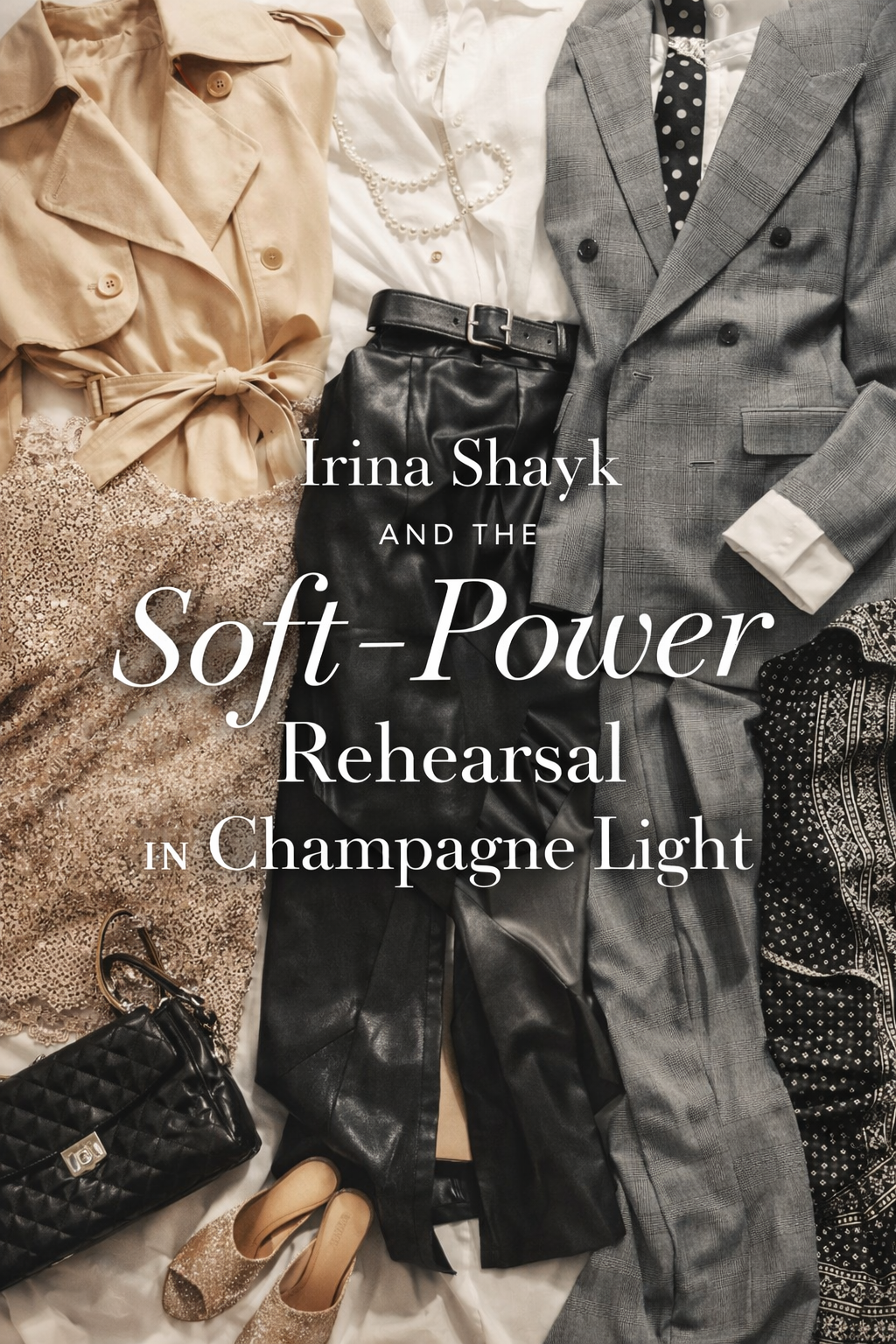
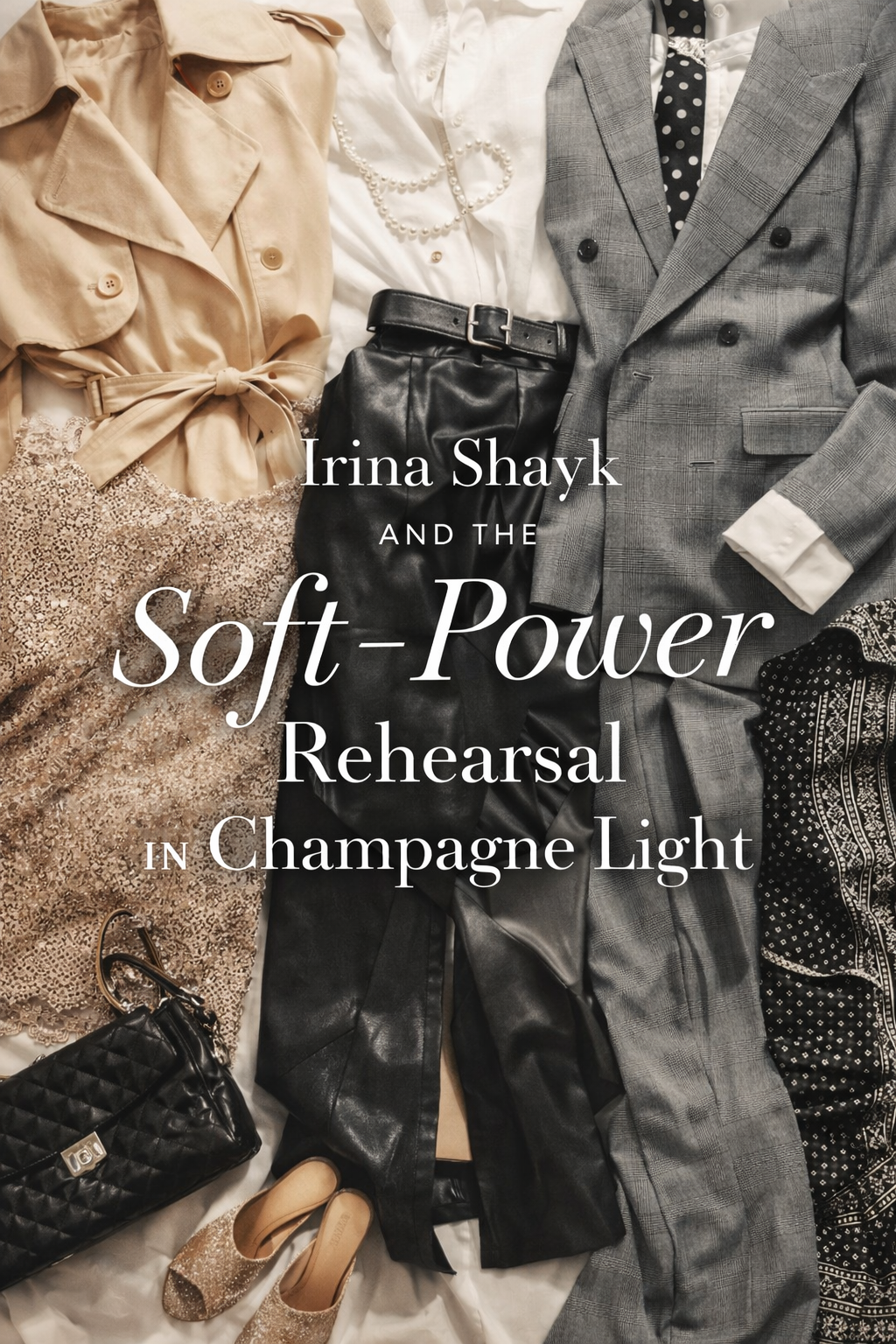
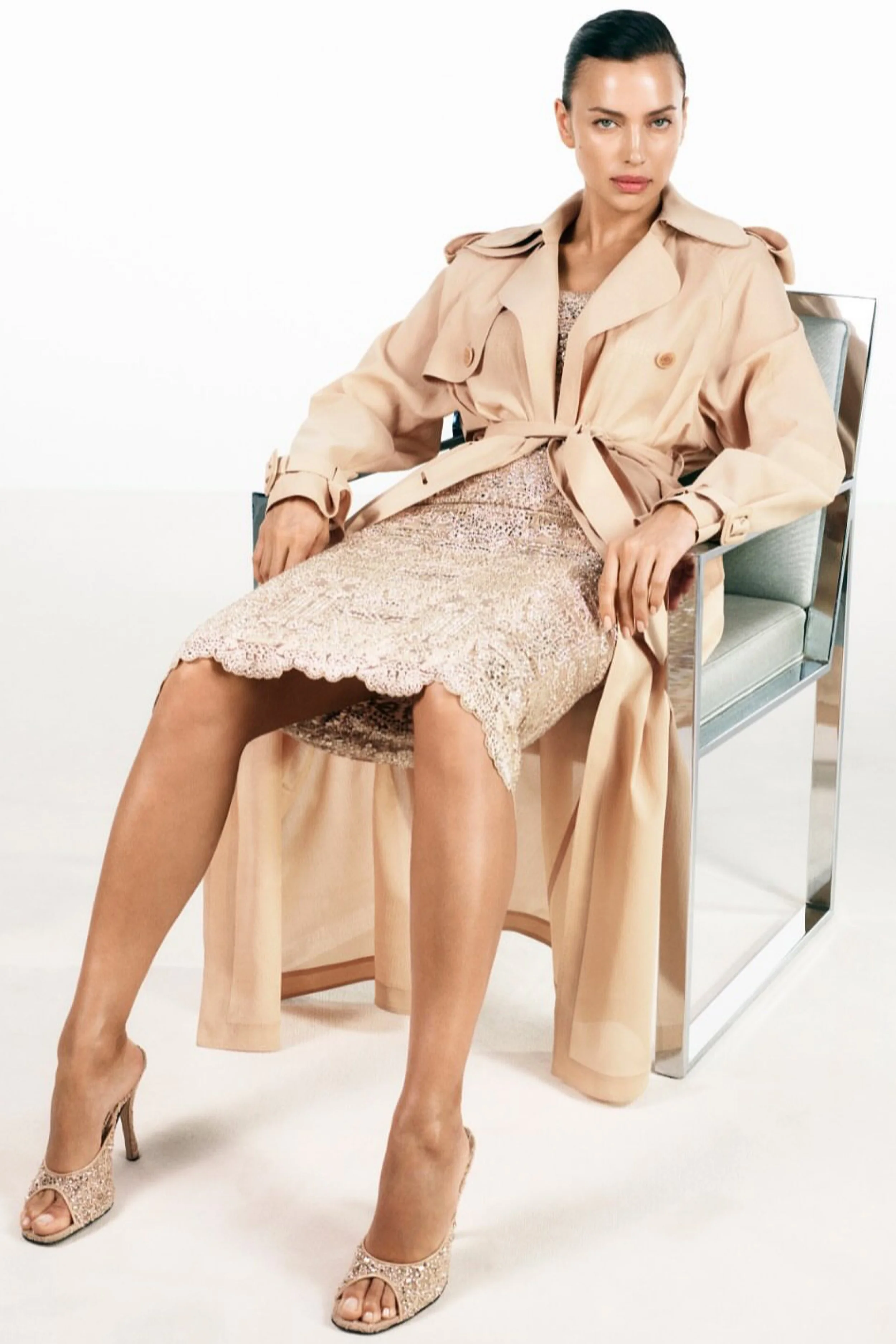
First, it’s champagne and sand and the faintest shimmer of mischief: a belted trench in a pale, expensive beige, the collar open like you’re about to say something you’ll never repeat. Under it, that glinting dress—textured and light-catching, with a hem that scallops like it was cut by someone who understands restraint as seduction. You’re seated, composed, legs crossed with the kind of unbothered elegance that makes me want to smooth my own sleeves just to keep up. And those heels—sparkle that doesn’t scream, just hums. You’re not dressed for an event; you’re dressed for an entrance. I can almost hear the trench belt whisper as it cinches you into focus.
I’m watching from the edge of the set—reader-as-observer, caught in the corner of the frame—thinking about how you make beige feel dangerous. The trench reads classic until it doesn’t: a softened shoulder, a deliberate drape, buttons that feel like punctuation. The chair’s chrome lines reflect back the clean geometry of it all, and you use that minimalism as a stage. You don’t pose. You declare. The gloss on your lips is quiet, your hair slicked back like a decision you made once and never regretted. Your gaze stays level, and I’m left wondering if the camera is brave enough.
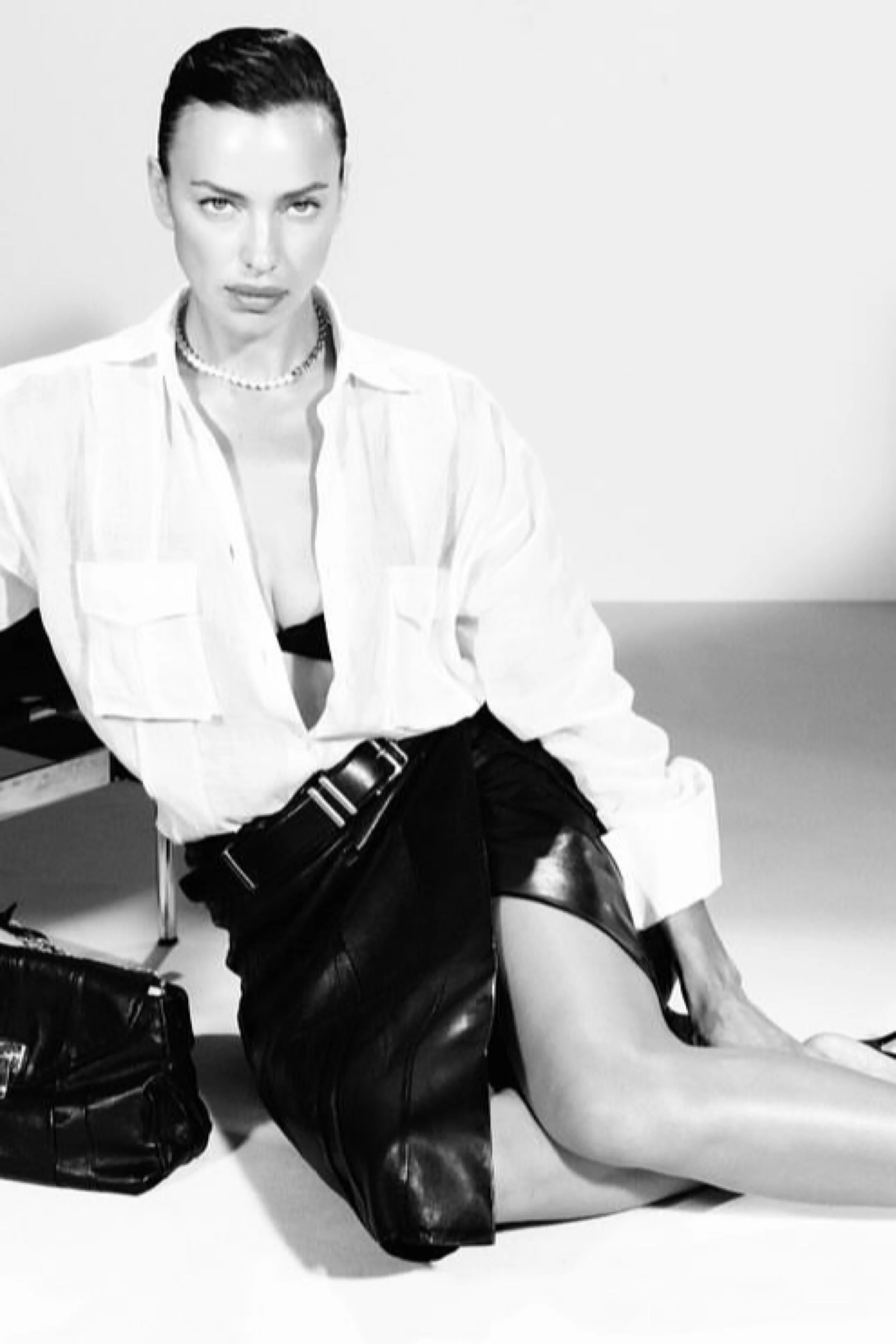
Then the story snaps into black-and-white, and suddenly it’s a different kind of intimacy—sharp, editorial, slightly noir. You’re seated again, closer now, with an oversized white shirt unbuttoned enough to show a lingerie-inspired underlayer—nothing gratuitous, just that little flash of contrast that says you understand tension the way a stylist understands silence. The shirt is crisp, pockets like architecture, cuffs relaxed. Around your waist: a belt with hardware that looks like it could lock a promise in place. And the skirt—black leather, clean line, slit that turns movement into a rumor. You’re not asking for softness; you’re engineering it.
I’ll admit it: I like you here, Irina. I like the discipline of the palette. I like how the monochrome makes everything about shape and attitude—your collarbones framed by that open neckline, the sheen of leather catching the studio light, the way a quilted bag sits nearby like a punctuation mark in a sentence you’ve already mastered. Pearls at your throat: not sweet, not nostalgic—more like a dare. You look like you could walk into a boardroom, then walk right back out with the entire room quietly rearranging itself behind you.
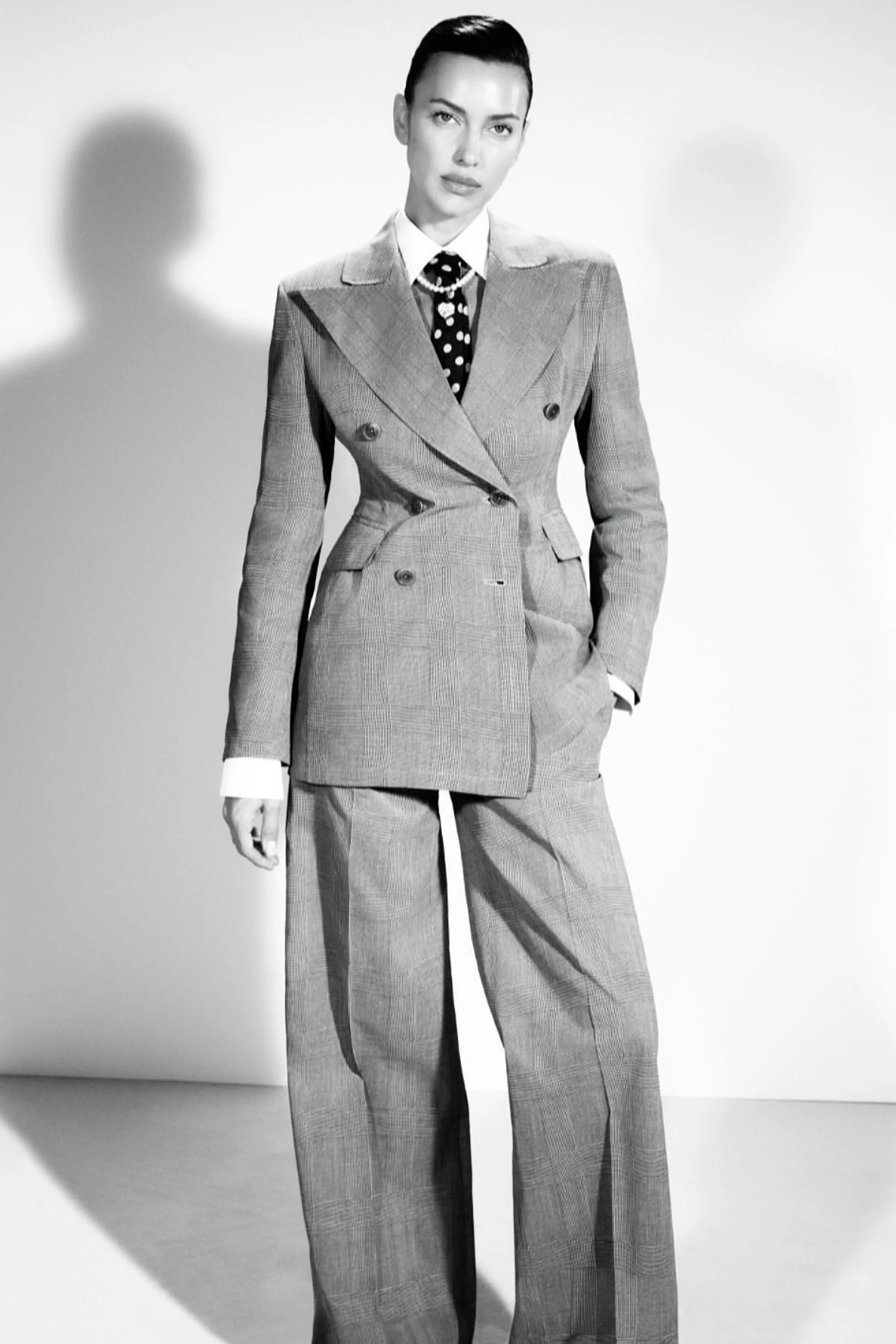
The next frame is where you go fully into soft power. A tailored suit—grey, double-breasted, with a subtle pattern that reads like quiet wealth if you know how to look. The jacket is structured, shoulders confident, waist shaped with that specific kind of tailoring that makes me want to applaud the seamstress. Under it, a white shirt buttoned to the collar and a polka-dot tie that shouldn’t work but does—because you’re wearing it like a wink, not a costume. The trousers fall long and relaxed, a wide-leg that swings with intention. Hands in pockets. Face calm. A look that says: I don’t chase trends; I train them.
And I’m sitting here thinking—how do you make masculine tailoring feel like a love letter to your own control? The tie is playful, almost cheeky, but the set of your jaw keeps it from turning cute. You don’t soften yourself for the camera. You sharpen. Even your jewelry—those pearls again—feel like they’re being worn with authority, not ornament. The studio shadow behind you is crisp, and your silhouette holds its ground against it, like you’ve negotiated with the light and won.
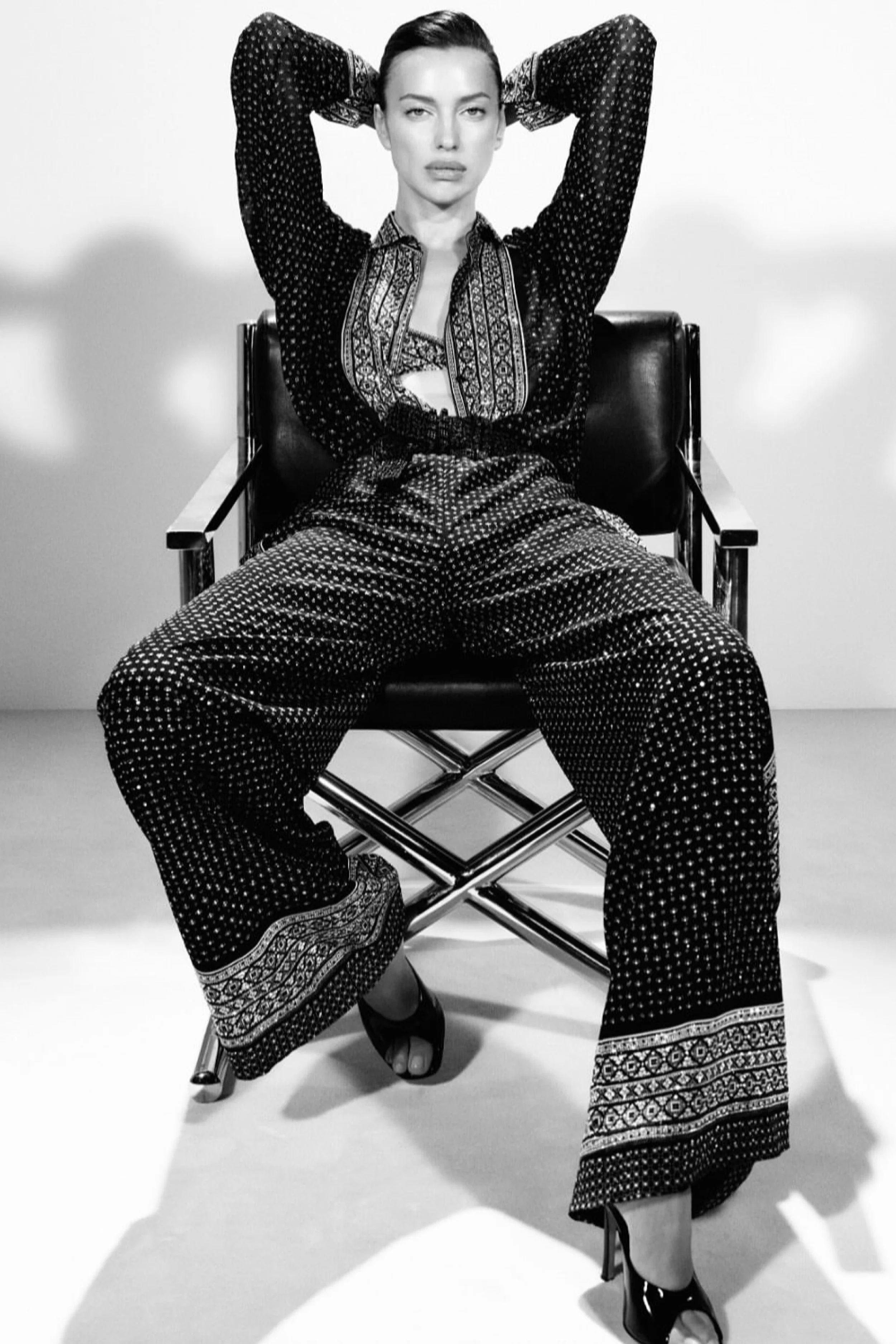
Then you pivot—because of course you do—and the final look slides in like a midnight postcard. Still black-and-white, but now it’s pattern and folklore and a little bit of rebellion: a long, printed set—jumpsuit or matching separates—dense with tiny motifs and bold, ornate trim that frames the neckline like an heirloom border. The sleeves sit fitted, the waist defined, the legs wide and pooling with that languid drama that makes sitting look like a performance. Your shoes go dark and sleek, a platform-like lift that grounds the whole look in modern edge. Arms lifted behind your head—an effortless stretch that reads like you’re bored of being iconic and doing it anyway.
I can’t decide what gets me more: the graphic trim that turns your torso into a focal point, or the way you make that chair look like it was designed specifically for you to dismantle with posture alone. You’re not lounging; you’re reigning. And the set—minimal, clean—only makes the styling louder, the patterns more cinematic, the attitude more precise. The camera doesn’t catch you; it tries to keep up.
Somewhere between the beige trench and the leather skirt, between the polka-dot tie and the ornate print, you turn this whole editorial into a lesson in controlled contrast. Soft shimmer against strict tailoring. Crisp cotton against glossy leather. Classic pearls against modern hardware. You move through it like chapters, and I’m flipping pages too fast, trying not to show how much I want to linger on every detail—the trench belt knot, the scalloped hem, the shine of that leather, the weight of the suit fabric, the ornamental trim that looks like a signature.
And if you catch me watching—if you catch the reader watching from the edge of the frame—I swear it’s not just admiration. It’s the way you make styling feel like storytelling. The way you sit in a chair and somehow turn it into a throne. The way you keep your gaze steady, like you already know the ending.
I’m not pretending this is anything but an imagined moment, a fashion daydream I don’t want to wake up from. But Irina… if you’re going to keep serving quiet power with this much precision, you can’t blame me for wanting to follow the hem of your trench straight into the next scene.
Shop the Look
- Champagne belted trench coat energy — soft-structured outerwear that cinches the whole story.
- Allover-sequin midi dress shimmer — that light-catching texture that reads expensive on camera.
- Scalloped hem lace slip dress — delicate edge with editorial bite.
- Glitter high-heel mule sandals — a sparkle that whispers instead of shouts.
- Oversized crisp white button-down shirt — borrowed-from-the-boys, tailored-by-your-attitude.
- Black leather midi skirt with slit — sleek, sharp, and made for a slow turn.
- Wide statement belt with hardware buckle — the kind of cinch that changes your posture.
- Quilted black shoulder bag — structured, classic, and quietly bossy.
- Double-breasted plaid blazer suit set — soft power, sharpened.
- Polka dot tie for womens suiting — the wink that makes tailoring feel flirtier.
- Printed wide-leg jumpsuit with trim — pattern-play that still reads high fashion.
Style It With
- Pearl necklace minimalist strand — the “yes, I meant that” finishing touch.
- Fashion tape for crisp necklines — keeps the button-down perfectly undone, perfectly controlled.
- Nude seamless slip or shaping slip — smooth under shimmer without stealing the spotlight.
- Garment steamer for tailoring and trenches — because wrinkles ruin authority.
- Shine spray for slick bun finish — that glossy, editorial pull-back perfection.
- Black sheer tights for leather-skirt days — adds polish and a little extra noir.
- Neutral-toned clutch and bag organizer — keeps your essentials as composed as your gaze.
- Signature warm floral perfume — the invisible accessory that lingers after the last frame.
Closing Note
Irina Shayk, you make “classic” feel like a challenge and “minimal” feel like a dare—and I’m helpless for that kind of elegance that doesn’t ask permission. In this imagined studio world, you didn’t just wear the clothes; you conducted them, like fabric and light were waiting for your cue.
If you decide to step into the next scene in that belted trench again, I’ll be right here—quietly obsessed with the way you turn tailoring into poetry, and sparkle into a secret.