Black Garlic & Truffle Deviled Eggs, Dressed in Midnight
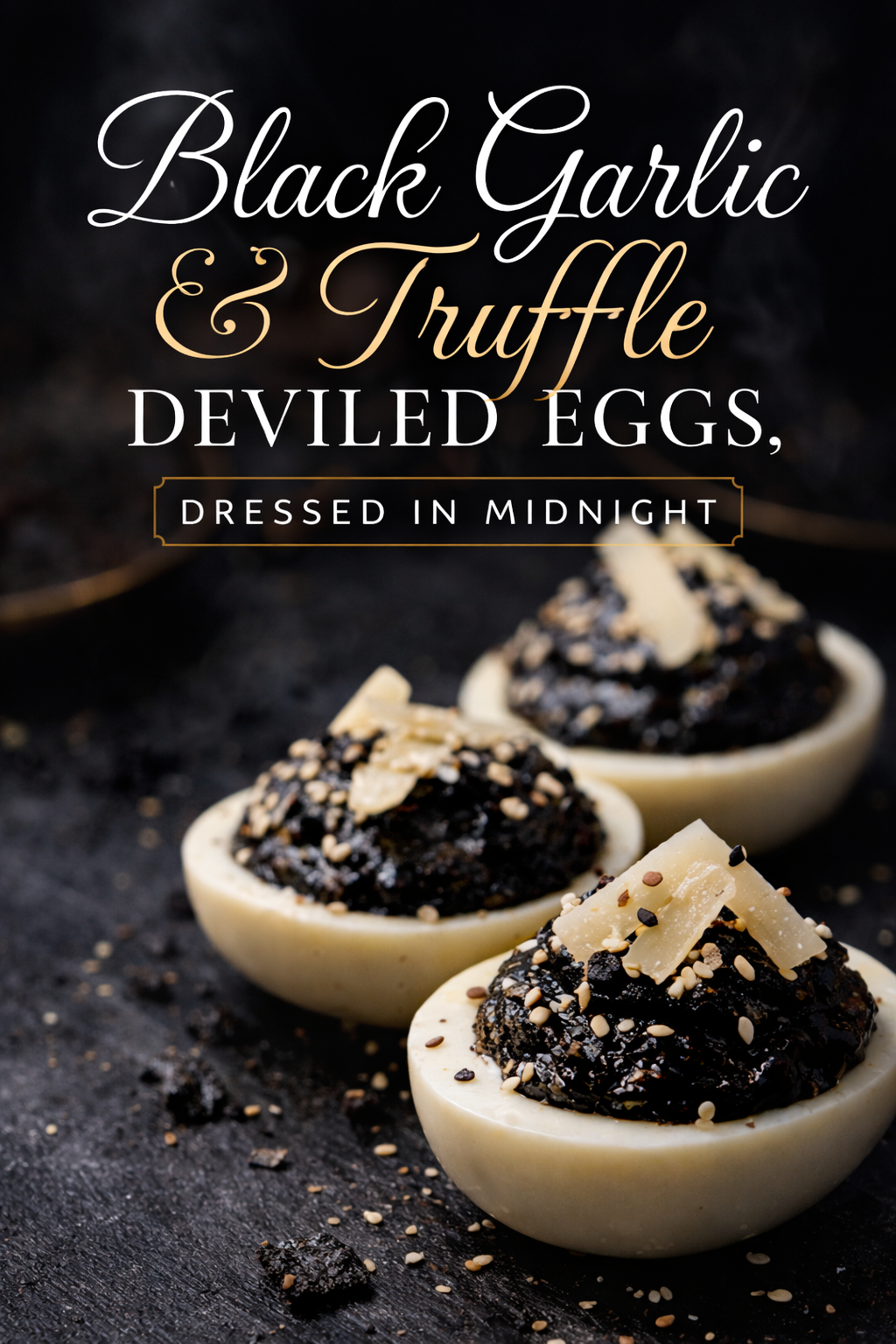
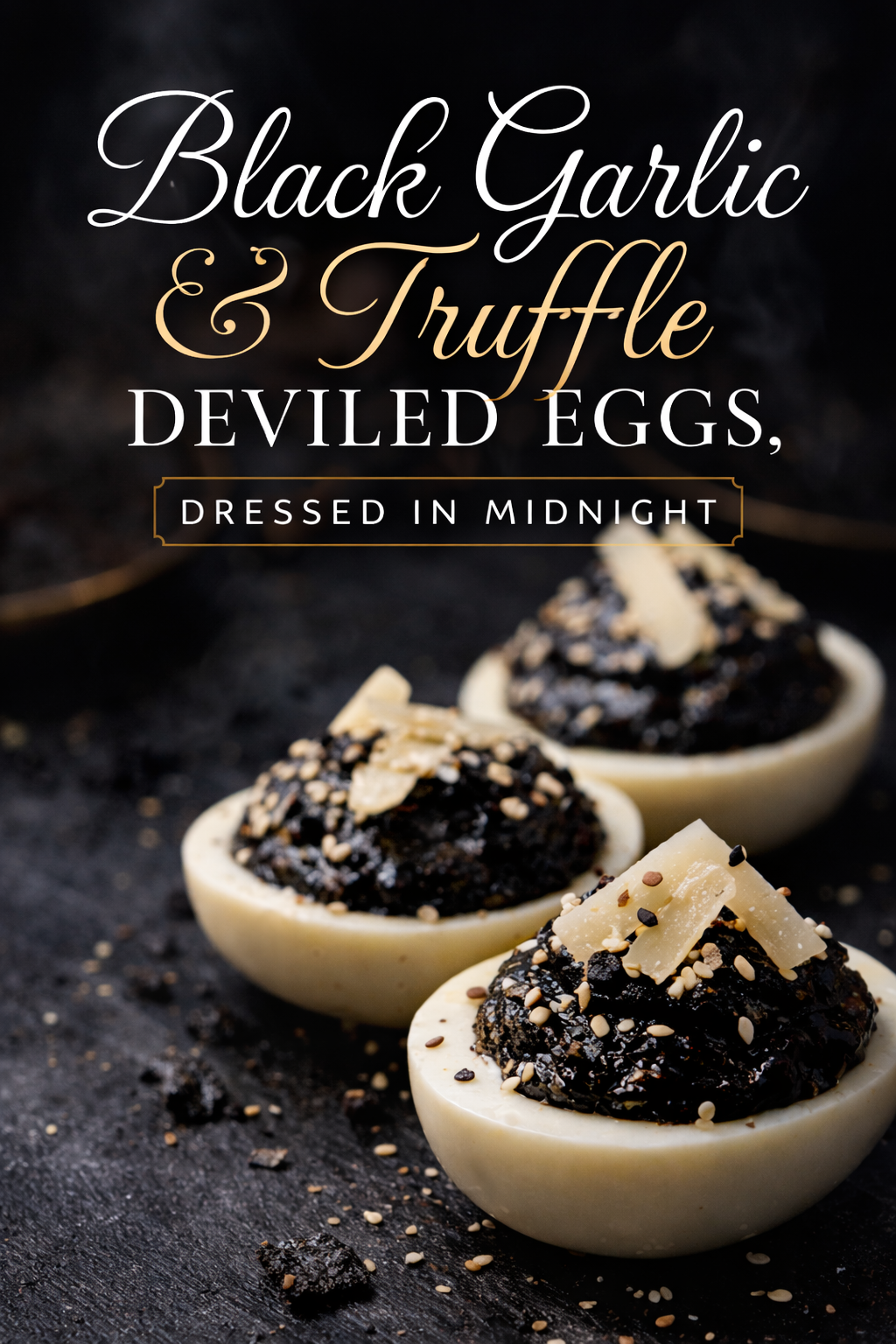
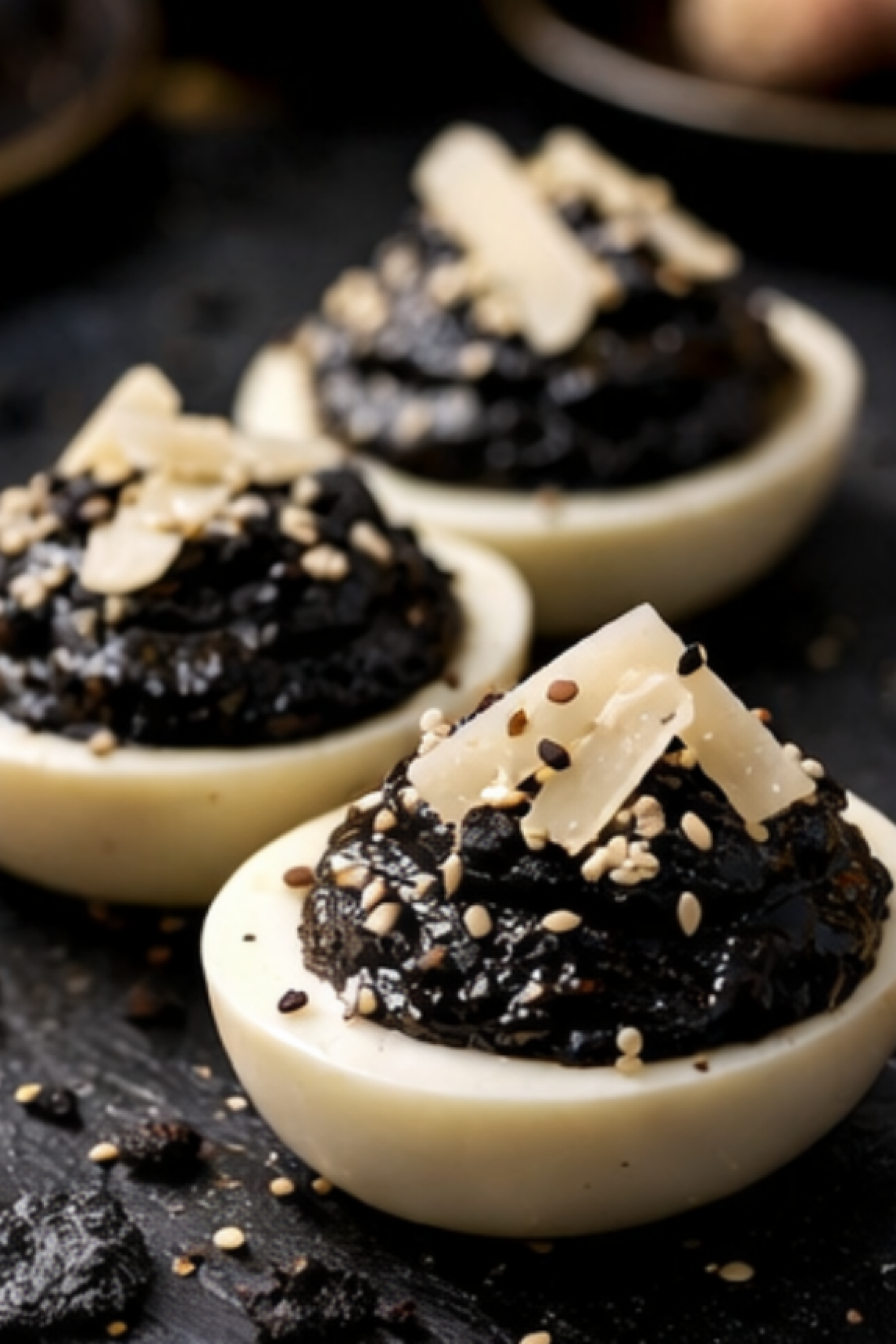
The first impression is silence, broken only by the sheen. Against a dark, almost slate-black surface, the eggs sit halved and upright, their whites impossibly smooth, porcelain-bright, and deliberate. They feel sculptural, like something placed rather than served. The filling is not pale or whipped but deep and glossy, a near-black mound that catches the light with a lacquered finish. It looks slow and intentional, as though it took time to become itself. A scattering of sesame seeds clings to the surface, adding texture and contrast, while delicate shards of pale cheese rest on top, sharp-edged and elegant, like shaved stone.
There is an immediate sense of restraint. Nothing spills. Nothing rushes. These deviled eggs feel composed, editorial, almost ceremonial. Black garlic brings with it the quiet luxury of fermentation—sweet, earthy, umami-rich—while truffle lingers in suggestion rather than declaration. The aroma is subtle but unmistakable, the kind that doesn’t announce itself until you lean in. It’s the scent of late evenings, low lighting, and food made for people who notice details.
The image invites a slower rhythm. These are not picnic deviled eggs or holiday potluck staples. They belong on dark wood tables, next to heavy glassware and soft linen. They pair naturally with conversations that stretch longer than expected, with hands reaching for another half without ceremony. There’s something intimate about the scale—small bites with outsized presence—that makes them feel indulgent without being excessive.
What makes them compelling is how modern they feel without trying to be. Black garlic has become a quiet favorite among chefs for its complexity, and when folded into a deviled egg filling using a smooth, controlled blend—something easily achieved with a compact food processor designed for small batches—it transforms the familiar into something almost unrecognizable. The texture becomes silkier, denser, and more cohesive, allowing each egg to hold its shape like a finished dish rather than a casual snack.
Truffle oil, used sparingly, adds depth rather than drama. A drop too many would overwhelm, but restraint allows it to sit behind the black garlic, amplifying its natural sweetness. The final garnish—hard cheese shaved thin with a sharp handheld grater built for hard cheeses—adds a salty snap that breaks through the richness, while sesame seeds offer a gentle crunch that keeps each bite from feeling too soft.
Visually, the contrast is what lingers. Pale against dark. Matte against gloss. Simple forms elevated by careful choices. These eggs feel styled rather than dressed, finished rather than topped. They speak to a kind of hosting that values atmosphere as much as flavor, where the table is as intentional as the menu.
There’s also a confidence here. Deviled eggs are often nostalgic, tied to memory and tradition, but these abandon nostalgia entirely. They live in the present—moody, refined, and unapologetically savory. They don’t ask to be liked by everyone. They’re designed for the person who notices the difference between garlic and black garlic, who appreciates the quiet luxury of truffle used with discipline, and who understands that the most powerful flavors don’t need volume to make themselves known.
Set on a platter of dark stone or slate, arranged with space between each half, they become more than a dish. They become a statement. One that says indulgence can be subtle, elegance can be edible, and even the most familiar foods can be transformed with intention, patience, and a willingness to let depth speak louder than brightness.
Black Garlic & Truffle Deviled Eggs
An elevated, savory take on classic deviled eggs with deep umami flavor.
Ingredients
- Large eggs
- Black garlic cloves
- Mayonnaise
- Dijon mustard
- White truffle oil
- Finely grated hard cheese (such as Parmesan or Pecorino)
- White or black sesame seeds
- Sea salt, to taste
Method
- Hard-boil the eggs, then cool completely and peel.
- Slice eggs in half lengthwise and remove yolks.
- Blend yolks with black garlic, mayonnaise, and Dijon until smooth.
- Season lightly with salt and a few drops of truffle oil.
- Pipe or spoon the filling back into the egg whites.
- Finish with shaved cheese and a sprinkle of sesame seeds.
Begin with the eggs themselves, because everything that follows depends on their texture. A properly cooked egg should have a fully set white and a yolk that is cooked through but still tender. Overcooking leads to chalkiness, which no amount of black garlic can disguise. Start the eggs in cold water, bring them just to a boil, then remove from heat and let them sit covered. This gentle approach prevents that gray ring around the yolk and preserves a clean flavor.
Once cooled and peeled, handle the whites carefully. Any tears or dents will be visible in a recipe that relies so heavily on presentation. If uniformity matters, a thin, sharp knife makes clean cuts without dragging—something akin to a precision kitchen knife designed for delicate prep work helps maintain that pristine edge.
The filling is where the transformation happens. Black garlic should be soft, sticky, and almost jam-like. If it feels dry, it won’t blend smoothly. Break it apart before adding it to the yolks so it incorporates evenly. A small blender or processor allows you to achieve a dense, glossy texture without introducing excess air. The goal is richness, not fluff. If the mixture seems too thick, a touch more mayonnaise brings it back into balance without diluting flavor.
Truffle oil should be treated as an accent, not a base. Start with the smallest amount possible, blend, taste, then decide if it needs more. The filling should smell savory and deep, never sharp or perfumed. If truffle dominates, it masks the caramelized complexity of the black garlic rather than supporting it.
Seasoning requires restraint. Black garlic already carries natural sweetness and umami, and hard cheeses add salt at the finish. Taste before adding more than a pinch of salt. Over-seasoning here flattens the layered effect you’re building.
When filling the egg whites, piping creates a clean, architectural look. A reusable bag or a simple piping set suitable for savory fillings keeps portions consistent and elevates the final presentation. If spooning, smooth the surface gently with the back of the spoon to maintain that polished appearance.
Garnishes matter more than they seem. Cheese should be shaved, not grated, so it sits lightly on top rather than melting into the filling. Sesame seeds should be scattered, not piled, adding visual rhythm and subtle crunch. Each element has a role: texture, contrast, and restraint.
For variations, consider swapping sesame seeds for finely chopped chives if you want a greener note, or using a different aged cheese for sharper bite. If black garlic isn’t available, slow-roasted garlic can work in a pinch, but expect a brighter, less complex result.
Serve these chilled but not cold. Too much chill dulls flavor. Let them rest briefly at room temperature so the filling softens slightly and the aromatics open up. Arranged thoughtfully on a dark platter, these deviled eggs become less about tradition and more about intention—proof that a familiar form can carry depth, elegance, and unmistakable presence when handled with care.