The Picnic Flex Nobody Saw Coming: Loaded Bacon & Egg Potato Salad Recipe
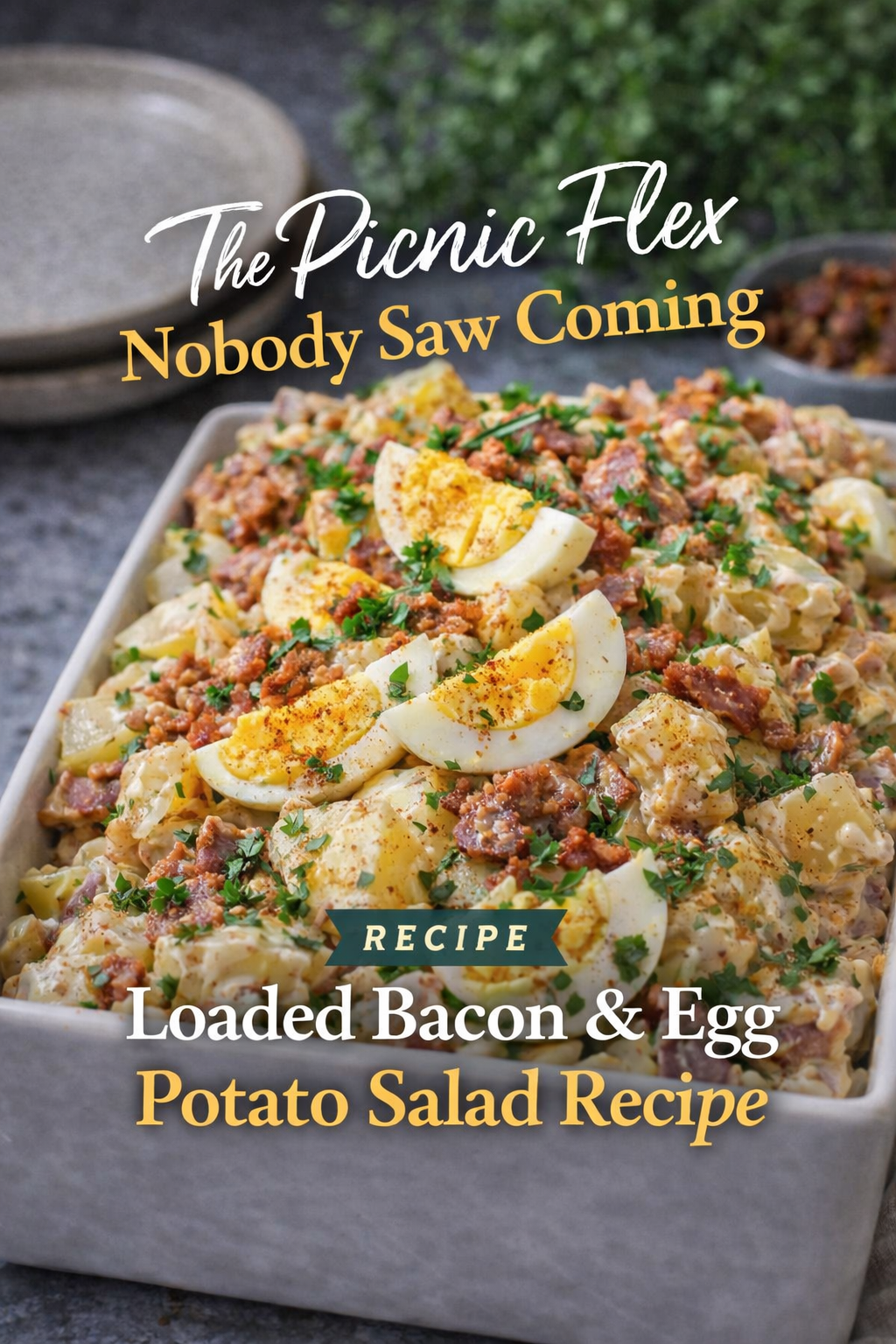
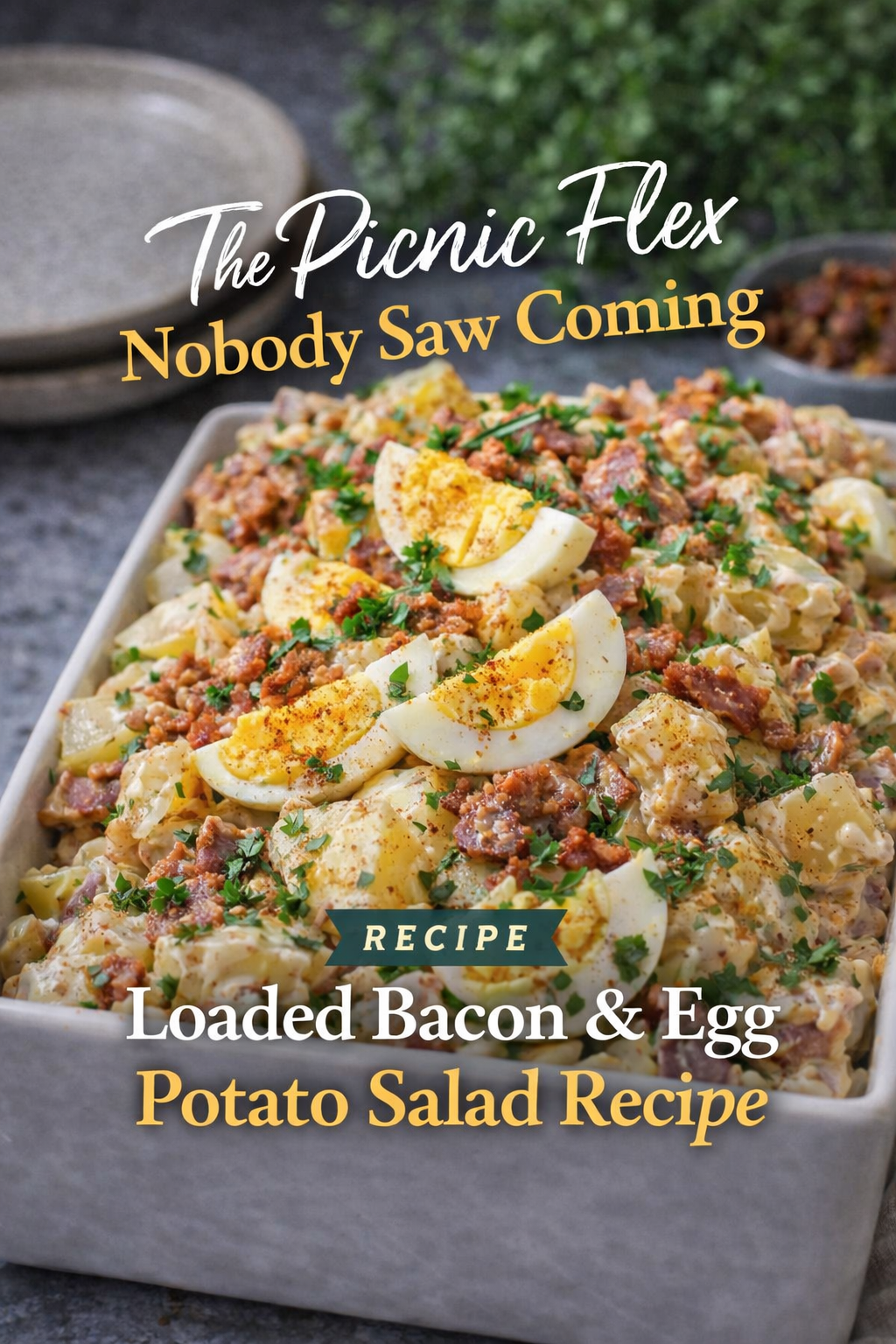
There’s a certain kind of silence that settles over a kitchen when something truly irresistible hits the counter—no fanfare, no announcement, just the subtle shift of attention as everyone’s eyes find the same place. A big white dish, heavy with promise. Potatoes cut into generous chunks, their edges softened into that perfect “just-tender” texture, wearing a creamy coating that looks like it was stirred with patience instead of urgency. Hard-boiled eggs sit on top in bright wedges, their yolks a warm gold against the pale dressing, like little sunbursts tucked into the folds. Crispy bacon is scattered everywhere, the pieces catching light and adding that toasted, smoky crunch that makes people take a second look. A dusting of paprika (or something close to it) warms the surface with color, and fresh green herbs—parsley, likely—lift the whole dish with the kind of clean, garden-fresh fragrance that keeps rich food from feeling heavy.
It’s the kind of bowl that makes gatherings feel inevitable. The casual kind, the ones that happen because the day is beautiful or the game is on or someone finally has a Saturday that doesn’t require shoes. The dish itself looks like it belongs in that sweet spot between nostalgic and upgraded—familiar enough to feel like home, styled enough to feel like a little celebration. The potatoes are substantial, not dainty. The egg wedges are confident and visible, not hidden like an afterthought. The bacon is not “a hint of,” it’s a presence. And the herbs aren’t just decoration—they’re a signal that what you’re about to eat is balanced, designed to keep you going back for one more forkful without getting fatigued by richness.
There’s also something deeply satisfying about the geometry of it all: irregular potato chunks that still feel deliberate, egg wedges placed with enough intention to look abundant, bacon bits tucked into creamy crevices like treasure, green flecks landing where they want. It’s not precious; it’s magnetic. The creamy dressing looks thick but not gluey—silky, clingy, the kind that wraps around potatoes rather than pooling at the bottom. That tells you the potatoes were cooled properly and the dressing was made with the right ratio of richness and tang. The surface has that faint sheen of mayo or sour cream or both—classic, yes, but here it reads like luxury because it’s done with restraint.
And the scent—imagine the first moment the spoon breaks through the top layer. You’d get smoky bacon first, then the mellow sweetness of potatoes, then that gentle egg aroma, then the bright lift of herbs. If there’s a touch of mustard in the dressing (and there should be), it won’t shout; it will whisper, adding dimension and waking up the palate. The paprika gives a soft warmth, not heat, more like a cozy edge that makes the dish feel seasoned rather than simply salted. It’s a bowl that feels like late afternoon light, like laughter in the yard, like the kind of meal that doesn’t require a reason.
This is the sort of potato salad that quietly wins the table. Not because it’s flashy, but because it’s complete. It has creamy, crunchy, savory, fresh. It has familiar comfort with a few smart upgrades that make it feel intentional. It tastes like the good version of what people hope potato salad will be—never watery, never bland, never one-note. It’s the dish that disappears early, the one someone asks about while already holding a second helping.
To pull it off, the details matter in ways that are almost invisible. The right potato variety, so the chunks stay tender without turning to mush (a bag of gold potatoes ideal for salads is a simple starting point). A pot large enough that the water doesn’t cool down the second the potatoes go in (a heavy-bottomed stock pot for boiling potatoes makes the texture more consistent). A sharp knife that gives clean cuts instead of smashing the potato edges before they even cook (a sharp chef’s knife for clean potato chunks sounds basic, but it changes everything). Even the way you cook and peel the eggs matters—yolks jammy or chalky can shift the whole vibe, and a simple egg timer for perfect hard-boiled eggs takes the guesswork out when you’re juggling everything else.
The dressing is where the magic hides. It’s easy to think potato salad is “just mayo,” but the best versions are a careful choreography of creamy richness and bright tang. Mayonnaise gives body, sour cream gives softness, mustard gives lift, and something acidic—pickle juice, vinegar, lemon—keeps it from tasting flat. If you’re the kind of cook who likes control, having measuring spoons that actually match makes dialing in that balance effortless. And because bacon is the headline here, it helps to cook it so it’s properly crisp and stays crisp—whether that’s in a skillet or on a tray lined with a cooling rack for extra-crispy oven bacon so the fat drips away instead of soaking back in.
When it all comes together, the bowl looks exactly like the moment you want to serve: generous, textured, alive with contrast. Egg wedges resting on top, bacon scattered like confetti, herbs keeping it bright. The kind of dish you set down and immediately feel the room lean in. Not because it’s trying to impress—because it simply will.
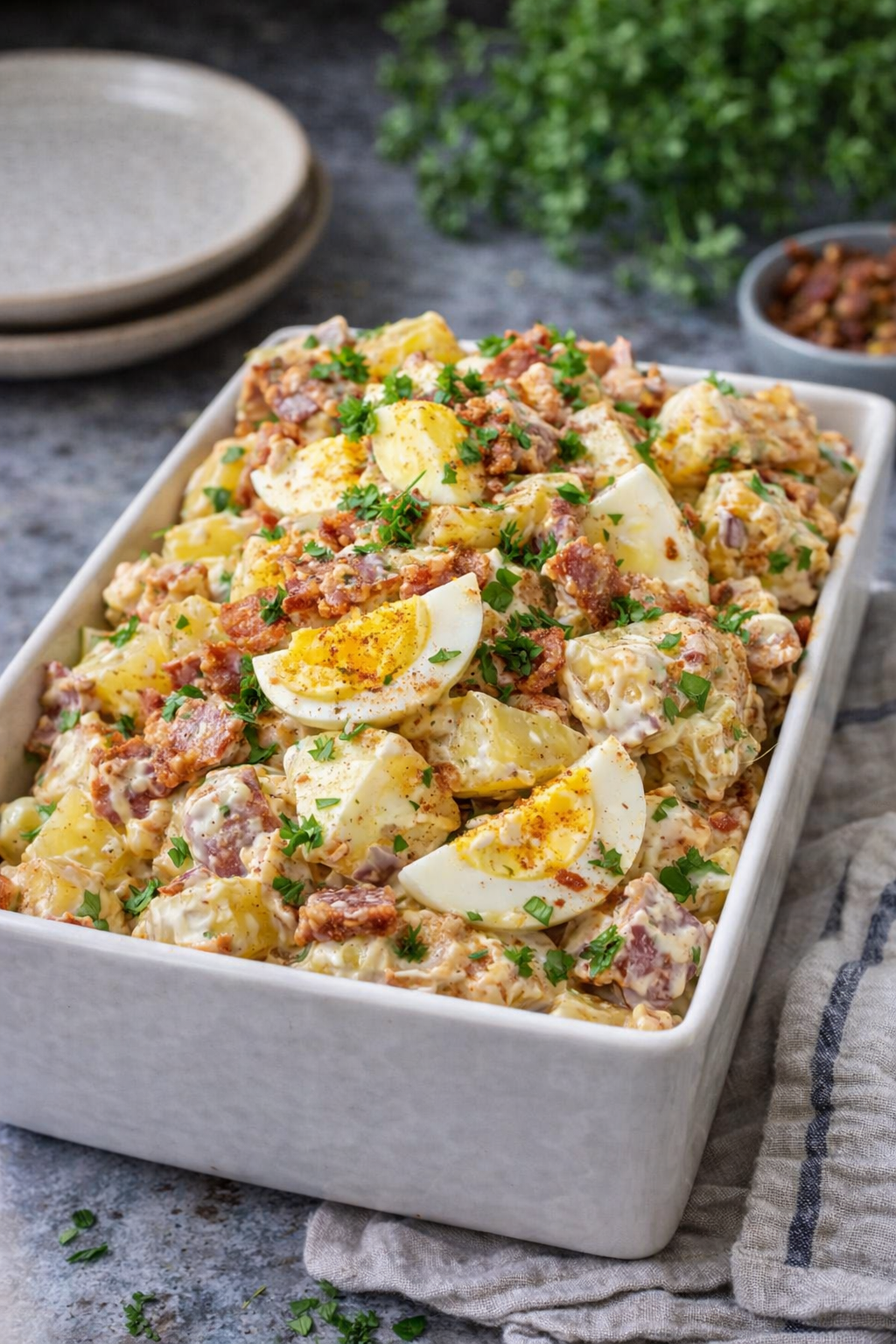
Loaded Bacon & Egg Potato Salad
This is a classic, creamy potato salad upgraded with crispy bacon, hard-boiled eggs, a tangy dressing, and fresh herbs—built to hold its texture and flavor from first scoop to last.
Ingredients
- 2 1/2 to 3 lb gold or red potatoes, cut into 1 1/2-inch chunks
- 6 large eggs
- 10 to 12 slices bacon, cooked crisp and crumbled
- 3/4 cup mayonnaise
- 1/3 cup sour cream (or Greek yogurt)
- 2 tbsp yellow mustard (or Dijon)
- 2 tbsp pickle juice or apple cider vinegar
- 1/2 cup finely chopped celery
- 1/4 cup finely chopped red onion (or scallions)
- 2 tbsp chopped fresh parsley
- 1 tsp kosher salt, plus more for boiling water
- 1/2 tsp black pepper
- 1/2 tsp smoked paprika, plus extra for topping
- Optional: 1 to 2 chopped dill pickles or 2 tbsp relish
Method / Instructions
- Boil the potatoes in well-salted water until just fork-tender, 10–12 minutes. Drain and cool 15–20 minutes.
- Hard-boil the eggs, cool in ice water, peel, and cut into wedges or chunks.
- Whisk mayo, sour cream, mustard, and pickle juice/vinegar in a large bowl. Season with salt, pepper, and paprika.
- Fold in potatoes, celery, onion, parsley, and most of the bacon. Add optional pickles/relish if using.
- Gently fold in chopped egg (reserve a few wedges for topping if desired).
- Top with remaining bacon, extra parsley, and a dusting of paprika. Chill at least 1 hour before serving for best flavor.
The best potato salad doesn’t happen by accident—it’s built in layers, and every layer has a job. What makes this Loaded Bacon & Egg Potato Salad feel “restaurant-solid” while staying comfort-food familiar is the way texture, temperature, and seasoning are managed from the first cut to the final chill. Follow the flow below and you’ll end up with a bowl that holds together beautifully, tastes bold without being heavy, and stays craveable even after it’s been sitting out at a gathering.
Start with the potatoes, because they decide the final texture. Gold potatoes (Yukon-style) are the sweet spot: creamy inside, sturdy enough to keep their shape, and naturally buttery. Red potatoes work too if you prefer a firmer bite. The key is cutting them into consistent chunks—around 1 1/2 inches—so they cook evenly. If you want clean, sharp edges that don’t crumble before they hit the water, use a sturdy cutting board that won’t slide and a sharp blade. Uneven pieces lead to that classic problem: some chunks mushy, others still firm in the center.
Salt the water aggressively. This is the only chance to season the potatoes internally, and it matters more than people think. The water should taste pleasantly salty—like soup, not like the ocean. Bring the water to a steady boil before adding potatoes so the cooking starts immediately. Overcrowding can slow the boil and make cooking uneven, so a wide large pot that keeps a rolling boil helps if you’re making a big batch.
Cook until just fork-tender. That phrase gets tossed around, but here it means: the fork goes in with gentle resistance, and the chunk lifts without breaking apart. If you overcook, the dressing turns pasty and the potatoes collapse into a mashy texture. If you undercook, the salad tastes starchy and dry. Ten to twelve minutes is a typical range, but trust the fork more than the clock. Drain immediately, then let the steam escape—spreading the potatoes on a tray speeds cooling and prevents them from continuing to cook in their own heat.
While the potatoes cool, handle the eggs with intention. Perfect hard-boiled eggs are creamy and clean, not rubbery or sulfur-smelling. A reliable method is to simmer (not violently boil) and then shock in ice water. If peeling eggs is your personal nightmare, an ice bath bowl large enough for quick chilling makes the cooling step more effective, and fresher eggs can actually be harder to peel—slightly older eggs tend to cooperate better. Once peeled, decide your egg shape: wedges look dramatic on top, while chopped eggs distribute flavor throughout. A combination is the move: reserve a few wedges for that “wow” finish, and chop the rest so every bite gets egg.
Now the bacon—this is where the dish gets its swagger. Crisp matters. Soft bacon disappears into the dressing and loses its identity. If you cook bacon in the oven, it crisps evenly and frees you up to do other steps. Lining the tray with foil helps cleanup, and placing bacon on a rack keeps it truly crisp. Once cooked, let it cool fully before crumbling so it stays crunchy. If you’re making this ahead and want maximum crunch at serving time, save a portion of the bacon for the very end and keep it separate until you’re ready to top the dish.
Dressing is the backbone, and the goal is creamy without being heavy, tangy without being sharp. A base of mayo brings structure; sour cream or Greek yogurt brings softness and a gentle tang. Mustard is non-negotiable—it wakes up the whole bowl. The secret “why does this taste so good?” element is a splash of pickle juice or vinegar. It keeps the salad from tasting flat, especially once chilled. Mix your dressing in a big bowl before anything else goes in, because you want seasoning evenly distributed. A large mixing bowl with room to fold gently prevents you from crushing the potatoes when you stir.
Season the dressing decisively. Salt and pepper are obvious, but paprika (especially smoked paprika) is the quiet amplifier. It adds warmth and a savory depth that pairs beautifully with bacon. If you like a little edge, a pinch of cayenne can work, but keep it subtle—this dish reads “classic” first. Taste the dressing before adding potatoes. It should be slightly brighter and more seasoned than you want the final salad to be, because potatoes mellow everything.
Add-ins are where you control texture. Celery provides clean crunch; red onion adds sharpness and color. Chop them finely so they integrate instead of dominating. If you love pickles, add chopped dill pickles or relish—just be mindful of salt levels if you’re already using pickle juice in the dressing. Herbs matter more than they get credit for. Parsley is the classic because it’s clean and fresh; dill is incredible if you want a sharper, picnic-style profile. Use a chef’s knife that makes clean herb cuts so the herbs stay vibrant rather than bruised.
Here’s the crucial assembly: potatoes should be warm-to-cool, not hot. Hot potatoes can drink up dressing too aggressively and turn oily or heavy; ice-cold potatoes don’t absorb flavor. Let them cool 15–20 minutes after draining—still slightly warm is ideal. Fold potatoes into the dressing gently, using a broad silicone spatula rather than a spoon that can smash. A flexible silicone spatula for folding helps you scoop from the bottom and turn without crushing. Add celery, onion, herbs, and most of the bacon. Then fold in chopped egg. Keep the reserved egg wedges aside if you want the dramatic finish.
If the mixture looks a little tight, don’t panic—potato salad loosens slightly as it rests and the potatoes release a tiny bit of moisture. If it’s genuinely dry, add a spoonful of mayo or sour cream and fold again. If it looks too loose, chilling will thicken it up. Either way, the chill step is not optional if you want peak flavor. One hour is good; overnight is even better. The dressing settles, the mustard rounds out, the tang integrates, and the potatoes stop tasting like separate pieces and start tasting like one cohesive dish.
Right before serving, do the “finish like a pro” step. Sprinkle on reserved bacon for crunch, scatter fresh herbs, and dust the top with paprika for that warm, appetizing color. Add the egg wedges last so they stay clean and bright. If you’re serving outdoors, keep the bowl nested in a larger dish with ice underneath so it stays safe and fresh. For extra credit, bring a small side container of bacon bits and herbs to refresh the top after the first round of scoops—because this is the kind of salad that will get scooped.
Variations are easy once you’ve got the foundation. Want it sharper? Increase pickle juice and add dill. Want it richer? Use a little more mayo and swap in Dijon for a deeper mustard note. Want it lighter? Use Greek yogurt for most of the creamy base and keep mayo as a smaller component. Want heat? Add minced jalapeño or a pinch of cayenne. Want a more “deviled egg” vibe? Add a touch more mustard and paprika and consider a tiny spoon of relish.
Troubleshooting is simple:
- If it tastes bland: add salt and a splash of acid (pickle juice or vinegar), then chill 20 minutes and taste again.
- If it’s watery: your potatoes were too hot or not drained well; chill to thicken and fold in a little more mayo/sour cream if needed.
- If it’s mushy: potatoes overcooked or overmixed; next time cut larger and fold gently.
- If the bacon went soft: save more for topping right before serving.
When everything is done right, you get exactly what the bowl promises: creamy potato chunks that still have structure, smoky bacon that pops, eggs that feel tender and rich, herbs that keep it fresh, and seasoning that makes every bite feel complete. It’s the kind of dish that doesn’t just sit on the table—it draws people back, again and again, until someone finally scrapes the corners and asks who made it.