Carolina-Marie Robertson and the Hotline in the Honey-Gold House
The Story
You arrive like a scene I swear I’ve already watched—on film, in perfume, in the kind of daydream that makes a room feel warmer than it is. Carolina-Marie Robertson, you don’t just step into a frame; you make the frame behave. The light finds you and suddenly everything else looks like it’s trying to keep up.
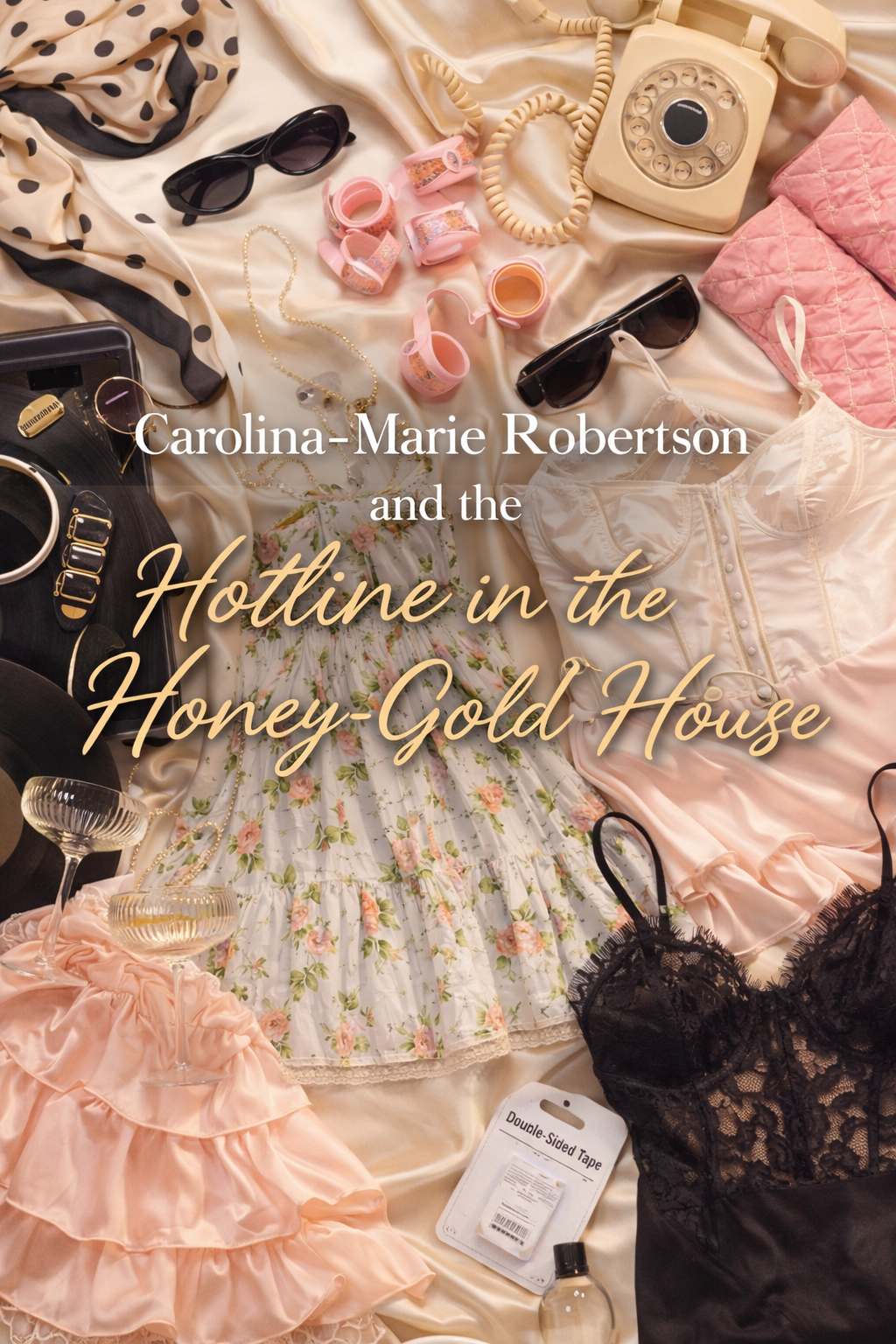
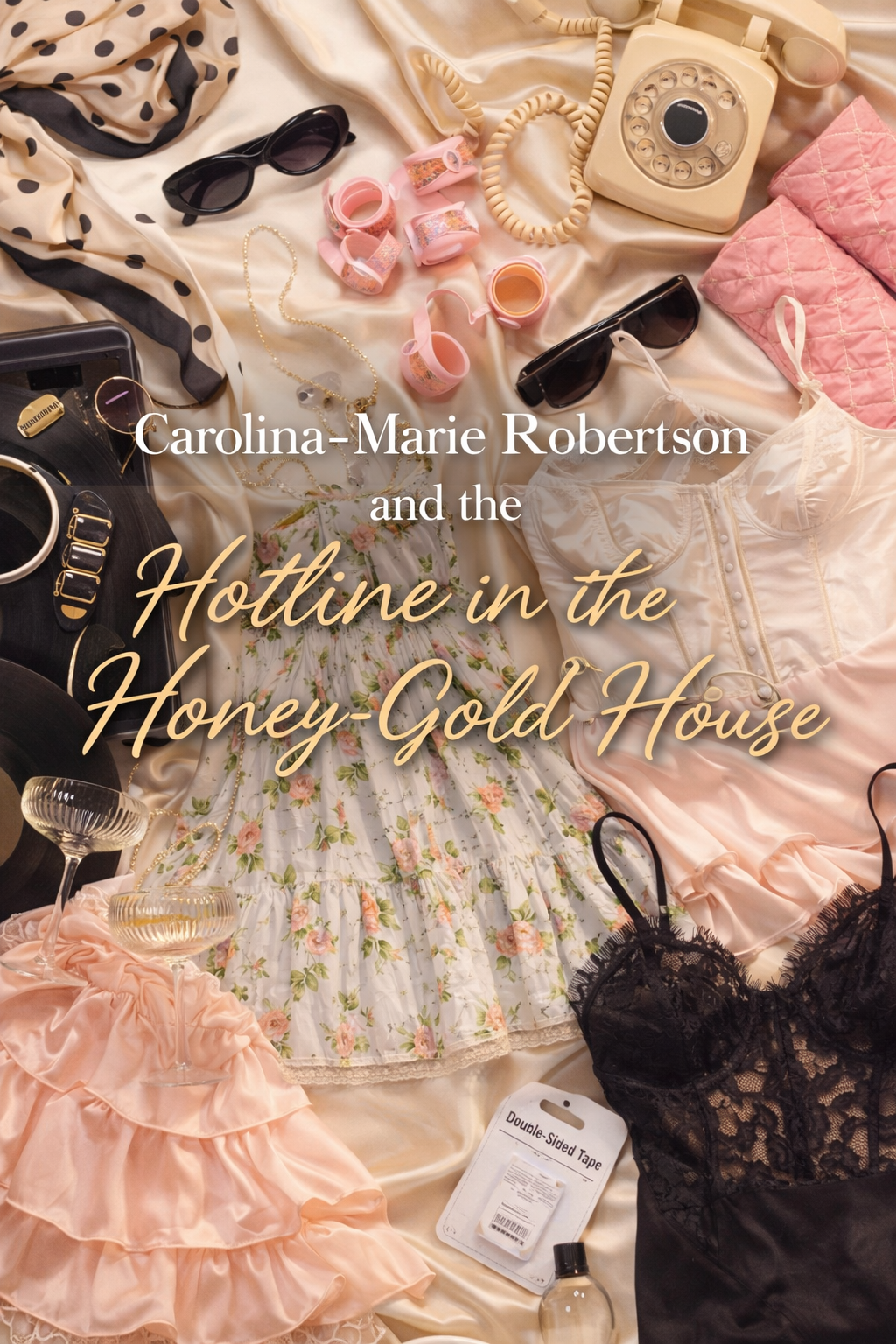
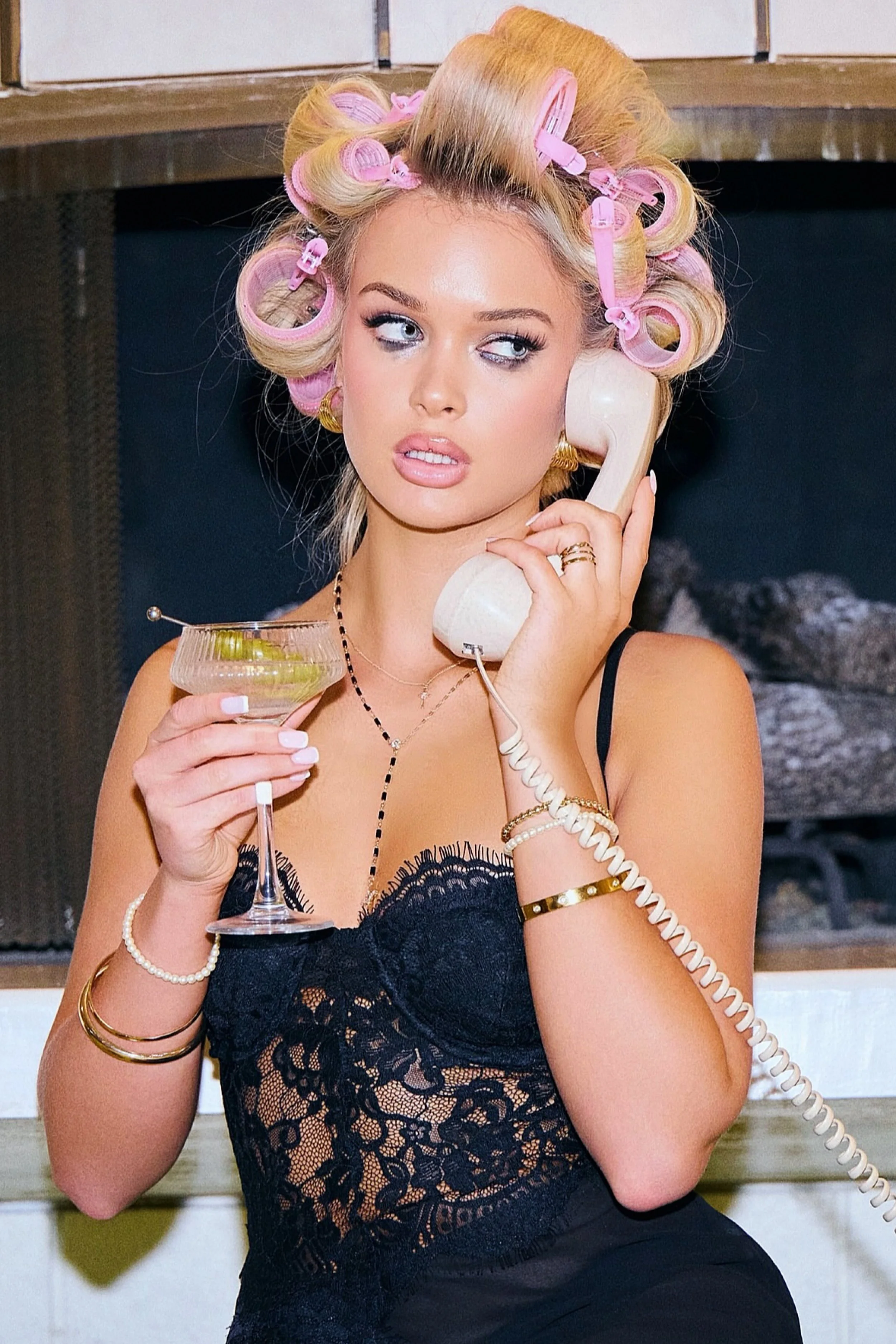
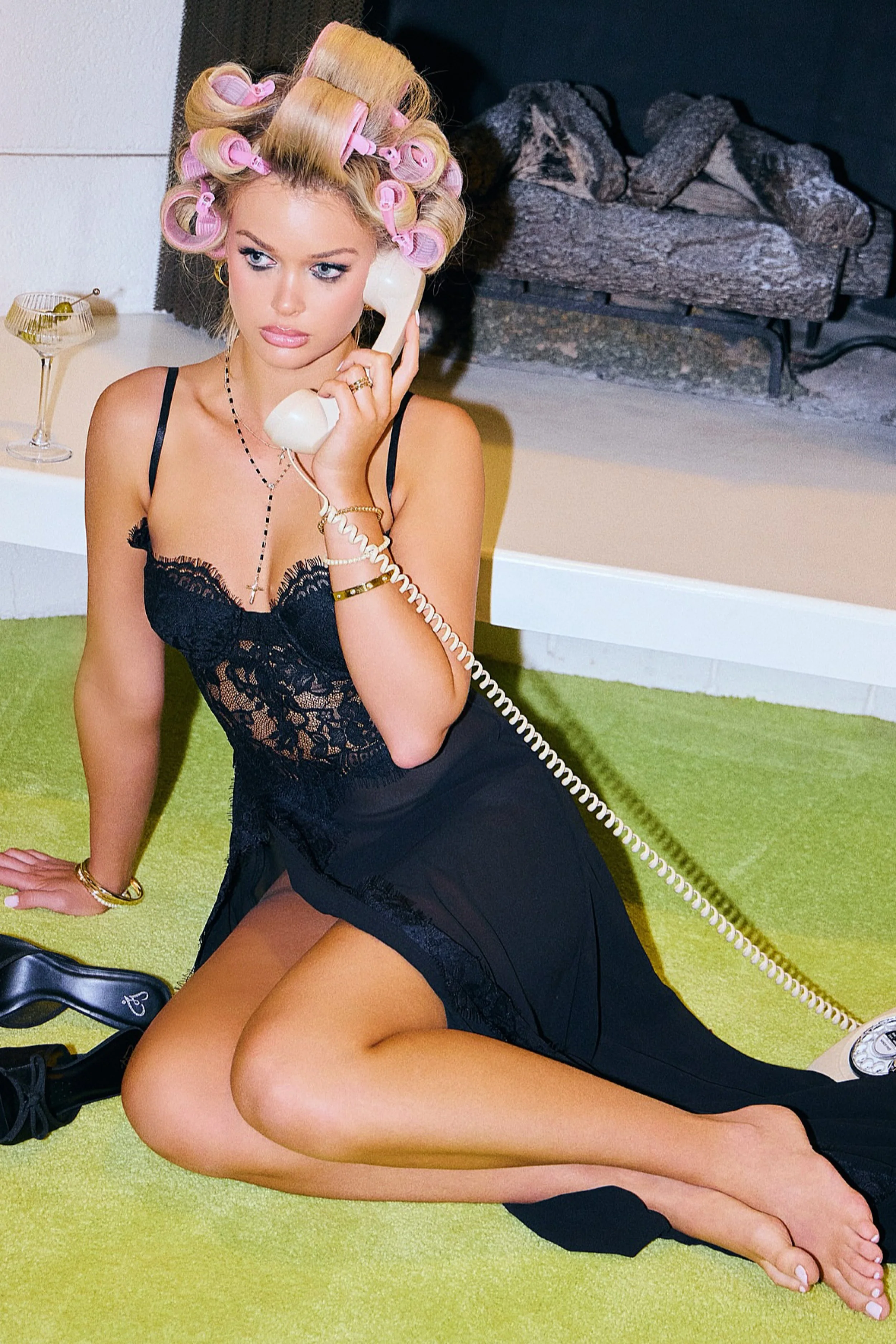
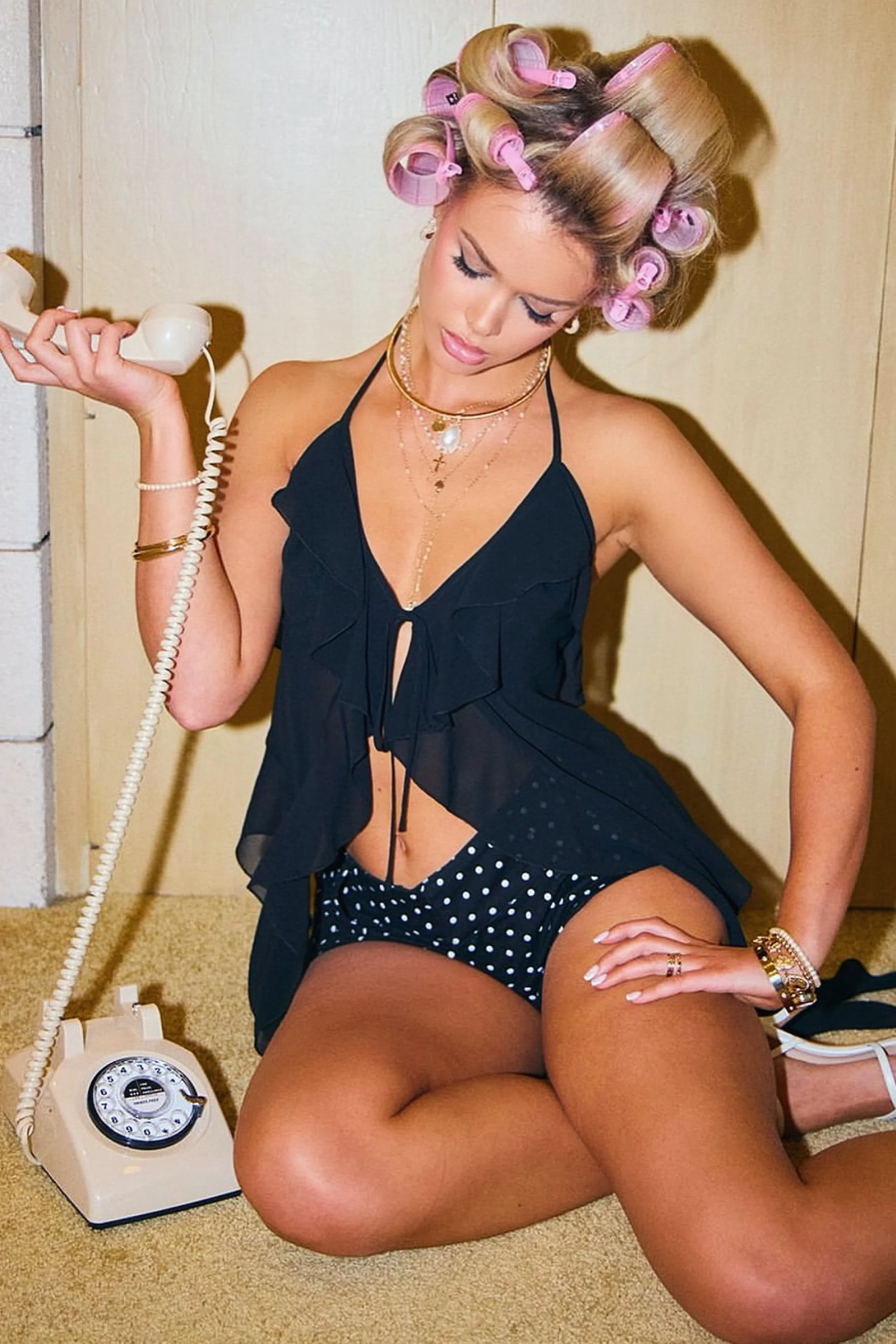
First it’s the curlers—pink, unapologetic, perfectly impractical in the most cinematic way. I’m watching you with that old-Hollywood patience, the kind that says glamour is a process, not a switch. You’re in black lace that doesn’t shout, it hums: delicate edges, shadowy patterning, a silhouette that looks like it was designed to be remembered. The telephone cord coils like a flirtation itself—retro, spiraled, a little dramatic—and you hold the receiver to your ear as if you’re deciding whether the world deserves your voice right now. I shouldn’t be jealous of a rotary phone, but here we are.
And that glass in your hand—something sharp and pale and sparkling—turns the moment into a confession. The rim catches the light. Your jewelry catches the rest of it. Gold at the wrist, a glint at the neck, tiny punctuation marks against the black lace. You’re not “styled,” you’re curated. You look like you could turn a mundane sentence into a headline just by blinking slowly and letting the silence do the talking.
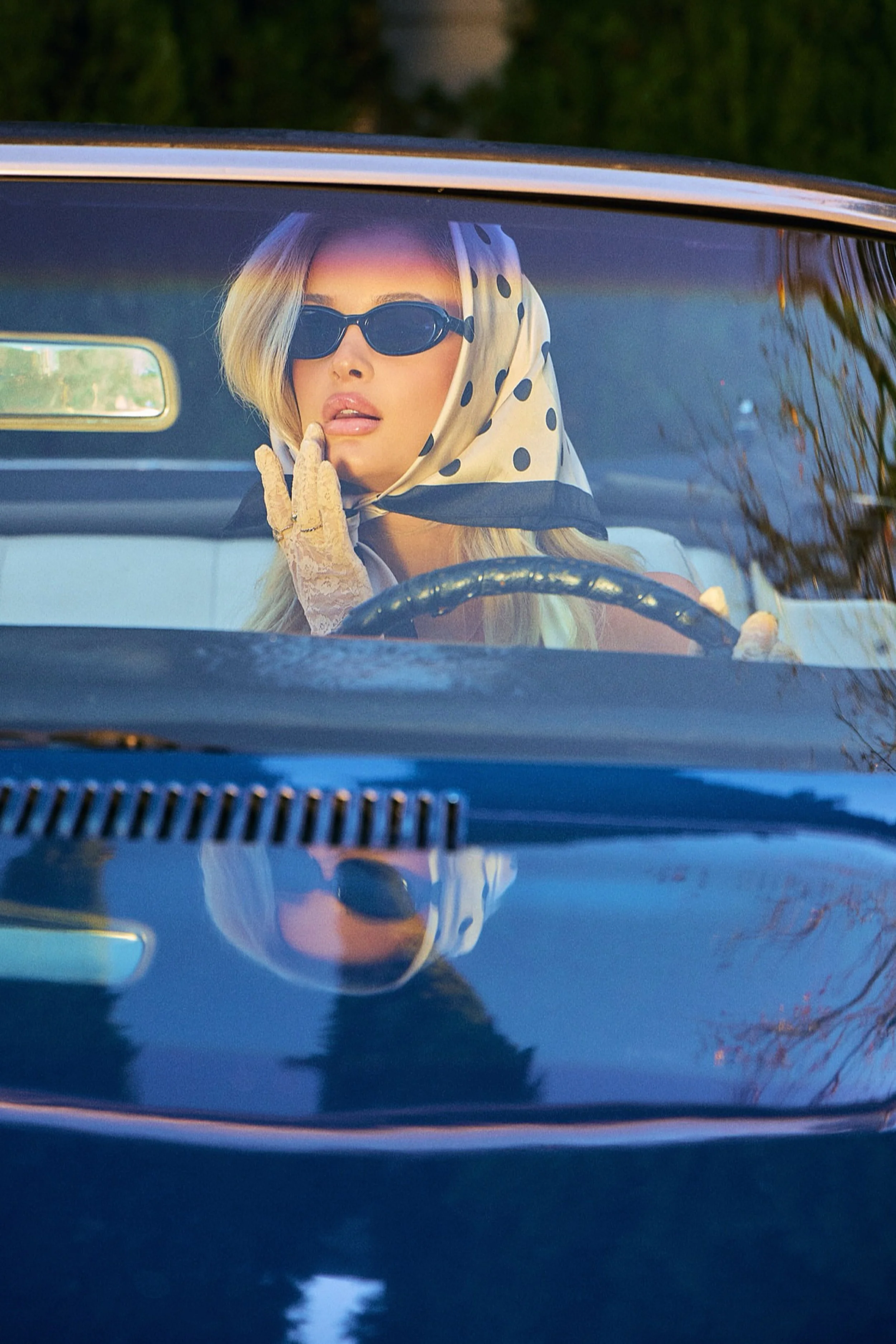
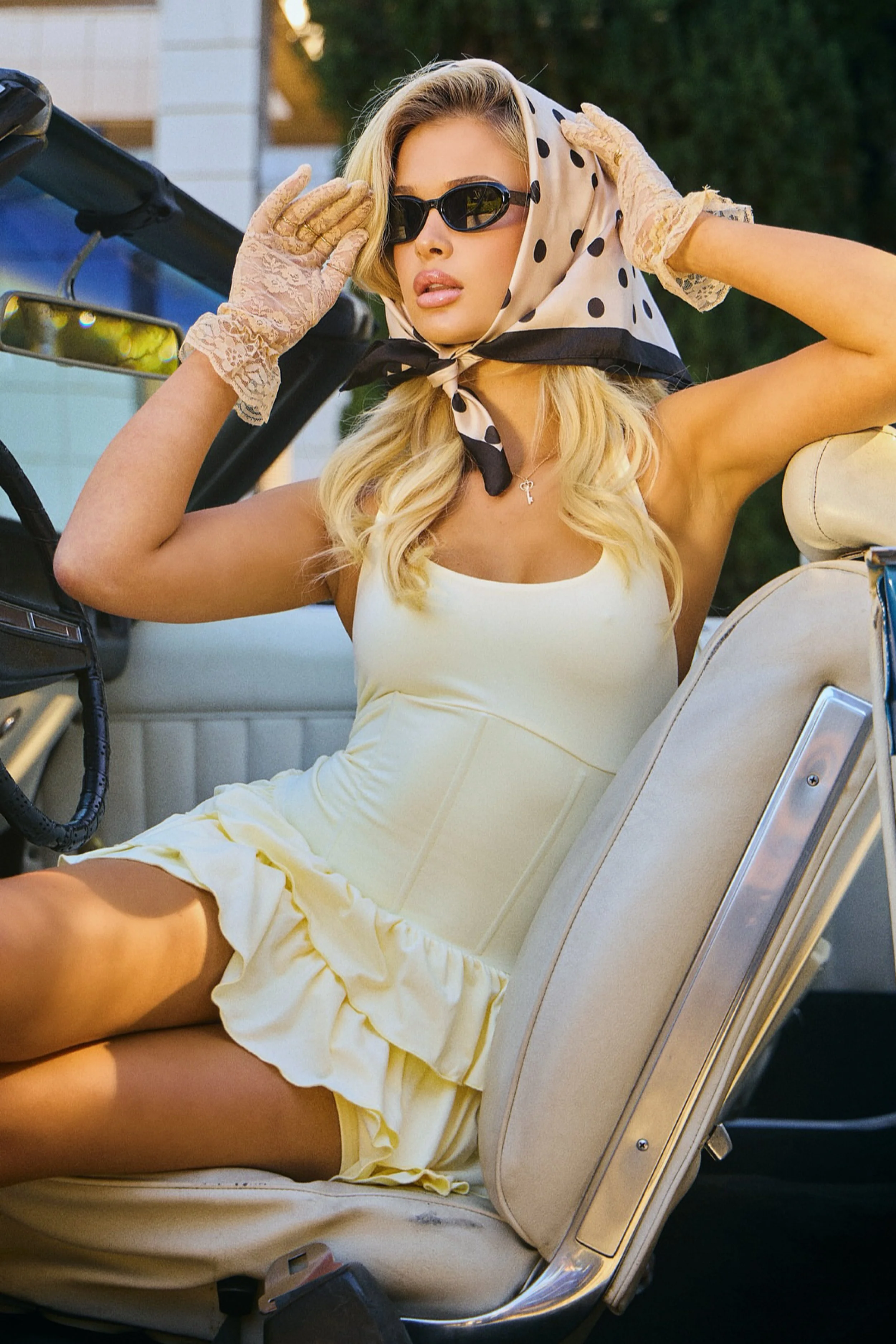
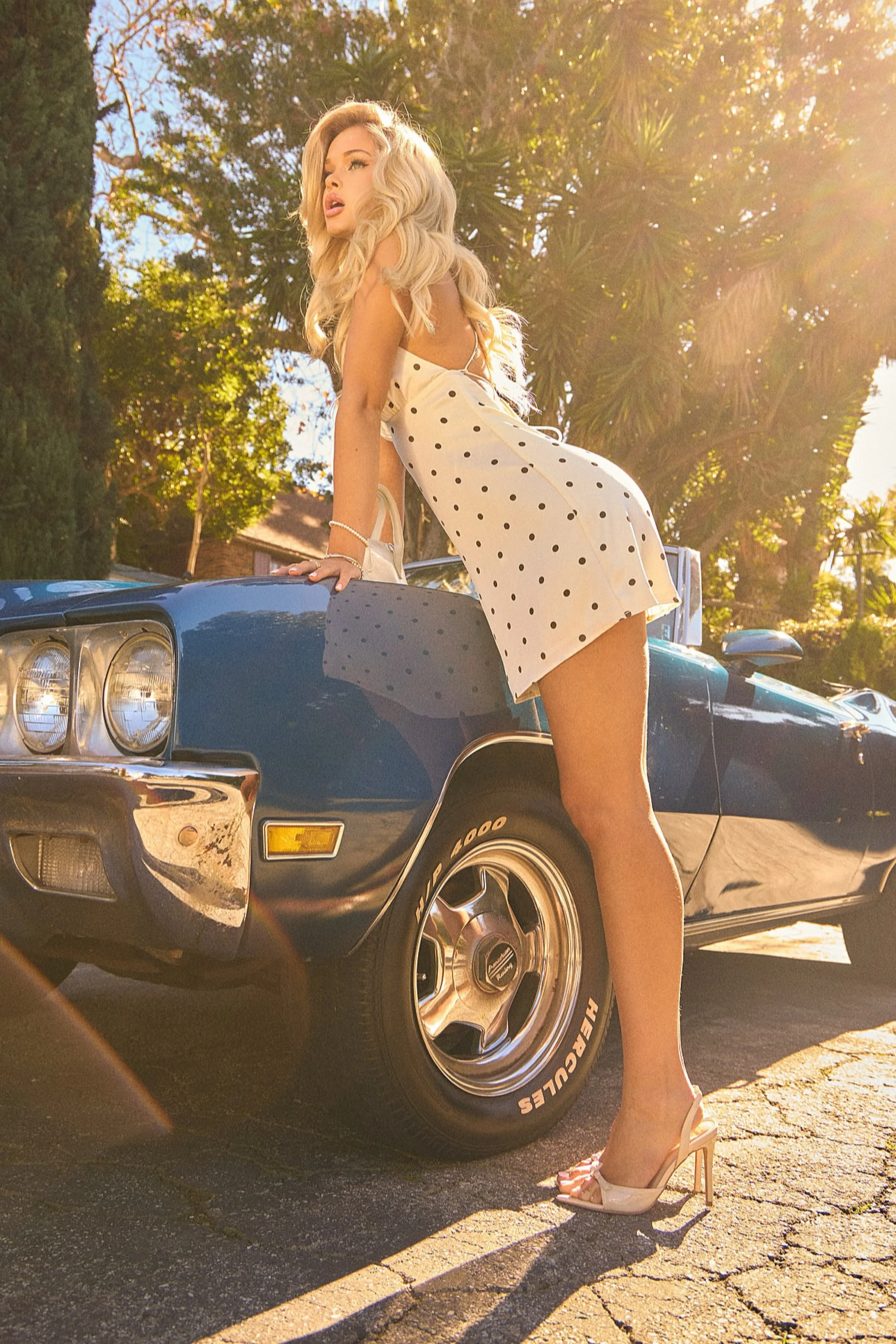
Then the scene shifts, and I follow because of course I do. Now you’re behind a windshield, the world tinted and dreamy, and you’re wearing that polka-dot scarf like it’s a signature. Sunglasses, sleek and knowing, set low enough to suggest you can see everything. Lace gloves make your hands look like they’re dressed for a secret. You touch your lips in a way that feels like a plot twist—soft, deliberate, the kind of gesture that makes me think you’re not escaping the day so much as editing it. If anyone asks, I’ll say I’m just admiring the styling. If I’m being honest, I’m admiring the way you turn “going somewhere” into a whole philosophy.
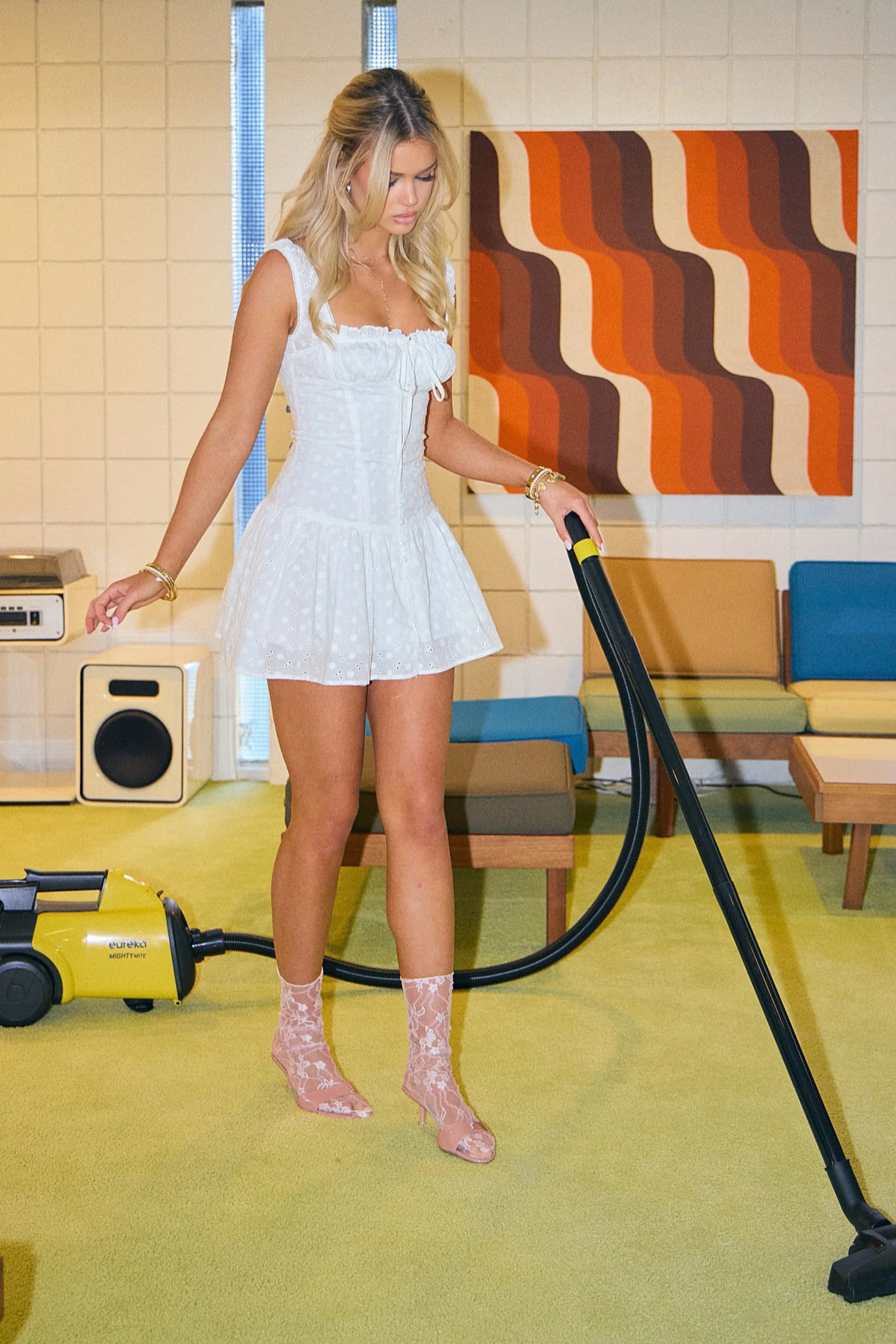
There’s a push-pull to this set that I can’t stop savoring: domestic details made decadent, the familiar made cinematic. You float through a honey-gold interior that feels like a warm record crackle—mid-century lines, glossy surfaces, the kind of space that looks best when someone like you gives it a little trouble. You lean in a doorway with the phone again, and I swear the air changes. The cord drapes, the receiver hangs, and your posture says you’re not waiting on anyone—you’re letting them wait on you. That’s the difference. That’s always the difference with you.
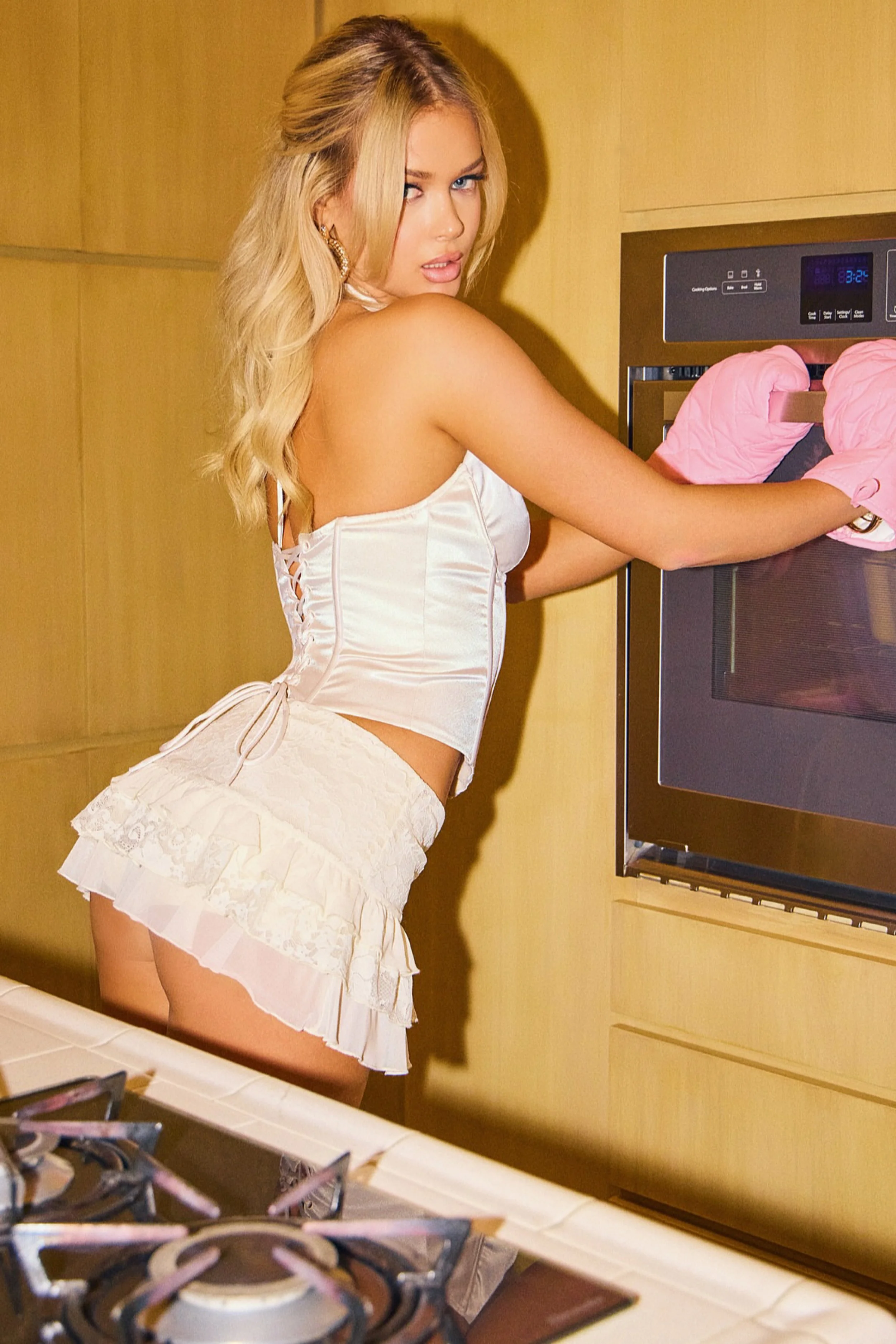
And just when I think you’ll stay in noir, you pivot into something lighter—white satin, laced tight in back like a ribbon pulled with intention. The corset top catches the warm light and throws it back softer, sweeter. You’re at an oven with pink mitts, which is almost funny until you make it look like a fashion statement. I watch you reach in with that elegant practicality, and I’m struck by the whole contradiction: you’re styled like a daydream, but you move like you know exactly where everything is. It’s not playacting. It’s command—wrapped in softness, tied in bows, delivered with a look that says, “I can be delicate and still be the one in charge.”
Then comes the ruffle—little layers, little flirtations, a skirt that moves like it has its own opinions. The vibe is sugar with a razor edge: sweet silhouette, sharp confidence. You angle your body and the camera catches it—how you can make the simplest pose feel like a dare. Not crude, not loud. Just unmistakably alive. I can practically hear the click of heels on tile, the whisper of fabric, the quiet certainty of you owning your space.
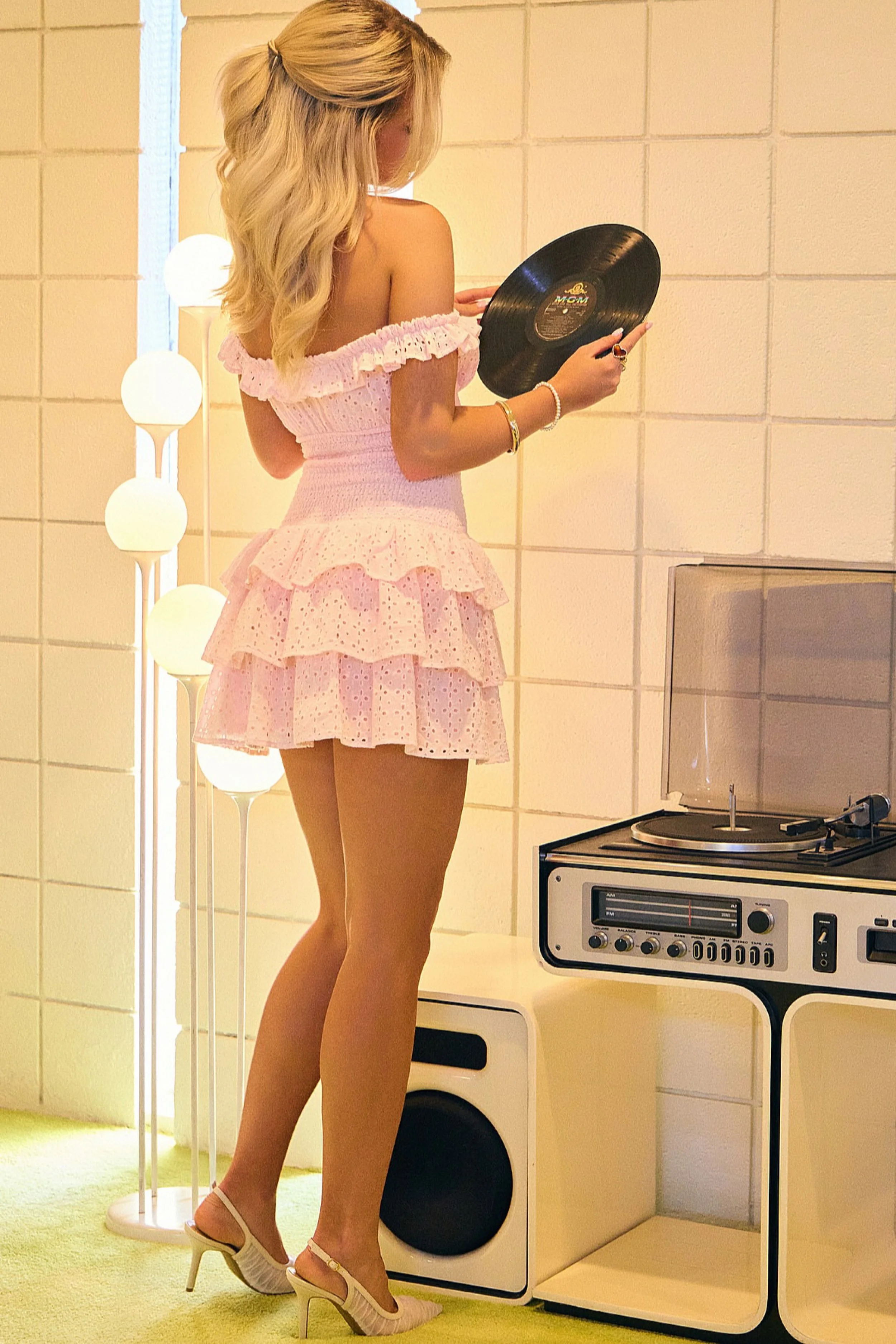
You turn again and suddenly you’re in pink—an off-shoulder ruffle moment that belongs to a pastel dream. You hold a vinyl record like it’s a love letter you’re not sure you want to send. The room feels like music even before the needle drops. I’m watching from the edge of the scene, the way a reader watches a character who’s about to do something unforgettable. You tilt your head, hair falling in soft waves, earrings catching a small sunbeam, and I’m absurdly grateful that “pretty” isn’t enough to describe you. Pretty is passive. You are not.
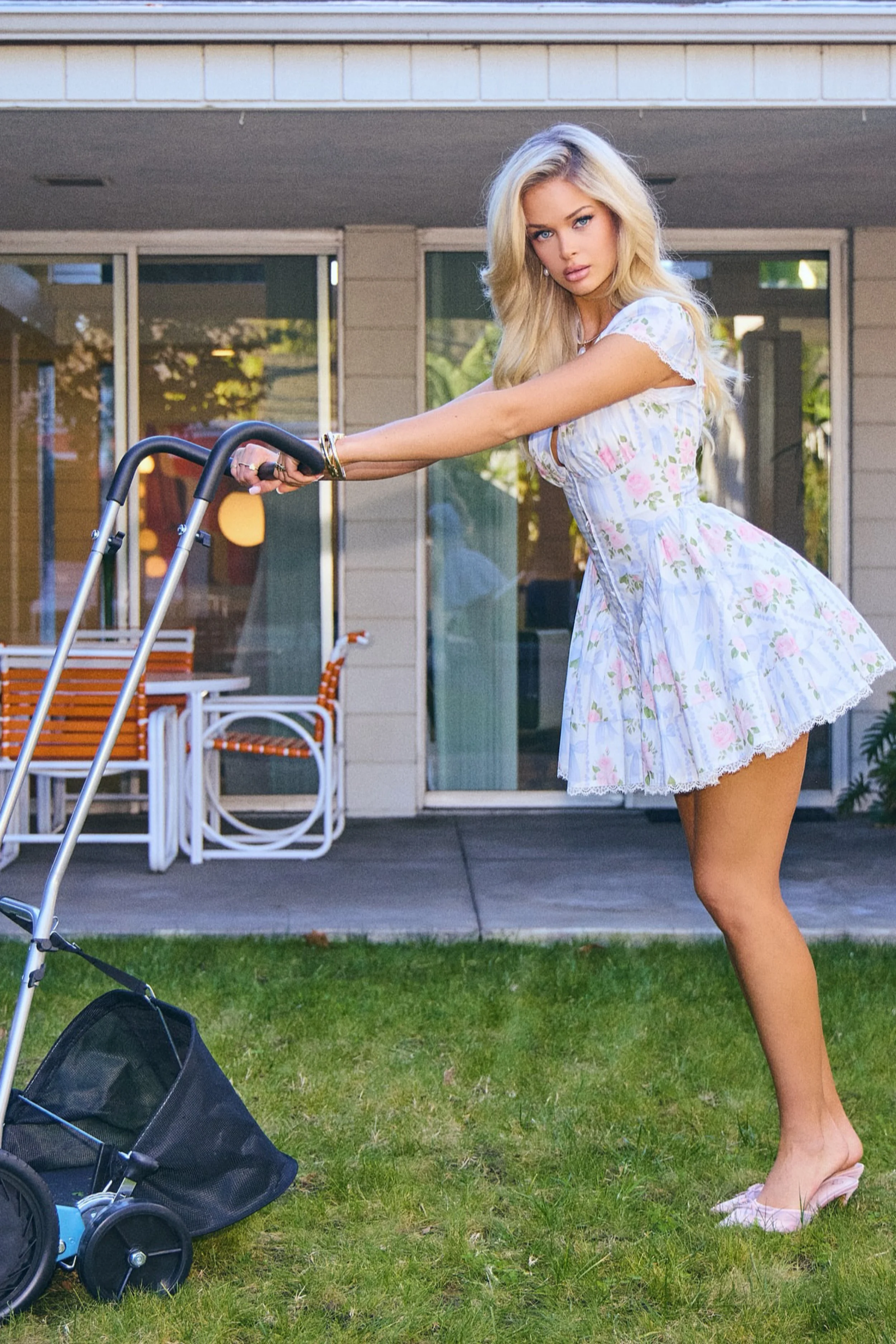
Outside, the story brightens into suburbia on purpose—white floral mini, a lawn mower like a prop you’re about to steal the spotlight from. You lean into the handle with that confident extension of your arms, the skirt flaring just enough to imply movement, and I’m laughing quietly because you’ve somehow made yard work look like a runway rehearsal. The house behind you sits politely in the background, but you’re the architecture. You’re the reason the grass looks greener. You’re the reason the afternoon feels like it’s auditioning.
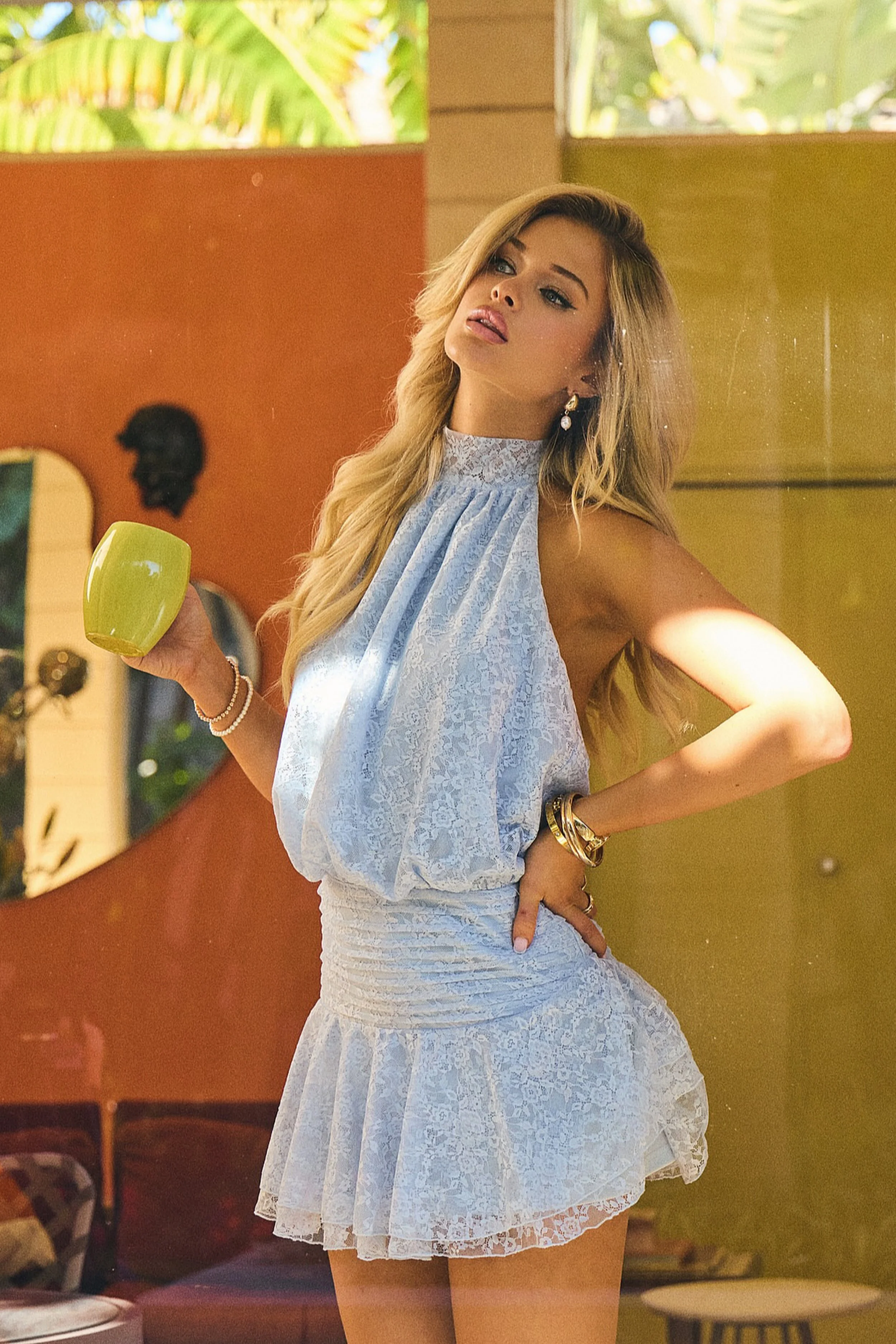
Another beat: blue lace, high neck, a soft vintage shape that turns you into a living porcelain figurine—except you’re too modern for that. You hold a mug like it’s part of the styling (because it is), and the light filters through leaves and dust motes and whatever else the universe throws in when it’s trying to impress you. The color palette swings between buttercream walls and cool lace, between warm gold and gentle pastels, and you stitch it all together with the simplest thing: presence.
And through it all—curlers, scarves, corsetry, lace—there’s this delicious tension I can’t stop noticing. You’re playful, but never unserious. You’re cute, but never small. You let the set flirt with you, but you’re the one doing the directing. Sometimes you catch it in the corner of the frame—the camera, the viewer, me—like you know you’re being watched and you’re choosing exactly what we’re allowed to keep. That’s the true power move: not the reveal, but the restraint.
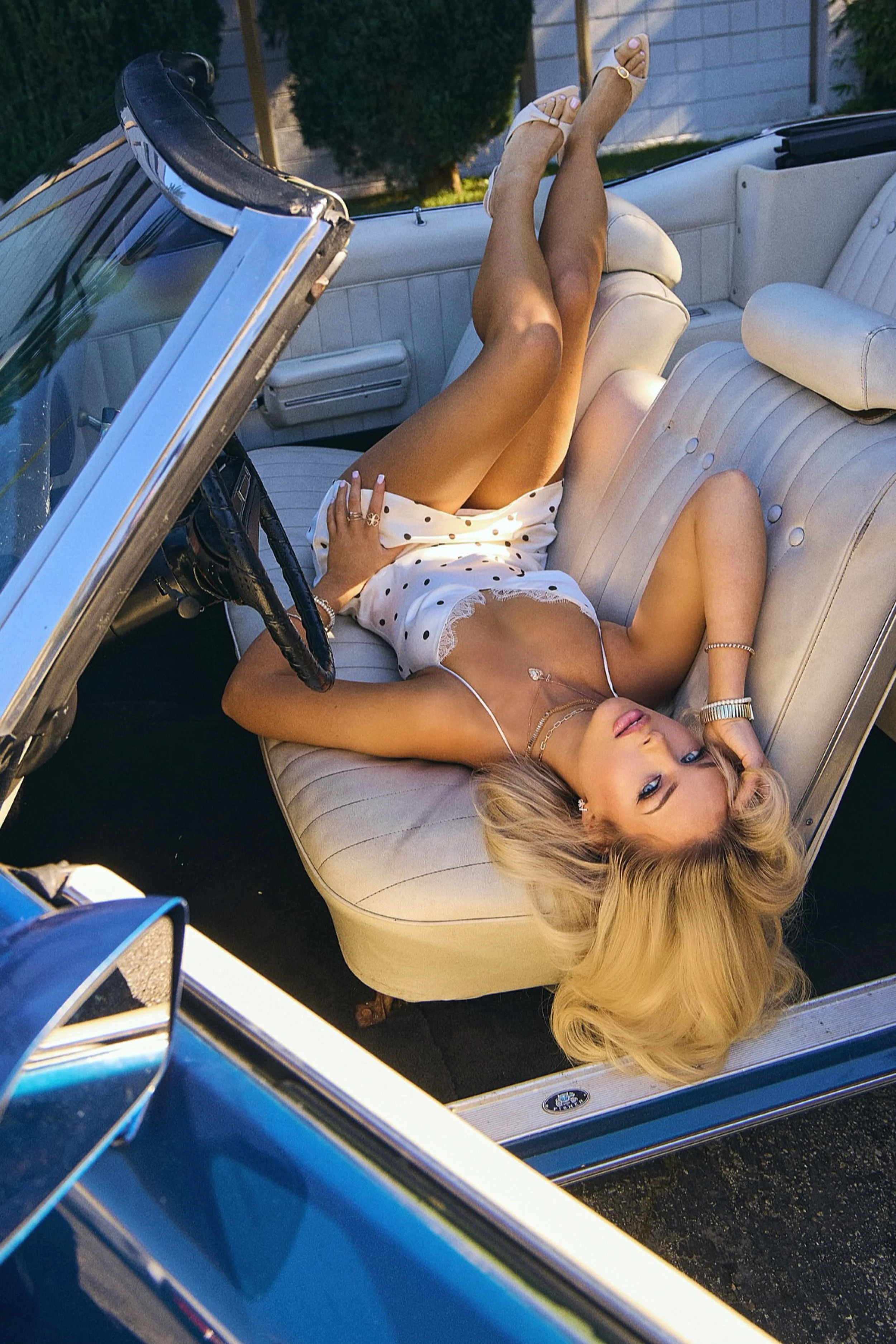
By the end, I’m left with a handful of images that feel like scenes from the same dream. You with the phone, deciding if you’ll answer. You in the car, scarf tied neat, eyes hidden behind black lenses, looking like a secret that knows it’s safe. You in lace and satin, turning “at home” into something editorial. You in florals and ruffles, making the everyday look like it’s been waiting for you to arrive and give it a plot.
And I’ll admit it—my favorite part is the way you never ask for attention. You just exist, and the world rearranges itself accordingly. If this is the kind of work you call “new,” Carolina-Marie Robertson, then I’m already hoping for the next scene—because I know you’ll make me chase the light again.
Shop the Look
- Slip into a black lace slip dress — moody, soft, and instant vintage noir.
- Set the mood with pink hair rollers — the glam prep that is the look.
- Bring the drama home with a vintage-style rotary phone — coiled-cord romance, no notes.
- Toast the storyline with coupe cocktail glasses — because every scene deserves a sparkle.
- Tie it on and disappear with a polka dot headscarf — old-money mystery in one knot.
- Go incognito-cool in retro oval sunglasses — windshield-ready and a little dangerous.
- Make every gesture count with lace gloves — delicate texture, cinematic hands.
- Cinch the sweetness with a white satin corset top — bridal-but-make-it-bold.
- Add movement with a ruffle mini skirt — flirty layers that photograph like a dream.
- Float through the frame in an off-shoulder pink ruffle dress — pastel romance with bite.
- Play the soundtrack with a suitcase record player — instant retro atmosphere, anywhere.
- Turn chores into couture with a white floral mini dress — garden-party energy, editorial posture.
Style It With
- Lock the set in place with strong-hold setting spray — because your curls deserve credits.
- Smooth the silhouette with seamless shapewear shorts — invisible support under lace and satin.
- Make necklines behave using fashion tape — tiny strips, big confidence.
- Finish the vintage whisper with pearl jewelry sets — soft glow, classic punctuation.
- Keep the romance practical via lingerie wash bags — protect the lace like it’s a secret.
- Steam the story crisp with a handheld garment steamer — smooth fabric, smoother confidence.
- Add that vintage-leg polish with lace ankle socks — sweet detail, camera-friendly.
- Organize the sparkle with a jewelry organizer tray — so every ring gets its own spotlight.
Closing Note
Carolina-Marie Robertson, if this whole shoot is a phone call, consider me the breath you hear before the line clicks—quiet, thrilled, and absolutely listening. You make lace feel like a headline and curlers feel like couture, and I’m not immune to that kind of power.
So keep the scarf tied, keep the record spinning, keep the ruffles in motion. In my imagined next scene, I’m still trailing your silhouette through honey-gold light—just trying to catch up to the way you turn “at home” into a full cinematic event.