Kylie Jenner and the Silver-String Spell That Turns a Room into a Spotlight
The Story
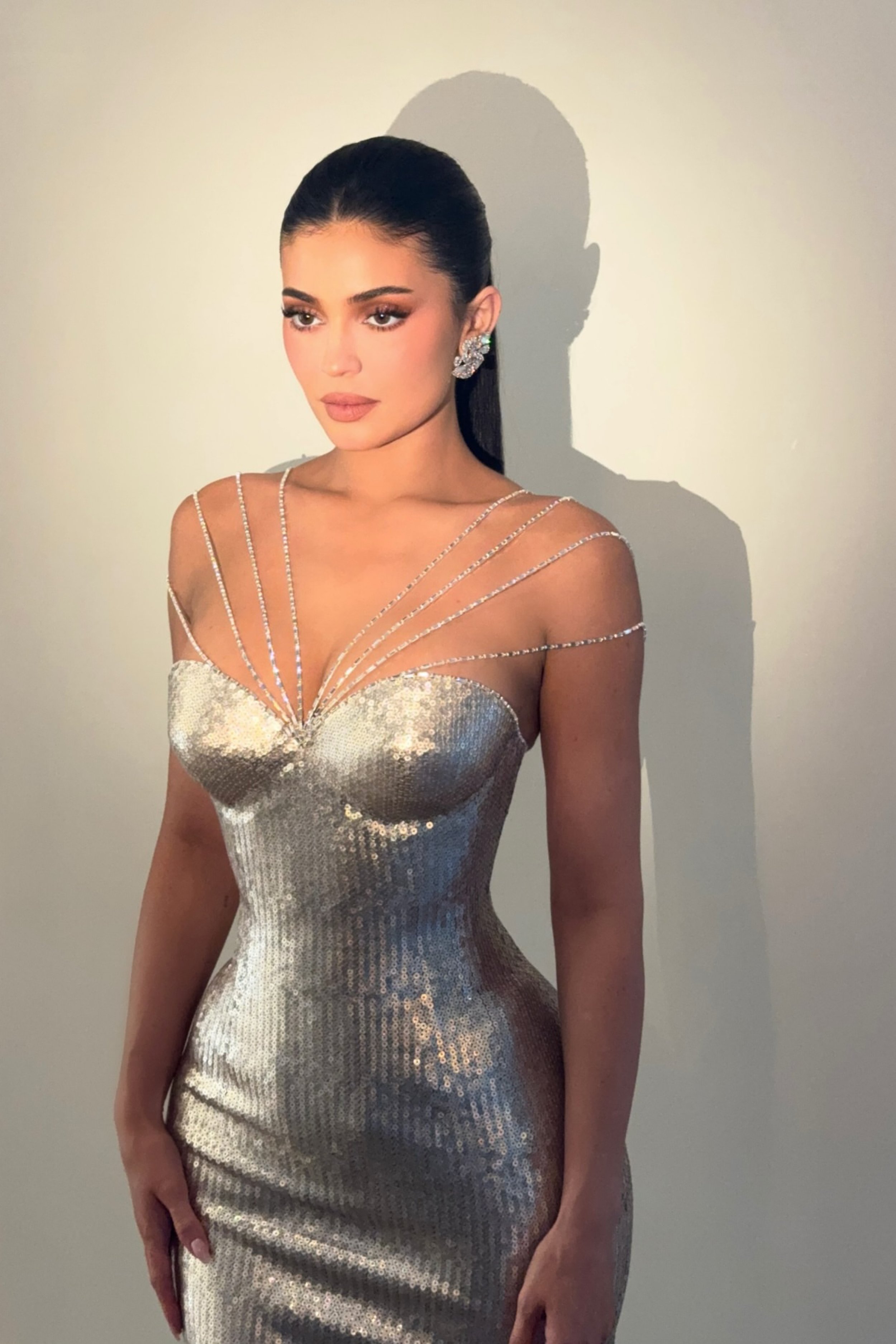
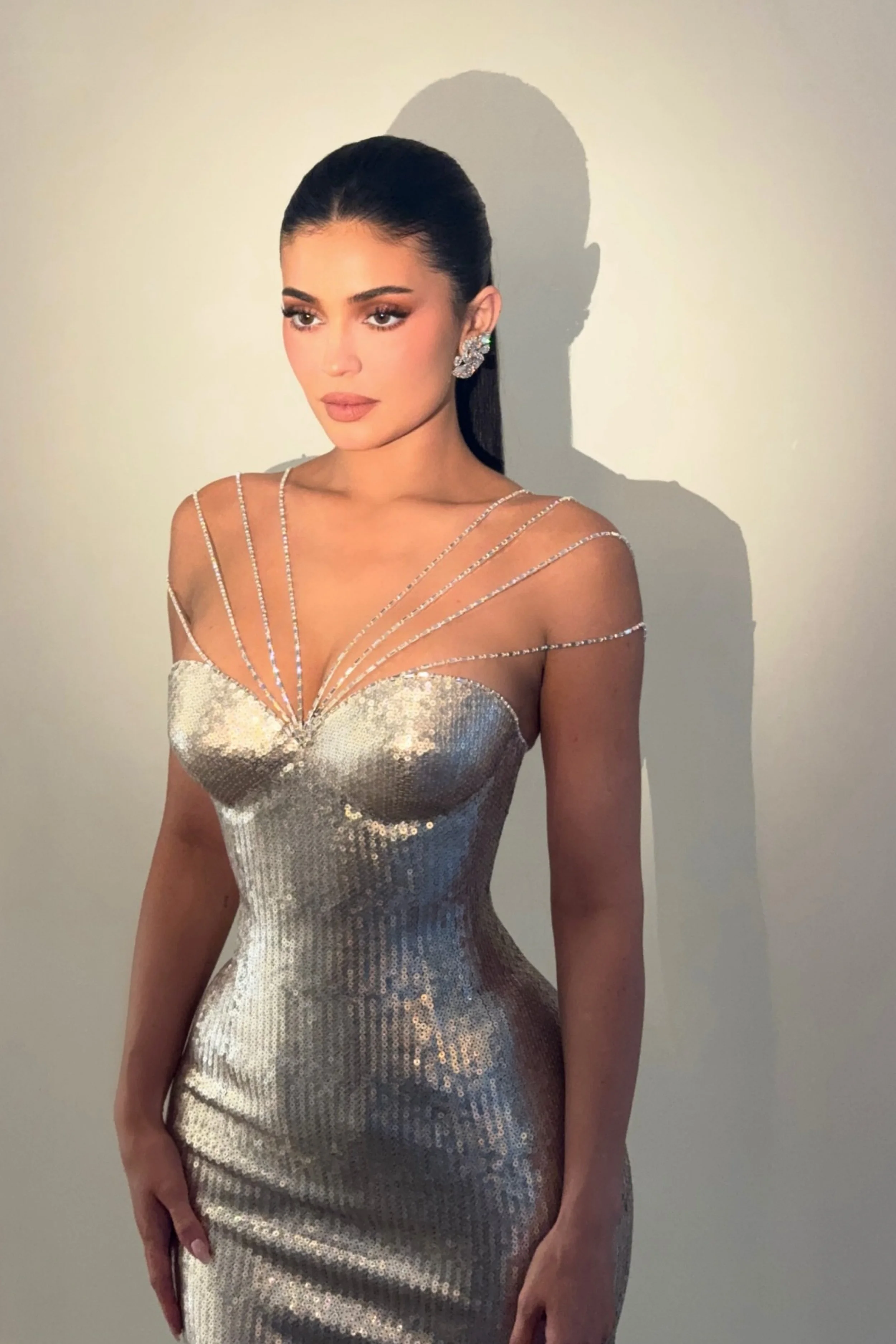
Kylie Jenner, you don’t walk into a frame—you tune it. The light finds you like it’s been practicing, and suddenly the plainest wall becomes a stage with a pulse. In this imagined moment, the world is stripped down to essentials: a clean backdrop, a sharp shadow, and that liquid-metal gown clinging to you like it was poured rather than stitched. I watch the sequins behave like tiny mirrors, collecting every flash, every breath, every second of attention you pretend not to notice. Pretend. You’re very good at that.
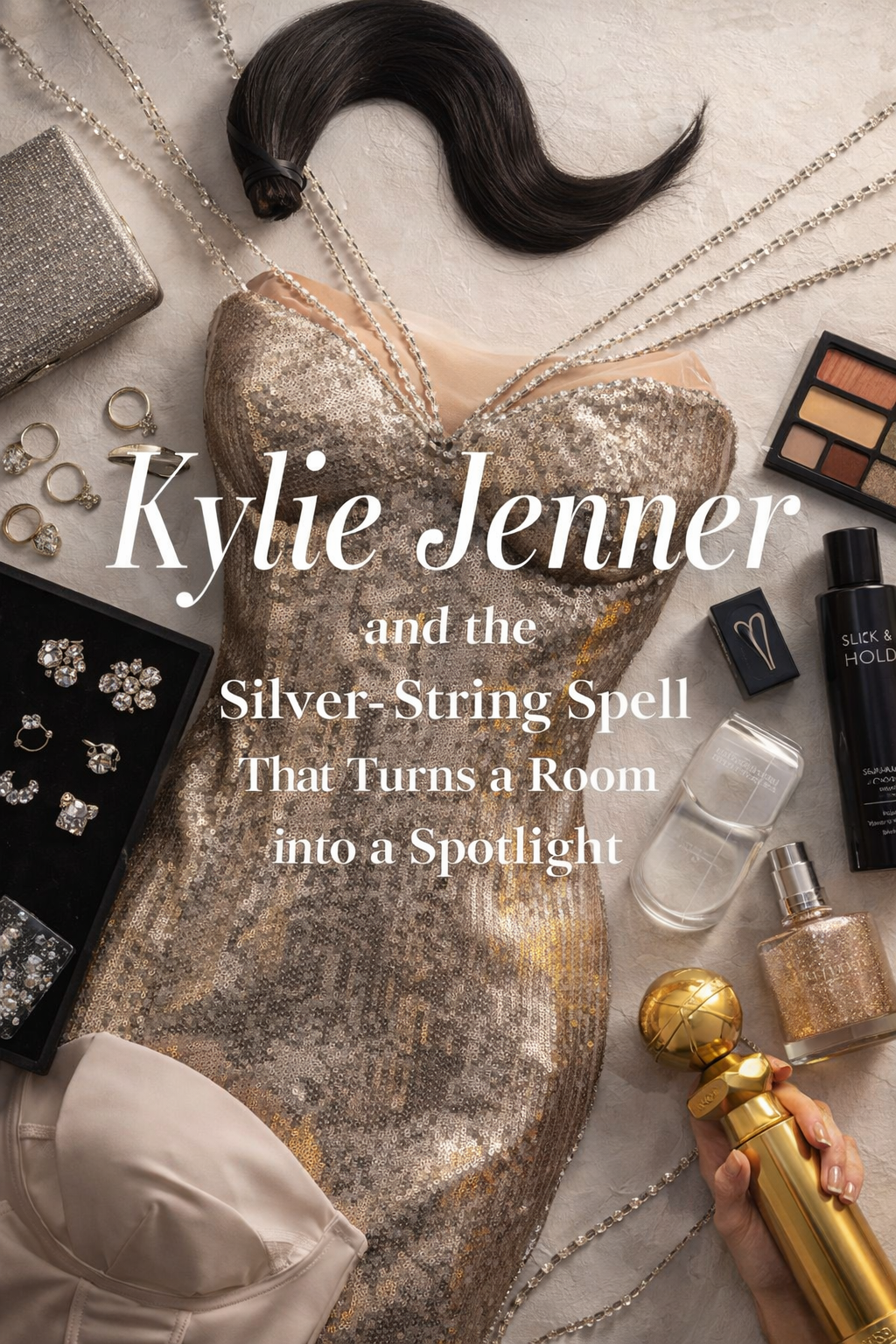
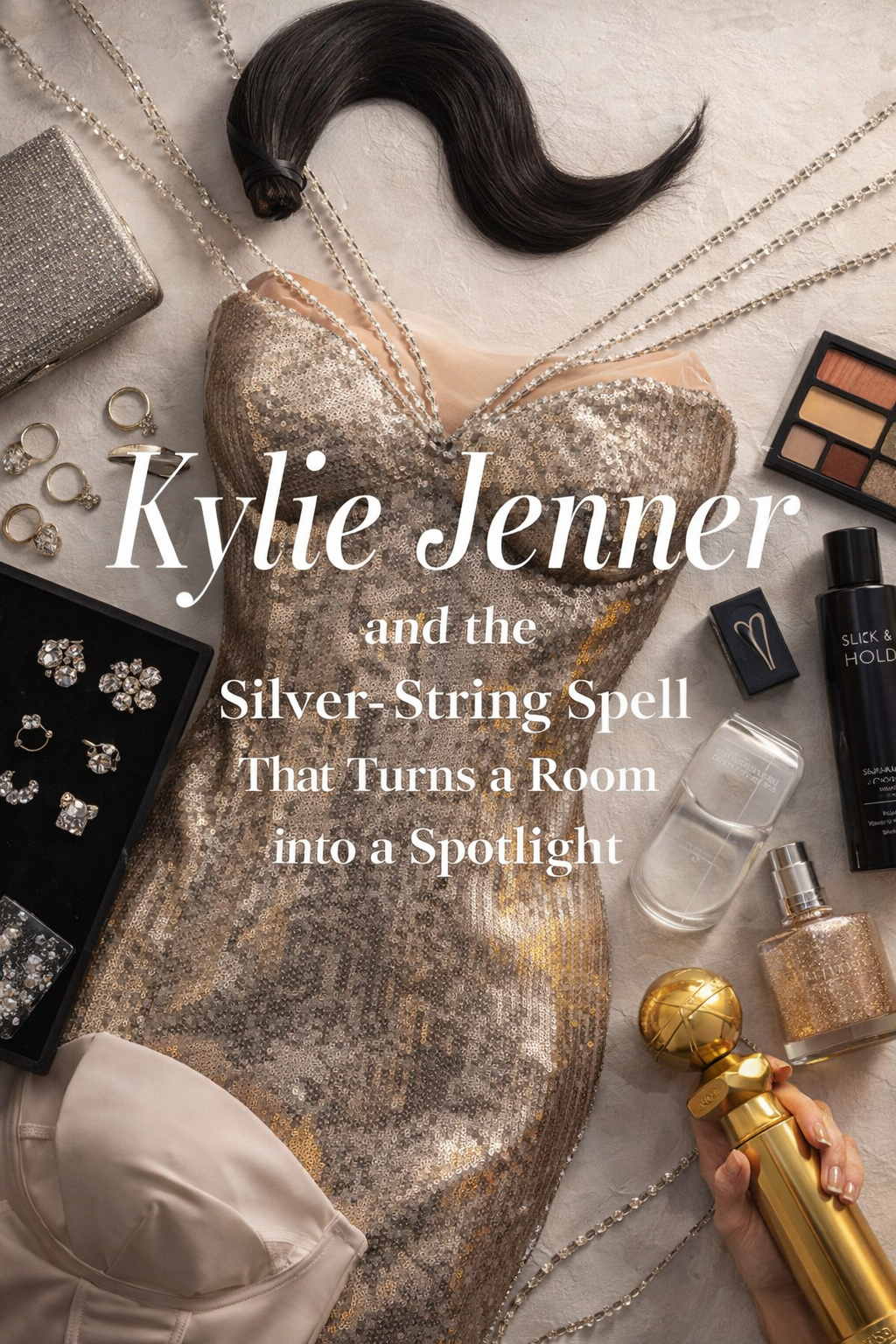
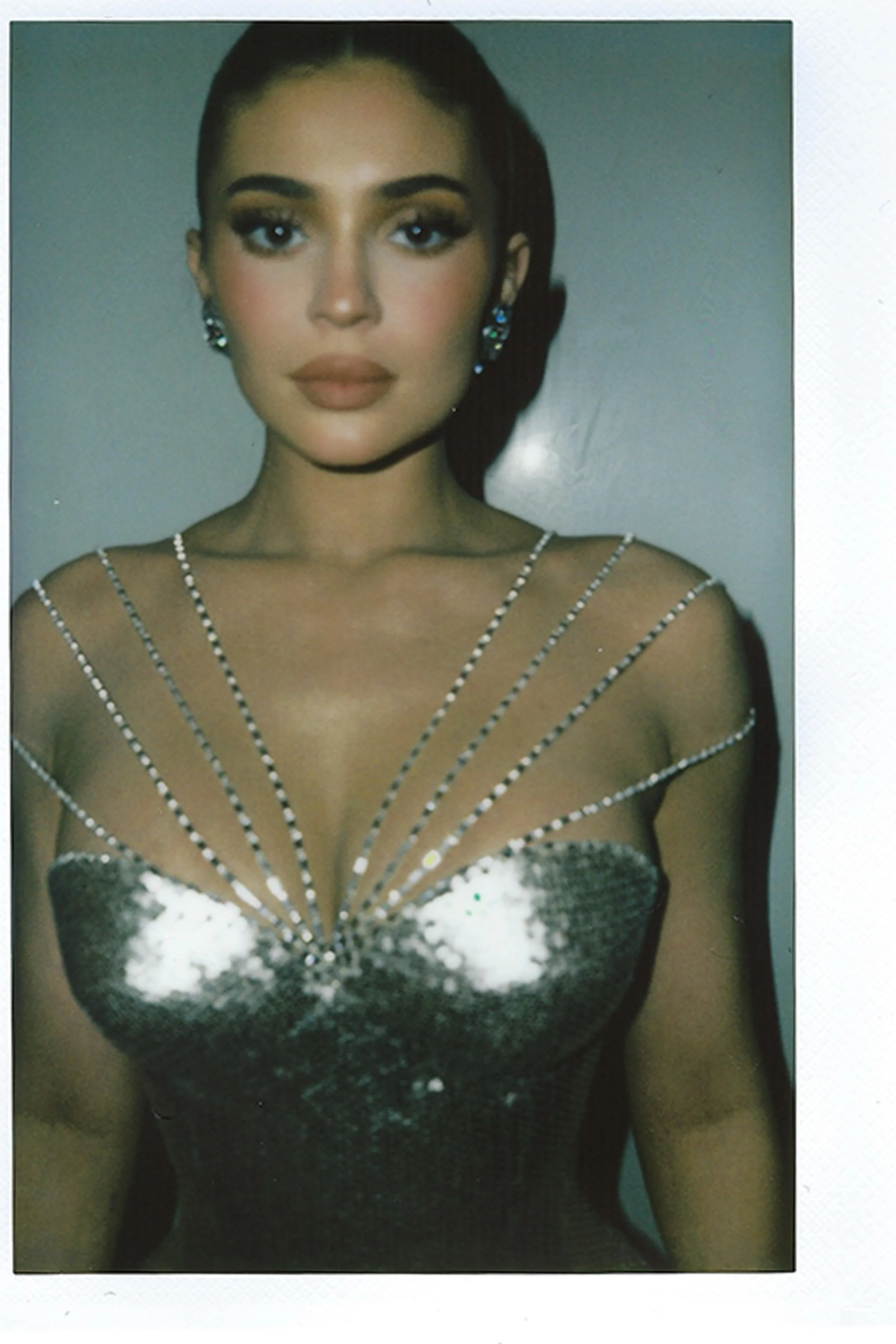
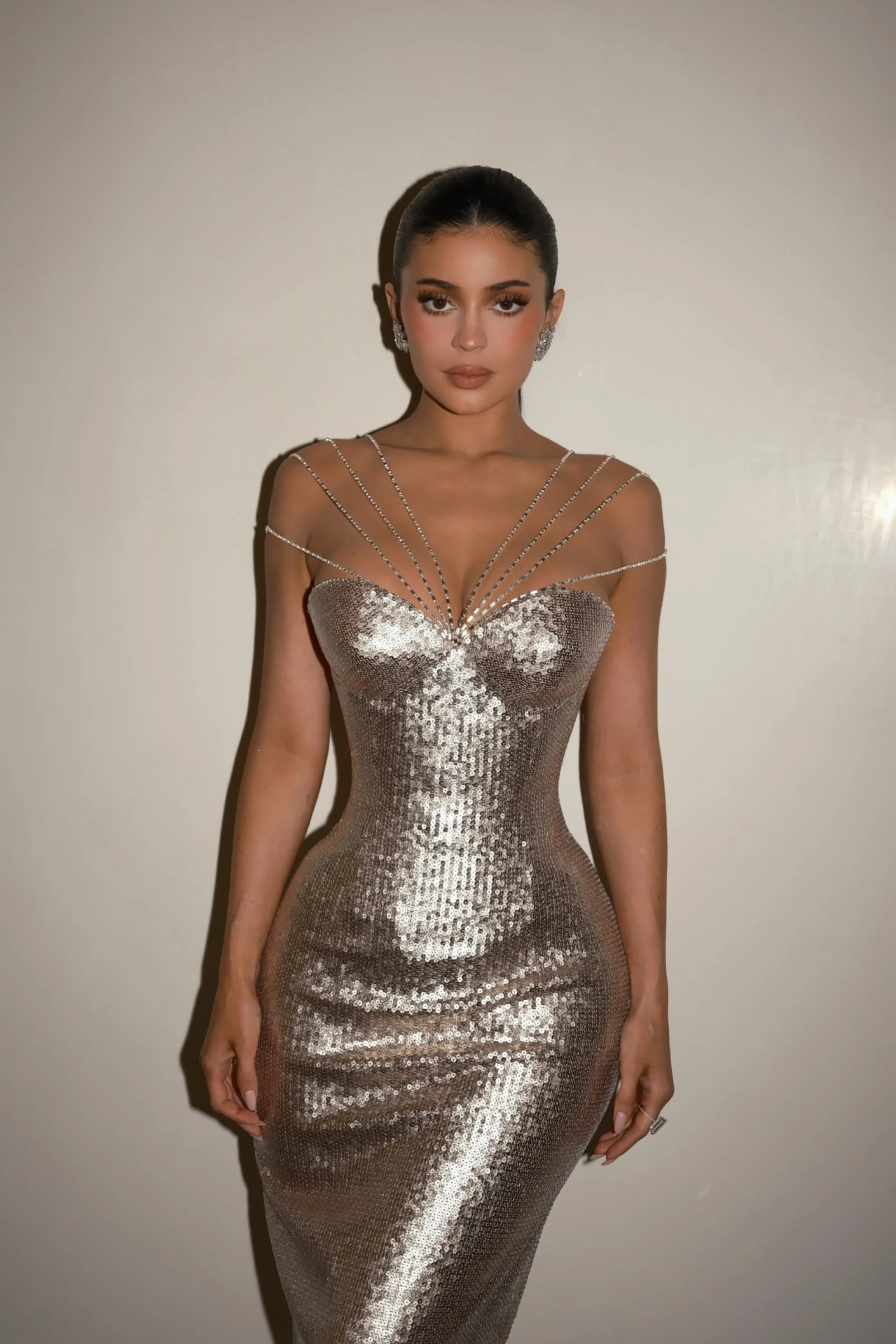
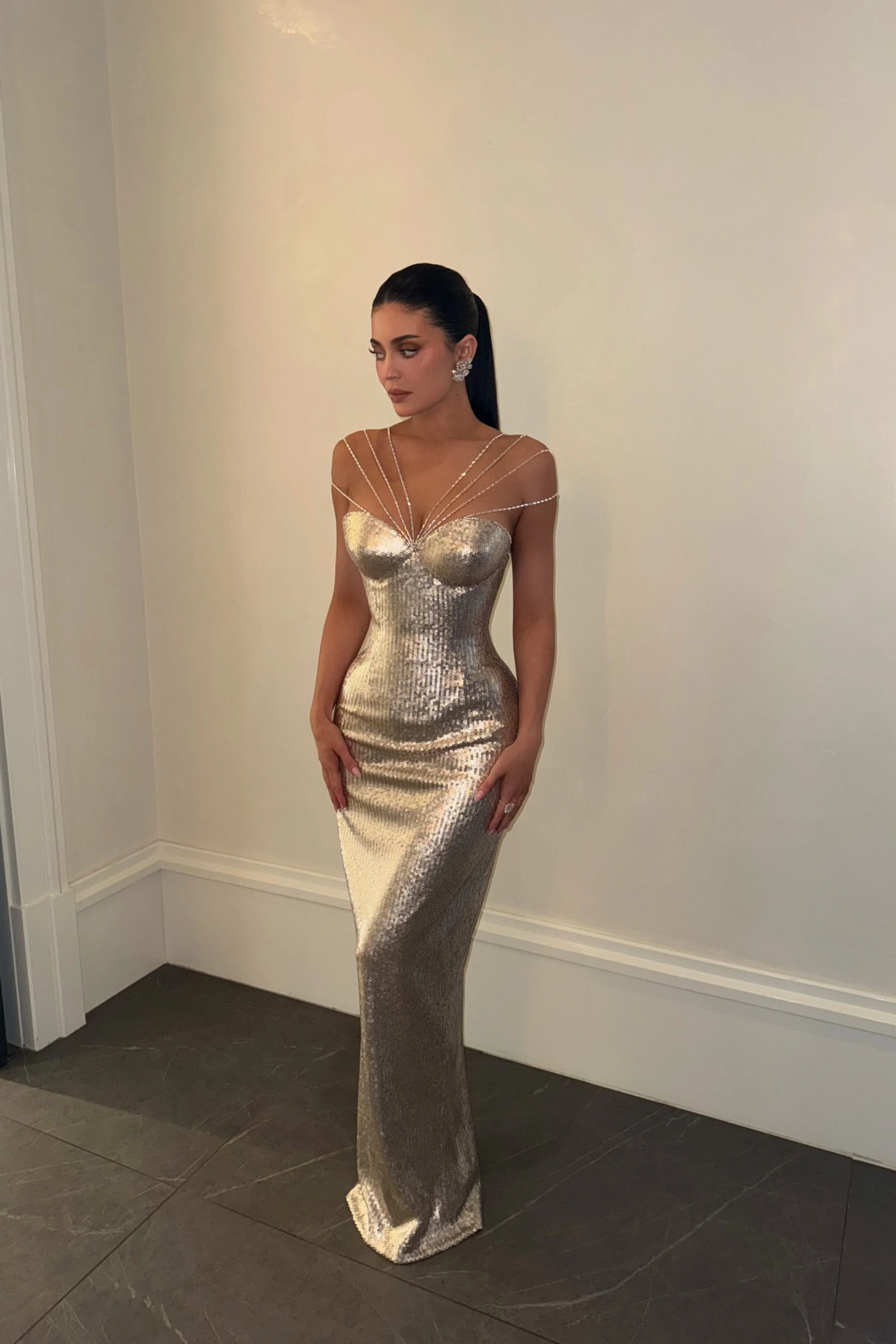
The dress does the kind of talking that never raises its voice. It’s a strapless corset silhouette—structured through the bodice, impossibly sleek through the hips—then it lengthens into a column that reads “old Hollywood” but speaks in a modern dialect: silver, precise, and slightly dangerous. And then there are the crystal strands—those deliberate lines that sweep from the neckline across your shoulders like a constellation mapped by someone who knows exactly where they want my eyes to land. It’s flirtation, but architectural. It’s glamour, but with a blueprint.
I’m taken by the way you hold still without ever feeling static. The slick ponytail is pure control—glossed, tight, intentional—and it makes the whole look feel sharpened. Your makeup is the same kind of discipline: sculpted warmth in the cheeks, smoky depth at the eyes, lashes that make your stare feel like it’s edited in post-production, and a soft nude lip that keeps everything from tipping into costume. You’re not wearing “sparkle.” You’re wearing restraint with a shine finish.
The first image is quiet-loud. A bare wall behind you, and your shadow thrown over it like a second outfit—darker, taller, a silhouette that proves the lighting is obeying you. You angle slightly away, gaze off-frame like you’re listening to something only you can hear. I’m not supposed to be able to tell when someone is choosing their moment—but you make the choice visible. It’s not arrogance. It’s craft. And I’m helpless for craft.
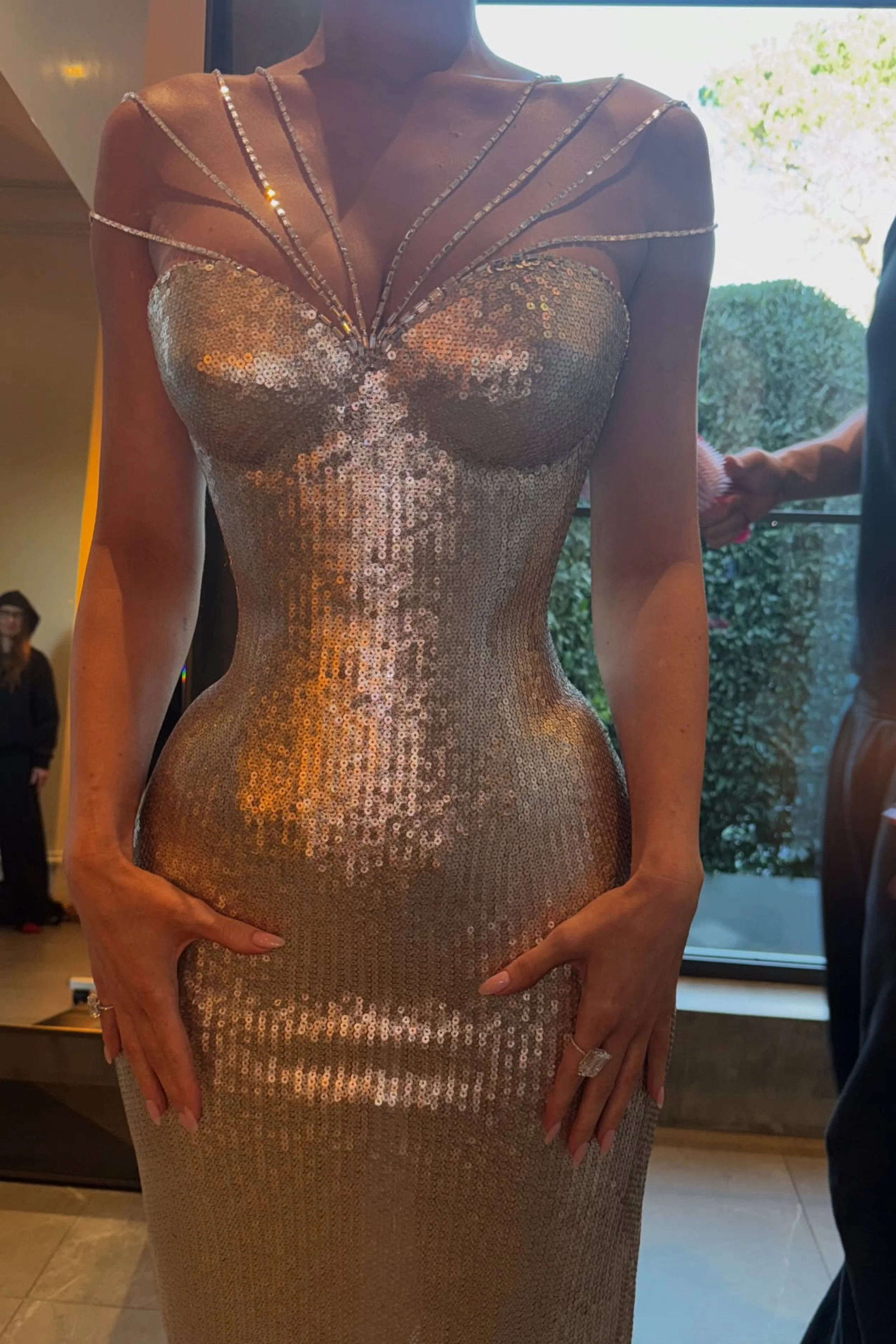
Then the camera moves closer, and the gown’s texture becomes its own language—tiny circles of shimmer, sequins set in dense rows like chainmail made for a ballroom. The bodice cups and supports without fuss, and those crystal strands, those delicate tethers, catch the light in thin strokes. They look like jewelry pretending to be fabric, or fabric pretending to be jewelry. I can’t decide which is more your style: the illusion, or the certainty underneath it.
You stand front-facing in one frame, and it hits—this isn’t just a look, it’s a posture. Shoulders open, arms relaxed, the line from collarbone to waist clean and confident. The dress doesn’t fight you; it follows. Even the shadow behind you feels intentional, like a styled accessory. I imagine you in a hallway just before the door opens—an inhale, a micro-check in a mirror, the kind of stillness that isn’t calm so much as charged. The room doesn’t know it yet, but it’s about to be rearranged.
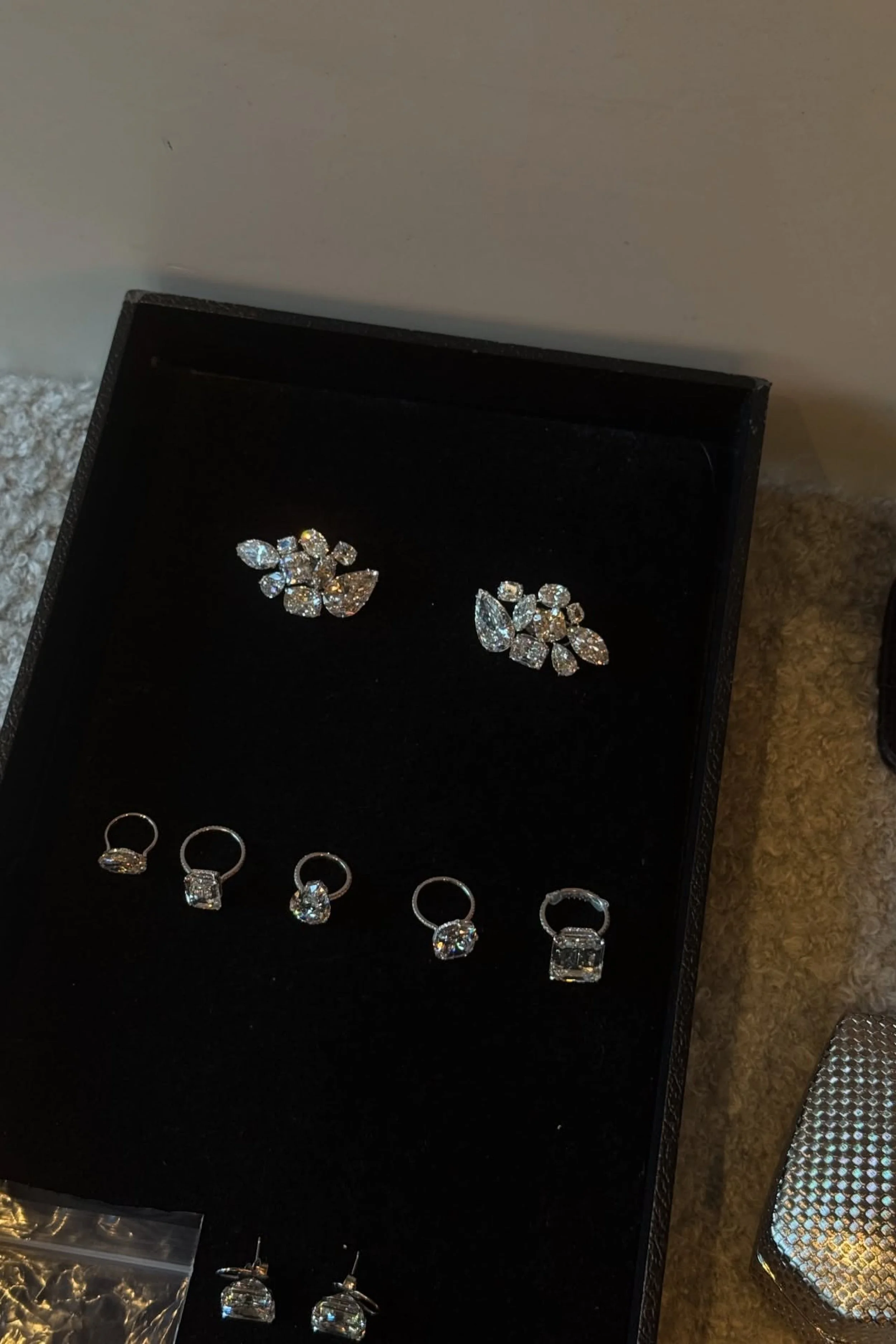
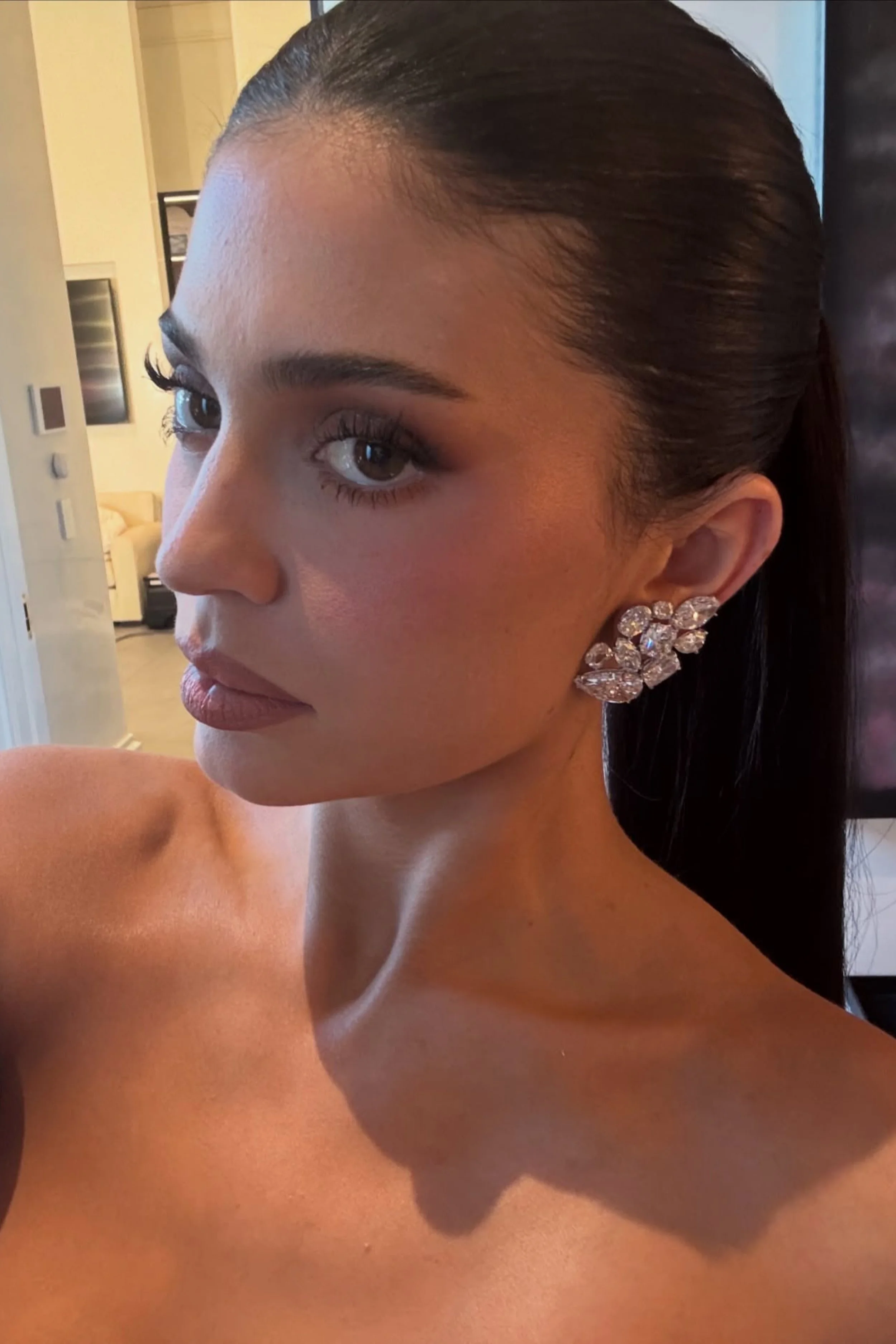
And then there’s the jewelry—because of course there’s jewelry, but not in a “pile it on” way. Your earrings are a clustered bloom of stones, the kind of sparkle that reads icy and expensive without needing to shout. In another image, I catch a tray laid out like an altar: pairs of earrings, rings lined up with precision, each piece catching the light like it’s flirting back. It’s a backstage glimpse that makes the glamour feel earned—selection, curation, the quiet ceremony of deciding what gets to join you in public. Whoever is reading this can almost hear the soft clink of metal on velvet, that tiny sound that means something important is being assembled.
The scene shifts again—now the dress is no longer alone against a blank wall; it’s in motion, in a room with people, with a window, with the little hum of a gathering. The sequins warm under indoor light, reflecting amber and gold instead of just silver. The gown becomes softer without losing its shape, like it’s adapting to the environment the way you do. Your hands settle near your hips, fingers relaxed, nails pale and neat, and I notice a ring that flashes in a way that feels… deliberate. Not “look at this.” More like “if you notice, you’re paying attention.” I am paying attention.
There’s a full-length moment where you step back into the corner of a room, and the dress reads like a sculpture from a distance: the long column line, the corset waist, the subtle flare near the hem that moves like a whisper. The wall behind you is pale, the floor dark, and the contrast frames you the way a gallery frames a piece it expects people to crowd around. You look sideways, almost bored, which is unfair—because the look itself is doing acrobatics. You’re giving discipline and glitter at the same time, and I’m trying not to fall for the contradiction like a rookie.
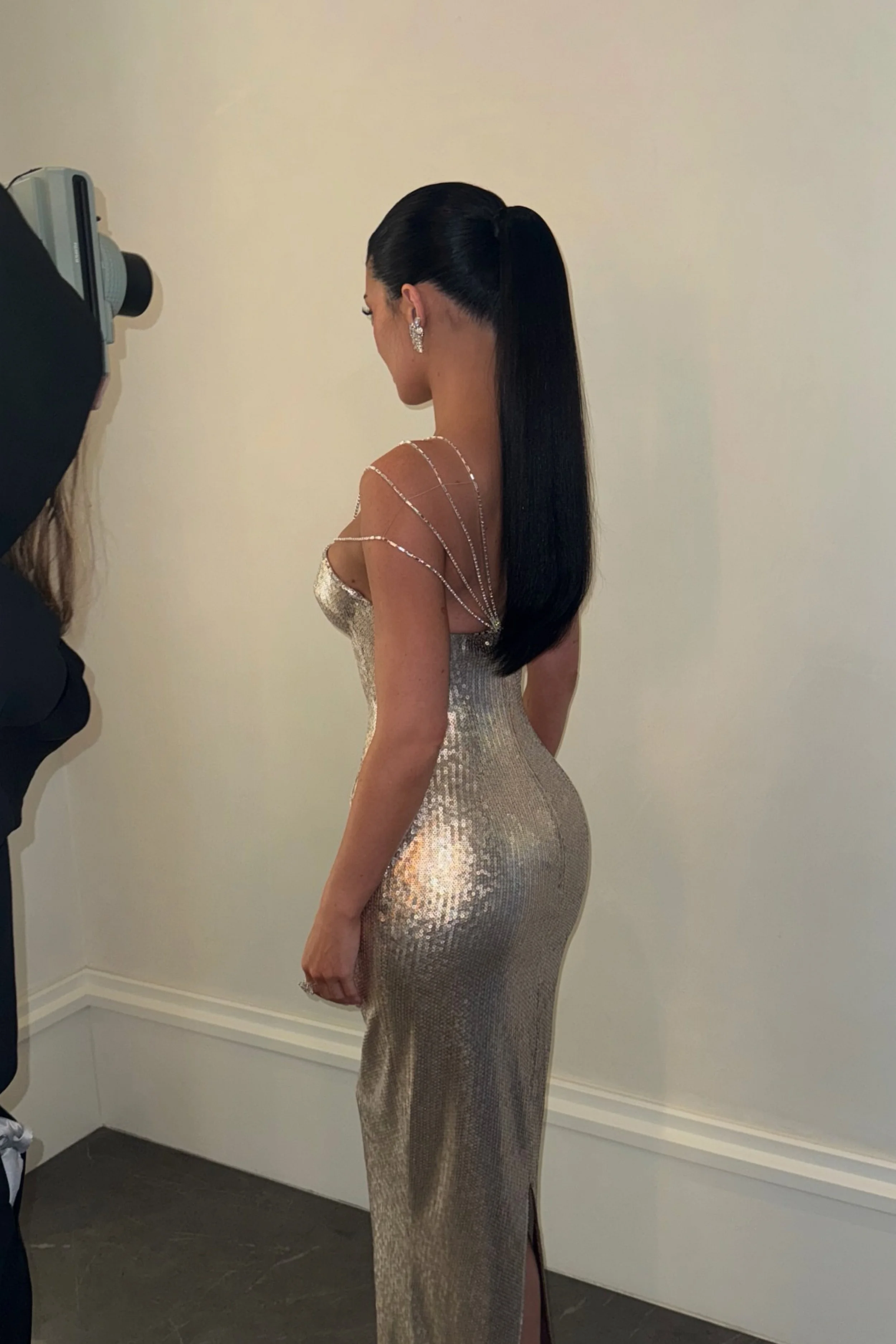
From the back, the ponytail becomes its own statement—long, glossy, heavy with intention. It swings slightly, and I swear even that movement feels styled. The crystal strands curve over your shoulders like a draped necklace reimagined as harness detail. That’s the thing: the look isn’t only “pretty.” It’s designed. It has edges. It has a plan. And you, Kylie, wear a plan like it’s a secret you’re letting the world borrow.
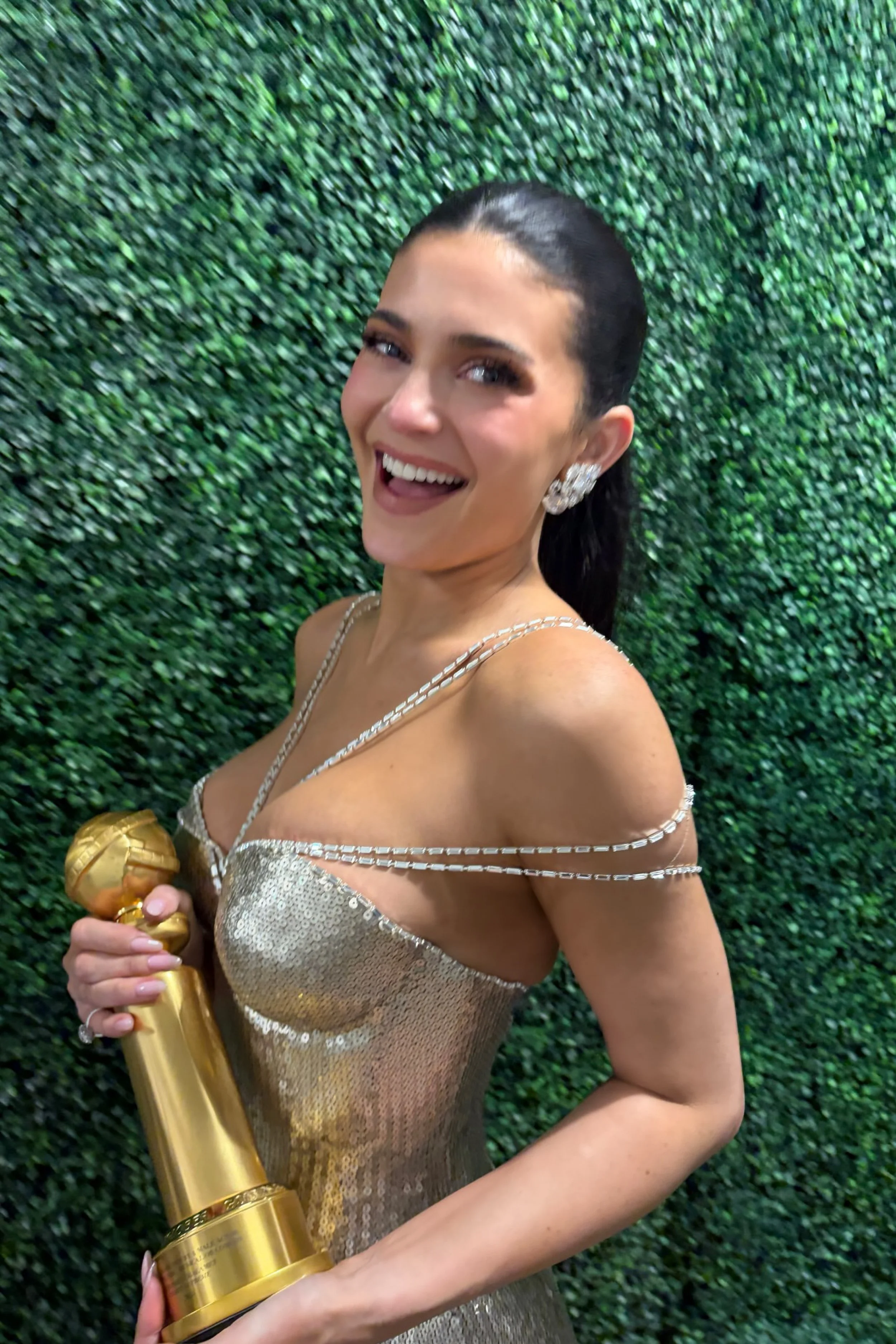
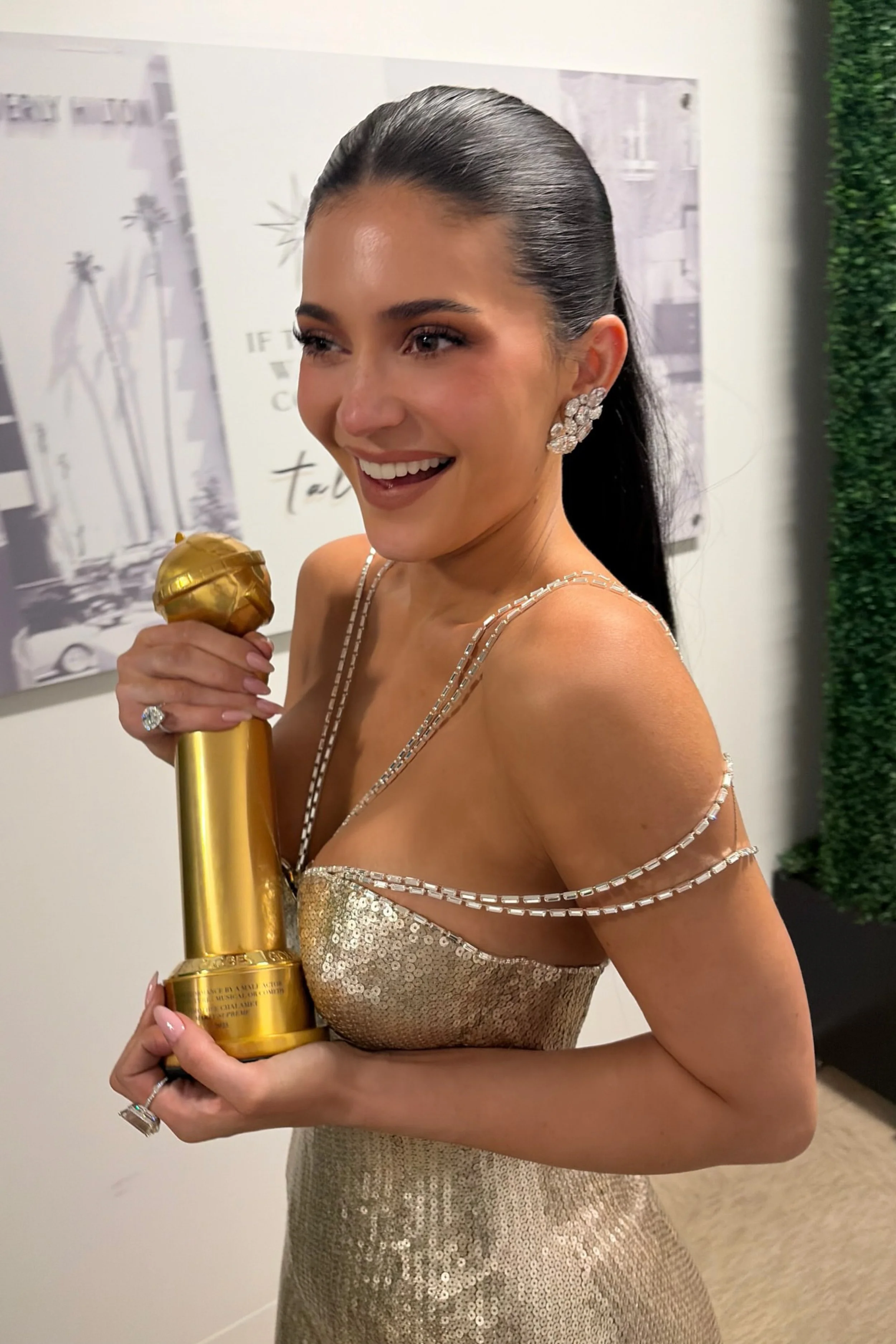
Then—my favorite shift—the smile breaks through. Suddenly you’re against a wall of green, holding a gold trophy like it’s lighter than it looks, and your face opens into joy. The sparkle of the dress changes again in the outdoor-ish light, the silver turning brighter, more reflective, almost champagne in spots. You’re laughing, shoulders angled, earrings catching the light, and the entire vibe becomes: yes, I can do statuesque, but I can also do electric. The trophy is absurdly gold, almost cartoonish in its shine, and it makes the silver gown feel even cooler—like moonlight next to molten sun.
I have this ridiculous, cinematic thought: the dress is a night sky and the trophy is a sunrise, and you’re the only one who can hold both without it looking like a metaphor you’re trying too hard to sell. You don’t try too hard. That’s the whole point. You let the work do the flirting, and then you add the smallest smile like a signature.
If the reader is watching from the corner of the room, they’d notice the way you shift weight—one hip, a slight angle of the shoulder, the tiniest repositioning that changes everything. That’s not accident. That’s you conducting the camera. And if they’re lucky, they’ll catch the moment your expression goes serious again—eyes forward, mouth neutral, the kind of composure that makes people forget how to breathe for half a second. You don’t demand attention. You simply remove the option of looking away.
By the end of this imagined sequence, the look feels inevitable: silver sequins like armor, crystal straps like starlines, diamond earrings like punctuation, hair slicked back into power. It’s the kind of styling that says, “I didn’t come to blend in.” And Kylie, you don’t blend in. You translate the room into your language—light, edge, glamour—and then you stand there like it’s the most natural thing in the world. I hate how easily you make impossible look effortless. I love it more.
Shop the Look
- Silver sequin strapless corset maxi gown — liquid-metal shine with a sculpted bodice.
- Crystal strap body chain shoulder harness — that constellation-over-the-collarbone effect.
- Rhinestone spaghetti strap overlay accessory — the “strap illusion” that reads couture.
- Diamond cluster statement stud earrings — icy sparkle that frames the face.
- Sleek high ponytail hair extension — glossy length with red-carpet control.
- Hair gel for slicked back styles — glassy hold without flyaways.
- Nude brown matte lipstick — soft-focus lips that keep the drama chic.
- Smoky brown eyeshadow palette — warm depth that photographs like velvet.
- False eyelashes wispy glam — that “edited” eye without looking heavy.
- Silver sequin evening clutch — a little mirror of the dress, held in one hand.
Style It With
- Fashion tape for strapless dresses — invisible security so you can move like you mean it.
- Strapless longline bra corset support — smooth structure under a fitted bodice.
- Seamless shapewear thong bodysuit — clean lines under sequins, no interruptions.
- Body shimmer oil subtle glow — collarbone light that looks expensive on camera.
- Setting spray long lasting dewy — keeps the face flawless through flash after flash.
- Garment steamer for formal dresses — because wrinkles are not invited to this party.
- Earring backs for heavy studs — comfort + lift for statement sparkle.
- Jewelry organizer tray velvet — the backstage flatlay ritual, made tidy and luxe.
Closing Note
Kylie Jenner, in this imagined Golden Globes glow, you feel like a dare wrapped in sequins—silver that behaves like moonlight, crystal straps that sketch your silhouette like a signature. I’m not saying I’d follow that sparkle into the next scene… but if you turned your head and the earrings caught the light, I’d absolutely forget whatever I was pretending to do.
Keep the ponytail sharp, keep the neckline fearless, keep letting glamour look like a decision you make on purpose. I’ll be over here, quietly obsessed with the way you turn a blank wall into a legend.