Hailey Bieber and the Flashbulb-Quiet Hour Before the Doors Open
The Story
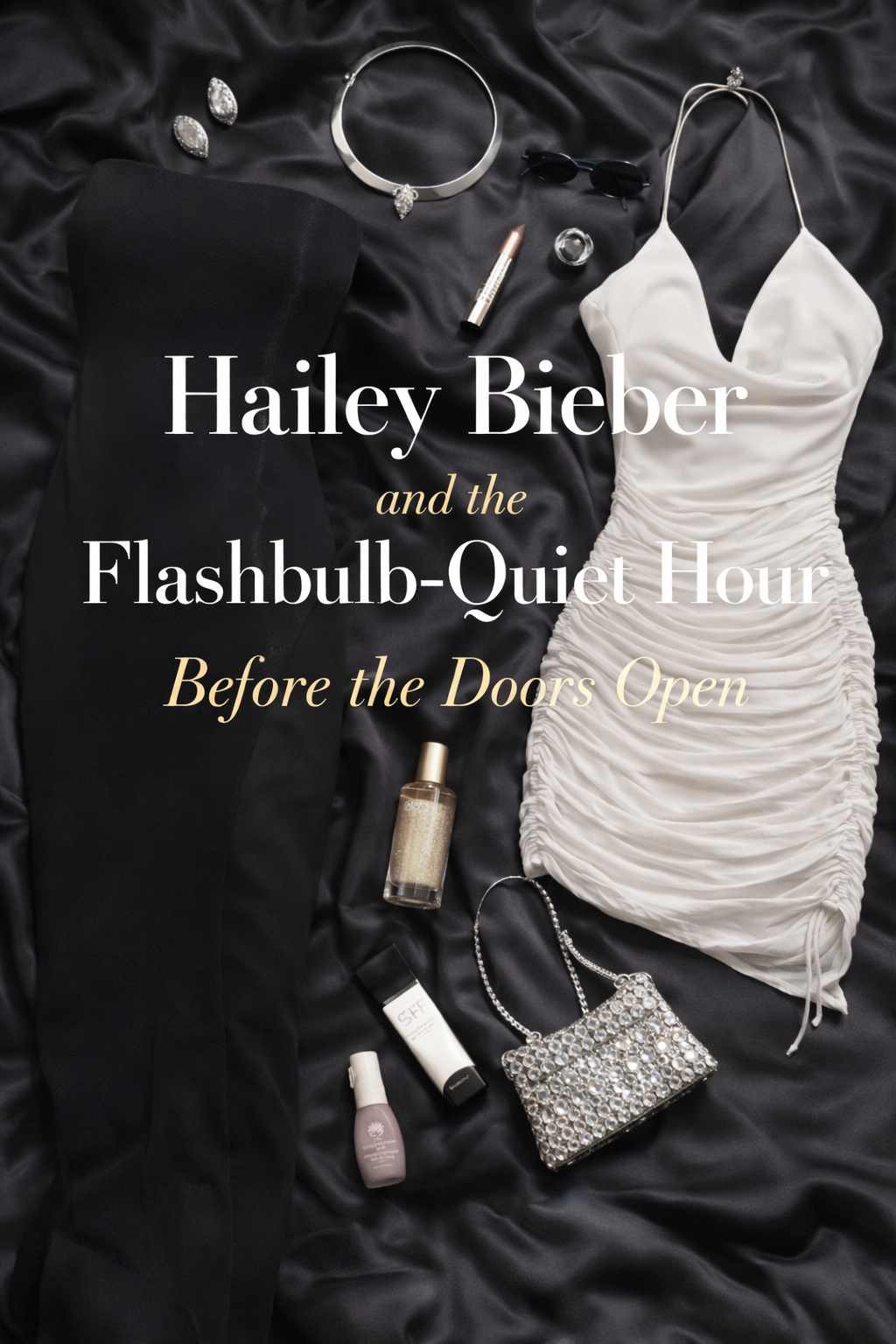
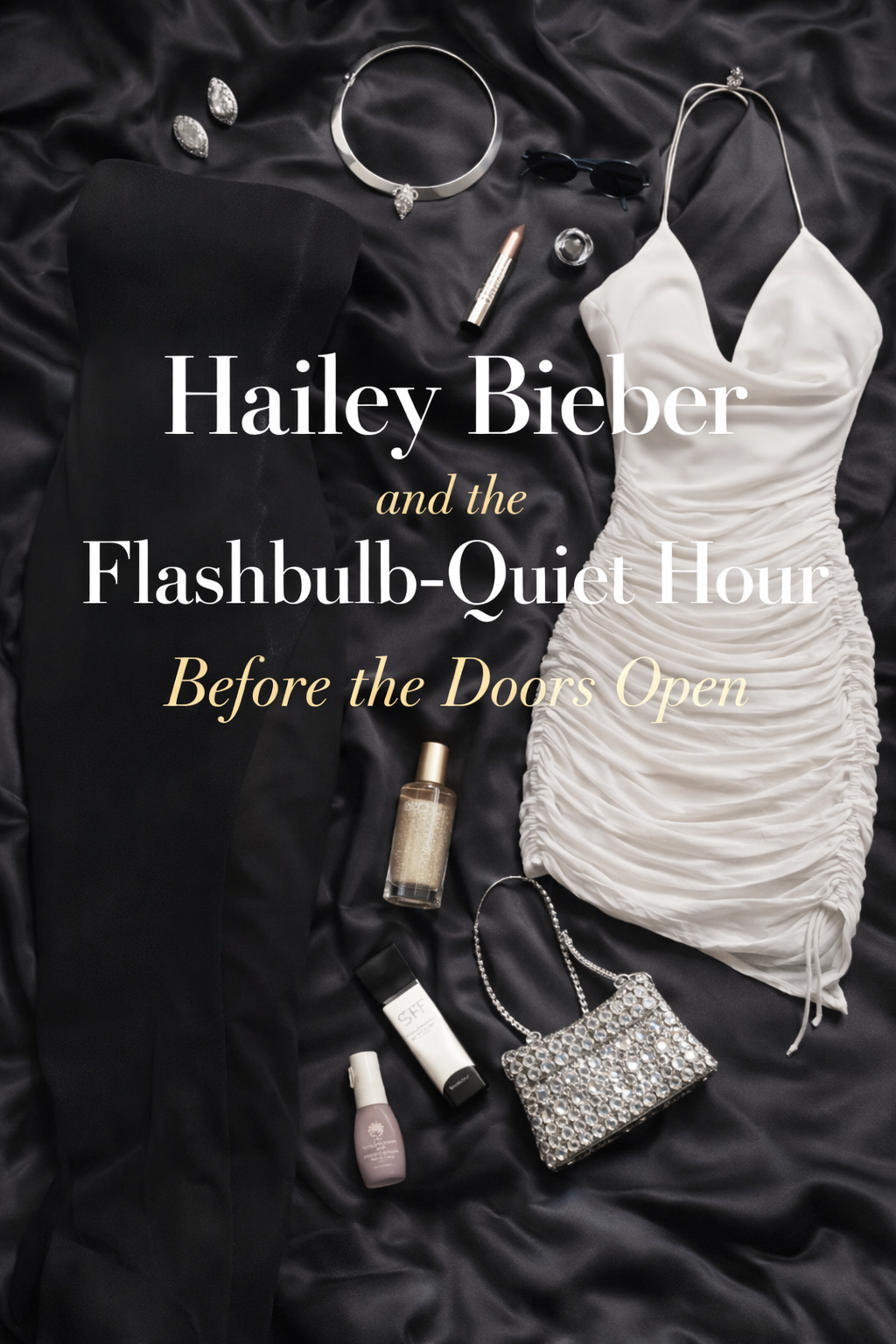
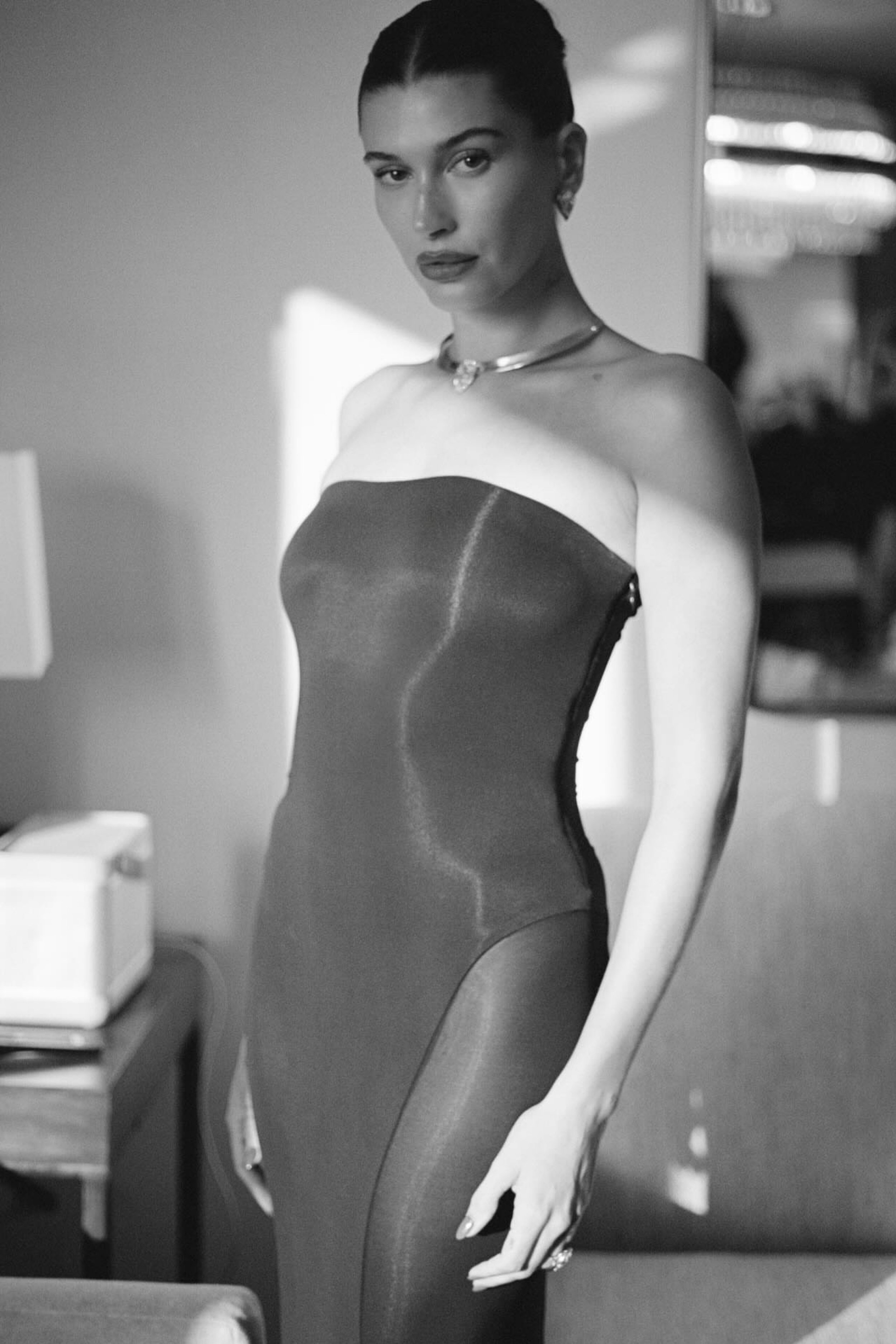
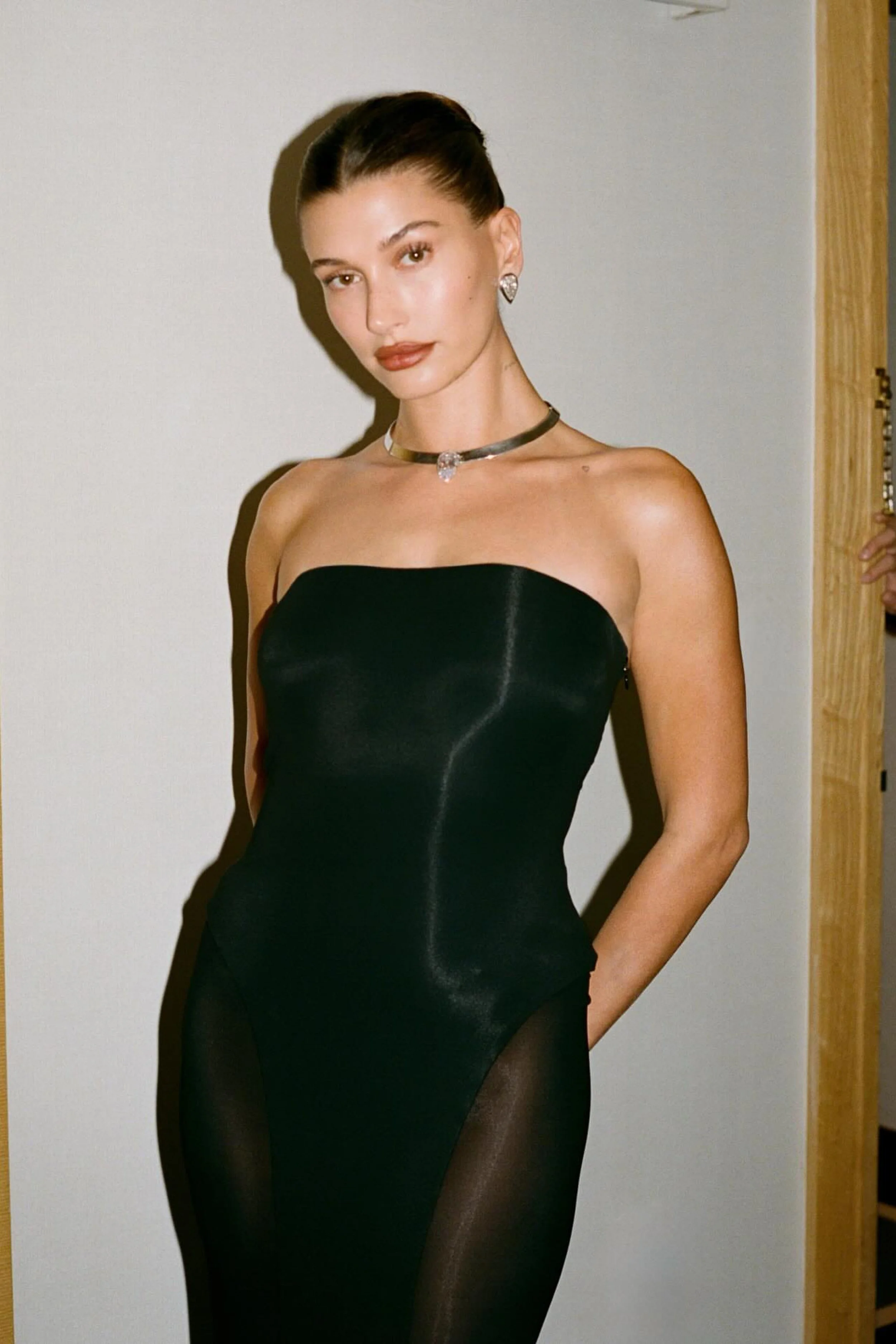
Hailey Bieber, you arrive like a clean exhale—no fuss, no extra syllables, just a silhouette that knows exactly what it’s doing. In my head, the night starts in monochrome, because of course it does: you in that strapless black column that reads less “dress” and more “decision.” It’s the kind of piece that doesn’t beg for attention; it simply removes every other option from the room. I’m watching the line of the neckline—straight, unapologetic, a perfect horizon—and I can’t help it: I want to follow that seam the way you follow a song you pretend you don’t love. The fabric catches the light in one deliberate ribbon down the center, like the camera found your pulse and decided to underline it.
Your hair is slicked back into a sculpted bun that says, I’m not here to be windblown; I’m here to be remembered. And then there’s the jewelry—sharp, icy, editorial. A collar of silver hugging the throat with a centered stone that feels like punctuation. Not a question mark. Never a question mark. You’ve got that heart-of-the-spotlight thing going on, where the styling doesn’t compete with you; it frames you the way a perfect matte does: quiet, steady, certain.
I’m not pretending this is a real hallway or a real night. This is my imagined little film, and you’re the only character the lens cares about. Somewhere off-frame, a door clicks. Somewhere else, someone says your name like it’s a password. You don’t look rushed. You look calibrated. The dress is fitted, but the mood is looser—confidence like a silk ribbon you don’t even bother tying. There’s a sheer panel moment that turns the whole look into a whisper of danger without saying a single explicit word. It’s fashion’s favorite kind of flirt: suggestion, geometry, restraint.
And then you shift—just a fraction, just enough—and I catch a glimpse of your nails, pale and polished, and a ring that flashes like a private joke you won’t explain. I like that about you, in this imagined edit: you never over-explain. You give the camera something to chase, and it does, obediently. I do too, honestly—quietly, from the safe distance of admiration. If I were writing captions for this scene, I’d keep them short, like your styling: “clean lines, loud effect.” But I’m not here to be short. I’m here to linger.
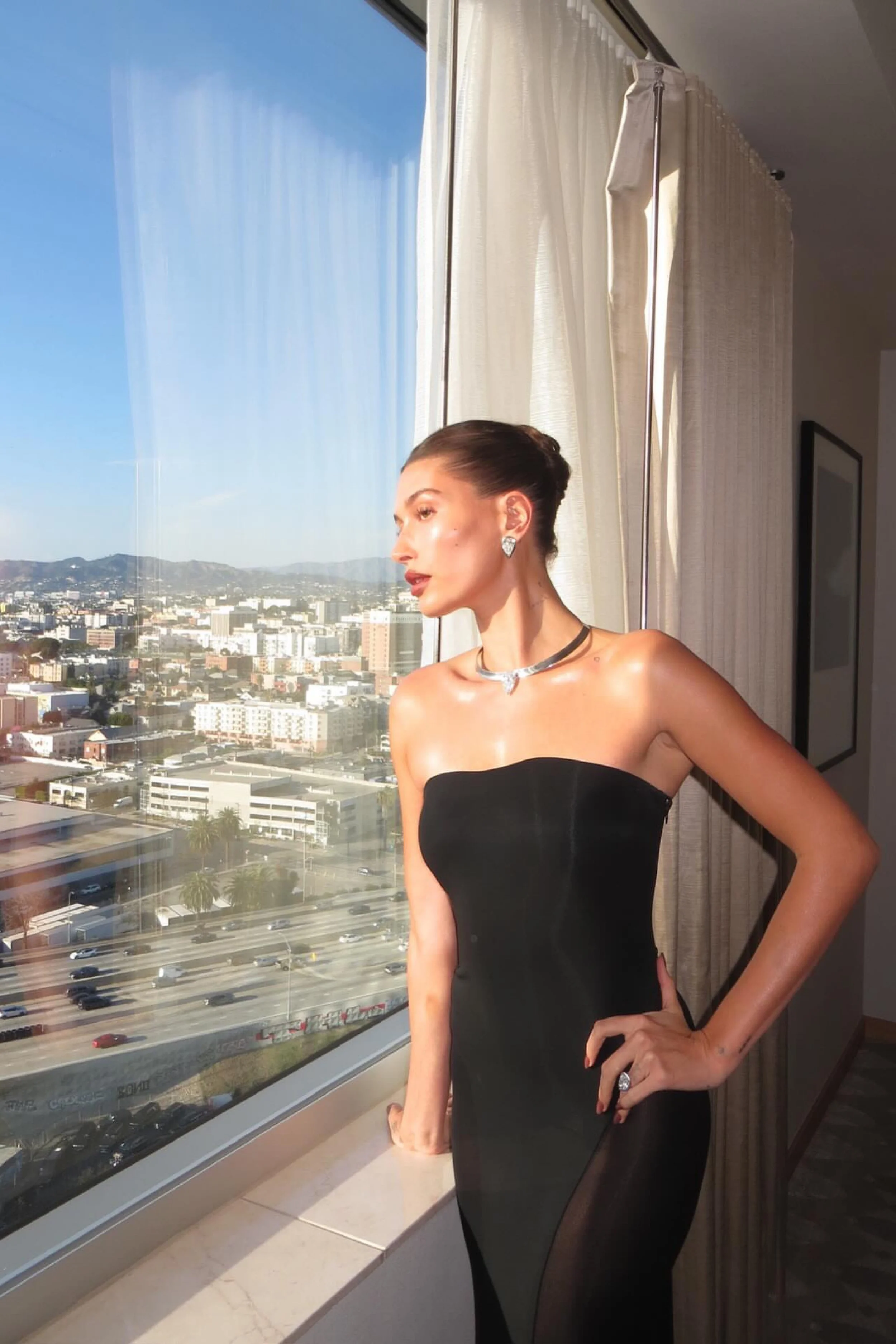
In the next frame, the light changes. The black-and-white snaps into color—warm sun through a tall window, city spread out like a diagram of ambition. You’re standing in the kind of daylight that’s almost rude in its honesty, and somehow you still look like night. The same strapless black column, the same sleek hair, the same cool hardware at your throat. But now the glow is doing its own styling: your skin looks glassed, softly lit, all highlight and calm. I can practically hear the curtain breathe when it moves. You angle your face toward the view, and for a second you become a statue that learned how to smirk.
Here’s where the observer becomes the observed—because you catch it, don’t you? That tiny awareness in the corner of the frame, like you know someone is watching and you decide to let them. Not to invite them in. Just to let them feel the distance. It’s the most elegant kind of power: letting the room want you without ever needing the room. The choker sits perfectly—no fidgeting, no adjusting—like you’ve trained your entire look to hold its own shape. I’m jealous of that kind of composure, and yes, I’m a little smitten by it too.
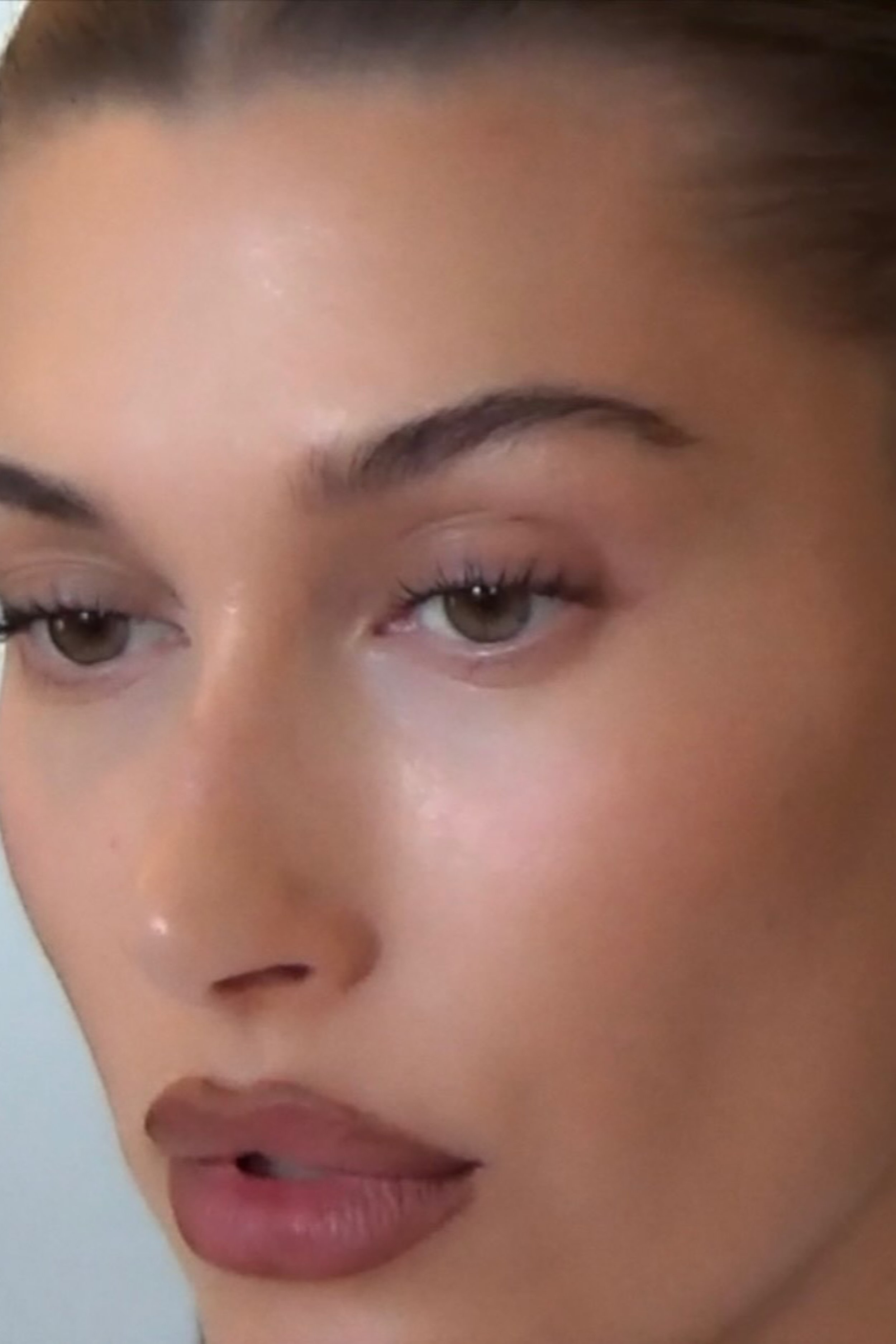
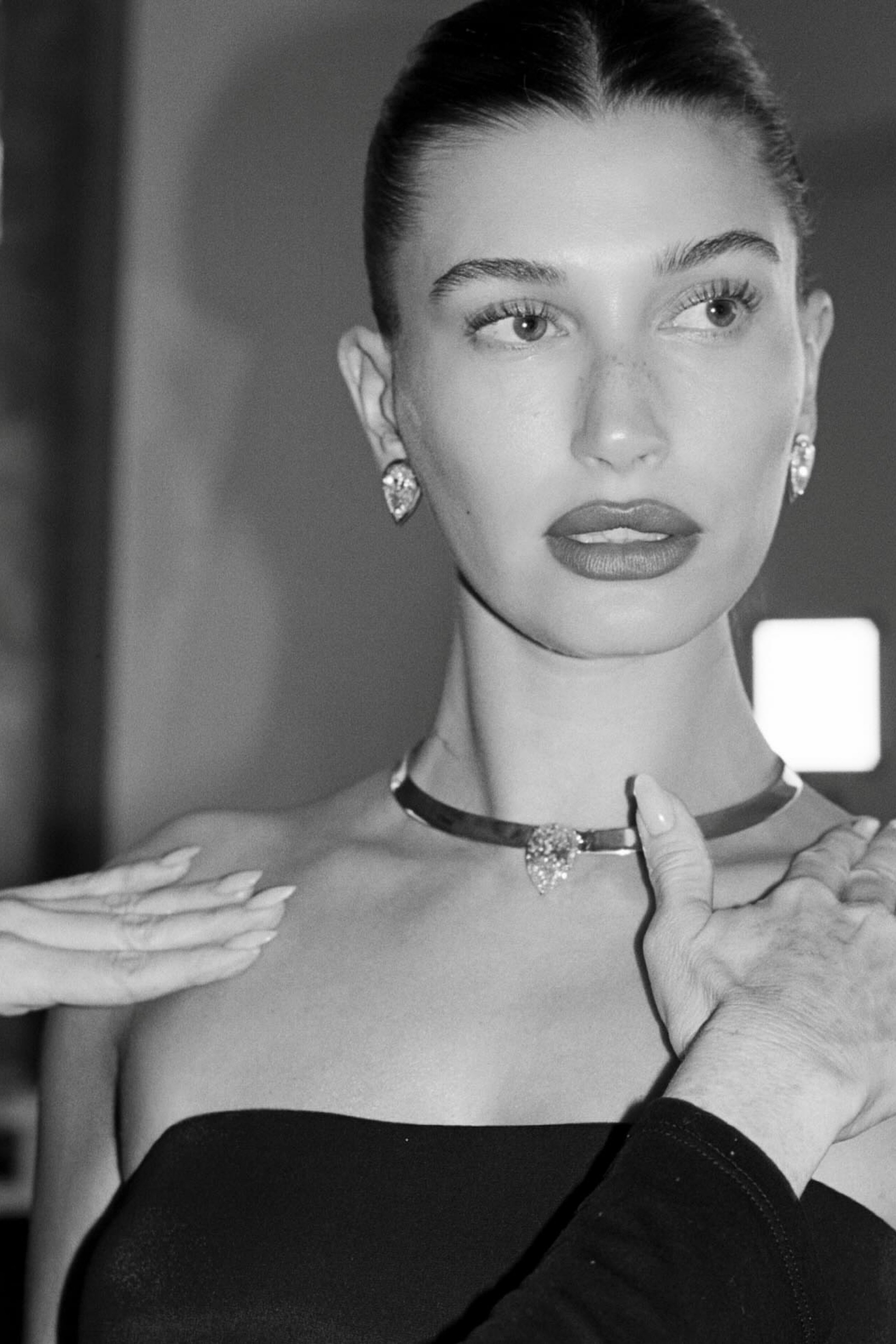
We cut back to black-and-white again—closer now, tighter. Your earrings are sculptural little drops, bright against your hairline, and your makeup is that exact “barely-there but undeniable” thing: brushed brows, clean lash, soft neutral lid, and a lip that’s satin and serious. The lipstick isn’t loud; it’s confident. It’s the shade of a good secret. The camera catches the faint freckles and the smooth plane of your cheek, and I swear the whole look is a masterclass in negative space: nothing extra, nothing missing.
There’s a behind-the-scenes moment—hands near your collarbone, adjusting the necklace, checking the fall of the metal against skin. It’s intimate in the most professional way, like tailoring for jewelry. You stare past the lens, not at it, and it makes me want to behave. You’re giving “precision,” and I’m trying to match your energy by not being ridiculous, but then you tilt your chin and the stone catches the light and I lose it a little. Not in a messy way. In a quiet, editorial way. The kind that lives between the lines.
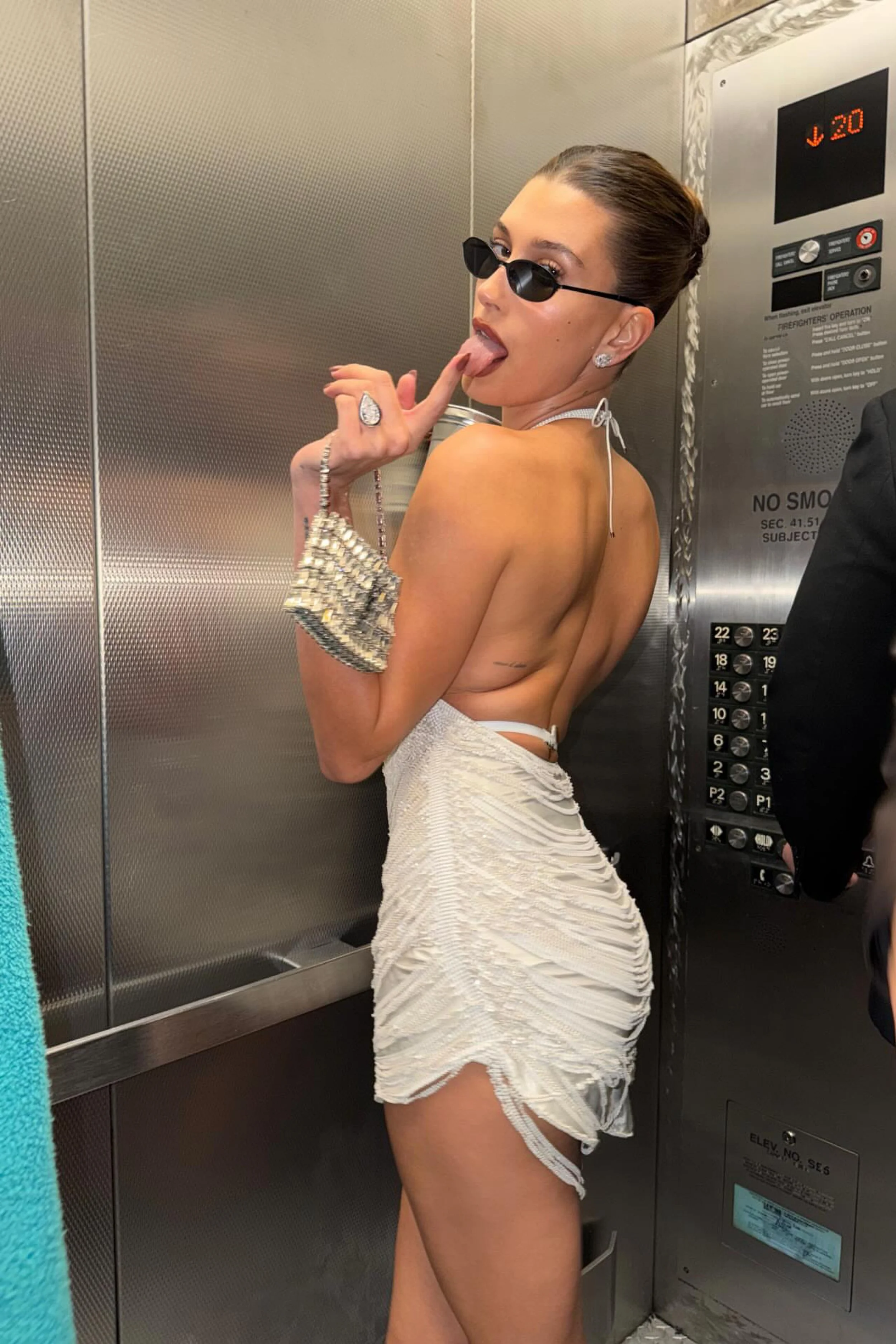
And then—because the night always has a twist—you show me a second look that’s pure mischief. An elevator scene, stainless steel and fluorescent, where the glam goes a little wicked. You’re in white now: a halter-like top that ties behind the neck and leaves the back bare, paired with a ruched mini skirt that looks like it was gathered by hand and dared to stay put. The texture is all ripples and shimmer, like icing dragged across a cake with a careless spoon. Tiny black sunglasses sit on your face like a punchline. A sparkling little bag hangs from your wrist, the kind that catches every bit of light and turns it into gossip.
It’s playful. It’s cheeky. It’s the kind of styling that says, I did the serious thing already—now I’m going to have fun with the camera. And yes, you pull a face, tongue out, finger up, a mock-sassy moment that feels like the afterparty version of you—still curated, still gorgeous, but now with a wink. I’m not going to moralize it. I’m going to appreciate the styling logic: after a black strapless column and diamond punctuation, you pivot into white ruched chaos with micro shades and a crystal clutch. That’s range. That’s narrative. That’s the kind of switch that makes a lookbook feel like a story instead of a catalog.
In my imagined cut, the doors open. The hallway sound changes. Flashbulbs start to behave like weather. You step forward, and the black dress becomes a clean line moving through noise. The necklace becomes a tiny lighthouse. The bun becomes a signature. And when the scene flips back to the elevator, the white look becomes a spark—brief, bright, impossible to ignore.
I don’t claim any of this happened. I’m simply saying: if I were the one editing the night into a fashion fable, I’d write you exactly like this—minimalist when it matters, mischievous when it’s safe, always so precise that even the light looks styled. And I’d keep one thought to myself, the way you keep your composure: you make a strapless neckline feel like a challenge, and I’m weak for a challenge dressed this well.
Shop the Look
- A strapless black bodycon maxi moment — sleek, clean, camera-proof.
- Sheer-panel evening dress energy — that whispered edge without shouting.
- A sculptural collar necklace with a center stone — the kind of punctuation you wore like destiny.
- Teardrop crystal statement earrings — bright, sharp, unapologetically polished.
- A slick bun hair gel + finishing wax combo — for that “nothing moves” elegance.
- A ruched white mini skirt for afterparty mischief — texture that catches light like gossip.
- A white halter backless top that ties at the neck — clean front, dramatic exit.
- Tiny black oval sunglasses — the “don’t ask me” accessory.
- A rhinestone mini handbag — glittering, compact, dangerously fun.
- A bold cocktail ring with a clear stone — the detail that flashes mid-gesture.
Style It With
- Body glow oil for that window-light sheen — apply where the sun hits and let it do the flirting.
- Long-wear neutral lipstick in a satin finish — the “serious mouth” that still feels soft.
- Liquid highlighter for cheekbone glass-skin — a tiny beam of confidence on demand.
- Fashion tape for strapless security — invisible peace of mind.
- Seamless thong bodysuit shapewear — smooth lines, zero distractions.
- A mini garment steamer for hotel-room saves — because wrinkles ruin the plot.
- Setting spray that locks in a glossy glow — the kind of finish that survives flash.
- A sleek bun brush + edge tool set — for that sculpted, editorial control.
Closing Note
Hailey Bieber, if this were my magazine page, I’d underline the way you made minimalism feel like a dare—strapless black, diamond-cold punctuation, and not a single wasted detail. I’d keep rereading that clean neckline like it’s a line of poetry I don’t want to admit I memorized.
And then I’d flip to the elevator frame—white ruching, tiny shades, a glittering bag—and grin, because you reminded me the best style has a sense of humor. In my imagined edit, you don’t just wear the looks. You steer the scene.