Irina Shayk and the Black-Chrome Fable That Refuses to Behave
The Story
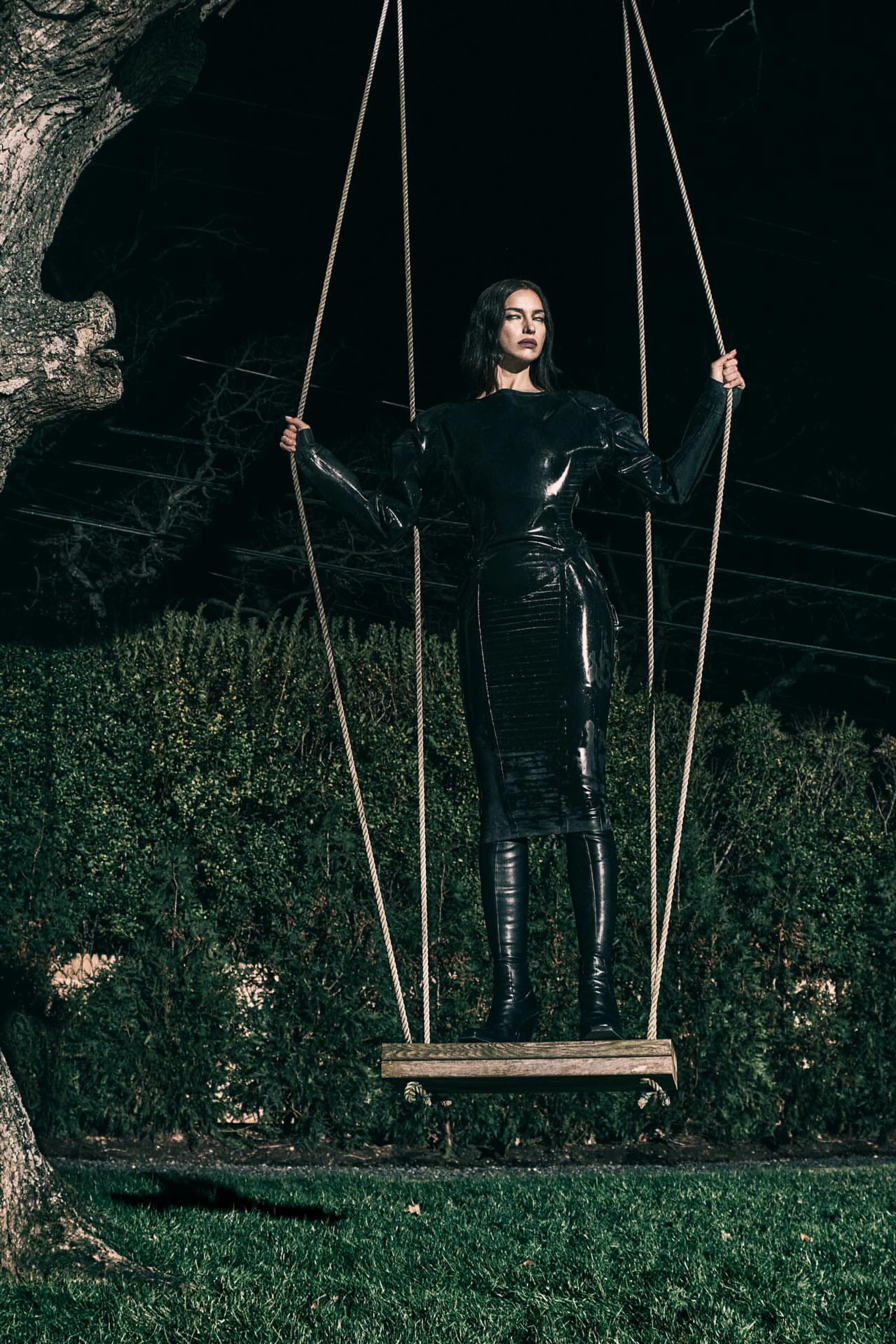
I knew this set would be dangerous the second I saw how you wear black, Irina Shayk—not like a color, but like an intention. You don’t “arrive” in these frames so much as you edit the atmosphere. The palette is ruthless: ink, graphite, oil-slick shine. The mood is tuned to that Steven Klein kind of cinematic tension where every highlight looks deliberate and every shadow feels like it’s keeping a secret. And there you are at the center—calm, unbothered, impossibly precise—making even a still image feel like it’s about to lurch forward into motion.
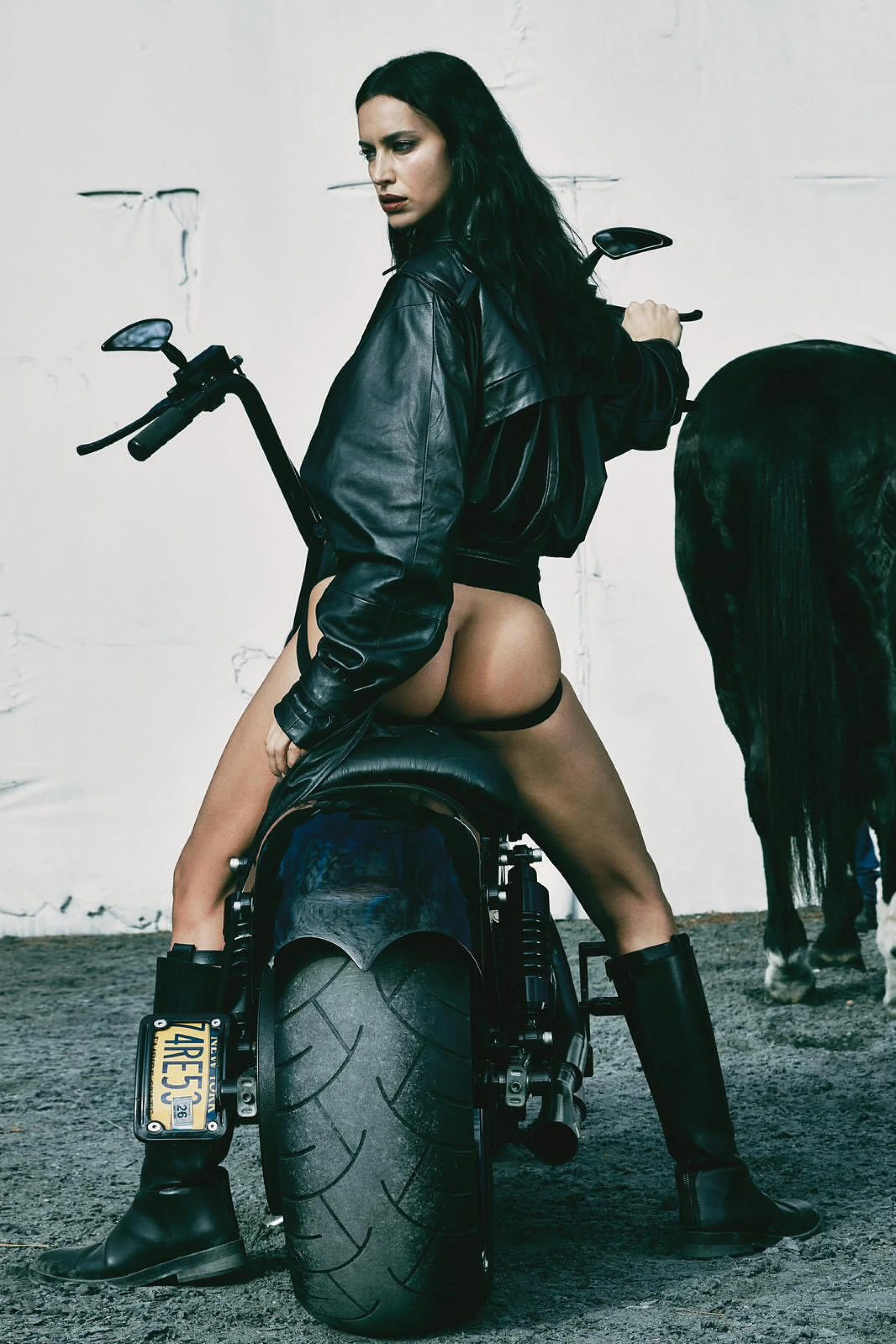
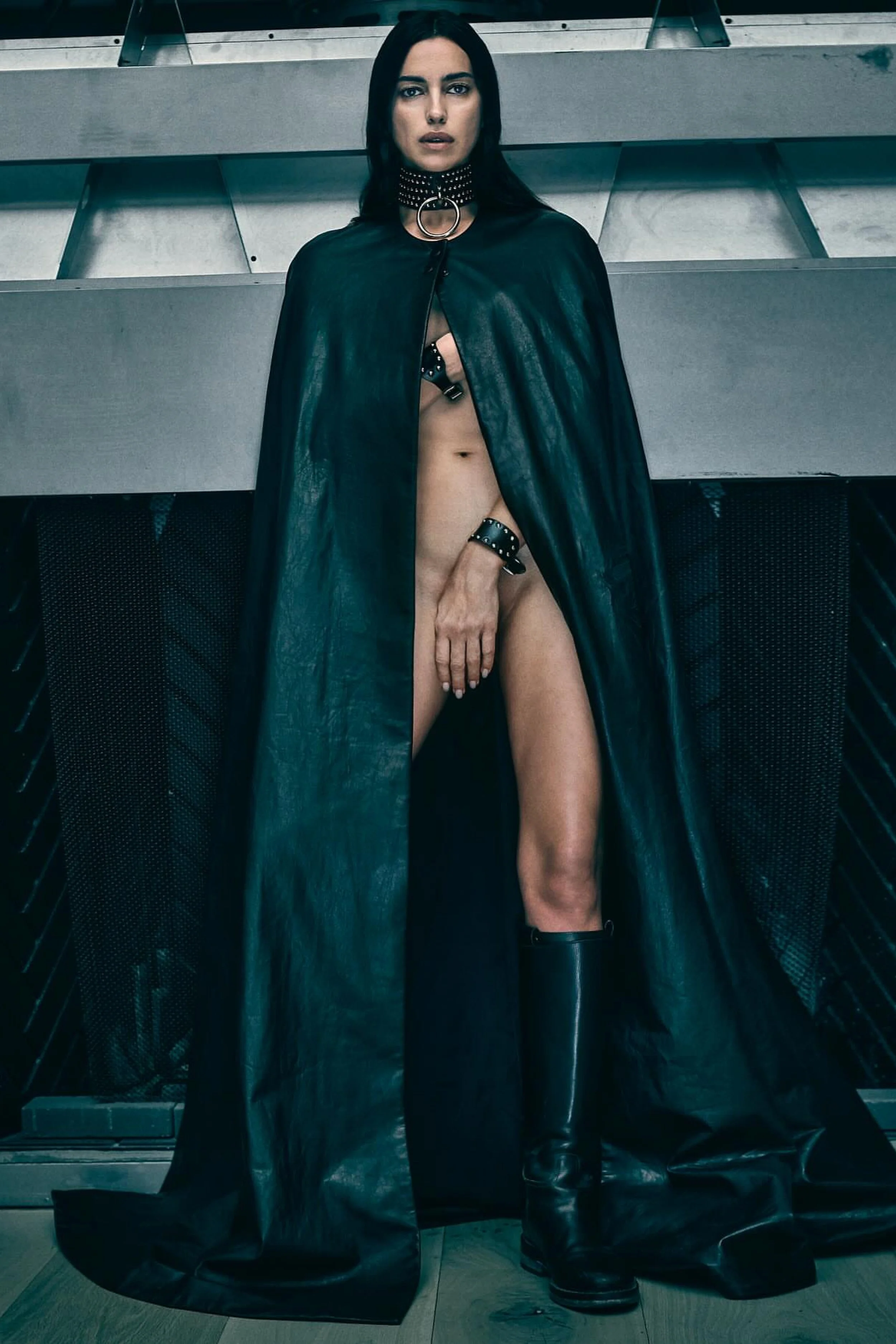
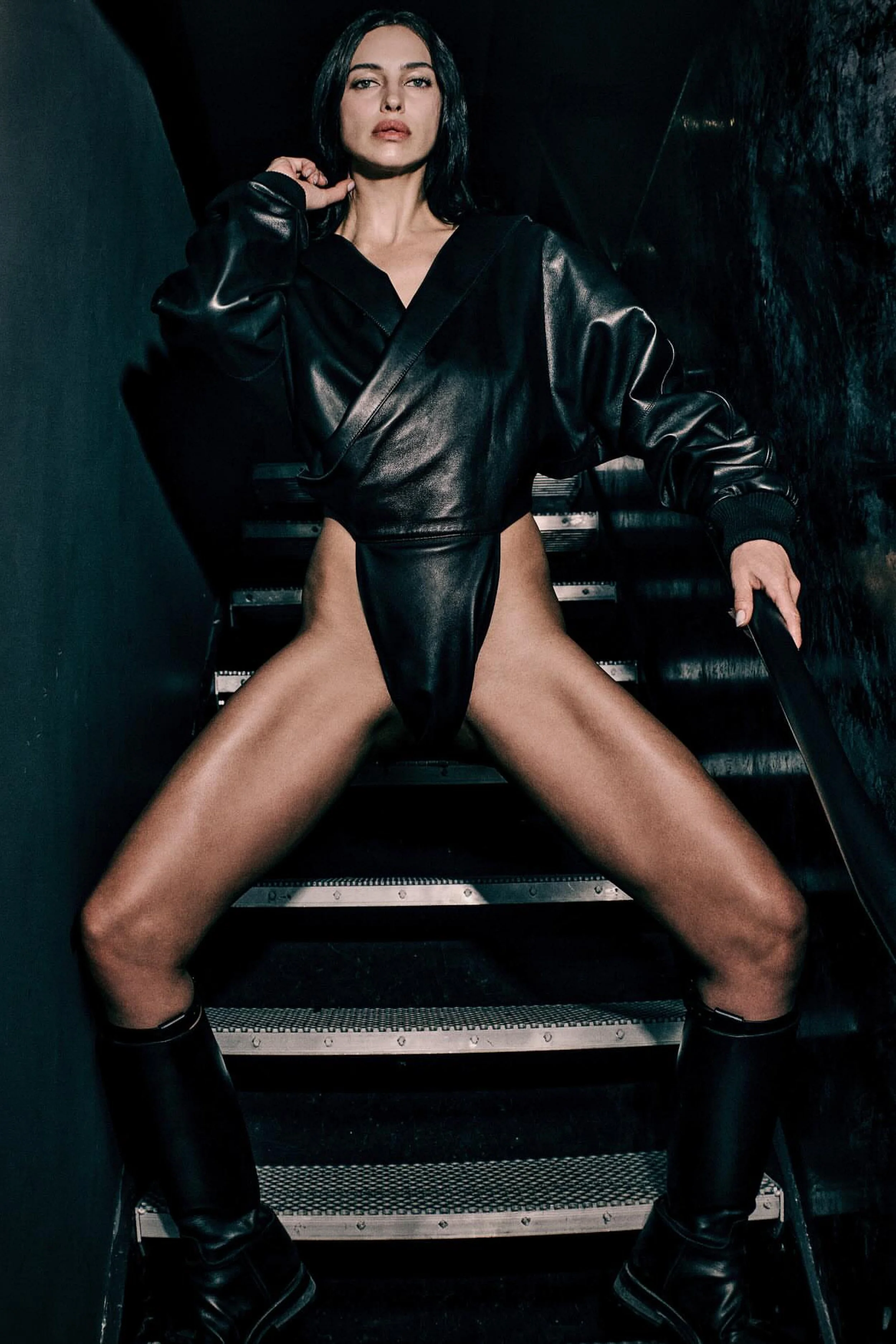
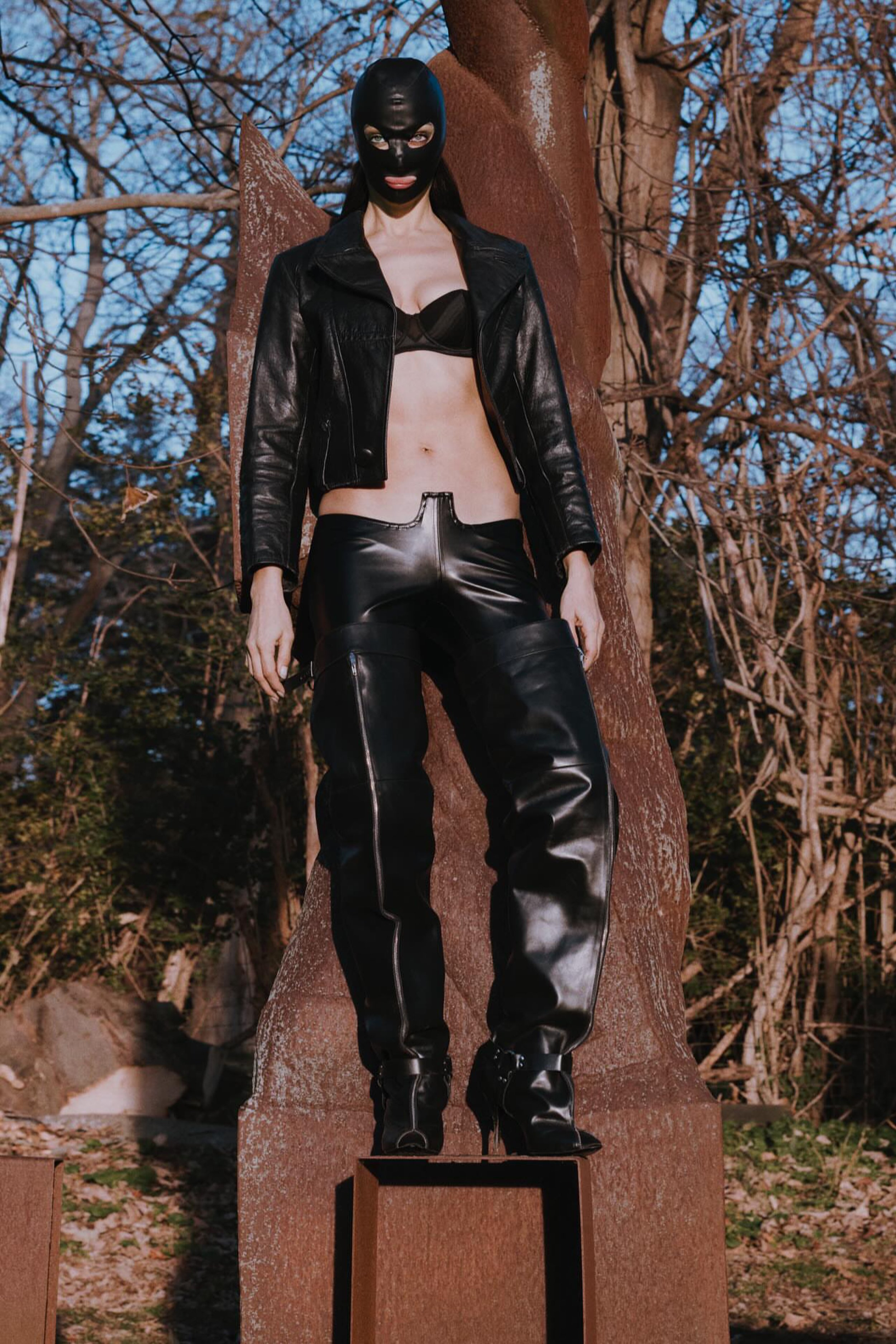
The first beat reads like a modern myth: leather, steel, and the quiet confidence of a woman who doesn’t need to announce herself. The jacket is the opening line—cropped, sculptural, slightly oversized in the sleeves, with that clean, glossy finish that catches light like wet pavement. It’s not “biker” in the costume sense. It’s editorial biker: fashion distilled into silhouette, attitude rendered in negative space. Your hair falls sleek and dark, your expression all focus and refusal, like you’ve already decided what the frame is allowed to take from you.
And I’ll admit it—this is where I start falling into the spell. Not the kind of spell that’s messy or clingy. The kind that’s sharp, aesthetic, almost intellectual: I’m watching you conduct the scene with posture and restraint. I’m tracking how the leather folds at the shoulder, how the seam lines steer the eye, how the boots anchor everything like punctuation. You make the look feel engineered, not thrown on—and I always love a woman who makes “effortless” look like a choice instead of an accident.
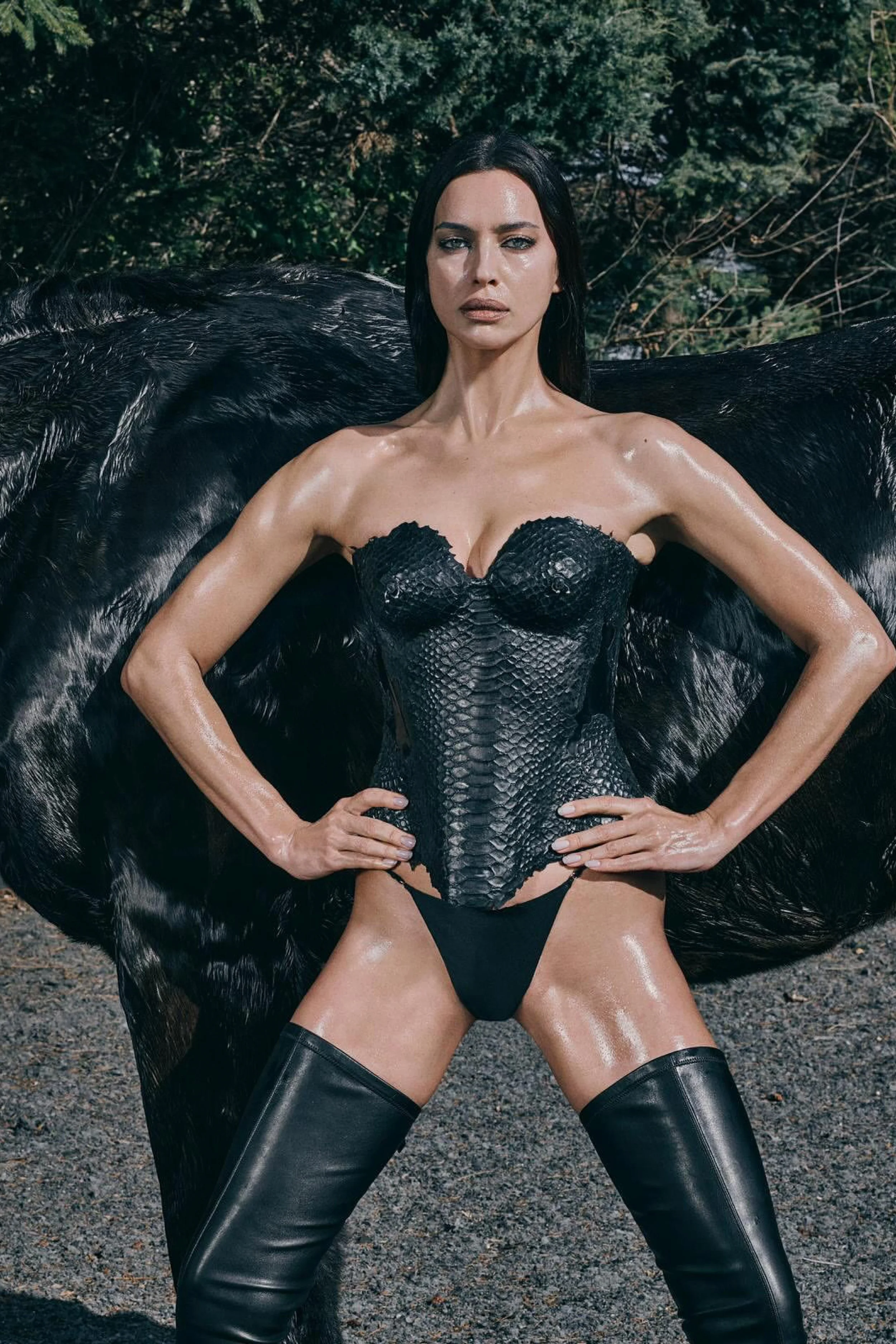
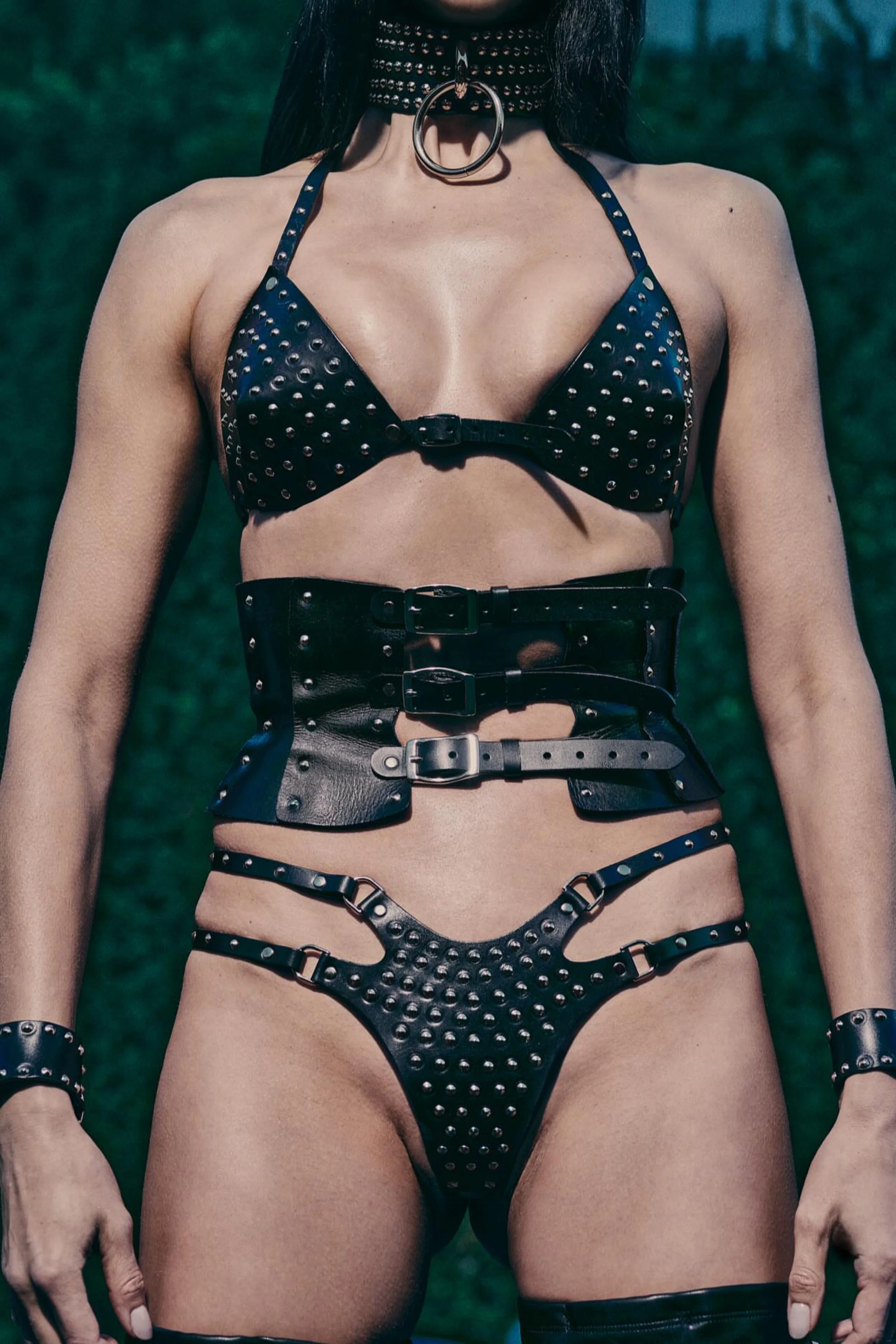
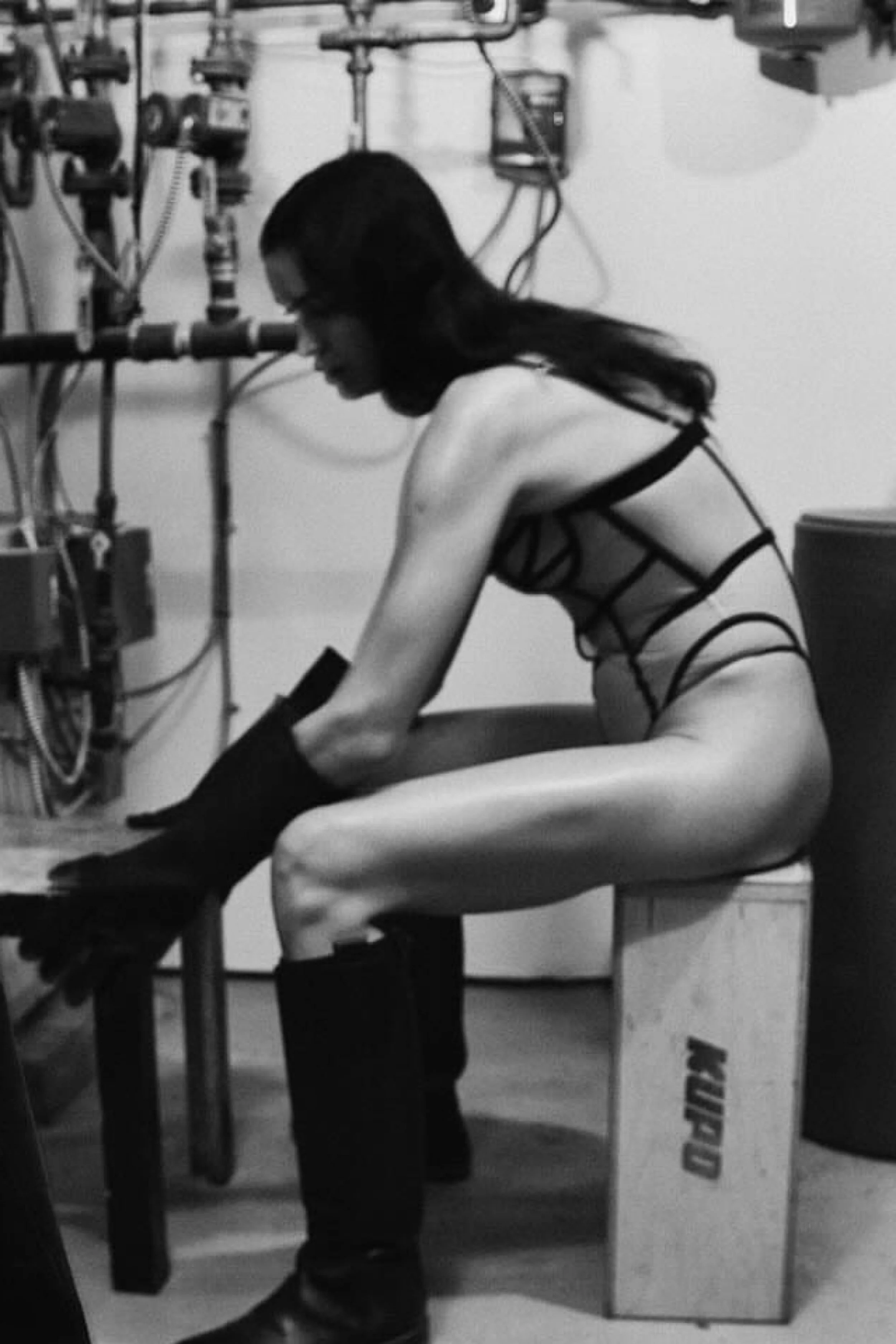
Then you pivot into the corsetry moment and the story tightens. The bodice is sculpted—textured like armor but styled like couture—structured enough to command, clean enough to read as pure fashion. Everything around it goes minimal so the shape can speak. This is not romance; it’s precision. It’s the kind of styling that says: I know exactly where the light is going to land, and I’m going to let it land there. Your skin has that high-gloss editorial finish—luminous, camera-ready—turning highlights into a deliberate design element, like another accessory you’re wearing.
Here’s one of those little observer moments you can feel even if you’re “just” looking: you catch it in the corner of the frame—the way the set balances softness and steel, nature and machine, quiet background and loud silhouette. The environment is there, but it behaves. It knows it’s not the star. That’s your job. And you do it with a kind of patience that reads almost regal.
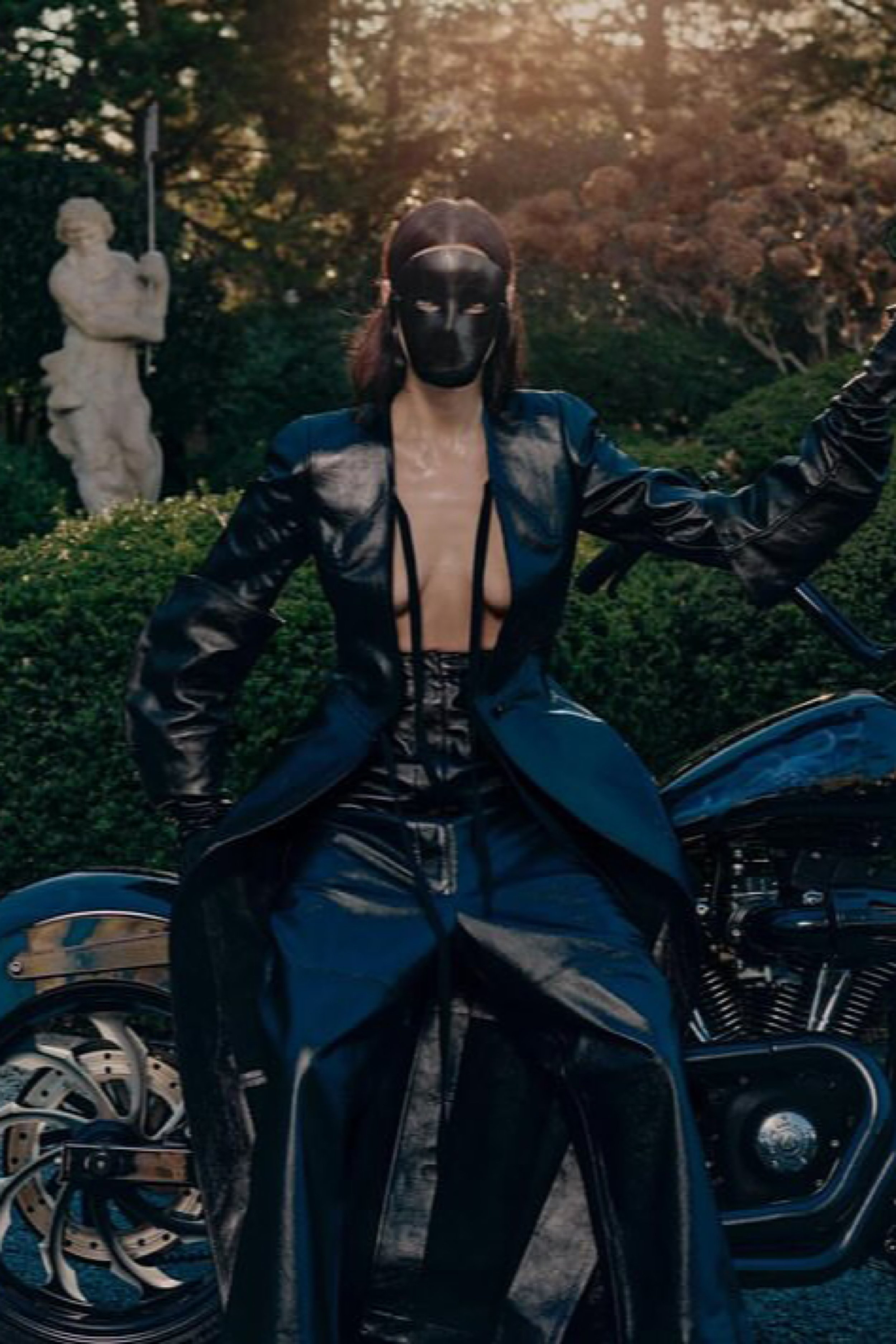
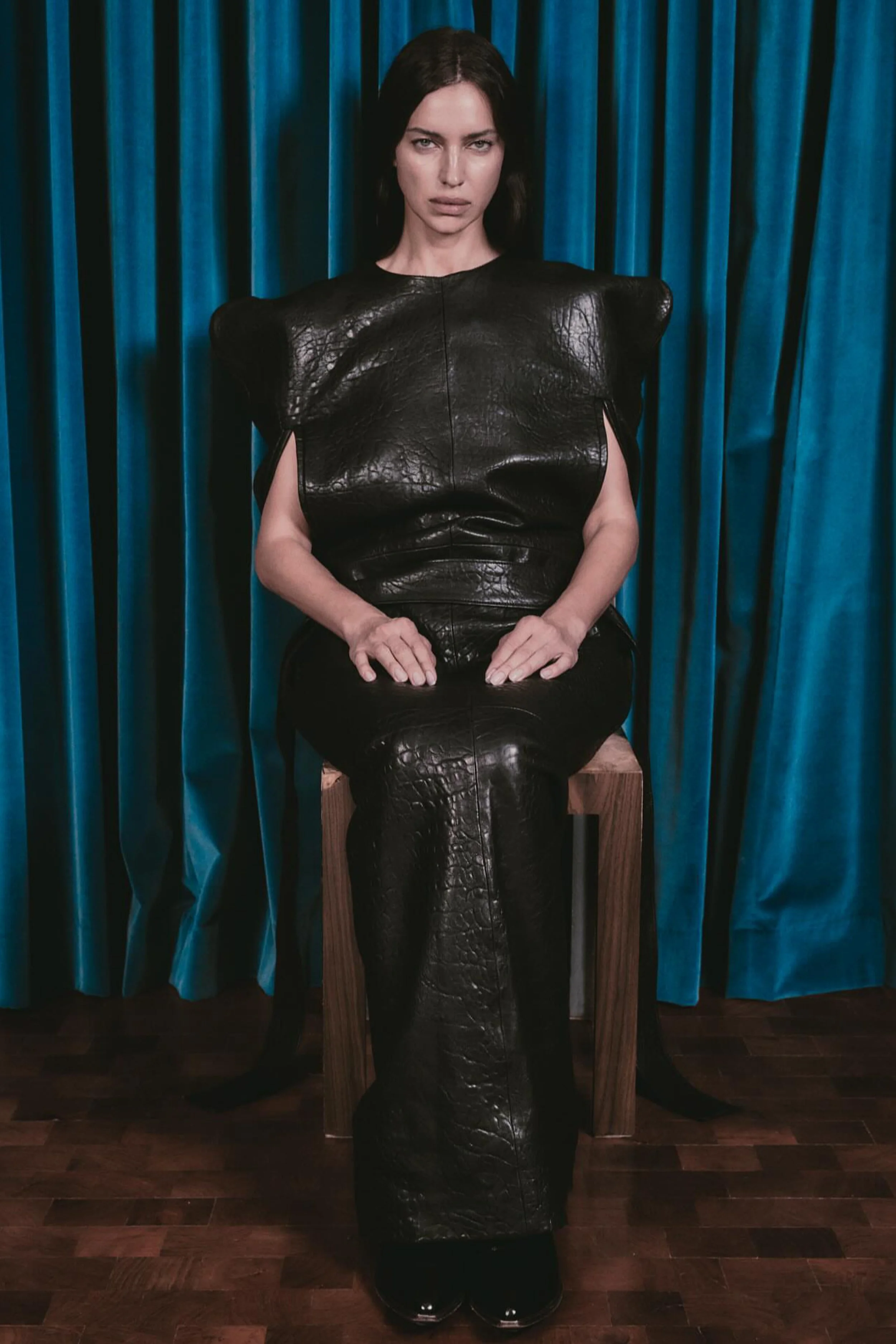
The sequence shifts again, and suddenly the noir gets deeper: a long coat with movement, tailored lines that sweep through the frame like a dark curtain. Underneath, the styling leans into glossy black—sleek pants, sharp seams, a finish that reflects just enough light to feel expensive. It’s the kind of black that doesn’t absorb the world; it mirrors it. And you—Irina—make the whole thing read like a fashion thriller. Not because anything “happens,” but because everything suggests something could. That’s the power of editing: implication, tension, withheld information.
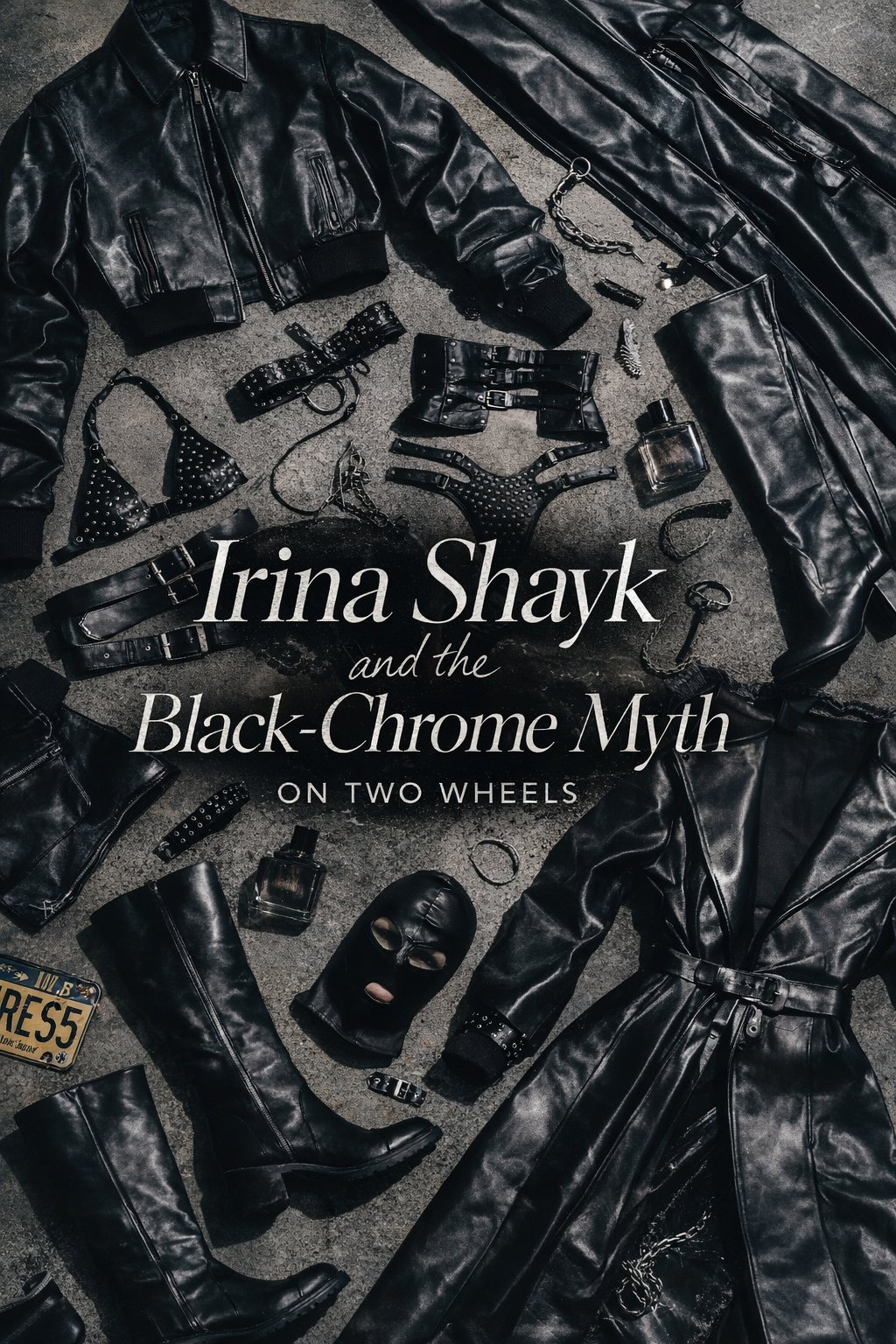
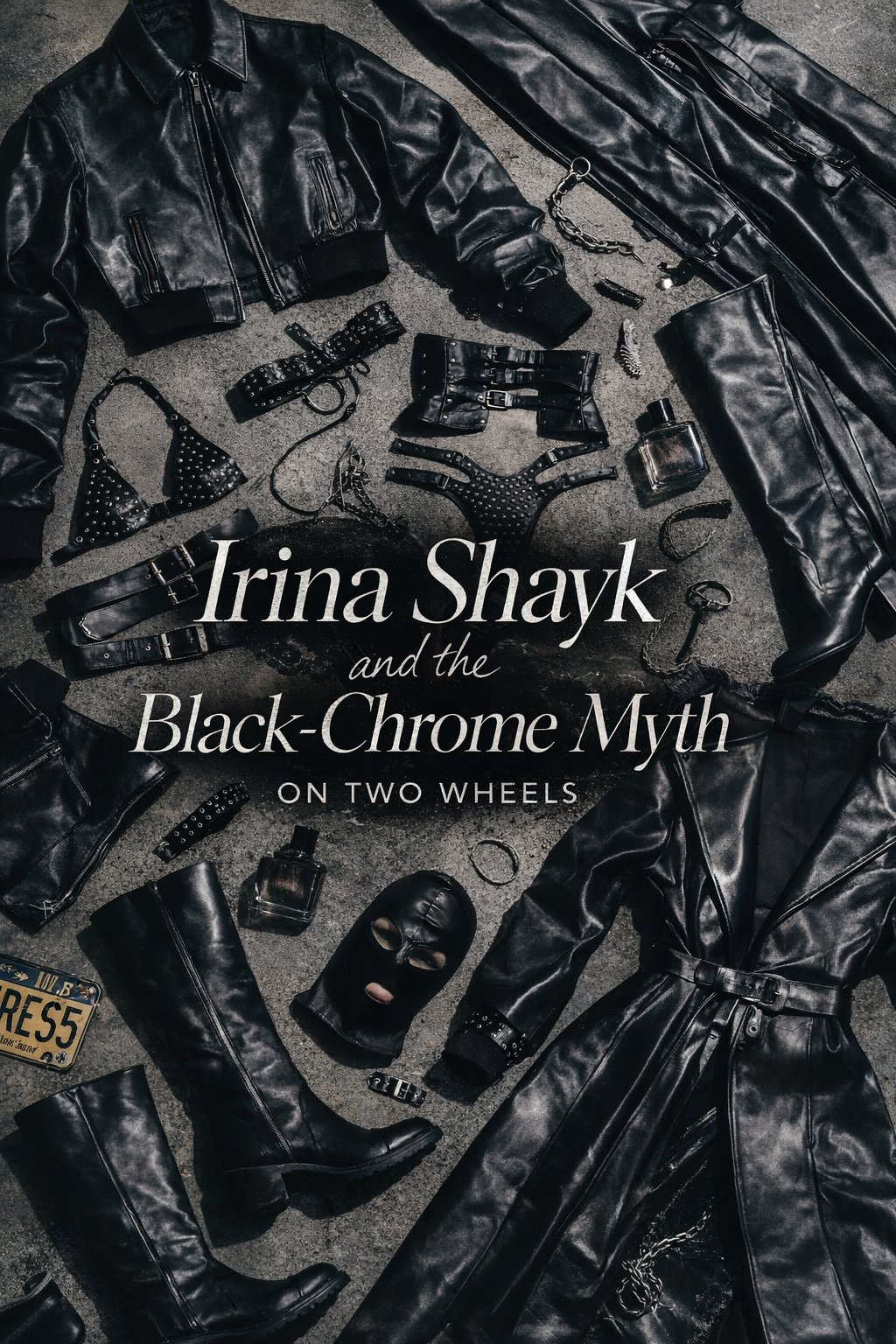
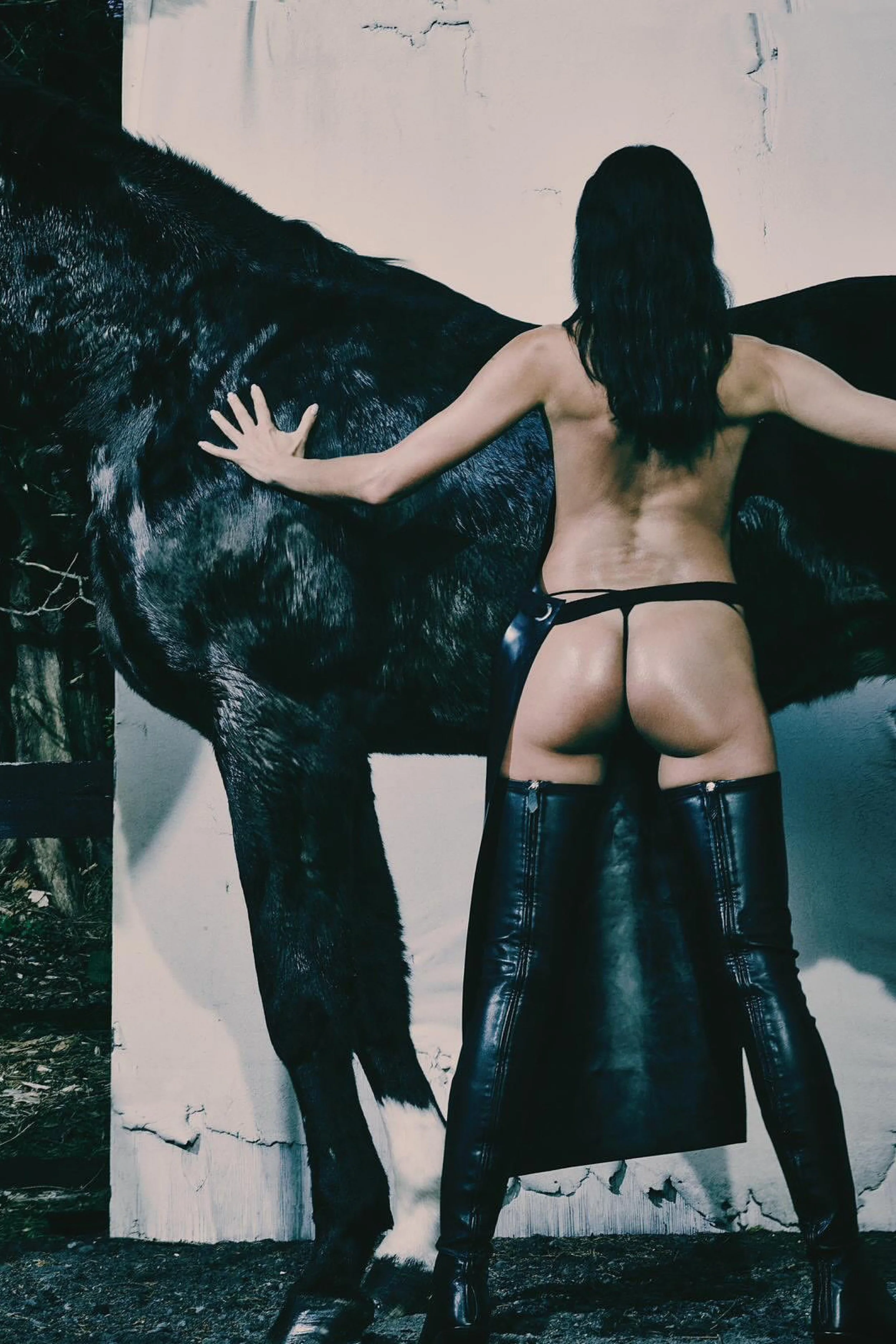
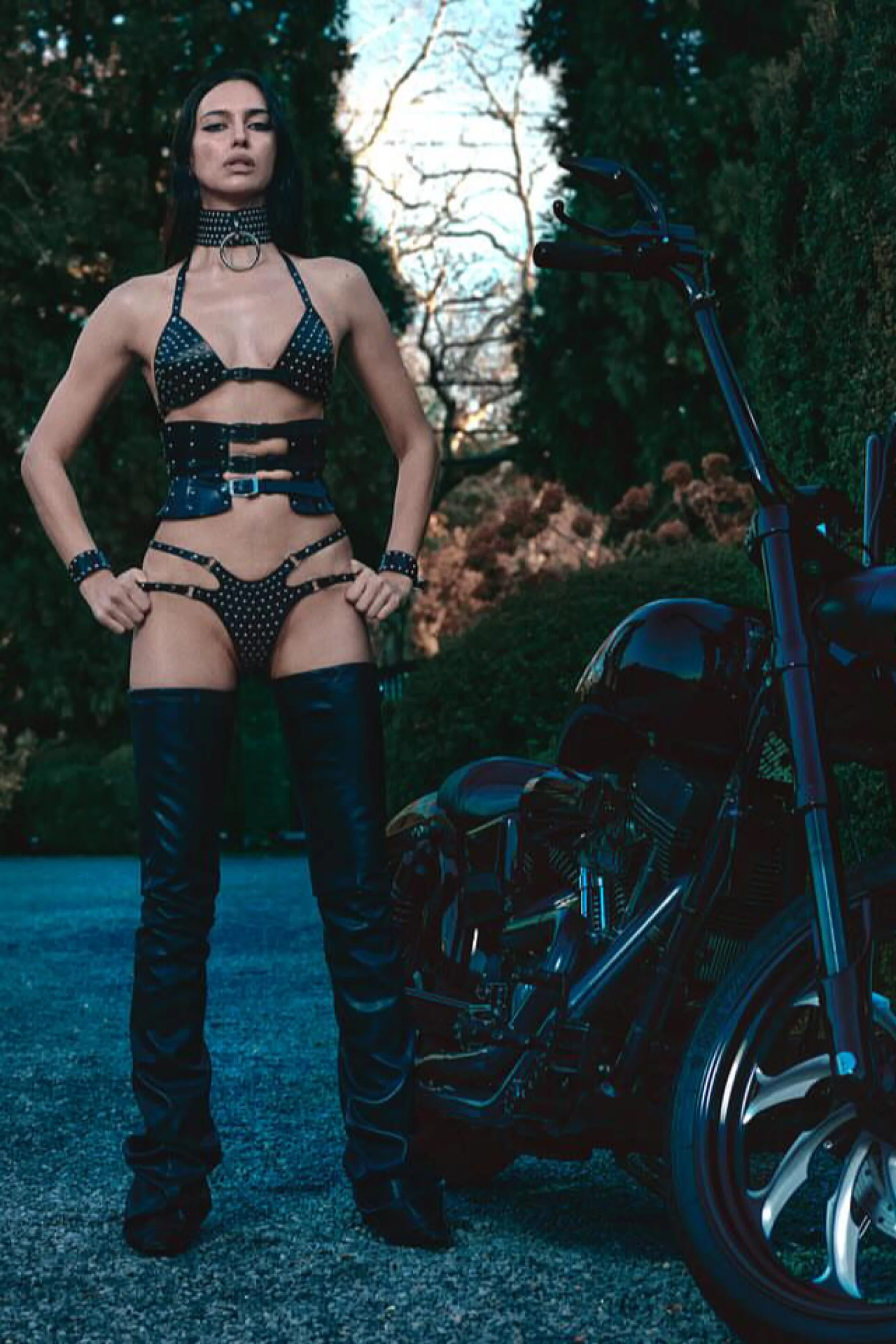
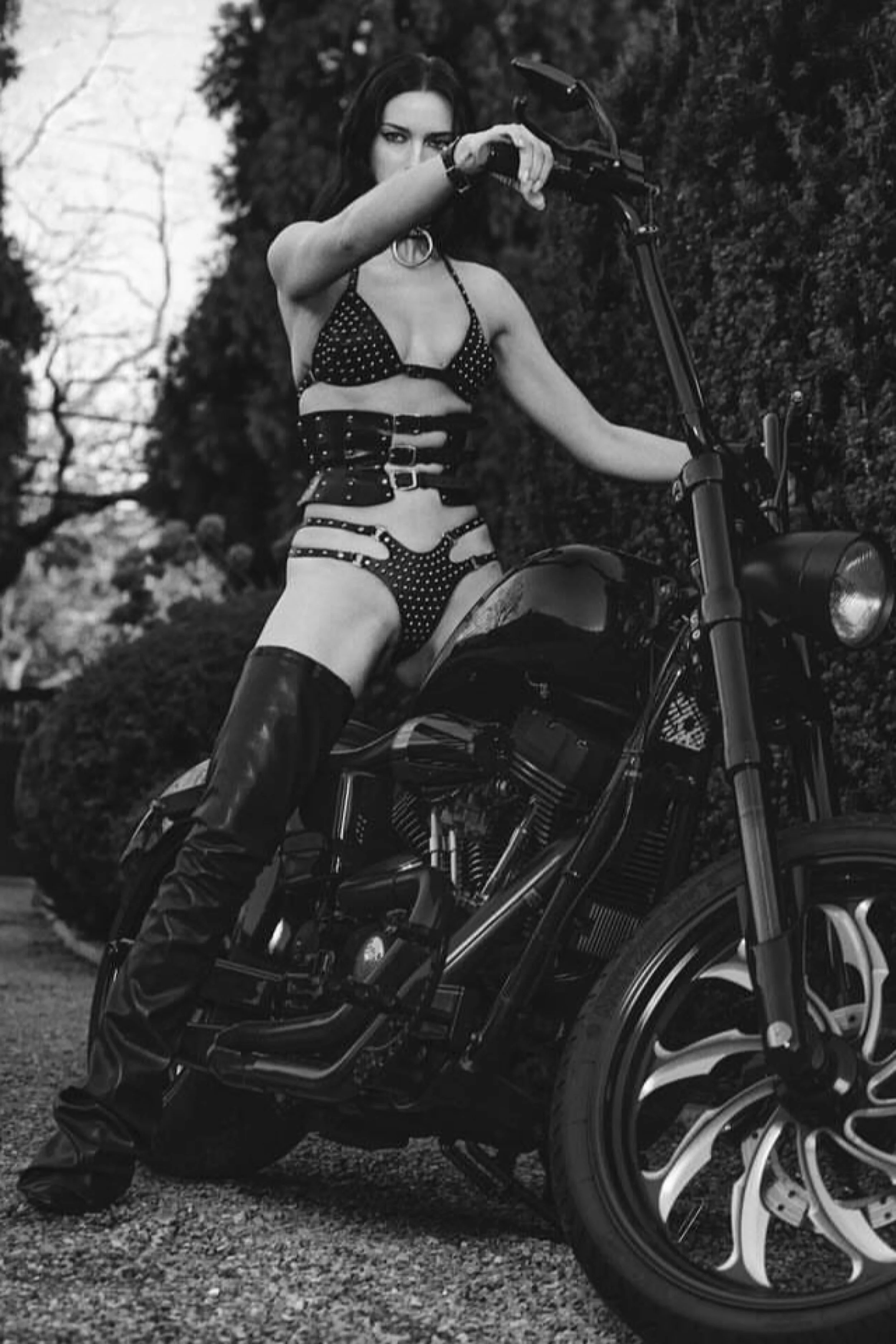
Then comes the hardware chapter. Straps, studs, buckles—arranged with a designer’s discipline, not chaos. In lesser hands, it could read like noise. On you, it reads like styling architecture. The accessories are decisive: a statement choker with bold hardware, wrist cuffs that echo the same language, everything aligned to keep the look coherent. You’re not wearing “pieces.” You’re wearing a system. A visual thesis. A hard-edged poem in black and metal.
And here’s where I get a little dangerous with my own imagination—tasteful, PG-13, fashion-first. Because I’m not just looking at the outfit; I’m looking at the way you hold it. The way your shoulders stay open and steady. The way your gaze doesn’t ask permission. The way you make a dramatic styling choice feel oddly quiet, like confidence with the volume turned down. Irina Shayk, you make boldness look clean. That’s rare.
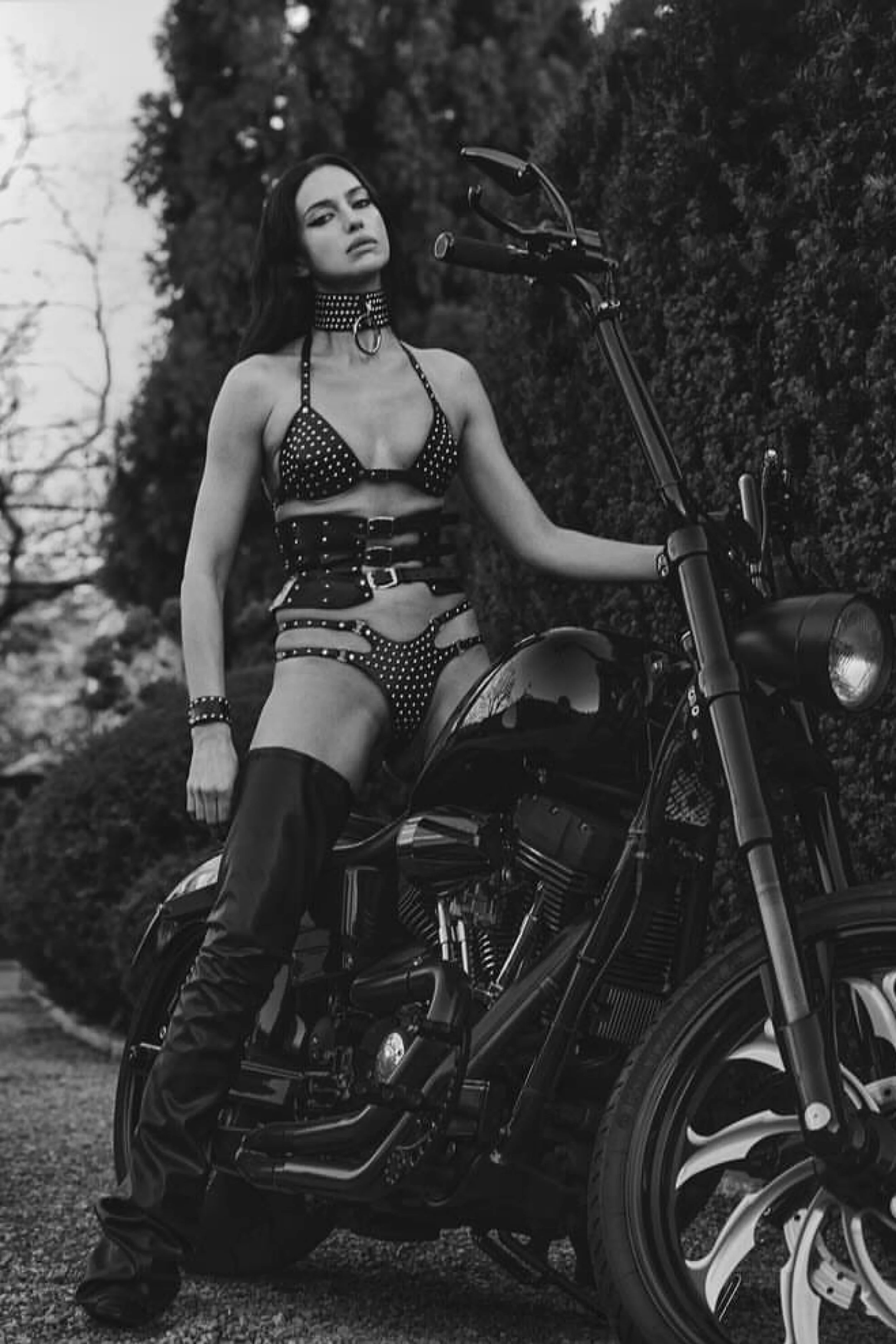
There’s an outdoor frame that feels like a pause between scenes: you stand with the bike nearby, the background soft and natural, and yet you’re the sharp object in the center. The styling is still black-on-black, but the composition changes the temperature. It’s dusk-cool, cinematic, slightly unreal—like a memory you can’t quite place, only feel. You don’t smile. You don’t soften. You don’t “perform.” You simply exist in the look, and that becomes the performance. I find that maddeningly elegant.
Then the set dips into darker interior mood—stairs, shadow, a tighter pool of light. The silhouette changes again: sharp shoulders, deep V geometry, smooth leather that reads like a uniform for a future that’s both glamorous and slightly dangerous. It’s minimalist, but not simple. The shape does the talking. The lighting does the flirting. And you—of course—stay controlled, letting the garments and the pose create the drama while you keep the emotional line cool and unreadable.
I keep thinking about the craftsmanship of this story: how each frame is a different dialect of the same language. Leather as armor. Leather as liquid. Leather as tailoring. Hardware as jewelry. Boots as foundation. It’s a lesson in consistency: keep the palette strict, let texture do the work, and suddenly the whole world feels like it’s been color-graded around you.
And yes—because I’m me, and this is my private editorial confession—I love the way you make the viewer work. You don’t hand out warmth. You don’t explain the mood. You let the audience chase the meaning through seams and shine, through buckles and shadow, through the way a coat hem moves or a boot toe points. It’s flirtation the fashion way: not a wink, but a refusal to over-give. I’m hooked.
By the end, the set feels like a black-chrome fable: nature in the background, machine in the foreground, and you in the center—part couture heroine, part myth, part immaculate styling lesson. The shoot doesn’t need a plot twist because you are the twist: you take familiar pieces—moto leather, corset structure, hardware accents—and you make them read new, editorial, inevitable. Irina Shayk, you don’t wear the look. You author it. And I’d be lying if I said I didn’t want to follow the next sentence wherever you decide to place it.
Shop the Look
- Enter the scene in a cropped leather bomber jacket — boxy sleeves, modern bite.
- Go classic-but-sharp with a black leather moto jacket — clean lapels, instant edge.
- Sculpt the torso with a faux leather corset top — structured, editorial, precise.
- Keep it sleek in high-waisted faux leather pants — glossy finish, long line.
- Add cinematic movement with a long black leather trench coat — drama in one piece.
- Own the silhouette in thigh-high black boots — commanding, leg-lengthening.
- Ground the look with knee-high biker boots — heavy sole, cool restraint.
- Make hardware feel like jewelry with a black O-ring choker — bold center detail, editorial energy.
- Layer in attitude with a studded harness accessory — straps and studs, styled clean.
- Finish the noir styling note with black leather gloves — polished, cinematic, controlled.
Style It With
- Keep daring necklines secure with double-sided fashion tape — invisible hold, clean lines.
- Make leather look expensive forever with a leather conditioner — soft sheen, better drape.
- Get that editorial glow finish with illuminating body oil — light-catching, camera-ready.
- Smooth the foundation under fitted pieces with seamless shapewear — clean base, no lines.
- Maintain razor-sharp outfits with a handheld garment steamer — crisp in minutes.
- Get sleek, glossy hair to match the palette with a flat iron — smooth finish, editorial polish.
- Keep chains and hardware tangle-free with a jewelry organizer — chokers, cuffs, order.
- Seal the mood in the air with a smoky unisex perfume — dark-luxe, lingering.
Closing Note
Irina Shayk, you made black feel like a living thing here—shifting from armor to liquid, from tailoring to threat, without ever losing that immaculate control. I can’t decide what I love more: the discipline of the styling, or the way you let the camera chase you and still never catch you completely.
If this were my next imagined page, I’d keep the palette ruthless and let one detail misbehave—one flash of chrome, one sharp seam, one coat hem that moves like a dare. And yes, purely for the fashion of it, I’d follow that dare into the next scene.