The Night the Drizzle Won: Chocolate-Caramel Turtle Cheesecake
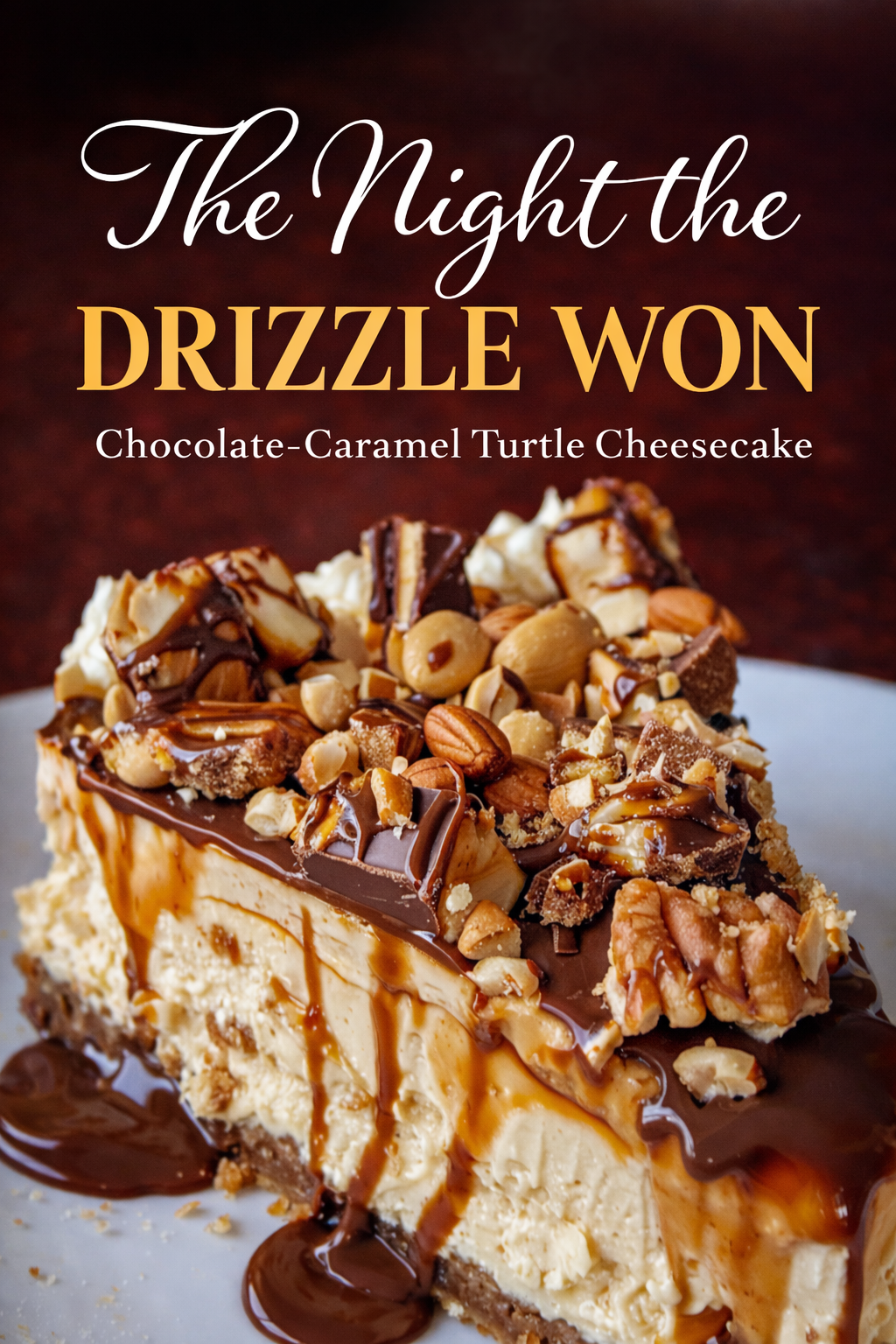
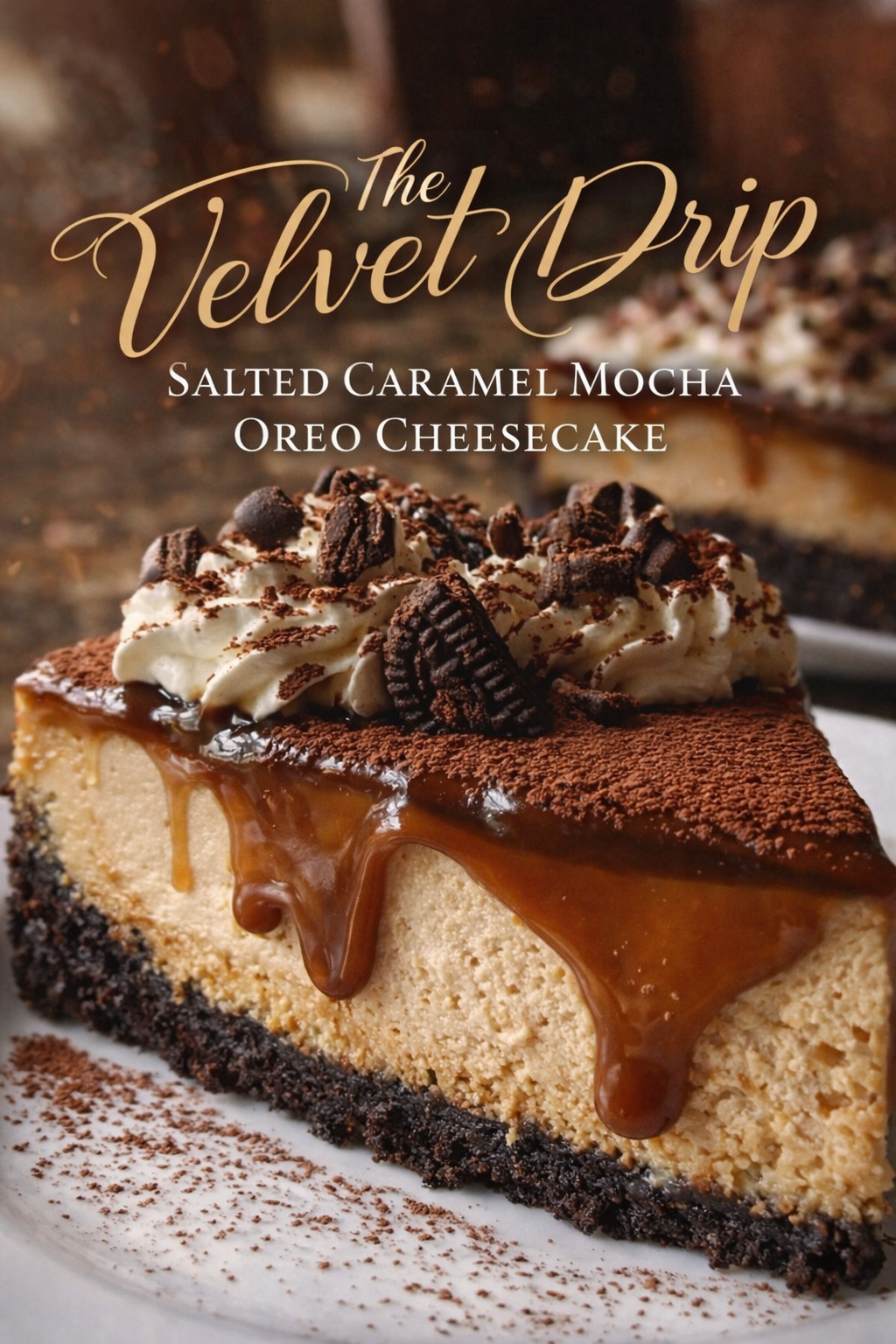
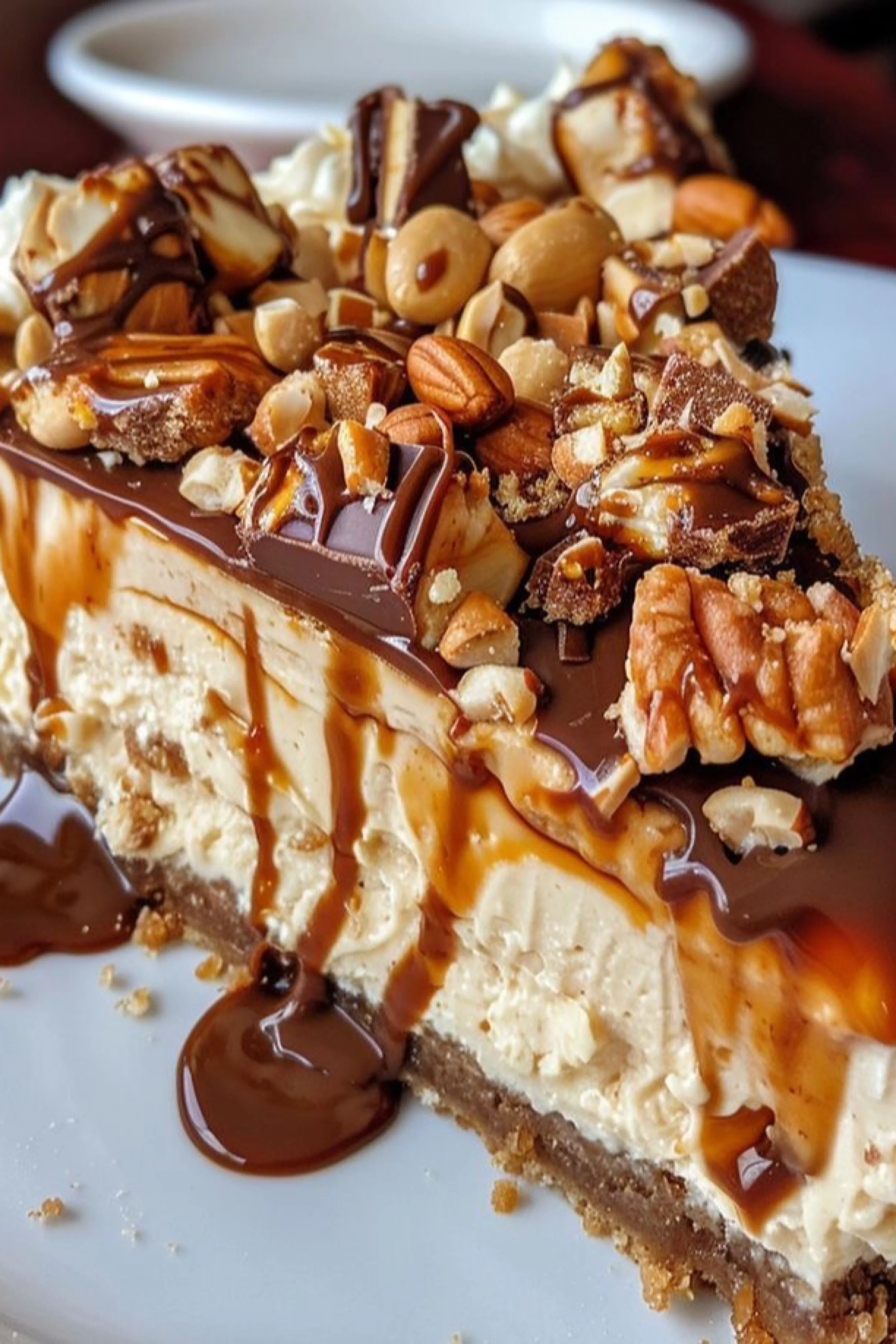
It arrives like a dare on a white plate—one thick wedge, calm and pale at the center, wearing its decadence like a glossy coat. The first thing you notice is the shine: a dark chocolate veil poured so smoothly it looks like lacquer, pooling at the edges in slow, deliberate curves. Then the caramel—amber, sticky, and unapologetic—threading down the sides in warm rivulets that catch the light and make the whole slice feel alive, as if it’s still melting into its own sweetness. The cheesecake itself holds that unmistakable density: creamy, tight, and plush, with a faint marbling of caramel tucked inside like a secret. A crumb crust anchors it all—sturdy, buttery, and slightly darker than graham, suggesting toasted crumbs and deep sugar notes.
And then there’s the crown.
A chaotic, beautiful pile of texture sits on top: chopped nuts scattered like confetti, a pecan half perched near the edge, and candy-bar-like chunks with chocolate-striped tops that look like they were dropped there mid-celebration. Some pieces are glossy with chocolate, others glint with crushed bits—tiny shards that promise snap and crunch against the soft center. A whisper of whipped cream peeks out in the background, not as an afterthought, but as a soft contrast to all that shine, like a cloud behind a storm of caramel.
This is the kind of dessert that changes the temperature of the room. People stop talking when it hits the table. Forks slow down. Someone leans closer, inspecting the layers, wondering how the chocolate stays so sleek, how the caramel clings without slipping, how the slice stands so tall without collapsing into a delicious mess. It’s not just sweet—it’s engineered pleasure, a careful balance of rich and bright, creamy and crunchy, buttery and bittersweet.
The vibe is indulgent but not sloppy. The chocolate top is the line between dessert and drama, and it practically begs for a clean pour from a small saucepan that heats evenly so the ganache lands smooth instead of grainy. The slice is tall enough to make you grateful for a springform pan that releases cleanly, because this is not the moment for a stuck crust or a cracked edge you have to patch with extra whipped cream. And if you’ve ever fought lumpy batter at the worst possible time, you already know the quiet luxury of a stand mixer that whips without strain or even a hand mixer with enough power for thick cream cheese, the kind that makes the filling turn silky instead of stubborn.
The scent alone tells you what’s coming. Vanilla first—warm, almost floral—followed by toasted nuts and that deep cocoa note that lives inside good chocolate. Caramel brings a buttery edge that feels like browned sugar and slow heat, and beneath it all the crust throws off a toasted sweetness that reminds you of late-night baking and the way butter smells when it hits crumbs and becomes something larger than itself. It’s the kind of dessert that feels both nostalgic and brand-new at the same time—like a candy shop memory, rebuilt in cheesecake form and dressed for an evening out.
This is the “turtle” idea, but turned into something more editorial: chocolate + caramel + nuts, yes—but layered and styled so each bite lands like a sequence. The first bite is ganache and caramel, glossy and bold. The second is crunch—nuts, candy pieces, that tiny snap of chocolate. Then the filling settles in: creamy, tangy, and sweet enough to carry the topping without becoming cloying. A good slice does that. It doesn’t overwhelm; it conducts.
And the best part is that it’s achievable in a real kitchen, with real tools, as long as you treat it like a dessert that deserves patience. A water bath isn’t fussy—it’s insurance. Cooling slowly isn’t optional—it’s the reason your cheesecake stays tall and clean instead of splitting down the center. Even the topping has its own quiet logic: toast the nuts so they taste like themselves, use a caramel that pours but doesn’t run, and finish with chocolate that sets softly, not like a hard shell. Having a roasting pan for a gentle water bath and wide heavy-duty foil makes the whole process feel less like risk and more like ritual.
What you end up with is a dessert that doesn’t just satisfy a craving—it stages a moment. One slice looks like a whole story: the caramel trails like punctuation, the chocolate drips like a signature, and the nutty crown like the final line that makes everyone reach for a fork. It’s rich, yes—but it’s also balanced, with enough tang in the filling and enough bite on top to keep it from becoming a sugar fog. It’s the kind of cheesecake you bring out when you want people to remember the night, not just the meal.
So if you want a dessert that feels like a little bit of chaos held together by craft—something creamy, glossy, crunchy, and impossibly satisfying—this is the one. Make it cold. Serve it clean. Let the drizzles do the talking.
Recipe
A rich, creamy cheesecake with a buttery crumb crust, a silky chocolate ganache cap, and a caramel-and-nut “turtle” topping for maximum crunch and drama.
Ingredients
Crust
- 2 cups graham cracker crumbs (or chocolate cookie crumbs)
- 3 tbsp granulated sugar
- 6 tbsp unsalted butter, melted
- Pinch of salt
Filling
- 32 oz cream cheese, room temperature
- 1 cup granulated sugar
- 1 cup sour cream, room temperature
- 1 tbsp vanilla extract (or vanilla bean paste)
- 4 large eggs, room temperature
- 2 tbsp all-purpose flour
- 1/4 tsp salt
- Optional: 1/3 cup thick caramel sauce (to ripple inside)
Chocolate Ganache
- 8 oz semi-sweet chocolate, chopped
- 3/4 cup heavy cream
- Pinch of salt
Turtle Topping
- 1 1/2 cups mixed nuts (pecans, almonds, peanuts, macadamias), toasted and chopped
- 1/2 cup chopped chocolate pieces or candy-bar chunks
- 1/2 cup thick caramel sauce, plus more for drizzling
- Optional: whipped cream for serving
Method
- Prep the pan: Heat oven to 325°F. Line the bottom of a 9-inch springform pan with parchment; lightly grease sides.
- Make the crust: Mix crumbs, sugar, salt, and melted butter. Press firmly into the pan bottom (and slightly up the sides). Bake 10 minutes, then cool.
- Mix the filling: Beat cream cheese until smooth. Add sugar, then sour cream and vanilla. Mix in flour and salt. Add eggs one at a time on low, just until combined.
- Bake (water bath): Wrap the pan in foil, place in a roasting pan, and add hot water halfway up the sides. Pour in filling. Bake 60–75 minutes until edges are set and center still gently wobbles.
- Cool slowly: Turn oven off, crack the door, cool 1 hour. Chill at least 6 hours (overnight best).
- Ganache: Heat cream until steaming; pour over chopped chocolate. Rest 2 minutes, whisk smooth, add salt. Spread over chilled cheesecake.
- Top: Spoon caramel over ganache, scatter nuts and chocolate chunks, then drizzle more caramel. Chill 30 minutes before slicing.
Step-by-Step Guide
1) Build a crust that stays crisp
Start with crumbs that taste toasted, not raw. If you’re using graham crumbs, consider a deeper base by blending in a handful of chocolate cookie crumbs; it plays beautifully with caramel and the chocolate cap. Melt butter fully so it coats every crumb, then press firmly—really firmly—into the pan. The easiest way is to use the flat bottom of a measuring cup or glass. If you want clean slices later, lining the bottom with parchment is your best friend, especially with a tall cheesecake and sticky caramel.
If you’re shopping tools, a secure release matters more than you think—use a 9-inch springform pan with a tight seal. It helps prevent seepage during the water bath and keeps the crust intact when you unmold.
Bake the crust briefly. Ten minutes is enough to set the butter and toast the crumbs so they don’t absorb moisture from the filling. Let it cool while you mix the batter.
2) Get the filling silky, not airy
Cheesecake batter should be smooth and creamy, not whipped and foamy. Room temperature cream cheese is non-negotiable; cold blocks fight back and create lumps you’ll chase forever. Beat the cream cheese first until it looks like frosting—then add sugar. After that, sour cream and vanilla bring softness and a tangy edge that keeps the dessert from tasting flat.
This is where equipment helps. A steady mixer makes a difference, whether it’s a stand mixer for thick batters or a strong hand mixer. Keep the speed moderate and scrape the bowl often; most lumps hide along the bottom edge.
Add eggs last, one at a time, on low. Overmixing eggs adds air, and air expands and contracts—hello cracks. You want the batter to look glossy and unified, not bubbly.
Optional caramel ripple: If you want the interior to echo the caramel on top, spoon in a few ribbons of thick caramel and gently swirl. Thick matters—runny caramel disappears into the batter. Look for a thick caramel sauce made for drizzling if you don’t want to make your own.
3) Water bath: the quiet secret of a flawless top
A water bath isn’t about being fancy—it’s about controlled heat. Cheesecake hates temperature swings. A gentle steam environment keeps the edges from overbaking while the center catches up.
Wrap the pan in multiple layers of foil. Use wide foil if you can; fewer seams means fewer leaks, and wide heavy-duty foil makes it easier. Set the wrapped pan inside a larger roasting pan and pour hot water around it, about halfway up the sides. A sturdy pan helps here—a large roasting pan is one of those “forever kitchen” pieces.
Bake at 325°F until the edges are set but the center still has a gentle wobble—think “set Jell-O,” not liquid. If you’re nervous about doneness, an internal temp around 150°F is a sweet spot; an instant-read thermometer takes the guessing out without turning it into a science project.
4) Cool like you mean it
Most cracks happen after baking, not during. The cheesecake is still cooking from residual heat, and sudden cooling makes it contract too fast.
Turn the oven off, crack the door, and let it sit for an hour. Then move it to the counter until it reaches room temp. Only after that goes it into the fridge—ideally overnight. Cold cheesecake slices cleanly, holds topping better, and tastes richer because the flavors have time to settle.
5) Ganache that shines instead of seizing
For the glossy chocolate cap, chop chocolate finely so it melts evenly. Heat the cream just until steaming—don’t boil it aggressively. Pour over the chocolate, let it sit for two minutes, then whisk from the center outward until it turns satiny.
If you want an extra-smooth finish, whisk in a tiny pinch of salt. Spread the ganache on the chilled cheesecake with an offset spatula for clean sweeps. The goal is a smooth layer that drapes slightly over the edges, like the slice in the photo—rich, sleek, and unapologetically thick.
6) Toast the nuts for real flavor
Nuts are not just crunch—they’re aroma. Toast them lightly until they smell fragrant and look a shade darker. Cool, then chop. A mix gives the best texture: pecans for buttery depth, almonds for crispness, peanuts for that candy-shop nostalgia, and macadamias for luxe richness.
You can keep it simple with a mixed nut blend for baking, then customize your ratios. The important part is to avoid adding nuts straight from the bag without toasting; it’s the difference between “fine” and “wow.”
7) Build the “turtle” crown without making a mess
Once ganache is set slightly (cool to the touch but not fully firm), drizzle caramel in thick ribbons. Then add your chopped nuts and chocolate pieces. This layering helps everything stick instead of sliding off.
For the candy-bar vibe, chop chocolate into chunky shards or use pre-made pieces—just make sure they’re not so tiny that they disappear into the nuts. If you want that dramatic look—big chunks plus drizzle—search for chunky chocolate pieces for baking.
Finish with one more caramel drizzle. If you love a dramatic drip down the sides, warm the caramel slightly so it flows, but don’t make it hot—warm caramel runs fast. A squeeze bottle can help control the lines; a dessert drizzle bottle set makes the look intentional instead of accidental.
8) Slice clean, serve bold
For slices that look like the photo, use a long sharp knife and wipe it between cuts. Warm the blade under hot water, dry it, slice, repeat. The ganache will cut cleaner, and the topping won’t drag.
If you want the full experience, serve with soft whipped cream. It lightens each bite and gives you that cloud-like contrast against chocolate and caramel. A quick whip is easy with a handheld electric whisk or a mixer—just don’t overwhip into butter.
Troubleshooting (so it always works)
- Crack on top: Usually too much air (overmixed eggs) or cooling too fast. Next time, mix eggs on low and cool in the oven with the door cracked.
- Water bath leak: More foil layers, fewer seams, and a tight springform seal. Consider a silicone pan wrap for water baths if you bake cheesecakes often.
- Grainy ganache: Cream was too hot or chocolate wasn’t chopped enough. Rewarm gently and whisk; a smooth finish is worth the extra minute.
- Topping sliding off: Apply toppings when ganache is slightly tacky, and use thicker caramel.
Variations that still feel “turtle”
- Espresso turtle: Add 1–2 tsp instant espresso powder to the ganache for deeper chocolate flavor.
- Salted caramel: Stir flaky salt into your caramel drizzle right before finishing; it makes everything taste sharper and more grown-up.
- Chocolate crust: Swap graham for chocolate cookie crumbs to make the whole slice darker, moodier, and even more candy-like.
When you nail the chill, the shine, and that crunchy crown, you get the payoff: a cheesecake that slices tall, looks expensive, and eats like a celebration—creamy center, crisp crust, glossy chocolate, and caramel drips that feel like the final word.