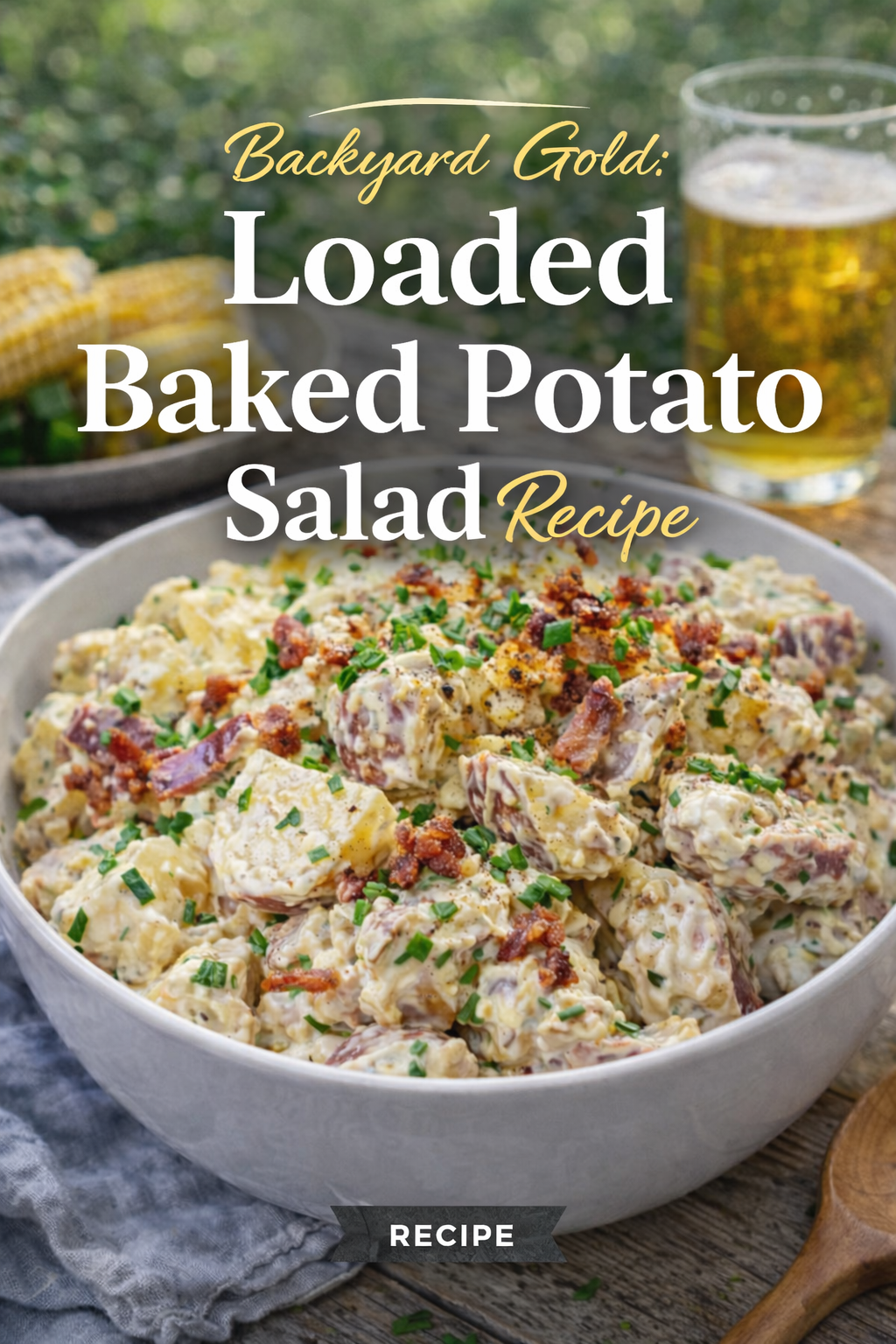
Backyard Gold: Loaded Baked Potato Salad Recipe With Bacon, Chives, and Creamy Tang
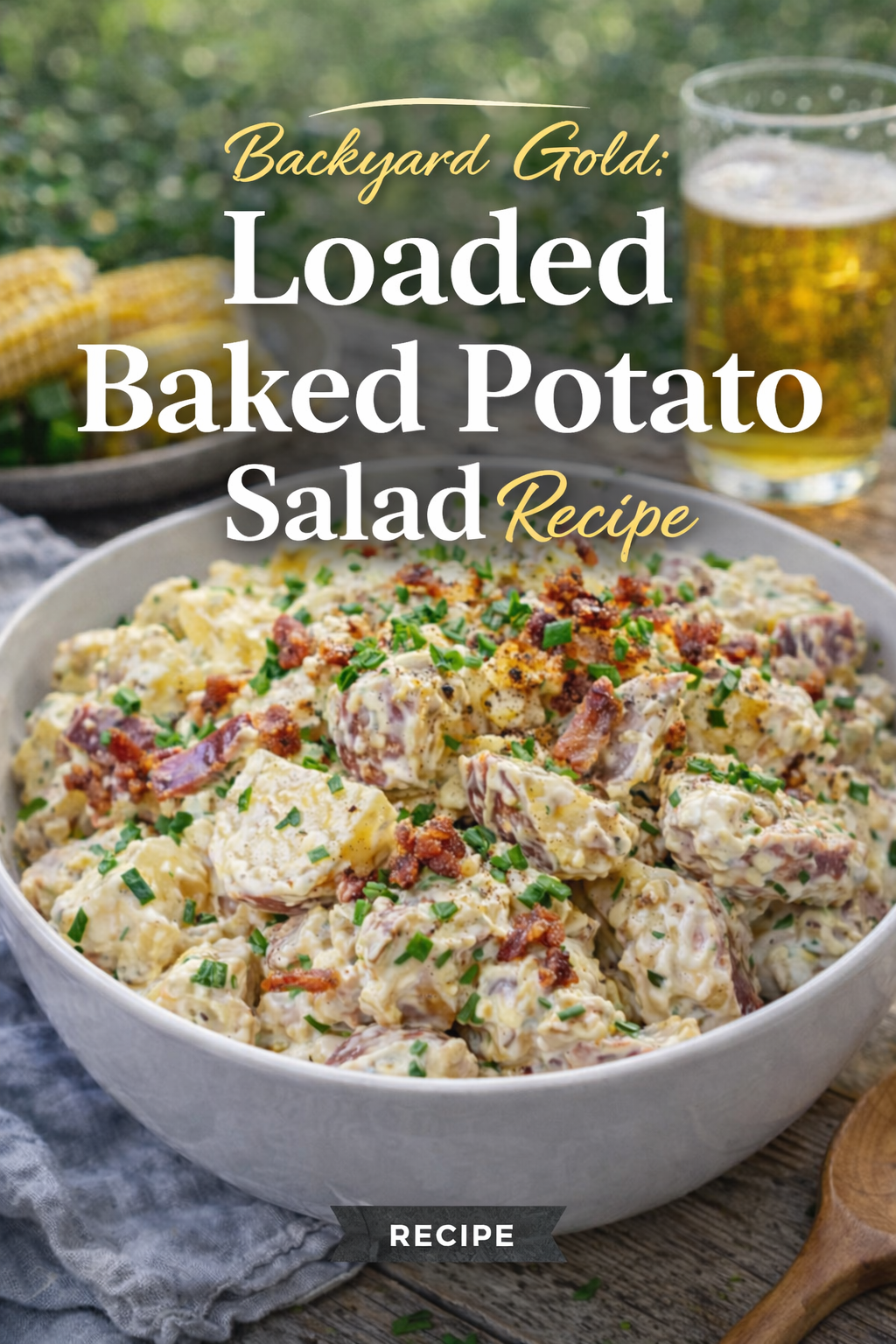
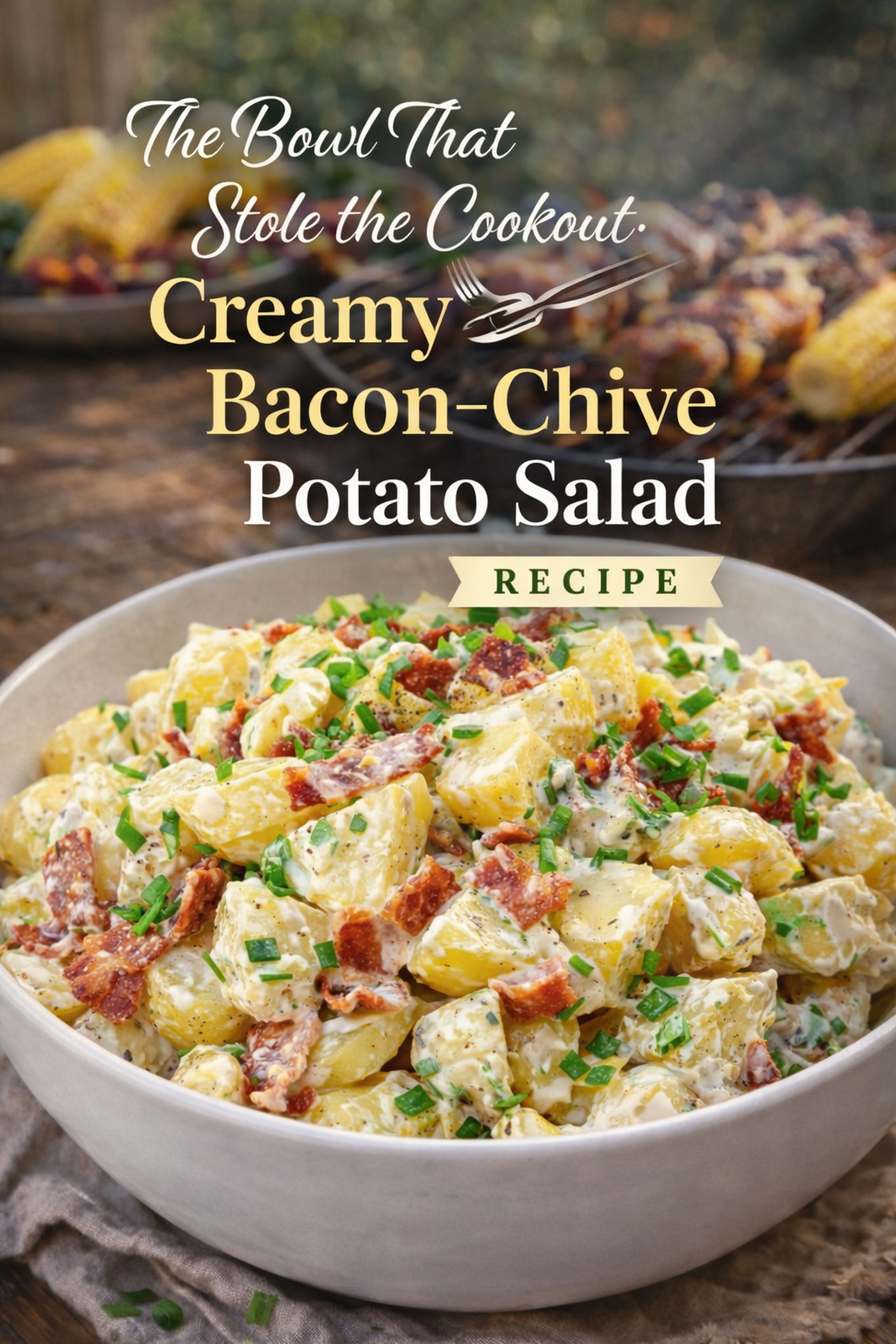
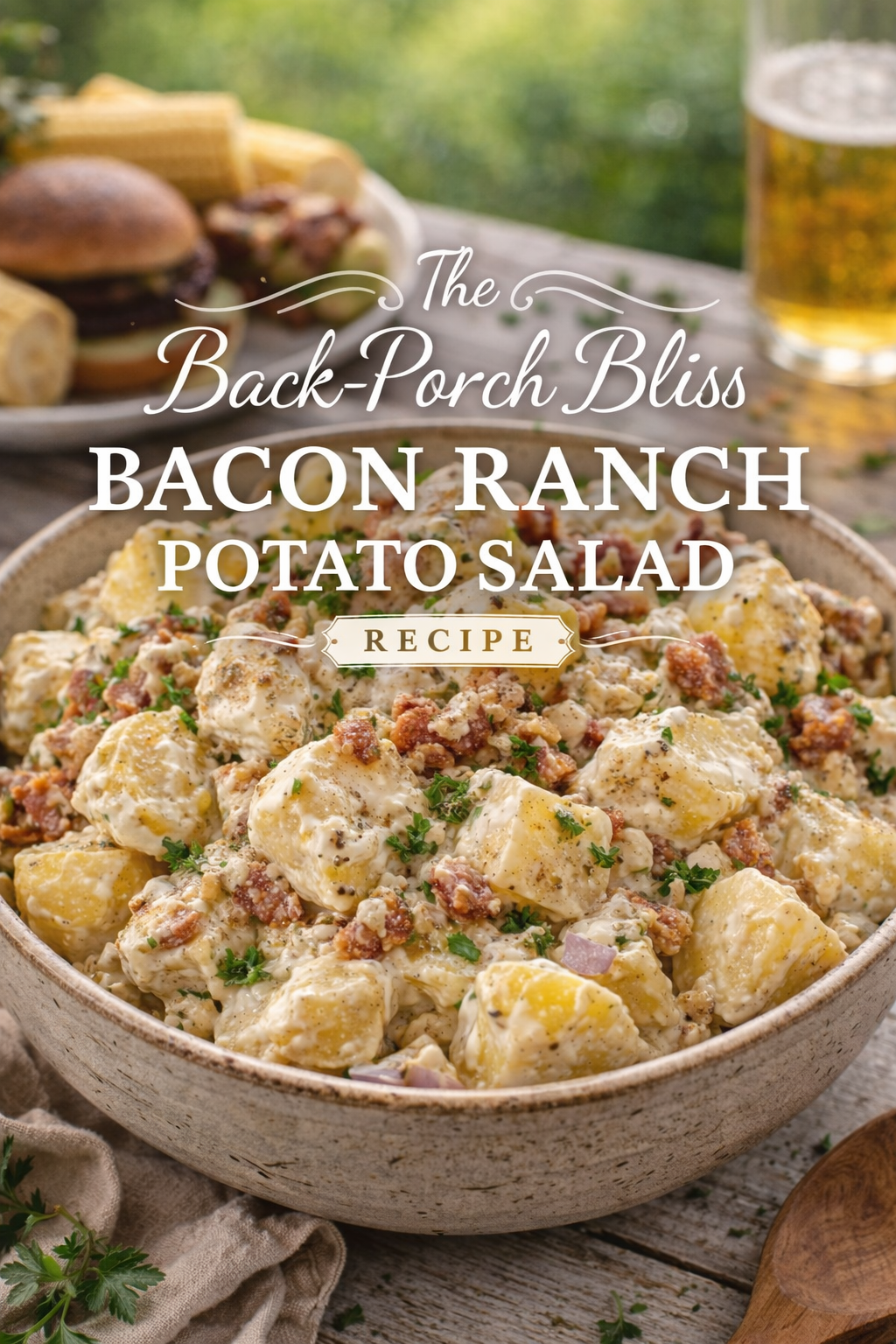
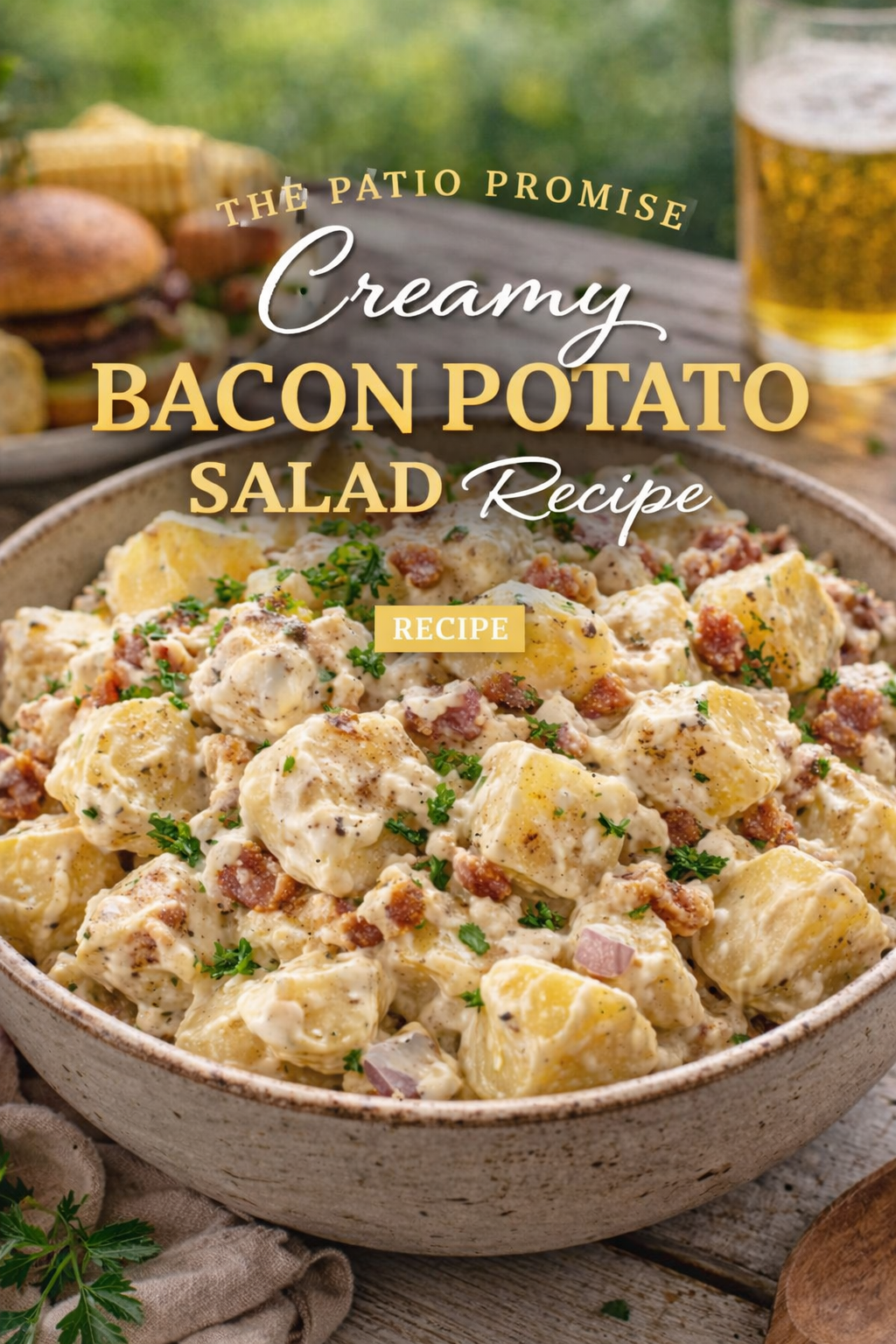
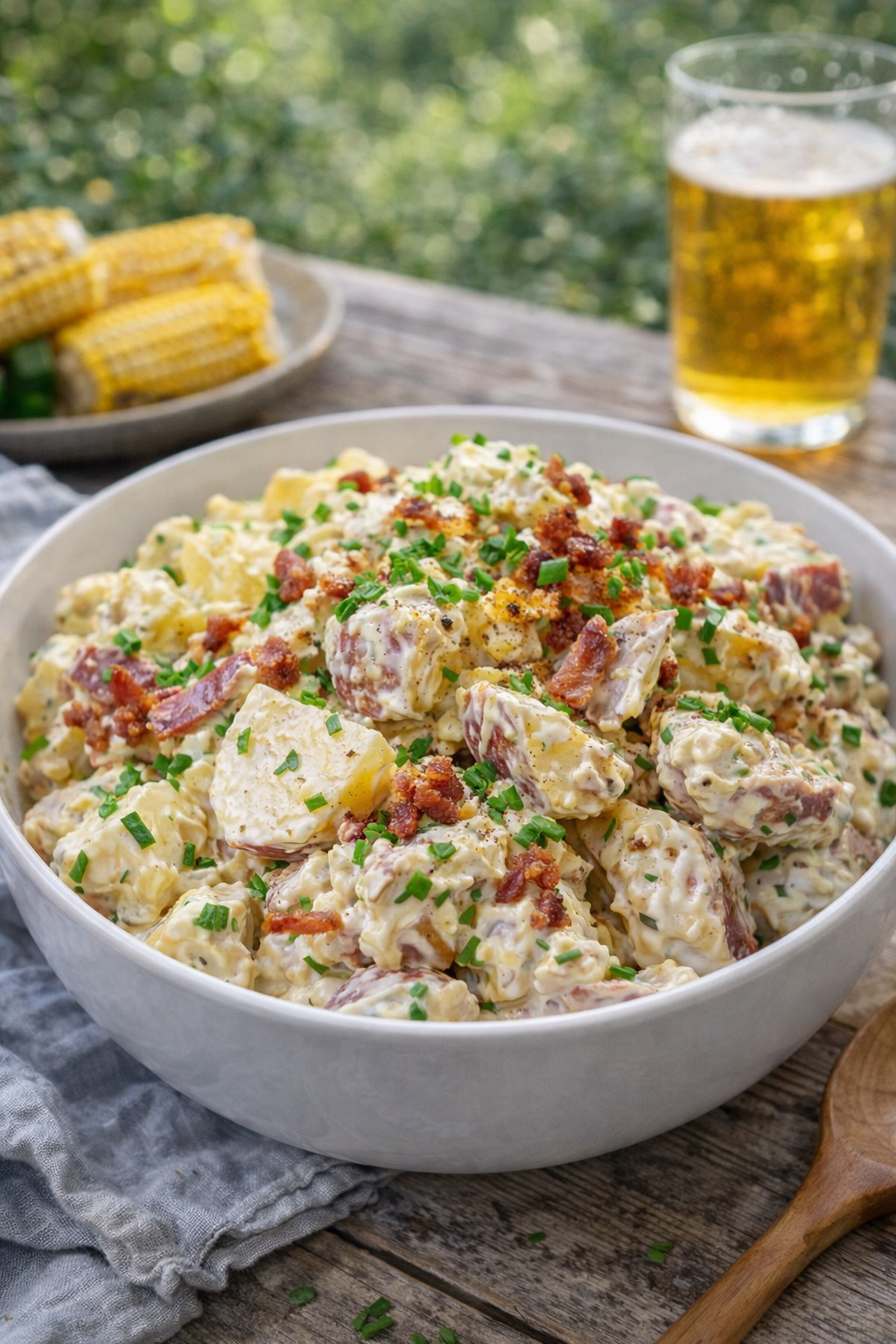
The bowl lands on the table like a promise—cool, heavy, and generous—its surface mounded with buttery potato chunks dressed in something glossy and pale, the kind of creaminess that clings without drowning. In the light, the salad looks almost sunlit, flecked with black pepper and green chive confetti, with a scatter of bacon that reads less like garnish and more like a dare. The potatoes themselves hold their shape—tender at the edges, sturdy in the middle—suggesting they were treated with respect: cooked just enough, cooled properly, then folded gently so they keep that soft, satisfying bite. Every spoonful hints at contrast: warm-weather ease with a little bit of indulgence, picnic simplicity with a steakhouse attitude.
Behind it, the scene feels like late afternoon. Wood grain under the bowl, a soft cloth pushed aside like someone already reached for seconds, and that golden drink catching the light in a glass—cold, bright, and uncomplicated. Even the background blur feels like summer moving slowly: greenery, bokeh, the hush of a yard or patio where time stretches. This is the kind of side dish that doesn’t behave like a side. It pulls focus. It makes corn-on-the-cob taste sweeter just by being nearby. It convinces grilled chicken it’s allowed to be a little bland because the potatoes are doing the heavy lifting.
Loaded baked potato energy is the whole point—just translated into something scoopable, shareable, and dangerously easy to keep picking at with a fork. The flavors don’t arrive all at once; they layer. First you get the cool tang of sour cream and mayo, then the mellow richness of potato, then the smoky crunch of bacon, and finally that clean, oniony snap of chives that resets your palate so you want another bite. A little mustard can sit in the background like a quiet amplifier, not shouting but lifting everything. If you add cheddar, it becomes even more of a “backyard feast” situation—salty, creamy, savory, and just sharp enough to keep it from feeling heavy.
There’s a particular satisfaction in making a potato salad that doesn’t apologize for being creamy. This one leans into it—but with structure. The potatoes aren’t mush. The dressing isn’t watery. The seasoning is deliberate. It’s the difference between “something in a bowl” and a dish that feels like it belongs next to smoke from a grill and laughter that carries down a driveway.
The best part is how familiar it feels while still getting that little upgrade—like putting on a clean white tee that somehow fits better than every other one you own. The secret isn’t complicated; it’s the small choices. The right potato variety. The way you salt the water. The moment you dress them. The patience to chill it so the flavors settle. If you’ve ever had potato salad that tasted flat, it’s usually because the potatoes weren’t seasoned early enough—or because the dressing was slapped on without balance. This version is built to taste like it knows what it’s doing.
And it’s built for real life, too. It holds up on a table. It gets better after an hour. It welcomes substitutions without falling apart. You can prep it with a sturdy mixing bowl that won’t slip while you fold the potatoes, and it helps to have a sharp chef’s knife for clean potato cubes and quick chive work so everything looks as good as it tastes. A fine microplane-style grater for garlic or a little lemon zest can turn a “good” dressing into the kind that makes people pause mid-sentence. Even the bacon becomes less of a chore with a rimmed sheet pan for oven-crisping without splatter drama, and once the potatoes are cooled, a silicone spatula that folds without smashing keeps those gorgeous chunks intact.
This is the bowl you set down when you want the day to feel easy—when you want the table to look abundant, even if the menu is simple. It’s the dish that quietly says: someone cared enough to make the basics feel special. And when the sun starts to dip and the conversation gets softer, it’s still there—creamy, peppery, flecked with green—waiting for one more scoop.
Loaded Baked Potato Salad Recipe
This creamy, bacon-studded potato salad channels all the comfort of a loaded baked potato—cool, tangy, savory, and built for cookouts, potlucks, and easy dinners.
Ingredients
- 3 lb Yukon Gold potatoes (or red potatoes), cut into 1-inch chunks
- 1 tsp kosher salt, plus more for the water
- 3/4 cup mayonnaise
- 3/4 cup sour cream
- 1 tsp Dijon mustard (optional, but recommended)
- 1–2 tsp apple cider vinegar or pickle brine
- 1/2 tsp freshly ground black pepper (plus more to finish)
- 8 slices bacon, cooked crisp and crumbled
- 1/2 cup chopped chives (or sliced green onions)
- 1 cup shredded cheddar (optional)
- Optional add-ins: minced garlic (1 small clove), smoked paprika, diced pickles, celery
Method / Instructions
- Boil the potatoes: Place potatoes in a large pot, cover with cold water by 1–2 inches, salt the water generously, and bring to a boil. Simmer 10–12 minutes until fork-tender but not falling apart. Drain well.
- Season while warm: Spread potatoes on a tray to steam-dry 5 minutes. Sprinkle with 1 tsp salt and a splash of vinegar/pickle brine; toss gently.
- Make the dressing: Stir together mayo, sour cream, Dijon (if using), black pepper, and any optional seasonings.
- Combine: Once potatoes are warm-but-not-hot, fold in dressing. Add most of the bacon and chives (and cheddar if using), reserving a little for the top.
- Chill: Cover and refrigerate at least 1 hour (best 3–6 hours). Before serving, taste and adjust salt, pepper, and tang. Finish with reserved bacon and chives.
Start by choosing potatoes that can take a little handling. Yukon Golds are ideal for this style: creamy enough to feel luxurious, but firm enough to hold shape when folded into dressing. Reds work too—slightly waxier, a touch more bite. Aim for uniform chunks so everything cooks evenly; a large cutting board with plenty of room for clean, fast prep makes it easier to keep your cuts consistent without crowding your workspace.
Put the potatoes in the pot first, then cover with cold water. This matters: cold-starting helps the centers and edges cook at the same pace, so you’re less likely to end up with blown-out corners and undercooked middles. Salt the water more than you think you should—potatoes drink seasoning from the inside out, and this is the only chance to flavor them all the way through. Bring to a boil, then reduce to a steady simmer. A hard boil can bang the potatoes around and rough them up too much. You’re looking for “fork-tender but still structured.” If a fork slides in with slight resistance and the cube doesn’t crumble when lifted, you’re there.
Drain thoroughly, then give the potatoes a short steam-dry. Spread them on a tray or in a wide bowl for five minutes. This step is quiet but powerful: excess moisture is the enemy of thick, clingy dressing. Too much steam trapped inside the salad later can thin everything out. If you want to be extra precise, a rimmed baking sheet that lets the potatoes breathe in a single layer makes the steam-dry effortless.
While the potatoes are warm, season them with a little salt and a splash of vinegar or pickle brine. This isn’t about making it taste sour—it’s about waking the potatoes up. Warm starch absorbs that tiny hit of acidity and carries it deep into the bite, so the final salad tastes lively instead of heavy. If you’ve ever eaten potato salad that felt one-note, it usually skipped this moment.
Now build the dressing. The classic backbone is mayo plus sour cream: mayo brings body and richness, sour cream brings tang and a slightly lighter feel. Dijon mustard is optional, but it’s a smart supporting character—quietly sharpening the edges without turning it into “mustard potato salad.” Stir until smooth. If you want a subtle punch, grate in a small garlic clove using a fine zester-style grater that turns garlic into a paste, which disappears into the dressing instead of leaving raw chunks behind. Black pepper matters here, too; don’t be shy. Pepper is part of that loaded-potato personality.
Timing is everything when you combine. If the potatoes are piping hot, they can melt the dressing and turn it loose and greasy. If they’re fully cold, they won’t absorb any flavor and the salad can taste like “dressing on the outside.” The sweet spot is warm-but-not-hot—comfortable to touch, still releasing a little steam, but not radiating heat. Fold, don’t stir aggressively. Use a wide silicone spatula that lifts and turns without crushing so you keep those tender chunks intact. You’re aiming for coated potatoes, not mashed potatoes.
Bacon deserves respect in a dish like this because it’s both texture and smoke. Crisp it well so it stays crunchy, and let it cool before crumbling so it breaks into clean bits. Oven-baking is the easiest way to get evenly crisp strips; a wire rack that fits inside a sheet pan lets fat drip away and keeps the bacon from frying in its own grease. Fold most of it in, then save a little for the top so every serving has that fresh crunch.
Chives (or green onions) do the same job as a squeeze of lemon in other dishes—they brighten. Add them in two stages if you want the best flavor: some folded in early so they perfume the salad, some sprinkled at the end so they taste fresh and sharp. If you’re using cheddar, fold it in once the potatoes are cool enough that the cheese won’t melt into the dressing. Shredded cheddar gives you that true “loaded baked potato” vibe; a sharper cheddar keeps the creaminess from feeling too rich.
Chilling is where everything becomes cohesive. At first, it can taste like separate parts: potatoes here, dressing there. After an hour, the flavors marry. After a few hours, it tastes intentional—pepper more integrated, tang more balanced, bacon more pronounced. Plan on at least one hour, but if it’s for a gathering, making it earlier in the day is a win.
Before serving, always taste and adjust. Cold food needs more seasoning than warm food, so you may need another pinch of salt and a few grinds of pepper. If it feels heavy, add a teaspoon of vinegar or pickle brine and fold again. If it feels too thick, loosen it with a tablespoon of milk or a spoonful of sour cream. If it feels bland, it’s often missing salt—not more mayo.
Variations that stay true to the spirit:
- Extra “loaded”: add diced pickles, a pinch of smoked paprika, and extra cheddar.
- Herby: fold in dill and parsley with the chives.
- Heat: add minced jalapeño or a shake of cayenne.
- Lighter: swap part of the mayo for Greek yogurt, keeping some sour cream for tang.
- Crunch: add finely diced celery, but keep it modest so it doesn’t hijack the baked-potato mood.
Troubleshooting is simple once you know what causes issues:
- Watery salad usually means the potatoes didn’t steam-dry or were dressed too hot.
- Mushy salad usually means overcooked potatoes or too much stirring.
- Flat flavor usually means under-salted cooking water or skipping the warm-potato seasoning step.
- Greasy dressing usually means mixing while potatoes are too hot or using bacon fat accidentally mixed in before it cools.
When it’s done right, the texture is the headline: creamy coating, tender potato bite, crisp bacon scatter, fresh green snap. It’s familiar, yes—but elevated in the way that makes people hover near the bowl. And once that first scoop happens, the rest of the day tends to fall into place.