The Takeout Glow You Can Make at Home with Ham Fried Rice Recipe
More like this
Introduction
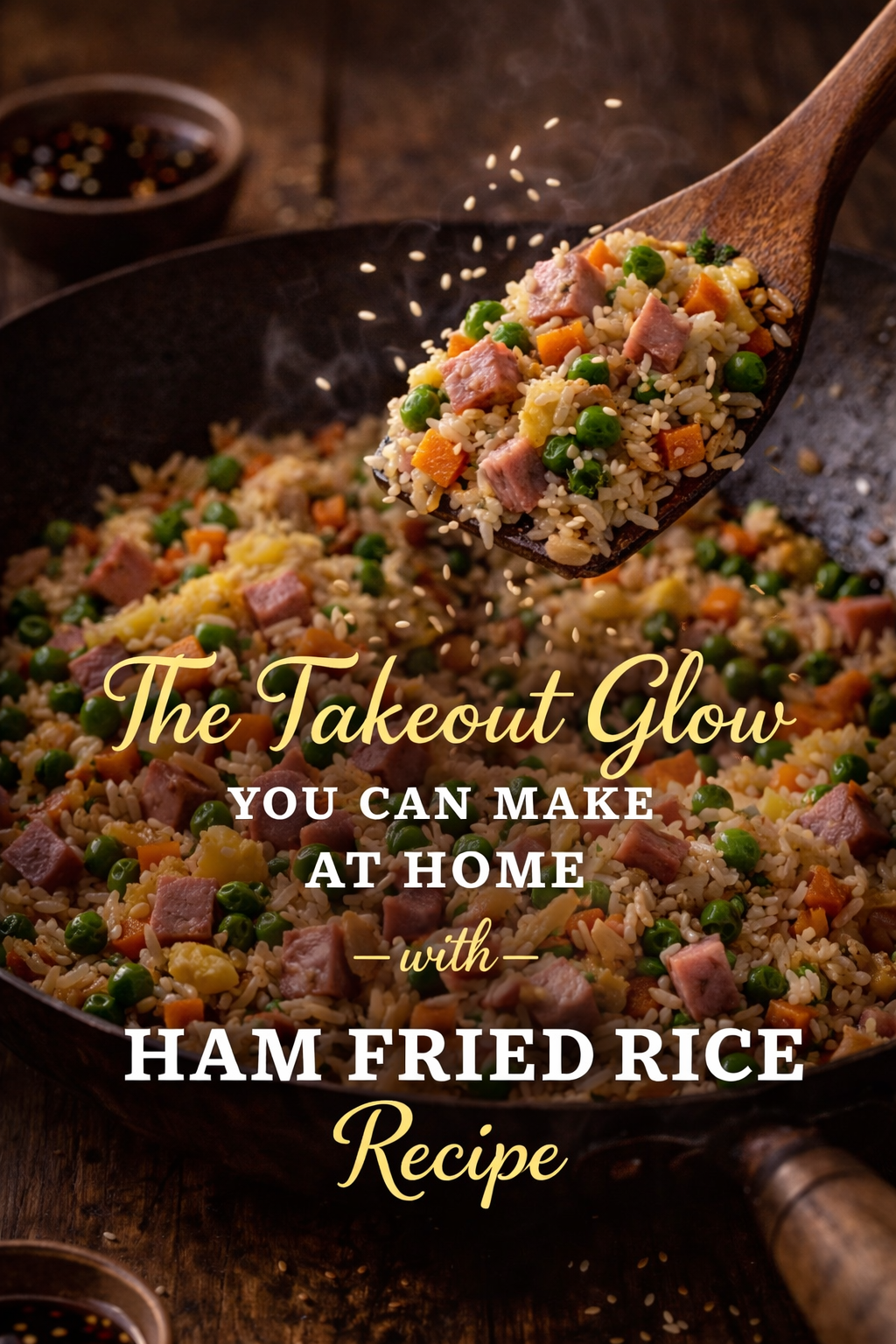
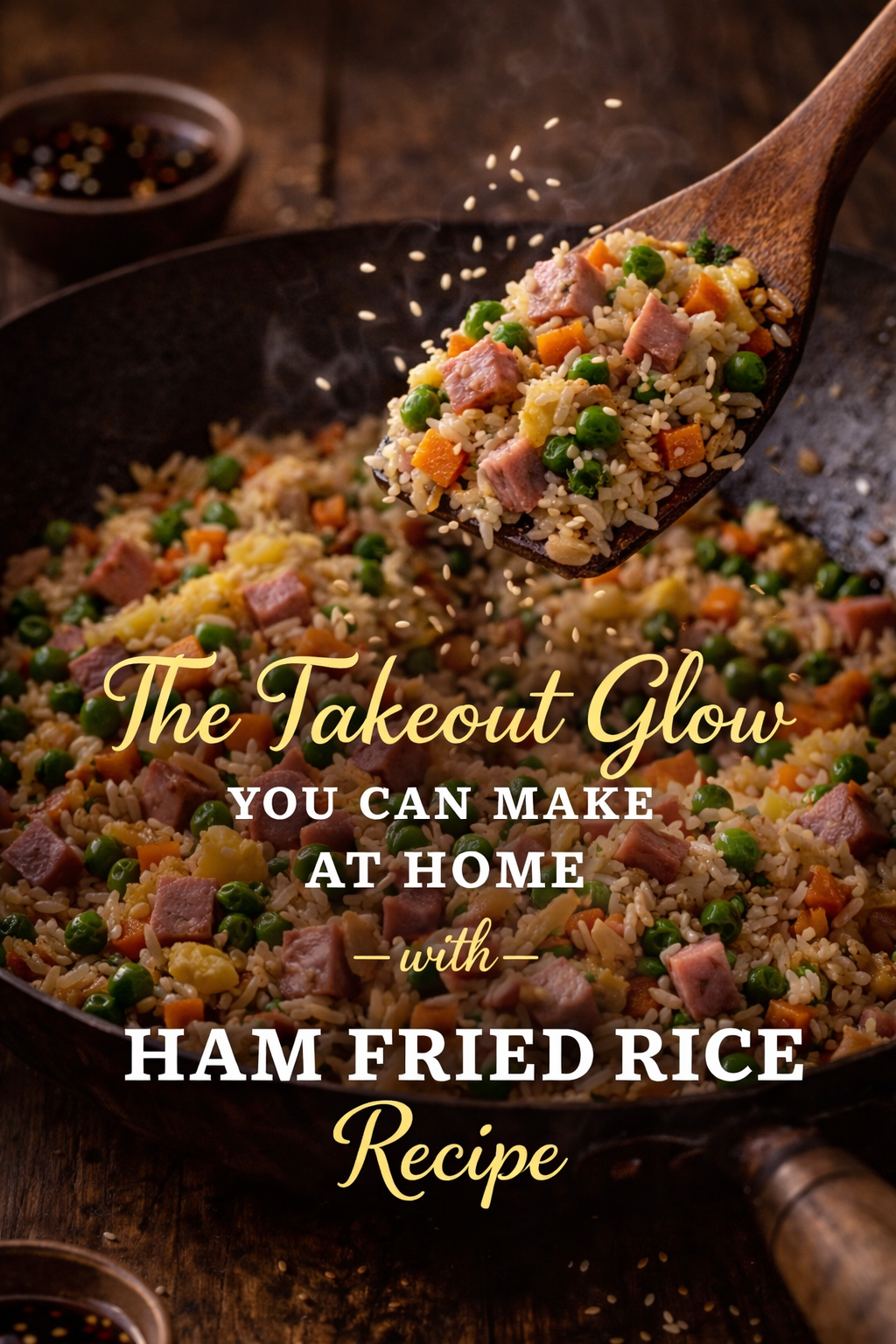
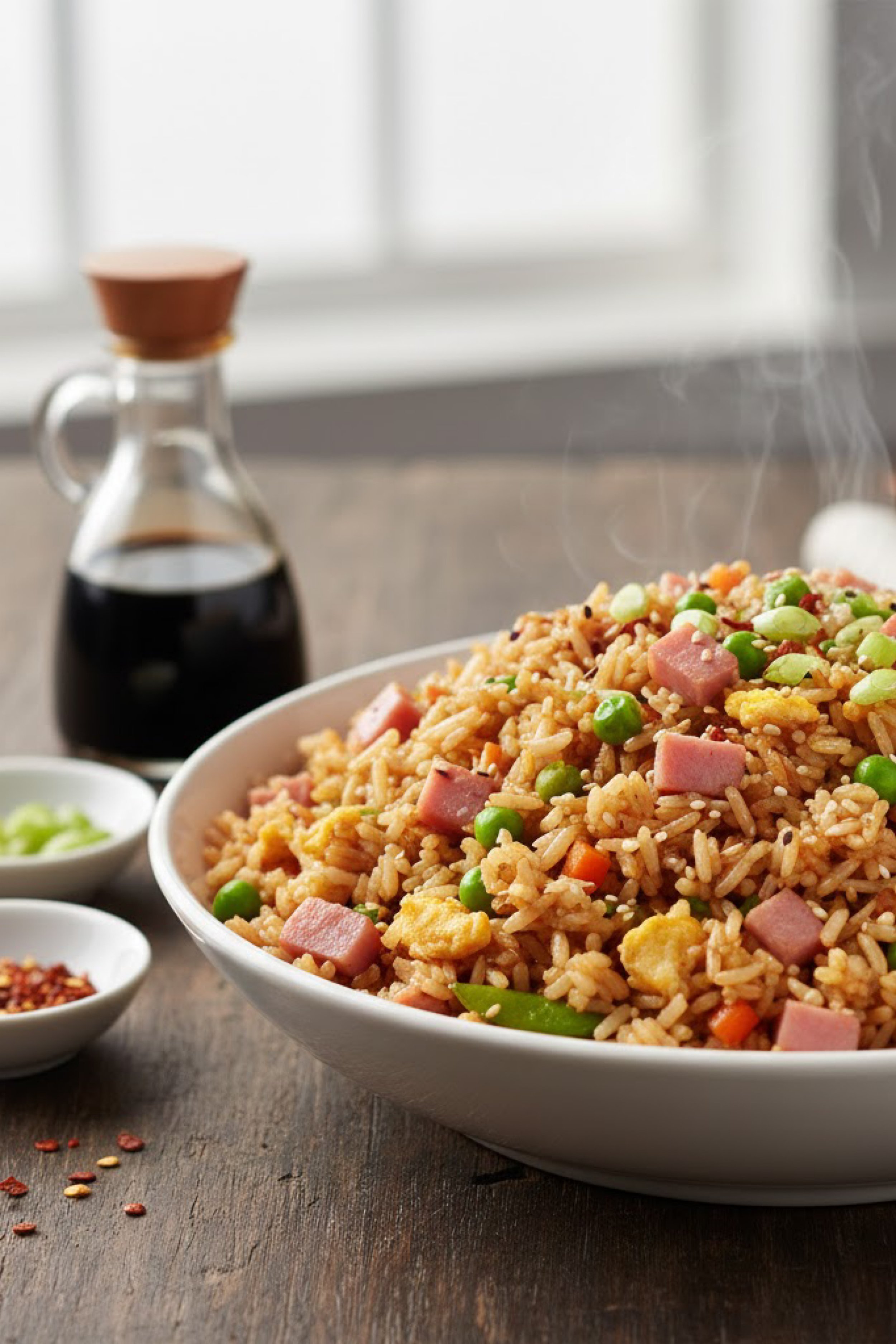
Steam curls up from the bowl in soft ribbons, catching the light just enough to make everything look warm, lived in, and irresistible. The rice is glossy and bronzed, each grain separate and lightly slicked with savory sauce. Bright peas sit against cubes of pink ham like little pops of color in a dish that already feels comforting before the first bite even lands. There are bits of carrot for sweetness, tender folds of egg for richness, and that unmistakable fried rice aroma that seems to fill a whole kitchen in seconds. Off to the side, a dark bottle of soy sauce waits quietly, while scattered seasonings on the table hint at how easily a plain bowl of leftover rice can be turned into something that feels satisfying, complete, and just a little addictive.
Ham fried rice has a particular kind of magic. It feels practical, but it never tastes like compromise. It is the kind of meal that arrives out of ingredients you may already have and somehow still tastes like it was planned. That is part of the beauty. A scoop from a skillet or wok, a few pantry basics, a cold container of cooked rice from yesterday, and suddenly dinner has texture, color, and a restaurant style finish that feels far bigger than the effort required. It is quick enough for a weeknight, but it also has that nostalgic comfort that makes it feel worth slowing down for.
There is something wonderfully timeless about recipes like this. They belong to the category of meals people come back to again and again because they solve more than one problem at once. They use leftovers well. They make vegetables feel easy. They stretch a modest amount of protein into something generous. And they create that deeply savory, almost smoky flavor that happens only when hot rice hits a hot pan and begins to toast around the edges. A good carbon steel wok for fried rice nights helps capture that kind of fast, high heat cooking beautifully, but even a roomy deep nonstick skillet for weeknight stir fry dinners can turn out a gorgeous batch when handled with confidence.
What makes this version especially appealing is the ham. It brings salt, tenderness, and a little bit of smoky depth without needing much extra work. Unlike raw proteins that demand marinating or careful timing, diced ham is ready when you are. It slips into the skillet and starts crisping at the edges almost instantly, giving the whole dish more character. Paired with fluffy rice and quick scrambled egg, it creates that ideal balance between hearty and light. A handful of frozen peas and carrots keeps things colorful and easy, while a splash of soy sauce and toasted sesame oil rounds out everything with a finish that tastes familiar in the best possible way.
Texture is everything here. Great fried rice should never feel wet or heavy. It should be lively. The grains should tumble, not clump. The vegetables should stay bright. The ham should hold its shape. The egg should be soft, distinct, and woven through the dish rather than disappearing into it. Using day old rice that chills evenly in storage containers makes a huge difference because cold rice fries instead of steaming. That small detail changes the entire final result. Fresh rice can still work in a pinch, but rice that has had time to dry just slightly in the refrigerator is what gives fried rice its signature texture and that satisfying spoonful you keep going back for.
The seasonings are simple, which is exactly why they matter. Soy sauce provides the savory base. A little sesame oil brings warmth and fragrance. White pepper or black pepper adds gentle heat. Green onions cut through the richness with something fresh and sharp. You do not need a long list to make the dish memorable. You just need balance. Keeping a bottle of toasted sesame oil for stir fry recipes and noodle bowls nearby instantly opens the door to flavors that feel fuller and more finished. The same goes for a dependable low sodium soy sauce pantry staple, which gives you better control over salt while still delivering depth.
What makes ham fried rice especially lovable is how adaptable it is. It can lean cozy and simple, or it can become a clean out the fridge masterpiece with bits of cabbage, mushrooms, snap peas, bell peppers, or bean sprouts folded in at the end. It can stay mild and family friendly, or pick up heat from chili flakes and a spoonful of crisp chili oil. It can be served straight from the pan at the kitchen counter, or spooned into wide bowls with extra green onion and sesame seeds for something that feels almost styled enough for a weekend lunch guests will remember. With the right wooden cooking utensils for stir fry and rice dishes, even the motion of tossing it all together becomes part of the pleasure.
This is the kind of food that rewards instinct. Once you learn the rhythm, it becomes second nature. Heat the pan. Crisp the ham. Scramble the eggs. Fry the rice. Fold everything together. Taste. Adjust. Serve immediately. The process moves quickly, but that speed is part of the charm. Dinner comes together with energy, aroma, and the sense that something wonderfully satisfying is about to hit the table. And when it does, it looks exactly like comfort should look: golden rice, bright vegetables, tender egg, savory ham, steam rising, chopsticks ready.
A dish like this proves that humble ingredients are often the most generous. They meet you where you are. They do not ask for ceremony. They ask only for a little heat, a little attention, and a willingness to let simple things become delicious. Ham fried rice delivers on all of that. It is warm, deeply savory, colorful enough to feel cheerful, and easy enough to become part of the regular rotation without ever feeling boring. One pan, one bowl, one spoonful, and it is easy to remember why meals like this have staying power.
Recipe
A savory, fast, and satisfying ham fried rice made with chilled rice, diced ham, vegetables, egg, and a simple soy based seasoning. It is ideal for using leftover rice and comes together quickly in a hot skillet or wok.
Ingredients
4 cups cooked cold rice
1 1/2 cups diced ham
2 tablespoons neutral oil
3 large eggs, lightly beaten
1 cup frozen peas and carrots
3 green onions, sliced
3 tablespoons soy sauce
1 teaspoon toasted sesame oil
1/2 teaspoon black pepper
1/4 teaspoon garlic powder
1 tablespoon sesame seeds, optional
Instructions
- Heat 1 tablespoon oil in a large skillet or wok over medium high heat. Add the diced ham and cook for 2 to 3 minutes until lightly browned at the edges. Remove and set aside.
- Add the remaining oil. Pour in the eggs and scramble just until set.
- Add the cold rice and break it up with a spoon or spatula. Stir fry for 3 to 4 minutes until heated through and lightly toasted.
- Add the peas and carrots, then return the ham to the pan.
- Stir in the soy sauce, sesame oil, black pepper, and garlic powder. Toss until everything is evenly coated and hot.
- Fold in the green onions and sprinkle with sesame seeds if using.
- Serve immediately.
Step by Step Guide
The secret to ham fried rice is not complexity. It is order, heat, and texture. Once those three things are working together, the dish comes alive quickly. Every ingredient has a role, and every step supports the final balance between savory flavor, tender bites, and separate, lightly toasted grains of rice.
Start with the rice, because it is the foundation of everything. Cold rice is ideal because it has had time to firm up and lose some surface moisture. That means it will fry when it meets the pan instead of turning gummy. If you cooked rice specifically for this dish, spread it on a tray and let it cool before refrigerating it for a few hours. If you are using leftovers, break apart any compacted clumps gently with your hands before cooking. This gives you a head start and makes it much easier to get that even, golden finish in the skillet. A sheet pan for cooling freshly cooked rice can help speed up that prep when you want the right texture without waiting until the next day.
Next, gather and prep everything before the heat comes on. Fried rice moves fast. Once the pan is hot, you will not want to stop and dice ham or measure soy sauce. Have your eggs beaten, vegetables ready, ham cubed, and seasonings close by. This is one of those dishes where setup creates ease. Keeping ingredients within arm’s reach lets you work confidently and keeps the rice from overcooking while you search for the next component. Small prep bowls for chopped vegetables and sauces make that process smooth and keep the cooking flow tidy.
Now think about the ham. Since it is already cooked, the goal is not doneness but flavor development. When ham hits a hot pan with a little oil, its edges begin to brown and tighten slightly, creating a deeper savory note and a more satisfying bite. This step also leaves behind tasty browned bits in the pan that season the rice naturally. Give the ham a few minutes undisturbed before stirring so it can develop color. If you move it too quickly, it warms through but never really transforms. Those golden edges matter more than most people realize.
After the ham is browned, remove it briefly and cook the eggs. Scrambling the eggs separately rather than stirring them into the finished rice helps preserve their soft texture. You want tender curds, not tiny dry flecks. Pour the beaten eggs into the hot pan, let them sit for a few seconds, then push them gently until just set. They will cook a little more later when returned to the pan, so err on the side of softness. This gives the finished fried rice richer, more distinct texture and keeps the eggs from becoming rubbery.
Then comes the rice, which should hit the pan while the heat is still lively. Add a little more oil if the pan looks dry, then spread the cold rice out so as much surface area as possible touches the hot metal. This is where flavor builds. Let the rice sit briefly before stirring. Those moments of contact help create lightly toasted edges and a subtle pan fried aroma that gives fried rice its character. Stirring constantly from the start can prevent browning, so think in intervals. Spread, sear, toss, repeat.
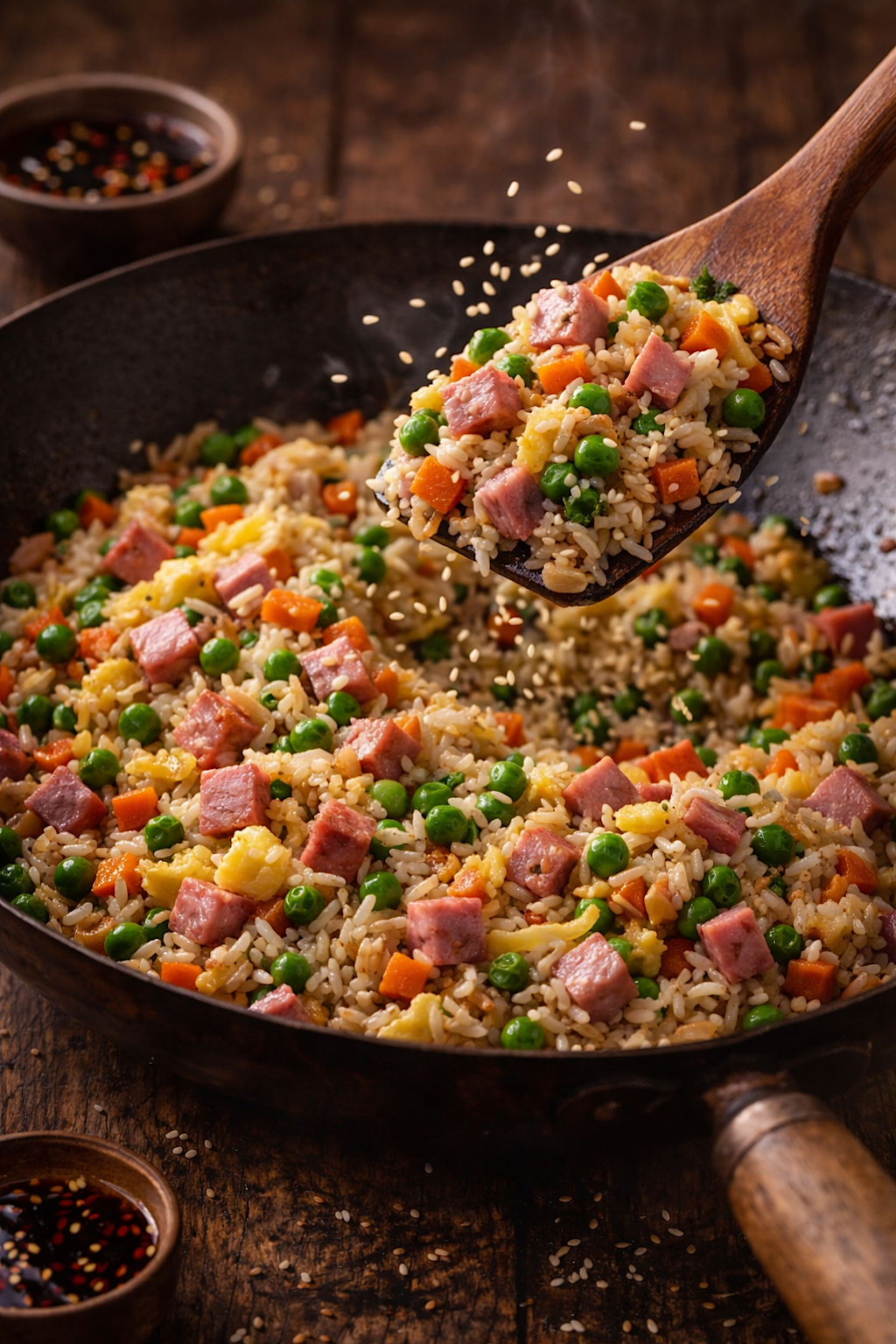
As the rice heats through, break apart remaining clumps with a spatula or spoon. A sturdy rice paddle or stir fry spatula makes this easier without crushing the grains. You are aiming for separation, not mash. Once the rice is hot and slightly glossy, add the vegetables. Frozen peas and carrots work beautifully because they are quick, dependable, and give the dish color without extra prep. Add them directly to the pan and stir just until heated through. Overcooking them can dull both flavor and texture, so keep them bright and lively.
Seasoning should happen with restraint at first. Soy sauce is powerful, and too much added too quickly can make the rice salty and wet. Start with a few tablespoons, drizzle it around the pan rather than dumping it in one spot, and toss well. This helps the sauce distribute evenly and prevents dark patches. Add sesame oil near the end rather than early in the cooking process. Its flavor is delicate and aromatic, and adding it late helps preserve its warmth and fragrance. A pinch of pepper sharpens everything without making the dish spicy.
At this stage, return the ham and eggs to the skillet. Fold them in gently so they stay distinct. The goal is integration, not disappearance. Add sliced green onions for freshness and a final lift. If you want a little extra texture, sesame seeds on top bring a subtle nuttiness and a bit of contrast. You can also add a spoonful of chili crisp or red pepper flakes at serving for a touch of heat, though the base version is satisfying exactly as it is.
A few variations work especially well with this recipe. If you want more vegetables, diced bell pepper, corn, mushrooms, chopped cabbage, or snap peas all fit naturally. Add harder vegetables earlier so they have time to cook. Softer vegetables can go in closer to the end. If you want more protein, stir in cooked shrimp or leftover chicken alongside the ham, though the ham by itself gives plenty of flavor. For extra savoriness, a tiny splash of oyster sauce can deepen the taste, but keep it modest so it does not overpower the clean, balanced profile.
Troubleshooting fried rice usually comes down to one of four issues. If the rice is mushy, it was probably too fresh or too wet. If the dish tastes flat, it likely needs a touch more soy sauce, sesame oil, or pepper. If the ingredients feel steamed rather than fried, the pan may have been overcrowded or not hot enough. And if the eggs vanished into the rice, they were either overmixed or added at the wrong point. The good news is that all of these are easy to improve the next time, and even an imperfect batch is often still deeply comforting.
Pan choice matters more than people think. A wide pan allows moisture to evaporate quickly, which keeps the rice lively instead of soggy. If your skillet is small, consider cooking in two batches rather than piling everything in at once. Crowding the pan traps steam and works against the texture you want. A large carbon steel pan for high heat stir frying is excellent for this style of cooking because it holds heat well and encourages browning.
Serving is simple but worth a moment of thought. Ham fried rice is best straight from the pan while the rice is still hot and the vegetables still bright. Spoon it into shallow bowls, finish with extra green onion, and serve with soy sauce, chili flakes, or a drizzle of sesame oil on the side for anyone who wants to customize. It can easily stand alone as a full meal, but it also pairs nicely with dumplings, cucumber salad, or a simple soup if you want a fuller spread.
In the end, this is a recipe about rhythm and confidence. It proves that leftovers can become something craveable and that a short ingredient list can still produce a dinner with color, depth, and comfort. Once you make it a couple of times, the pattern stays with you. Heat, toast, fold, season, serve. That is the beauty of ham fried rice. It is quick without feeling rushed, easy without feeling plain, and deeply satisfying in a way that keeps it coming back to the table again and again.
For the smoothest results, keep a few basics on hand: a good wok for weeknight fried rice cooking, a bottle of sesame seeds for finishing rice and noodle dishes, and dependable soy sauce for savory homemade takeout favorites. With those and a container of cold rice in the fridge, dinner is never very far away.