The Powdered Sugar Brunch Crush Monte Cristo Recipe
More like this
Introduction
There is something instantly irresistible about a breakfast bake that looks almost too pretty to disturb, especially when it arrives at the table with that particular golden finish that promises a crisp top, a soft center, and a filling that still stretches when the first serving is lifted free. This one has the kind of presence that turns a quiet morning into an occasion. It sits in a white baking dish like a centerpiece, each portion neatly puffed and bronzed, dusted with a snowfall of sugar that catches the light in the gentlest way. Beneath that delicate sweetness is a richer story waiting to unfold. Ham is folded in soft ribbons. Melted cheese tucks itself between layers of bread and pastry like a warm secret. Steam curls upward. Coffee waits nearby. The whole scene feels calm, elegant, and deeply comforting, like the sort of breakfast that makes everyone linger a little longer than planned.
What makes a Monte Cristo inspired bake so appealing is the balance. It brings together sweet and savory without forcing either side to compete. The sugar on top is not there to turn it into dessert. It is there to brighten the richness, to play against the salt of the ham and the creaminess of the cheese, to create that classic contrast that makes each bite feel fuller and more memorable. The bread becomes tender inside while the top edges deepen to a buttery crispness. When you pull up a square with a serving spatula, the layers reveal themselves slowly, almost theatrically. It is hearty without feeling heavy. Familiar without feeling ordinary. Comforting without losing its sense of style.
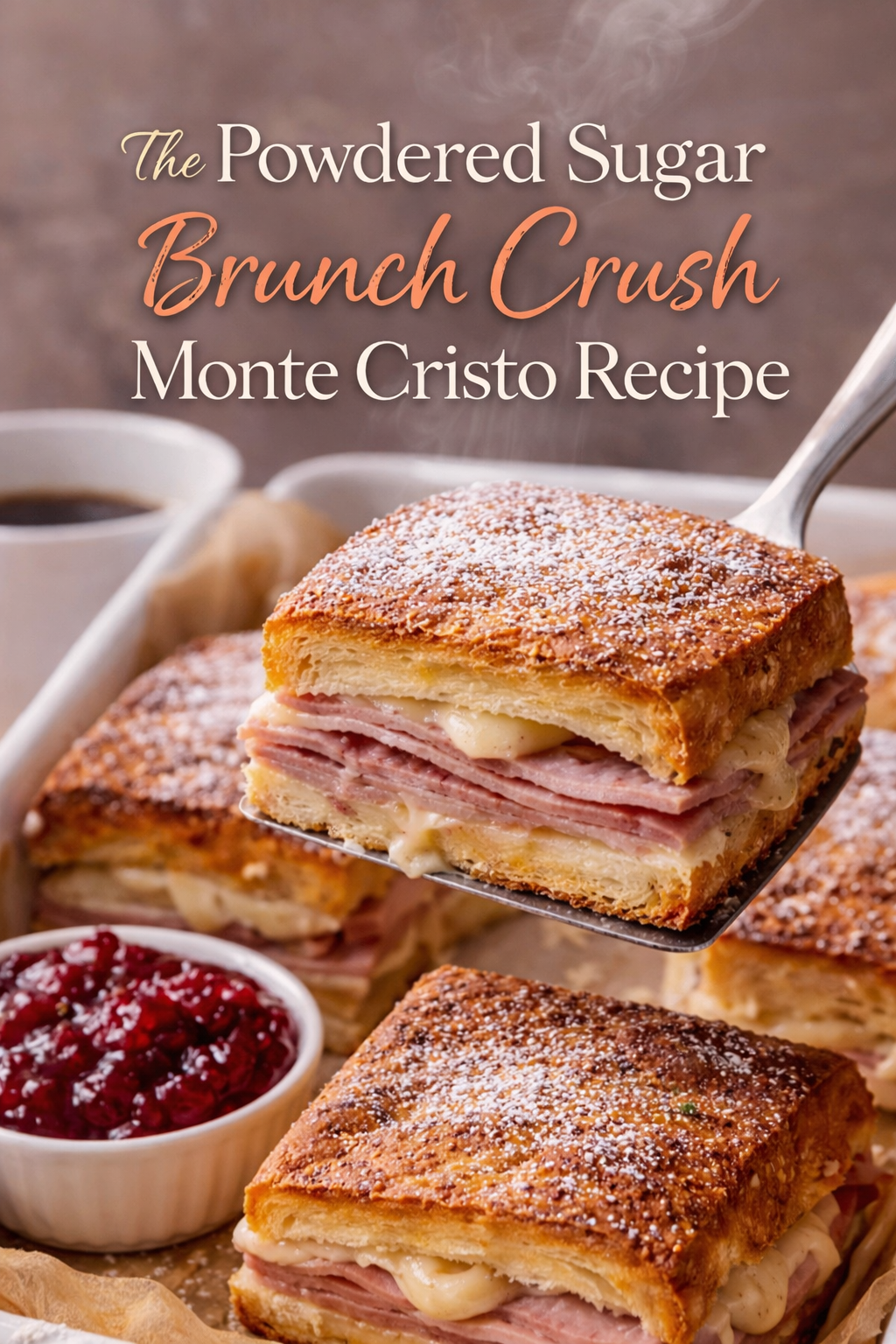
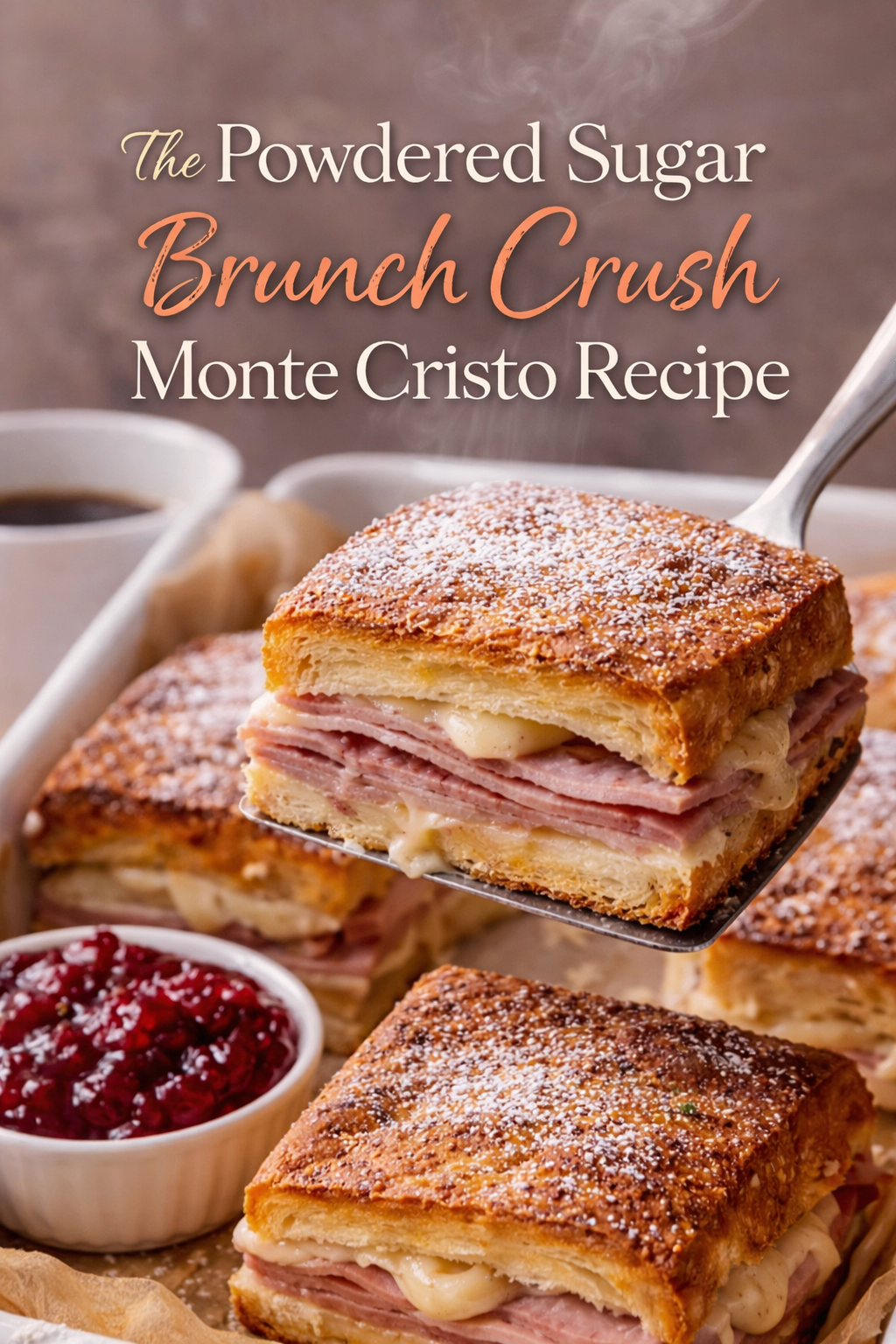
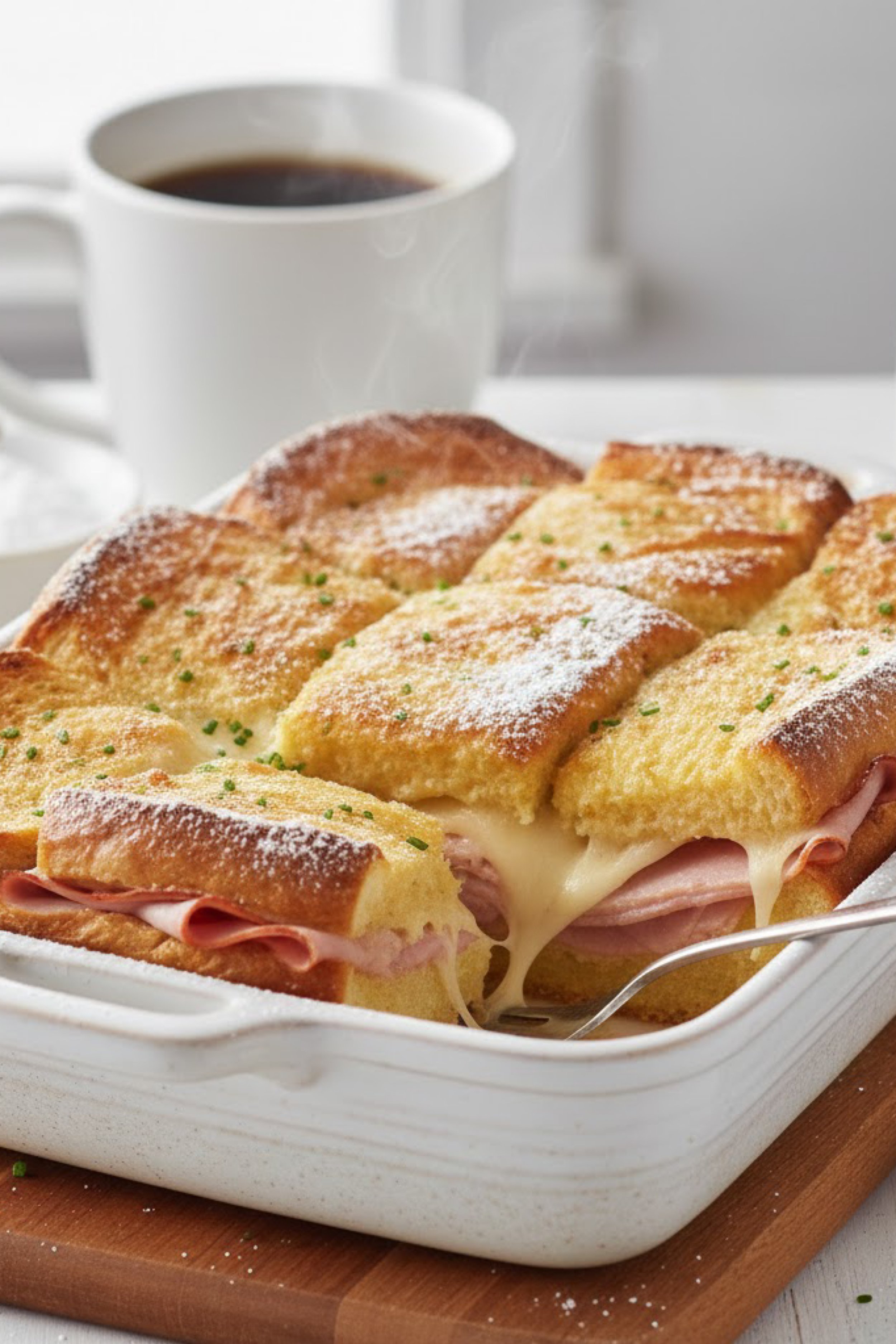
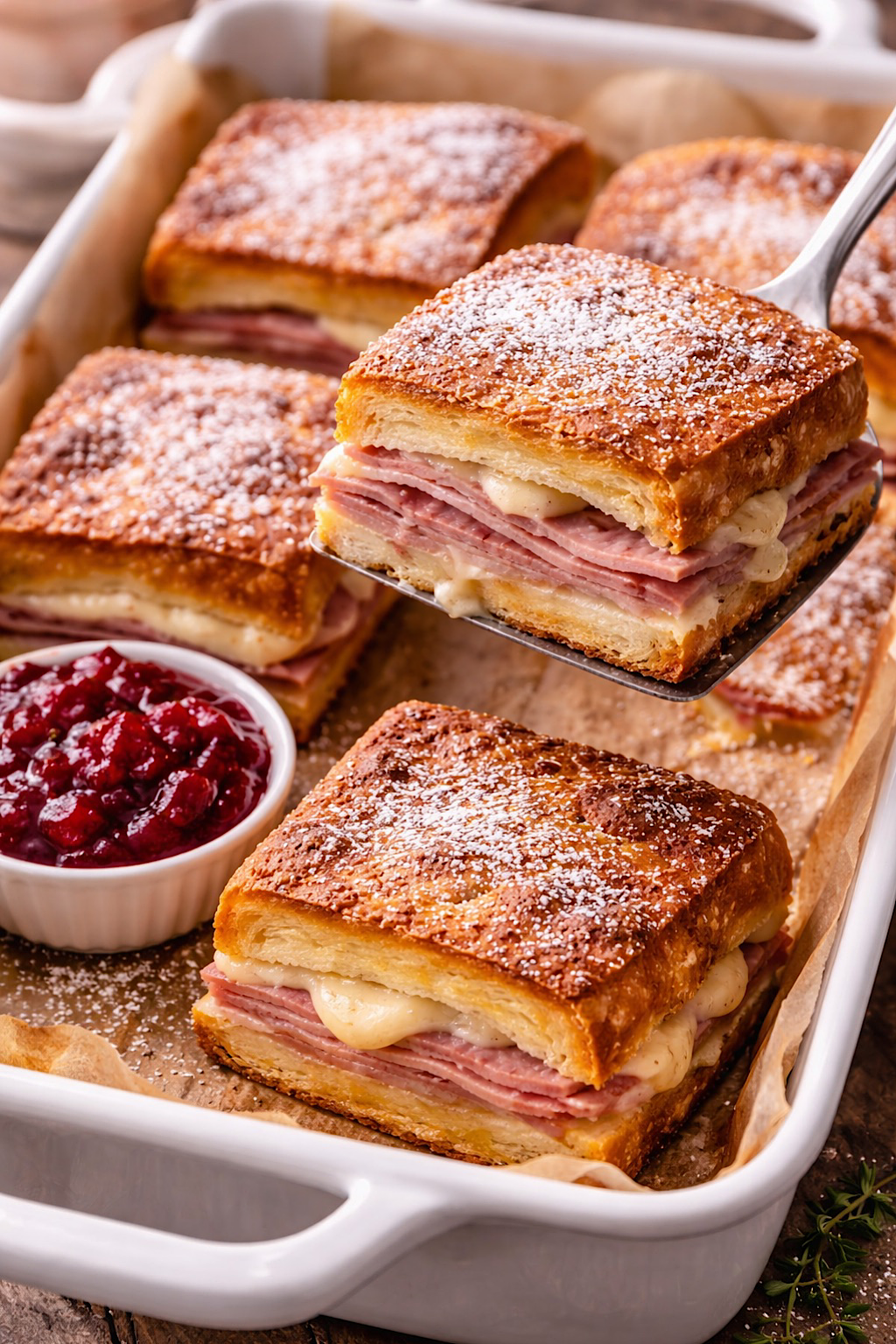
The image tells that story beautifully. The tops are puffed and golden, the edges just touched with a deeper caramel tone that suggests a hot oven and perfectly timed baking. A gentle dusting of sugar softens the surface visually, almost like a final flourish before serving. In one view, the sandwich bake looks plush and airy, with cheese pooling and stretching at the edge. In the other, the portions appear crisp, square, and more structured, with beautifully defined layers of ham and cheese stacked inside. Together they suggest the best of both worlds. You get a breakfast that is elegant enough for a special brunch table and comforting enough for a lazy weekend morning in slippers.
This is also the kind of recipe that fits effortlessly into real life. It feels generous. It can feed a table. It can be prepared for family visiting over the holidays, for a weekend gathering, or for the kind of slow morning when you want the kitchen to smell like butter and toasted bread while coffee brews in the background. A sturdy ceramic baking dish for breakfast casseroles gives it that oven to table charm, and a reliable offset spatula for lifting layered bakes makes those tidy servings much easier to pull off. If you love the polished brunch look, a simple powdered sugar shaker for pastries and breakfast bakes is one of those small tools that makes a surprising difference.
The beauty of this kind of dish is that it feels nostalgic and current at the same time. It nods to the diner classic and the old fashioned café sandwich, but reimagines it in a form that feels softer, more shareable, and more inviting for home cooks. Instead of standing at the stove flipping sandwiches one by one, you build everything in layers and let the oven do the work. The result is more relaxed, more generous, and perfect for serving a group. It is also easy to dress up with the little details that make breakfast feel special. A spoonful of berry preserves on the side brings brightness and color. A fresh pot of dark coffee deepens the contrast. A platter of fruit or a bowl of citrus rounds out the table without requiring much effort at all.
Even the ingredients feel like a pleasure rather than a project. Good sliced ham, creamy Swiss or Gruyère, thick cut bread or soft rolls, eggs, milk, butter, and sugar all come together in a way that feels luxurious without asking for anything fussy. Choosing a flavorful sliced Swiss cheese for melting sandwiches and a tender ham for breakfast sandwiches and brunch boards gives the layers depth without needing complicated seasoning. A good nonstick parchment paper for easy casserole cleanup can make the whole process even easier, especially when you want clean edges and effortless serving.
There is also something charming about the sweetness here that feels understated and elegant. Powdered sugar has a way of signaling comfort and indulgence at once. It makes the finished bake look softer, more bakery inspired, and a little bit celebratory. The savory filling underneath keeps the sweetness from floating off into pastry territory, so the final bite lands right in that craveable middle ground. That is why a Monte Cristo style breakfast works so well. It does not choose between breakfast and brunch, sweet and savory, cozy and polished. It simply gathers all of those moods into one dish.
If mornings had a signature mood, this would be one of the most convincing versions of it. Warm dish on the counter. Steam rising. Crisp corners. Melting cheese. Sugar dusting the top like a final blessing. Coffee within reach. The first square lifted out while everyone watches the cheese pull and waits for their turn. It is the sort of meal that makes the room quieter for a second, not because it is formal, but because everybody knows something especially good has just arrived. A soft linen style napkin set for brunch tables and a clean white serving platter for breakfast spreads only heighten that feeling. It is simple food, yes, but it carries itself with a little grace. And sometimes that is exactly what the morning needs.
Recipe
A baked Monte Cristo style breakfast made with layers of ham, cheese, and buttery bread, then finished with a light dusting of powdered sugar for that classic sweet savory contrast.
Ingredients
- 8 slices thick white bread or brioche
- 12 ounces sliced deli ham
- 8 slices Swiss or Gruyère cheese
- 4 large eggs
- 1 cup whole milk
- 2 tablespoons Dijon mustard
- 2 tablespoons melted butter
- 1 tablespoon granulated sugar
- 1 teaspoon vanilla extract
- 1/4 teaspoon salt
- 2 tablespoons powdered sugar, for finishing
- Berry jam or preserves, for serving
Instructions
- Preheat the oven to 375 degrees Fahrenheit and grease a medium baking dish.
- Arrange half of the bread in the dish, trimming as needed to fit.
- Layer on the ham and cheese evenly, then top with the remaining bread.
- In a bowl, whisk together the eggs, milk, Dijon, melted butter, sugar, vanilla, and salt.
- Pour the custard mixture evenly over the sandwiches and let sit for 10 minutes so the bread can absorb some of the liquid.
- Bake for 25 to 35 minutes, until puffed, golden, and set in the center.
- Cool for 5 minutes, dust with powdered sugar, and serve warm with berry jam on the side.
Step by Step Guide
The first thing that makes this bake successful is choosing the right bread. You want something sturdy enough to hold its shape once it absorbs the egg mixture, but still tender enough to give you that soft interior that makes a Monte Cristo feel rich and luxurious. Brioche is beautiful here because it brings a buttery softness and a little natural sweetness. Thick sliced white bread also works well if you want a more classic, comforting texture. Avoid bread that is too thin or delicate because it can disappear into the custard and leave the finished bake too dense. If your bread is especially fresh, let it sit out for a bit before assembling, or lightly toast it. A little dryness helps it absorb the custard more evenly. A good serrated bread knife for clean thick slices can make prep quicker and cleaner if you are cutting from a loaf.
Next comes the layering, which is where the structure of the bake really begins. Start with a buttered baking dish so the bottom browns nicely and the servings release more easily. Lay down the first layer of bread so it covers the base as evenly as possible. Then add the ham in generous folds rather than pressing it flat. Those little ripples create better texture and keep the interior from feeling compressed. Add the cheese in an even layer so every serving gets that melty center. Swiss is the traditional favorite because it has that mellow nutty flavor that works beautifully with the sweet finish, but Gruyère gives the bake a slightly deeper, more elegant flavor. If you want even more melt, a thin layer of sliced mozzarella can be added without overwhelming the classic character. A sharp box grater for cheese prep and finishing is useful if you prefer to grate your cheese rather than layer slices.
The custard mixture is what transforms the dish from a simple baked sandwich into something plush and cohesive. Eggs provide structure, milk gives softness, melted butter adds richness, and a little Dijon sharpens the flavor just enough to balance the sweetness that comes later. That small touch of vanilla might seem surprising, but it brings the profile closer to the spirit of a Monte Cristo without making the dish taste like dessert. Whisk thoroughly so the eggs are fully incorporated. If the custard is streaky, the bake can cook unevenly. Pour it slowly and evenly over the layered bread, giving special attention to the corners and edges, which tend to dry out first. Letting the assembled dish rest for about 10 minutes before baking helps the bread absorb enough liquid to soften without collapsing. A roomy mixing bowl set for batters and custards and a smooth balloon whisk for eggs and cream mixtures make this step easy.
Baking is where the transformation happens. Set the dish into a fully preheated oven so the top starts browning as the custard gently rises through the layers. You are looking for a surface that turns golden with deeper toasted edges, while the center feels set when lightly pressed. If it browns too quickly before the middle finishes, loosely tent the top with foil for the last stretch of baking. This protects the surface while allowing the inside to cook through. An oven thermometer for accurate baking temperatures can be surprisingly helpful if your oven tends to run hot or cool, since custard based bakes are sensitive to temperature swings. When the bake is done, let it rest for a few minutes before cutting. That short wait lets the filling settle and helps you get cleaner portions.
The powdered sugar is more than decoration. It gives the top that signature Monte Cristo finish and creates the sweet savory tension that makes the dish memorable. Dust it lightly rather than heavily. You want a gentle veil, not a thick coating. The goal is to brighten the richness of the ham and cheese rather than mask it. If you love the diner style experience, serve it with raspberry or mixed berry jam on the side. That tart fruit note wakes everything up and gives each bite a little extra contrast. A neat jam server set for brunch tables or small ramekins for sauces and preserves makes the final presentation feel thoughtful without requiring much effort.
There are several easy ways to vary the recipe depending on the mood you want. Turkey can replace the ham for a lighter version, though the flavor will be less traditional. Gruyère and ham give it a more French café feeling, while cheddar and ham lean more toward cozy comfort food. Some cooks like to add a thin layer of cream cheese or mascarpone for extra richness, but use a light hand so the bake does not become too heavy. If you want a slightly more pronounced sweet note, add a teaspoon of maple syrup to the custard. For a more savory finish, skip the vanilla and increase the Dijon slightly. The structure of the recipe is forgiving, which is part of its charm.
This is also a wonderful make ahead breakfast. You can assemble the entire dish the night before, cover it, and refrigerate it so the bread absorbs the custard slowly overnight. In the morning, let it sit at room temperature while the oven preheats, then bake as directed. This deeper soak creates an even softer interior and makes the whole morning feel effortless. If you plan to do this often, a snug reusable baking dish cover for refrigerator storage is worth having around. It keeps everything protected without the hassle of wrestling with cling wrap.
Troubleshooting is simple once you know what to look for. If the bake turns out soggy, it usually means the bread was too soft or the dish needed a few more minutes in the oven. If it is too dry, the bread may have been too thick for the amount of custard, or it baked too long. If the cheese leaks too much, that is often just a sign that it is especially melty, which is hardly a problem, though a slightly thicker sliced cheese can help it stay better layered. If the top darkens too much before the center is ready, cover it loosely with foil and keep going. The beauty of a baked brunch dish like this is that small imperfections rarely hurt its appeal. In many cases, the crispest edges and meltiest corners become everyone’s favorite bites.
Serving matters too. Cut the bake into generous squares and use a wide spatula to lift each portion so the layers stay intact. Serve it hot, when the cheese is still tender and the top still carries that fresh from the oven crispness. A dark roast coffee, fresh fruit, or a side of roasted breakfast potatoes turns it into a full meal, but it is also satisfying enough to stand alone. A sturdy wide serving spatula for casseroles and breakfast bakes helps preserve those beautiful layers. The finished effect should feel a little indulgent, a little nostalgic, and entirely worth making again.
In the end, what makes this recipe special is not complexity. It is contrast. Crisp and soft. Sweet and savory. Familiar and just polished enough to feel new. It looks inviting in the pan, smells rich and buttery in the kitchen, and tastes like the kind of breakfast people remember. That is the magic of a Monte Cristo inspired bake. It takes humble ingredients and arranges them in a way that feels generous, elegant, and quietly irresistible.