Citrus-Sizzled Salmon & Cajun Shrimp Rice Platter
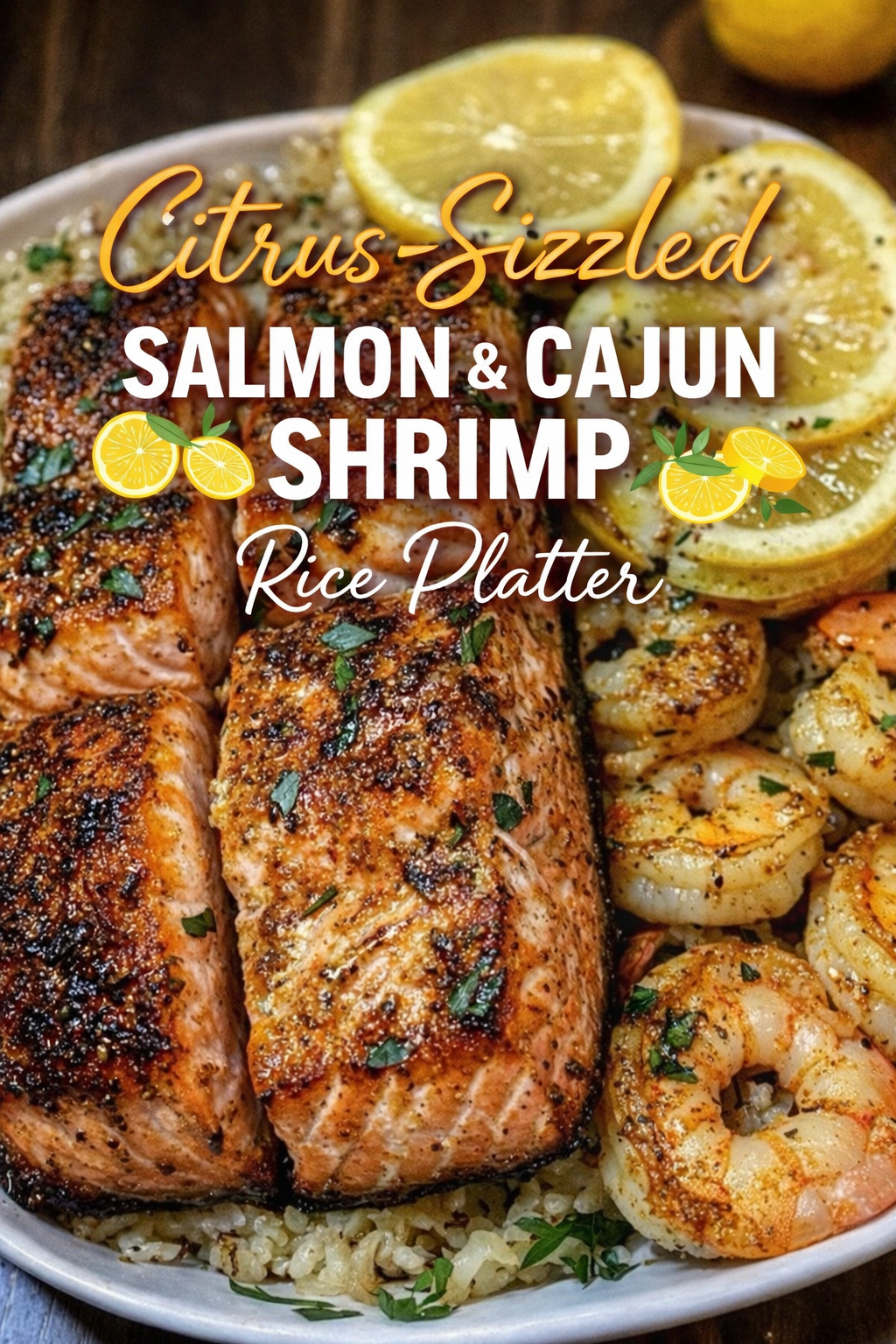
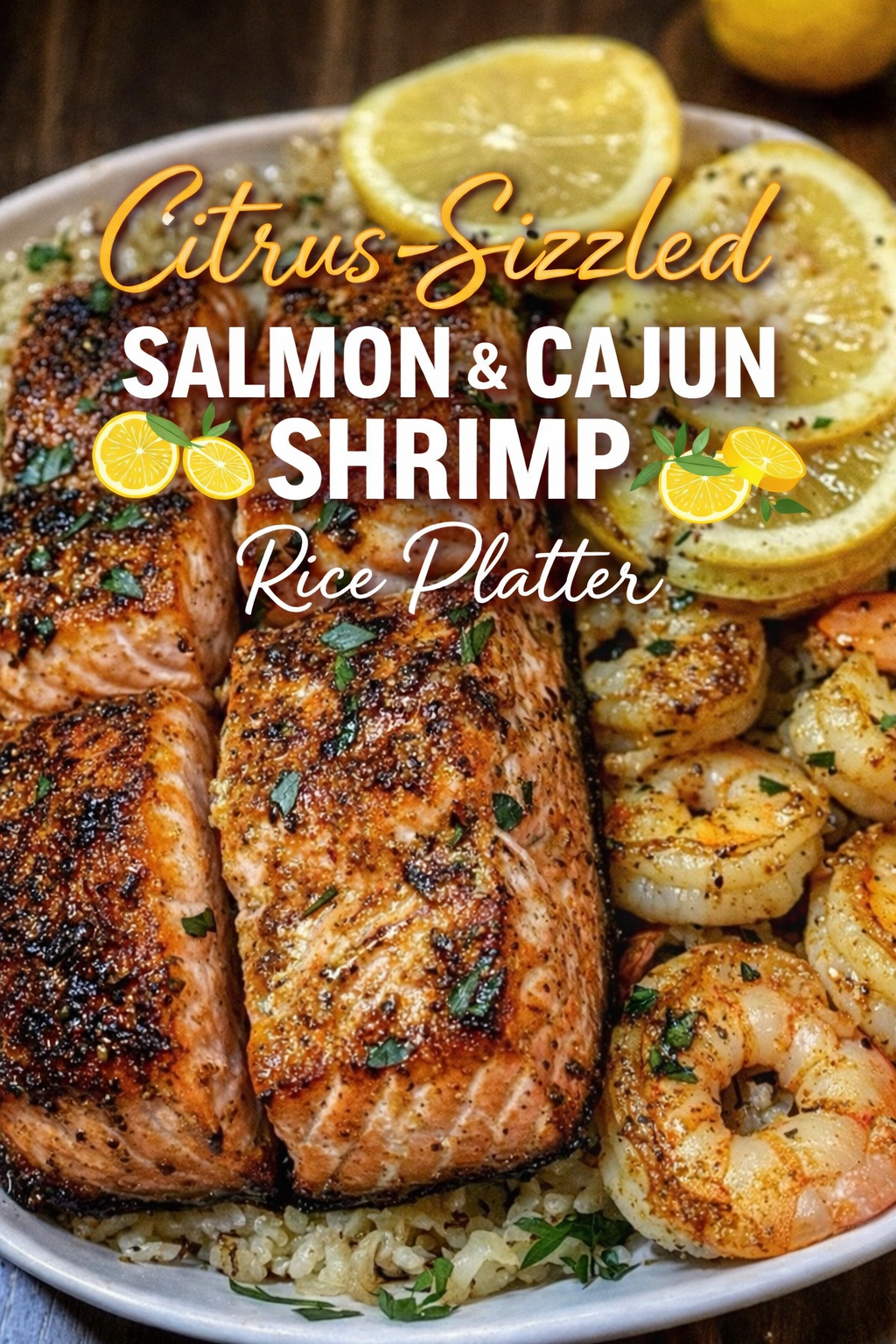
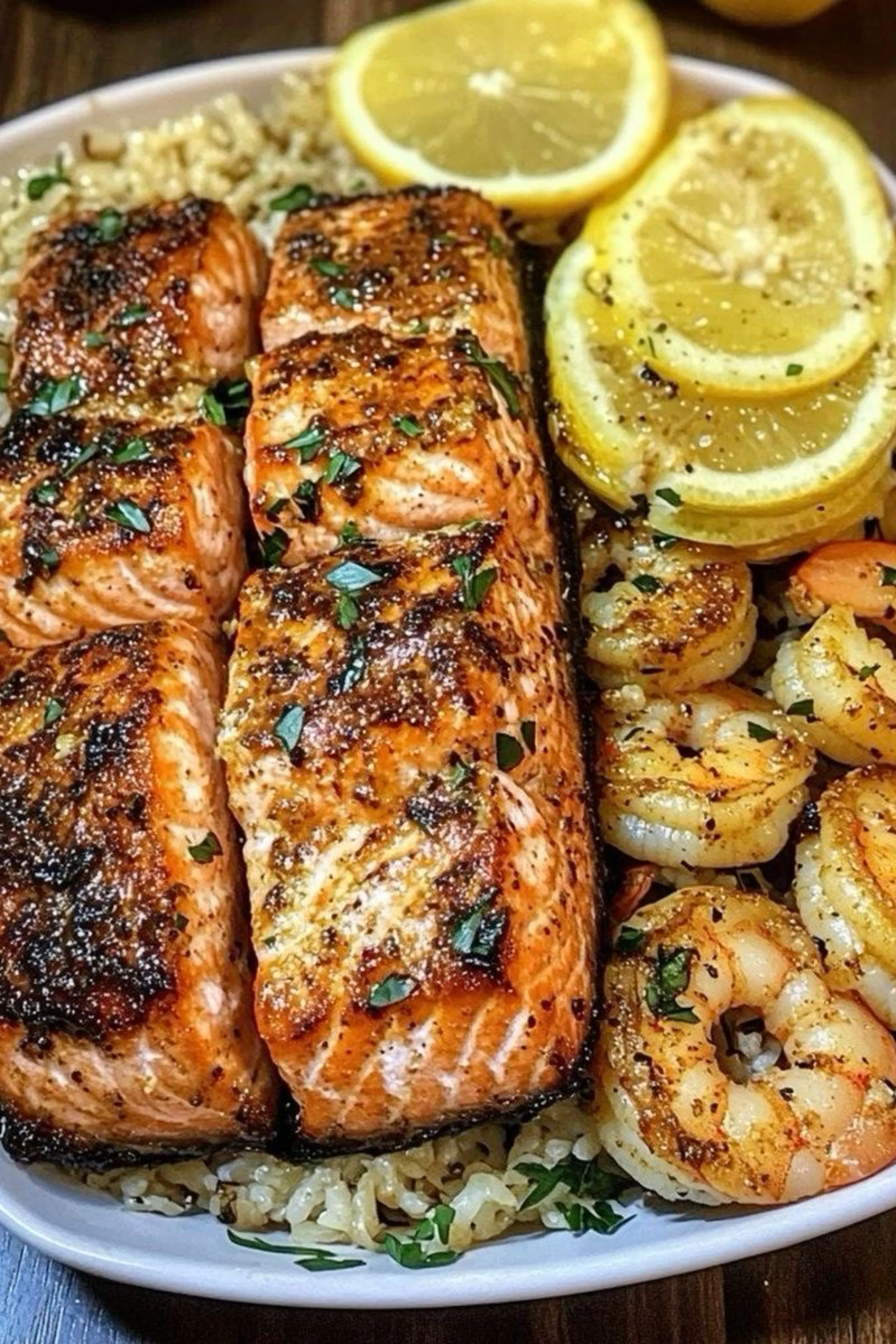
The first thing you notice is the gloss—an almost lacquered sheen clinging to the salmon’s surface, where spice has toasted into dark, fragrant freckles and the edges have caught just enough heat to look fearless. The fillets sit like center-stage performers, thick and blush-toned beneath that bronzed crust, their flaky layers hinted at by a few gentle splits where the sear has tightened and the butter has seeped in. Around them, shrimp curl into little crescents, blushing from pearl to coral, speckled with seasoning and kissed by the pan until their backs take on a faint char. Everything rests on a bed of rice that looks quietly luxurious—separate grains with a soft shine, catching drips of citrus and spice like it was made to hold onto flavor.
Then there’s the lemon: bright wheels stacked at the edge, not just garnish, but a promise. The kind of citrus that lifts the whole room when it hits warmth—sharp, clean, almost sparkling. A few chopped herbs scatter over the top, green confetti against the deep amber browns and rosy fish, making the platter feel finished in that effortless way that’s never actually effortless. You can almost hear the sizzle that came before this moment—the quick crackle when seafood meets heat, the hush that follows when the pan settles into its work, the tiny pops of spice blooming in fat.
This is the kind of dinner that feels like a reset button. Not “fancy” in the formal sense—no white tablecloth required—but undeniably special, the kind of meal that turns a regular night into something you’ll remember. It’s bold without being heavy. It’s bright without being precious. It’s comfort with a backbone. The salmon brings richness and that buttery depth you only get from good fish treated simply but confidently. The shrimp brings snap and swagger, the spice landing fast and clean, then fading into lemon and herbs so you want another bite immediately.
If you’ve ever wanted your kitchen to smell like a coastal bistro for an hour—warm spice, sizzling butter, citrus mist in the air—this is how you do it. The magic is in the contrast: hot pan, cool lemon; rich salmon, quick shrimp; toasted spices, fresh herbs. A heavy skillet that holds heat like a champ makes that crust possible without overcooking the center, and a set of sharp chef’s knives for clean citrus wheels and neat herb chops keeps the prep feeling smooth instead of sloppy.
The rice underneath isn’t just a side—it’s the glue that makes the whole platter make sense. It catches the buttery drippings, the spice runoff, the lemony pan juices, and turns them into something you can scoop up greedily. The best part is how the flavors travel: one forkful starts with salmon, ends with rice that tastes like it’s been simmering in seafood stock and sunshine. And when a shrimp lands on top—spice, sweetness, that gentle chew—it’s like the whole plate clicks into place.
There’s also something deeply satisfying about serving it as a single, generous platter. It feels abundant. It feels like hospitality, even if you’re feeding only yourself. You can pile it up, let the lemon slices sit where they want, scatter herbs with a carefree hand, and bring it to the table like a little showpiece. For that moment, it doesn’t matter what the day looked like before—emails, errands, weather, noise—because the plate is warm and bright and completely present.
The real secret is that it’s not complicated. It’s about timing and confidence: getting the pan hot enough, not moving the salmon too soon, respecting shrimp’s quick cook time, and letting lemon do what lemon does best—wake everything up. A quick-read digital thermometer for perfect salmon doneness can take the guesswork out of that “is it done yet?” moment, and a zester for a whisper of citrus fragrance can make the finishing touch feel restaurant-level without any extra drama.
You can picture the last minute: the salmon resting, the shrimp finishing, the rice already waiting, warm and ready to be dressed in whatever goodness the pan has left behind. The lemon slices go down like a bright border. Herbs fall like the final note. And suddenly, you’ve made something that looks like it came from a menu—warm colors, glossy textures, confident sear marks—without needing anything more than heat, spice, and a little citrus courage.
This platter is for nights when you want comfort that doesn’t taste sleepy. For when you want dinner to feel like a reward. For when you want that first bite to make you sit back and think, okay—this is happening. And it is: tender salmon, spicy shrimp, buttery rice, lemon cutting through like a clean chord. A full, vivid plate that tastes like you meant to make something memorable all along.
Citrus-Sizzled Salmon & Cajun Shrimp Rice Platter is a one-platter dinner that hits the sweet spot between bold and bright—seared salmon, spiced shrimp, lemon, herbs, and rice that soaks up every drop.
Ingredients
- 2 salmon fillets (about 6 oz each)
- 1 lb large shrimp, peeled and deveined
- 3 cups cooked rice (white or jasmine preferred)
- 1–2 lemons (sliced into wheels), plus extra for squeezing
- 3 tbsp butter, divided
- 2 tbsp olive oil, divided
- 3 cloves garlic, minced
- 1 tsp smoked paprika
- 1 tsp Cajun seasoning (or to taste)
- 1/2 tsp black pepper
- 1/2 tsp kosher salt (adjust for seasoning blend)
- 1/4 tsp cayenne (optional)
- 2 tbsp chopped parsley (or cilantro)
- Optional: lemon zest
Method
- Pat salmon dry. Season with salt, pepper, smoked paprika, and a light dusting of Cajun seasoning.
- Toss shrimp with Cajun seasoning, a pinch of paprika, and a drizzle of oil.
- Heat a skillet over medium-high. Add 1 tbsp oil + 1 tbsp butter. Sear salmon 3–4 minutes per side (depending on thickness) until browned and just cooked through. Remove to rest.
- In the same pan, add remaining butter and a touch of oil if needed. Add garlic for 20–30 seconds, then add shrimp. Cook 2–3 minutes total, flipping once, until pink and lightly charred.
- Squeeze fresh lemon into the pan, scrape up browned bits, and spoon the juices over rice.
- Plate rice, top with salmon and shrimp, scatter chopped herbs, and serve with lemon wheels for extra brightness.
Start with the rice, because it’s the quiet foundation that makes everything else feel like it belongs together. If your rice is freshly cooked, fluff it and let it steam off for a minute so it doesn’t turn gummy under the seafood. If it’s leftover, that’s honestly perfect—cold rice reheats beautifully when it gets hit with warm butter and pan juices. A rice cooker that nails texture consistently takes this from “weeknight improvisation” to “repeatable staple,” but stovetop rice works just as well as long as you keep the grains distinct.
Next, treat the salmon like it’s the main character—because it is. The difference between “good” and “wow” is dryness and heat. Pat the fillets down until the surface is truly dry; moisture is the enemy of crust. Seasoning should look even, not caked—smoked paprika for warmth and color, salt and pepper for structure, and just enough Cajun seasoning to give it edge without bulldozing the fish’s natural richness. If you want the citrus to feel more alive, add a little zest at this stage. A fine zester for clean, fragrant lemon zest makes it easy to add aroma without bitter pith.
Now the pan: you want it hot enough to sear, not so hot that butter burns instantly. A preheated cast iron skillet or heavy stainless pan is ideal because it holds heat steady, which is what builds that gorgeous bronzed surface. Add oil first (it tolerates heat), then a portion of the butter for flavor. When the butter foams and the surface shimmers, the salmon goes in—presentation side down if you care about looks. Press it gently for the first 10 seconds so the whole surface makes contact; that’s how you get an even crust instead of patchy browning.
Here’s the part most people rush: don’t move it. Let the salmon cook until it releases naturally. If it sticks, it’s not ready. When it’s ready, it will lift with a confident nudge. Flip once, cook the second side briefly, and then pull it a touch earlier than you think—carryover heat finishes the job while it rests. If you like certainty, use a quick-read thermometer for seafood doneness and aim for a tender, just-done center. Resting is not optional; it keeps the salmon juicy and prevents the flakes from turning dry and tight.
While the salmon rests, the shrimp takes the spotlight for its quick, dramatic moment. Shrimp is fast food in the best way—two to three minutes and it’s done—but the window between perfect and rubbery is narrow. Toss shrimp with seasoning and a little oil so the spice coats evenly and doesn’t scorch in dry patches. If your Cajun blend is salty, ease up on added salt. If you want a deeper color, a whisper more paprika helps.
Use the same pan without washing it. Those browned bits left behind from the salmon are pure flavor, and they’re about to become your sauce. Add the remaining butter and a small touch of oil if the pan looks dry. Drop in minced garlic and stir for just long enough to smell it—20 to 30 seconds. Garlic burns fast, and burnt garlic will make the whole dish taste bitter. Then add shrimp in a single layer. Don’t overcrowd; shrimp needs contact with heat to sear instead of steaming. Cook until the first side develops a faint char, flip once, and pull them the moment they’re pink and curled.
Now the citrus: squeeze lemon into the pan off the heat or with the heat lowered. This keeps the lemon bright instead of turning it harsh. Use a wooden spoon to scrape up the browned bits and swirl everything together. You’ve just made a quick pan glaze—buttery, spicy, lemony—without any extra work. If you want it slightly silkier, add a tablespoon of warm water and swirl again. If you want it sharper, add more lemon.
Bring it all together like a platter, not a stack. Spoon rice onto the base, then nestle salmon and shrimp across the top. Drizzle the pan juices over everything so the rice drinks it up. Scatter chopped parsley for freshness and contrast, and lay lemon wheels on the side so each bite can be adjusted at the table. A large serving platter that makes weeknight dinners feel like an occasion turns this into a centerpiece without changing a single ingredient.
Variations that work without breaking the vibe:
- Swap rice for orzo or couscous if you want a lighter, faster base.
- Add a handful of sautéed spinach at the end for a green element that folds right into the pan juices.
- Use blackening seasoning for a more intense crust, but keep lemon generous to balance it.
- Prefer creamy? Stir a spoon of Greek yogurt into the rice with lemon zest for a tangy, rich base.
Troubleshooting, so it’s flawless:
- If salmon won’t release: the pan wasn’t hot enough or you moved it too soon. Give it time.
- If shrimp seems watery: the pan was crowded. Cook in batches for better sear.
- If the flavor feels flat: add salt carefully, then brighten with lemon. Salt builds the base; lemon lifts the top.
- If it tastes too spicy: add more butter and lemon, and let the rice absorb the intensity.
This is the kind of dish that rewards small choices—drying the salmon, respecting the sear, squeezing lemon at the right time. Do those few things well, and you get a platter that tastes bold, clean, and completely addictive: caramelized salmon, snappy shrimp, citrus cutting through richness, and rice that turns every drip into another perfect bite.