The Platter That Stopped the Room: Balsamic-Charred Steak Caprese
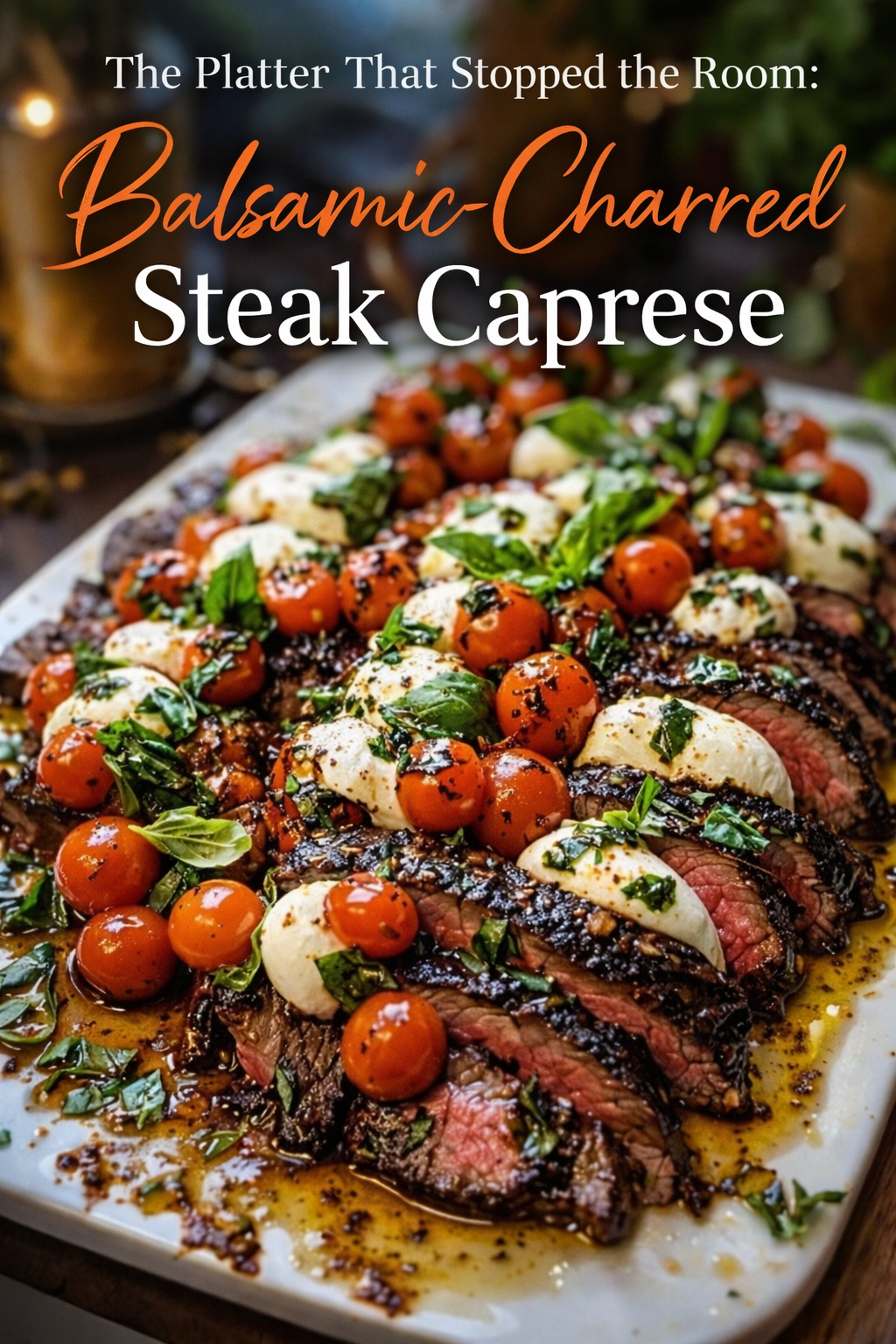
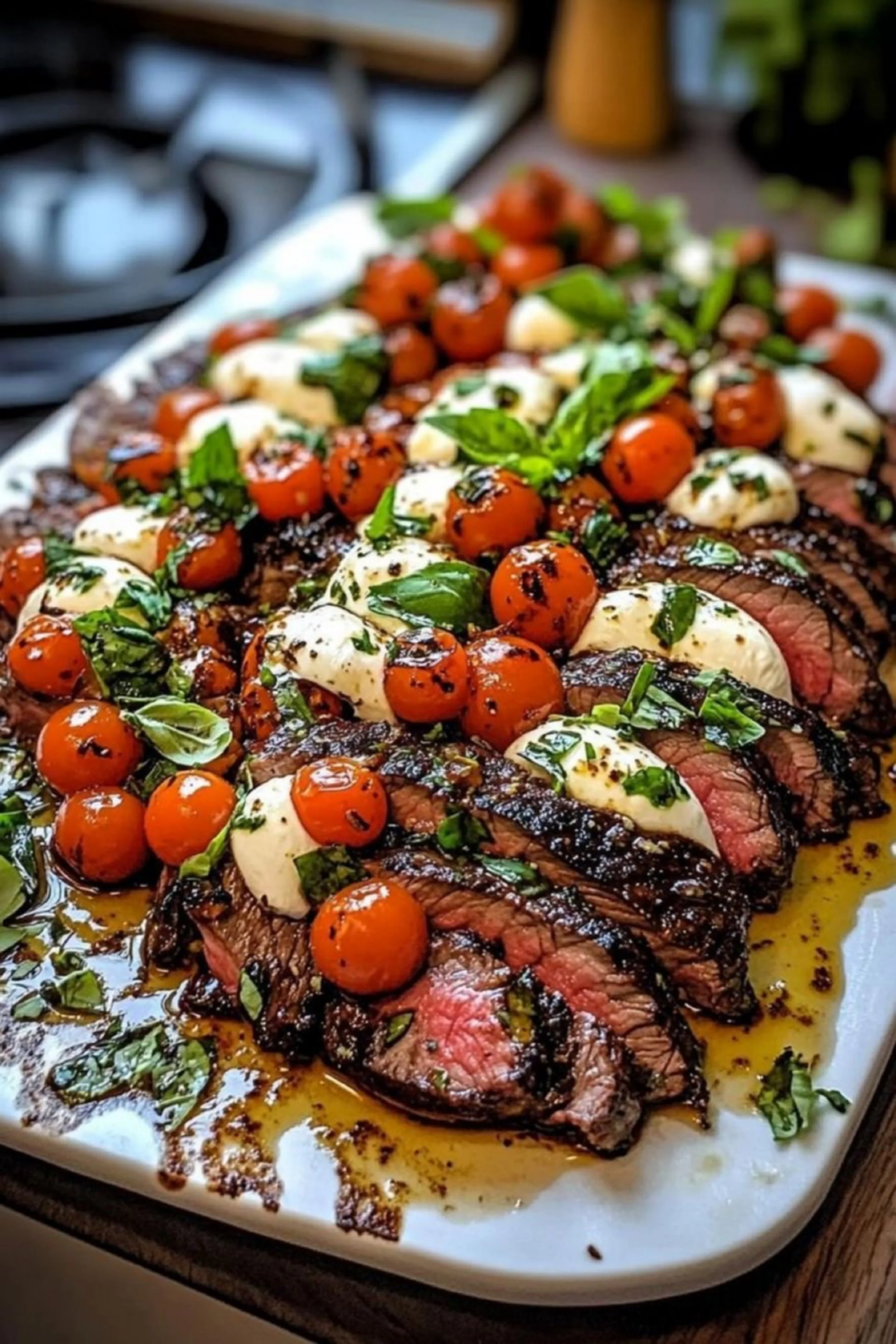
The first thing you notice is the shine—golden, buttery drips pooling at the edge of a white platter, catching the light like it’s late afternoon and the kitchen has gone quiet on purpose. Slices of steak fan out in a dark, confident arc, their seared edges nearly blackened in the best way, the center blushing warm and tender as if it’s still holding onto the heat from the pan. Across the top, cherry tomatoes sit glossy and barely blistered, some with that split skin that tells you they met high heat and didn’t flinch. Between them, soft rounds of mozzarella nestle like little clouds, the kind that go creamy at the edges when the plate is still warm. Fresh basil—torn, not chopped—scatters over everything with that unmistakable green perfume that makes the whole scene feel like summer even if it’s raining outside.
There’s a kind of luxury to meals like this that has nothing to do with formality. It’s the luxury of simplicity done with intention—bold ingredients, sharp heat, a little patience, and a finish that feels like the last note of a song. The steak doesn’t need a complicated sauce; it just wants salt, heat, and a moment to rest. The tomatoes don’t need much beyond a quick char and a kiss of acidity. And the mozzarella—cool, milky, gentle—does what it always does best: softens the edges of everything around it and makes each bite feel complete.
This is the kind of platter you bring to the table and suddenly everyone’s closer. Someone reaches for a tomato first, then a piece of basil, then the steak, and before you know it the plate becomes the center of gravity. The flavors are straightforward but layered: char and smoke, sweet tomato, creamy cheese, herbal brightness, and that dark balsamic finish that lands like a velvet curtain. You can dress it up with a more dramatic drizzle, or keep it rustic and glossy with olive oil and pan juices—either way, it looks like you meant to impress.
It starts with the right heat and the right surface—something that can deliver a hard sear without apologizing. A heavy cast-iron skillet that holds a fierce, steady temperature changes the whole outcome: deeper crust, better browning, and those tiny caramelized bits that melt into the pan drippings. If you want those signature grill-like stripes without stepping outside, a stovetop grill pan with deep ridges gives you the same drama on a weekday.
Then there’s the quiet supporting cast—simple tools that make the process smoother and more exact. A sharp carving knife with a long slicing blade lets you cut clean, beautiful slices that stay juicy instead of shredding at the edges. A large wooden cutting board with a juice groove catches every drop you’ll want to pour back over the platter later. And if you’ve ever guessed at doneness and regretted it, a quick-read meat thermometer for steak turns that guesswork into confidence.
What makes this platter feel so addictive is contrast—temperature, texture, and intensity. Warm steak meets cool mozzarella. Sweet tomatoes meet tangy balsamic. Charred edges meet soft centers. Basil lifts everything like a fresh breeze. Even the oil matters here: you want something bright and clean, the kind that tastes like green pepper and almonds, so a good extra-virgin olive oil for finishing is more than a garnish—it’s part of the flavor.
And because this is a platter built for sharing, it plays well with your mood. It can be date-night dramatic with candles and a glass of red. It can be “friends just dropped by” casual with a loaf of bread and laughter in the background. It can be your own private reward after a long day, eaten standing at the counter with the kind of satisfaction that doesn’t need an audience. However you serve it, it has that rare quality: it looks like an occasion and tastes like you’ll make it again.
Balsamic-Charred Steak Caprese Platter
A bold, shareable steak platter topped with blistered cherry tomatoes, creamy mozzarella, fresh basil, and a glossy balsamic finish.
Ingredients
- 1 ½ to 2 lb steak (sirloin, ribeye, strip, or flank)
- Kosher salt
- Freshly cracked black pepper
- 1 tbsp high-heat oil (avocado, grapeseed, or canola)
- 2 cups cherry tomatoes
- 8 oz fresh mozzarella pearls or torn mozzarella (or burrata)
- ½ cup fresh basil leaves, torn
- 2–3 tbsp extra-virgin olive oil (for finishing)
- 1–2 tbsp balsamic glaze (or reduced balsamic)
- Optional: 1 clove garlic, smashed; pinch of red pepper flakes; flaky finishing salt
Method
- Season steak: Pat dry and season generously with salt and pepper. Let sit 15–30 minutes at room temp.
- Sear: Heat a skillet over high heat until very hot. Add high-heat oil. Sear steak 3–5 minutes per side (time varies by thickness) until a deep crust forms.
- Rest: Move steak to a board and rest 10 minutes.
- Blister tomatoes: In the same hot pan, add tomatoes (and optional smashed garlic). Cook 3–5 minutes, shaking occasionally, until blistered and glossy.
- Slice: Slice steak against the grain.
- Assemble: Arrange steak on a platter. Spoon tomatoes and any pan juices over the top. Add mozzarella and torn basil.
- Finish: Drizzle with olive oil and balsamic glaze. Add flaky salt and pepper to taste. Serve immediately.
Start by choosing a steak that matches your vibe. Ribeye and strip give you richness and tenderness; sirloin is leaner but still plush when cooked right; flank is fantastic if you slice it thin against the grain. Whatever you pick, the most important move happens before heat ever touches the meat: dry it well. Moisture is the enemy of browning, so take a minute with paper towels and press the surface until it’s truly dry. That’s how you get the kind of crust that looks almost lacquered.
Seasoning is simple here—just salt and black pepper—but don’t be shy. Salt should look slightly excessive before cooking because some falls off and some stays at the surface where it helps create that savory bark. If you want a little extra depth, you can add a pinch of garlic powder, but keep it subtle; the basil and balsamic are doing plenty later.
Now, heat is everything. You want the pan hot enough that the first contact sizzles instantly. A well-seasoned cast-iron skillet is ideal because it holds heat like a promise, giving you that deep sear without cooling down the moment the steak hits. If your kitchen runs smoky, crack a window and keep the fan on—this is a high-heat moment, and it’s worth it.
Add a thin layer of high-heat oil (avocado, grapeseed, canola) and swirl quickly. Lay the steak down away from you so it doesn’t splash. Then don’t touch it. The temptation to move it around is strong, but a great crust needs uninterrupted contact. Let it sear 3–5 minutes on the first side depending on thickness. You’re looking for a dark, assertive browning that borders on char in spots. Flip once and repeat.
If you like a more aromatic finish, you can add a smashed garlic clove during the last minute and tilt the pan slightly, spooning the hot fat over the top. Keep it brief—garlic burns fast at these temperatures. For doneness, your best ally is certainty: a fast instant-read thermometer makes the difference between “pretty good” and “nailed it.” Aim for about 125°F for rare, 130–135°F for medium-rare, 140–145°F for medium, remembering it will rise a few degrees while resting.
Resting isn’t optional—it’s the moment the steak becomes juicy again. Set it on a board and leave it alone for at least 10 minutes. While it rests, don’t waste the pan. Those browned bits stuck to the surface are flavor gold. That’s where the tomatoes come in.
Toss the cherry tomatoes straight into the hot pan. If the pan looks dry, add a tiny splash more oil. The tomatoes should sputter and roll, their skins blistering and splitting in places. You’re not trying to fully break them down; you want them bright, juicy, and just charred enough to taste like they came off a grill. A pinch of salt here wakes them up, and a pinch of red pepper flakes adds a subtle heat that plays beautifully with the sweetness.
Now slice the steak properly. Identify the grain (the direction the muscle fibers run) and cut across it. This shortens the fibers and makes every bite feel tender. A long slicing knife helps you make clean, confident cuts without sawing, which keeps the surface glossy and the slices intact. Angle the knife slightly for wider slices if you want that dramatic platter look.
Assembly is where the Caprese magic happens. Fan the steak across a platter. Spoon the blistered tomatoes over the top, and make sure you pour any pan juices too—those juices carry char, salt, and all the caramelized flavor you built. Add the mozzarella next. If you’re using pearls, scatter them like little white accents. If you’re using burrata, tear it gently so it looks lush and natural, then let it melt slightly against the warm steak.
Basil should be torn, not chopped. Tearing bruises less and releases aroma right at the surface. Scatter it generously. Then finish with a drizzle of olive oil—this is one of those times when a bright extra-virgin olive oil actually tastes like part of the dish, not just shine. Finally, add balsamic glaze in thin ribbons. If you don’t have glaze, you can reduce regular balsamic in a small saucepan until syrupy, but glaze makes it fast and consistent.
Troubleshooting is simple once you know the causes:
- Not getting a crust? The pan wasn’t hot enough or the steak was damp. Dry more thoroughly and preheat longer.
- Steak tastes tough? It may be overcooked, or it was sliced with the grain. Use the thermometer and slice across the fibers.
- Tomatoes burst too much? Heat was too low and they stewed. Go hotter and shorter, letting skins blister quickly.
Variations are endless without changing the core identity. Swap basil for arugula for a peppery bite. Add shaved Parmesan for extra savory edge. Use a squeeze of lemon if you want a brighter finish instead of extra balsamic. If you’re serving a crowd, double the tomatoes and mozzarella and make it a full-board situation—steak at the center, everything else scattered and glossy.
The best part is how it eats: build a forkful with steak, tomato, mozzarella, and basil, then drag it through the juices on the plate. It’s bold, clean, rich, and fresh all at once—exactly the kind of meal that feels expensive without being complicated.