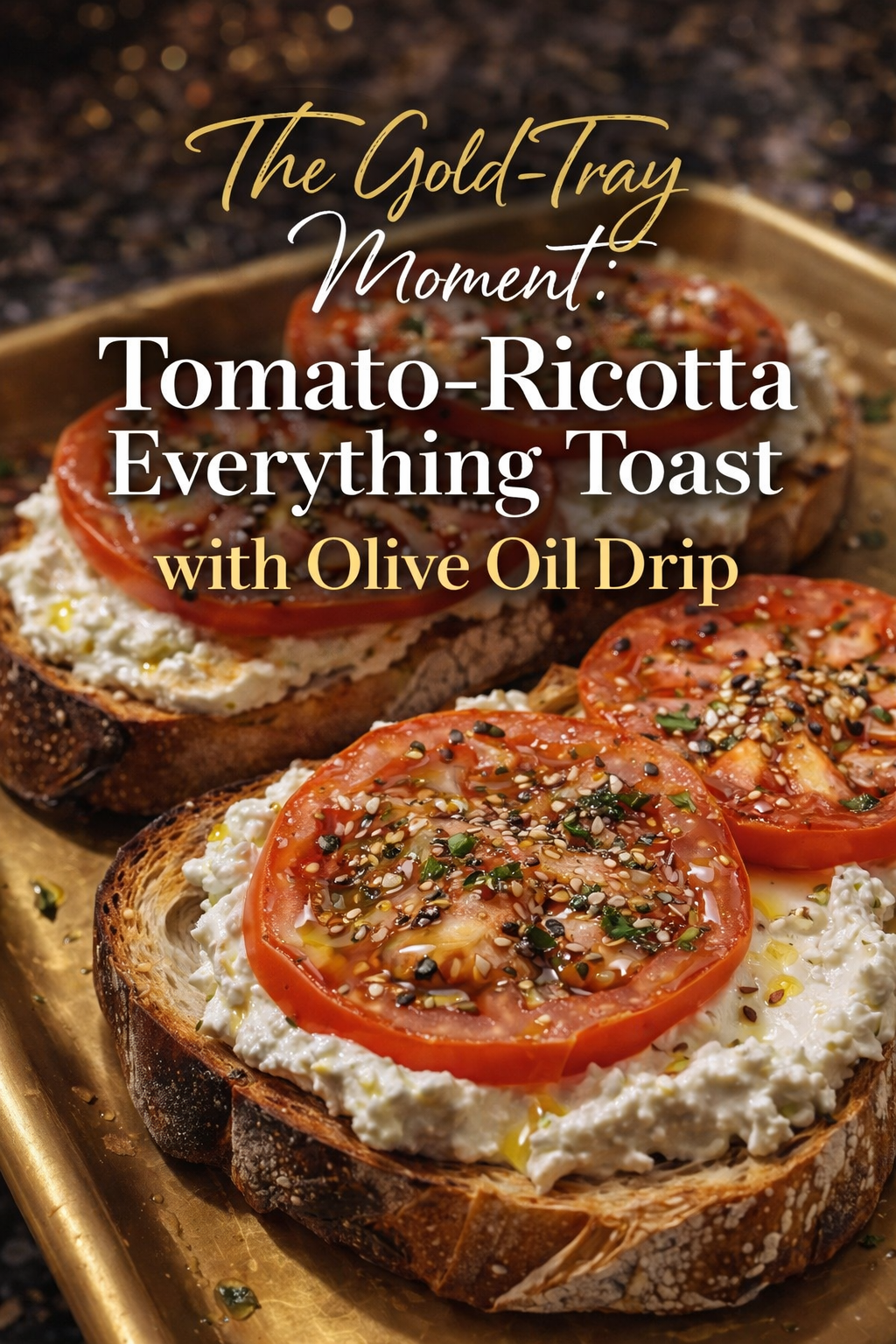
The Gold-Tray Moment: Tomato-Ricotta Everything Toast with Olive Oil Drip
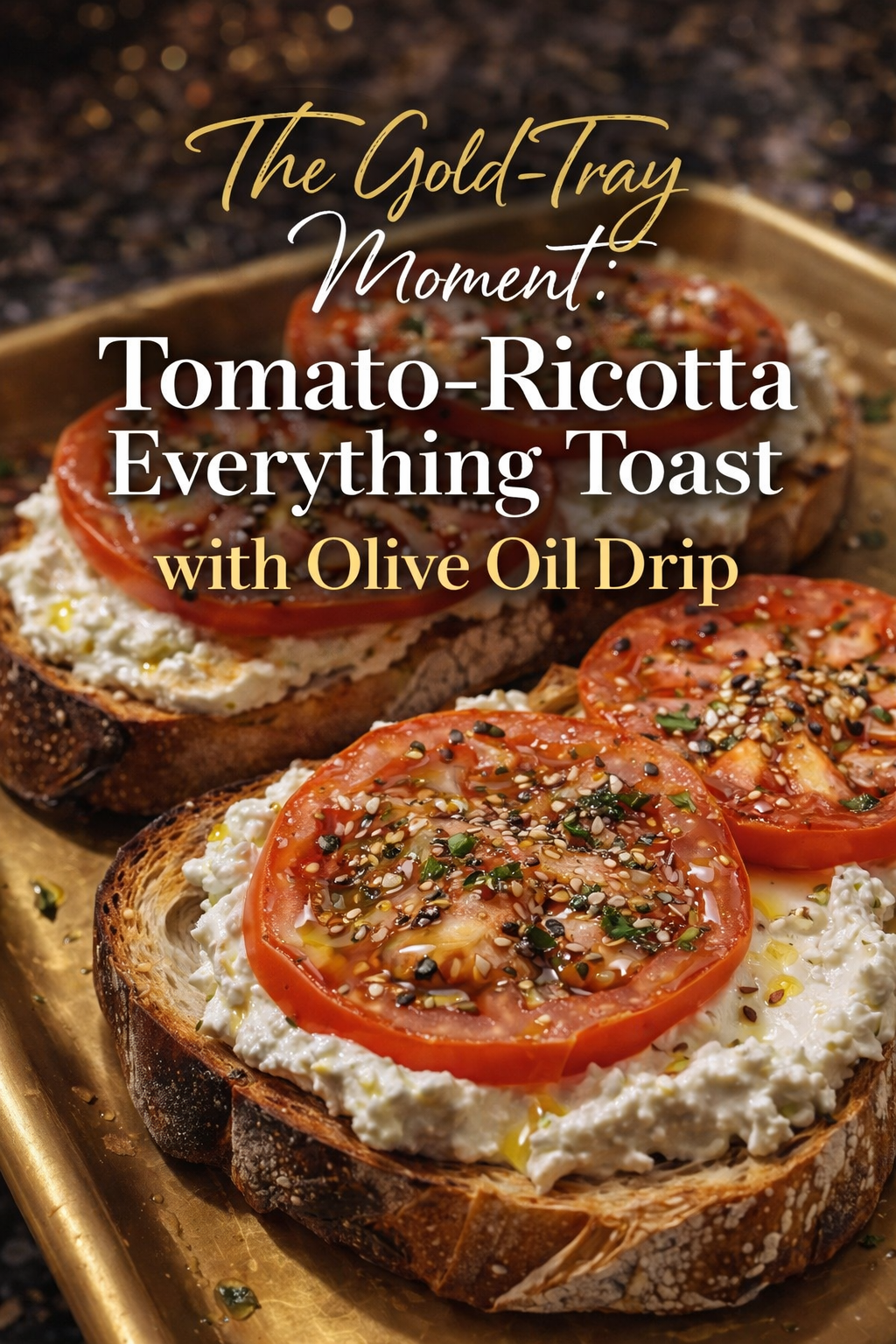
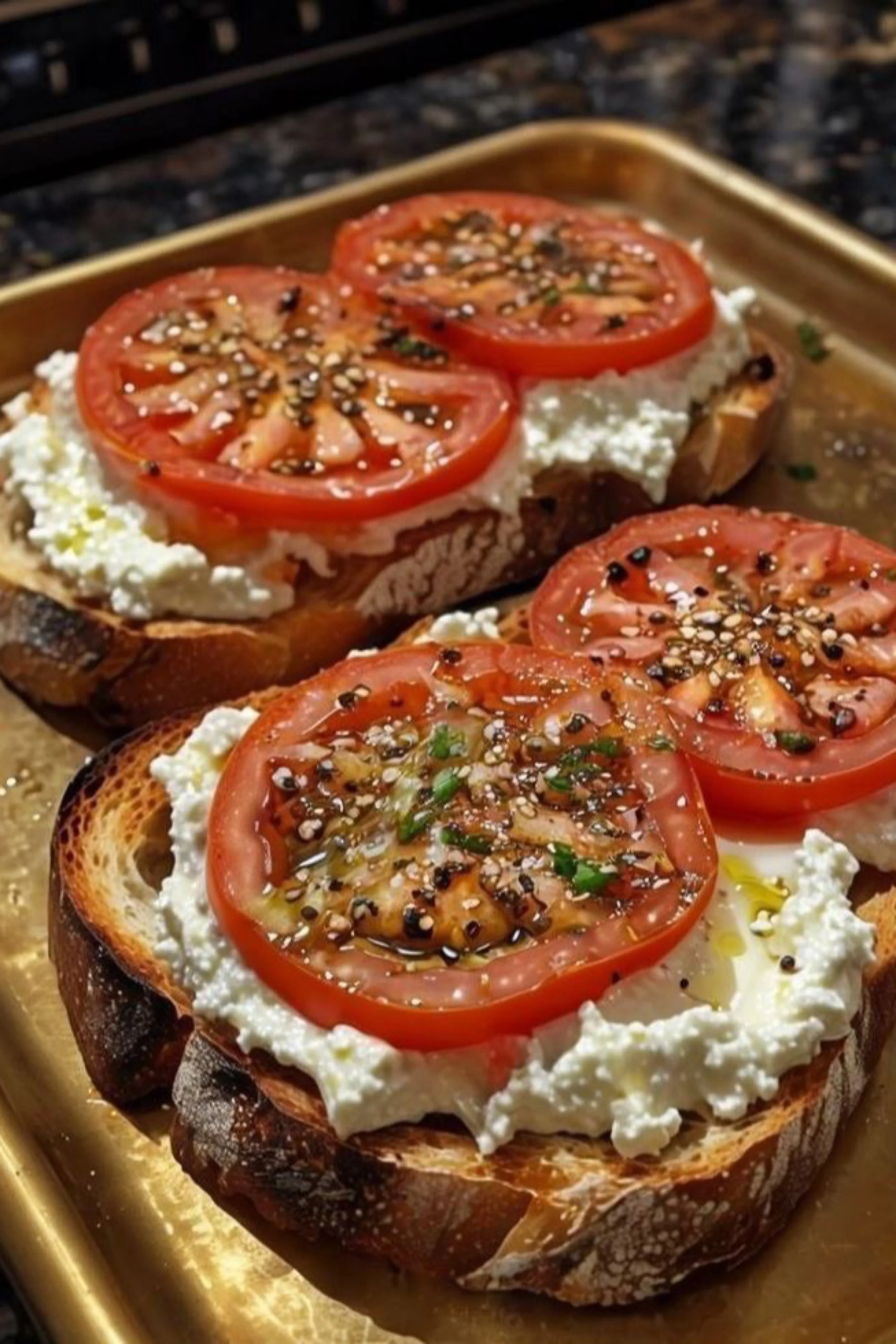
There’s a certain kind of quiet that happens right before you bite into something perfect—when the kitchen feels warmer than the rest of the house, when the counters still hold the day’s clutter, and the only thing that looks undeniably intentional is what you’ve set down in front of you. On a simple metal tray, three slices of deeply toasted bread sit like a small ceremony: edges bronzed and blistered, centers sturdy enough to hold what comes next. It’s the kind of toast that smells faintly smoky, like the last second before bread turns from golden to char. The kind you make on purpose.
And then the white. A thick, cloud-soft layer of ricotta—lush, slightly sweet, and cool against the heat of the toast—spread generously, not neatly. It’s imperfect in the best way, with peaks and valleys that catch light and oil, like fresh snow right after it falls. If you’ve ever chased the creamy tang of a café toast that felt way too fancy for what it technically was, you already know what this is trying to be: comfort and elegance in the same bite, a small luxury that doesn’t ask much from you.
The tomato slices are the final punctuation. Wide rounds, bright and glossy, laid on top like stained glass—ruby edges, pale starbursts of seed chambers, all of it glistening as if it’s just been kissed by salt. They look heavy in that ripe way, the way a tomato should look when it’s actually going to taste like something. When you press a fork into one, it gives with that gentle resistance that says you’re about to get juice—real juice, the kind that runs warm and sweet and lightly acidic, the kind that makes bread feel like it was invented for this moment.
Across the top: the sparkle. A scatter of everything-style crunch—sesame, poppy, bits of toasted onion, peppery flecks—plus a few green confetti pieces that read like chives. It’s not just seasoning; it’s texture. It’s the thing that makes each bite feel alive. And then the sheen: a drizzle of olive oil that catches the light in thin ribbons, pooling slightly at the ricotta’s edges and slipping into the toast’s cracks. If you want that glossy, restaurant-finish look, it helps to use a peppery extra-virgin olive oil with a clean finish and drizzle it last, like you’re signing your name.
This is food that’s tactile. You feel it before you taste it: the crisp shatter of crust, the cool creaminess, the soft give of tomato, the tiny snap of seeds and spice. It’s the kind of bite that makes you pause, then immediately go back for another—because it’s balanced in that effortless way that feels like it couldn’t possibly be this simple. But it is.
The mood matters, too. This is not a rushed breakfast eaten standing up. This is a late morning when the light is bright enough to make your countertop look expensive. This is an afternoon snack that turns into a full-on reset. This is a “I’m feeding myself like I matter” moment. All it asks is good bread, good dairy, and tomatoes that actually deliver.
The best part is how customizable it is without losing the plot. You can lean into savory with garlic and herbs, or keep it clean and bright with just salt, oil, and crunch. You can add heat. You can add acid. You can swap ricotta for cottage cheese if that’s what you have—especially a thick, small-curd style that holds shape. And if you’re building this on a weeknight with the oven already on, it’s easy to toast the bread on a sturdy rimmed baking sheet that browns evenly, which also gives you that crisp edge without the soggy middle.
Even the slicing feels like part of the ritual. A tomato cut with a truly sharp blade is a different experience—clean edges, no crushing, no watery mess. A quality chef’s knife that stays sharp makes this feel precise, and a serrated bread knife for thick sourdough turns slicing into something satisfying instead of chaotic.
And yes—bread matters. Something rustic and chewy, with a crust that can take heat and a crumb that won’t collapse under toppings. Sourdough is the obvious hero, especially if you’re using artisan-style sourdough loaves and boules as your benchmark. But any thick-cut country loaf works. The goal is structure. You want toast that can hold creamy ricotta and juicy tomato without turning limp.
There’s also a subtle indulgence in the way this looks: three pieces lined up, each one a little different, each one shining under the kitchen light like it knows it’s being admired. It’s casual but photogenic, effortless but intentional. The kind of snack that could be a meal if you let it. The kind of meal that can feel like a fresh start.
If you want to elevate it without complicating it, the “tiny upgrades” are the secret: flaky salt, a crack of black pepper, a whisper of garlic, a drizzle of balsamic glaze if you’re feeling dramatic. Keep those extras within reach—like flaky finishing salt for that crisp pop, everything bagel seasoning for instant texture, and balsamic glaze for a sweet-tart ribbon—and you can build the exact vibe you want.
At the end of it, this is a toast that doesn’t pretend to be more than it is. It’s bread, cheese, tomato, seasoning, oil. But it lands like something you’d pay for. It tastes like a small reward. And it looks like the kind of moment you’ll want to recreate—especially when you realize how quickly it comes together, and how good it feels to make something simple look like a scene.
Tomato-Ricotta Everything Toast with Olive Oil Drip is a crisp, creamy, savory toast topped with ripe tomato slices, a crunchy seasoning blend, and a glossy finish of olive oil.
Ingredients
- 3 thick slices sourdough or country bread
- 3/4 to 1 cup whole-milk ricotta (or thick cottage cheese)
- 1 large ripe tomato, sliced into thick rounds
- 1–2 tbsp extra-virgin olive oil
- 1–2 tsp everything bagel seasoning
- Flaky salt, to taste
- Freshly cracked black pepper, to taste
- Optional: 1 small garlic clove (halved), chopped chives, balsamic glaze
Method
- Toast bread until deeply golden and crisp (oven, toaster oven, or skillet).
- (Optional) Rub warm toast lightly with the cut side of a garlic clove.
- Spread ricotta generously over each slice.
- Top with tomato rounds.
- Sprinkle with everything seasoning, flaky salt, and black pepper.
- Drizzle with olive oil (and optional balsamic glaze). Finish with chives if using.
- Serve immediately while the toast is still crisp.
Step 1: Choose bread that can take the weight
This toast succeeds or fails on structure. You want thick-cut slices with a sturdy crust—something that will crisp deeply without turning brittle, and hold juicy toppings without collapsing. Sourdough and rustic country loaves are ideal. If you’re shopping specifically for a “toast loaf” vibe, use thick-cut artisan bread options that toast beautifully as your reference point: crusty exterior, airy interior, not sandwich-soft.
Step 2: Toast like you mean it
Aim for deep golden edges and a crisp surface. Pale toast turns soggy fast once ricotta and tomato hit it. You have three great routes:
- Oven/toaster oven: Set to 425°F and toast 6–10 minutes, flipping once, until the edges are properly bronzed. Use a rimmed baking sheet for even browning.
- Skillet: Medium heat, a dry pan, toast 2–4 minutes per side. This gives the most control and a gorgeous blistered crust—especially in a well-seasoned cast iron skillet.
- Toaster: Works, but pick the darkest setting that won’t scorch. If slices are oversized, the oven is better.
The goal is a toast that audibly cracks when you tap it.
Step 3: Build a creamy layer that stays put
Ricotta should be thick and plush, not watery. Whole-milk ricotta gives you that luxurious spread and mild sweetness that balances tomato acidity. If your ricotta looks wet, spoon it into a fine mesh strainer for 10 minutes. A spoonable, dense texture is what you’re after—similar to whole milk ricotta styles made for spreading.
Cottage cheese can absolutely work if it’s thick. If it’s loose, drain it briefly so you don’t flood your toast.
Step 4: Optional garlic—small move, big payoff
If you want the toast to taste “chef-y” with almost no extra work, rub the warm bread with a halved garlic clove. Don’t mash garlic into the ricotta unless you want a stronger punch—this is about a whisper of garlic perfume. For a cleaner, brighter garlic note without chunks, a quick pass over a fine microplane grater gives you a soft garlic paste you can fold into ricotta with a pinch of salt.
Step 5: Tomato matters more than people admit
The tomato is the star on top, so pick one that’s actually ripe. You want glossy skin, a gentle give, and that sweet scent at the stem. Slice thick—thin slices weep too fast and don’t give you that juicy bite. A sharp blade keeps the slices clean instead of crushed; a high-quality chef’s knife makes a visible difference here.
Once sliced, give the tomato a tiny pinch of salt right on the cut surface. Two minutes later, you’ll notice it gets glossier and more fragrant. That’s flavor waking up.
Step 6: Seasoning is texture, not just taste
Everything-style seasoning is perfect because it brings crunch, aromatic onion-garlic notes, and toasted seeds in one move. Sprinkle it generously, but keep it even so every bite gets the same “snap.” If you don’t have it, you can mimic the effect with sesame seeds, poppy seeds, dried onion, and black pepper—though grabbing an everything seasoning blend with real crunch is the simplest path.
Black pepper is non-negotiable if you want the toast to taste lively. Use a grinder if possible; a simple pepper mill keeps the flavor brighter than pre-ground.
Step 7: The olive oil finish—make it shine
Drizzle olive oil last so it stays glossy and perfumes the top. The difference between “good” and “wow” is often the oil: peppery, fruity, clean. Reach for extra-virgin olive oils that finish bright and smooth. Start with a light ribbon, then add a touch more if the ricotta looks matte. Oil should catch in little pools along the ricotta’s ridges—exactly the effect you see when the toast looks restaurant-ready.
Step 8: Salt like a finisher
Flaky salt is the secret handshake here. It lands on the tomato and ricotta with tiny bursts instead of dissolving into the background. Use a flaky finishing salt and add it at the end—one pinch per toast, then taste. The seasoning blend already has salt, so you’re balancing, not burying.
Step 9: Variations that keep the vibe
- Balsamic drama: Add a thin ribbon of glaze for sweet-tart contrast. Use balsamic glaze for a neat drizzle.
- Herb garden finish: Chives, basil, or dill brighten everything. Snip chives with kitchen shears right over the top for that fresh-green pop.
- Heat: Chili flakes or hot honey changes the whole mood. Try crushed red pepper flakes for a clean kick.
- Protein boost: Add smoked salmon or a jammy egg. A jammy egg is easiest when you have a reliable timer and egg tool setup and you already know your sweet spot.
Step 10: Troubleshooting (so it stays crisp and gorgeous)
- Toast goes soggy fast: Your bread wasn’t toasted deeply enough, or your ricotta/tomato had too much moisture. Toast darker next time, and drain ricotta briefly if it looks wet.
- Tomato tastes bland: Salt the slices and wait 2 minutes. Also, a few cracks of pepper and a better oil fix more than you’d think.
- Too salty: Ease up on everything seasoning and rely more on pepper, herbs, and olive oil. Finish with just a tiny pinch of flaky salt.
- Ricotta tastes flat: Stir in a pinch of salt and a teaspoon of olive oil before spreading. A little acidity helps too—a tiny splash of lemon if you like a brighter bite (without making it lemony).
Step 11: Serving timing—don’t overthink it
This is best the second it’s built. Toast first, spread immediately while the bread is warm, then top and finish. If you’re making multiple pieces, toast everything together, then assemble in a quick line. Serve on a tray, a board, or straight off the baking sheet if you want that casual, photogenic feel.
When it’s done right, the experience is unmistakable: crisp edges, cool creamy ricotta, ripe tomato juice, crunchy seasoning, and that glossy olive-oil finish that makes the whole thing taste more expensive than it has any right to.