The Burgundy Hour Beef Stew with Thyme and Root Vegetables
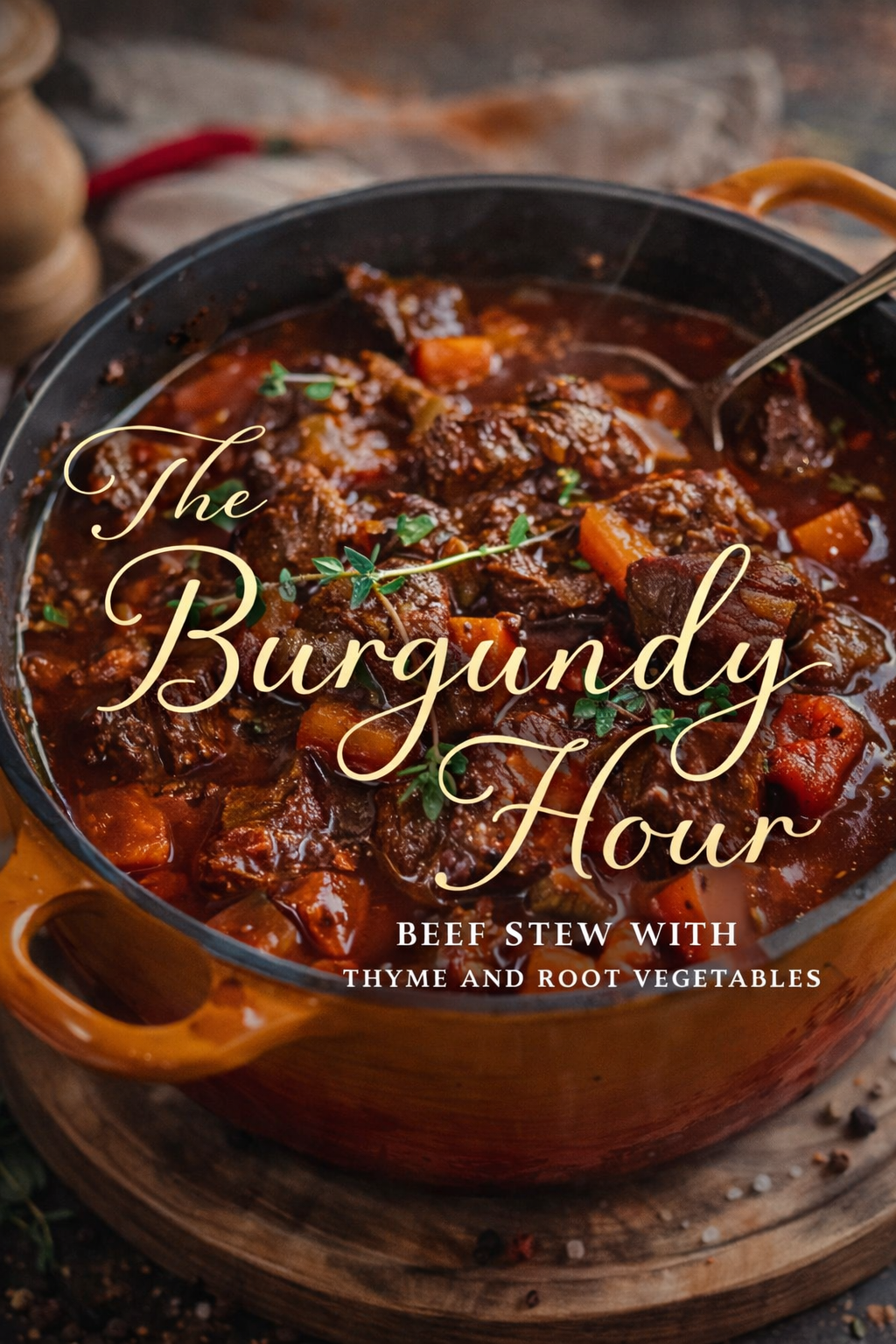
There’s a certain kind of quiet that settles in when a pot starts to behave the way you hoped it would—when the surface stops looking like liquid and begins to look like promise. The color in the pot deepens into that lacquered mahogany you only get when onions have surrendered, when tomato paste has been allowed to darken just a shade past polite, when beef has been seared until its edges hold a faint, caramelized roughness. This is the moment the kitchen smells like it’s wearing a coat—warm, heavy, and elegant—stitched with pepper, wine, and time.
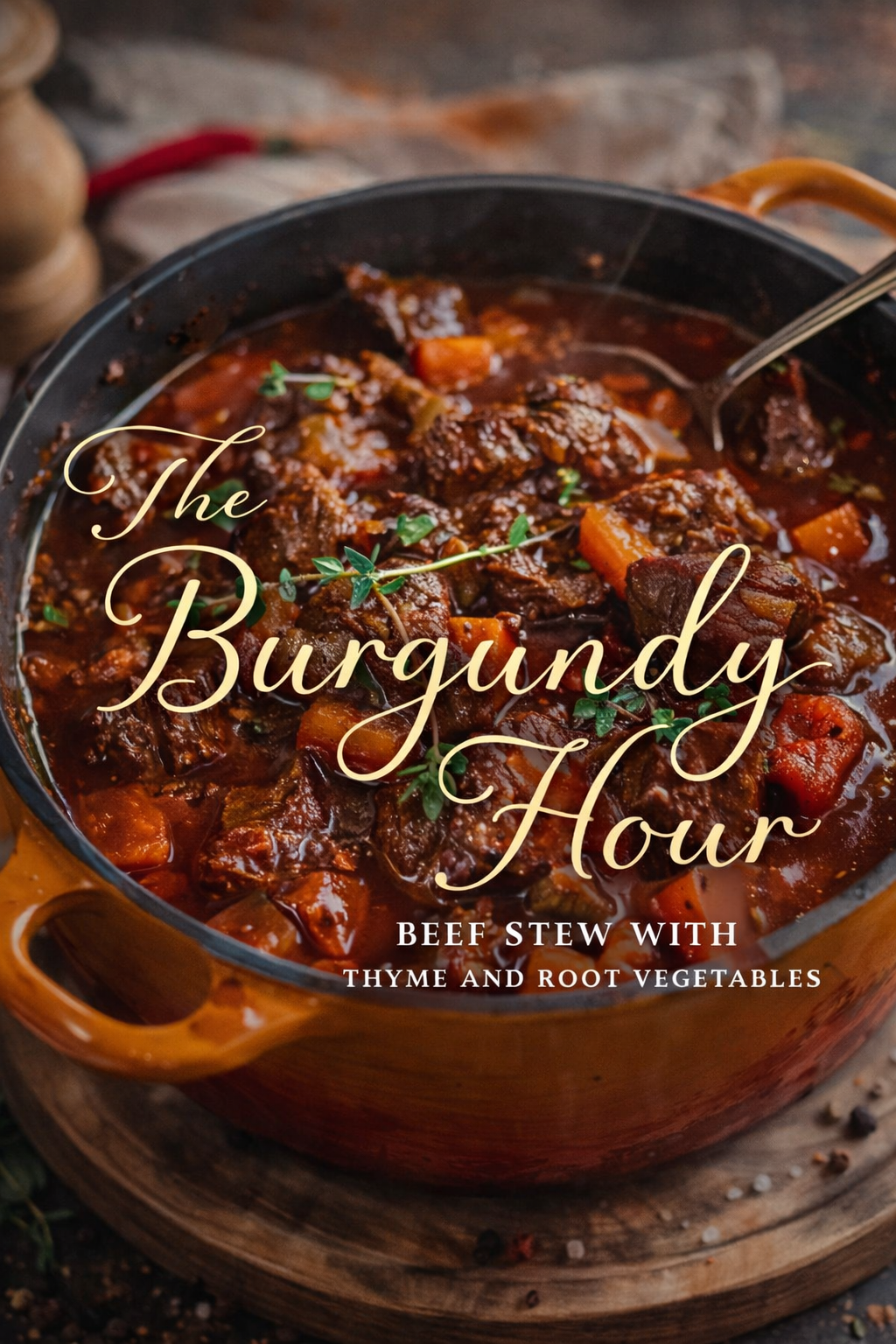
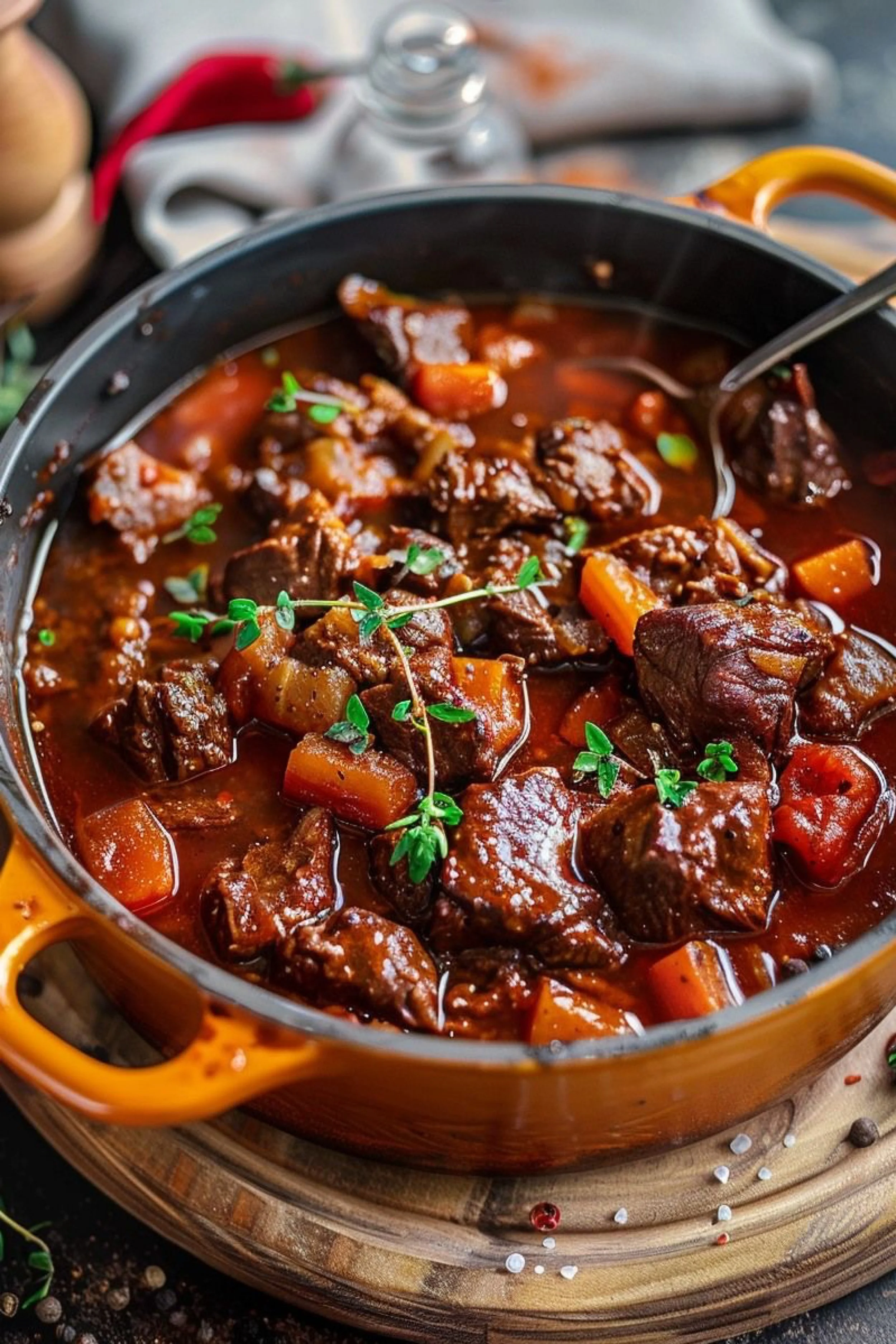
The stew sits there like a still life you can eat: chunks of beef that look glossy and resolute, carrots bright as embers, potatoes softened into gold, all of it swimming in a sauce that clings rather than splashes. A few delicate sprigs of thyme float on top like a finishing touch, green against the red-brown depth, as if someone remembered to add beauty even when comfort was the goal. It’s the kind of pot that makes you lean in without thinking, the kind of aroma that makes you pause mid-step because your body has already decided where you’re going next.
This isn’t the sharp heat of a quick dinner. It’s slow warmth—rounded, mellow, layered. The kind that fills the whole room and seems to settle into fabric and wood. The ladle rests in the pot like it belongs there, ready to pull up a scoop that’s half broth, half velvet. And when you look closely, you can almost read the method in the surface: the sear that created those darker tones, the simmer that coaxed the carrots into tenderness, the gentle patience that turned tough muscle into a spoon-cut luxury.
A stew like this asks for the right vessel, not for show but for physics—something heavy enough to hold heat evenly and steady enough to simmer without drama. A wide enameled cast iron Dutch oven for slow braises feels like the obvious choice, the kind of cookware that makes the process calmer because it behaves predictably. It’s the difference between babysitting and simply being present.
Around the pot, the kitchen becomes a small stage of details: a cutting board marked with the day’s work, a scatter of peppercorns, salt crystals like tiny pearls, a hint of red pepper flakes waiting in the wings. The knives matter here, too—not because you need chef theatrics, but because cutting carrots and potatoes cleanly keeps the cook focused and unhurried. A well-balanced chef’s knife that glides through root vegetables turns prep into a rhythm instead of a chore.
And then there’s the meat—sturdy cubes, browned and proud, the heart of the whole thing. This is not the kind of dish that rewards rush. The beef needs that initial contact with high heat, that sizzling honesty that builds flavor where it can’t be faked. When it hits the pot, it should sound like certainty. If you’re shopping for the right cut, you’re looking for marbling and structure, the kind that melts into tenderness over time—something like beef chuck roast for stew and braising is exactly the vibe, built for transformation.
The sauce is where the magic gathers. You can taste it before you taste it—tomato’s subtle sweetness, the savory depth of browned onions, the gentle bitterness that wine leaves behind when it cooks down properly. A good splash of red wine doesn’t make it fancy; it makes it dimensional. And even if you don’t keep wine around, the idea is the same: you want something that adds shadow and brightness at once. When you deglaze the pot, scraping up those browned bits with a flat-edged wooden spoon for sautéing and scraping fond, you can feel the dish assembling itself, one small decision at a time.
As it simmers, the vegetables start to look like they belong. Carrots soften and sweeten; potatoes absorb the broth like sponges with good manners. Every now and then, a piece of beef rises to the surface, glossy, as if to remind you it’s still there, still becoming something better. The liquid thickens just slightly, not gloopy—more like silk that learned how to hold its shape. And the thyme—fresh, green, clean—keeps the whole thing from feeling heavy. It’s the thread that lifts the richness, the little whisper that says this isn’t just comfort; it’s comfort with taste.
This is the kind of meal that doesn’t ask for a special occasion, but it creates one anyway. It turns an ordinary evening into something with a center. A bowl in your hands feels grounding. Steam rises and fogs the air. The first bite tastes like depth and patience, like the best parts of winter even if it’s not winter. And if you serve it with bread—something sturdy enough to drag through the sauce—you’ll understand why people keep a loaf on standby. A crusty artisan bread slicer and board setup is the kind of small upgrade that makes the whole moment feel deliberate.
Some dishes are about speed. This one is about surrender—letting heat and time do what they do best, letting the kitchen smell like home, letting the pot become the evening’s heartbeat. You don’t need perfection. You just need a good sear, a steady simmer, and the patience to let everything meet in the middle.
The Burgundy Hour Beef Stew with Thyme and Root Vegetables (Recipe)
A deeply savory, wine-kissed beef stew with tender root vegetables and a glossy, rich broth—built for slow simmering and even better the next day.
Ingredients
- 2 1/2 to 3 lb beef chuck, cut into 1 1/2-inch cubes
- 2 tsp kosher salt, plus more to taste
- 1 tsp black pepper
- 3 tbsp all-purpose flour (optional, for light coating)
- 2–3 tbsp neutral oil (or beef tallow)
- 1 large yellow onion, diced
- 3 cloves garlic, minced
- 2 tbsp tomato paste
- 1 1/2 cups dry red wine (or additional stock)
- 3 cups beef stock
- 2 tbsp Worcestershire sauce (optional)
- 2 bay leaves
- 6–8 sprigs fresh thyme (plus more to finish)
- 4 carrots, peeled and cut into chunks
- 2–3 Yukon Gold potatoes, cut into chunks
- 1 cup mushrooms or pearl onions (optional)
- 1 tsp smoked paprika or a pinch of red pepper flakes (optional)
- 1–2 tsp cornstarch mixed with 2 tsp water (optional, to thicken)
Method
- Pat beef dry. Season with salt and pepper (and lightly coat with flour if using).
- Heat oil in a heavy pot over medium-high. Brown beef in batches until deeply seared; remove.
- Lower heat to medium. Sauté onion 5–7 minutes until softened; add garlic 30 seconds.
- Stir in tomato paste and cook 1–2 minutes until it darkens slightly.
- Pour in wine to deglaze, scraping browned bits; simmer 2–3 minutes.
- Return beef to the pot. Add stock, Worcestershire (if using), bay leaves, thyme, and optional spices. Bring to a gentle simmer.
- Cover and simmer low 60–75 minutes, stirring occasionally.
- Add carrots and potatoes (and mushrooms/pearl onions if using). Simmer uncovered 35–50 minutes until beef is tender and vegetables are soft.
- Adjust salt and pepper. Thicken with cornstarch slurry if desired. Finish with fresh thyme.
Optional tools: a heavy Dutch oven for braising, a sturdy ladle for soups and stews
The secret to a stew like The Burgundy Hour Beef Stew with Thyme and Root Vegetables isn’t a secret ingredient—it’s the sequence. Each step is there to create a specific kind of flavor, and when you respect the order, the final pot tastes like it has depth you didn’t have to force.
1) Start by drying the beef (yes, really)
Moisture is the enemy of browning. If the beef goes into the pot wet, it steams instead of sears, and you miss the foundation that makes the broth taste “finished.” Pat the cubes thoroughly with paper towels, then season generously with salt and pepper. If you like a slightly thicker, more velvety body, dust the beef with a little flour—just enough to look lightly coated. This isn’t a breading; it’s a head start on gloss.
Tip: Use a wide, heavy pot so the beef has room. A wide-bottom enameled cast iron Dutch oven helps you brown efficiently without scorching.
2) Brown in batches—crowding is the silent ruin
Heat your oil until it shimmers, then add only enough beef to form a single layer with space between pieces. Let it sit. Resist stirring. Browning needs contact, and contact needs patience. When the beef releases easily, flip and brown the other sides. You’re not cooking it through; you’re building the flavor architecture.
Troubleshooting:
- If the beef is sticking: It’s not ready to move yet, or the pot isn’t hot enough.
- If liquid pools quickly: The pan is crowded. Remove some pieces and keep going in smaller batches.
3) The onion phase is where sweetness begins
Once the beef is browned and removed, drop the heat to medium. Add onions to the same pot and let them soften, picking up the browned drippings left behind. This is a gentle stage—sweating, not scorching. If the pot looks too dry, add a small splash of oil.
Tool note: A flat-edged wooden spoon for scraping and stirring makes it easier to keep the bottom clean while coaxing flavor off the surface.
4) Cook the tomato paste until it changes personality
Tomato paste is powerful, but raw tomato paste can taste sharp and tinny. Stir it into the onions and cook it for a full minute or two, until it deepens in color and starts to smell slightly caramelized. This step is how you get that rich, brick-red depth without needing extra sugar.
Variation:
- Add a pinch of smoked paprika here if you want a subtle fireplace note.
- A tiny pinch of red pepper flakes can add warmth without making it “spicy.”
5) Deglaze like you mean it
Pour in the red wine and immediately start scraping the bottom of the pot. Those browned bits are concentrated flavor; wine is the solvent that lifts them into the stew. Let the wine simmer for a couple minutes so the harsh alcohol note softens and the flavor tightens.
No-wine swap:
- Use extra beef stock with a teaspoon of vinegar for brightness, or a splash of pomegranate juice for a subtle fruit note.
- The goal is acidity plus depth, not sweetness.
6) Build the simmer—gentle is the word
Return the beef to the pot. Add stock, Worcestershire if you like that savory edge, bay leaves, and thyme. Bring it up to a simmer—not a boil. Boiling makes meat fibers tighten and can turn tender dreams into chewy reality. A slow simmer lets collagen dissolve gradually, which is how beef becomes spoon-tender.
If you’re unsure what “gentle simmer” looks like: small bubbles at the edges, occasional lazy blips through the center.
7) Timing the vegetables keeps them intact
Root vegetables can go from perfect to mushy if they simmer too long. Give the beef a head start—about an hour—then add carrots and potatoes. That way, the meat gets time to tenderize while the vegetables finish at the right texture.
Potato choice matters:
- Yukon Golds hold their shape while still going creamy at the edges.
- Russets break down more easily, which can be lovely if you want a naturally thicker stew.
Cut size guide:
- Keep carrots and potatoes roughly the same size so they finish together—about 1 to 1 1/2 inches.
8) Create the final texture: glossy, not gummy
When everything is tender, taste the broth. Salt is the lever that makes the flavor “wake up.” Add a little at a time until the stew tastes rounded. If you want a thicker body, you have options:
- Cornstarch slurry: A small amount thickens quickly and keeps the sauce shiny. Mix cornstarch with cold water first, then stir into the simmering stew.
- Natural reduction: Simmer uncovered for 10–15 minutes to concentrate flavor without adding starch.
- Mash-and-stir method: Mash a few potato chunks against the side of the pot and stir them in for a rustic thickness.
9) Finish with freshness so it doesn’t feel heavy
Right before serving, add a few fresh thyme leaves or a small squeeze of lemon to lift the richness. That tiny bright note keeps the stew from tasting flat, especially after a long simmer.
Serving ideas that make it feel complete:
- Ladle into warm bowls and pair with crusty bread, or serve over mashed potatoes.
- A simple green salad with vinegar dressing balances the richness.
Make-ahead upgrade: This stew improves overnight. The flavors meld, the broth thickens slightly, and the beef becomes even more tender. Store it in the fridge and reheat gently. If it thickens too much, loosen with a splash of stock.
Helpful gear that makes the process smoother:
- a sharp chef’s knife for clean prep
- a set of nesting prep bowls for mise en place
- a fat separator for removing excess grease
When you hit the sequence—dry, sear, sauté, darken, deglaze, simmer, then finish—the pot delivers exactly what the image promises: tender beef, soft root vegetables, and a broth so rich it looks like it could hold a reflection.