The Rain-Soft Ritual of Classic Beef Stew Over Herbed Rice
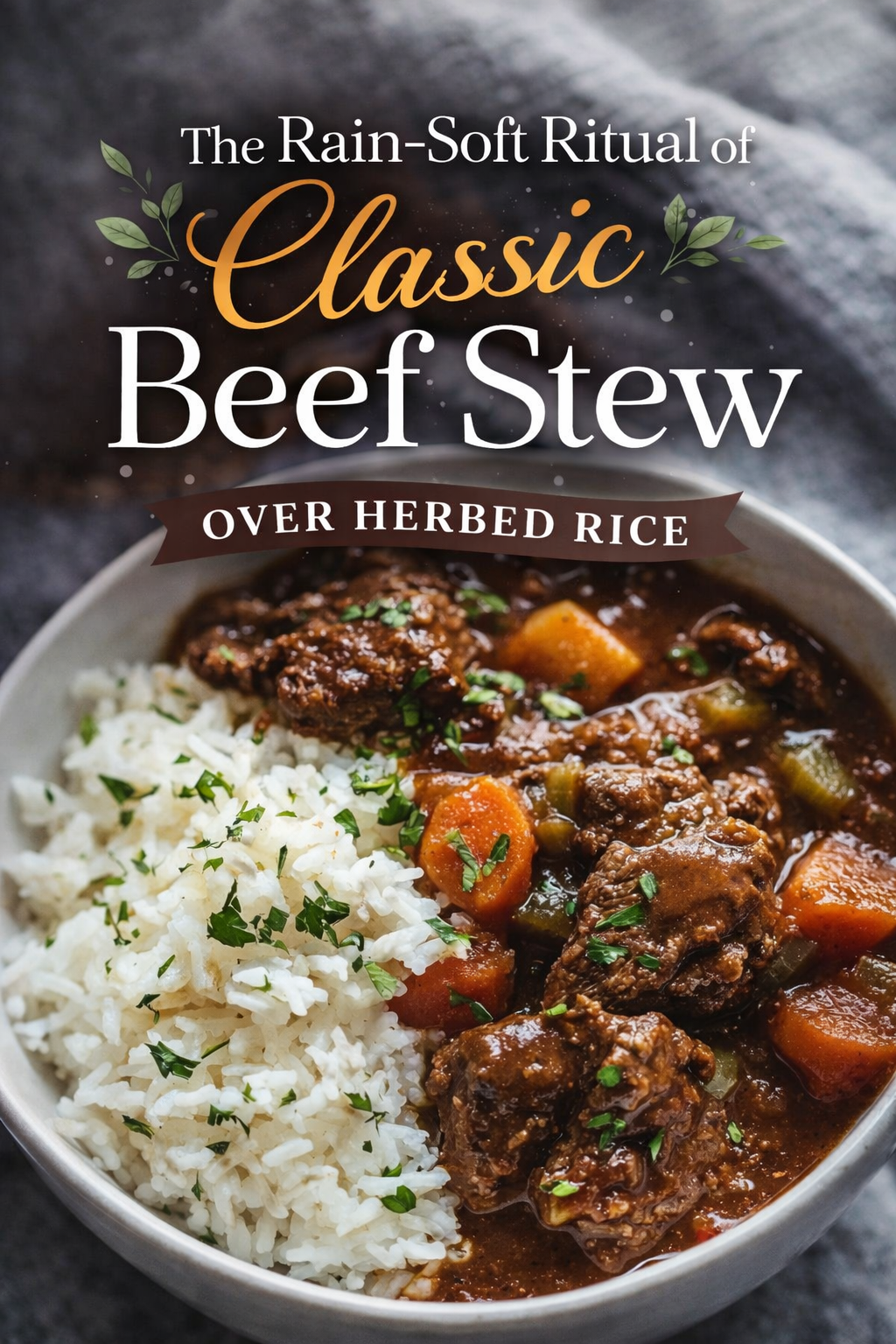
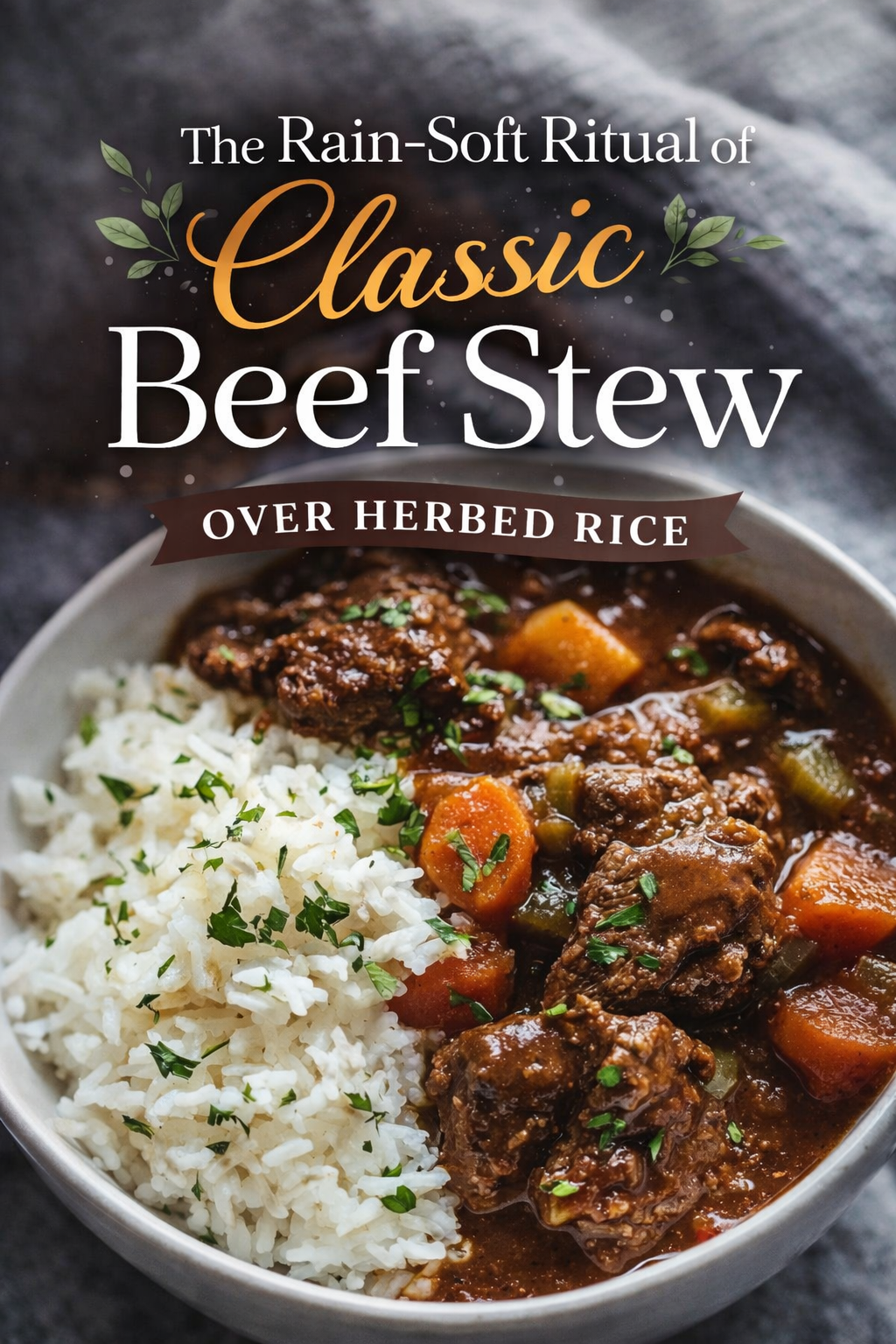
The bowl arrives like a quiet promise—half cloud, half midnight. A drift of rice, pearly and loose, sits on one side as if it’s been tucked in with care, each grain holding its shape but still giving off that gentle steam that fogs the edge of the ceramic. On the other side, the stew pools deep and glossy, the color of old mahogany and slow evenings. Carrots glow in warm orange coins, potatoes turn buttery at the corners, and tender cubes of beef settle into the sauce as though they’ve finally found their home. A scatter of green herbs lands on top like confetti that knows how to behave—bright, clean, and restrained.
There’s a hand in the frame, fingertips resting on the rim, and it changes everything. Suddenly this isn’t just dinner; it’s a moment being held in place. The background blurs into soft gray fabric, the kind you reach for when the weather decides to lean in. The whole scene has that intimate, end-of-day hush—when the kitchen is still warm, the lights feel kinder, and time slows enough for you to taste what you made. This is comfort with structure: rice for lift, stew for depth, and the little ribbon of herb freshness that keeps it from feeling heavy.
This kind of meal has a way of rewriting the day. It doesn’t demand celebration, but it creates it anyway. It’s what you make when you want to feel taken care of without asking anyone to do it for you. You start with a pot that can hold a story—something like a heavy enameled pot built for long braises—and you build flavor the way you build atmosphere: slowly, deliberately, with small decisions that stack up into something undeniable.
The beef wants patience. The best stews don’t rush tenderness; they negotiate it. A good cut like chuck becomes luxurious when it’s given time to relax, and the ritual begins at the cutting board, with the steady rhythm of a sharp blade against wood. The tools don’t make the meal, but they make the process feel calm—like a chef’s knife that holds a confident edge and a thick wooden cutting board that doesn’t slide away from you when you’re trying to be precise.
The aroma shifts in chapters. First comes the browned beef, that deep roasted scent that fills the kitchen and signals you’re doing it right. Then onion softens into sweetness, garlic warms into perfume, and tomato paste darkens until it smells like the base note of something expensive. A splash of wine or broth lifts the fond—those caramelized bits stuck to the bottom of the pot—and suddenly the whole thing tastes like it’s already been simmering for hours. The stew begins to look like itself, even before it becomes itself.
Somewhere in the middle, you realize how much of this is about texture. You want the sauce thick enough to cling, but not so thick it feels static. You want vegetables that keep their integrity, but yield at the edges. You want beef that breaks with the slightest pressure, the kind of tenderness that feels almost like a secret. And then there’s the rice—simple, bright, necessary. It’s the canvas and the contrast, especially when you cook something fragrant like jasmine or basmati in a pot that steams evenly, or even in a reliable rice cooker for fluffy grains every time. When you spoon the stew over the rice, the sauce seeps into the grains like a slow tide, and every bite lands exactly where you want it.
The finishing touch matters more than people admit. A pinch of chopped parsley doesn’t just add color; it adds lift. It’s the little green inhale that keeps the dish from feeling too dark, too winter. If you’re the type who loves that final flourish, a quick snip from kitchen shears made for herbs turns it into a ritual you’ll repeat without thinking. And when you finally bring the bowl close—when you feel the warmth in your hands and the steady, savory steam rise into your face—it’s hard not to believe that food can change a mood in real time.
This is the kind of meal that makes the world smaller in the best way. It doesn’t ask you to perform; it invites you to settle. It’s dinner that feels like a blanket, but tastes like you planned it. It’s rich without being complicated, classic without being boring, and somehow—every time you make it—it feels a little different, like the pot remembers the weather and adjusts accordingly. One bowl, half rice, half stew, and suddenly the evening has a heartbeat.
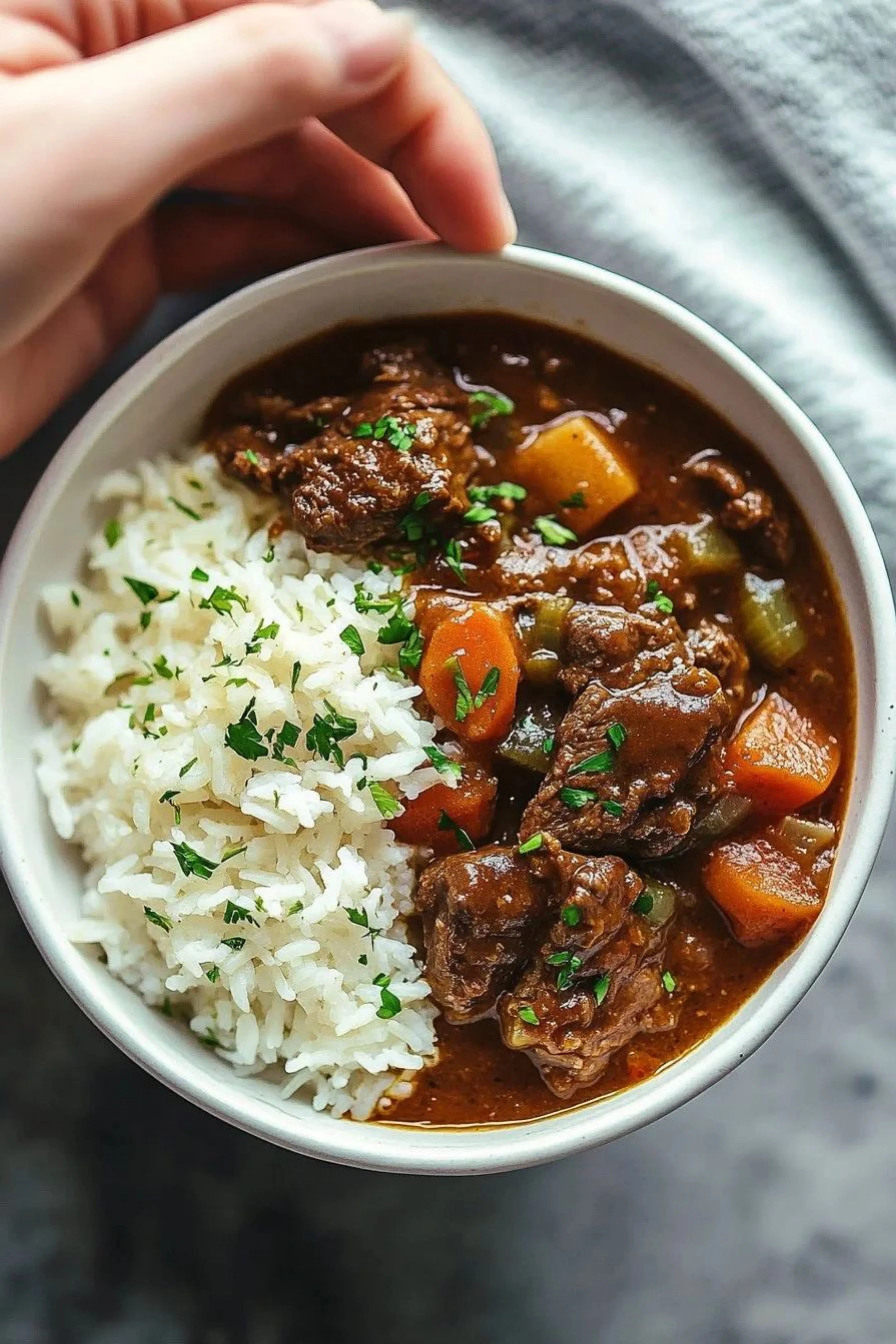
Classic Beef Stew Over Herbed Rice
A hearty, glossy beef stew spooned over fluffy rice—tender beef, carrots, potatoes, and celery in a deeply savory gravy.
Ingredients
For the stew
- 2 ½ lb beef chuck roast, cut into 1 ½-inch cubes
- 2 tsp kosher salt, plus more to taste
- 1 tsp black pepper
- 3 tbsp all-purpose flour
- 2 tbsp neutral oil (or beef tallow)
- 1 large yellow onion, diced
- 3 cloves garlic, minced
- 2 tbsp tomato paste
- 1 cup dry red wine (optional) or extra broth
- 4 cups beef broth
- 2 tbsp Worcestershire sauce
- 2 bay leaves
- 1 tsp dried thyme (or 2 tsp fresh)
- 3 carrots, sliced into thick coins
- 2 ribs celery, chopped
- 2 large potatoes, peeled and cubed
- 1 tbsp soy sauce (optional, for depth)
- 1–2 tsp cornstarch mixed with 2 tbsp cold water (optional, to thicken)
For the rice
- 1 ½ cups jasmine or basmati rice, rinsed
- 2 ¼ cups water
- 1 tbsp butter
- ½ tsp salt
- 2 tbsp chopped parsley (for serving)
Method
- Brown the beef: Toss beef with salt, pepper, and flour. Heat oil in a heavy pot over medium-high. Brown beef in batches until deeply browned; remove.
- Build the base: Lower heat to medium. Add onion and cook 5 minutes. Add garlic 30 seconds. Stir in tomato paste and cook 2 minutes until darkened.
- Deglaze: Pour in wine (or a splash of broth) and scrape up browned bits. Simmer 2 minutes.
- Simmer: Return beef to pot. Add broth, Worcestershire, bay leaves, and thyme. Bring to a gentle simmer, cover, and cook 1 hour.
- Add vegetables: Stir in carrots, celery, and potatoes. Cover and simmer 45–60 minutes until beef is fork-tender and vegetables are soft.
- Finish: Stir in soy sauce if using. Thicken with cornstarch slurry if desired. Adjust salt and pepper. Remove bay leaves.
- Cook rice: Combine rinsed rice, water, butter, and salt. Simmer covered 15 minutes (or use your preferred method). Rest 10 minutes, then fluff.
- Serve: Spoon rice into bowls, ladle stew alongside or over it, and finish with chopped parsley.
The Rain-Soft Ritual of Classic Beef Stew Over Herbed Rice — Step-by-Step, Done Like a Pro
1) Start with the right cut, then cut it right.
Beef stew becomes legendary when the beef is built for slow cooking. Chuck roast has enough connective tissue and fat to melt into tenderness over time. Cut it into even, generous cubes—about 1 ½ inches—so everything finishes together. Uneven pieces mean some turn shreddy while others stay chewy. A steady prep setup helps you move calmly: a large cutting board that stays put and a sharp chef’s knife make the whole first phase feel clean and controlled.
2) Dry the meat before it hits heat.
Moisture is the enemy of browning. Pat the beef dry with paper towels before seasoning. This single step is the difference between pale, steamed meat and those dark, savory edges that make stew taste like it has a soul. Season boldly—salt and pepper—and dust with flour. The flour isn’t just for thickening later; it helps you build a lightly roux-like base as the stew simmers.
3) Brown in batches and don’t flinch.
Use a pot that holds heat well—thin pans lose temperature and punish you with gray meat. Something like a heavy Dutch oven suited for braising is ideal. Heat oil until it shimmers, then add beef in a single layer. If the pot is crowded, the beef releases moisture and steams. Give each batch time. You’re not just “searing”; you’re creating flavor deposits on the bottom of the pot that will later dissolve into the sauce.
4) Build the aromatic foundation in the same pot.
Once the beef is browned and removed, drop the heat to medium and add onions. They’ll soften and pick up those browned bits. After a few minutes, add garlic—briefly—so it perfumes without burning. Then comes tomato paste, and this is where most people stop too early. Let it cook until it darkens and smells rounded and rich, not raw. That quick caramelization is a shortcut to long-simmer depth.
5) Deglaze like you mean it.
Pour in wine or broth and scrape the bottom with a wooden spoon. The fond (those stuck brown bits) is concentrated flavor. Simmer for a minute or two so the sharpness of wine softens and the pot becomes a unified base. If you like a deeper, more velvety stew, a dry red wine is your friend—just keep it balanced. You can also lean on broth alone for a cleaner, classic taste.
6) Control the simmer—gentle is the whole point.
Return beef to the pot, add broth, Worcestershire, thyme, and bay leaves. Bring it up to a simmer, then immediately reduce heat. A rolling boil can tighten meat fibers and make the beef tougher. You want small, lazy bubbles. Cover and cook about an hour before adding vegetables. That head start lets the beef begin tenderizing before the vegetables enter the conversation.
7) Add vegetables at the right time for the right texture.
Carrots, celery, and potatoes should go in after the beef has already softened. If you add them at the beginning, they’ll collapse and disappear into the sauce. Cut vegetables into hearty chunks so they hold shape and look beautiful in the bowl—like the image, where the carrots and potatoes are distinct and glossy. Simmer covered until beef is fork-tender and potatoes yield with a soft edge.
8) Taste for depth, then tune.
Once it’s tender, this is where you make it sing. A small splash of soy sauce can add savory depth without tasting like itself. Worcestershire adds a subtle tang and meatiness. Salt is the final sculptor—add a pinch at a time until everything tastes vivid, not flat. If you want to be precise, check the stew’s heat and tenderness with an instant-read thermometer for kitchen accuracy and your fork; the beef should pull apart easily without shredding into mush.
9) Thicken only if you need to—and do it cleanly.
A great stew should be glossy and spoon-coating. If yours is too thin, don’t panic. Mix cornstarch with cold water to make a slurry, then stir it in while the stew gently simmers. Add a little, wait a minute, then reassess. If you prefer the classic, old-school method, you can also reduce the stew uncovered for 10–15 minutes to concentrate flavor and naturally thicken.
10) Rice is not an afterthought—treat it like a component.
Rinse the rice until the water runs mostly clear; this removes excess starch and keeps the grains fluffy. Jasmine or basmati adds fragrance that contrasts beautifully with the dark stew. Cook it with a touch of butter and salt, then rest it covered for 10 minutes so it finishes steaming. If rice is a frequent part of your rotation, a dependable rice cooker keeps it effortless and consistent.
11) Build the bowl for contrast and comfort.
Spoon rice into one side of the bowl and ladle stew beside it so the boundary stays visually satisfying—just like the half-and-half composition in the image. The stew will slowly seep into the rice, giving you both clean bites and sauced bites. Finish with chopped parsley for brightness; it cuts through richness and makes the whole bowl feel alive. If you like quick prep, kitchen shears for herbs make that final garnish feel like a small flourish instead of a chore.
Variations that still feel classic
- Mushroom-forward: Add sliced cremini mushrooms with the onions for extra depth.
- Smoky edge: A pinch of smoked paprika turns the gravy warmer and more complex.
- No wine: Use more broth and a teaspoon of balsamic vinegar for gentle acidity.
- Thicker, richer gravy: Increase flour slightly when tossing the beef, or reduce uncovered at the end.
Troubleshooting, fast
- Beef isn’t tender: It simply needs more time at a gentle simmer. Keep going—toughness is undercooked collagen, not overcooked meat.
- Sauce tastes flat: Add salt in small steps, then consider a touch of Worcestershire or a splash of vinegar for lift.
- Vegetables turned mushy: Next time, add them later and cut them larger.
- Greasy surface: Skim with a spoon, or chill the stew and remove solid fat—stews are even better the next day.
The goal is a bowl that feels calm but tastes intense: beef that yields, vegetables that glow, gravy that clings, rice that stays bright. When it’s right, every spoonful lands like a soft exhale—warm, steady, and quietly unforgettable.