Velvet Red-Wine Beef Stew with Baby Potatoes, Carrots & Rosemary
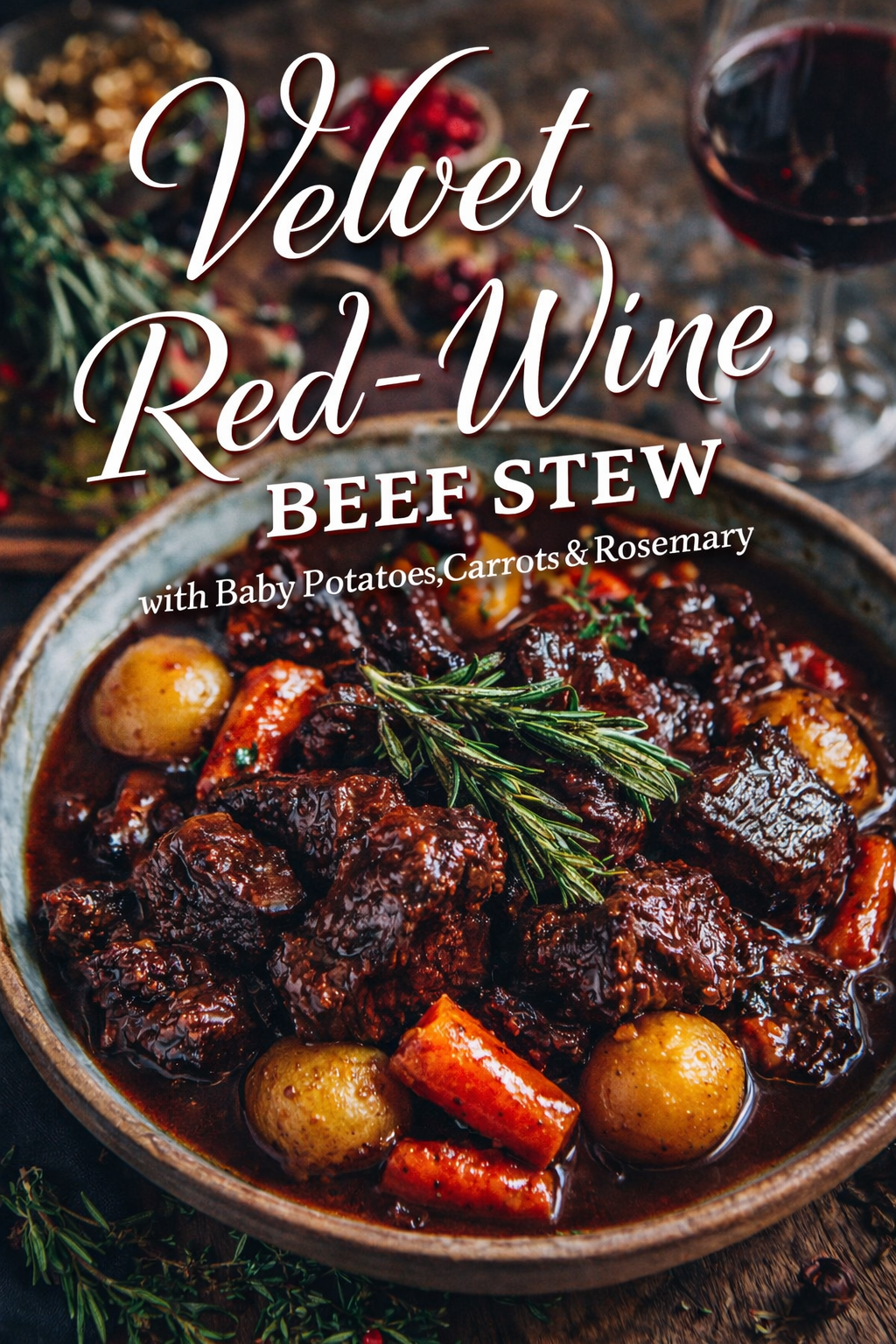
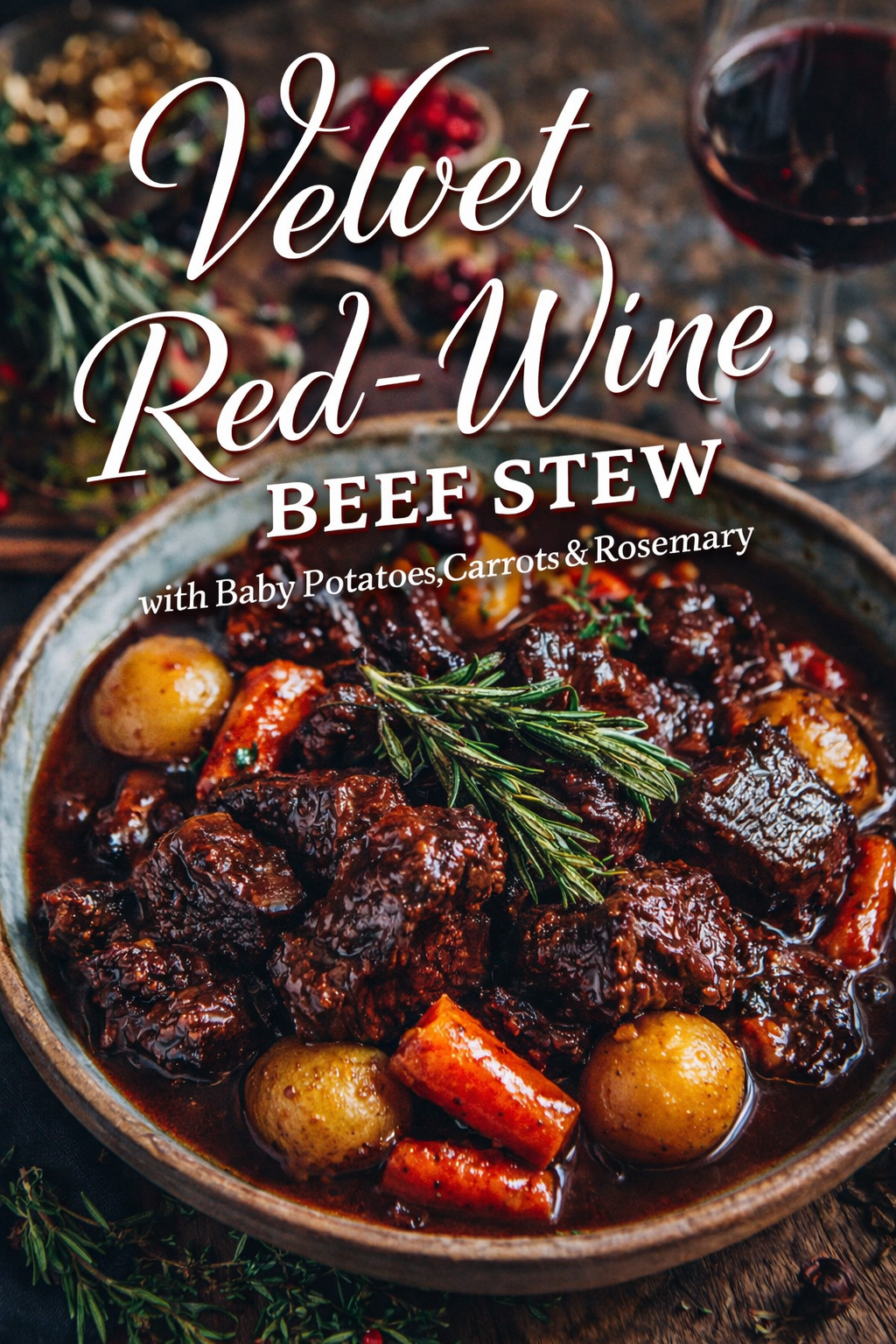
The first thing you notice isn’t the beef—though it’s there, dark and glossy, cut into generous, slow-braised hunks that look like they’ve been lacquered by patience. It isn’t the baby potatoes either, round and golden, holding their shape like little anchors in a broth that feels almost too luxurious to call “stew.” It’s the shine.
That deep, wine-black sheen that clings to every surface in the bowl, catching the light the way a good coat of lipstick does right before you leave the house. It’s the kind of finish that says someone cared. That someone waited. That this wasn’t thrown together—it was built.
A red-wine stew is one of those rare dishes that makes a kitchen feel like a destination. The air changes while it cooks. The house gets quieter, slower, more deliberate. You start moving like you’re in a scene—opening the cabinet for a Dutch oven, finding the wooden spoon that feels right in your hand, pouring a glass of wine even if it’s not “wine o’clock” yet because the moment insists on it. The pot doesn’t just simmer. It performs.
And the bowl—this bowl—feels like the finale.
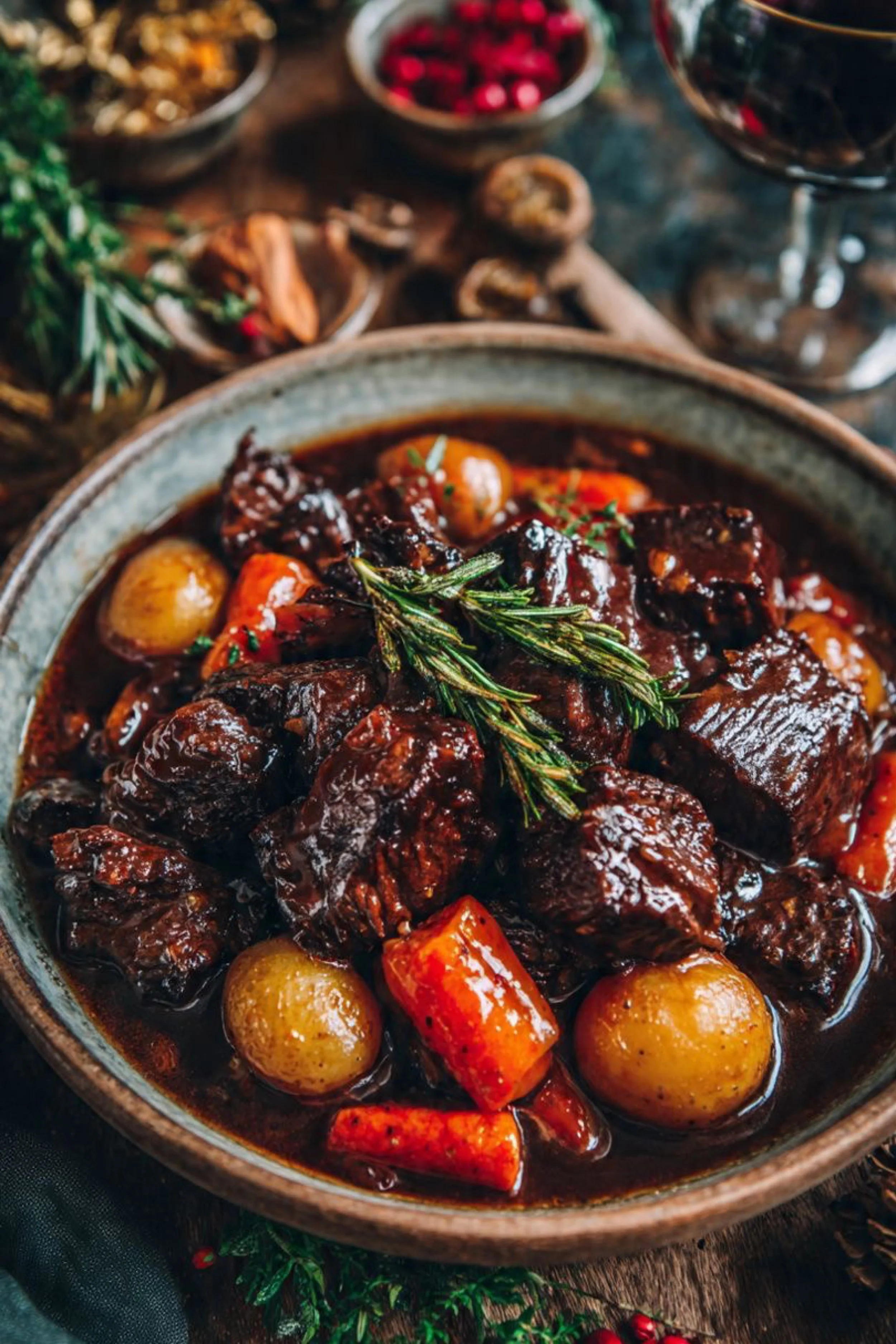
There’s rosemary laid across the top like a signature. Not a delicate sprinkle. A confident, piney branch that says, “Yes, we’re doing this properly.” It brings brightness and bite, the sharp green note that cuts through the richness like a well-timed comment at a dinner party. Carrots add their warm sweetness, softened at the edges, stained the color of the sauce. They taste like comfort with good manners. The potatoes are buttery and mellow, and when you catch one with your spoon, it feels like catching a lucky coin.
Then the beef: tender enough to pull apart with a nudge, but still substantial—still proud. The kind of texture that only comes from real browning and real time. You don’t get it by rushing. You get it by letting the pot teach you patience. And when you finally taste it, you understand why people romanticize slow braises. The flavor lands in layers: savory depth, a gentle tang from the wine, the sweetness of vegetables, that herbal lift from rosemary, and the quiet, meaty richness that makes you close your eyes for a second because your brain wants to record it.
This is the kind of meal that looks like it belongs next to a candle and a half-full glass of Cabernet. The kind of meal that makes you want crusty bread—not as a side, but as a tool. A way to chase every last drop of sauce around the bowl until the bottom looks clean enough to show off. It’s bold without being loud, cozy without being heavy, and somehow both rustic and elegant at the same time.
What I love most is how forgiving it is. You can make it on a Sunday and eat it through the week, and it only gets better—deeper, rounder, more cohesive, like it’s been resting into itself. You can serve it for guests and feel like you did something impressive without spending the whole night trapped in the kitchen. You can make it just for you, too—because sometimes you deserve a dinner that feels like a soft robe and a slow song.
This version leans into the visual drama you see in the bowl: a dark, reduced red-wine sauce; baby potatoes that stay intact; chunky carrots that hold their sweetness; and rosemary that perfumes the whole thing like a forest breeze sneaking into a warm room. It’s luxurious in the way only comfort food can be—honest, rich, and completely unbothered by trends.
If you’ve ever wanted a recipe that makes the entire evening feel more expensive than it actually was, this is the one. The pot does the work. You just set the mood.
Ingredients
- 3 lbs beef chuck roast, cut into 2-inch chunks (trim big hard fat)
- 2 1/2 tsp kosher salt, divided
- 1 1/2 tsp black pepper
- 2–3 tbsp olive oil (for browning)
- 1 large yellow onion, diced
- 4 cloves garlic, minced
- 2 tbsp tomato paste
- 2 tbsp all-purpose flour (optional, for a slightly thicker stew)
- 2 cups dry red wine (Cabernet, Merlot, Pinot Noir—use one you’d drink)
- 3 cups beef broth, plus more as needed
- 1 tbsp Worcestershire sauce
- 2 bay leaves
- 1 tsp dried thyme (or 1 tbsp fresh)
- 3–4 sprigs fresh rosemary (plus more for serving)
- 1 lb baby gold potatoes, scrubbed
- 4 large carrots, cut into thick chunks
- 8 oz cremini mushrooms (optional, but amazing)
- 1–2 tsp balsamic vinegar (optional, to brighten at the end)
- 2 tbsp butter (optional, for glossy finish)
How to Make It
- Dry the beef + season. Pat beef very dry with paper towels (this is the browning secret). Season with 2 tsp salt and all the pepper. If using flour, toss the beef lightly until dusted.
- Brown in batches. Heat a Dutch oven over medium-high. Add 1–2 tbsp oil. Sear beef in batches, 3–4 minutes per side, until deeply browned. Don’t crowd. Transfer browned beef to a plate.
- Build the base. Lower heat to medium. Add onion with a pinch of salt. Cook 6–8 minutes until softened and lightly browned. Stir in garlic for 30 seconds.
- Toast the tomato paste. Add tomato paste and cook 1–2 minutes until it darkens slightly and smells rich.
- Deglaze with wine. Pour in the red wine and scrape up every browned bit from the bottom. Simmer 6–8 minutes to reduce a little and cook off the sharp alcohol edge.
- Braise. Add beef back in, along with beef broth, Worcestershire, bay leaves, thyme, and rosemary sprigs. Bring to a gentle simmer. Cover and cook on low for 1 hour 45 minutes (or in a 325°F oven).
- Add vegetables. Stir in baby potatoes, carrots, and mushrooms (if using). Cover and cook 45–60 minutes more, until beef is fork-tender and potatoes are creamy.
- Finish the sauce. Remove lid and simmer 10–15 minutes to thicken if needed. Stir in butter for shine. Add balsamic a few drops at a time if you want the flavor to pop. Taste and adjust salt.
- Serve. Ladle into bowls. Top with fresh rosemary. Serve with crusty bread, mashed potatoes, or buttered noodles.
Timing + Yield
- Servings: 6
- Prep: 25 minutes
- Cook: 2.5–3 hours
- Total: About 3 hours 15 minutes
Pro Tips for That Dark, Glossy Finish
- Browning matters more than anything. Dark color on the beef = deep flavor in the sauce.
- Reduce the wine before braising. That short simmer turns the wine from sharp to velvety.
- Keep the simmer gentle. A hard boil can make beef tough.
- Want it thicker? Mash a few potatoes into the pot near the end, or use the flour at the start.
- Want it even richer? Add 1–2 oz chopped dark chocolate at the end (sounds wild, tastes luxurious).
Variations
- Bourguignon vibe: Add pearl onions and a handful of chopped bacon at the start.
- Herby: Add parsley stems during the braise, finish with chopped parsley.
- Spicy: A pinch of crushed red pepper in the onion step adds a subtle glow.
Make-Ahead + Storage
- Make-ahead: Best the next day. Cool, refrigerate, reheat gently.
- Fridge: 4 days
- Freezer: Up to 3 months (thaw overnight, reheat low and slow)
Shop the Kitchen (Amazon)
an enameled Dutch oven that braises beautifully
a sturdy wooden spoon for deglazing
a sharp chef’s knife for clean beef chunks
an extra-large cutting board
a deep soup ladle for perfect bowls
an instant-read thermometer
Style it With
crusty bread tools for sauce-dragging perfection
stemless wine glasses for the vibe
wide ceramic bowls that make it feel fancy
This is the kind of stew that doesn’t just feed you—it changes the temperature of the night. It slows the room down. It makes you sit a little closer to the table. It makes the first bite feel like a small, private celebration.
If you make it, I want to know one thing: did you go for bread to chase the sauce, or did you give in and eat it straight from the bowl like you couldn’t wait another second? Because honestly… that second option tells me everything I need to know about your taste.