The Copper-Pot Comfort Beef Stew with Baby Potatoes, Carrots & Garden Peas

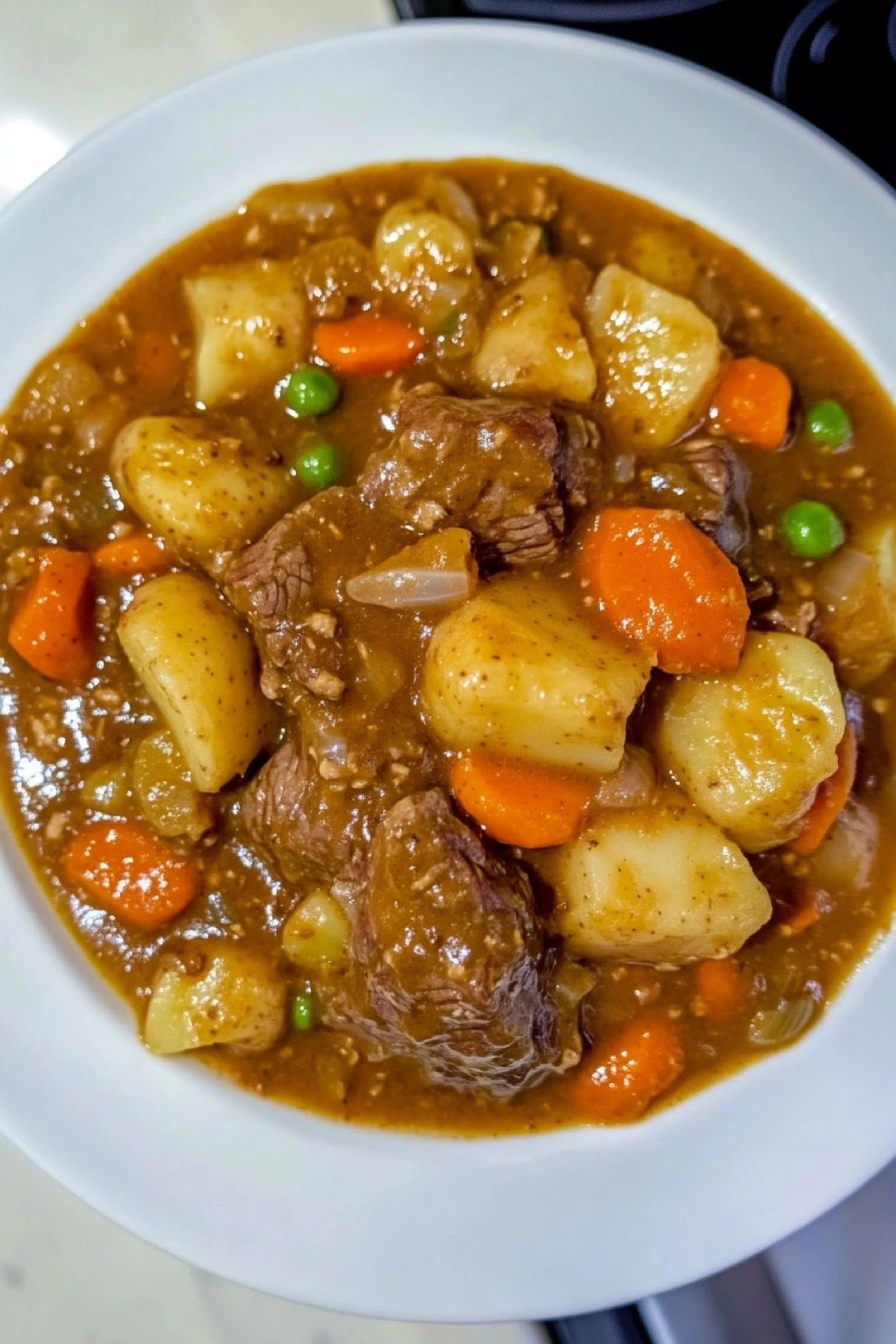
The first thing you notice is the sheen—the way the gravy catches the light like polished bronze, thick enough to cling, glossy enough to look almost lacquered. In the bowl, the potatoes sit like little anchors, their skins freckled and tender, edges softened by hours of simmering. Carrots glow a bright, confident orange, and the peas pop through like small green punctuation marks, a reminder that comfort can still feel alive.
This is the kind of stew that makes the whole house smell like it’s keeping a secret. The air turns warm and savory, layered with browned beef and softened onion, with that faint sweetness that only shows up when vegetables have had time to surrender. It asks for a slow afternoon and rewards you with a dinner that feels like a blanket—weighty in the best way, grounding, steady, and quietly luxurious without trying too hard.
It starts with the sound: beef meeting hot metal, that immediate hiss that tells you you’re building flavor, not just cooking. A deep, steady pot matters here—something like a heavy enameled Dutch oven built for long simmers that holds heat evenly and gives you the kind of browning that tastes like patience. The beef should be cut generous, the way it appears in the bowl—big enough to feel like a true bite, not a shredded afterthought. Look for well-marbled beef chuck roast for stews and let it be what it is: sturdy, honest, made for low heat and time.
As the pot settles into its rhythm, the broth turns from thin to velvety. A spoon drags through it and leaves a trail that slowly fills back in, like the stew is breathing. The seasoning is quiet but deliberate—salt, pepper, paprika, a whisper of thyme—nothing flashy, just the steady architecture of flavor. If you keep tomato paste on hand, it deepens the base with a subtle roasted sweetness, and a splash of Worcestershire sauce adds that hard-to-name savoriness that makes people ask what you did differently.
By the time the potatoes go in, the kitchen feels changed. Steam fogs the edges of the room. The pot lid lifts and everything smells darker, richer, more complete. Baby potatoes soften without falling apart, their centers turning creamy, their skins taking on the stew’s spice and color. When you finally add peas at the end, it’s like turning on a small light—freshness tucked into something deep and slow.
Served hot, it’s the kind of bowl you lean over. You taste the browned edges first, then the gravy—silky, peppery, full of the slow-cooked sweetness of onion and carrot. The beef breaks with the slightest pressure. The potatoes hold their shape but melt on the tongue. It doesn’t rush you. It doesn’t need to. It simply waits, warm and certain, like it always belonged on your table.
Ingredients
- 2 1/2 to 3 lb beef chuck roast, cut into 1 1/2-inch chunks
- 2 tsp kosher salt (plus more to taste)
- 1 tsp black pepper
- 2 tbsp all-purpose flour (for tossing beef)
- 2 to 3 tbsp oil (avocado or vegetable)
- 1 large onion, chopped
- 3 cloves garlic, minced
- 2 tbsp tomato paste
- 4 cups beef broth
- 1 tbsp Worcestershire sauce
- 1 tsp smoked paprika
- 1/2 tsp dried thyme
- 2 bay leaves
- 1 lb baby potatoes (or Yukon gold, chunked)
- 4 to 5 carrots, cut into thick coins
- 1 cup frozen peas
- Optional thickener: 1 1/2 tbsp cornstarch + 2 tbsp cold water (slurry)
Method / Instructions
- Pat beef dry. Toss with salt, pepper, and flour.
- Brown beef in a heavy pot over medium-high heat in batches; remove to a plate.
- Sauté onion in the same pot until softened; add garlic for 30 seconds.
- Stir in tomato paste and cook 1 minute.
- Add broth, Worcestershire, paprika, thyme, and bay leaves; scrape up browned bits.
- Return beef to pot. Simmer covered on low for 1 hour.
- Add potatoes and carrots. Simmer 45–60 minutes, until beef is fork-tender and potatoes are cooked through.
- Stir in peas for the last 3–5 minutes.
- If desired, thicken with cornstarch slurry, simmering 2–3 minutes until glossy. Adjust salt and pepper. Rest 10 minutes before serving.
A stew like this isn’t complicated, but it is precise in the way all great comfort food is: each step is small, and each one quietly matters. Think of it as building a sauce with a backbone—brown, deglaze, reduce, and only then let time do its work.
Start by drying your beef thoroughly. Moisture is the enemy of browning, and browning is where the stew’s “deep” flavor comes from. If you want that rich, roasted taste that makes the gravy look darker and more luxurious, you need real caramelization. Tossing the beef with a light coat of flour helps, too—it encourages browning and gives the finished stew a subtle body. Use a wide, heavy vessel like a cast-iron or enameled Dutch oven so the heat stays stable when the cold meat hits the surface.
Brown in batches. This is the step people skip, and it’s the step that changes everything. If the pot is crowded, the beef steams and turns gray. Give each piece space, let it sit long enough to form a crust, and turn only when it releases easily. You’re not “cooking the beef through” here—you’re creating flavor. The browned bits stuck to the bottom (fond) are future gravy.
Once the beef is out, drop the heat slightly and add your onions. They should soften and turn glossy, picking up the browned flavor left behind. If the pot looks dry, add a small splash of oil. When the onions are sweet and translucent, add garlic briefly—just enough to wake it up, not scorch it. Then tomato paste goes in. This is where you coax a roasted note out of it: let it cook for a full minute until it darkens slightly and smells deeper, less sharp. If you keep pantry staples stocked, having tomato paste in a tube is especially handy for this kind of cooking.
Deglazing is next. Pour in broth and scrape the bottom thoroughly. A flat-edged tool like a sturdy wooden spoon makes this easy and protects your pot. Those browned bits dissolve into the liquid and become the stew’s signature depth. Add Worcestershire, paprika, thyme, and bay leaves—simple seasonings, but they layer into something that tastes far more complex than the ingredient list suggests. Using a full-bodied broth helps; beef broth or stock concentrate can boost richness if what you have is a little mild.
Now the long simmer begins. Keep it low—barely bubbling. Hard boiling tightens meat fibers and makes beef tough. A gentle simmer relaxes collagen over time, turning it into gelatin, which is what gives the gravy that silky, clingy finish. Cover the pot, but not airtight; you want some evaporation so the sauce reduces. Check occasionally and stir, especially along the bottom.
After about an hour, add carrots and potatoes. Timing matters: if you add them too early, they’ll collapse by the time the beef is tender. Baby potatoes are ideal because they hold shape while becoming creamy inside. If using larger potatoes, cut them into big chunks—small pieces disappear. Carrots should be thick coins so they stay distinct and sweet. Return the lid and keep that same gentle simmer until the beef is fork-tender. The best test is texture, not time: a piece should yield easily when pressed, but still feel substantial.
Peas go in last. They’re already cooked; you’re just warming them through and preserving their color. This tiny step makes the bowl look brighter and tastes fresher, especially against a deeply savory gravy.
If your stew looks a little thinner than you want, you have options. The most elegant is simply simmering uncovered for 10–15 minutes to reduce. If you need it faster, a cornstarch slurry works—stir it in and simmer a few minutes until the gravy turns glossy and coats the spoon. Keep cornstarch around for exactly this kind of finishing move.
Troubleshooting is straightforward:
- If the beef is tough: it needs more time at low heat. Collagen doesn’t soften on a schedule—it softens when it’s ready.
- If the gravy tastes flat: add salt gradually, then a small splash of Worcestershire for savoriness, or a spoon of tomato paste for depth. A pinch of black pepper at the end wakes everything up.
- If it tastes too heavy: brighten with a tiny splash of vinegar or lemon at the end (not enough to taste sour—just enough to lift).
Variations that still keep the soul of the bowl:
- Add sliced mushrooms with the onions for an earthier base.
- Swap thyme for rosemary for a piney, wintery vibe (use a light hand).
- Stir in a spoon of Dijon at the end for a subtle tang.
- Prefer extra-velvety gravy? Finish with a small pat of butter off heat and whisk gently.
Finally, let the stew rest 10 minutes before serving. Resting lets the gravy settle and thicken naturally and gives the flavors time to knit together. Serve it hot, in wide bowls, with the kind of spoon that feels substantial—something like deep soup bowls made for hearty stews. The result is exactly what the image promises: glossy gravy, tender beef, potatoes that taste like they’ve absorbed the whole day, and bright vegetables that make every bite feel complete.