The Citrus-Lacquered Spiral Ham That Made the Table Go Quiet
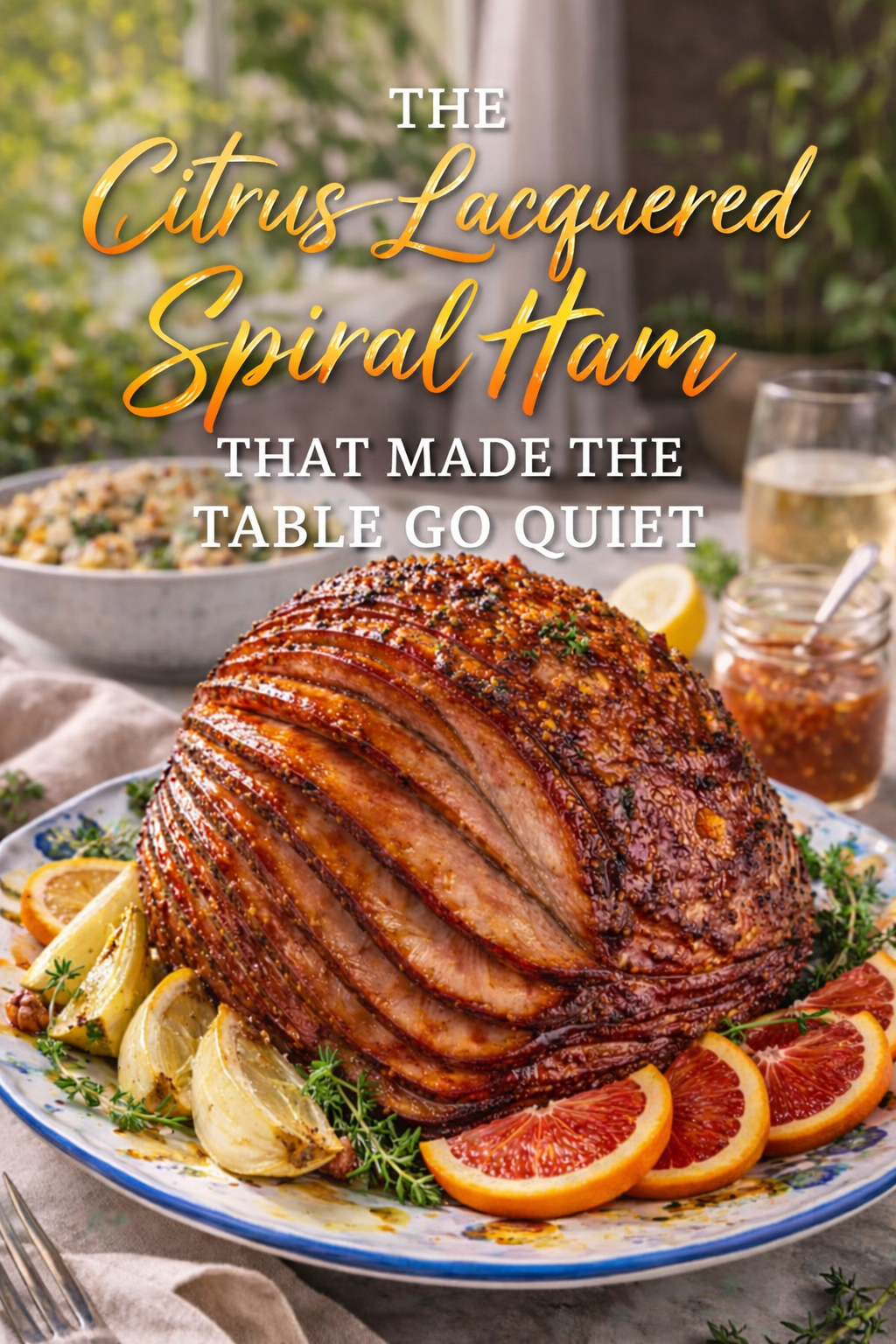
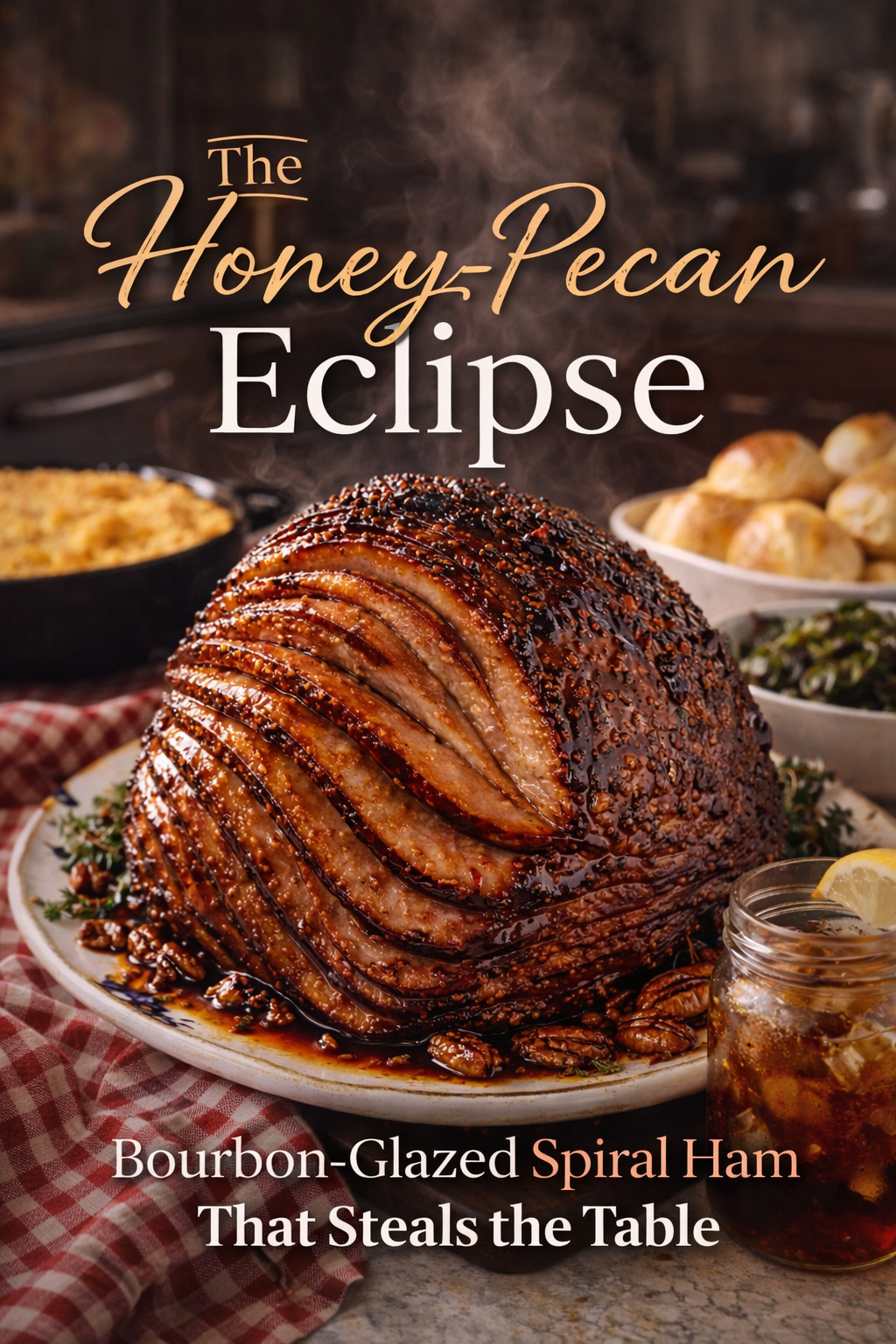
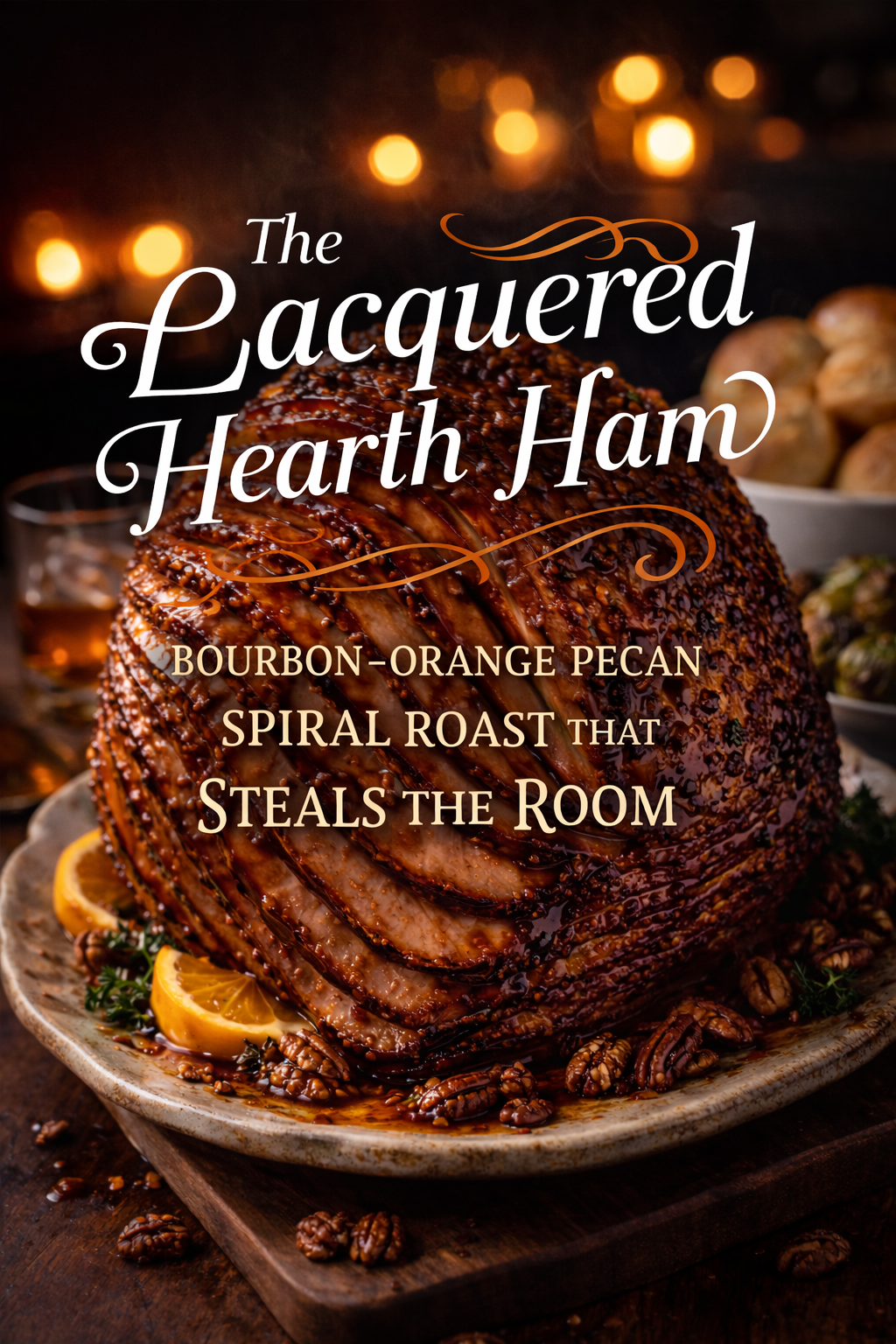
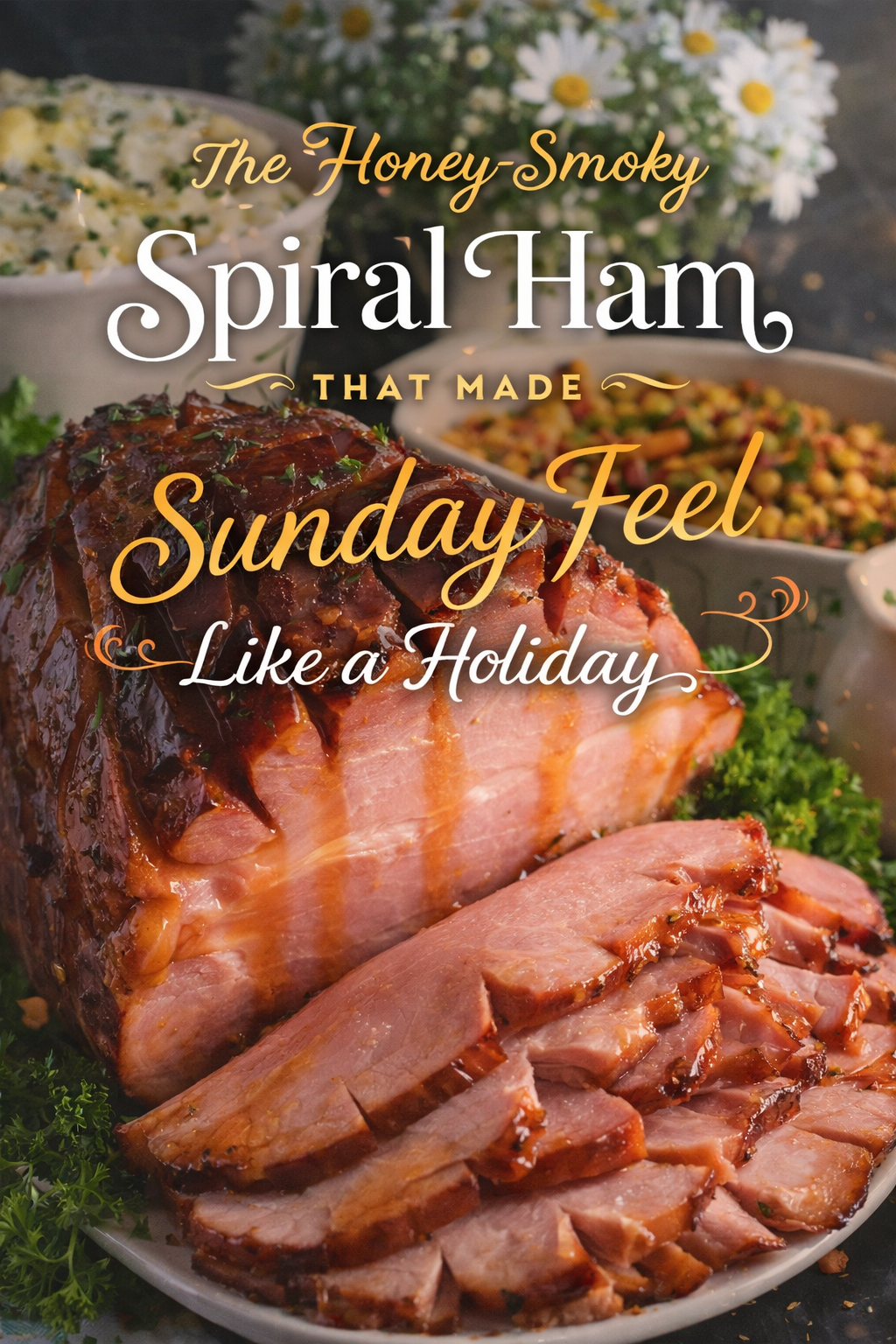
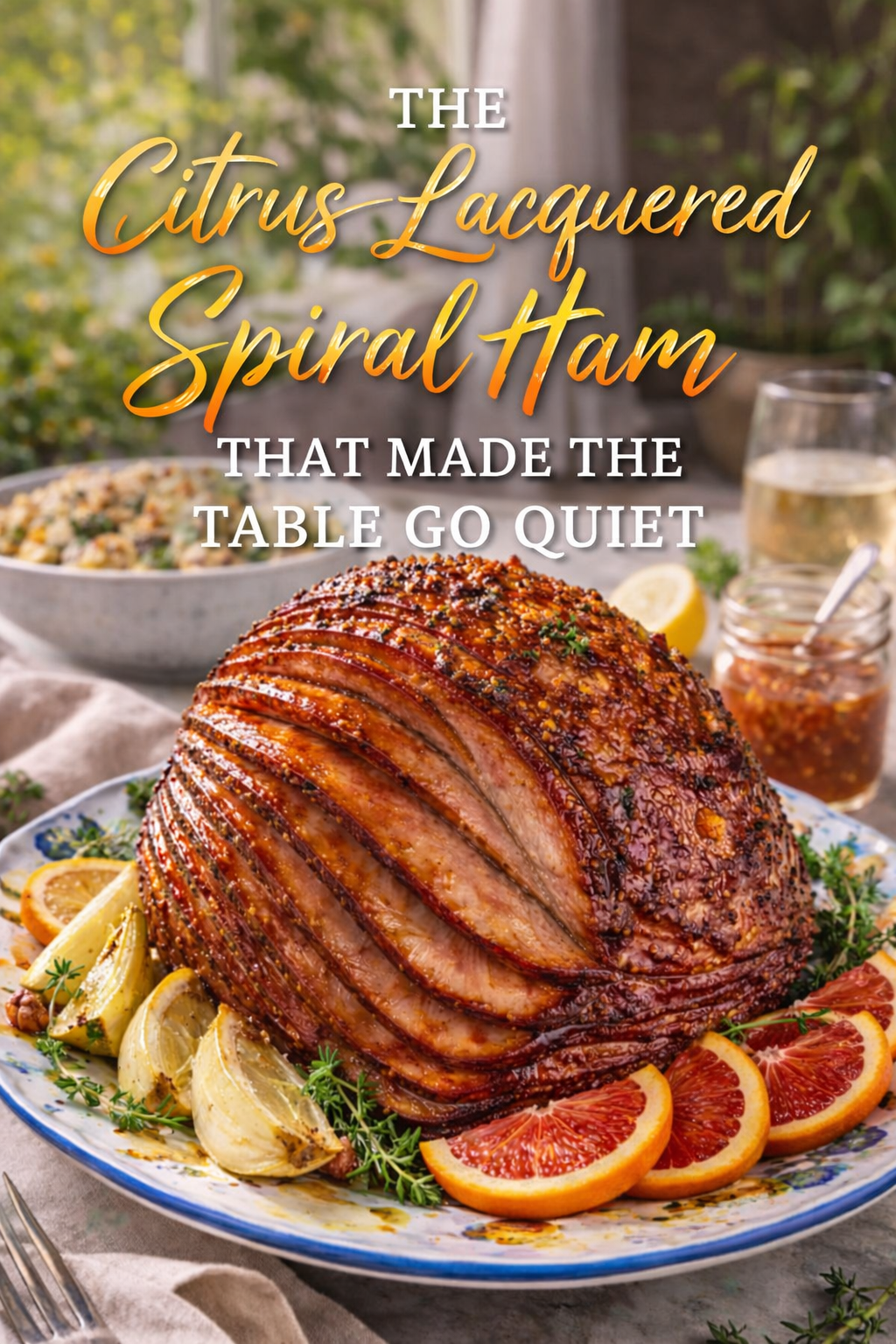
Sunlight slips across the table like a warm secret, catching on the glossy ridges of a spiral ham that looks almost sculpted—each slice curved and stacked, bronzed at the edges, and sealed in a sticky, jeweled glaze. The surface is alive with texture: tiny seeds and cracked spice suspended in amber sheen, flecks of green herb clinging where the glaze settled, and darker caramelized lines tracing the spiral cut like hand-drawn ink. Around it, citrus wedges glow—blood-orange crescents the color of stained glass and pale lemon segments that look freshly torn open, their juice threatening to bead and run. Roasted onion petals rest nearby, softened and sweet, their edges blistered just enough to hint at smoke and browned sugar. A few sprigs of thyme sprawl across the platter as if they fell there mid-laugh, adding that unmistakable clean, woodland perfume that makes the whole scene feel expensive without trying.
The ham carries its own kind of ceremony. Not fussy, not precious—just undeniably central. It’s the sort of centerpiece that changes the room, pulling people closer with the promise of salt and sweetness, citrus brightness, and that deep roast aroma that lingers in the air long after the oven door has closed. There’s a gentle clink of glass nearby, a pale drink catching the light, and a small jar of glossy preserve—something marmalade-adjacent—waiting like a backup singer, ready to echo the citrus notes if anyone dares to add a spoonful. In the background, a bowl of creamy, herby side dish sits out of focus, a reminder that this isn’t a solo performance. It’s a table built for passing plates, for second helpings, for someone quietly stealing a corner slice where the glaze pooled thickest.
What makes a spiral ham feel like this—less like “served” and more like “revealed”—is the finish. Spiral slicing is generous, but it can dry if treated casually. This one looks protected, lacquered, held together by a glaze that’s equal parts shine and flavor. You can almost taste it before the first cut: tang from mustard, a gentle heat from crushed pepper and spice, bright citrus oils from zest, and a low, dark sweetness that reads more like toasted sugar than candy. The kind of balance that keeps the ham’s savoriness intact while giving every edge that subtle crackle where glaze met heat.
There’s also something undeniably stylish about citrus beside ham—classic, yes, but also photogenic in the best way. Blood orange brings drama; lemon brings clarity. Together they make the platter feel fresh, even decadent. A large ceramic serving platter for dramatic presentation turns the whole arrangement into a still life, while a soft linen napkin set in warm neutrals keeps the scene relaxed instead of formal. The small details matter: a sharp carving knife that glides through spiral slices so the meat doesn’t tear, a basting brush for painting on glossy layers so the glaze lands exactly where you want it, and a reliable instant-read thermometer that keeps everything juicy without guesswork.
And then there’s the fragrance—thyme warmed by residual heat, citrus zest blooming the moment it hits the glaze, and that roasted-onion sweetness drifting up from the platter. It’s the kind of aroma that makes people wander into the kitchen “just to see,” only to hover a little too close to the counter. The ham doesn’t need a speech. It just needs a moment, a board, and a confident hand. A sturdy roasting pan with a rack helps the heat circulate, while a microplane zester for vivid citrus oils turns the peel into perfume instead of bitter strips.
On a day like this—bright, calm, quietly celebratory—food becomes a kind of atmosphere. The glaze shines not because it’s trying to impress, but because it was built in layers, coaxed into that glassy finish with patience. The citrus isn’t garnish; it’s contrast. The herbs aren’t decoration; they’re direction. And when the first slice lifts away, you get that soft, steamy reveal of blush-pink interior against caramel edge—proof that something hearty can still feel elegant, and something traditional can still feel new.
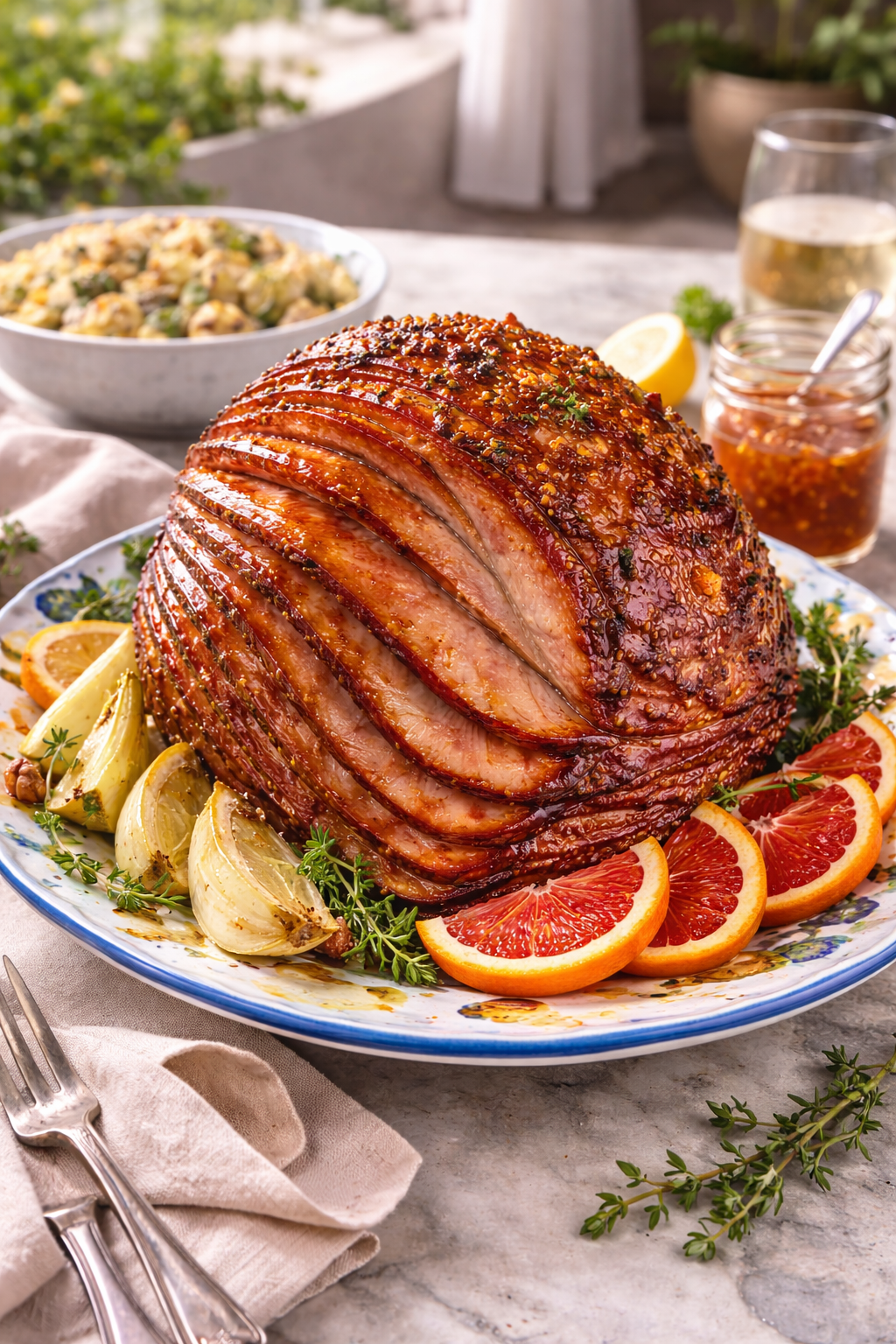
A spiral ham is already halfway to unforgettable—this version finishes the job with a citrusy mustard glaze that caramelizes into a glossy, savory-sweet crust.
Ingredients / Materials
- 1 spiral-cut bone-in ham (8–10 lb), fully cooked
- 1 cup orange marmalade
- 1/3 cup Dijon mustard
- 1/4 cup honey (or brown sugar)
- 2 tbsp fresh lemon juice
- 1 tbsp orange zest (blood orange or navel)
- 2 tsp fresh thyme leaves (plus sprigs for serving)
- 1/2 tsp crushed red pepper (optional)
- 1/2 tsp black pepper
- 2 tbsp apple cider vinegar (or water)
- 2–3 small onions, quartered (optional, for roasting)
- Citrus slices/wedges for serving (blood orange + lemon)
Optional tools:
Method / Instructions
- Heat oven to 325°F. Place ham cut-side down on a rack in a roasting pan. Add onions around the ham if using. Pour 1/2 cup water into the pan and cover tightly with foil.
- Warm ham 10–12 minutes per pound, until the center reaches 120–125°F.
- Meanwhile, whisk marmalade, Dijon, honey, lemon juice, zest, thyme, pepper flakes (if using), black pepper, and vinegar in a saucepan. Simmer 3–5 minutes until glossy and slightly thickened.
- Remove foil. Brush ham with a generous layer of glaze. Return to oven uncovered for 10 minutes.
- Brush with more glaze every 8–10 minutes for 20–30 minutes total, until deeply lacquered and the center reaches 140°F.
- Rest 15–20 minutes. Garnish with citrus and thyme, then serve by lifting slices along the spiral cut.
Start by treating the ham like what it is: a ready-to-eat centerpiece that needs warming, protection, and a finish worthy of the moment. Because spiral hams are pre-sliced, they can lose moisture faster than an uncut roast. The goal is gentle heat first, then high-impact glazing at the end—so the meat stays juicy while the outside turns glossy and caramel-kissed.
1) Choose the right ham and set it up for success.
A spiral-cut, bone-in ham in the 8–10 pound range is the sweet spot for even warming and dramatic slices. Set it on a rack inside a sturdy roasting pan with a rack; the rack keeps the bottom from stewing in its own juices and helps heat circulate. Pour a little water (or cider) into the pan—not to boil the ham, but to create humidity that protects the slices.
2) Cover tightly and warm low and slow.
Cover the pan with foil and crimp it tight. This is the “save the juiciness” phase. Warm at 325°F, estimating about 10–12 minutes per pound. Don’t chase a high internal temp yet—your target is around 120–125°F before glazing. Use a reliable instant-read thermometer and check in the thickest center, not between slices. If the thermometer slides in too easily and reads low in a pocket, move it a bit deeper until you get a stable number.
3) Build a glaze that balances bright, sharp, and sweet.
While the ham warms, make the glaze. Marmalade gives body and shine; Dijon adds savory bite; honey (or brown sugar) rounds it out; lemon juice lifts the whole thing so it doesn’t taste candy-sweet. Simmering the glaze briefly does two important things: it dissolves any grainy sweetness and concentrates the flavors so you get impact in thin layers. For maximum citrus perfume, zest fresh fruit with a microplane zester and stir it in once the glaze is warm—zest is where the aromatic oils live.
4) Transition from steaming to lacquering.
Once the ham hits that 120–125°F range, remove the foil. You’ll notice the spiral slices relax slightly—that’s normal. Now you’re switching goals: from moisture retention to surface caramelization. Patience matters here. Instead of dumping all the glaze at once, apply it in layers. A silicone basting brush helps you paint the glaze into the grooves without tearing delicate slices.
5) Glaze in intervals for a true glossy crust.
Brush on the first generous coat and return the ham to the oven uncovered for about 10 minutes. Pull it out, glaze again, and repeat every 8–10 minutes. This layering is what creates that deep shine and speckled, caramelized look—each coat sets, then the next builds on top. If your glaze thickens too much as it sits, warm it briefly and add a teaspoon of water to loosen it back into a brushable gloss.
6) Control heat to avoid burning.
Marmalade and honey can scorch if the oven runs hot or if the ham sits too close to a top element. Keep the oven at 325°F for predictable results. If the surface darkens faster than you want, tent loosely with foil for the last round. If it’s not browning enough, you can raise the oven to 350°F for the final 8–10 minutes—but stay close. “Deep amber” is the line; “blackened sugar” is not.
7) Use citrus and onions as more than decoration.
Those roasted onion petals in the scene aren’t just pretty. Quarter a couple onions and tuck them around the ham during the covered warming phase; they’ll soften and sweeten in the humid heat, then pick up color once the foil comes off. Citrus can work two ways: lemon juice in the glaze for brightness, and fresh slices for serving so each bite can be finished with a little zing if someone wants it. Blood oranges bring a gentle berry-like depth; lemons bring clean snap.
8) Know the real finish temperature and why it matters.
Because most spiral hams are fully cooked, you’re warming to serving temperature rather than “cooking through.” The standard endpoint is 140°F in the center. Hitting that number without overshooting keeps the meat tender. Check temperature during the final glazing rounds and pull the ham as soon as it reaches 140°F; carryover heat will keep it warm while you rest.
9) Rest so slices stay silky, not shredded.
Resting isn’t optional. Give the ham 15–20 minutes before serving. This lets juices redistribute and keeps spiral slices from separating into dry ribbons. Transfer it to a large ceramic serving platter for a centerpiece moment and scatter thyme sprigs and citrus around it while it rests—the warmth will bloom the herb aroma and make the table smell incredible.
10) Carving and serving without chaos.
Spiral ham is wonderfully forgiving, but a little technique keeps it elegant. Use a long, sharp carving knife and slide along the spiral cut, lifting slices in clean arcs. If you want a showstopper effect, serve the first slices from the outer edge where glaze is thickest and caramelization is deepest. Keep a small bowl of extra warm glaze on the side so anyone can add shine to their slice.
Variations that keep the same vibe
- Spicy-citrus version: Add a pinch of cayenne or a spoon of chili crisp-style heat (keep it subtle).
- Herb-forward version: Stir in minced rosemary with the thyme for a piney edge.
- Brown-sugar bourbon style: Swap part of the honey for brown sugar and add a splash of bourbon to the glaze (simmer briefly).
- Apricot-lemon glaze: Replace marmalade with apricot preserves and increase lemon zest for brightness.
Troubleshooting
- Ham seems dry: It likely warmed too long before glazing. Next time, keep it covered longer and start glazing only after it’s mostly warmed. Also verify thermometer placement.
- Glaze won’t stick: The surface may be too wet. Blot gently with a paper towel after removing foil, then glaze in thinner coats.
- Glaze is burning: Lower heat, tent loosely with foil, and shorten intervals.
- Not getting shine: Simmer glaze a bit longer and layer more times; shine comes from reduction plus repeated setting.
When it’s done right, you get that exact visual promise: a ham that looks carved and lacquered, citrus that brightens every bite, and edges that taste like the best part of the pan—sweet, salty, and just a little smoky.