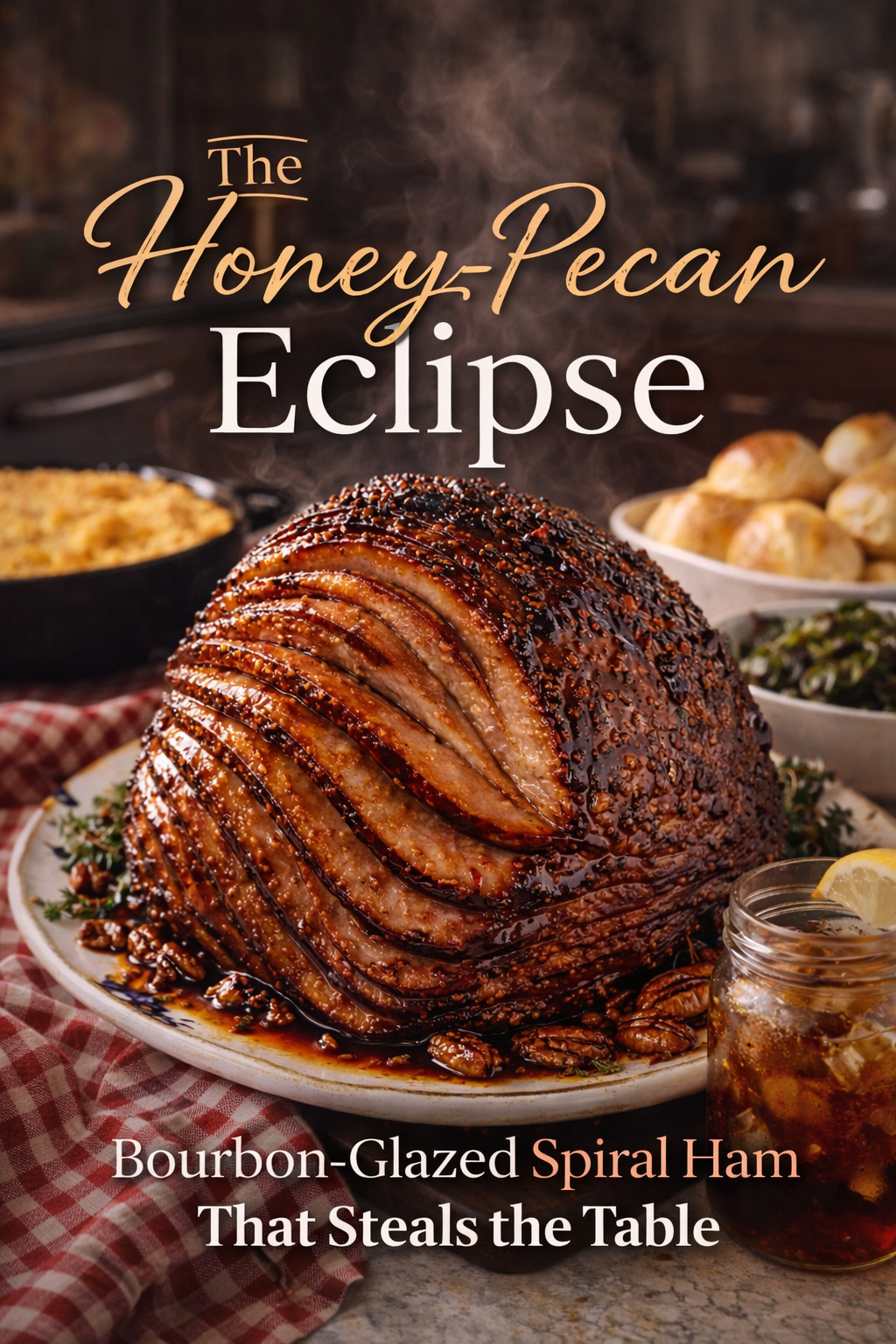
The Honey-Pecan Eclipse: Bourbon-Glazed Spiral Ham That Steals the Table
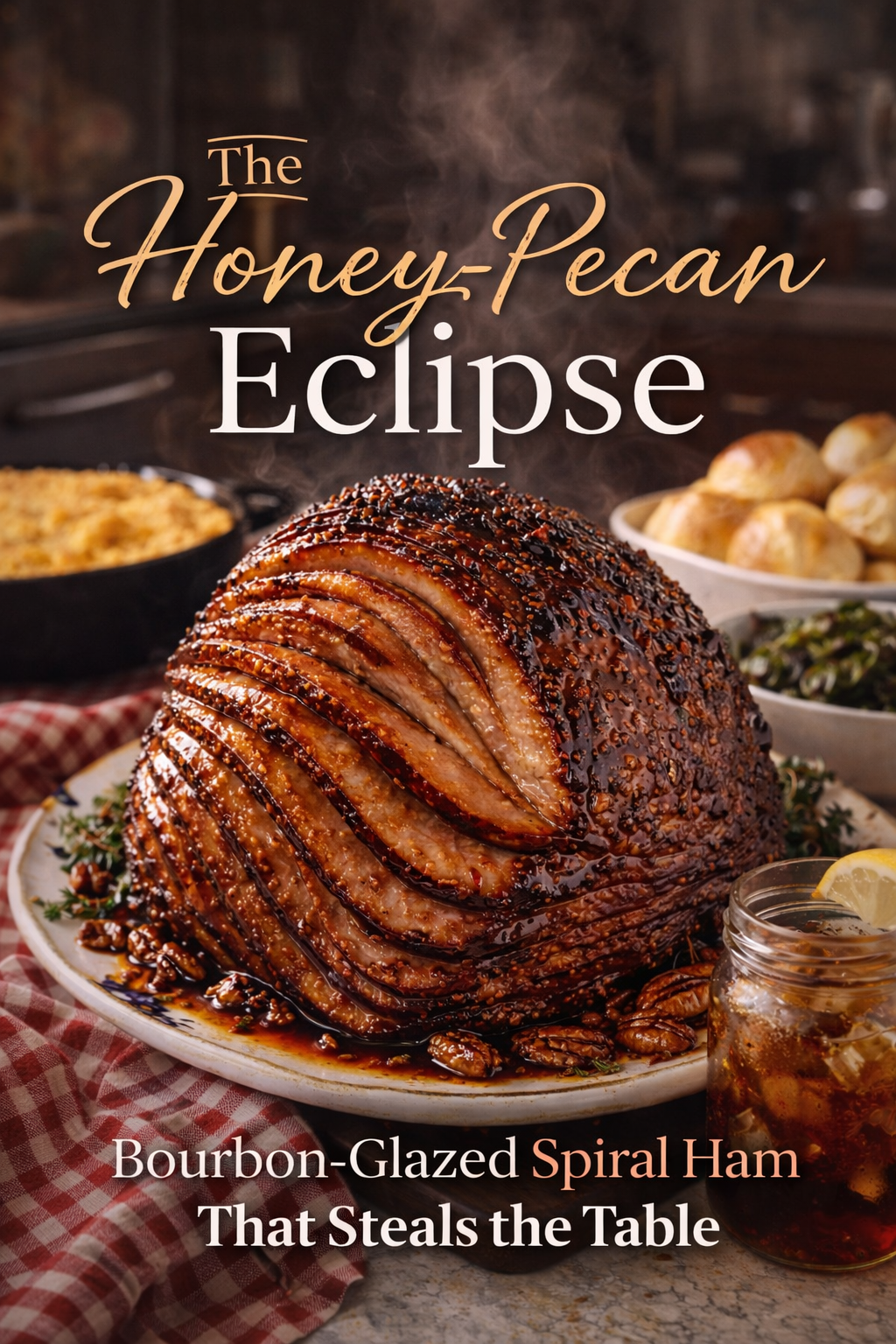
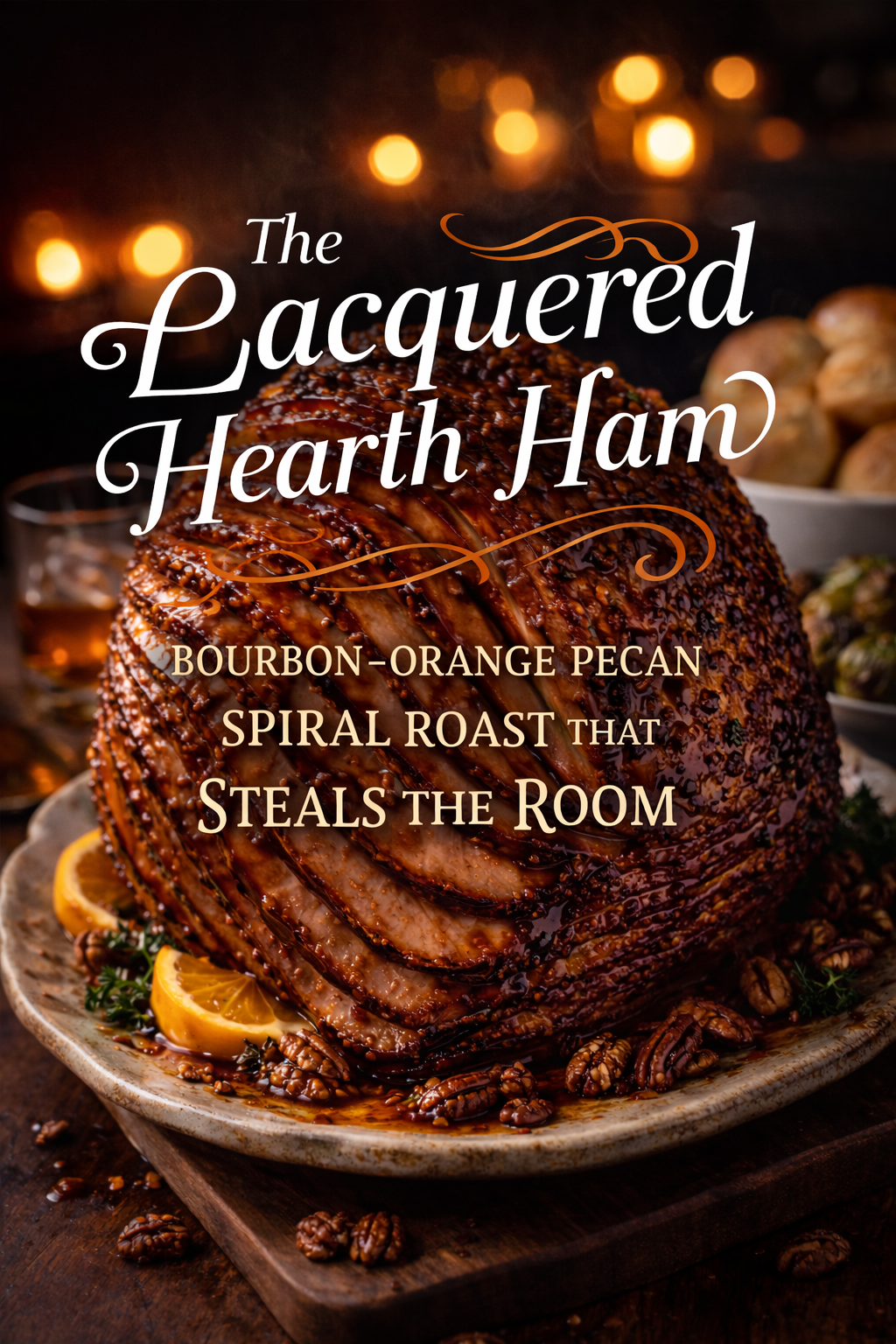
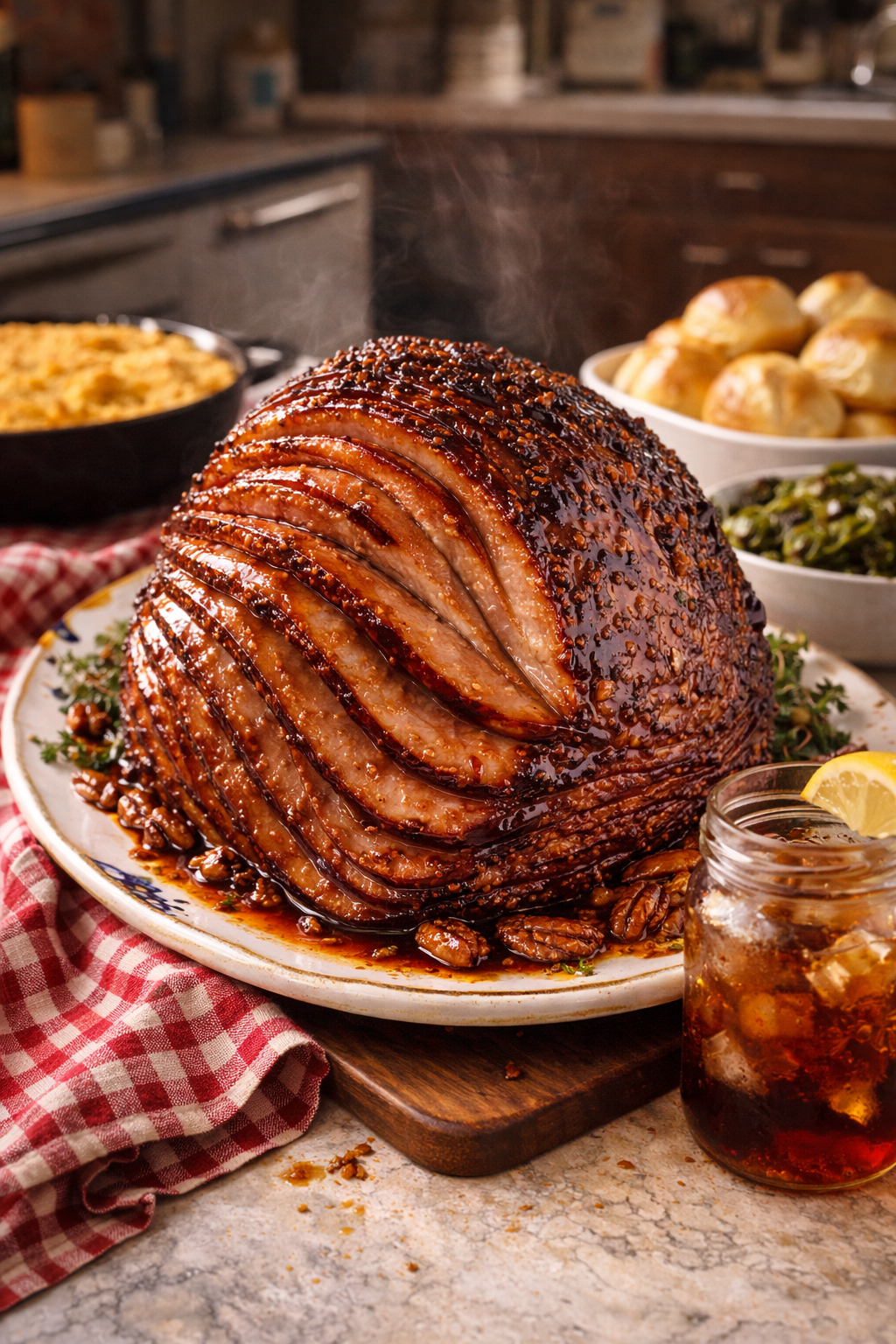
The first thing you notice is the sheen—an almost lacquered glow that catches the kitchen light and turns it into something warmer, richer, a little more dramatic. The ham sits like a centerpiece you could build a whole afternoon around: spiral-sliced, fanned in tight, perfect arcs, each cut holding onto the glaze as if it knows it’s being watched. The surface is peppered with toasted bits—brown sugar crystals kissed dark at the edges, crushed spices, and tiny flecks that look like they were meant to cling there, not sprinkled as an afterthought. Steam rises in thin ribbons, the kind that moves slowly, confidently, because it has nowhere urgent to be. It’s the smell that makes the room feel occupied even before anyone steps in: deep pork sweetness, caramel notes, and that subtle high perfume of something boozy and vanilla-adjacent—bourbon warming the air without shouting.
The plate beneath it is generous and unpretentious, the kind of serving platter that feels like it’s been part of holiday tables and Sunday suppers for years, ready for a new chapter without needing to be reinvented. A scatter of pecans gathers around the base like little treasures—glossed, browned, and sticky enough to make you reach for one before you remember you’re supposed to wait. Nearby, a wedge of lemon lounges against a glass of dark iced tea, its citrus brightness promising relief from all that sweet depth, like a crisp exhale between bites. Behind it all, the sides blur softly into the background: pillowy rolls stacked and shining, greens tucked into a bowl with their earthy gloss, and a pan of something golden and bubbling that looks like comfort baked into a crust.
This is the kind of kitchen scene that feels lived-in, not staged—busy counters, soft-focus bottles, the quiet proof that something good has been happening here for a while. It’s not just a meal; it’s a mood. It’s the moment when the house shifts from “getting ready” into “it’s happening.” You can almost hear the small sounds that come with it: a knife set down on wood, a spoon tapping a bowl, the low laugh from another room, the faint hum of the oven settling back into silence after doing its part. The ham’s spiral cuts make it look elaborate, but the real magic is how approachable it feels—how it invites you in like it’s been waiting for you specifically.
There’s a particular thrill to glazing a ham the right way—the slow layering, the way the sauce thickens from glossy to syrupy, the way heat transforms sugar into something with edges and depth. Using a heavy-bottomed saucepan for reducing glazes turns the process into a calm ritual: simmer, stir, watch the bubbles tighten and become smaller and shinier, like the glaze is concentrating itself into a promise. And when it’s time to roast, a sturdy roasting pan with a fitted rack keeps everything elevated and even, letting the heat circulate so the exterior caramelizes while the interior stays soft and juicy. Even the simplest steps feel elevated when your tools don’t fight you.
The flavor story here is bold without being busy. Brown sugar brings that classic holiday warmth, but it’s the bourbon that makes it feel grown-up—round and oaky and slightly smoky, as if the glaze has a secret it’s not telling. Dijon adds a sharp, clean thread through the sweetness, keeping every bite from going flat. And then pecans—those deep, buttery, toasted notes—turn the whole thing into something almost dessert-like, but still unmistakably savory. A pinch of spice—paprika, black pepper, maybe a whisper of cayenne—makes the glaze feel alive, like it has a heartbeat. If you’ve ever been disappointed by ham that tastes one-note, this is the antidote: sweetness, salt, smoke, tang, and toasted richness all braided together.
There’s something deeply satisfying about the spiral itself. It’s theatrical in the best way—like the ham is already halfway served, already offering itself to the table. Each slice catches sauce in the grooves, each edge browns differently, creating a landscape of textures: sticky caramel on the top ridges, tender and glossy where the glaze sinks in, crisp little corners where the sugar got bold. A sharp slicing knife with a comfortable grip makes the final carving feel effortless, even though the ham looks like it required more work than it actually did. And if you’re the type who lives for a perfect pour, a silicone basting brush that holds onto thick glaze helps you paint every curve without wasting a drop.
The sides in the background make it clear: this is a spread. Soft rolls that beg to be torn open and dragged through sticky drippings. Greens that bring a bitter, mineral edge to balance the sweetness. That bubbling golden pan—maybe mac and cheese, maybe a casserole—acting as the warm blanket to the ham’s spotlight. The ham anchors the whole table like a bass note. Everything else harmonizes around it.
And then there’s the glaze itself pooling on the platter, dark amber and glossy, carrying little toasted pecan fragments like it’s been flecked with gold. The best part is that it doesn’t have to stay on the platter. It can become the finishing touch—drizzled over slices, spooned over rolls, whisked into pan drippings, or warmed again for anyone who wants their portion extra shiny. Keeping it smooth is easier when you use a fine-mesh strainer for catching spice bits, but leaving it rustic with pecan pieces is its own kind of charm—proof that it was made, not manufactured.
If this scene feels like a memory you haven’t had yet, that’s because it’s built from the same ingredients every good gathering is built on: warmth, anticipation, and a centerpiece that makes people drift toward the kitchen without thinking. A ham like this doesn’t just feed a room. It gathers it. It turns a regular day into one with a before and an after. It gives you something to place in the middle of the table and say—without even saying it—that you wanted this to feel special.
And when the first slice lifts away, glossy and steaming, with that caramel edge clinging to it like a signature, it becomes clear that the real luxury here isn’t complexity. It’s confidence. It’s knowing that a few bold choices—bourbon, pecans, mustard, brown sugar—can make something familiar feel brand-new, like the table is seeing it for the first time.
Recipe
A spiral ham is already a gift—pre-sliced, crowd-friendly, and forgiving. This version leans into a glossy bourbon-brown sugar glaze, sharpened with Dijon and finished with toasted pecans for a sticky-sweet, deeply savory centerpiece.
Ingredients
- 1 spiral-sliced bone-in ham (8–12 lb)
- 1 cup packed brown sugar
- 1/2 cup bourbon (or apple juice for alcohol-free)
- 1/2 cup pure maple syrup
- 2 tbsp Dijon mustard
- 2 tbsp apple cider vinegar
- 1 tsp smoked paprika
- 1/2 tsp garlic powder
- 1/2 tsp black pepper
- Pinch cayenne (optional)
- 1 cup pecans, roughly chopped (plus extra for garnish)
- 1/2 cup water or ham juices (as needed for thinning)
Optional tools:
Method
- Heat oven to 325°F. Place ham cut-side down on a rack in a roasting pan. Add 1/2–1 cup water to the bottom of the pan; cover tightly with foil.
- Simmer glaze: In a saucepan, combine brown sugar, bourbon, maple syrup, Dijon, vinegar, paprika, garlic powder, pepper, and cayenne. Simmer 6–10 minutes until glossy and slightly thickened. Stir in chopped pecans.
- Warm ham (covered) 10–12 minutes per pound, or until the center reaches 130–135°F.
- Uncover. Brush generously with glaze, letting it drip into the slices. Bake uncovered 15 minutes.
- Brush again and bake 10–15 minutes more, until the glaze is sticky and the ham reaches 140°F.
- Rest 15 minutes. Spoon any pan glaze over the top, garnish with extra pecans, and serve.
In-Depth Step-by-Step Guide
1) Choose the right ham (and set yourself up for success)
A spiral-sliced ham is the easiest path to a dramatic, shareable centerpiece because it’s already cut for you. What matters most is keeping it moist while you build that glossy crust. Since most spiral hams are fully cooked, your job is gentle reheating plus glazing—think “warm through and lacquer,” not “roast until done.” If you like a deeper, smokier background flavor, a hickory-smoked spiral ham search can point you toward the style you want for future shopping, but any good spiral ham works beautifully here.
2) The roasting pan matters more than people admit
Spiral ham is all about even heat. A roasting pan with a fitted rack keeps the meat elevated so the hot air moves around it, which helps the outer glaze set without overcooking the bottom. If you don’t have a rack, you can improvise with a ring of foil, but a proper rack reduces the “soggy underside” risk dramatically.
Before the ham goes in, add water to the bottom of the pan—this is your humidity insurance. Spiral slices create lots of exposed edges, and those edges dry out fast without steam. That small pool of water (or broth) becomes a protective atmosphere under the foil.
3) Why you cover first (and glaze later)
The first phase is about warming the ham slowly. Covering tightly with foil keeps the moisture in and prevents sugar from scorching before the meat is hot. If you glaze too early, the sugar can darken too fast, turning bitter while the center is still cool. Covered roasting gives you a head start: a warm, juicy interior that can handle the final glossy blast.
Plan on roughly 10–12 minutes per pound at 325°F for the covered warming stage, but don’t treat that like gospel—treat it like a runway. The real finish line is temperature, and a reliable instant-read meat thermometer makes the difference between “perfect” and “why is it dry?” Aim for 130–135°F before you begin the glazing phase, then you’ll push it to 140°F during the final uncovered bake.
4) Building a glaze that tastes expensive
This glaze succeeds because it has structure: sweetness, tang, and savory heat all pulling against each other. Brown sugar provides the caramel backbone. Maple syrup adds a rounded, woodsy sweetness that feels deeper than plain sugar. Bourbon brings vanilla-oak warmth and a faint smokiness. Dijon and vinegar keep everything bright so the glaze doesn’t land as sticky-sweet and flat.
Use a heavy-bottomed saucepan so the sugars don’t scorch in hot spots. When you simmer, look for the bubbles to change: early on they’re large and loose; as it thickens, they become smaller and more lacquer-like. You’re reducing water, concentrating flavor, and creating a syrup that clings instead of sliding off.
Pro tip: If the glaze seems thin after simmering, give it another 2–3 minutes. If it seems too thick, loosen it with a tablespoon or two of water. Glaze is forgiving—what you want is “paintable,” not “watery” and not “taffy.”
5) Pecans: toast first, then decide how rustic you want it
Pecans can go two ways: folded into the glaze or used as a crunchy finish. If you want the photograph-worthy sticky pecans hugging the ham and platter, stir chopped pecans into the glaze after it thickens. For a cleaner glaze with pecans as garnish, keep them separate and sprinkle them on at the end.
Toasting makes them taste like themselves—deeper, butterier, more aromatic. A sheet pan that heats evenly makes quick work of it: 350°F for 6–8 minutes, just until fragrant. Don’t walk away. Nuts go from “perfect” to “burnt” fast.
6) Glazing without chaos (and without wasting sauce)
Once the ham hits 130–135°F, pull it out, remove the foil, and take a moment. The surface will be warm and slightly damp—ideal for the first coat to adhere. Set the ham back in the oven uncovered and begin layering.
A silicone basting brush is your best friend here because thick glaze needs a tool that holds onto it. Brush along the spiral lines and let the glaze drip into the slices. That’s not a mistake—that’s the whole point. Those little channels become flavor reservoirs, and each slice gets its own glossy edge.
Do two to three coats, spaced about 10–15 minutes apart. The first coat soaks and clings. The second starts to shine. The third turns it into lacquer—sticky, dark, and dramatic. If you see the glaze darkening too quickly, reduce the oven to 300°F for the final stretch, or tent loosely with foil while still leaving some exposure for caramelization.
7) The temperature target that keeps it juicy
Because the ham is already cooked, overcooking is the only real way to fail. Pull the ham when the thickest part reaches 140°F. If you let it creep much higher, the spiral edges tighten and dry. Use that thermometer and trust it.
Also: resting is not optional. Give it 15 minutes. Resting lets the juices settle back into the slices instead of running onto the platter the second you touch it. If you want a showy finish, this is when you spoon a little warm glaze over the top to restore maximum shine.
8) Troubleshooting (so it works in any kitchen)
- Glaze tastes too sweet: Add 1–2 teaspoons more vinegar or a small spoon of Dijon and simmer 1 minute.
- Glaze is too thick: Thin with a tablespoon of water, stir, and warm gently.
- Glaze won’t stick: Your ham is too wet or too cool. Pat the surface lightly with paper towels, then apply glaze after 5 minutes uncovered in the oven.
- Edges browning too fast: Lower oven temp and glaze a bit less aggressively; sugar darkens faster than you think.
- Ham seems dry: Next time, increase the covered warming time and keep the pan liquid topped up. Spiral cuts need humidity.
9) Variations that still feel cohesive
- Alcohol-free: Swap bourbon for apple juice or strong brewed black tea; keep the vinegar and Dijon for balance.
- Spicier: Add more cayenne or a pinch of crushed red pepper; the heat makes the sweetness taste even richer.
- Citrus twist: Add orange zest and a squeeze of orange juice to the glaze for a brighter, holiday-leaning profile.
- Herbal edge: Stir in minced thyme or rosemary at the end of simmering for a savory lift that plays beautifully with pecans.
If you want to serve it like the scene demands, pair it with buttery rolls, something green and a little bitter, and one creamy side that feels like comfort. The ham will do the rest—glossy, steaming, and built to make the kitchen feel like the center of the day.