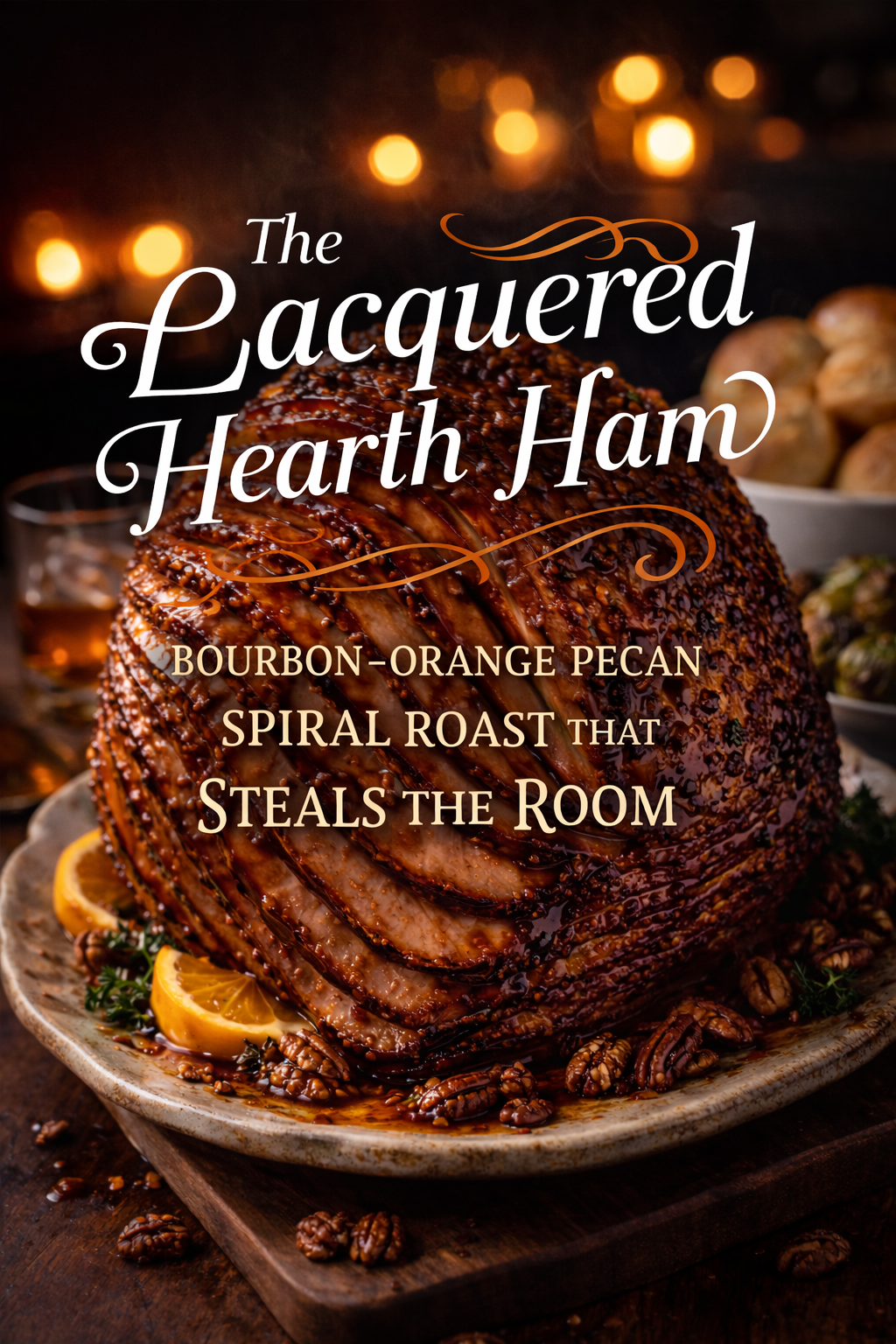
The Lacquered Hearth Ham: Bourbon-Orange Pecan Spiral Roast That Steals the Room
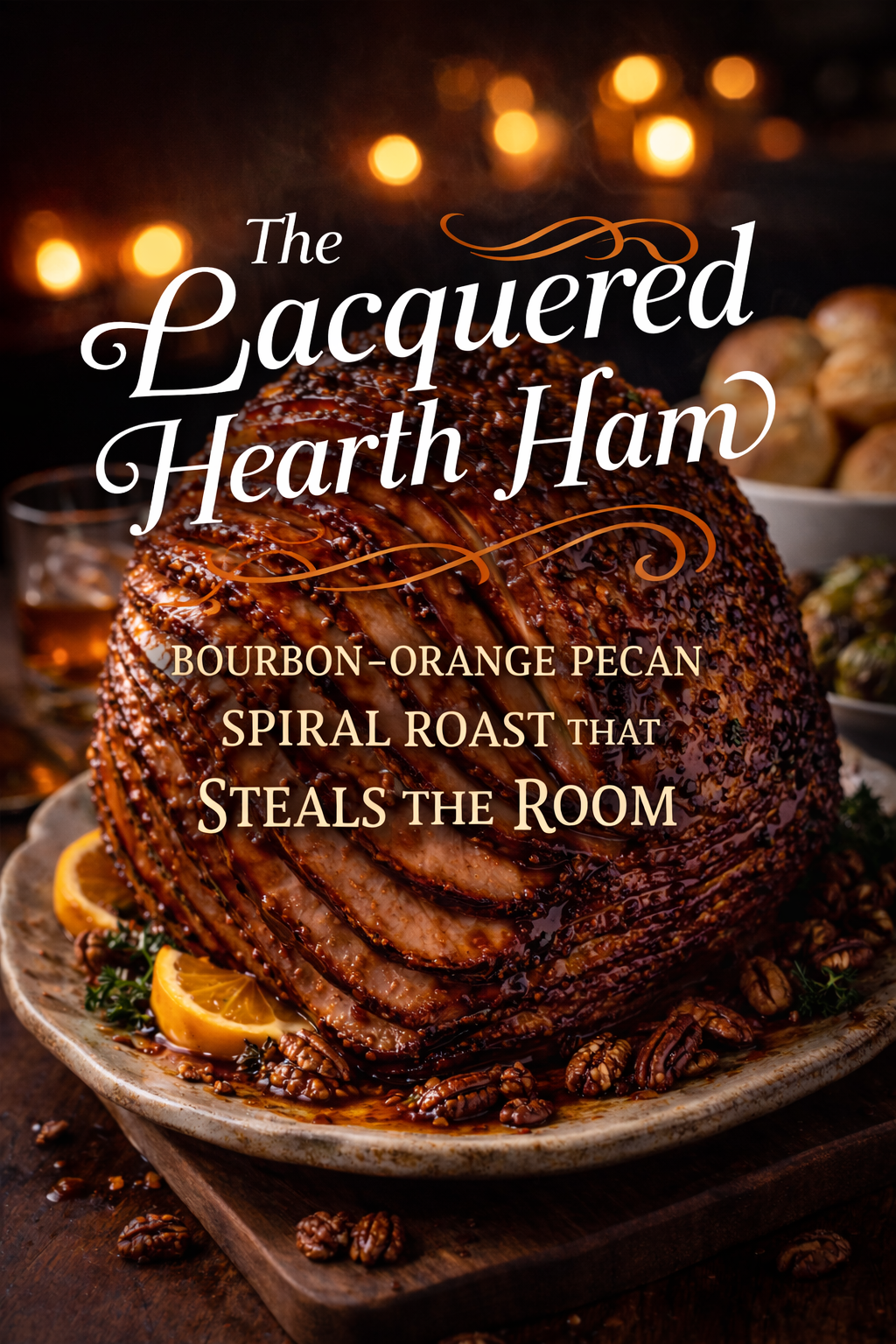
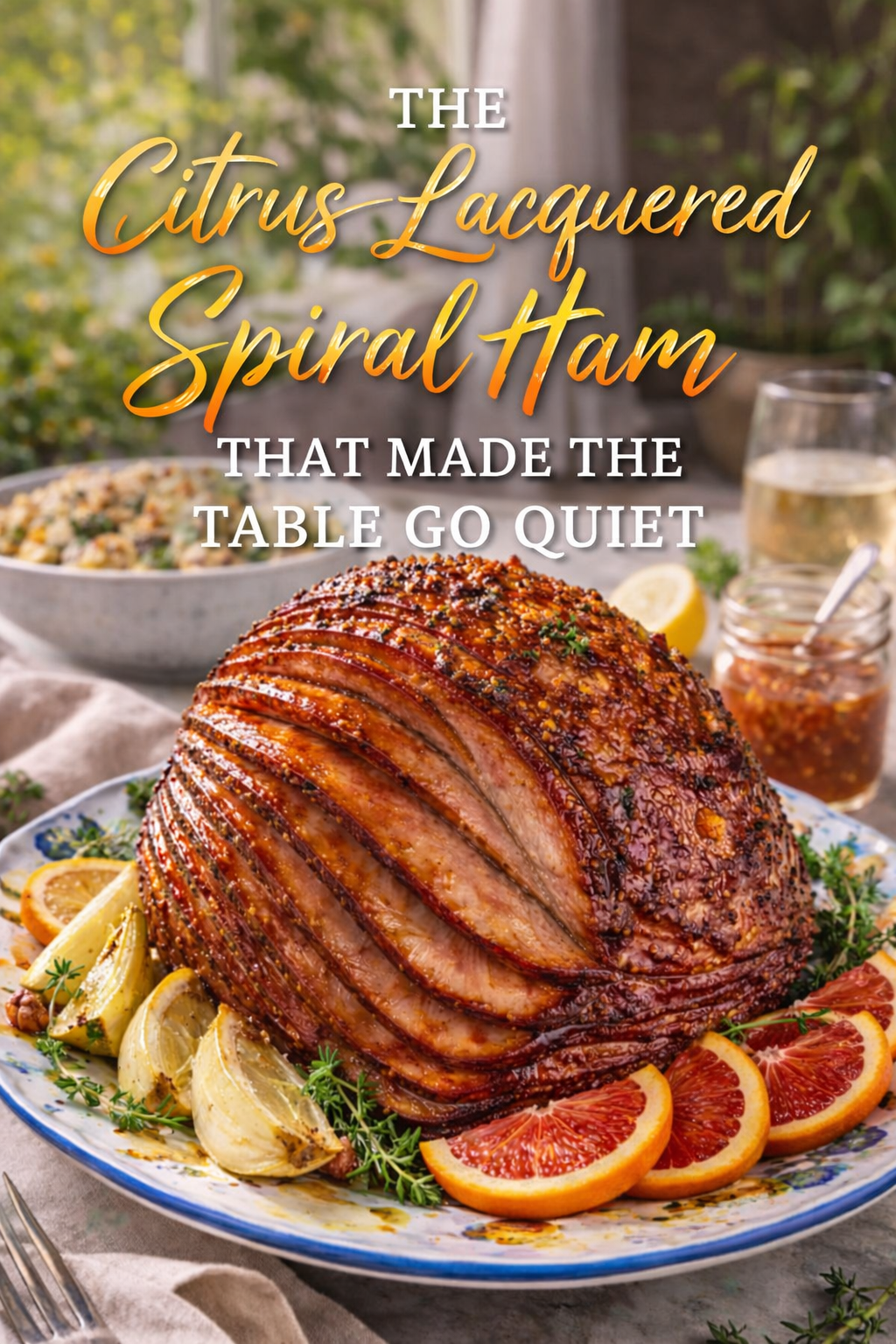
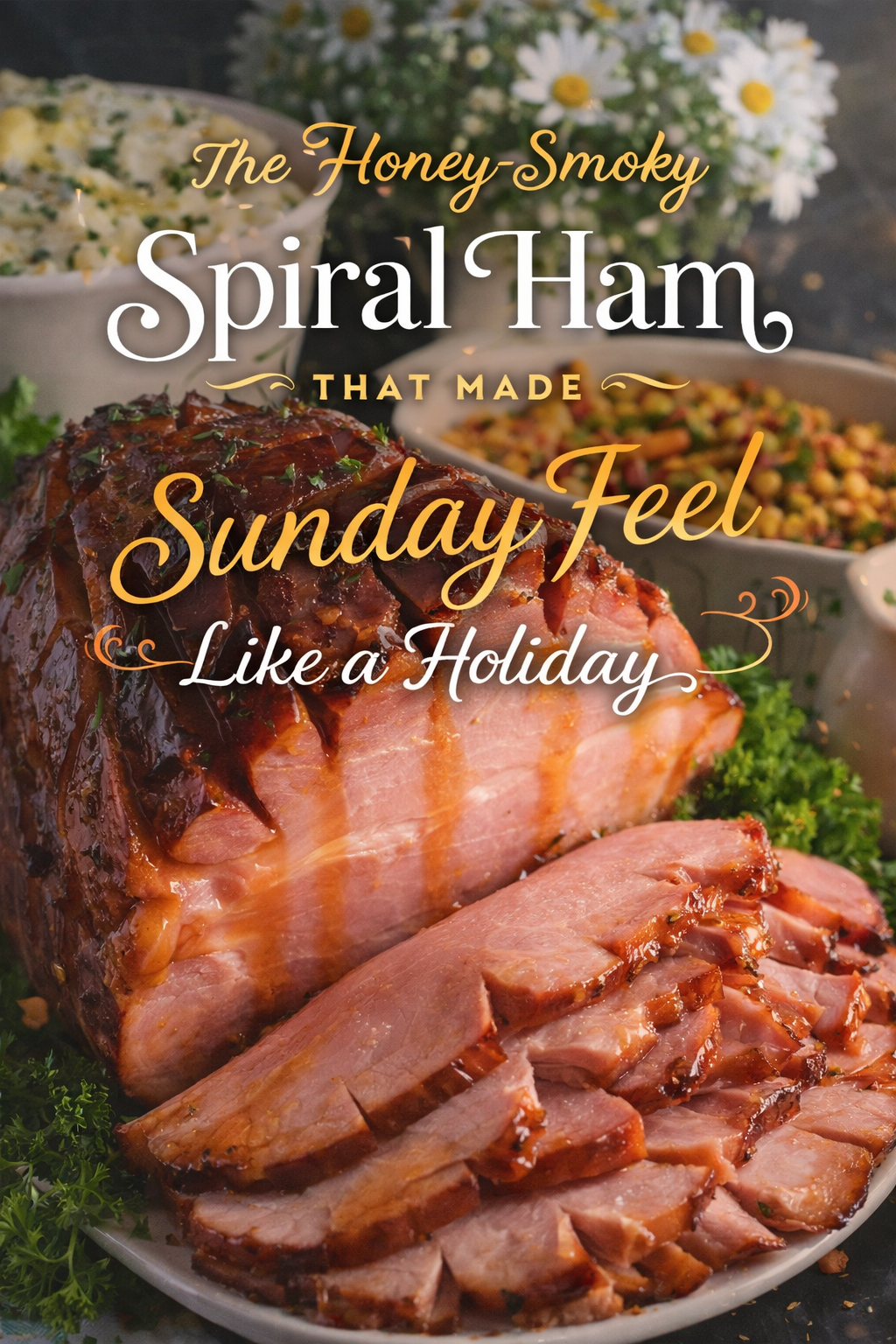
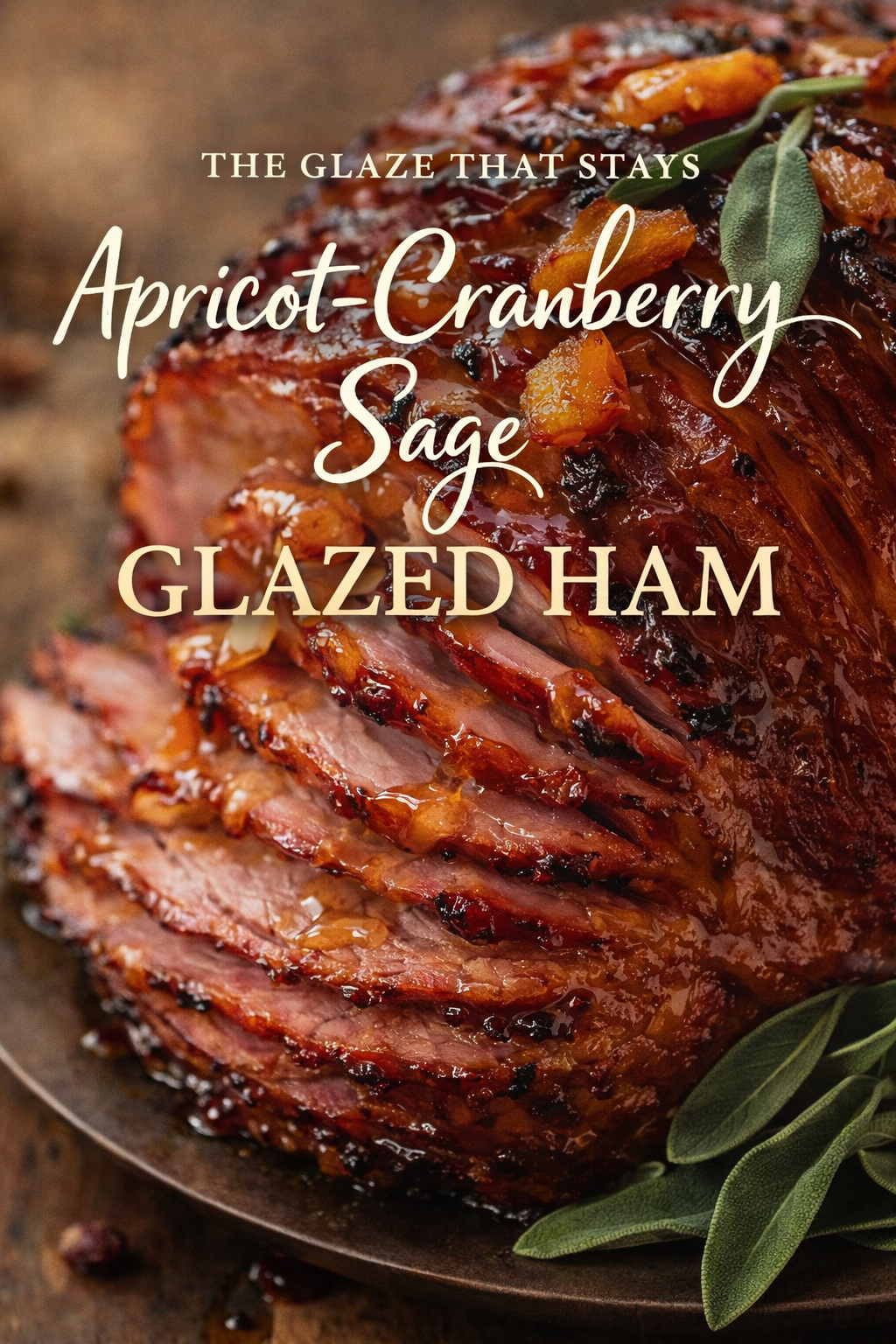
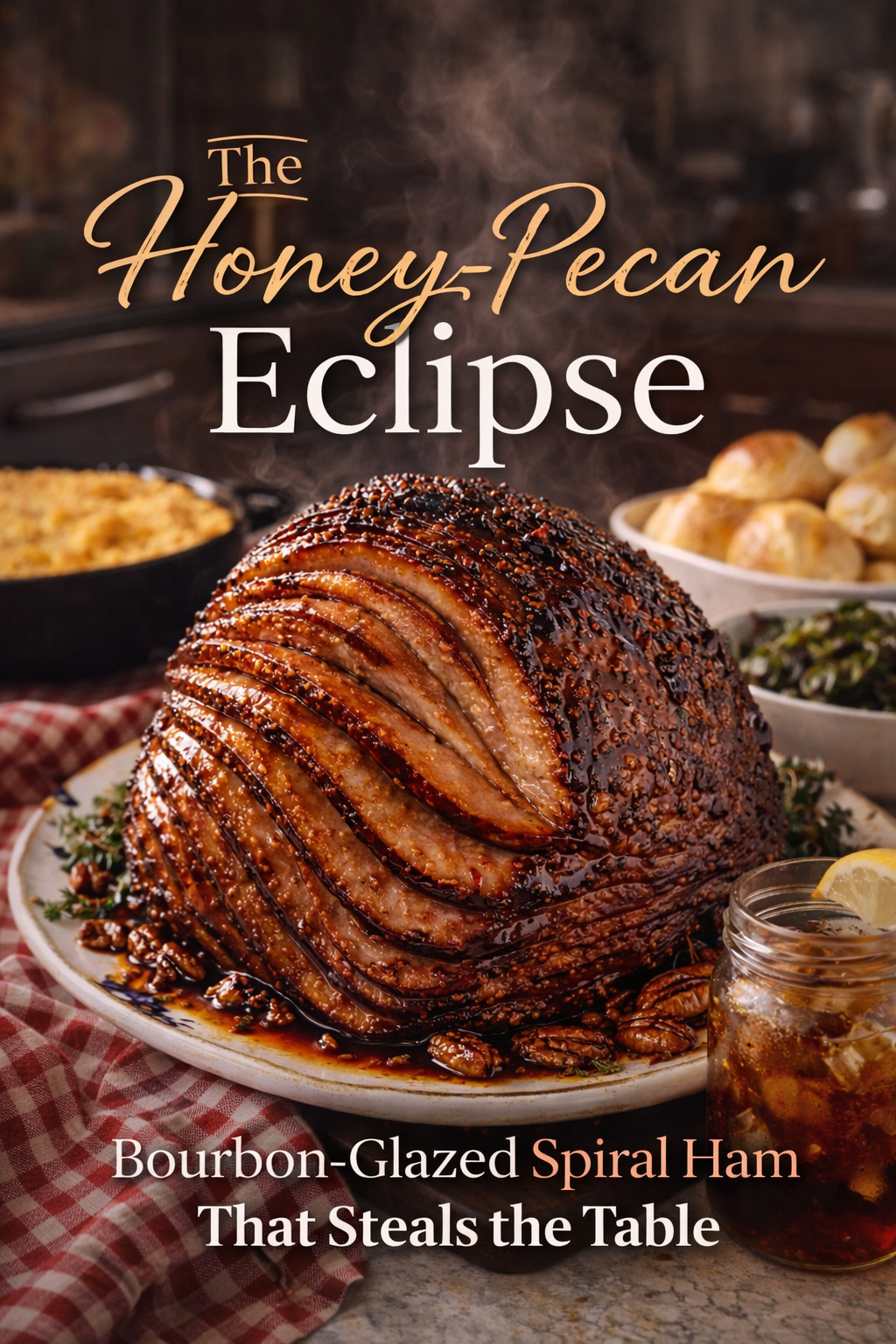
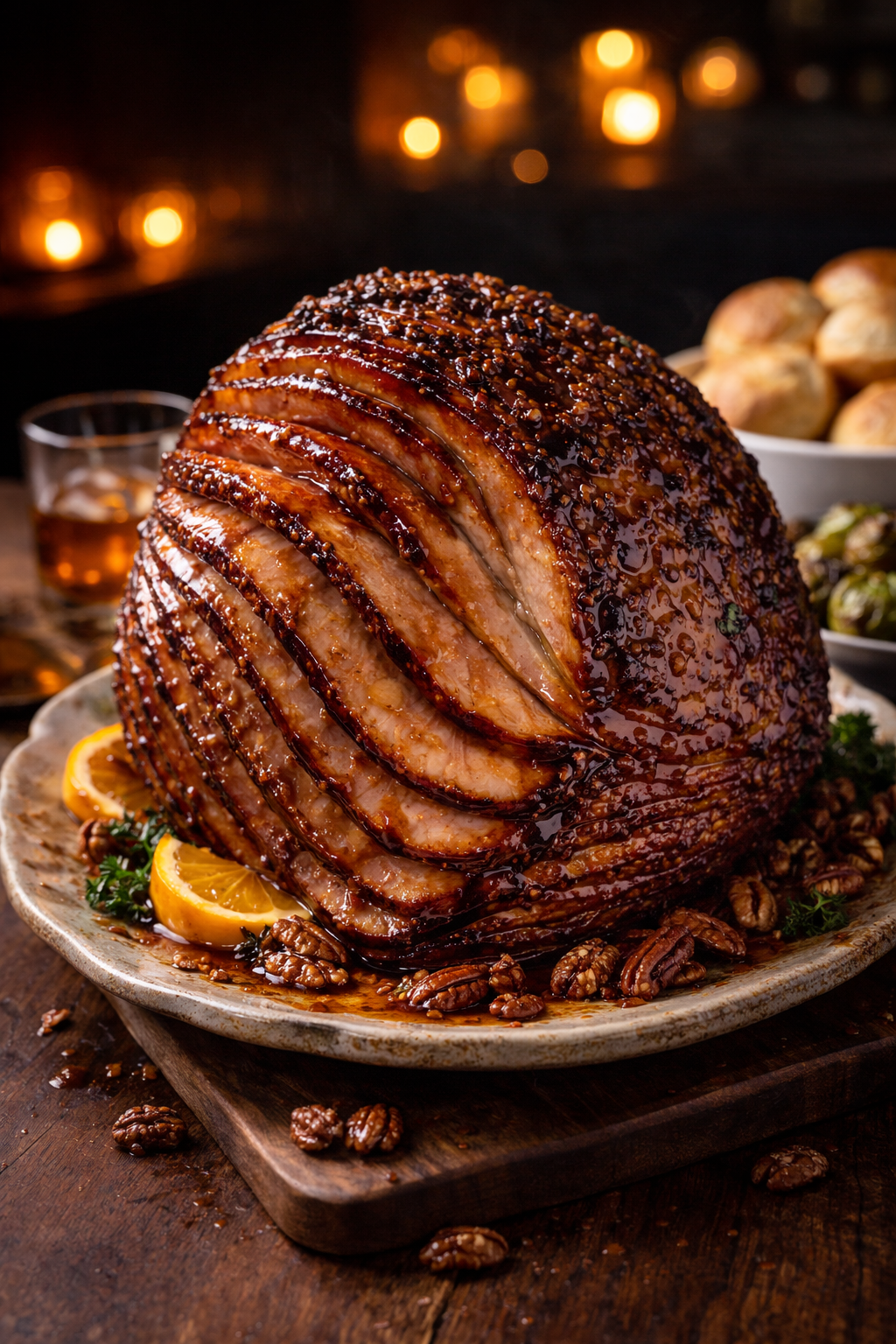
The first thing you notice is the shine—an almost impossible gloss that catches every warm flicker in the background like it’s holding candlelight inside the glaze. The ham sits proudly at the center of the table, not just cooked but dressed, each slice fanned in tight, elegant waves that look hand-set, as if someone took time to make symmetry feel seductive. The surface is dark and jeweled, a sticky, caramelized armor peppered with toasted bits that cling like confetti. It’s the kind of roast that doesn’t simply arrive—it enters.
Around it, the scene hums with quiet luxury. A low, amber mood glows from soft points of light behind the plate, turning the room into a cocoon, turning dinner into an event. The platter is rustic and pale, the ham’s lacquer standing out against it like polished mahogany on stone. At the edge, bright citrus rounds peek out—orange slices cut thick enough to look juicy, their cut faces glistening where stray glaze has pooled. Scattered pecans gather in little clusters, glossy from syrup and fat, like they’ve been sugared by accident and decided to make it their personality. There’s a sense of abundance without chaos: a bowl of pillowy rolls nearby, a side dish in soft focus, a drink catching the same copper light. Everything feels curated, but nothing feels fussy.
This is the moment people remember: the hush when the platter lands, the small inhale from someone who didn’t expect ham to look like that, the way conversation pauses just long enough for admiration. You don’t need a holiday to justify it. You need a reason to make the room smell like toasted sugar and warm spice, to let citrus cut through the richness, to let pecans bring that roasted, buttery crunch. You need a meal that feels like comfort wearing something expensive.
Part of the magic is how the slices hold the glaze. Those ridges—those neat arcs—catch syrup in their grooves, so every bite carries a little sheen, a little sweetness, a little salt. The glaze isn’t simply painted on; it’s layered, patiently built the way a good varnish is built, thin coats that become depth. A whisper of bourbon warmth, the rounded brightness of orange, the slight bite of mustard, the dark hush of brown sugar as it caramelizes into something almost smoky. You don’t need to announce any of that at the table. It announces itself the second the knife touches the first slice and the aroma rises.
The tools matter in the same way good lighting matters: you can do it without, but with the right pieces everything becomes easier and more beautiful. A ham like this loves heat that circulates and steadies, the kind you get from a sturdy roasting pan with a rack that keeps the bottom from stewing. The glaze behaves better when it’s whisked smooth in a small saucepan built for steady simmering, and the final doneness becomes effortless when you trust a fast, accurate instant-read thermometer instead of guessing. Even the carving feels ceremonial with a long, sharp slicing knife made for clean ribbons, the blade gliding through those layers without tearing the shine you worked for.
The ingredients carry their own quiet drama. Citrus here isn’t decoration—it’s a bright blade that keeps the sweetness from getting heavy, and it’s even better when you lean on fresh navel oranges plus a spoonful of orange marmalade to deepen the flavor into something jammy and fragrant. Pecans turn into something addictive when you toast them and let them fall into the glaze, especially if you start with whole pecan halves that stay elegant on the platter. The sweetness becomes glossy and grown when it’s built on dark brown sugar, and the savory edge lands best with Dijon mustard that keeps everything from tipping into candy.
And then there’s the bourbon note—not loud, not harsh, just warm and round, the way a good caramel tastes when you let it go one shade darker than safe. It’s that subtle heat that turns glaze into something with depth, something that feels like a late-evening table instead of a midday buffet. If you’re keeping it alcohol-free, you can still get that same effect with spice and vanilla and a little extra citrus, but the bourbon version reads like velvet.
What makes this ham feel so special, though, isn’t just the gloss or the pecans or the citrus. It’s the way it changes the air. The kitchen becomes a place of slow sweetness and roasted edges. The room becomes warmer than the thermostat says it
Bourbon-Orange Pecan Lacquer Spiral Ham
A glossy, caramelized spiral ham finished with a bourbon-orange glaze and toasted pecans. Sweet, savory, citrus-bright, and built for easy serving.
Ingredients
- 1 spiral-sliced bone-in ham (8–10 lb)
- 1 cup dark brown sugar
- 1/2 cup orange marmalade
- 1/2 cup orange juice (fresh preferred)
- 1/4 cup bourbon (or apple juice for alcohol-free)
- 2 tbsp Dijon mustard
- 2 tbsp unsalted butter
- 1 tsp smoked paprika (optional)
- 1/2 tsp ground cinnamon
- Pinch of cayenne (optional)
- 1 1/2 cups pecan halves
- 1 orange, sliced into rounds (for roasting and serving)
Method
- Heat oven to 325°F. Set ham cut-side down in a roasting pan with a rack. Add orange rounds to the pan.
- Cover loosely with foil and bake 10–12 minutes per pound, until warmed through.
- While ham bakes, simmer brown sugar, marmalade, orange juice, bourbon, Dijon, butter, and spices 6–8 minutes until glossy and slightly thick.
- Toast pecans in a dry skillet 3–5 minutes until fragrant; stir half into the glaze.
- During the last 30–40 minutes of baking, uncover ham and brush with glaze every 10 minutes to build a lacquered coating.
- Remove at 140°F internal (or per your ham’s label). Rest 15–20 minutes.
- Serve with remaining glaze drizzled over slices and scatter with the rest of the toasted pecans.
The difference between an okay ham and a ham that looks like it belongs under warm candlelight is almost always temperature control and layering. Spiral ham is already cooked, which means your real job is to reheat it gently, keep it juicy, and then build a glaze that clings like satin instead of sliding off. Start by getting the setup right: the ham should sit slightly elevated so heat can circulate, which is why a roasting pan with a rack is such a quiet win. If the ham sits in its own juices the whole time, the bottom gets soggy and the glaze never truly lacquer-sets.
Place the ham cut-side down. That single choice protects the exposed interior from drying and keeps the slices tender. Add orange rounds to the pan—not as garnish, but as a little fragrant steam source and a buffer that perfumes the drippings. Then cover with foil, but don’t crimp it tight like a vault. You want a tent that holds warmth without trapping so much moisture that the surface turns wet. Wet surface equals slippery glaze.
While the oven does the slow warming, build the glaze in a way that respects thickness. Combine brown sugar, marmalade, orange juice, bourbon, Dijon, butter, and spices in a saucepan and let it simmer until it turns glossy and slightly syrupy. This is where a small whisk earns its keep—marmalade likes to cling, and you want a smooth glaze that brushes evenly into all those slice ridges. If the glaze seems thin at first, don’t panic; it thickens as water evaporates and sugar concentrates. If it gets too thick, loosen with a splash of orange juice.
Toast the pecans separately. It’s tempting to skip, but raw pecans taste flat next to caramel and citrus. A quick toast wakes up the oils and adds that bakery-level aroma. Use a dry skillet and stir until they smell like buttered wood, then pull them off the heat before they go bitter. Starting with pecan halves keeps the presentation gorgeous and the texture satisfying.
Now the most important part: glazing in layers. Think of it like painting a door—you don’t dump the whole can on at once. In the final 30–40 minutes, uncover the ham and brush a thin coat of glaze over the surface, working with the spiral so glaze tucks into the grooves. Ten minutes later, brush again. Repeat. Each coat concentrates in the oven heat, caramelizing a little more, getting darker, shinier, and more cohesive. A silicone brush helps here because it holds glaze without shedding bristles; a silicone basting brush makes the process clean and controlled.
Watch your heat and your timing. If the glaze starts to look like it’s darkening too fast, loosely tent with foil again and keep going. Sugar can go from mahogany to bitter if it’s pushed too hard. You’re aiming for deep amber with shine, not blackened edges. If your oven runs hot, drop the temperature slightly and extend the glazing window. The ham will forgive time; it won’t forgive scorching.
Doneness matters even though it’s pre-cooked. You’re reheating to serving temp, not cooking from raw. The sweet spot is usually 140°F in the thickest part (check your ham’s packaging if it specifies otherwise). This is where an instant-read thermometer turns confidence into certainty. Insert the probe into the meatiest section without touching the bone. If you hit 140°F early, you can hold the ham warm, covered, while you finish sides; if it’s behind, keep it covered and give it a little more time before the final glaze coats.
Resting is non-negotiable. Pull the ham, let it sit 15–20 minutes, and watch what happens: juices redistribute, the slices relax, and the glaze sets into that reflective finish you want. Cutting too soon makes the surface wet and can pull the glaze away. While it rests, warm any remaining glaze gently. If it thickened too much, loosen it with a teaspoon or two of juice or water.
Serving should be as intentional as the cooking. Slide orange rounds onto the platter and let pecans spill around the base so it looks abundant, not decorated. Use a long slicing knife to separate the spirals cleanly; a carving set built for roasts makes it effortless to lift perfect slices without shredding them. Drizzle a little glaze over the top for shine, and pass the rest at the table for the people who want their slice extra glossy.
Variations are easy once you understand the structure. Want it smokier? Add a little more smoked paprika and a drop of molasses. Want it brighter? Increase orange zest and swap some marmalade for fresh juice reduction. Want it alcohol-free but still “warm”? Replace bourbon with apple juice and add a tiny splash of vanilla plus a pinch more cinnamon. Prefer a spicier edge? A little cayenne does wonders against sweet glaze.
Troubleshooting is mostly about texture. If your glaze won’t stick, the surface was too wet—pat the ham gently with paper towels after uncovering, then start the glaze layering. If it turns grainy, the sugar simmered too aggressively; lower the heat next time and whisk steadily. If it got too dark, you glazed too early or at too high a temperature—save the thick glaze for the final window and let the ham warm under foil first.
When it’s done right, you get exactly what the scene promises: slices that gleam, a glaze that tastes like caramel kissed by citrus, and pecans that crunch like a finishing note. It’s comfort, yes—but it’s comfort with polish, the kind that makes the table feel like the evening has a heartbeat.