Ember-Red Comfort: Jalapeño Brisket Chili Recipe for Nights That Need a Little Fire
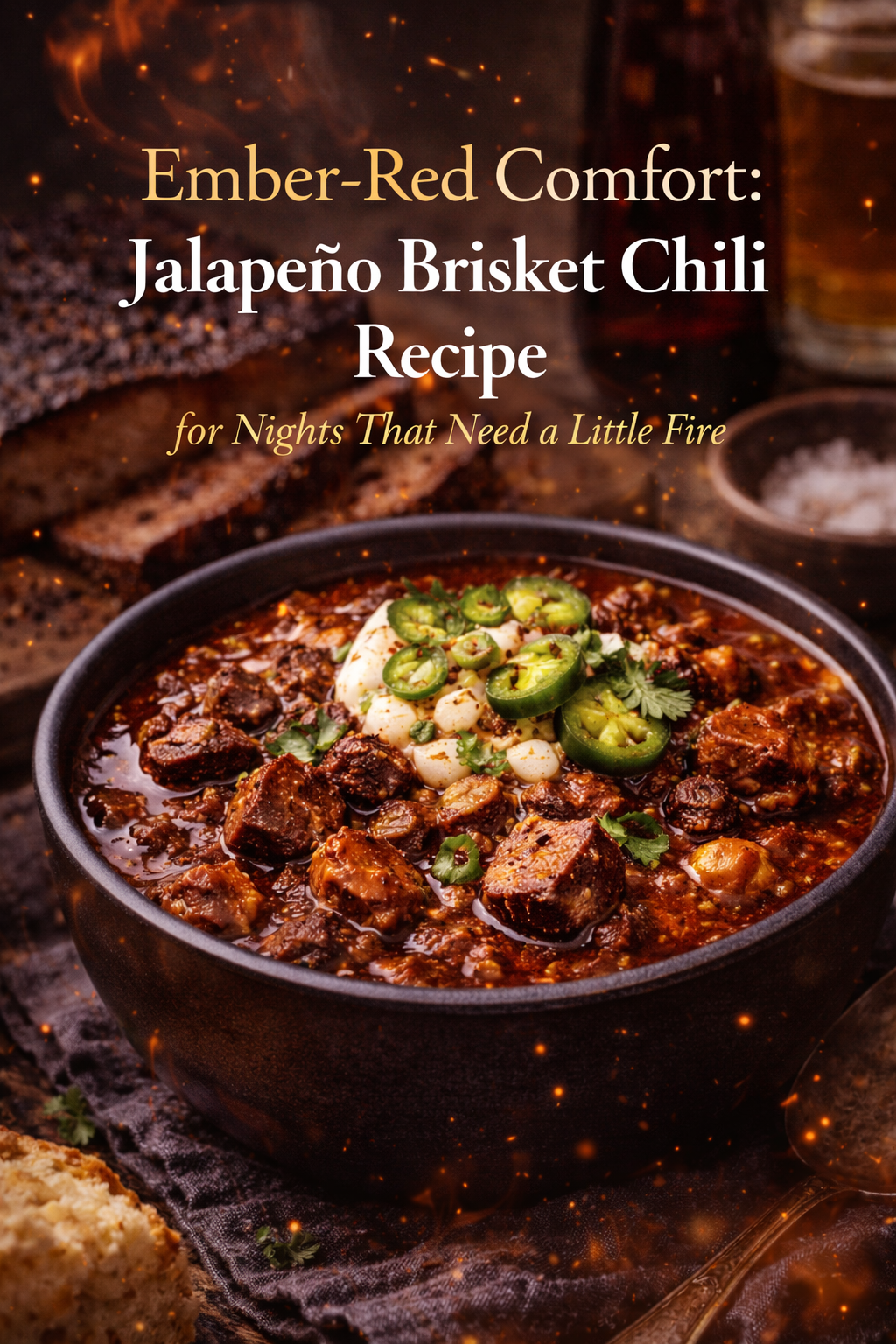
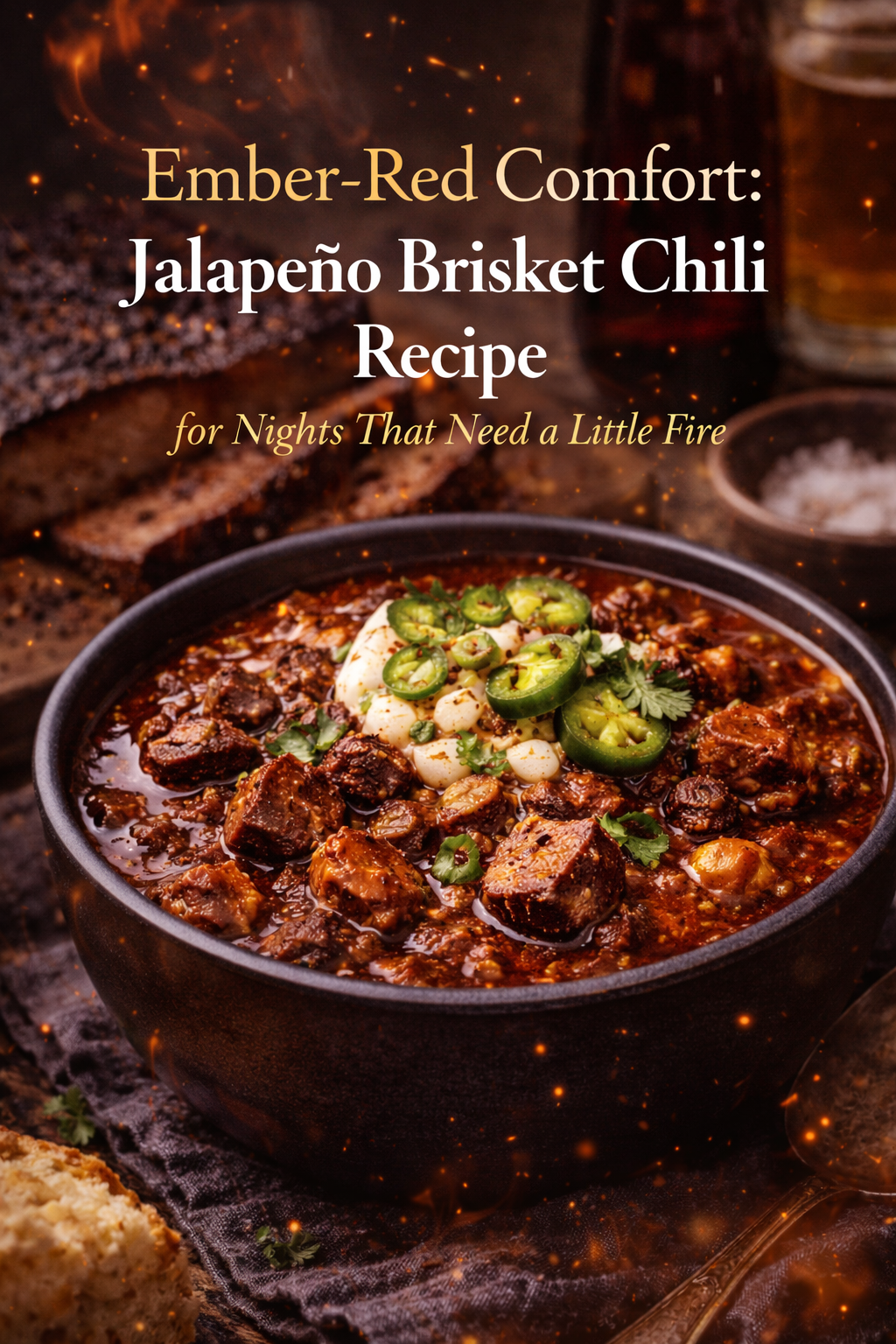
The bowl arrives like a small, self-contained weather system—dark, glossy, and steaming, with a heat haze that curls upward in slow, lazy ribbons. The chili is the color of varnished mahogany at the edges, where the oil rises and catches the light, and deeper toward the center, where the sauce turns almost black-red, thick with spice and time. Big, confident cubes of brisket sit half-submerged like stones in a riverbed, their surfaces lacquered with chili paste and rendered fat, their edges softened into that perfect point between “bite” and “spoon.” It’s the kind of texture that only happens when patience becomes an ingredient.
On top, a cool, bright crown breaks the heat: a soft mound of crema or sour cream, scattered with jalapeño coins that look like little green glass, glossy and sharp. A few leaves of cilantro fall across the center like punctuation—fresh, herbal, almost citrusy—promising lift against the richness underneath. The contrast is immediate and deliberate: fire below, relief above. One spoonful gives you the full arc—smoky depth, beefy sweetness, a slow bloom of chile heat, then that clean snap of jalapeño that wakes everything up again.
Around the bowl, the scene feels like a late-night table set for the best kind of quiet. Dark bread sits nearby, thick-sliced and rugged, ready to drag through the edges where the sauce clings. The surface beneath is moody and textured, the kind of backdrop that makes the food look even more dramatic—like the whole moment has been styled by candlelight and appetite. A heavy spoon rests within reach, because this is not a delicate meal. This is the meal you want when the day has been long, when the air outside has a bite, when you need something that feels earned.
The aroma is what seals it. First comes smoke—deep and toasty—then the warm perfume of toasted cumin and chili powder, followed by the darker sweetness of tomato cooked down to jam. There’s a faint tang that suggests vinegar or beer, that subtle brightness that keeps the bowl from turning heavy. When you lean in, you can almost taste the spice before it hits your tongue, the way good chili announces itself without shouting.
This is a recipe that rewards tools that can take heat and keep it steady: a heavy, enameled Dutch oven built for slow braises or a large stainless stockpot that holds a deep simmer without scorching. It’s also the kind of dish where the small things matter—the way spices bloom in oil, the way onions dissolve into sweetness—so having a set of sturdy wooden spoons for constant stirring and a sharp chef’s knife that makes brisket prep feel effortless turns the whole process into something smooth and satisfying.
And then there’s the seasoning—this bowl lives and dies by it. A smoky backbone often comes from ancho or chipotle, and the simplest way to build that pantry is to keep smoked paprika with real depth, ground cumin that still smells alive, and good chili powder with a balanced heat within reach. If you like the flavor to lean darker—more café-mocha than bright tomato—then unsweetened cocoa powder for savory cooking becomes a secret weapon, adding a whisper of bitterness that makes the brisket taste even richer.
The mood of this chili is confident, but it’s also generous. It’s the kind of pot you make knowing it will feed you more than once. The first night is all drama—steam, spice, a spoon that doesn’t stop. The next day it becomes something else entirely: deeper, rounder, smoother, like the flavors had a chance to meet and decide they’re better together. It’s a meal that makes the refrigerator feel like a promise. It’s the quiet satisfaction of a container waiting for you at lunchtime, the kind you open and instantly smell the work you put in.
And the toppings—those aren’t optional here, they’re part of the architecture. Cool dairy to soften the edges. Fresh jalapeño for that crisp, green heat that sits higher on the palate. Cilantro to cut through the richness. Maybe a squeeze of lime, maybe not—but the point is contrast. Keep a citrus juicer for quick bright finishes nearby if you like that final lift, the kind that makes the whole bowl taste sharper and more vivid without changing its soul.
Even the bread feels intentional. Something with a crust that can stand up to sauce, something that turns into a sponge at the edges. If cornbread is your move, having a cast iron skillet that bakes cornbread with crisp edges makes the pairing feel inevitable—dark chili, golden crumb, a swipe through the oily rim of the bowl. If you’re more of a thick rustic loaf person, the moment stays the same: tear, dip, taste, repeat.
This bowl doesn’t ask for a special occasion. It makes one. It turns an ordinary evening into something that feels curated—warm light, heavy spoon, the low clink of ceramic, the gentle sting of jalapeño that lingers just long enough to feel thrilling. It’s comfort with sharp edges, richness with a green bite, slow-cooked ease with a confident burn. The kind of food that makes you pause halfway through, look down, and realize you’re eating exactly what you wanted.
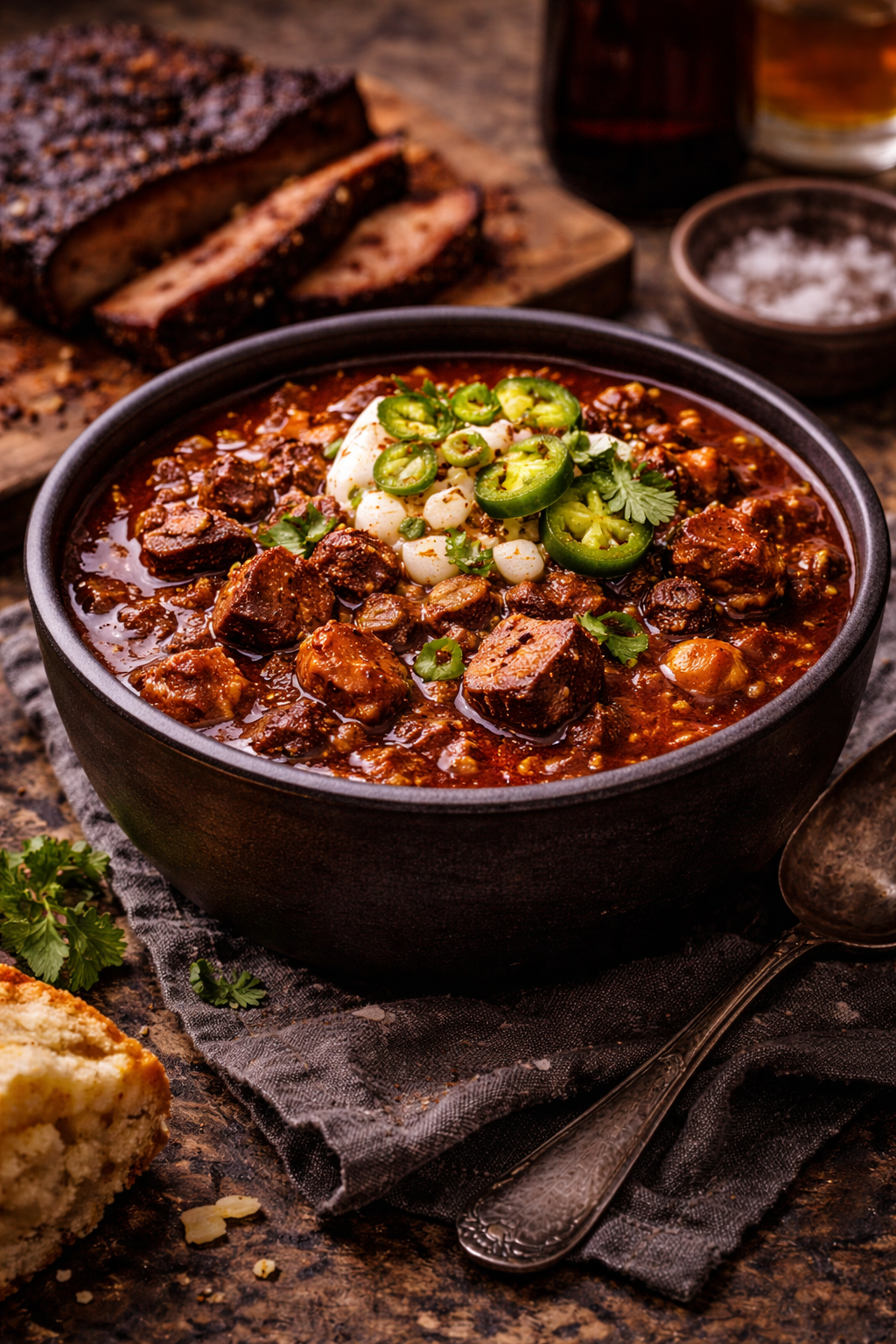
Jalapeño Brisket Chili is a slow-simmered, smoky bowl of beef, chile, and spice finished with cool crema and fresh jalapeño for contrast.
Ingredients
- 2 to 2½ lb brisket (or chuck roast), cut into 1–1½ inch cubes
- 2 tbsp neutral oil
- 1 large onion, finely diced
- 4 cloves garlic, minced
- 2 tbsp tomato paste
- 2 tbsp chili powder
- 1 tbsp ground cumin
- 2 tsp smoked paprika
- ½ tsp dried oregano
- ½ tsp chipotle powder (optional, for smoke/heat)
- 1 (28 oz) can crushed tomatoes
- 2 cups beef broth
- 1 bottle beer (12 oz) or 1½ cups extra broth
- 1 tbsp brown sugar (optional)
- 1 tbsp apple cider vinegar or lime juice
- 2 bay leaves
- Salt and black pepper
- Optional: 1 (15 oz) can pinto beans or black beans, drained and rinsed
To Finish
- Sour cream or crema
- Fresh jalapeño, sliced
- Cilantro leaves
- Optional: shredded cheddar, diced onion, lime wedges
Method
- Season beef generously with salt and pepper. Heat oil in a heavy, enameled Dutch oven built for slow braises over medium-high heat and brown the beef in batches. Transfer to a plate.
- Lower heat to medium. Add onion and cook until softened, 6–8 minutes. Stir in garlic for 30 seconds.
- Add tomato paste and cook 1 minute. Stir in chili powder, cumin, smoked paprika, oregano, and chipotle powder; cook 30–60 seconds until fragrant.
- Add crushed tomatoes, broth, beer (or more broth), bay leaves, and the browned beef (plus any juices). Bring to a gentle simmer.
- Cover partially and simmer on low 2½–3½ hours, stirring occasionally, until brisket is tender. If using beans, add during the last 20 minutes.
- Adjust thickness with a splash of broth if needed. Finish with vinegar (or lime) and optional brown sugar. Season to taste.
- Serve hot with sour cream/crema, jalapeño slices, and cilantro.
Start by choosing the right cut and the right pace. Brisket brings a luxurious chew and that unmistakable slow-cooked richness, but it needs time to relax; chuck is a little faster and more forgiving. Either way, cut the beef into generous cubes so the interior stays tender while the outside caramelizes. A sharp blade matters here—use a sharp chef’s knife that makes brisket prep feel effortless—and take a second to trim only the hard, waxy fat. Leave the softer fat; it melts into the sauce and makes the chili feel glossy and complete.
Browning is the first major flavor decision. Heat your pot until it’s properly hot, add oil, and work in batches so the beef sears instead of steaming. If the pot looks crowded, it is. Use a heavy Dutch oven that holds heat evenly, let each side develop deep color, and don’t rush the fond—the browned bits at the bottom are the backbone of the final taste. If your fond threatens to go from brown to black, pull the pot off heat for a moment, add a spoon of broth, and scrape. Controlled browning is the difference between “smoky and complex” and “bitter.”
Once the beef is out, you’re building the base that makes the bowl taste layered rather than flat. Onions go in first and cook until they soften and start to sweeten. This isn’t a quick sauté; you want them to lose their raw edge. Garlic follows briefly—long enough to bloom, not long enough to scorch. Tomato paste then gets its own minute of heat. That quick caramelization pulls out a darker, rounder tomato flavor that reads almost like roasted sweetness.
Now bloom the spices in oil. Chili powder, cumin, smoked paprika, and oregano should hit warm fat and turn fragrant almost instantly. Keep fresh smoked paprika with real depth and ground cumin that still smells alive on hand—stale spices can’t carry a pot like this. If you want a campfire edge, a pinch of chipotle powder is perfect, but you can also build smoke with ingredients later (like a touch of cocoa or extra paprika). Stir constantly for 30–60 seconds. The goal is toasted aroma, not burnt spice.
Deglazing is where the pot comes alive. Add a splash of beer or broth and scrape the bottom thoroughly, dissolving every browned bit into the liquid. Those bits are concentrated flavor. Then in go the tomatoes, the rest of the broth, bay leaves, and the browned beef plus its resting juices. Bring it just to a simmer—small bubbles, not a rolling boil—and then lower the heat until it’s barely moving. This is a slow conversation, not a shout.
The long simmer does two jobs: it tenderizes the meat, and it reduces the sauce until it clings to a spoon. Keep the lid partially on so you control evaporation. Too thick too early? Add broth. Too thin late in the game? Remove the lid and let it reduce. Stir occasionally, especially near the end, when sugars in tomato and onion can settle and scorch.
Heat balance is its own craft. Chili’s spice should build, not punish. If it’s too hot, add more fat and dairy at serving (sour cream helps), or stir in a spoonful of tomato, broth, or even a bit of brown sugar to round sharp edges. If it’s too mild, don’t just dump in more chili powder raw—bloom an extra teaspoon of spice in a little oil in a small pan, then stir that flavored oil into the pot. That keeps the flavor integrated instead of dusty.
Beans are optional; brisket chili doesn’t need them, but they add body and make the bowl stretch. If you use them, add late—last 15–20 minutes—so they don’t disintegrate. Want a thicker texture without beans? Mash a small scoop of chili against the side of the pot and stir it back in.
Finishing is where the bowl gets its clarity. A tablespoon of vinegar or a squeeze of lime right at the end sharpens everything—suddenly the beef tastes beefier and the smoke tastes cleaner. Keep it subtle; you want brightness, not sourness. A tiny pinch of cocoa can deepen the color and add a shadowy richness—use unsweetened cocoa powder for savory cooking if you like that darker profile—but start small (¼ to ½ teaspoon), then taste.
Now the toppings: treat them like architecture. A cool dollop of sour cream or crema softens the heat and adds a silky contrast. Jalapeño slices give a crisp, green bite that sits on top of the deeper chile warmth. Cilantro lifts the whole bowl into something fresher and more alive. If you want the jalapeños gentler, remove seeds; if you want them sharper, keep them. For extra drama, char the jalapeños quickly in a dry pan before slicing.
Common troubleshooting is simple once you know the signals. Bitter chili often means scorched spices or over-dark fond; next time, lower the heat during blooming and deglaze sooner. Greasy chili usually just needs time—skim a little surface fat or chill and remove the solidified layer, then reheat. Flat-tasting chili almost always needs acid and salt; add them in small increments until it snaps into focus. Tough beef means it needs more time at a gentler simmer; brisket becomes tender when collagen finally melts, and that doesn’t respond to impatience.
Finally, let it rest. Even 20 minutes off heat makes the sauce settle and the flavors unify. Overnight is even better. Reheat gently, thin with broth if needed, and finish with fresh toppings every time so the bowl stays vivid. Serve it with thick bread, cornbread, or simply a spoon and a quiet moment—the kind of meal that feels both indulgent and grounded, with a slow burn that keeps you coming back for one more bite.