Honey Jalapeño Meatball Chili Recipe That Tastes Like a Secret
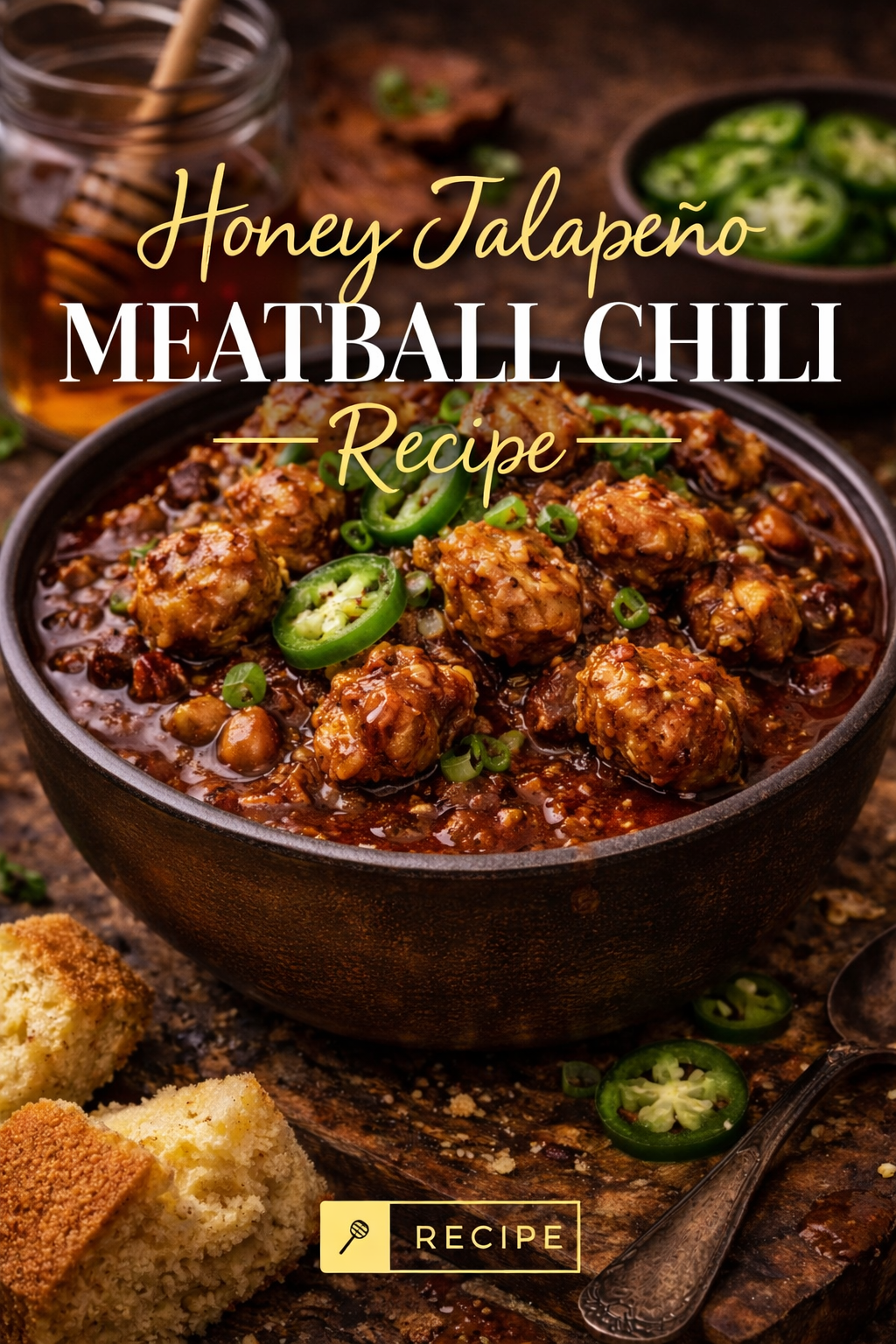
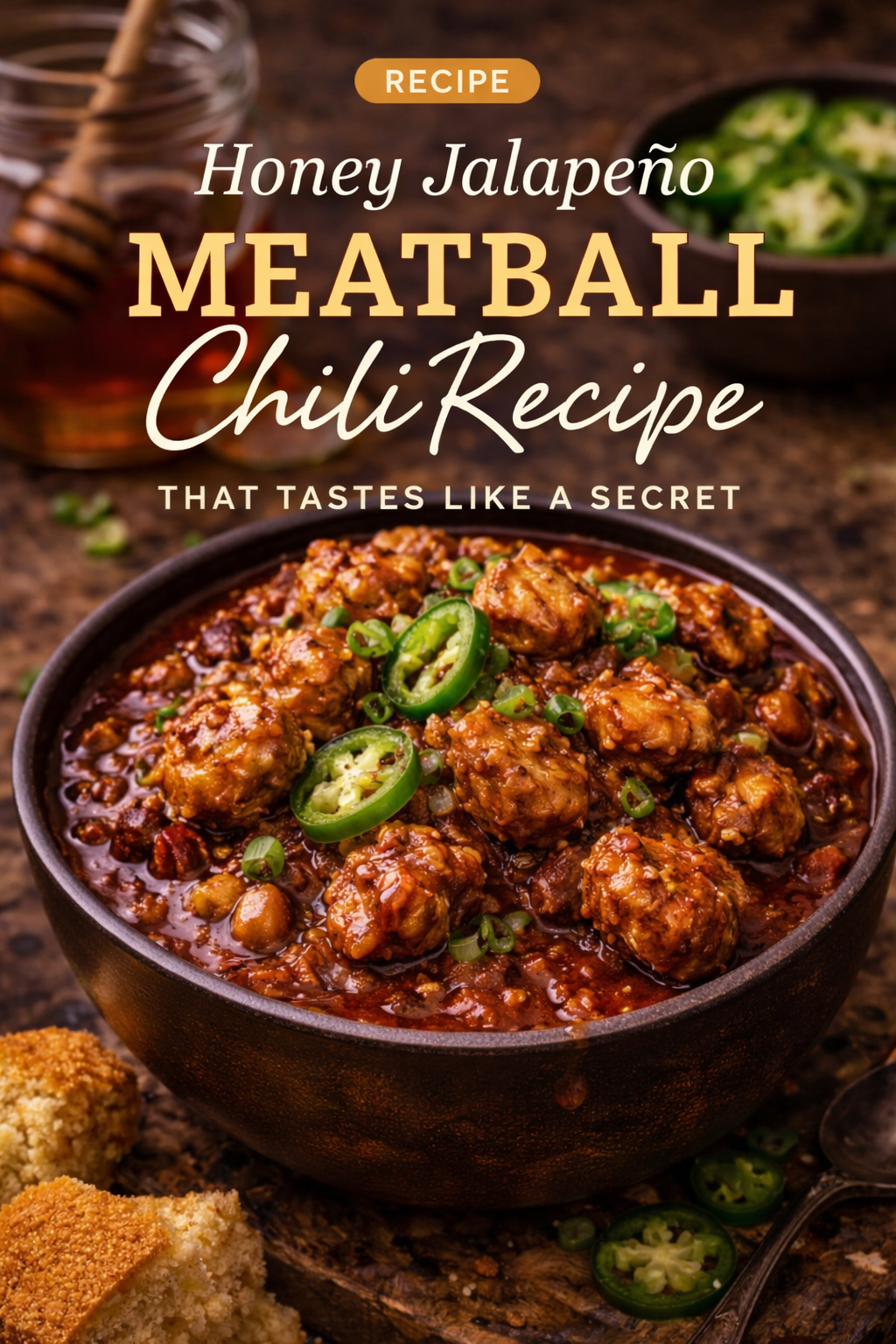
The bowl arrives like a low, warm storm—inky red and glossy at the edges, where the chili oil catches the light and turns copper. A heavy black ceramic rim frames the heat the way a fireplace frames flame: contained, deliberate, quietly daring. Meatballs sit proud and lacquered, their surfaces craggy and caramel-dark, as if they’ve been kissed by smoke and then glazed by something sweet at the very last second. They’re nestled into a thick, slow-simmered base that looks almost velvet until you notice the texture: beans suspended like little anchors, tiny flecks of spice and pepper pulp, the occasional glint of rendered fat swirling in amber ribbons. On top, jalapeño slices are scattered like green coins—bright, fresh, unapologetic—while a confetti of scallions softens the scene with a clean, oniony lift.
There’s a quiet luxury to the whole setup, the kind that feels like a weekend evening when the world finally stops asking you for things. The wooden board beneath the bowl is worn and honest, stained in places from past meals, holding the evidence of comfort food done properly. A spoon rests nearby, ornate and slightly old-fashioned, like it belongs to a set that only comes out when the mood is right. Off to the side, cornbread sits in thick, tender chunks—golden crust, pale crumb—ready to be dragged through the sauce or eaten in warm, buttery bites between spoonfuls. In the background, a jar of honey glows like stained glass, the dipper catching light the way a candle catches breath. It’s a hint, not a headline: something sweet has been invited into the heat.
The scent would hit first—chili powder blooming in oil, cumin and smoked paprika humming low, garlic rounding the edges. Then the sweetness arrives, not like dessert, but like a dimmer switch that turns the spice into something deeper and more complex. Honey doesn’t just sweeten; it polishes. It pulls forward roasted notes in the tomatoes and makes the meatballs taste richer, like they’ve been simmering for hours even if they haven’t. The jalapeños keep everything honest, slicing through with grassy heat and a bite that wakes up the palate. You can almost feel the rhythm of it: spoonful of chili, a jalapeño ring, a crumble of cornbread, and then that slow warmth that spreads rather than spikes.
This is the kind of dish that turns a kitchen into a place people linger. The pot on the stove becomes a reason to stay close—because the scent changes as it reduces, because you want to stir it just to watch the surface ripple, because you’re waiting for the moment when the flavors lock into place. It’s a meal that doesn’t need a special occasion, but it creates one anyway. Put on something soft, let the lights go warmer, and keep a stack of bowls ready. The chili thickens as it sits, becoming more indulgent with time, the meatballs soaking up the sauce like they’re meant to be there.
A small detail makes it feel effortless: the right tools, chosen for comfort more than perfection. A deep, heavy-bottomed Dutch oven that holds heat evenly makes the simmer steady and forgiving, and a wooden spoon made for slow stirring keeps the bottom from catching as the chili turns glossy. The meatballs come out best when they’re shaped with intention—uniform enough to cook evenly, rustic enough to feel homemade—especially if you’ve got a small cookie scoop for portioning that keeps your hands cleaner and the sizes consistent. When it’s time to build heat with control, a cast-iron skillet for browning gives the meatballs that caramelized edge that makes the final bowl taste expensive.
The pantry side of the story matters too, because this flavor lives in the layering. A smoky paprika that actually tastes like smoke adds depth without bitterness, and a bold chili powder blend makes the base feel full-bodied instead of flat. If you like the heat to feel clean rather than harsh, a chipotle powder for warm, lingering spice gives you that slow burn that pairs beautifully with honey. Even the finishing touch matters: a good honey dipper for drizzling turns the sweetness into a deliberate gesture, not an afterthought.
And then there’s the table logic—the bowl, the spoon, the cornbread, the scattered slices of jalapeño waiting to be chosen like a dare. This is comfort food that doesn’t apologize for having style. It’s a dinner that looks dramatic in low light and tastes even better the next day, when the spices have had time to settle into each other. It’s warmth with a point of view: sweet heat, rich meat, and that unmistakable feeling that you’re about to eat something that will make the room go quiet for a minute.
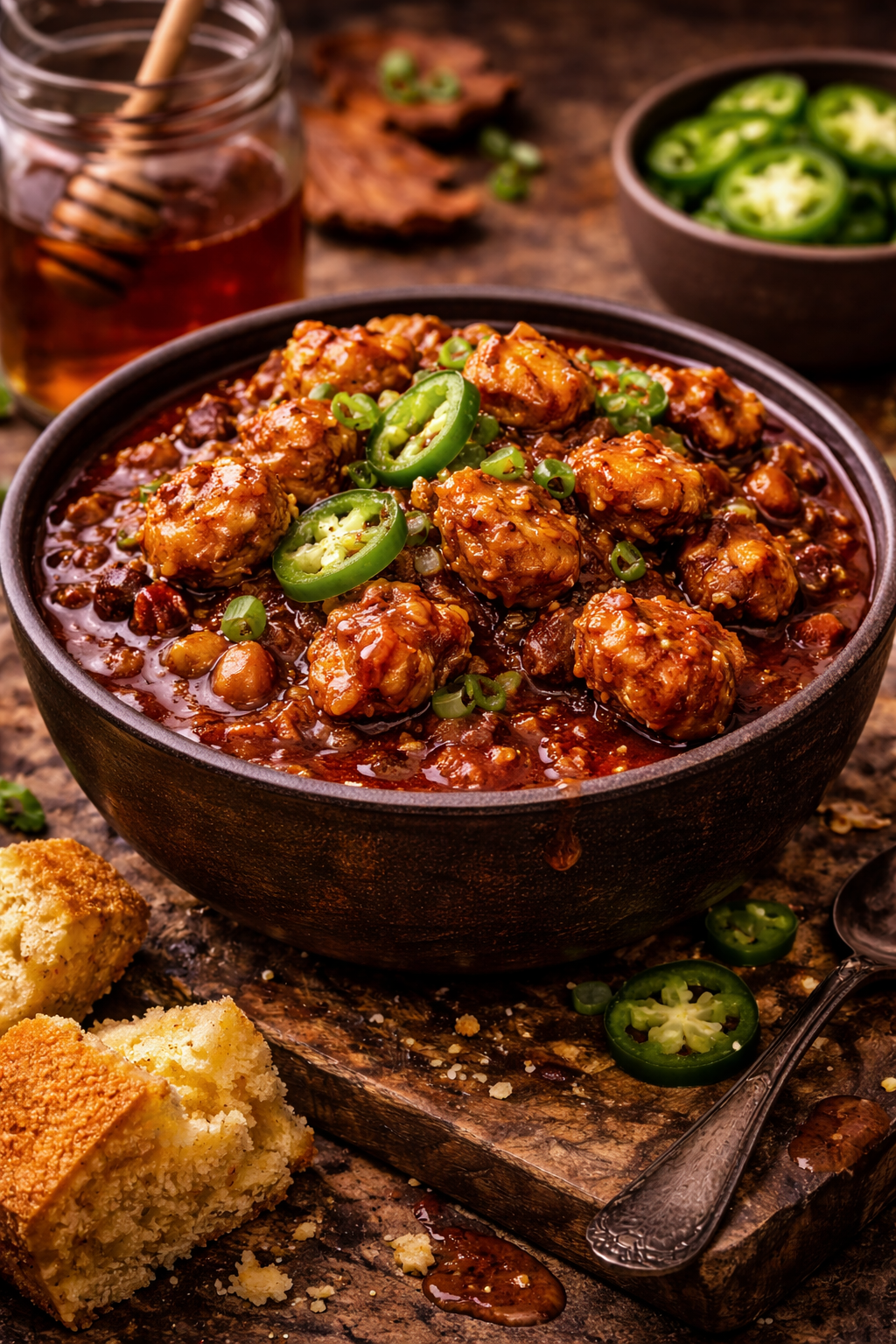
Honey Jalapeño Meatball Chili is a sweet-heat chili built around browned meatballs, a richly spiced tomato base, and a finishing drizzle of honey.
Ingredients
Meatballs
- 1 1/2 lb ground beef (or beef/pork blend)
- 1/2 cup breadcrumbs
- 1 large egg
- 2 cloves garlic, minced
- 1 tsp kosher salt
- 1/2 tsp black pepper
- 1 tsp smoked paprika
- 1/2 tsp cumin
Chili
- 1 tbsp neutral oil
- 1 medium onion, diced
- 1 bell pepper, diced
- 2 cloves garlic, minced
- 2 tbsp chili powder
- 1 tsp cumin
- 1 tsp smoked paprika
- 1/2 tsp chipotle powder (optional)
- 2 tbsp tomato paste
- 1 (28 oz) can crushed tomatoes
- 2 cups beef broth
- 1 (15 oz) can kidney beans, drained
- 1 (15 oz) can pinto beans, drained
- 2 tbsp honey, plus more to finish
- 1 tbsp apple cider vinegar (or lime juice)
- Salt to taste
Finish
- Sliced jalapeños
- Sliced scallions
Method / Instructions
- Mix meatballs: Combine meatball ingredients until just mixed. Form 1 to 1 1/2-inch meatballs.
- Brown: Heat oil in a pot. Brown meatballs on all sides (work in batches). Remove to a plate.
- Build base: In the same pot, sauté onion and bell pepper until softened. Add garlic for 30 seconds.
- Bloom spices: Stir in chili powder, cumin, smoked paprika (and chipotle if using) for 30–45 seconds. Add tomato paste and cook 1 minute.
- Simmer: Add crushed tomatoes, broth, beans, honey, and a pinch of salt. Return meatballs to the pot.
- Cook through: Simmer gently 20–30 minutes until meatballs are cooked and chili is thick. Stir occasionally.
- Balance: Add vinegar (or lime). Adjust salt and honey to taste.
- Serve: Top with jalapeños and scallions. Finish with a light honey drizzle if desired.
Start with the meatballs, because they’re the backbone of the whole bowl. The goal is a meatball that stays tender inside while developing a browned, almost sticky exterior that can stand up to a long simmer. Mix the ground meat with breadcrumbs and egg just until everything comes together—overmixing makes the texture tight and bouncy instead of juicy. If the mixture feels too soft to shape cleanly, let it rest for five minutes; the breadcrumbs hydrate and the mixture firms up on its own. A small scoop for even portions makes this effortless and keeps cook times consistent from meatball to meatball.
Browning is where the flavor gets expensive. Heat matters: you want a shimmer of oil, not a deep fry. If the pot is too cool, the meatballs steam and turn pale; if it’s too hot, the outside burns before the center sets. Brown in batches so the pan stays hot and the meatballs don’t crowd each other—crowding releases moisture and kills the sear. A heavy-bottomed pot that holds steady heat makes this step forgiving, especially if you’re working with a larger batch. You’re not cooking the meatballs through here; you’re building a crust. Pull them out once they’re bronzed and sticky-looking.
Now use what’s left in the pot. Those browned bits on the bottom are the foundation. Drop in diced onion and bell pepper and stir until they soften; the moisture will start lifting the fond. Add garlic briefly—garlic burns fast, so it should smell fragrant, not toasted. Then comes the most important flavor step: blooming the spices. Chili powder, cumin, smoked paprika, and optional chipotle need a short moment in the hot fat to wake up. It’s the difference between “tastes like chili powder” and “tastes like chili.” If you want a deeper, rounder smoke note, choose a smoked paprika with bold aroma and, for warmth that lingers, a chipotle powder for controlled heat. Stir for under a minute—enough time to smell the spices bloom, not enough to scorch them.
Tomato paste goes in next to caramelize. Let it cook until it darkens slightly and clings to the pan; this step deepens the tomato flavor and adds that slow-cooked taste. Then deglaze with crushed tomatoes and broth. Scrape the bottom thoroughly—every browned bit you dissolve becomes flavor in the finished bowl. Add beans for body and texture. If you prefer a thicker chili, you can mash a small portion of the beans against the side of the pot after the simmer starts; it naturally thickens the sauce without flour or cornstarch.
Here’s where the signature twist lands: honey. Add it early enough to integrate, but not so early that it disappears into the background. Honey does two things in a chili like this: it smooths bitterness from tomatoes and spices, and it makes the meat taste richer. Start with two tablespoons, then adjust at the end. If you like the honey note more pronounced, keep the final adjustment for serving—a small drizzle over the bowl makes the sweet-heat contrast obvious. A simple honey dipper for finishing drizzles helps you control it so it stays elegant, not sticky.
Return the browned meatballs to the pot and simmer gently. Gentle matters. A rapid boil can break meatballs apart and make the sauce taste harsh. You want small bubbles and a slow burble, stirring occasionally so nothing sticks. As it simmers, the meatballs give off flavor and absorb spice; the sauce thickens and turns glossy. If the chili gets thicker than you want, loosen it with broth. If it’s thinner than you want, simmer uncovered for a few more minutes.
Balance is the last professional step, and it’s what separates a good chili from one that makes people pause mid-bite. Add acidity at the end—apple cider vinegar or lime juice—because acid brightens the whole bowl and keeps the sweetness from feeling heavy. Taste before you salt aggressively; as the chili reduces, salt concentrates. If the heat is intense, honey can round it, but so can fat—serve with cornbread or a dollop of something creamy if you want the spice softened.
Now the finish: jalapeños and scallions. Think of jalapeños as a fresh, green snap that keeps the chili from tasting one-note. Slice them thin so every spoonful can pick up a ring or two. If you want less bite but still want that jalapeño flavor, remove seeds and membranes. For more heat, leave them in—or swap to serranos. Scallions add brightness and a mild onion note that cuts through richness.
Variations are easy if you keep the structure the same. Want turkey? Use ground turkey for the meatballs and add an extra tablespoon of olive oil to the chili base so it doesn’t lean dry. Want a smokier pot? Add a spoon of chipotle in adobo or a pinch of smoked salt. Want it heartier? Stir in corn or black beans. Want it thicker and almost stew-like? Simmer longer and mash more beans. For a crowd, double everything and use a larger pot; the flavors actually improve with volume as long as the simmer stays gentle.
Troubleshooting is mostly about texture and balance. If meatballs fall apart, the mixture was too wet or the simmer was too aggressive—next time, add a bit more breadcrumbs and keep the simmer lower. If the chili tastes flat, it needs one of three things: salt, acid, or time. Add a pinch of salt, a splash of vinegar, and give it ten more minutes. If it tastes bitter, the spices may have scorched—honey can soften it, but the real fix is gentle heat and careful blooming. If it’s too sweet, add more acid and a pinch of salt; sweetness often reads stronger when salt is low.
Serve it the way the bowl suggests: a deep ladle of glossy chili, meatballs piled high, jalapeño rings and scallions scattered generously, and cornbread on the side for the moments when you want to drag, dunk, and soak up every last bit. The best part is what happens later—the second-day bowl, thicker and darker, when the spices have settled and the honey-heat contrast feels even more intentional.