Loaded Tortilla Crunch Chili Recipe: The Bowl That Turns a Weeknight Into a Party
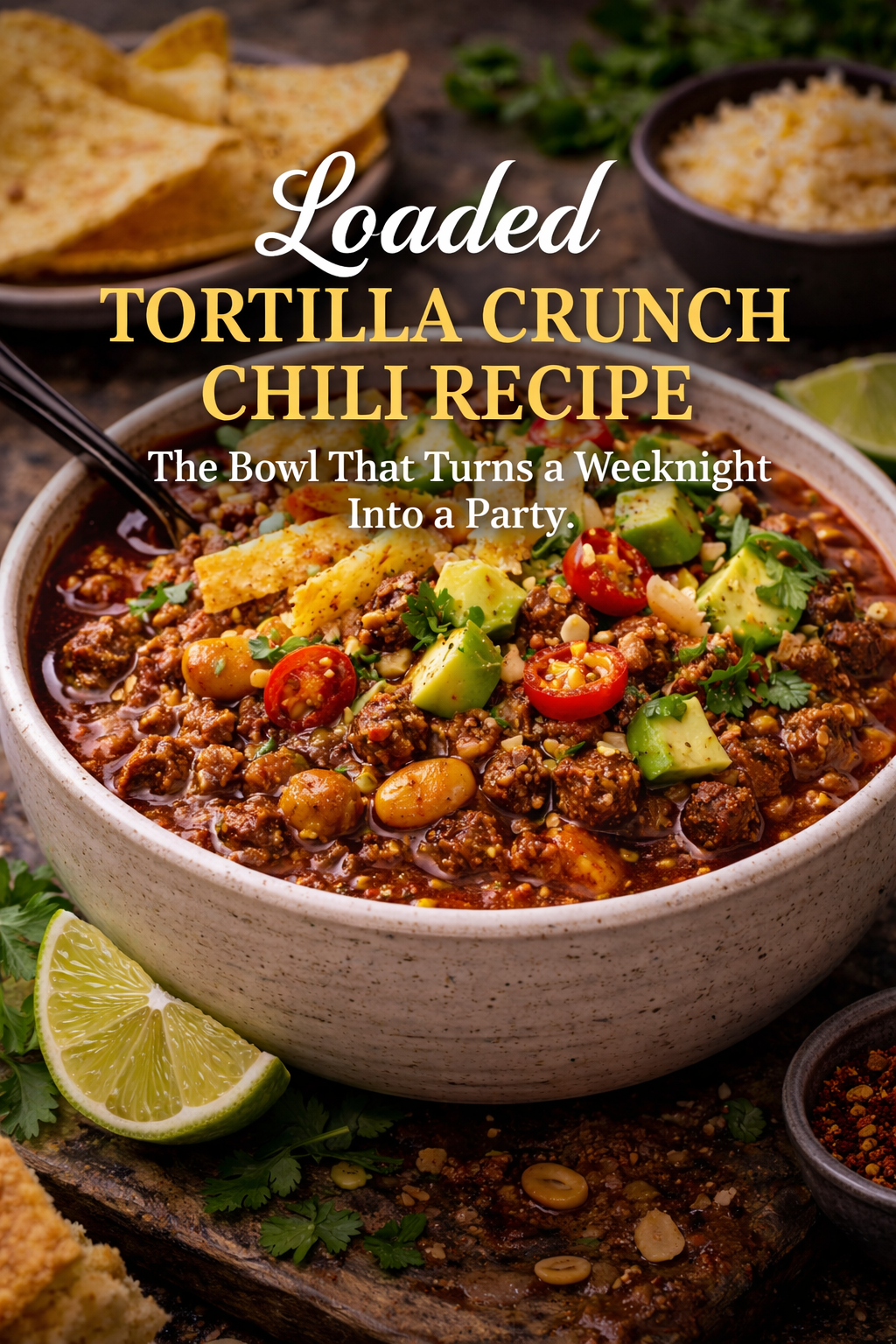
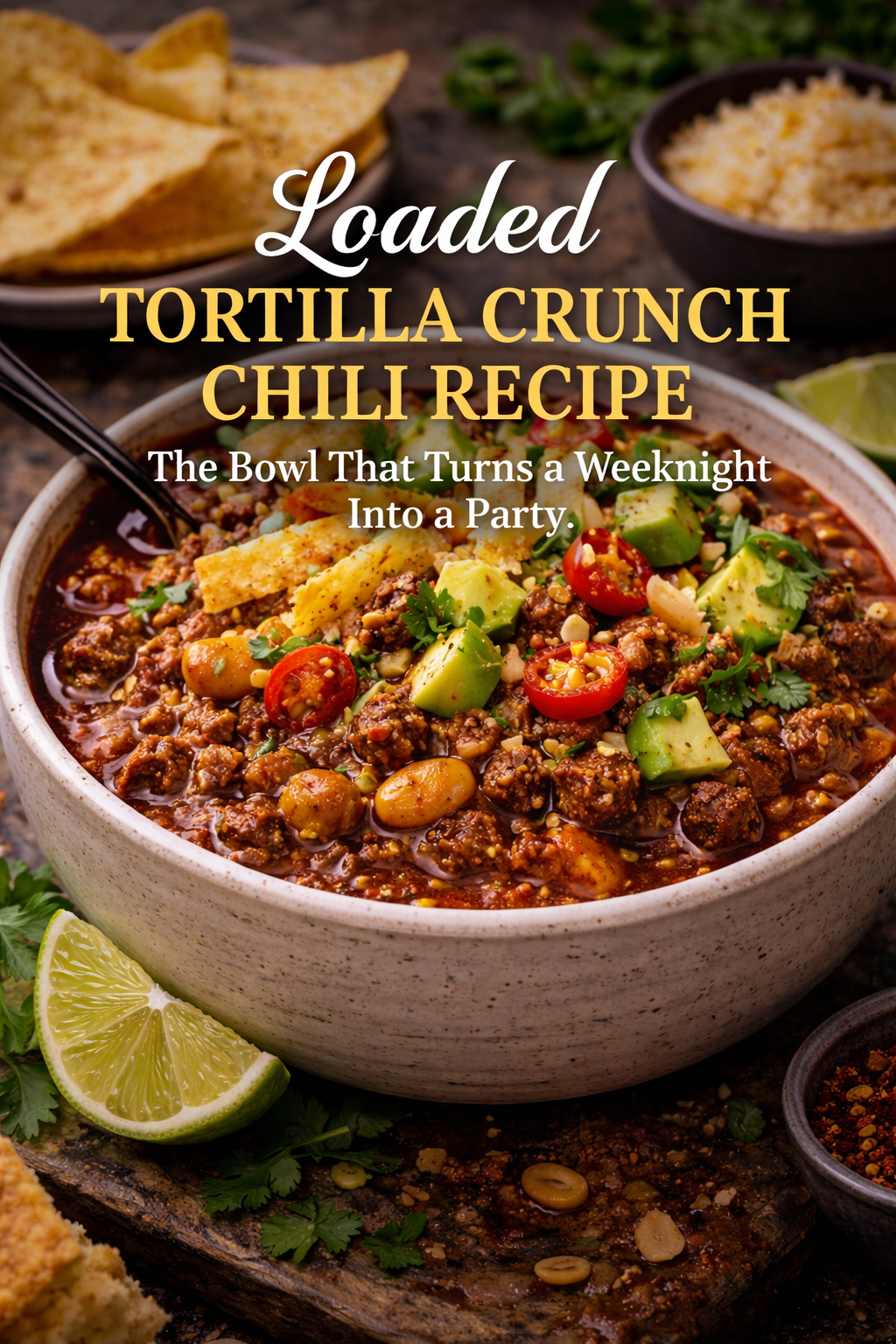
The bowl arrives like a little bonfire set down on a weathered board—brick-red, glossy at the edges, and alive with heat. The surface is crowded in the best way: curls of tortilla chips sinking into the sauce, bright coins of chile floating like confetti, and soft cubes of avocado catching the light with that quiet, buttery green. Cilantro is scattered as if it fell from someone’s fingers in a hurry to eat, and a lime wedge waits at the corner, already perfuming the air with sharp citrus. Everything about it says comfort, but not the sleepy kind—this is comfort that hums, that makes the room feel warmer even before the first bite.
There’s a certain magic to chili when it’s built like a layered scene instead of a single-note stew. The base is deep and slow-tasting, the kind of simmer that turns simple pantry ingredients into something that feels deliberate. Beans hold their shape but give way easily, the sauce clings to each bite, and the spices land in stages—smoky first, then a gentle sweetness, then that bright, late heat that lifts everything up. It’s the kind of flavor that makes you reach for a drink not because it’s too hot, but because you want the cold sip to reset the stage for the next spoonful.
On nights when the world feels noisy, a pot like this is its own form of order. The cutting board gets a quick parade of toppings: avocado, sliced fresh chiles, a handful of herbs. A small bowl of shredded cheese sits nearby like a soft landing, and there’s always something crunchy ready to break up the richness—chips, toasted pepitas, crushed crackers if that’s what’s around. The best part is that the pot does the heavy lifting while the table becomes the fun part. A sturdy Dutch oven that holds heat beautifully makes the simmer feel effortless, and a wide wooden ladle that won’t scratch cookware turns serving into a small ritual.
The scene in front of you feels like game day energy without the chaos—more candlelit than stadium-lit. A pile of tortilla chips sits off to the side, warm-toned and slightly salted, ready to be dunked. In the background, cheese waits in a bowl like snowfall, and a little dish of chili spice looks like ground sunset. The board is messy in a satisfying way: lime juice glistening, a few cilantro leaves drifting, crumbs and flakes of spice that promise the bite will be bold. It’s not pristine. It’s inviting. It feels like the kitchen is the only place that matters for a while.
What makes this bowl so addictive is how it plays with texture. Chili can be soft all the way through if you let it, but here the crunch is part of the design. The chips soften at the edges, turning almost dumpling-like where they meet the sauce, while the top stays crisp long enough to crackle between your teeth. Avocado cools and rounds off the spice. Fresh chile slices brighten the whole thing with a clean snap. Lime cuts through the richness and makes the flavors feel louder without adding more heat. A sharp chef’s knife that glides through tomatoes and herbs and a heavy cutting board that won’t slide around turn those quick topping moments into something smooth and satisfying.
Chili like this is also a quiet flex: it tastes like it took all day, even when it didn’t. The secret is building the base properly—giving onions time to soften and sweeten, letting spices bloom in the oil, and using a combination of ingredients that create depth fast. Tomato paste for concentration, canned tomatoes for brightness, broth for body. A little cocoa or espresso if you want the background to feel darker and more complex. A set of measuring spoons that actually fit spice jars makes the seasoning stage feel precise without being fussy, and a microplane for quick garlic and lime zest adds that polished finish that reads as “restaurant” even in sweatpants.
Then there’s the social side of it—the way chili turns a table into a build-your-own bar without announcing itself. Everyone gets to make a bowl that matches their mood. More lime, more heat, extra cheese, a mountain of chips, a handful of cilantro, maybe a spoon of sour cream to turn it silky. It’s casual, but it feels curated. It’s the kind of food that invites lingering, the kind that makes people hover near the stove for “just a taste” and somehow end up with a full bowl before dinner technically starts.
And when the pot is nearly gone, the best part still waits: leftovers that taste even better the next day. The spices settle into each other overnight. The sauce thickens. The whole thing becomes more unified, like it learned how to be itself while you slept. All that’s left is to reheat gently and set the toppings out again—fresh lime, avocado, chips—and let the bowl become the center of the room one more time.
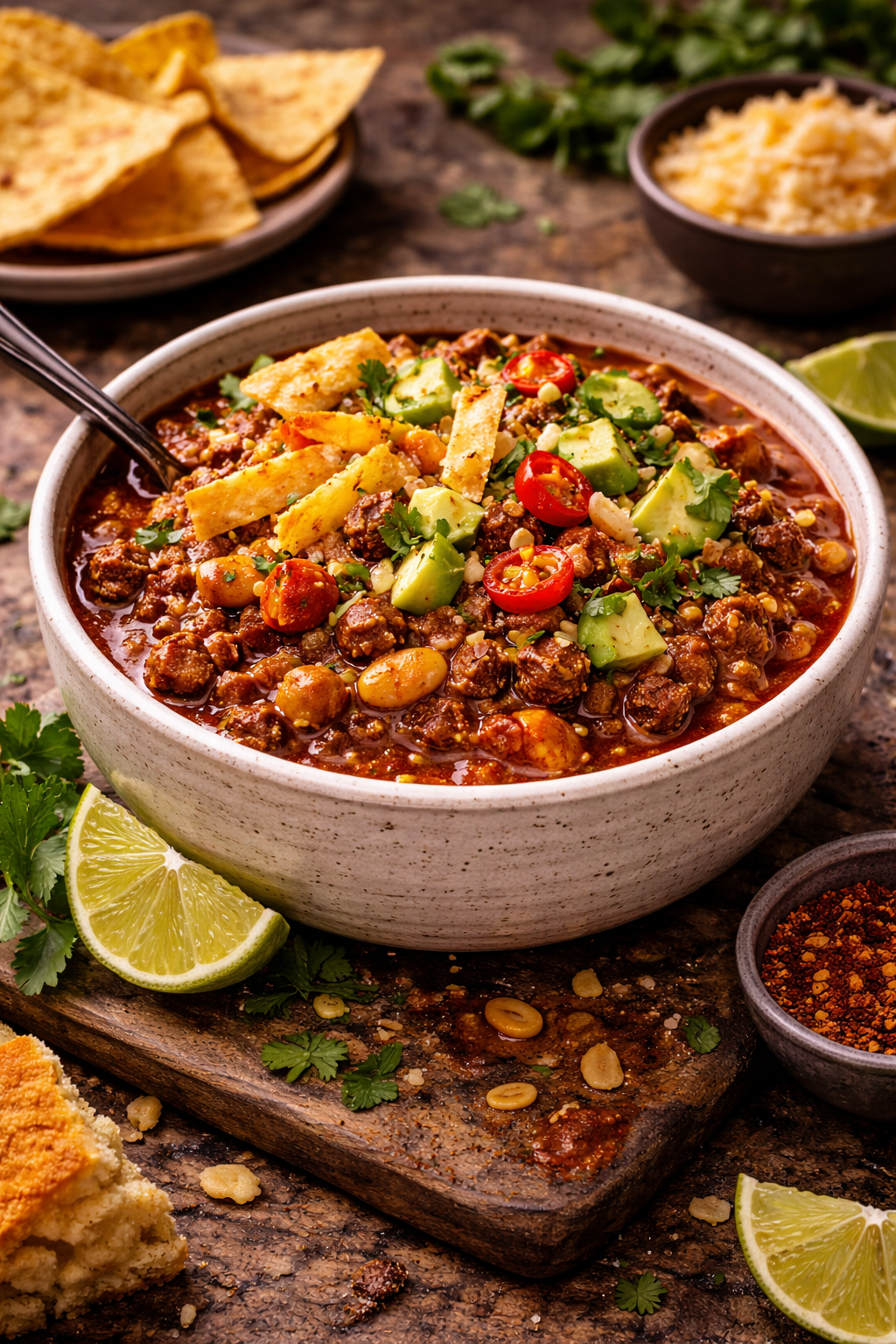
A bold, hearty chili with smoky depth, tender beans, and a crunchy tortilla-chip finish—topped with avocado, fresh chiles, cilantro, and lime.
Ingredients
- 1–2 tbsp olive oil
- 1 large yellow onion, diced
- 1 red bell pepper, diced (optional)
- 4 cloves garlic, minced
- 2 tbsp tomato paste
- 2 tbsp chili powder
- 2 tsp ground cumin
- 1 tsp smoked paprika
- 1 tsp dried oregano
- 1/2–1 tsp cayenne (to taste)
- 1 1/2 tsp kosher salt, plus more as needed
- 1 lb ground beef or turkey (or plant-based crumble)
- 1 (14–15 oz) can diced tomatoes
- 1 (14–15 oz) can crushed tomatoes
- 1 1/2–2 cups beef or chicken broth (or vegetable broth)
- 1 (15 oz) can pinto beans, drained and rinsed
- 1 (15 oz) can kidney beans, drained and rinsed
- 1 cup corn (frozen or canned)
- 1 tbsp brown sugar or honey (optional)
- 1 tbsp lime juice, plus wedges for serving
Toppings
- Tortilla chips, lightly crushed
- Diced avocado
- Sliced fresh jalapeño or red chile
- Chopped cilantro
- Shredded cheese
Method
- Heat oil in a large pot over medium heat. Add onion (and bell pepper if using) and cook until softened, 6–8 minutes.
- Stir in garlic and tomato paste; cook 1 minute. Add chili powder, cumin, smoked paprika, oregano, cayenne, and salt; stir 30 seconds.
- Add ground meat and cook until browned, breaking it up as it cooks.
- Stir in diced tomatoes, crushed tomatoes, broth, beans, and corn. Bring to a simmer.
- Reduce heat and simmer uncovered 25–40 minutes, stirring occasionally, until thickened. Add a splash of broth if needed.
- Taste and adjust salt, heat, and sweetness. Stir in lime juice.
- Serve hot with tortilla chips, avocado, fresh chiles, cilantro, lime wedges, and cheese.
Start by choosing the right pot. Chili wants steady heat and plenty of surface area for browning, and a heavy vessel keeps the simmer calm instead of frantic. If there’s a tool that quietly upgrades the whole process, it’s a wide, heavy-bottomed pot built for long simmers. It helps you build flavor in layers without scorching, and it keeps the texture consistent from the first ladle to the last.
1) Build the sweet base
Begin with onion (and bell pepper if you like). The goal isn’t just “soft.” You want the edges to go translucent and slightly golden, because that’s where sweetness forms. Give it time—stir occasionally, not constantly, and let the pot do its work. If you rush this stage, the chili tastes sharper and flatter. If you nail it, the finished bowl tastes rounded, like it has a built-in richness even before anything else goes in.
Tip: If the onions start to brown too fast, lower the heat and add a tablespoon of water. That little splash loosens the fond and keeps everything on track.
2) Bloom the paste and spices
Tomato paste is the difference between “tomato-y” and “deep.” When it hits the oil and heat, it caramelizes slightly and becomes darker, almost smoky. Stir it into the softened onions and let it cook for a minute. Then add the spice blend—chili powder, cumin, smoked paprika, oregano, and cayenne. This stage matters because dry spices need heat and fat to wake up. Thirty seconds to a minute is enough to make them fragrant without burning.
If you like consistency in your seasoning (especially if you make this often), keep a dedicated blend jar and portion it with a spice spoon set that makes measuring fast and clean.
3) Brown the protein properly
Add ground beef or turkey and break it into small pieces. Browning isn’t just cooking-through—it’s flavor. Let the meat sit against the surface for a moment before stirring so it actually sears. Those browned bits become part of the sauce later, and they’re what make the chili taste like it’s been simmering all day.
Variation: For a chunkier, steakhouse vibe, use a mix of ground and diced chuck. For a lighter bowl, ground turkey with extra smoked paprika keeps the flavor bold.
4) Create body with the right liquid ratio
Add diced tomatoes for texture, crushed tomatoes for smooth body, then pour in broth. Start with less liquid than you think; you can always loosen it later. Chili should move like lava, not soup. If it’s thin, it tastes thin—even if the spices are strong. If it’s thick, every bite feels intentional.
Troubleshooting:
- Too thin after simmering? Keep it uncovered longer and stir more often near the end.
- Too thick? Add broth in small splashes, stirring well between additions.
5) Add beans and corn at the right time
Beans can go in early because they hold up well and soak up flavor. Corn adds sweetness and contrast; it’s especially good when the chili leans smoky and spicy. Rinse beans to remove excess starch and canning liquid so the sauce stays clean-tasting.
Substitutions:
- Pinto + kidney is classic.
- Black beans add a darker, earthier finish.
- Chickpeas give a slightly nutty bite that works surprisingly well with smoky chili.
6) Simmer for flavor, not just thickness
A steady simmer is the sweet spot: small bubbles, gentle movement. Too hot and the bottom scorches; too cool and it tastes like the ingredients never fully meet each other. Aim for 25–40 minutes uncovered. Stir occasionally, and especially near the end as it thickens. A silicone spatula that scrapes the pot clean is perfect here because it reaches into corners where scorching starts.
Optional depth boosters (choose one):
- 1 tsp cocoa powder for a darker, rounder finish
- 1 tsp instant espresso for background bitterness
- 1–2 tsp chipotle in adobo (blended) for smoky heat
- 1 tbsp maple syrup or brown sugar for balance if the tomatoes feel too sharp
7) Finish with acid and salt like a pro
When the chili tastes “almost there,” it usually needs two things: salt and acid. Salt brings the flavor forward; lime makes it feel brighter and cleaner. Add lime juice at the end so it stays vivid instead of disappearing into the simmer. Taste, adjust, taste again. This is the final hinge that turns a decent pot into a bowl people remember.
For the lime and herbs, a microplane that makes quick zest and fine garlic gives an extra layer of citrus aroma without changing the texture.
8) Design the toppings for contrast
This bowl works because it’s engineered for contrast: hot/cool, soft/crunchy, rich/bright.
- Tortilla chips: crush lightly so you get both shards and larger pieces.
- Avocado: cut into cubes so it stays creamy but doesn’t disappear.
- Fresh chiles: thin slices for a clean snap and fresh heat.
- Cilantro: rough chop so it looks abundant and tastes lively.
- Cheese: a small handful melts into the top and softens spice edges.
If you want picture-perfect avocado cubes, slice cleanly with a sharp paring knife made for precision cuts.
9) Make-ahead and reheating that improves the pot
Chili gets better after resting. Cool it, cover it, and refrigerate overnight. The next day, reheat gently, adding a splash of broth if needed. Set toppings out fresh again—especially lime, cilantro, and chips—because the contrast is the whole point.
Storage notes:
- Fridge: 4 days, tightly covered
- Freezer: up to 3 months (freeze without toppings)
10) Easy variations that still feel intentional
- “Taco shop” style: add extra cumin, a pinch of coriander, and finish with more lime.
- Smoky red: add chipotle and a little smoked paprika; top with extra cilantro.
- Creamy finish: swirl in a spoon of sour cream at serving.
- Vegetarian: use plant-based crumbles and vegetable broth; increase beans and add diced zucchini for body.
No matter which direction you take it, keep the structure the same: build the sweet base, bloom the spices, simmer until thick, then brighten with lime and load the top with crunch. That’s how the bowl keeps its drama—and why the last spoonful tastes as good as the first.