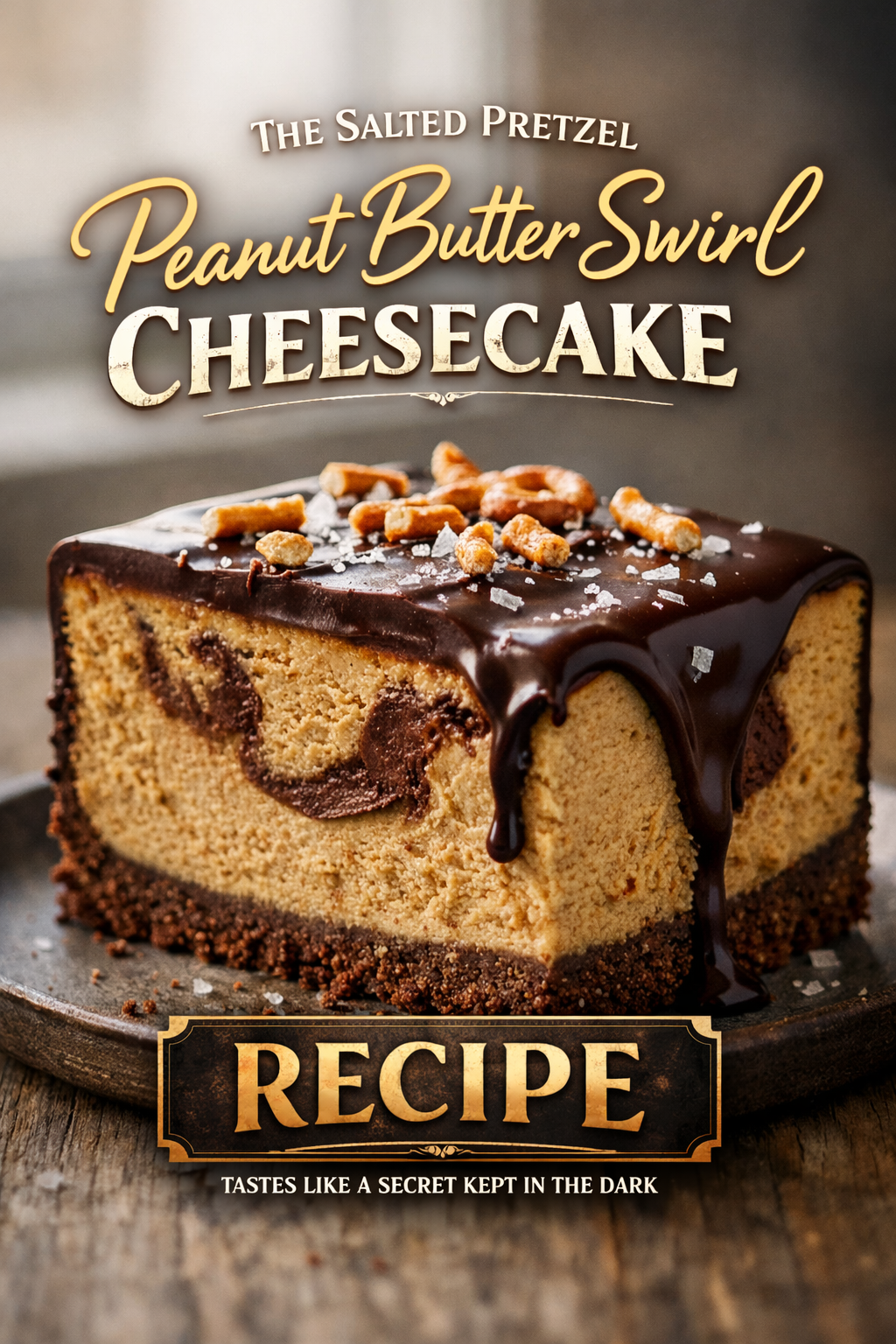
The Salted Pretzel Peanut Butter Swirl Cheesecake Recipe That Tastes Like a Secret Kept in the Dark
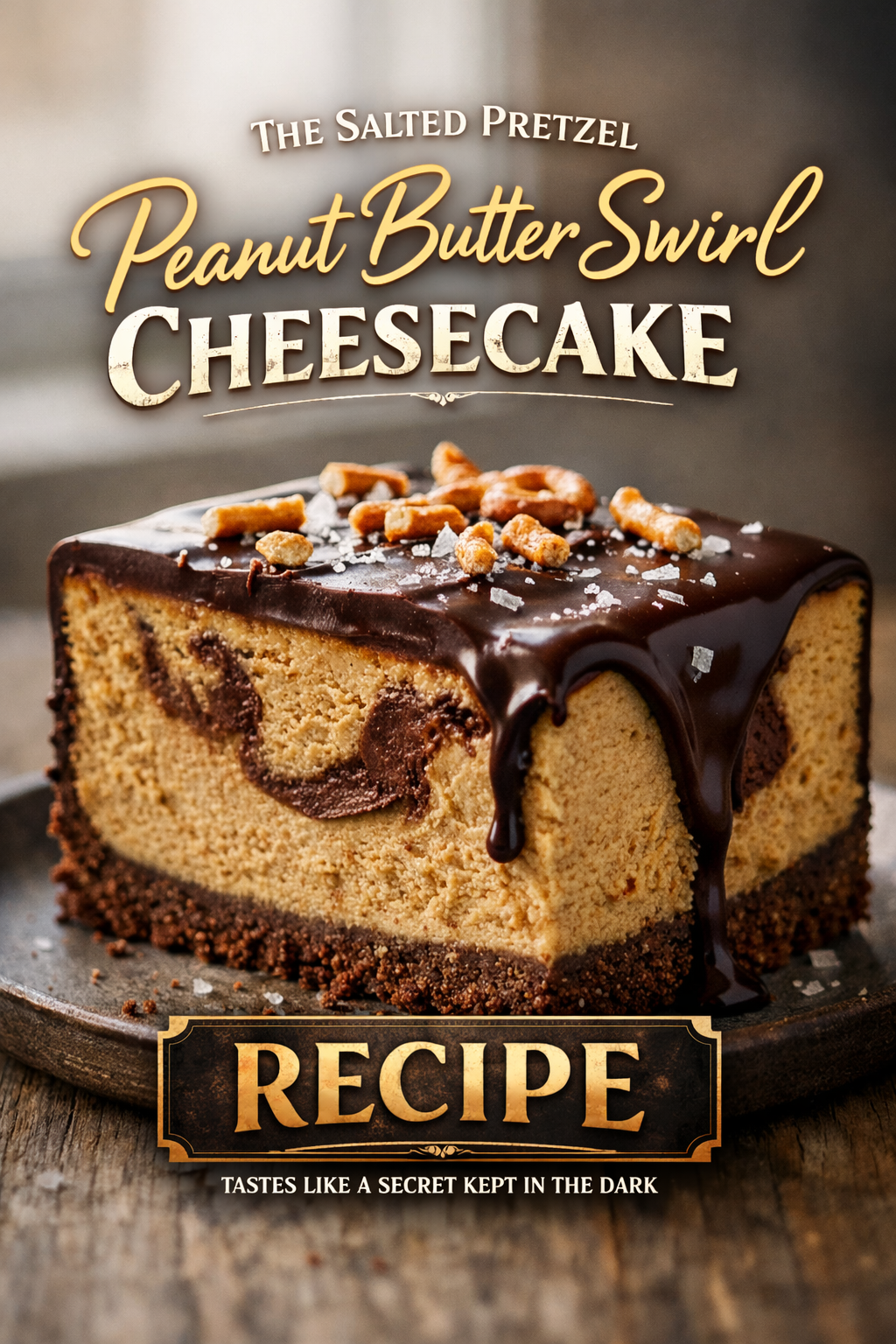
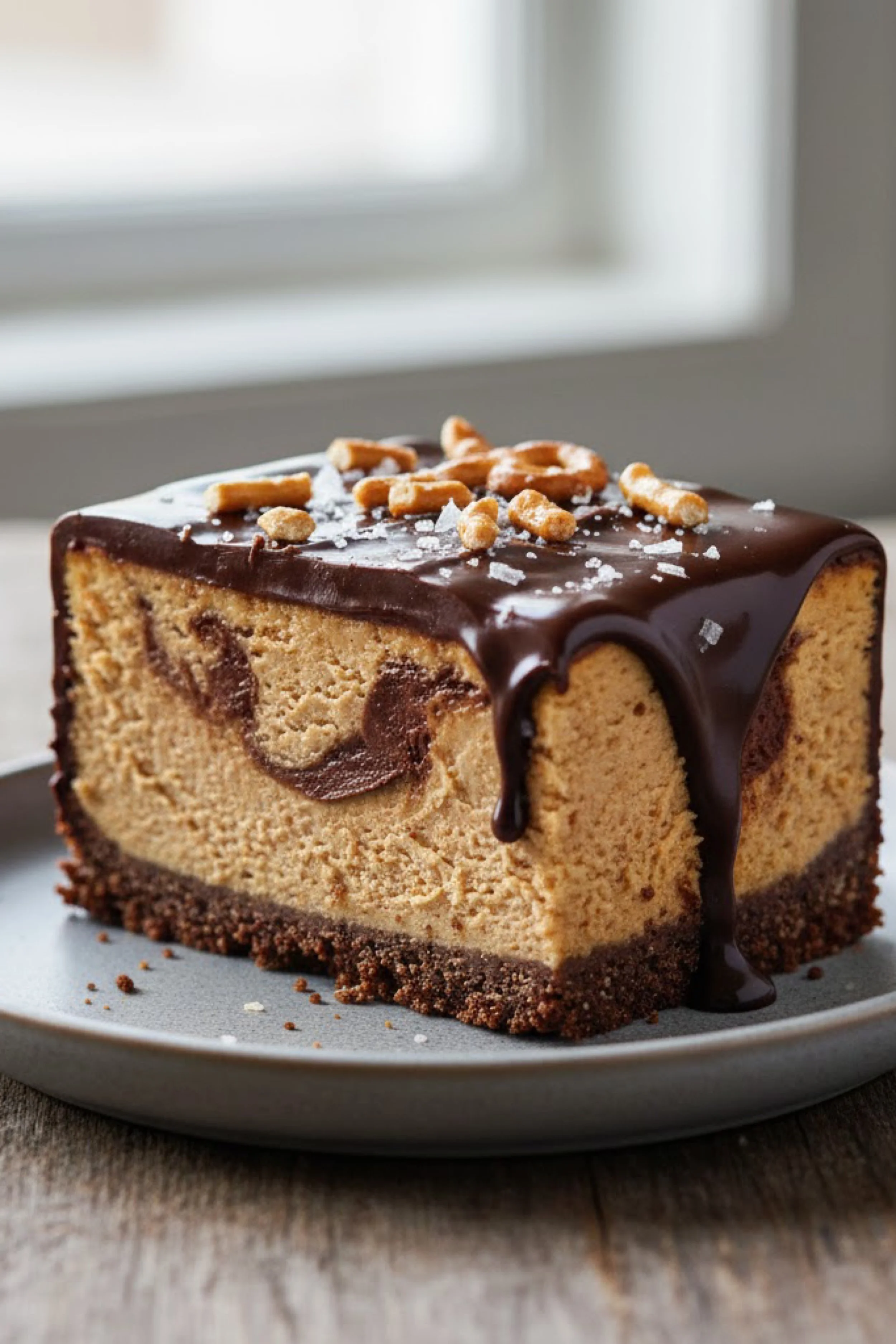
The first thing you notice is the shine. A dark, glossy ribbon of chocolate drapes over the top like silk caught mid spill, pooling at the edge before it decides to fall. It clings, then releases, and the drip feels intentional, theatrical, the kind of detail that makes a dessert look less like something you served and more like something you revealed. Under that lacquered top, the cheesecake holds its shape with a calm confidence, all clean edges and dense, velvety crumb, the color of toasted sugar and warm peanut butter. A chocolate swirl is suspended inside like a slow motion wave, a marbled crescent that hints at what happens when deep cocoa meets something creamy and nutty and unapologetically rich.
Then there is the crunch, scattered like confetti from a better party. Pretzel pieces sit on top with a casual messiness that somehow reads expensive, like a chef meant it to look effortless. A few flakes of salt sparkle across the ganache, catching light the way jewelry does, promising contrast before you even pick up a fork. The base is darker, tighter, almost sandy in its firmness, a chocolate crust that looks like it would snap cleanly and then melt the second it hits your tongue. Even from across the table, it feels like a dessert with layers of sound, the soft give of the cheesecake, the thin crackle of the ganache as it yields, the sharp little crunch of pretzel that wakes everything up.
This is the kind of slice that belongs in a quiet kitchen with a window throwing pale daylight across the plate. A dessert for the moment after dinner when conversation slows and someone finally says what they actually mean. It tastes like comfort, but not the simple kind. More like the comfort of a perfectly tailored coat, heavy in the right places, smooth where it matters, and finished with a detail that makes you look twice. The peanut butter is warm and rounded, the chocolate is dark enough to feel grown, and the salt keeps it from turning sweet in a flat way. Every bite has tension and release, like sweetness stepping forward and then being pulled back into balance.
The process can be calm too, especially when the tools feel reliable in your hands. A sturdy nonstick springform pan in the right size makes the whole thing feel less risky, like the cheesecake is already halfway to success. A smooth batter comes together with the gentle force of a stand mixer built for thick cream cheese mixtures, but a hand mixer works just as well when you want a quieter kitchen. The crust presses neatly when you have a flat bottom measuring cup set that fits your palm like it belongs there, and the ganache turns glossy with a simple pour from a small saucepan that heats evenly.
There is something satisfying about making a dessert that looks this composed without needing to chase perfection. Cheesecake rewards patience more than flair. It asks for room temperature ingredients, a slow bake, and the kind of cooling that feels like a ritual. Lining the pan with parchment rounds for clean releases is a small act of future kindness. So is keeping a silicone spatula that scrapes every last ribbon of batter so your swirl stays bold, not faint. Even the finishing touches feel like a signature: a handful of pretzels, a pinch of flaky salt, the last slow drip of chocolate that makes people pause before they take the first bite.
And when you do take that bite, the whole thing makes sense. The ganache brings deep cocoa and shine, the peanut butter gives body and warmth, the swirl adds drama, and the pretzel brings that crisp salty snap that keeps everything alive. It is rich, yes, but it is also balanced, designed, deliberate. A cheesecake that feels like a mood, a moment, a little bit of trouble dressed up beautifully.
Recipe
A slice like this deserves a simple setup and a clean approach. The goal is a smooth peanut butter cheesecake with a bold chocolate swirl, a chocolate cookie crust, and a glossy ganache finish with pretzel crunch and flaky salt.
Ingredients
Crust
- 2 cups chocolate cookie crumbs
- 6 tablespoons unsalted butter, melted
- 1 tablespoon granulated sugar
- Pinch of salt
Filling
- 32 ounces cream cheese, fully softened
- 1 cup creamy peanut butter
- 1 cup granulated sugar
- 3 large eggs, room temperature
- 1 cup sour cream, room temperature
- 2 teaspoons vanilla extract
- 2 tablespoons all purpose flour
Chocolate swirl
- 5 ounces semisweet chocolate, melted and slightly cooled
- 2 tablespoons heavy cream
Ganache topping
- 6 ounces semisweet chocolate, chopped
- 1/2 cup heavy cream
- Flaky salt
- 1/2 cup pretzel pieces
Method
- Heat oven to 325 F. Grease a 9 inch springform pan and line the bottom with parchment.
- Make the crust. Mix cookie crumbs, melted butter, sugar, and salt. Press firmly into the bottom of the pan. Bake 10 minutes, then cool.
- Make the filling. Beat cream cheese until smooth. Beat in peanut butter and sugar. Add eggs one at a time, mixing on low just until combined. Mix in sour cream, vanilla, and flour until smooth.
- Make the swirl base. Stir melted chocolate with heavy cream until glossy.
- Assemble. Pour about two thirds of the filling into the pan. Dollop chocolate swirl mixture over the top and gently marble with a knife. Add remaining filling and repeat a lighter swirl on the surface.
- Bake. Place the pan on a rack and bake 55 to 70 minutes until edges are set and the center jiggles slightly.
- Cool slowly. Turn oven off, crack the door, and let cheesecake sit 45 minutes. Cool at room temp 1 hour, then chill at least 6 hours, ideally overnight.
- Ganache. Heat cream just until steaming. Pour over chopped chocolate, rest 2 minutes, then stir smooth. Pour over chilled cheesecake and let it set 15 minutes.
- Finish. Top with pretzel pieces and a pinch of flaky salt. Slice with a hot, dry knife.
Start by setting yourself up for a calm bake, because cheesecake reads every choice you make. The biggest win is temperature. Cream cheese that is truly softened blends into a silky batter, while cold cream cheese turns into stubborn lumps that never fully disappear. Give it time on the counter. While it warms, prep the pan. A 9 inch springform is ideal, and the stability of a springform pan with a tight seal matters more than you think because a loose seam can invite moisture where you do not want it. Line the bottom with parchment so the crust releases cleanly, and lightly grease the sides so the cheesecake can rise without snagging.
For the crust, think pressure and evenness. Chocolate cookie crumbs and butter should look like wet sand. Press firmly, especially along the edges, so the base does not crumble when you slice. A flat bottom cup is perfect, but even the back of a spoon works. Bake the crust briefly to set it, then cool it down so the filling does not sit on heat and start cooking at the edges before the center ever meets the oven.
Now the filling. Beat the cream cheese first until it is smooth, then add peanut butter and sugar. The key is to avoid whipping in too much air. Air feels helpful in the bowl, but it can lead to cracks later. Mix on medium until smooth, then reduce speed. Add eggs one at a time on low, stopping as soon as each disappears. This restraint is what keeps the cheesecake dense and velvety rather than puffed and fragile. Sour cream and vanilla go in next, followed by flour, which gives the filling a little insurance and helps it slice cleanly.
The chocolate swirl is where it becomes art, but the best swirls come from control. Melt the chocolate and let it cool slightly so it does not seize when it meets cream. Stir in heavy cream to make a glossy, spoonable mixture that will ribbon through the batter instead of sinking into one heavy pocket. If you want a smoother melt without scorching, a microwave safe bowl set for melting chocolate keeps things tidy, and a fine mesh strainer is a quiet trick for rescuing any tiny lumps in the batter before you pour.
When you assemble, pour most of the peanut butter filling first. Dollop the chocolate mixture across the surface in a loose pattern, then drag a knife through it with intention. Less swirling gives you bolder marbling. Too much swirling turns it muddy. Add the remaining filling and repeat a lighter swirl on top, more like a signature than a full second layer. Tap the pan gently on the counter to release hidden bubbles.
Baking is about gentle heat and patience. Cheesecake wants to set slowly. Bake at 325 F and watch the edges. You are looking for a firm outer ring with a center that still jiggles like soft set custard. If you have an instant read thermometer, the center around 150 to 155 F is a strong indicator. A reliable instant read thermometer can remove the guesswork without you overbaking. Overbake is the enemy of creaminess, and it makes cracks more likely.
Cooling is not optional. It is part of the bake. When the cheesecake is done, turn the oven off, crack the door, and let it sit. This gradual cooling prevents the dramatic temperature change that can split the top. After that, let it cool at room temperature, then refrigerate for hours, ideally overnight. The texture improves as it chills, and slicing becomes cleaner.
Ganache is your finishing drama, and it is simple when you respect the ratio. Heat cream just until steaming, pour over chopped chocolate, wait, then stir. Do not rush the wait. It lets the chocolate melt evenly. If you want the glossiest finish, stir gently rather than whisking aggressively, which can trap tiny bubbles. Pour it over the chilled cheesecake and let it settle into a smooth sheet that drips naturally at the edges. A small offset spatula is optional, but if you like control, a small offset spatula makes it easy to nudge the ganache into a clean line without dragging crumbs into the surface.
The pretzel topping is more than decoration. It is the contrast that makes each bite feel alive. Add pretzel pieces once the ganache has started to set so they stay crisp rather than sinking. Finish with flaky salt, and keep it light. The salt should sparkle and pop, not dominate. For slicing, use a thin knife dipped in hot water and wiped dry between cuts. This gives you clean edges that show off the swirl like a cross section of something intentional.
Variations are easy. Swap the cookie crust for chocolate graham crumbs. Use dark chocolate for a more intense finish. Add a tablespoon of espresso powder to the ganache for depth. If you want a slightly lighter peanut butter profile, replace a quarter cup of peanut butter with an extra quarter cup of sour cream. For troubleshooting, cracks usually come from overmixing, overbaking, or cooling too fast. If a crack happens anyway, ganache is the most elegant cover story you will ever pour, and pretzels make it look planned.
The result should feel composed: dense, creamy peanut butter cheesecake, a clear ribbon of chocolate, a crisp chocolate base, and a dark glossy top that drips just enough to make the slice look irresistible. When the salty pretzel crunch hits right after the sweet, it stops being just cheesecake and becomes a full experience.