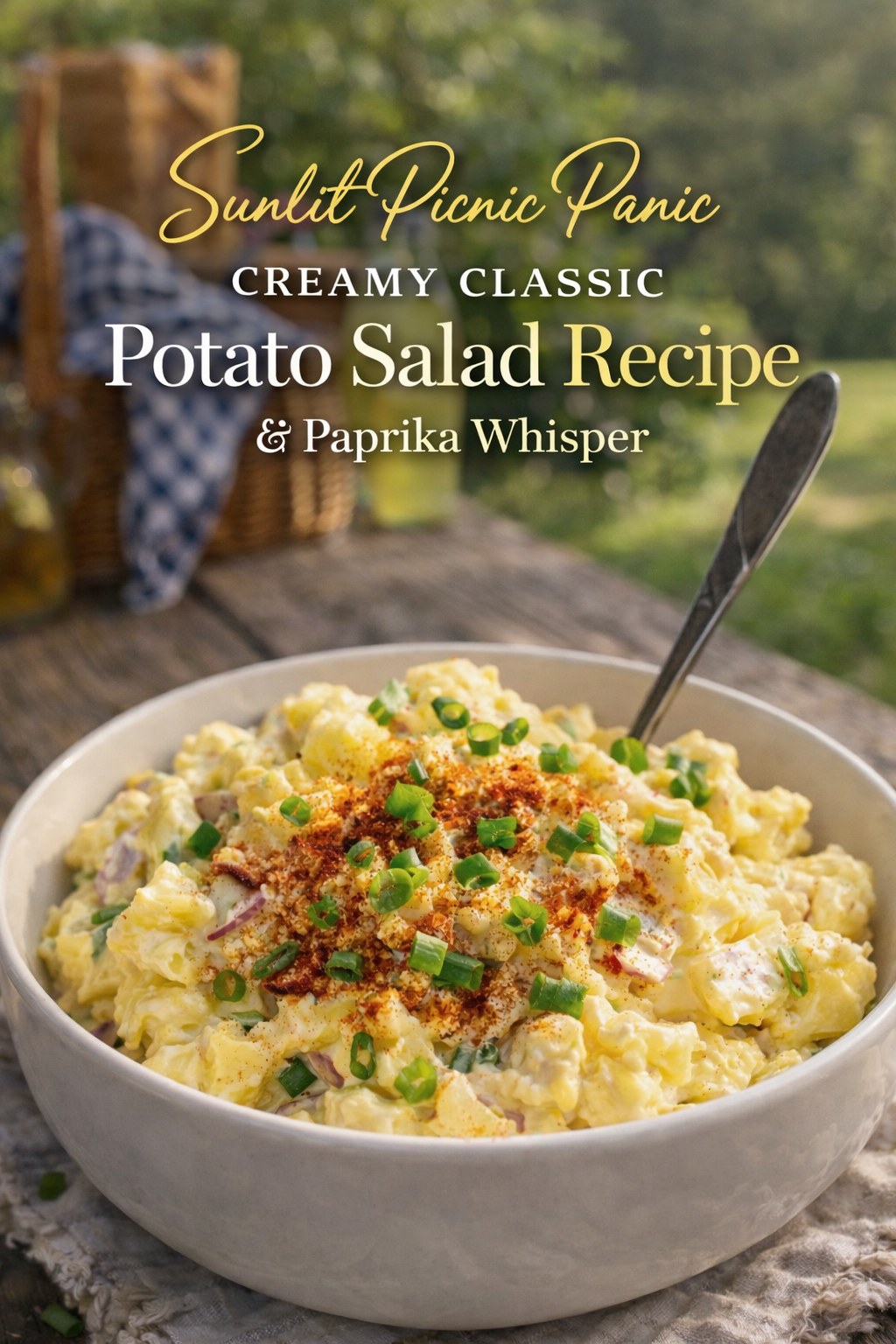
Sunlit Picnic Panic: Creamy Classic Potato Salad Recipe With a Paprika Whisper
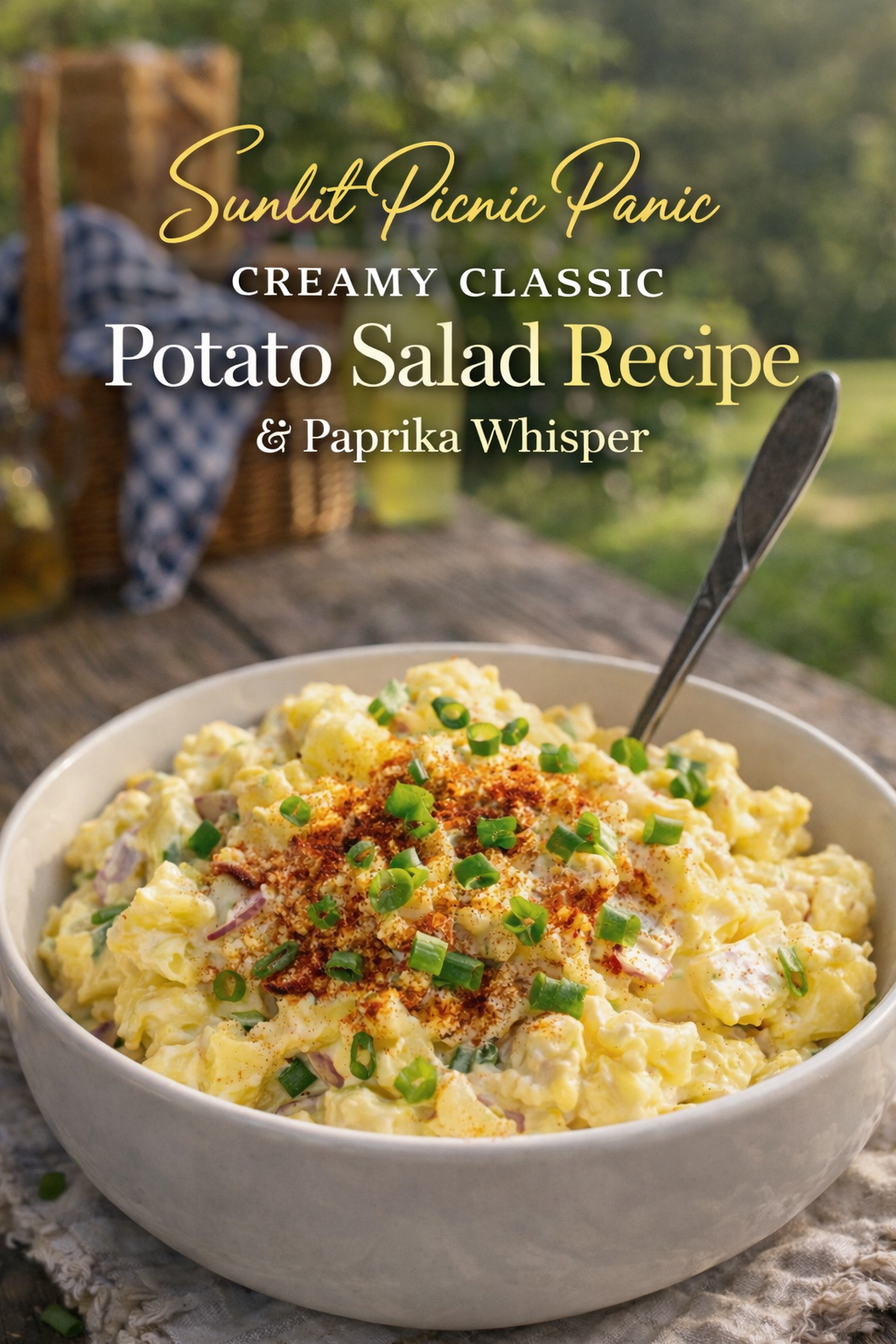
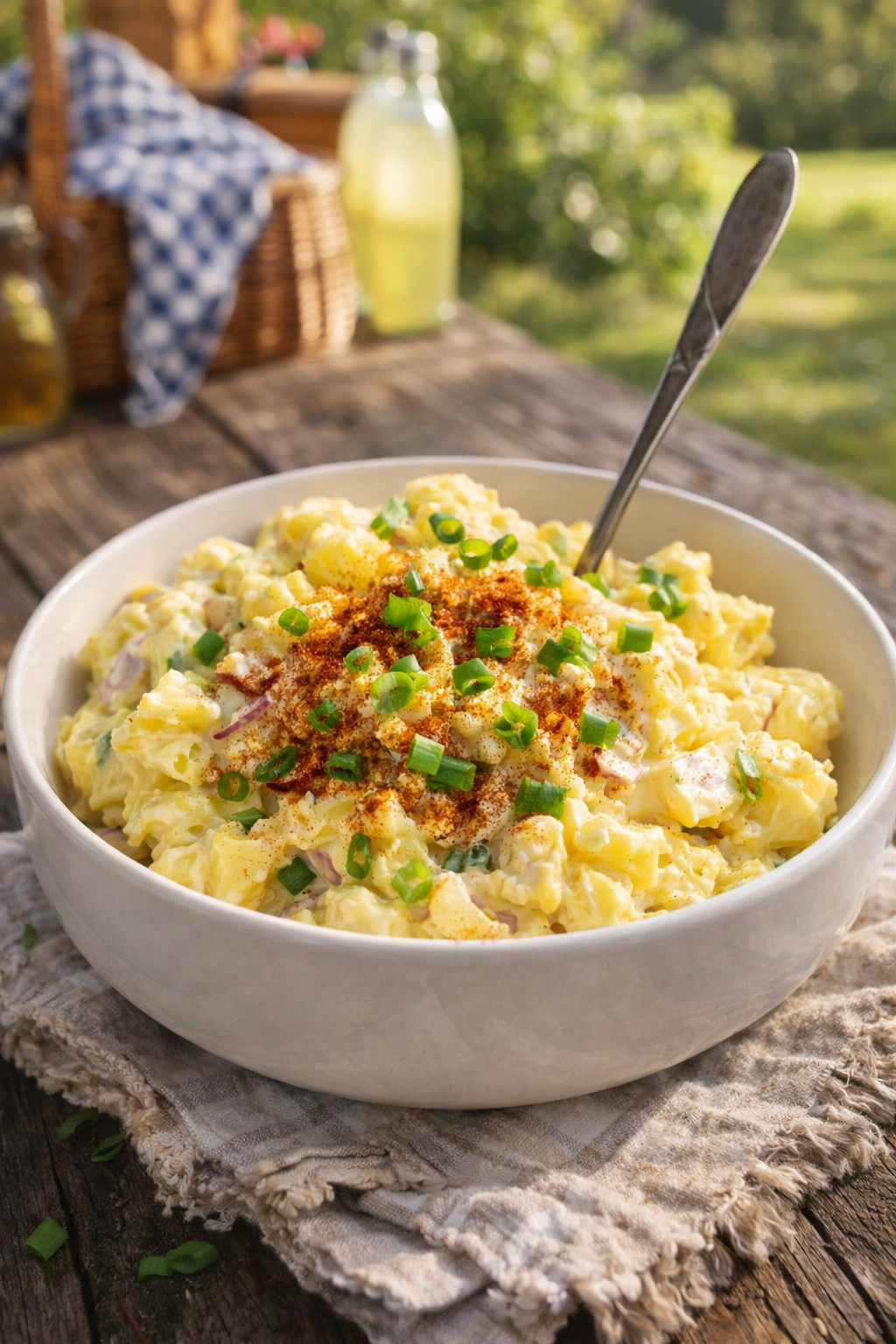
The bowl sits in the foreground like a soft dare—creamy, pale gold, and impossibly plush, with potato pieces that look tender enough to yield to the back of a spoon. A ribbon of sunshine falls across the rim, catching the glossy peaks of dressing and the tiny green confetti scattered on top. Chopped scallions brighten the surface like fresh-cut grass after rain, and a smoky dusting of paprika settles into the folds, hinting at depth beneath all that cool comfort. It’s the kind of scene that makes everything else go quiet for a second, because it feels familiar in the way the best summer memories do: simple, warm, and oddly cinematic.
Behind it, the day blurs into that hazy, late-afternoon softness—woven basket, checked cloth, a bottle of something pale and cold sweating gently in the light. The table itself looks weathered in the most honest way, grainy and sun-worn, as if it has held a thousand plates and heard a thousand easy conversations. This is food that belongs outdoors, even when you’re eating it inside. It carries the mood of porch steps, paper plates, and laughter that keeps going after the music stops.
Potato salad has a particular kind of power. It’s not flashy. It doesn’t need to be. It’s a quiet anchor—steady, dependable, and always somehow better than you remembered. The moment it hits the table, people relax. Someone reaches for it before they even realize they’re doing it. And the best versions aren’t about drowning potatoes in mayo; they’re about balance: the gentle tang, the soft crunch of onion, the way mustard perks up the richness, the way seasoning wakes everything up without shouting.
The beauty is in the texture. A good potato salad holds its shape but still feels lush—chunks that stay intact, edges that catch dressing, and a creaminess that looks almost whipped. That’s why the potatoes matter more than people admit: waxy varieties keep their structure, while starchy ones drink in flavor and turn the bowl into something closer to a spread. The sweet spot lives in the middle—tender, not mushy; seasoned all the way through, not just on the surface.
Even the supporting cast plays a role. A sharp, classic yellow mustard gives the dressing backbone, while a little vinegar brightens the whole thing like turning a lamp on in a dim room. For that gentle bite, thin slices of onion matter, and if you want the cleanest, freshest finish, kitchen shears for snipping scallions make it feel effortless—quick, neat, and exactly the size you want.
There’s something ceremonial about making it, too—the steam rising off drained potatoes, the first sprinkle of salt while they’re still warm, the way the dressing loosens as it meets heat and then settles into a velvety coat once chilled. The bowl you choose even changes the mood. A wide, simple serving bowl makes it feel picnic-ready, while something crisp and white turns it into a centerpiece. If you’re the kind of person who likes a “one perfect bowl” moment, a large white serving bowl for gatherings is one of those small upgrades that pays off every time.
And then there’s the finishing touch: paprika. Not just for color—though it does make the whole thing look like it belongs in a magazine—but for that faint smoky warmth that pulls the creamy elements together. A smoked paprika with deep color turns the top into a soft, rusty halo that feels both nostalgic and slightly elevated, like you’ve done something special without making a fuss.
This is the dish that gets scooped onto plates beside grilled food and devoured beside cold drinks. It’s the one that disappears even when there are ten other sides. It travels well, forgives timing, and tastes even better after it’s had a little time to become itself. Chilling isn’t a chore here—it’s part of the charm, the moment when flavors knit together and the dressing thickens into that signature, spoon-clinging silk.
It also welcomes personality. Some people want more tang, some want more sweetness, some want more crunch. Some want eggs, some don’t. Some want a whisper of heat. That’s the point: the “classic” version isn’t a rigid rule—it’s a starting line. The bowl in the sunlight proves it: creamy, generous, bright with green, kissed with paprika, ready for that first bite that tastes like summer showing up right on time.
If you like your prep to feel calm instead of chaotic, having the basics on hand helps: a sharp chef’s knife for clean potato cubes, a big mixing bowl for folding without smashing, and a fine-mesh strainer for fast draining. Then all that’s left is the good part—stirring, tasting, adjusting, and watching the bowl become the kind of side dish people remember.
Creamy Classic Potato Salad Recipe (Paprika + Scallion Finish)
This version is rich, tangy, and bright, with tender potato chunks, a smooth dressing, and a smoky paprika finish.
Ingredients
- 2 1/2 lb Yukon Gold potatoes (or red potatoes), cut into 1-inch chunks
- 1 tbsp kosher salt (for boiling water), plus more to taste
- 3/4 cup mayonnaise
- 2 tbsp yellow mustard
- 1 tbsp apple cider vinegar (or white vinegar)
- 1 tsp sugar (optional, for a subtle sweetness)
- 1/2 tsp black pepper
- 1/2 cup finely diced celery (optional, for crunch)
- 1/3 cup finely diced red onion (or 3 scallions, sliced)
- 3 hard-boiled eggs, chopped (optional but classic)
- Paprika or smoked paprika, for topping
- 2–3 tbsp sliced scallions or chives, for topping
Method / Instructions
- Boil potatoes: Add potatoes to a pot, cover with cold water by 1 inch, and salt generously. Bring to a boil, then simmer 10–12 minutes until fork-tender (not falling apart).
- Drain + cool: Drain well and let steam-dry 5 minutes. Cool to warm (not hot).
- Make dressing: In a bowl, whisk mayo, mustard, vinegar, sugar (if using), pepper, and a pinch of salt.
- Fold together: Gently fold potatoes with celery, onion/scallions, and eggs (if using). Add dressing and fold until coated.
- Chill: Cover and refrigerate at least 1 hour (best 4–12 hours). Adjust salt/pepper before serving.
- Finish: Sprinkle paprika and scatter scallions/chives over the top.
Optional tools/ingredients: potato masher for a slightly creamier texture, hard-boiled egg slicer
Start with the right potato texture, because everything else depends on it. Yukon Golds are the sweet spot for this style: creamy inside, thin-skinned, and sturdy enough to hold their shape. Reds work too if you want a firmer bite. Cut the potatoes into even chunks—about an inch—so they cook at the same speed. A large cutting board with plenty of prep space keeps the process tidy and helps you stay consistent.
Always start the potatoes in cold water. Dropping them into boiling water cooks the outside too fast and leaves the centers lagging behind. Cold water gives you a more even climb to tenderness. Salt the water boldly—this is your first chance to season the potatoes from the inside. Bring to a boil, then reduce to a steady simmer. If the pot is raging, the potatoes slam into each other and break, which can turn your salad gluey. A heavy-bottom stock pot helps maintain a calmer simmer.
Cook just until fork-tender. The fork should slide in with light resistance, not crumble the piece. Overcooked potatoes absorb dressing and collapse, which can make the salad dense and pasty. Undercooked potatoes stay chalky and won’t take on flavor. When you drain, let them steam-dry for a few minutes—this matters. Excess surface water thins the dressing and dulls the flavor.
Now decide your temperature target: warm potatoes accept dressing better than cold ones. Not hot (which can make mayo look oily), but pleasantly warm to the touch. This is where the “creamy without being heavy” magic happens: warm potatoes lightly drink in the tang and seasoning, so the flavor isn’t just on the outside.
Build your dressing in a separate bowl so you can control it. Mayo provides body and richness, mustard adds punch, and vinegar brings lift. Taste the dressing before it touches the potatoes; it should be slightly bolder than you think you want, because potatoes mute seasoning. If you like a cleaner tang, use white vinegar; for a rounder, fruitier note, use cider vinegar. Whisking matters here—fully emulsified dressing coats more evenly. A balloon whisk that aerates quickly makes the dressing silky and uniform.
Fold, don’t stir aggressively. Potatoes are delicate when warm, and heavy mixing turns the edges into mashed potato paste. That paste isn’t always bad—some people love a slightly creamy “mash halo”—but you want it controlled. Use a wide spoon or spatula and lift from the bottom, turning gently. A flexible silicone spatula gives you that soft, careful fold without smashing.
Crunch and bite are your balance points. Celery adds snap, red onion adds edge, scallions add freshness. If raw onion feels too sharp, soak chopped onion in cold water for 10 minutes, then drain well. That trick keeps the flavor but softens the burn. If you’re adding eggs, chop them after they’re fully cooled so they don’t smear into the dressing. A simple egg timer tool can help you nail consistent hard-boiled eggs if you make this often.
Chilling is not optional if you want the flavor to feel “complete.” As it rests, the dressing thickens, the potatoes absorb tang, and the onions mellow. One hour is the minimum; four hours is where it starts to shine; overnight is where it becomes the bowl people hover over. Keep it covered so it doesn’t pick up refrigerator smells, and use a set of airtight food storage containers if you’re prepping ahead for a gathering.
Before serving, always re-taste. Cold dulls seasoning, so you’ll often need a final pinch of salt, an extra crack of pepper, or a tiny splash of vinegar to wake it back up. If it feels too thick after chilling, loosen with a spoonful of mayo, a teaspoon of vinegar, or even a tablespoon of pickle brine if you like that savory tang. If it feels too loose, chill longer—time is the best thickener here.
Now for the finish that makes the bowl look like the photo: paprika and fresh green. Sprinkle paprika from higher up so it falls evenly instead of clumping. Smoked paprika brings warmth and a subtle campfire note; sweet paprika keeps it classic and mild. If you want that vivid, appetizing top layer, keep a fresh, bright paprika spice on hand and store it away from heat and light so it stays aromatic. Scatter scallions or chives last so they stay crisp and bright.
Variations that keep the soul intact:
- Tangier: add 1–2 extra teaspoons vinegar, or a spoon of pickle relish.
- Sweeter (Southern-leaning): add the sugar and a touch more mustard.
- Extra crunch: double the celery and add diced dill pickles.
- Herb-lifted: add chopped dill or parsley for a greener finish.
- No eggs: swap eggs for extra celery and scallions for structure.
Troubleshooting is simple once you know what to look for:
- Too mushy: potatoes overcooked or mixed too hard. Next time, shorten cook time and fold gently.
- Too bland: under-salted boiling water or not enough acidity. Add salt and a splash of vinegar, then chill 30 minutes.
- Too sharp: onion too aggressive. Rinse/soak onion next time; for now, add a spoon of mayo and let it rest.
- Too wet: potatoes weren’t steam-dried or salad warmed too long. Chill longer uncovered for 15 minutes, then cover.
Serve it cold or cool—not icy. Let it sit 10 minutes on the counter before plating so the flavor opens up and the texture turns lush again. When it’s done right, it’s exactly what that sunlit bowl promises: creamy, bright, gently smoky on top, and somehow impossible to stop eating.