
The Garden-Window Whisper: Creamy Chive Potato Salad Recipe That Tastes Like a Secret

Morning light makes everything feel softer—especially the kind that spills in sideways through a kitchen window and turns a simple bowl of food into something almost cinematic. That’s the mood here: a sturdy, speckled stoneware bowl cradling generous chunks of potato, each one lacquered in a pale, velvety dressing that clings like it was meant to. Fresh chives scatter across the top like confetti with a purpose, and a snowfall of cracked black pepper adds that quiet, grown-up edge—an aromatic promise that what looks comforting will also taste sharp, bright, and alive.
The scene feels like the calm before company arrives. The counter is cool and pale, the linen nearby looks slightly rumpled in the best way, and a sprig of rosemary rests like a little green bookmark in the moment. In the background, pots of herbs blur into a soft green haze—an unspoken hint that flavor is close at hand, that this isn’t the kind of potato salad that settles for bland. This is the version that tastes like someone cared: not fussy, not showy, just intentionally delicious.
Potato salad is usually filed away as familiar—cookout food, picnic food, the “someone always brings it” dish. But there’s a reason it keeps coming back. When it’s done right, it’s a perfect balance of heft and freshness, creaminess and bite. The potatoes carry warmth even when chilled, and the dressing—tangy, peppery, lightly herbal—doesn’t just coat; it transforms. Every forkful becomes a small study in texture: tender potato edges, a slick of sauce, a crisp spark from chives, and that peppery finish that makes you immediately want another bite.
The beauty of this style is how adaptable it is without losing its identity. You can keep it classic and clean, or push it into something more garden-forward with dill, parsley, or tarragon. You can sharpen it with a little mustard, mellow it with sour cream, or brighten it with lemon. The bowl in front of the window doesn’t look like it’s trying to impress, yet it absolutely does—because it’s composed, generous, and real.
A few small choices make all the difference. The potato variety matters. The way they’re cooked matters. The moment you dress them matters—when they’re warm enough to drink in flavor but not so hot they melt everything into a gluey haze. Even the tools shape the outcome, from a wide pot that keeps potatoes cooking evenly to a sharp chef’s knife for clean, non-smashed chunks. And then there’s the finishing touch—fresh herbs snipped right at the last second with kitchen shears made for delicate greens, so the top tastes as vibrant as it looks.
What’s most irresistible is the contrast between the cozy and the bright. Creamy doesn’t have to mean heavy. In fact, the best creamy potato salad tastes lively—lifted by acidity and herbs, grounded by salt, finished with pepper that blooms in the nose. The kind you keep “checking” with a spoon while the rest of the meal comes together. The kind that disappears quietly, even with a table full of louder dishes.
Serve it cold for that classic picnic snap, or slightly cool for a more luxurious texture. Pile it into a bowl that feels handmade, something like a rustic stoneware serving bowl that makes simple food look elevated. Bring it to the table with a little extra chive shower and a final twist from a pepper mill that cracks instead of dusts. And if you want the whole thing to feel as effortless as that window-light scene, keep it on a soft linen and let the greens in the background do the rest.
Some recipes are loud. This one is confident in a quieter way—cool, creamy, herb-flecked comfort with enough edge to feel modern. The kind of potato salad that tastes like a sunny kitchen, a calm counter, and a small, delicious secret you’re about to share.
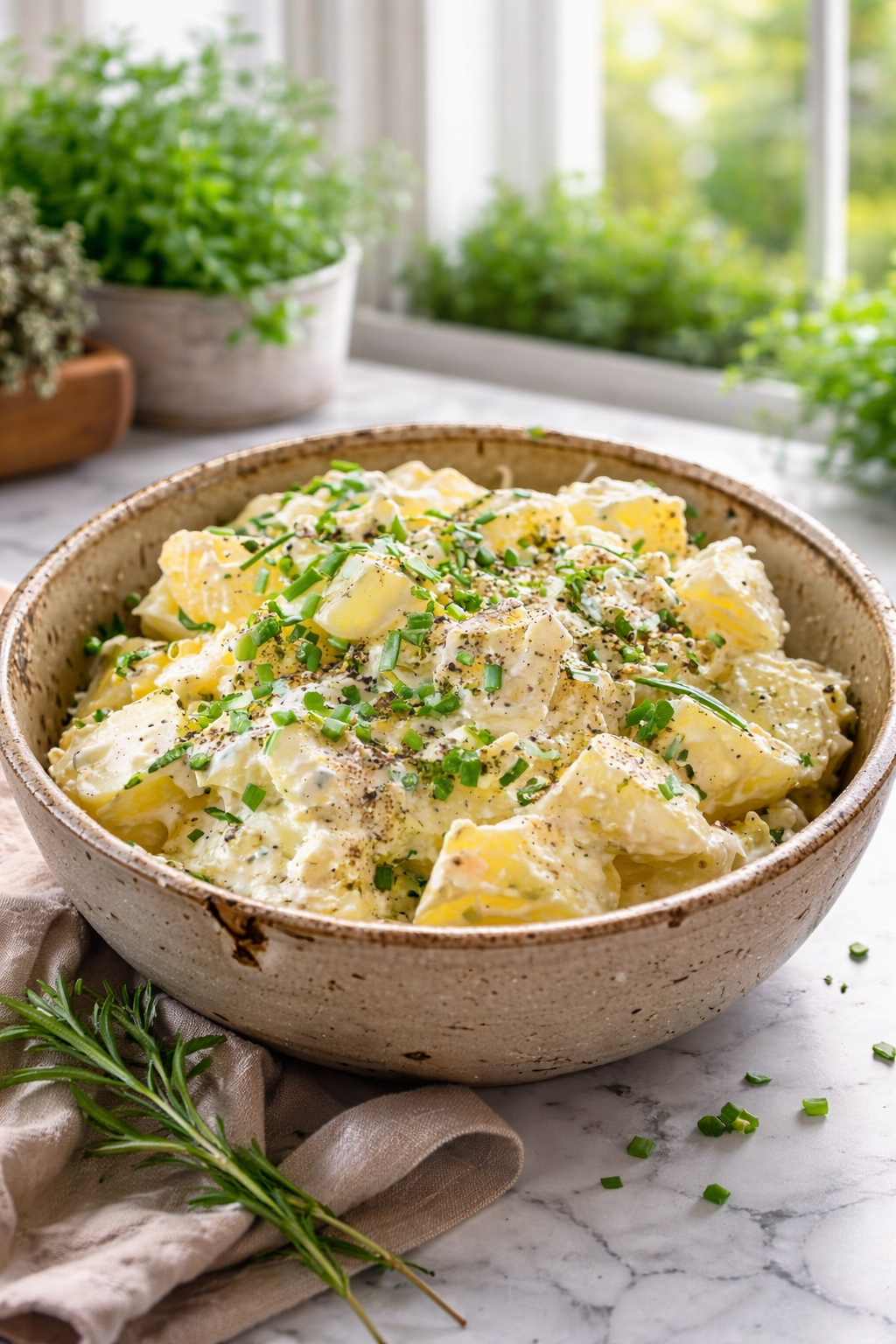
A Clean & Creamy Chive Potato Salad
This potato salad leans classic: tender potatoes, a tangy creamy dressing, plenty of chives, and bold black pepper.
Ingredients
- 2 1/2 lb Yukon Gold potatoes (or red potatoes), cut into 1 1/2-inch chunks
- 1 1/2 tsp kosher salt, plus more for the water
- 1 cup mayonnaise
- 1/3 cup sour cream (or Greek yogurt)
- 1 1/2 tbsp Dijon mustard
- 1 1/2 tbsp apple cider vinegar (or pickle brine)
- 1 tsp sugar (optional, balances acidity)
- 1/2 tsp garlic powder
- 1/2 tsp onion powder
- 1/3 to 1/2 cup chopped fresh chives, plus extra for topping
- Freshly cracked black pepper, to taste
Optional add-ins:
- 2 chopped celery stalks
- 2–3 chopped dill pickles
- 2–3 hard-boiled eggs, chopped
- 2 tbsp chopped fresh dill or parsley
Method / Instructions
- Cook the potatoes: Place potatoes in a pot, cover with cold water by 1 inch, and salt the water generously. Bring to a simmer and cook 10–14 minutes, until fork-tender but not falling apart. Drain well.
- Make the dressing: In a bowl, whisk mayo, sour cream, Dijon, vinegar, sugar (if using), garlic powder, onion powder, and a few cracks of black pepper.
- Dress while warm: Let potatoes cool 10 minutes, then gently fold with dressing so the surfaces absorb flavor without turning mushy.
- Add chives: Fold in chopped chives (and any optional add-ins). Taste and adjust salt, vinegar, and pepper.
- Chill: Cover and refrigerate at least 1 hour (best 3–6 hours). Finish with extra chives and black pepper before serving.
Helpful tools (optional):
In-Depth Step-by-Step Guide: How to Make It Silky, Bright, and Never Watery
Step 1: Choose the right potato (it decides the texture)
For the creamy-but-defined look in the bowl, Yukon Golds are the sweet spot. They turn tender and buttery, but they’re less likely to crumble into paste. Red potatoes also work well if you prefer firmer chunks. Russets can be used, but they break down faster—great if you want a more “smashed” style, risky if you want clean edges.
Keep pieces evenly sized—about 1 1/2 inches—so everything finishes at the same time. Clean cuts matter more than people think; you get less ragged starch on the surface, which helps the dressing stay glossy instead of gummy. A steady board and a sharp chef’s knife that glides through potatoes without tearing makes this part effortless.
Step 2: Start in cold water (for consistent doneness)
Put the potatoes in the pot first, then cover with cold water. Starting cold means the centers heat up at the same pace as the outside. If you drop potatoes into boiling water, the outside can overcook while the inside stays firm—then you keep cooking, and suddenly the edges disintegrate.
Salt the water generously. This is your first chance to season the potatoes themselves, not just the dressing. Use a pot roomy enough that the chunks aren’t crowded; a cramped pot encourages breakage as they bump around. A dependable option is a large stock pot for even simmering without boil-overs.
Step 3: Simmer, don’t aggressively boil
Aim for a gentle simmer. A rolling boil smashes potato edges and releases too much starch into the water. Simmering keeps them intact and creamy, not waterlogged and ragged.
Test at the 10-minute mark. You want fork-tender with a little structure. If you can slide a fork in easily and the potato still holds its shape when lifted, you’re there. Overcooked potatoes don’t just get soft—they shed their surfaces, and the final salad can turn heavy and pasty.
Step 4: Drain thoroughly (watery potato salad is almost always this step)
Drain in a colander and let steam escape for a minute or two. Excess water clings to the potatoes and dilutes the dressing later, especially after chilling. A quick, confident drain in a stainless colander that doesn’t trap pieces helps a lot.
If you want an extra insurance policy against watery texture, spread the drained potatoes on a tray for 5 minutes. That short steam-dry window keeps the dressing thick and clingy.
Step 5: Build a dressing that tastes bright, not flat
Creamy potato salad lives or dies on balance. Fat needs acid. Salt needs a little sweetness. Herbs need a supporting base. The dressing here uses mayo for body and sour cream (or Greek yogurt) for tang and softness. Dijon adds sharpness that feels modern, and vinegar (or pickle brine) brings the lift that makes you keep taking bites.
Whisk until smooth. A smooth dressing coats evenly and looks like the bowl in the image—glossy, thick, and intentional. Use a bowl that gives you room to whisk without splashing; a large mixing bowl makes this feel clean and fast.
Taste the dressing before it hits the potatoes. It should taste slightly too punchy on its own—potatoes mellow everything. If it tastes perfect in the bowl, it may taste muted once it’s folded in and chilled.
Step 6: Dress the potatoes while they’re warm (the secret to flavor that goes deeper)
This is the move that separates “fine” potato salad from the kind people remember. Warm potatoes absorb seasoning. Not steaming-hot—just warm. Give them about 10 minutes after draining, then fold with the dressing.
Use a gentle folding motion. You’re coating, not mashing. A flexible tool helps prevent breakage; a silicone spatula designed for folding is ideal.
If the potatoes seem like they’re soaking up too much dressing too fast, pause and let them sit for 3 minutes, then fold again. That rest lets the surface starch hydrate and smooth out, giving you that creamy, unified look.
Step 7: Add chives at the right moment
Chives are delicate and bright. Fold most of them in once the salad is mostly coated, then save a handful for the top. That second layer is what makes the finished bowl look fresh—like it was just made, even after chilling.
Snipping herbs keeps them crisp and clean; kitchen shears for herbs make it easy to cut directly over the bowl and distribute evenly.
Step 8: Pepper is the finish that makes it feel grown-up
Freshly cracked black pepper blooms on the surface and perfumes every bite. Add a little into the dressing, then finish the top generously. The contrast—cool creamy potato against pepper’s warm bite—is part of the allure.
A grinder matters more than it should; a pepper mill that produces a coarse crack gives you flavor and texture, not dust.
Step 9: Chill for structure and clarity of flavor
Potato salad improves as it rests. The dressing tightens, the seasoning distributes, and the herbs settle into the creamy base. Chill at least an hour, but 3–6 hours is the sweet spot.
Before serving, taste again. Cold food needs more seasoning than warm food. Add a pinch of salt, another splash of vinegar, or an extra spoon of sour cream to refresh the texture.
Variations that still feel luxe and classic
- Dill-Pickle Bright: Add chopped dill pickles and use pickle brine instead of vinegar. Finish with fresh dill.
- Eggy Deli Style: Fold in chopped hard-boiled eggs and a touch more Dijon for that classic counter-style richness.
- Celery Crunch: Add finely diced celery for snap that contrasts the soft potatoes.
- Lemon-Herb Garden: Swap vinegar for lemon juice and add parsley + tarragon for a greener, more aromatic finish.
- Lightened Creamy: Replace half the mayo with Greek yogurt and add a touch more salt and pepper to keep it bold.
Troubleshooting (so it always looks like the bowl by the window)
- Too watery: Potatoes weren’t drained/steam-dried enough, or they were rinsed (skip rinsing). Add a spoon of mayo and chill longer.
- Too thick/pasty: Potatoes were overcooked or stirred too aggressively. Loosen with a tablespoon of vinegar or a little sour cream, then fold gently.
- Bland: The water wasn’t salted enough and the dressing needs more acid. Add salt, pepper, and a small splash of vinegar or pickle brine.
- Herbs taste dull: Add fresh chives right before serving for a bright top-note.
Serving notes that make it feel like a moment
Serve in a bowl that holds temperature and looks tactile—stoneware is perfect. A piece like a rustic stoneware serving bowl makes the creamy texture and green chives feel even more inviting. Finish with a final crack of pepper, a last sprinkle of chives, and let it sit on the counter for 10 minutes before serving so the flavor opens up.
The result is creamy, clean, herb-forward comfort—potato salad that tastes bright and intentional, with that soft-window-light elegance built right in.