The Tea-Ceremony Moment: Matcha Lemon Cheesecake Recipe That Swirls Like Sunshine
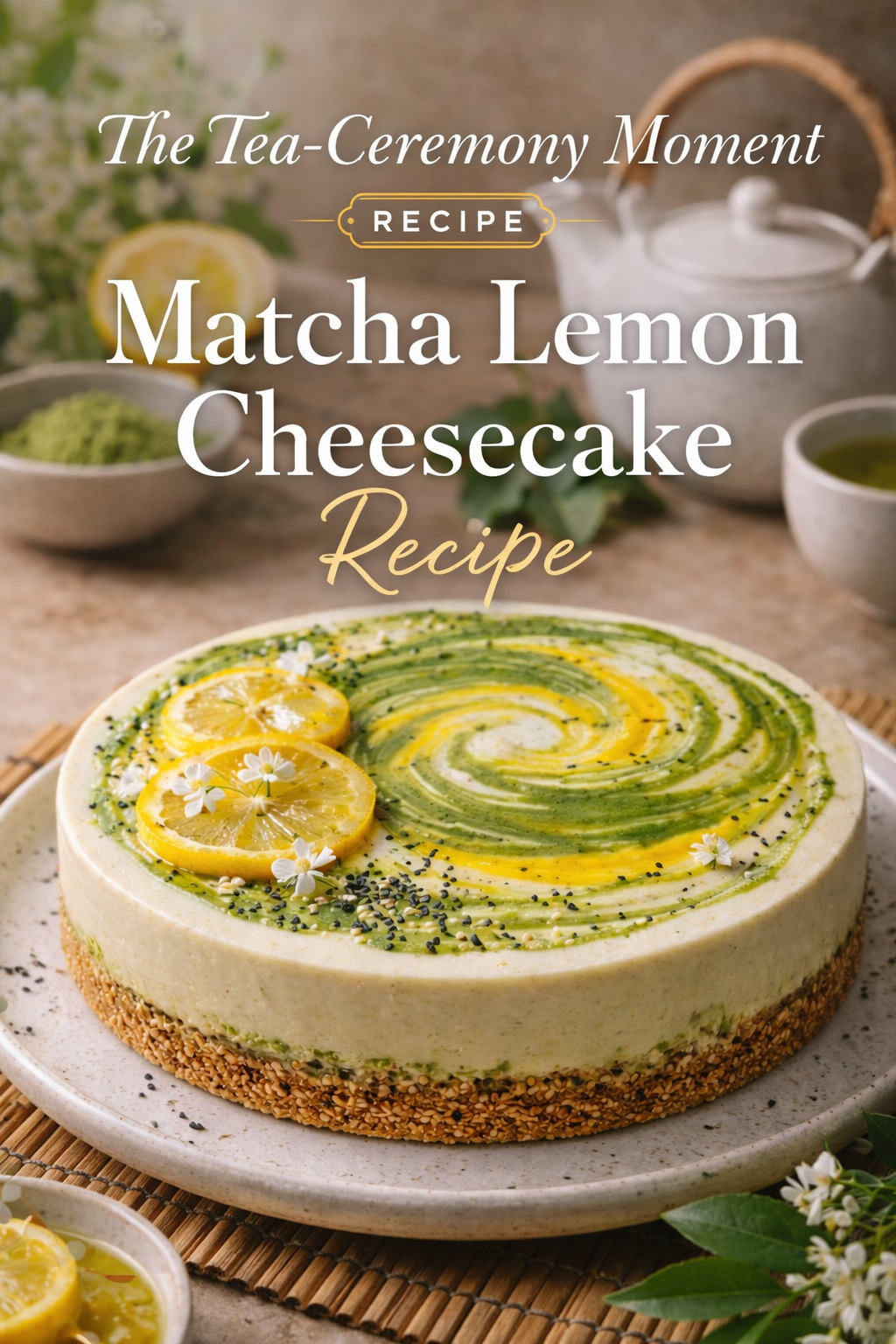
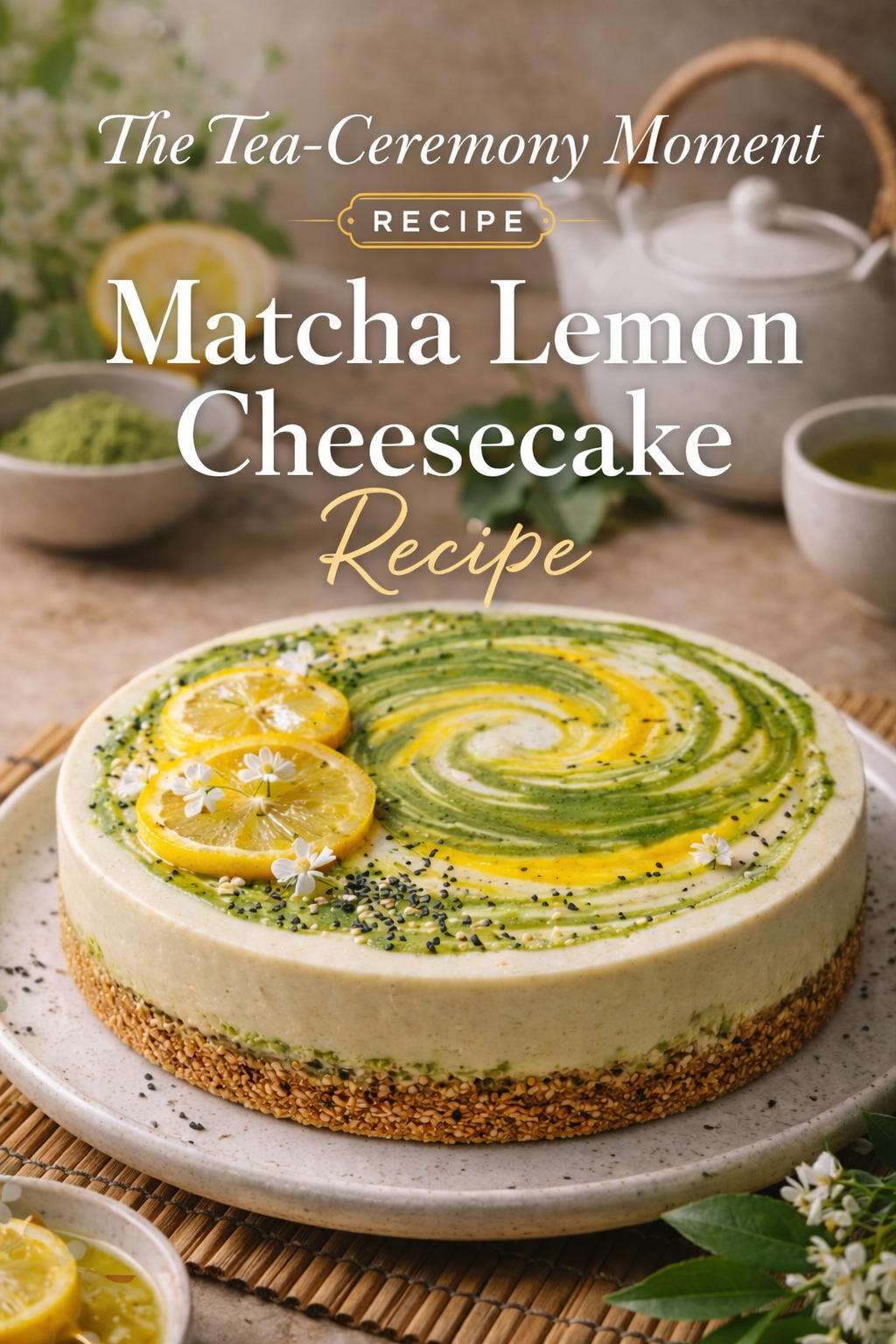
The room feels quieter the second the cake arrives—like someone lowered the volume on the day. A low, wide plate glides onto the table and suddenly everything else becomes background: the pale, velvety surface, the clean edge of the sliceable circle, the soft glow of citrus and green spiraling together in one hypnotic turn. It’s the kind of dessert that doesn’t shout. It just holds your attention, calmly, the way steam curls off a cup when you finally have time to notice it.
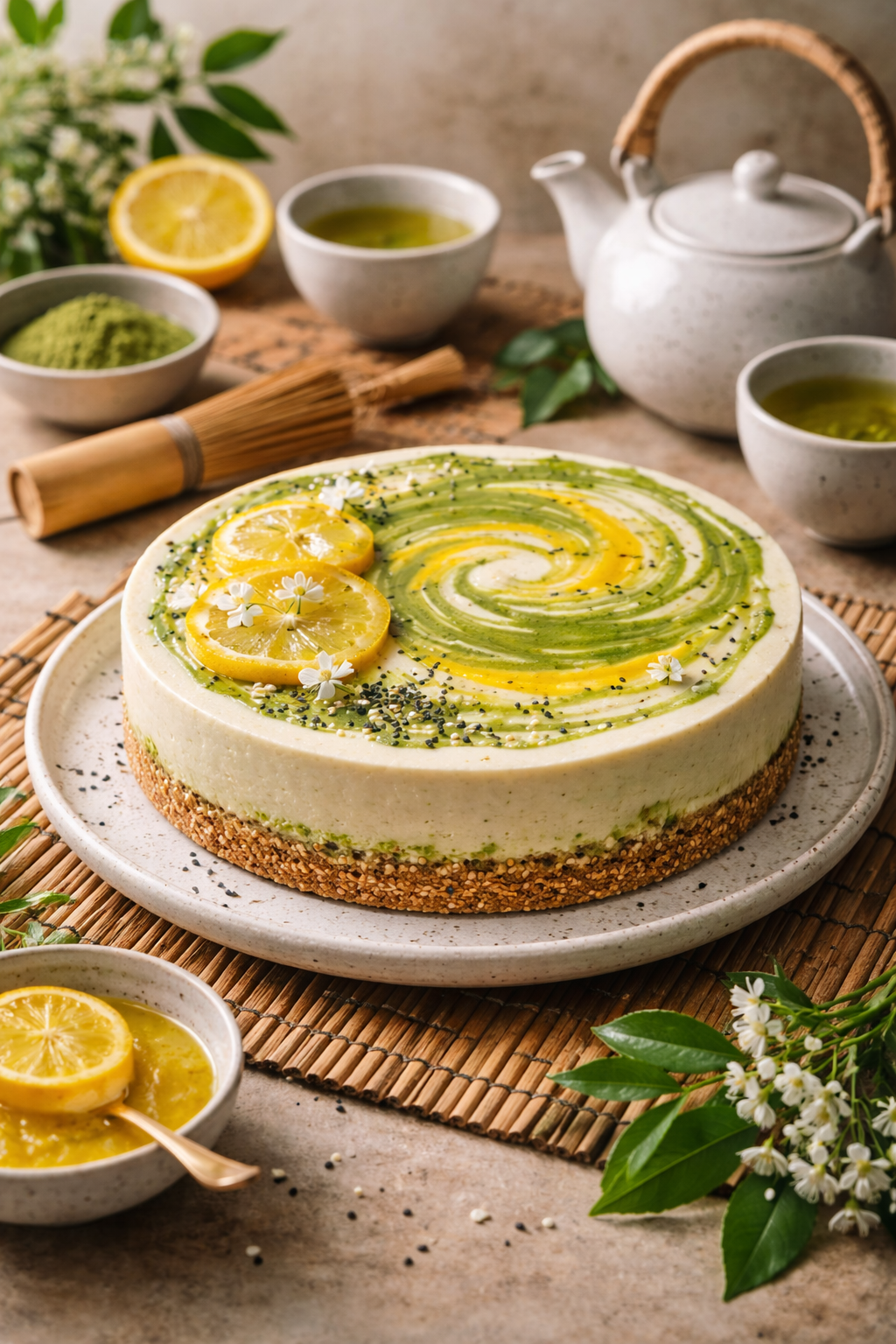
The swirl reads like brushstrokes—matcha swept in a wide arc, lemon threaded through it in a ribbon of gold. Not the artificial neon of candy, but the real color of freshly zested peel and sunlit juice. A few black sesame seeds scatter across the top like punctuation, and thin lemon wheels rest at the edge as if the cake needed a signature. The whole thing feels styled without trying: a bamboo whisk laid down like a tool between rituals, a teapot with a wrapped handle waiting in the wings, small bowls holding green powder and bright liquid like paint on a palette.
There’s a particular romance to matcha when it’s paired with something sharp and clean. Matcha alone can be deep, almost grassy, with a soft bitterness that lingers. Lemon alone can be all sparkle—bright, assertive, bracing. Together, they become balanced in a way that feels expensive: creamy, fresh, and crisp at the edges, like silk with structure. The first bite is a temperature change more than anything—cool and smooth, then a snap of citrus, then the slow, calming finish of tea. It tastes like an afternoon that doesn’t demand anything from you.
The base hints at something toasty and grounded. It’s not just sweetness; it’s texture—fine crumbs pressed into a golden layer, speckled with sesame, giving a gentle crunch before the filling turns into that clean, dense creaminess that cheesecake lovers chase. Getting that contrast right is half the magic, and the other half is the patience to let it set until the knife moves through it like it’s cutting into chilled butter.
This is the kind of dessert that rewards small, thoughtful choices. A bright, fragrant zest only happens when you use something like a razor-sharp microplane for citrus instead of a chunky grater that bruises the peel. Matcha only tastes lush—not dusty—when it’s whisked smooth, and a traditional bamboo matcha whisk makes that part feel like a ceremony instead of a chore. And that clean, bakery-perfect edge? That’s the confidence that comes from using a reliable springform pan lined neatly and unmolded like a promise kept.
Even the mood matters. You can feel it in the styling: the warm neutral surface under the plate, the little bowls of tea, the hint of blossoms at the corner like a floral note in perfume. This cake belongs to soft light. It’s meant for a table where cups are poured slowly and seconds aren’t rushed. It’s what you bring out when you want a dessert to feel like an event, even if the only guests are you and the afternoon.
And it’s surprisingly attainable—especially when you set yourself up with the right tools. A smooth crust comes together effortlessly in a sturdy food processor, but it’s just as doable with a rolling pin and determination. A filling that’s airy yet stable is easier when you whip cream with a hand mixer that doesn’t fight back, and even the finishing swirl becomes a calm, controlled moment when you spread it with an offset spatula made for clean layers. These little assists don’t change the soul of the cake—they just make the process feel as smooth as the final slice.
The best part is how the flavors evolve as it chills. Lemon settles into the cream and becomes more perfumed than sour. Matcha deepens and turns velvet-dark, its bitterness softening into something nutty and calm. The sesame in the crust becomes toastier overnight, and the entire cake tastes more intentional the next day—like it knew what it wanted to be all along.
When it’s time to serve, the knife matters. A thin blade warmed under hot water makes those perfect, clean cuts that show off the swirl like a small piece of edible art. Plates feel optional, but they elevate the moment. Tea is the obvious pairing, but sparkling water with lemon is quietly perfect too, especially if you want the citrus to pop.
This cheesecake doesn’t feel like a typical dessert course. It feels like a pause. A reset. A small luxury that sits calmly in the center of the table and makes everything else slow down around it—green and gold, creamy and bright, crisp at the base and cloud-smooth on top. One slice, and the day suddenly has a softer edge.
Matcha Lemon Cheesecake (No-Bake)
Ingredients
Crust
- 2 cups graham cracker crumbs (about 14–16 sheets)
- 2 tbsp black sesame seeds (optional but recommended)
- 6 tbsp unsalted butter, melted
- 2 tbsp granulated sugar
- Pinch of fine salt
Filling
- 24 oz cream cheese, softened
- 1/2 cup granulated sugar
- 1 tbsp lemon zest
- 1/3 cup fresh lemon juice
- 1 tsp vanilla extract
- 2–3 tbsp culinary matcha powder, sifted (to taste/strength)
- 1/4 cup hot water (not boiling)
- 1 1/4 cups heavy cream, cold
Set + Finish
- 2 1/4 tsp unflavored gelatin (1 packet) + 3 tbsp cold water (or use 1 1/2 tsp agar powder for a vegetarian option; see instructions)
- 2–4 tbsp lemon curd (optional, for the yellow swirl)
- Extra sesame seeds and thin lemon slices for garnish
Method / Instructions
Prep the pan
Line the bottom of a 9-inch springform pan with parchment. Lightly grease the sides.Make the crust
Mix crumbs, sesame, sugar, and salt. Stir in melted butter until it looks like damp sand. Press firmly into the bottom (and slightly up the sides if desired). Chill 15 minutes.Bloom the gelatin
Sprinkle gelatin over cold water and let stand 5 minutes. Warm gently until fully dissolved (microwave in short bursts or on the stove). Cool to lukewarm.Mix the matcha
Whisk sifted matcha with hot water until perfectly smooth.Build the filling
Beat cream cheese and sugar until smooth. Beat in lemon zest, lemon juice, and vanilla. Blend in the dissolved gelatin (lukewarm) while mixing, then mix in the matcha until evenly colored.Whip and fold
Whip cold heavy cream to medium peaks. Fold into the matcha-lemon cream cheese mixture until airy and uniform.Fill and chill
Spread filling over the crust and smooth the top. Chill at least 6 hours (overnight is best).Swirl + garnish
Dollop lemon curd on top and drag it gently with a skewer or spoon to create a yellow ribbon effect. Sprinkle sesame seeds and add lemon slices. Slice with a warm, clean knife.
A no-bake cheesecake lives or dies on two things: texture and confidence. The goal is a slice that holds a sharp edge but melts instantly—dense enough to feel luxurious, light enough to feel refreshing. Matcha and lemon make that balance easier because they naturally pull in opposite directions: matcha gives depth and quiet bitterness; lemon brings brightness and lift. The technique is how you make them meet in the middle.
Start with the right pan setup
A clean release is part of the experience. Line the base of a springform with parchment so the crust doesn’t weld itself to the metal, then lightly grease the sides so the filling unmolds without tearing. If the sides of your cake tend to look a little rustic, a simple fix is adding a roll of parchment strips for lining around the interior wall. That one move gives you those smooth, bakery edges.Crust: pack it like you mean it
A no-bake crust needs pressure more than time. You’re basically building a compacted crumb “floor” that holds up a creamy structure. After you stir in the melted butter, squeeze a handful—if it holds together, you’re ready. Press it down firmly using the flat bottom of a glass or a measuring cup. If you want that extra-toasty, nutty note that pairs beautifully with matcha, black sesame is perfect—earthy, slightly smoky, and visually dramatic. If you’ve never baked with it much, black sesame seeds are one of those pantry upgrades that instantly makes desserts feel more intentional.
Troubleshooting:
- Crust crumbles when slicing: it wasn’t packed firmly enough, or the butter ratio was low. Add another tablespoon of melted butter next time and press harder.
- Crust feels greasy: too much butter or too fine of a crumb. Mix in a handful of additional crumbs to rebalance.
Matcha: sift, then whisk smooth
Matcha clumps. That’s not a personality flaw—it’s part of the powder’s fine grind. The fix is simple: sift it first, then whisk it with hot water (not boiling) until it’s glossy and lump-free. If you want the process to feel calm and controlled, a matcha bowl and whisk set makes it easier to get that smooth “paint” you’ll fold into the filling.
Matcha strength varies a lot by brand, so taste matters. Start at 2 tablespoons for a noticeable but approachable flavor, then push to 3 if you want that deeper café-style intensity. If your matcha tastes flat or dull, the quality is often the issue—look for culinary matcha powder that’s vibrant green and fresh-smelling rather than brownish and dusty.Lemon: zest first, juice second
Zest is perfume; juice is brightness. Always zest before juicing. The oils in the peel are where the “wow” lives, and they bloom beautifully in a creamy base. A dedicated zester helps you avoid the bitter white pith—again, the reason people swear by a fine microplane. For juice, squeeze fresh. Bottled juice can taste metallic or muted, and matcha will highlight that difference.The structure: gelatin (or agar) done gently
A no-bake cheesecake needs a set agent so it slices cleanly. Gelatin is forgiving if you treat it kindly. Sprinkle it over cold water and let it bloom fully—this prevents grainy bits. Then warm it just enough to dissolve. Boiling can weaken it, and pouring hot gelatin into a cold filling can create tiny strings. The sweet spot is lukewarm: dissolved, fluid, and not steaming.
If you prefer plant-based structure, agar works, but it behaves differently: it sets faster and firmer and must be simmered briefly to activate. That’s why agar is best dissolved in a small saucepan, then cooled slightly before mixing. For agar, keep your mixing ready and move quickly—once it starts setting, it won’t “wait.”
Troubleshooting:
- Filling doesn’t set: gelatin wasn’t fully dissolved, or the cheesecake didn’t chill long enough. Overnight is safest.
- Filling sets too firm: too much gelatin or agar. Scale back slightly next time.
- Make the base silky before adding air
Beat softened cream cheese and sugar until smooth. This is where patience pays off: you want absolutely no lumps before anything else goes in. If you’re fighting texture, the cream cheese was likely too cold. Give it time at room temp, then use steady mixing. A hand mixer makes this quick, but a stand mixer works too.
Now add lemon zest, juice, and vanilla. Then blend in the dissolved gelatin while the mixer is running, so it disperses instantly. Finally, mix in the matcha. At this stage, the mixture should be glossy and uniform—bright, pale green, and fragrant.
- Whip cream to the right peak, not the biggest peak
Whipped cream is your lift. You want medium peaks: it should hold shape but still look supple. If you whip to stiff peaks, the cream turns grainy and won’t fold smoothly, and the final cheesecake can feel slightly dry. If you’re unsure, stop when the whisk leaves soft ridges and the peak bends gently. Folding is easier with a wide, flexible spatula—something like a silicone spatula set makes the motion clean and controlled.
Fold in thirds: add a third of the whipped cream to loosen the base, then the rest gently. Use broad strokes, scrape the bottom, rotate the bowl. The goal is to keep air without leaving streaks.
Fill, level, and chill like it’s non-negotiable
Pour the filling onto the chilled crust. Smooth the top with an offset spatula for that clean, editorial finish—an offset spatula makes it feel effortless. Then chill. Not “until it looks set.” Chill until it’s truly sliceable. Six hours is the minimum; overnight is the upgrade.The swirl: make it art without making it stressful
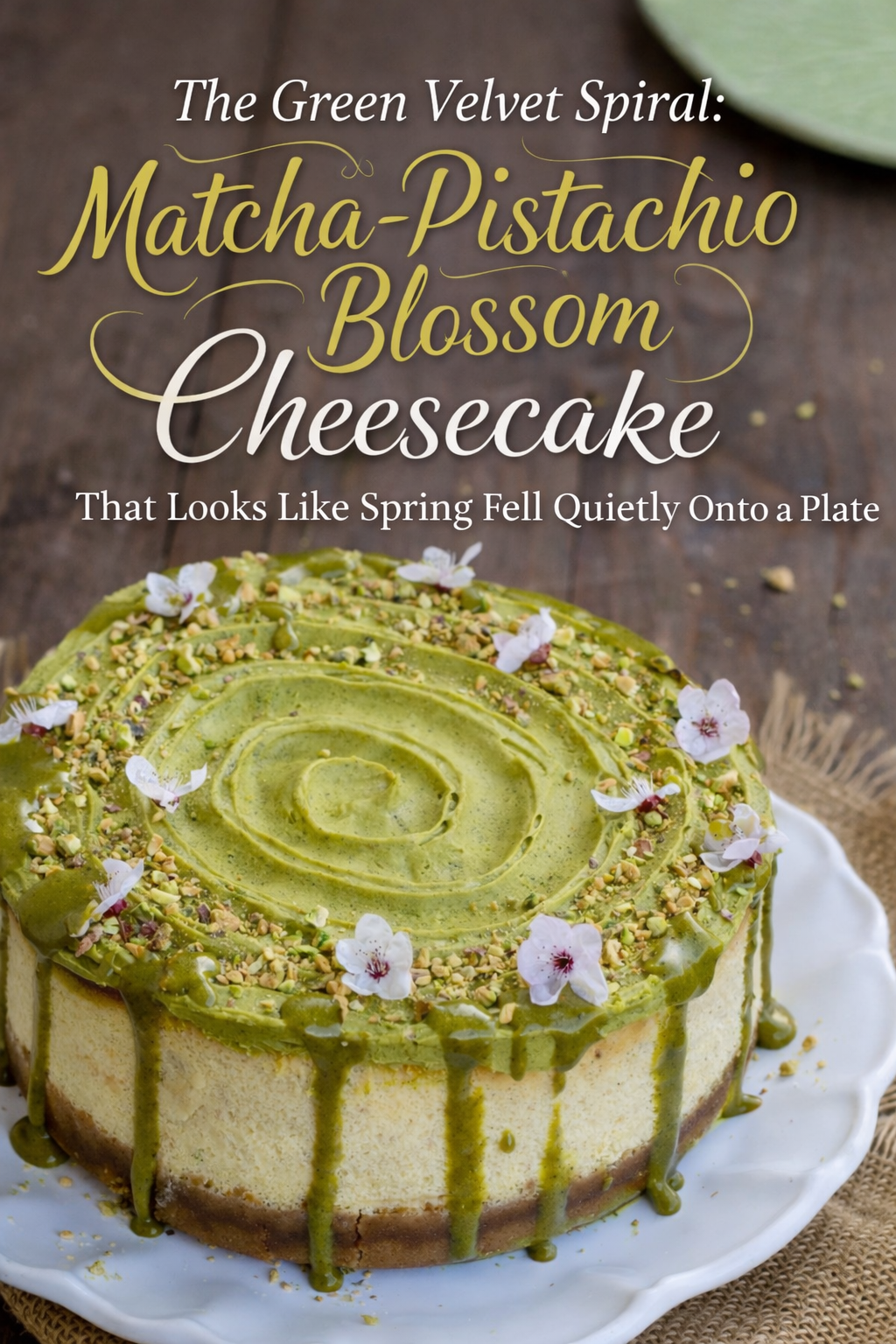
The green-and-gold swirl is surprisingly easy. You’ve already got the matcha base, so the yellow accent can come from lemon curd. Use small dollops and drag a skewer or the tip of a spoon in gentle arcs. Less stirring is better—too much mixing muddies the contrast. If you want picture-perfect lemon slices on top, pat them dry first so they don’t weep.Slicing for clean edges
Warm your knife under hot water, wipe it dry, then slice. Repeat between cuts. It’s a small ritual that makes the cake look professionally plated. A long, thin blade helps; if you bake often, a quality chef’s knife will earn its keep here.
Variations that still feel true to the vibe
- Yuzu twist: replace some lemon juice with yuzu for a more floral citrus profile.
- Coconut lift: swap a bit of cream for coconut cream; matcha loves coconut.
- Gluten-free crust: use gluten-free graham-style cookies or almond flour-based crumbs.
- Stronger tea finish: add an extra teaspoon of matcha sifted into the filling for a deeper green and more pronounced flavor.
Storage notes
Keep chilled and covered. The texture is best within 2–3 days, when the matcha is still vivid and the lemon still sparkles. If you make it ahead, add fresh lemon slices right before serving for the cleanest look.
This cheesecake is equal parts calm and electric—cool cream, bright citrus, and that slow, grounding matcha finish. Done right, it slices like a dream, swirls like a painting, and turns a simple cup of tea into the center of the day.