Sunlit Citrus Halo: Lemon Poppy Seed Cheesecake Recipe
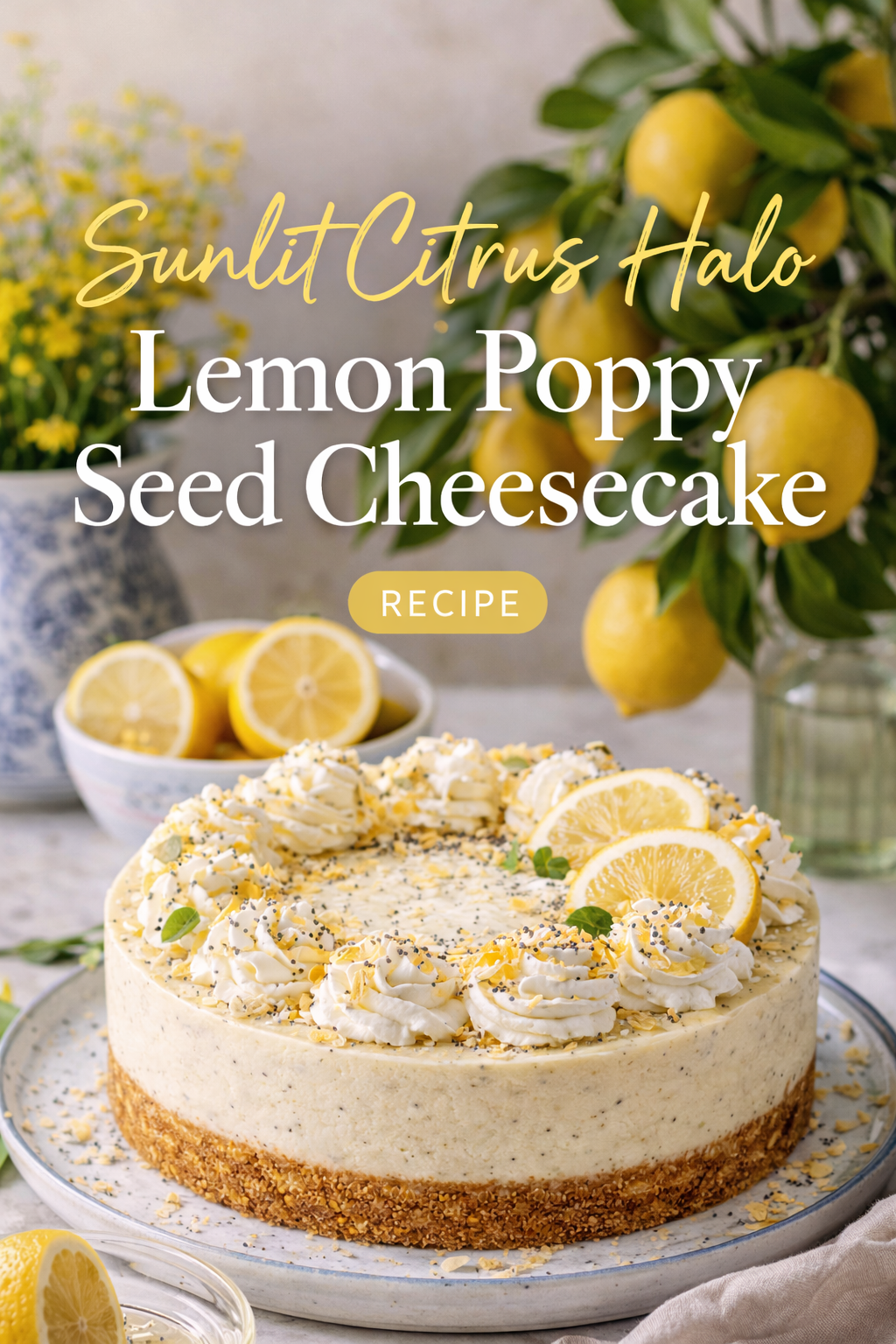
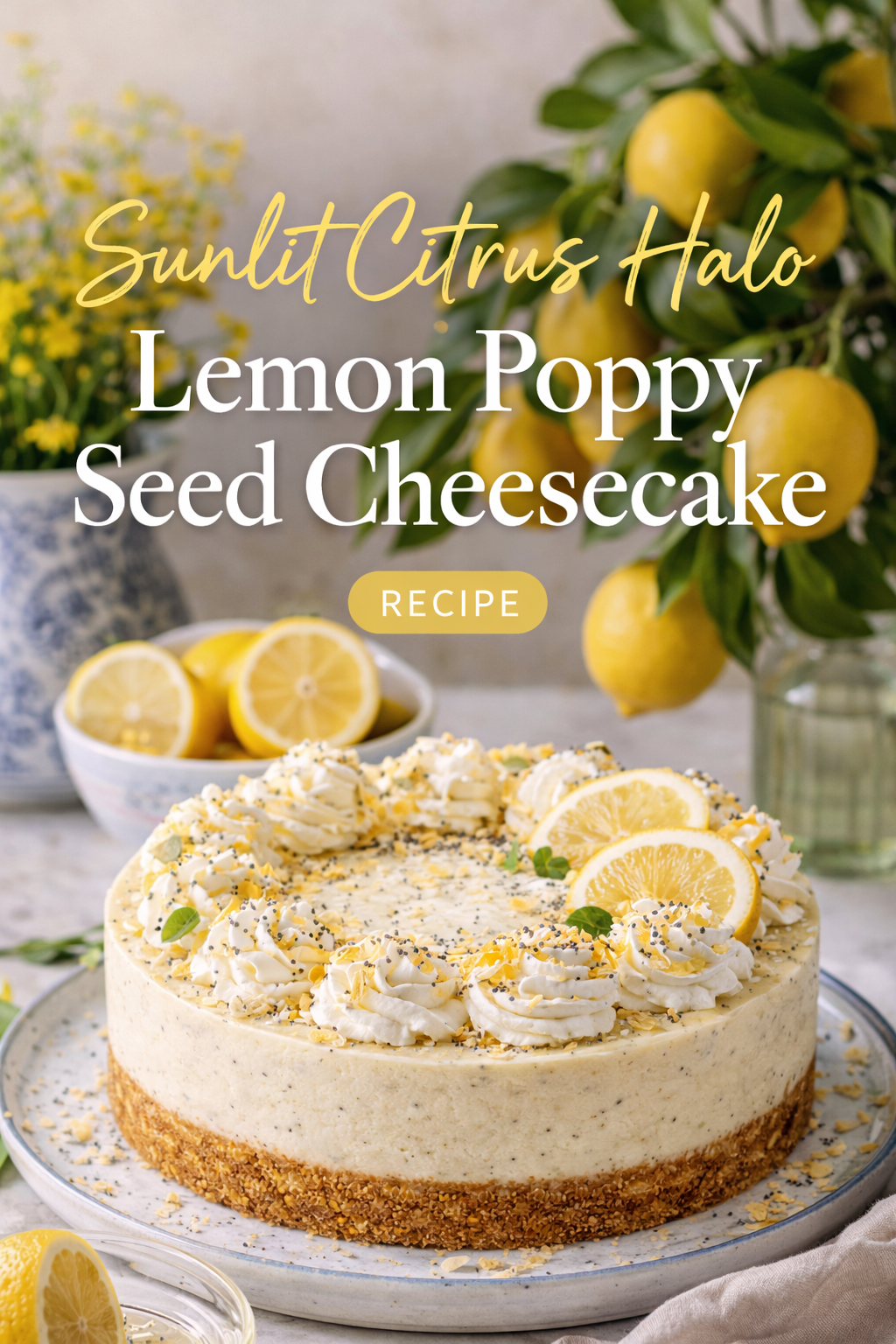
The room feels brighter the moment the lemons enter—glossy, gold-skinned, still carrying the cool, green suggestion of leaves. Their color lifts everything around them: the pale stone surface, the soft ceramic bowls, the quiet scatter of tiny poppy seeds like midnight freckles against a cream-white horizon. In the center sits the kind of cake that looks like a celebration without needing an occasion—smooth-sided, generously tall, and finished with a crown of whipped rosettes that catch the light the way sea foam catches dawn.
The first thing that lands is the scent—clean citrus, a little floral, and sharply alive—followed by that buttery, toasted warmth rising from the crumb at the base. The topping is a small still life: lemon slices tucked at an angle, a pinch of zest like confetti, and a peppering of seeds that promise a gentle crackle with every bite. It’s the kind of dessert that invites lingering: a slow pour of afternoon sun across the counter, a linen cloth casually draped nearby, the faint clink of a spoon against a bowl as someone steals a taste of whipped cream “for quality control.”
This Lemon Poppy Seed Cheesecake is built on contrasts that feel luxurious without trying too hard. The filling is plush and tangy—brightened with fresh lemon and softened by vanilla—while the poppy seeds add a delicate, nutty whisper and that signature speckled look that reads instantly as special. The crust anchors everything with a toasty sweetness, the kind you get when crumbs meet butter and turn into something that tastes like the best corner of a cookie. A springform pan that releases cleanly makes the whole thing feel effortless, letting those smooth cheesecake sides stay pristine when it’s time to serve.
There’s a quiet ritual in the prep that feels grounding: zesting lemons until the air turns perfumed and bright, then squeezing them until your hands smell like sunlight. A microplane zester for feathery citrus zest is one of those small upgrades that changes the mood of a kitchen—suddenly you’re making clouds of fragrant zest instead of wrestling strips from a peel. The juice, too, becomes a moment; a sturdy citrus juicer for fresh lemons keeps it simple and clean, no seeds slipping into the bowl, no sticky countertop drama.
What makes this cheesecake feel so composed is the texture: satiny, dense in the best way, with a whisper of mousse-like lightness at the top where the whipped crown meets the tangy filling. The poppy seeds aren’t loud; they’re elegant. They show up as tiny pops of contrast—like a tailored detail on a minimal outfit—turning a classic lemon cheesecake into something more editorial. Even the garnish feels intentional, especially when you have a piping set for clean, bakery-style rosettes ready to make that finishing touch look effortless.
Then there’s the calm satisfaction of the bake itself: a gentle, low heat; a slow set; the patience of letting it cool properly so the top stays smooth and uncracked. Cheesecake rewards people who don’t rush. A reliable instant-read thermometer can make that confidence even easier—no guessing, no overbaking—just the quiet certainty that the center is perfectly done and will firm into that ideal, creamy slice once chilled.
When it finally rests in the fridge, the flavors deepen. Lemon becomes rounder and more aromatic. Vanilla gets warmer. The crust becomes a little more cohesive, the kind that cuts cleanly and holds its own without crumbling into chaos. And when it’s time to serve, the slices look like they belong on a magazine page—pale, speckled, brightened by citrus, finished with a soft white flourish and a sparkle of zest. If you’ve ever wanted a dessert that feels like a fresh window thrown open on a clean, sunny day, this is it—cool, confident, and quietly unforgettable.
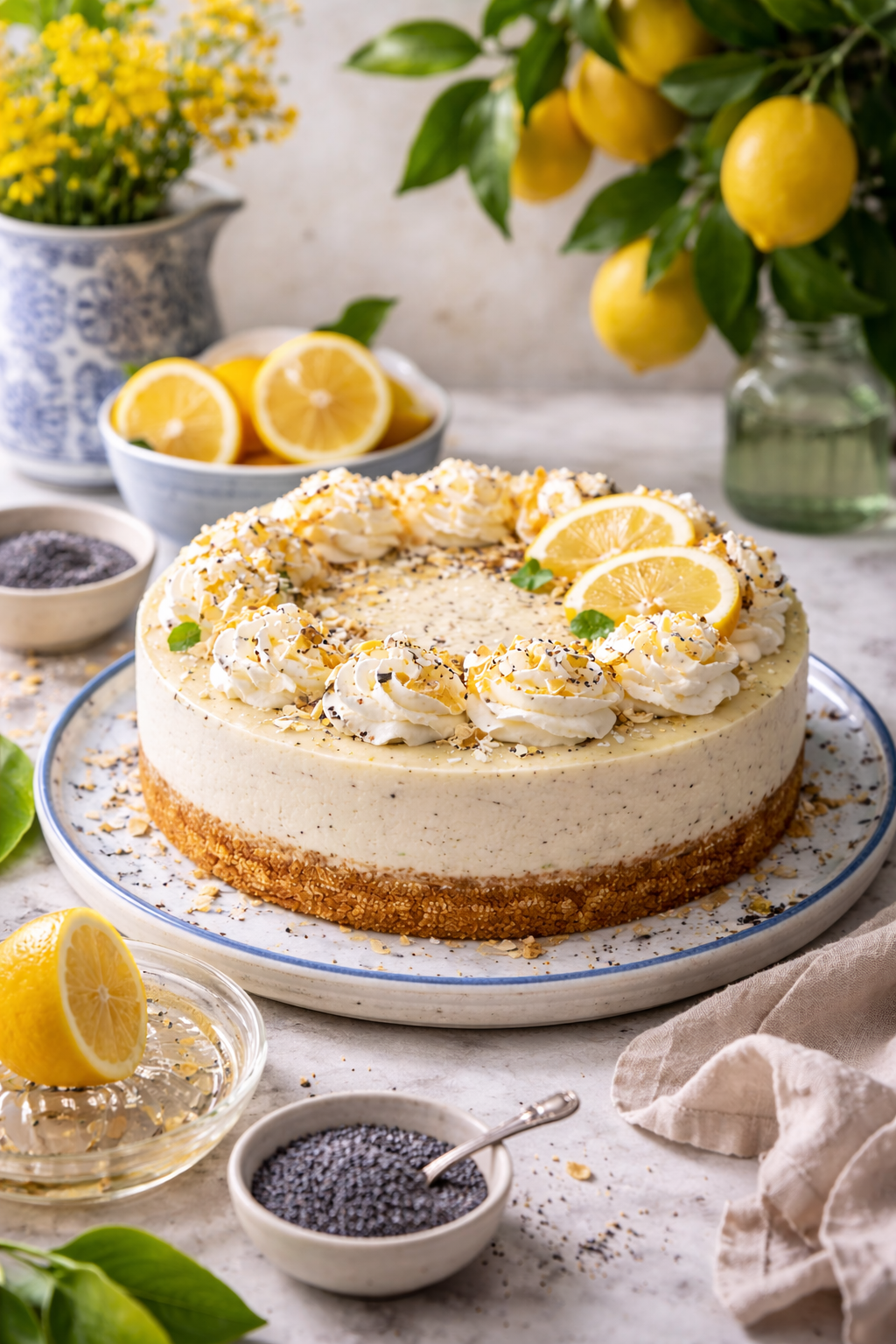
Lemon Poppy Seed Cheesecake brings bright citrus flavor to a classic creamy cheesecake, finished with a speckled poppy seed crumb and a soft whipped topping.
Ingredients
Crust
- 2 cups graham cracker crumbs (about 14–16 full sheets, crushed)
- 6 tbsp unsalted butter, melted
- 2 tbsp granulated sugar
- Pinch of fine salt
Filling
- 32 oz (4 blocks) cream cheese, room temperature
- 1 cup granulated sugar
- 1 cup sour cream, room temperature
- 3 tbsp all-purpose flour
- 4 large eggs, room temperature
- 2 tbsp lemon zest
- 1/3 cup fresh lemon juice
- 2 tsp vanilla extract
- 2 tbsp poppy seeds
- Pinch of salt
Topping (optional)
- 1 cup heavy cream, cold
- 2–3 tbsp powdered sugar
- 1 tsp vanilla extract
- Lemon slices + extra zest + poppy seeds for garnish
Method / Instructions
- Heat oven to 325°F. Line the bottom of a 9-inch springform pan with parchment and lightly grease the sides.
- Make crust: Mix crumbs, melted butter, sugar, and salt. Press firmly into the pan bottom. Bake 10 minutes; cool.
- Make filling: Beat cream cheese and sugar until smooth. Mix in sour cream, flour, salt, zest, lemon juice, and vanilla. Add eggs one at a time, mixing on low just until combined. Fold in poppy seeds.
- Pour filling over crust. Bake 55–70 minutes until the edges are set and the center still has a gentle wobble.
- Cool with oven door cracked 45–60 minutes, then cool to room temp. Chill at least 6 hours (overnight best).
- Optional topping: Whip cream with powdered sugar and vanilla to soft-medium peaks; pipe or spoon on top. Garnish with lemon slices, zest, and poppy seeds.
A cheesecake like this looks effortless, but the real magic is in the small choices that keep the texture velvety and the top smooth. Start by setting yourself up for calm: everything at room temperature, your pan prepped, and your workspace uncluttered. A nonstick 9-inch springform pan is the foundation here—clean release, tidy sides, and no stress when it’s time to unmold. Line the bottom with parchment (it matters more than people think), and lightly grease the ring so the cheesecake can rise and settle without grabbing.
1) Build a crust that slices cleanly
Crust is about compression, not just mixing. Once you’ve stirred crumbs with melted butter and sugar, press firmly into the pan using the flat bottom of a measuring cup. The goal is an even thickness and a tight pack so it doesn’t crumble when sliced. If you want an extra-toasty flavor, bake it until it smells like warm honey and cookies—about 10 minutes. Let it cool before adding filling; a hot crust can encourage condensation and affect the texture at the base. If you’re crushing your own crackers, a simple food processor for fast, even crumbs makes the texture consistent, which helps the crust hold together beautifully.
2) Zest first, then juice—always
Lemon flavor lives in the oils of the zest. Zest your lemons before juicing; it’s faster and cleaner. Use a fine microplane for citrus zest so you get only the fragrant outer layer, not the bitter white pith. Once zested, juice the lemons. Fresh makes a difference here—the brightness comes through even after chilling. A handheld citrus squeezer keeps seeds out and makes measuring easy.
3) Cream cheese texture: smooth, not airy
The biggest cheesecake mistake is beating too aggressively. You want smooth, not whipped. Mix the cream cheese and sugar until creamy and lump-free, then keep everything else gentle. Use medium-low speed and pause to scrape the bowl often. A stand mixer with a paddle attachment is great, but a hand mixer works too—just stay disciplined about speed. Overmixing incorporates air, and trapped air expands in the oven, then collapses as it cools, leading to cracks and a less creamy bite.
4) Add eggs last, and mix low
Eggs are structure. Add them one at a time on low speed, mixing only until each disappears. If you mix hard, you’ll aerate the batter. If you mix too long, you can make the texture slightly rubbery. The batter should pour like thick satin—smooth, cohesive, speckled with poppy seeds, and glossy.
5) Poppy seeds: how to keep them elegant
Poppy seeds can sink if the batter is too thin, but this recipe’s balance (with sour cream and a touch of flour) helps suspend them. Fold them in at the end so they distribute evenly without overworking the batter. If your seeds have been in the pantry forever, refresh them—the flavor should be gently nutty, not stale. A fresh poppy seed supply for baking can make the finish taste cleaner and more aromatic.
6) Bake low and slow for a silky center
Cheesecake isn’t a “golden brown” dessert—think pale, set edges and a center that still trembles. Bake at 325°F and start checking at about 55 minutes. The outer 2 inches should look set; the center should wobble like set custard. If you want maximum protection from cracking, a gentle water bath helps, but it’s optional. If you do it, wrap the pan well and place it in a larger roasting pan. A deep roasting pan for water baths makes that setup much easier and more stable.
7) Cooling is half the recipe
Cracks usually happen from sudden temperature change. When the cheesecake is done, turn off the oven, crack the door, and let it cool slowly for 45–60 minutes. This gradual cooldown prevents the top from contracting too quickly. Then move it to the counter and cool fully before refrigerating. Refrigerating while warm creates condensation, which can make the top tacky and soften your crust.
8) Chill long enough for perfect slices
Chilling is where the texture becomes luxurious. Six hours is the minimum; overnight is ideal. The lemon flavor rounds out, the vanilla deepens, and the slice becomes clean and confident. For bakery-sharp cuts, use a long knife dipped in hot water and wiped dry between slices. A long slicing knife for clean cheesecake cuts makes the presentation extra polished, especially if you’re serving guests.
9) Whipped topping that holds its shape
If you’re piping rosettes, keep your cream cold and whip to soft-medium peaks—stiff enough to hold definition, not so stiff it looks dry. Powdered sugar stabilizes and keeps the texture smooth. For the most consistent result, use piping bags and star tips and pipe in a simple ring. Finish with lemon slices, a shower of zest, and a light sprinkle of poppy seeds for that speckled, editorial look.
10) Variations and smart swaps
- More coconut-forward finish: Add toasted coconut to the top or mix a small handful into the crust.
- Gluten-free: Use gluten-free cookie crumbs for the crust.
- Extra tang: Swap part of the sour cream for Greek yogurt, keeping the total amount the same.
- Sharper lemon: Add a touch more zest rather than extra juice—zest boosts aroma without thinning the batter.
11) Troubleshooting, quickly
- Crack on top: Usually temperature shock or overmixing. Cover with whipped topping and garnish—still perfect to eat.
- Gummy texture: Often overbaked. Pull earlier next time when the center still wobbles.
- Soggy crust: Make sure crust is baked and cooled; avoid refrigerating while the cheesecake is warm; if using a water bath, wrap the pan thoroughly.
With the right pace—gentle mixing, patient baking, and a long chill—this Lemon Poppy Seed Cheesecake lands exactly where it should: bright, creamy, speckled, and impossibly smooth, with a sunlit citrus finish that tastes as clean as it looks.