
Velvet-Piped Deviled Eggs Recipe: Paprika, Chive, and a Little Party-Table Drama

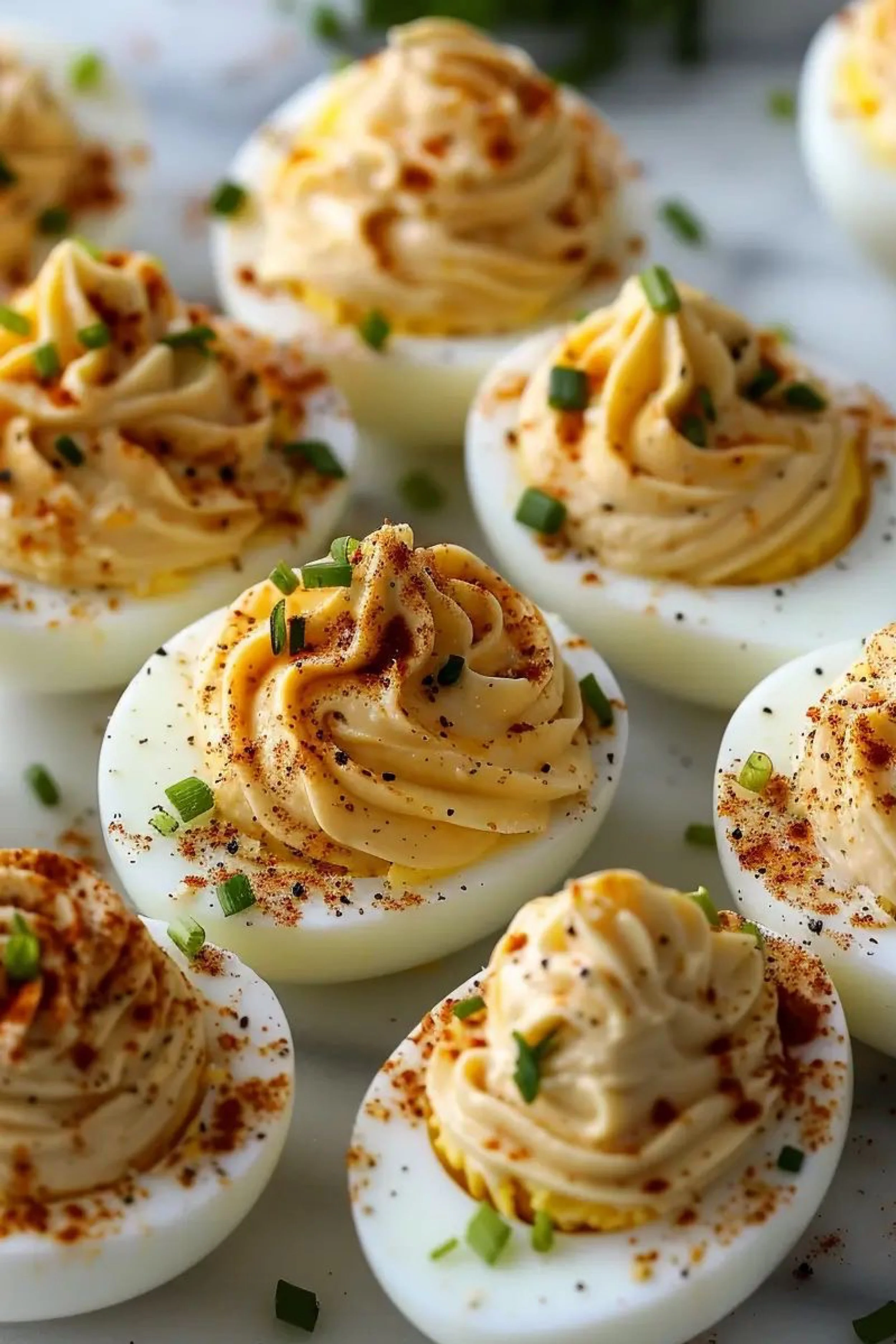
There’s a certain kind of quiet confidence that only a deviled egg can pull off—clean white curves, a sunny yolk line peeking at the edges, and that piped crown of filling that looks like it was dressed for the evening. In the light, everything reads as deliberate: the satin-smooth egg whites, the pale-gold swirl of yolk mousse, the freckles of paprika and pepper, the bright green chive confetti that makes the whole plate feel awake. It’s the kind of bite that belongs to the moment right before people arrive—when the kitchen is calm, the counters are wiped down, and the serving platter is waiting like a stage.
Deviled eggs have always been a little glamorous in a nostalgic way, but the version in front of you leans editorial. The filling is piped high, almost whipped, each rosette turning a humble snack into something that looks catered—even if it’s made in the same place where the coffee mug lives and the keys end up. That extra height changes everything: the bite becomes airy and plush, the flavors bloom faster, and the garnish lands like punctuation. A soft dusting of paprika reads warm and smoky. A few cracks of black pepper add that late note of bite. Chives cut through with clean green snap, like a crisp collar on a silk shirt.
The mood is also about texture. The whites are firm and cool, a clean canvas. The filling is creamy enough to hold a peak, but not so heavy it feels like paste—more like a savory frosting, balanced and bright. When it’s done right, the flavor doesn’t announce itself with blunt force. It glides. Tang from mustard. A little acidity from pickle brine or vinegar. Salt and pepper placed carefully instead of dumped. And the richness, always the richness, softened by lift—whipping, folding, tasting, adjusting until it feels like it was meant to be eaten in one perfect mouthful.
This is the kind of recipe that rewards small upgrades. A sharp mustard brings clarity. A good mayo makes the filling taste round instead of flat. Paprika that actually smells like paprika—sweet, warm, slightly smoky—turns the garnish into a real ingredient instead of a tradition you do out of habit. If the pantry needs a refresh, it’s worth grabbing a fresh, aromatic smoked paprika option and a punchy Dijon that stays bright in creamy mixes. Those small choices are what make deviled eggs feel “special occasion” even on an ordinary afternoon.
The look in the image—those tall swirls—comes from using the right piping tip and a filling with the right body. The difference between “spooned in” and “piped like a bakery” is mostly technique and one simple tool. A sturdy bag and star tip create clean ridges that catch paprika in the grooves and hold chive pieces where you want them. If you’re building that same dramatic finish, a piping set with star tips for savory spreads makes it effortless, and a non-slip serving platter for party trays keeps the whole thing looking intentional from kitchen to table.
Then there’s the vibe: deviled eggs are both retro and modern, depending on how you dress them. Sprinkle paprika and chives and it’s classic-cool. Add a little heat and it becomes flirtier. A tiny dab of relish and it leans picnic. A hit of smoked paprika and it suddenly feels like cocktail hour. If you like a gentle kick, a drop of a smooth hot sauce that blends cleanly into mayo-based fillings can wake up the whole batch without turning it into a dare.
The best part is how deviled eggs change the energy of a spread. Set them down and people circle. They’re approachable, but they don’t feel like an afterthought. They disappear fast—quietly, reliably—because the flavors are familiar and the texture is pure comfort. They also photograph like a dream: that creamy swirl, the spice dust, the green flecks, the clean white edge. Even before the first bite, they promise something good: richness that isn’t heavy, tang that doesn’t sting, and a finish that leaves you wanting the next one.
And that’s the goal: deviled eggs that feel polished without feeling fussy. A filling that pipes like velvet. A garnish that tastes like it looks. A bite that hits creamy, tangy, smoky, and fresh in one little arc—then vanishes, leaving only paprika dust on the platter like evidence that the party has started.
Recipe
Deviled eggs are at their best when the filling is creamy, bright, and perfectly seasoned—rich yolks lifted with mayo, sharpened with mustard, and finished with paprika and chives for that classic look and clean snap.
Ingredients
- 6 large eggs
- 1/4 cup mayonnaise (plus more if needed for texture)
- 1 1/2 tsp Dijon mustard
- 1–2 tsp pickle juice or white vinegar (to taste)
- 1/4 tsp kosher salt (plus more to taste)
- 1/8 tsp black pepper (plus more for garnish)
- Paprika or smoked paprika, for garnish
- 1–2 tbsp finely sliced chives, for garnish
Optional:
- 1–2 tsp sweet relish (for a more classic picnic profile)
- A few dashes of hot sauce (for gentle heat)
Method / Instructions
- Place eggs in a saucepan and cover with cold water by 1 inch. Bring to a boil, then cover, remove from heat, and rest 10–12 minutes.
- Transfer eggs to an ice bath for 10 minutes. Peel under a thin stream of water for cleaner shells.
- Slice eggs lengthwise. Pop yolks into a bowl; set whites on a plate.
- Mash yolks until fine. Mix in mayo, Dijon, pickle juice/vinegar, salt, and pepper until smooth and creamy.
- Taste and adjust: more mustard for zip, more acidity for brightness, more mayo for a softer, pipeable texture.
- Spoon or pipe filling into the egg whites.
- Finish with paprika, a few cracks of black pepper, and chives. Chill 20–30 minutes before serving for best flavor.
In-Depth Step-by-Step Guide
Start with the eggs, because everything good about deviled eggs is built on a clean boil and a calm peel. The goal is a yolk that’s fully set but still bright and tender—not chalky, not gray, not dry. Place the eggs in a single layer and cover with cold water by about an inch. Cold water matters because it brings the eggs up to temperature evenly. Bring the pot to a full boil, then cover, remove from heat, and let the eggs sit. This gentle finish helps prevent that rubbery texture and reduces the chance of overcooking. If you want a dependable rhythm, set a timer and stick to it—deviled eggs are one of those foods where consistency is the difference between “fine” and “gone in five minutes.”
Once the timer goes off, move straight into an ice bath. This is not optional if you care about peeling and appearance. The ice bath stops the cooking instantly, keeps the whites tender, and helps the membrane separate from the shell. Give them a full ten minutes. While they chill, set up the rest of the station: a bowl for yolks, a plate for whites, and whatever tool you’ll use to fill. For that tall, ridged rosette look in the image, a piping bag with a star tip is the easiest route—a piping bag and tip set made for clean ridges turns the filling into something that looks professionally styled with almost no extra effort.
Peeling is where many deviled eggs lose their elegance. Tap the egg gently all over—think small cracks, not big dents—then roll it lightly under your palm to loosen the shell. Peel under running water if you can; the water helps slip between the membrane and the white. If an egg fights you, don’t force it. Peel what you can, rinse, and move on—one or two imperfect eggs can be chopped into the filling if needed, and no one has to know.
Slice each egg lengthwise with a sharp knife. Wipe the blade between cuts for the cleanest edges, especially if you’re photographing. Then pop the yolks into a bowl. The whites should look smooth and intact, like little cups. If a few are wobbly on the plate, shave a whisper-thin slice off the bottom so they sit flat. That tiny detail keeps the finished tray looking composed.
Now build the filling. Start by mashing the yolks thoroughly before adding anything creamy. This is the step that prevents gritty filling. Mash until it looks like fine crumbs, then add mayonnaise and Dijon mustard. Mayo brings richness and silk; mustard brings definition. The image suggests a filling that’s whipped and stable—creamy enough to pipe, thick enough to hold shape. You can get there with a fork and patience, but for next-level smoothness, a quick pass with a hand mixer or food processor makes it feel like velvet. If you go the tool route, a compact food processor for silky spreads delivers that ultra-smooth texture that pipes like a dream.
Add acidity next: pickle juice or a small splash of vinegar. This is what keeps deviled eggs from tasting one-note. It lifts the richness and makes the whole bite feel lighter. Season with salt and pepper, then mix until uniform. Stop and taste. This is where the filling becomes yours. If it tastes flat, add a touch more mustard. If it tastes heavy, add a few drops more acid. If it’s too sharp, soften with a small spoon of mayo. The perfect filling tastes bright first, then creamy, then gently spicy at the end.
Texture is key for that tall swirl. If the filling is too loose, it will slump. If it’s too stiff, it will look jagged and feel dense. Aim for a consistency that holds a peak but still looks glossy. If you’ve ever frosted a cupcake, you know the feel: it should move through a piping tip without fighting you, but it should keep its ridges once it lands.
Filling the whites can be as simple or as styled as you want. For casual, spoon it in and smooth the top. For the look in the image, load the filling into a piping bag and pipe in a tight spiral, starting at the outer edge and building upward. A star tip creates those beautiful grooves that catch seasoning and make the deviled eggs look expensive. If you’re serving a crowd, consider setting them into a tray designed to hold them steady—a deviled egg platter that keeps halves from sliding makes transport and presentation dramatically easier.
Now garnish like it matters—because it does. Paprika isn’t just tradition; it’s aroma and warmth. Smoked paprika adds a deeper, more modern note that plays beautifully with the creamy filling. If your paprika has been living in the cabinet for years, it won’t do much. Fresh spice changes the entire impression, especially when it hits the filling’s ridges. Consider keeping a fresh smoked paprika for that warm, cocktail-hour edge on hand. Add a few cracks of black pepper for bite, then scatter chives. Chives are the perfect garnish here: green, clean, and sharp enough to cut the richness without competing.
Chill the finished eggs for at least 20–30 minutes before serving. That rest time helps the filling set, makes the flavors meld, and keeps the garnish looking crisp. If you’re prepping ahead, you can boil and peel the eggs a day early, then make the filling and pipe closer to serving time. For ultra-polished results, store the whites covered in the fridge and keep the filling in a sealed container; pipe just before guests arrive. It’s one of the easiest “looks like effort” moves in the kitchen.
Variations are where deviled eggs turn into a signature. For a sweeter, old-school version, add a spoon of relish. For a little heat, stir in a few dashes of hot sauce—a mild hot sauce that blends smoothly gives lift without overwhelming. For a deeper savory note, add a pinch of garlic powder or onion powder. For a tangier bite, swap in a bit of whole-grain mustard. If you want them extra plush, add a tiny splash of heavy cream, but do it sparingly so the filling doesn’t lose structure.
Troubleshooting is simple once you know the cues. If the filling is gritty: mash the yolks more before adding mayo, or use a processor. If the filling slumps: add a little more mashed yolk or chill it briefly before piping. If the flavor feels dull: it almost always needs more salt or a touch more acid. If the eggs are hard to peel: the ice bath was too short, or the eggs were very fresh. Next time, give them the full chill and peel under water.
Finally, serve them like the small luxury they are. Arrange them with breathing room so the swirls don’t smudge. Let the paprika dust look intentional, not accidental. Add chives last so they stay bright. Then watch what happens: people hover, choose one, and immediately glance back for a second. That’s the deviled egg effect—classic, irresistible, and somehow always the first thing to disappear.