
The Cocktail-Hour Glow: Smoky Chive Deviled Eggs Recipe

The board arrives like a little hush of indulgence—warm wood, cool air, and those pale halves lined up with the kind of confidence that says someone cared enough to make the simple feel sharp. The whites are satiny and clean, a soft matte against the richer swirl of filling, which looks whipped and plush, like it was coaxed into a peak rather than merely mixed. A dusting of paprika lands like sunset—rust-red freckles over gold—while chopped chives add that bright, green snap that makes everything feel freshly finished, not just assembled.
Deviled eggs live in that sweet spot between nostalgia and a certain kind of grown-up ease. They’re familiar enough to quiet a room (everyone knows what they are), but when they’re done like this—fluffy, seasoned, and topped with a little smoky crunch—they suddenly feel worthy of linen napkins and a drink poured over ice. They belong at the edge of a gathering where the light is low, the music is understated, and the first bite is meant to make people pause mid-conversation just long enough to smile.
What makes them irresistible is contrast. The egg white is mild, almost creamy in its own way, and then the filling hits with richness and lift: tang from mustard, brightness from a touch of acid, and that savory depth that makes you go back for “just one more.” The texture matters, too—the difference between a filling that’s merely mashed and one that’s truly aerated is the difference between polite and memorable. A fine-mesh sieve that helps you get ultra-smooth yolks is the kind of quiet upgrade you don’t think about until you taste the result: no graininess, no lumps, just a velvet spread that pipes like a dream.
And then there are the toppings—the finishing gestures that turn the classic into a signature. Paprika is the familiar flourish, but it doesn’t have to be flat. A smoked paprika that brings warmth without heat gives you that faint campfire echo that makes the eggs feel a little more cocktail-hour than picnic. Chives add freshness, the kind that wakes up everything creamy. If you want that crackle of savoriness like the photo suggests, a scatter of crisp bacon bits—or even finely chopped fried shallots—makes each bite feel textured and luxe. A set of sharp prep knives that makes quick, clean mince work will get your herbs and toppings tidy instead of bruised.
There’s also something about the way deviled eggs look when they’re plated right—little edible sculptures, each one identical and still somehow inviting. A neat, confident swirl communicates care, and it’s surprisingly easy to get there. A sturdy piping bag set with star tips turns the filling into something you can shape instead of smear, and suddenly your platter has that catered polish. Even if you keep it casual, a spoon and a little patience can give you soft peaks that feel intentional.
The mood of the image is all about restraint: no clutter, no garnish overload, just a handful of ingredients doing their jobs beautifully. It reads like an appetizer you’d set out at the start of a long evening—before the grill heats up, before the main dish lands, when everyone’s still a little hungry and a little curious. A tray of deviled eggs is a social food; people hover near it, return to it, comment on it. It’s comfort that makes space for compliments.
The best part is how flexible the base is. The same creamy yolk mixture can lean bright and lemony, sharp and Dijon-forward, smoky and savory, or even a little spicy if you like heat. Once you know the ratios, you can adapt to the season and the crowd. If you’re serving them in summer, you might chase freshness with lemon zest and dill. If it’s winter, you might go deeper: smoked paprika, black pepper, bacon, maybe even a whisper of horseradish. A small zesting tool for citrus and hard cheese is one of those tiny additions that lets you shift the whole personality of the filling with just a few bright shavings.
They also hold a kind of quiet glamour. The ingredients are humble—eggs, mayo, mustard—but the result feels generous. The filling is rich, but the bite is clean. The toppings are minimal, but they make the whole thing look finished. On a wooden board like this, they feel grounded and rustic; on a white platter, they feel crisp and modern; on a silver tray, they feel like a party.
If you want deviled eggs that look like the photo and taste even better, the secret isn’t complicated—it’s process. Cook the eggs so the whites are tender, not rubbery. Cool them properly so they peel without tearing. Make the filling smooth and balanced, then season it until it tastes bright enough to cut through its own richness. Finish with a light hand and a confident sprinkle. The rest is just letting the classic do what it does best: disappear quickly.
Set them out, step back, and watch what happens. People always think they’re too refined to love deviled eggs—until they taste one that’s whipped, smoky, and bright with chives. Then suddenly they’re asking what you put in them, and you’re smiling because the answer is mostly: attention.
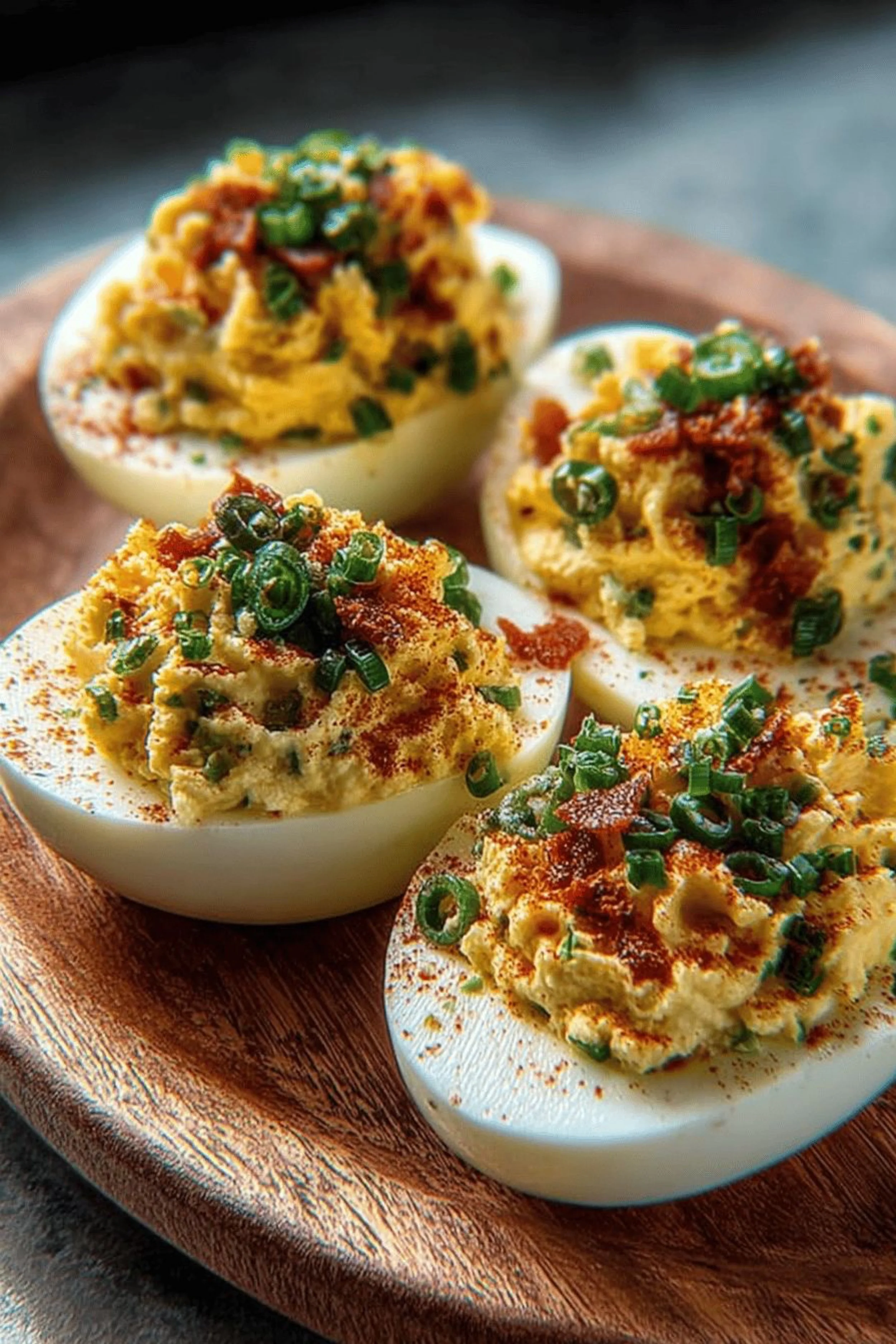
Smoky Chive Deviled Eggs
Ingredients
- 6 large eggs
- 1/4 cup mayonnaise
- 1 1/2 tsp Dijon mustard (or yellow mustard)
- 1 tsp white vinegar or fresh lemon juice
- 1/4 tsp fine salt, plus more to taste
- 1/8 tsp black pepper
- 2 tbsp finely sliced chives, plus extra for garnish
- Smoked paprika (or sweet paprika), for dusting
- Optional: 2 tbsp bacon bits or finely crumbled cooked bacon
Method / Instructions
- Hard-boil the eggs: Place eggs in a saucepan, cover with cold water by 1 inch, bring to a boil, then cover and remove from heat. Rest 10–12 minutes.
- Chill: Transfer eggs to an ice bath for 10 minutes, then peel.
- Halve and separate: Slice eggs lengthwise. Remove yolks to a bowl and set whites on a platter.
- Make filling: Mash yolks until smooth. Mix in mayo, mustard, vinegar/lemon, salt, pepper, and chives. Adjust seasoning to taste.
- Fill: Spoon or pipe filling into egg whites.
- Finish: Dust with paprika and top with extra chives. Add bacon bits if using. Chill 15–30 minutes before serving for best flavor.
A great deviled egg is less about fancy ingredients and more about getting the fundamentals right: tender whites, a filling that’s actually silky, and seasoning that’s bright enough to keep the richness from feeling heavy. The image you’re working from nails that balance—creamy peaks, a paprika haze, and chives scattered like confetti—so the goal is to build those same textures and flavors on purpose rather than by luck.
Step 1: Start with the right boil (so the whites stay tender) Place your eggs in a single layer and cover with cold water by about an inch. Cold water matters because it brings everything up to temperature evenly, which helps prevent overcooked whites and that chalky yolk texture. Bring the pot to a full boil, then immediately cover and remove from heat. Let the eggs sit—this is where consistency happens. For large eggs, 10–12 minutes is the sweet spot. If you like a slightly creamier yolk for extra-lush filling, lean toward 10 minutes; if you want a firmer yolk for a very defined pipe, go 12.
A reliable saucepan with a tight lid makes the off-heat method easier to control, because the temperature holds steady without you babysitting the stove.
Step 2: Ice bath like you mean it (for peelability and color) Move the eggs straight into an ice bath. This stops the cooking quickly (goodbye green-gray yolk ring) and it also helps the shell separate cleanly from the white. Let them chill at least 10 minutes. If you’re making these ahead, you can refrigerate the cooked eggs overnight and peel the next day—often even easier.
Troubleshooting peeling:
- If shells stick, tap the egg gently all over to crack it evenly, then peel under a thin stream of cold water.
- Very fresh eggs can be stubborn. If you regularly struggle, buy eggs a few days before you plan to make deviled eggs.
Step 3: Slice cleanly (so the platter looks polished) For clean halves, use a thin, sharp knife and wipe it between cuts. A sharp chef’s knife for clean slicing will reduce tearing, especially if the whites are delicate and cold. Cut lengthwise for that classic oval shape that holds filling neatly.
If you want picture-perfect halves, trim the tiniest sliver off the bottom of any egg that wobbles so it sits flat. Keep it subtle; you’re aiming for stability, not a flat-bottomed egg that looks carved.
Step 4: Make the yolks truly smooth (this is the whole game) Pop the yolks into a bowl and break them up. Here’s the upgrade that separates “good” from “absolutely finished”: press the yolks through a sieve. It takes a minute and transforms the filling into a velvet base that whips instead of clumps. A fine-mesh sieve for silky deviled egg filling is the simplest tool for that luxury texture you see in the photo.
If you don’t have a sieve, mash thoroughly with a fork, then beat until smooth. Just know that any remaining graininess will show up in both taste and piping.
Step 5: Build balance, not just creaminess Add mayonnaise first for body, then mustard for bite, then acid to lift everything. The acid is what makes deviled eggs feel bright instead of heavy. Start with vinegar or lemon juice, mix, taste, and then adjust. Salt is essential, but add it gradually—egg yolk can surprise you by absorbing seasoning.
A classic ratio (for 6 eggs) usually lands around:
- 1/4 cup mayo
- 1–2 tsp mustard
- 1 tsp acid Then salt and pepper to taste.
Variations that still match the vibe of the image:
- Smoky: swap sweet paprika for a smoked paprika with deeper warmth.
- Brighter: add a little lemon zest (micro-zest is best). A zester for clean, aromatic citrus zest gives you lift without extra liquid.
- More savory: a tiny spoon of pickle relish or chopped cornichons (drain well) adds tang and texture.
Step 6: Chives, finely and fresh Chives should be sliced thin so they read as a fresh, green accent—not chunky bites. Fold some into the filling for flavor, then save extra for the top. If you want the chives to pop visually, sprinkle them last, after paprika, so they stay bright.
Step 7: Fill like a pro (spoon, zip-top, or piping bag) You have three good options:
- Spoon: fastest, rustic, still delicious.
- Zip-top bag: fill the bag, snip the corner, and pipe simple mounds.
- Piping bag + star tip: the most “photo-ready” option, giving you those ridged peaks.
If you want the look from the image—defined, plush swirls—use a piping bag and star tip set for clean, consistent peaks. Keep the filling cool but not stiff; if it’s too warm, it won’t hold shape. If it’s too thick, loosen with a teaspoon of mayo or a few drops of lemon juice.
Step 8: Paprika dusting without going heavy Paprika should be a whisper, not a blanket. Hold it high and tap lightly so it falls in a fine veil. Smoked paprika leans cocktail-hour and savory; sweet paprika leans classic and gentle. Either way, the goal is a warm finish that frames the creamy filling.
Step 9: Add crunch (optional, but it’s what makes people remember them) The image hints at a little browned, crispy topping—bacon bits are the easiest way to deliver that smoky crunch. If using bacon, keep it finely crumbled so it behaves like a garnish, not a whole topping layer. Alternatively, crispy fried onions or shallots can give you texture with a slightly sweeter edge.
Step 10: Chill briefly before serving (flavor improves) Deviled eggs taste best after 15–30 minutes in the fridge, when the filling firms and the flavors settle into each other. Cover lightly so the tops don’t dry out. If you’re transporting, keep them cold and stable—use a container that holds the eggs snugly so the filling stays intact.
Make-ahead guidance:
- Boil eggs up to 2 days ahead (store unpeeled).
- Mix filling up to 1 day ahead (store in a covered container).
- Fill and garnish within a few hours of serving for the freshest look, especially with chives.
Quick fixes if something goes sideways:
- Filling tastes flat: add a pinch more salt and a tiny splash more acid.
- Filling too loose: add an extra yolk or chill longer; next time reduce mayo slightly.
- Filling too thick: loosen with mayo, a few drops of lemon juice, or a touch of sour cream.
- Whites tear while peeling: patch with a little filling and garnish; the paprika and chives hide a lot with grace.
When they’re done right, these deviled eggs hit exactly what the photo promises: creamy, whipped peaks; the warm spice of paprika; the bright green bite of chives; and that savory crunch that makes each bite feel intentional. Put them on a wooden board, pour something cold, and they’ll vanish faster than anything else on the table.