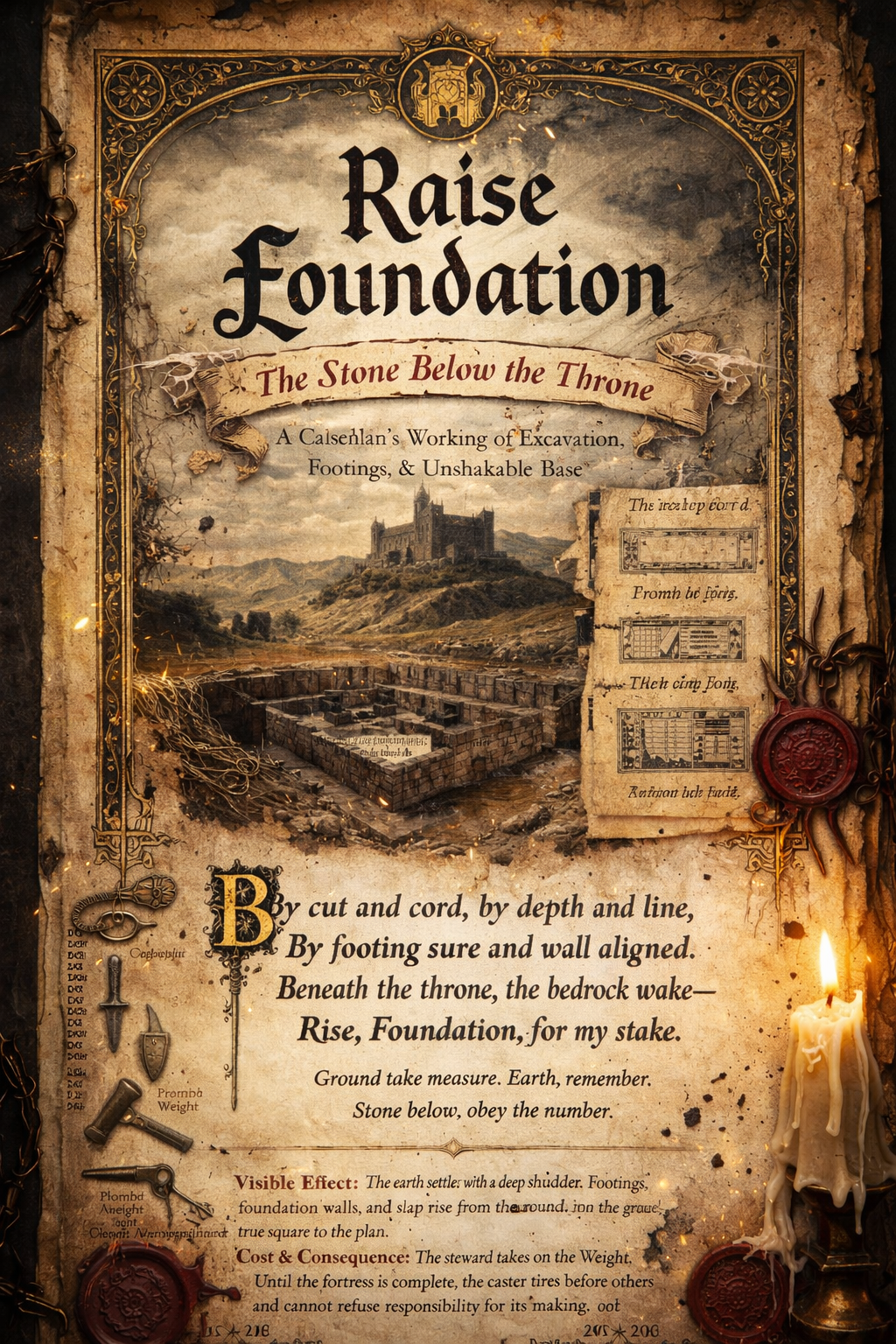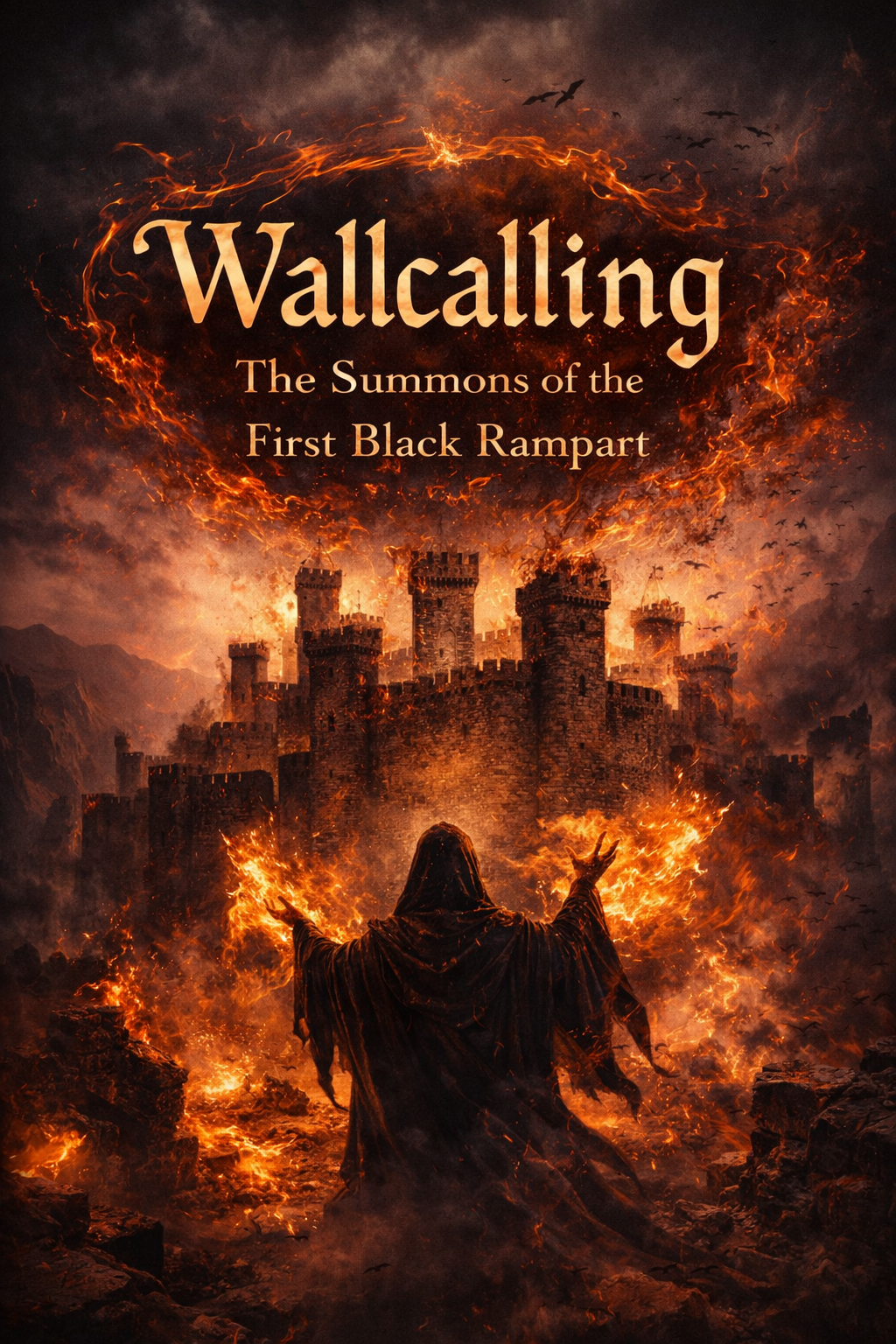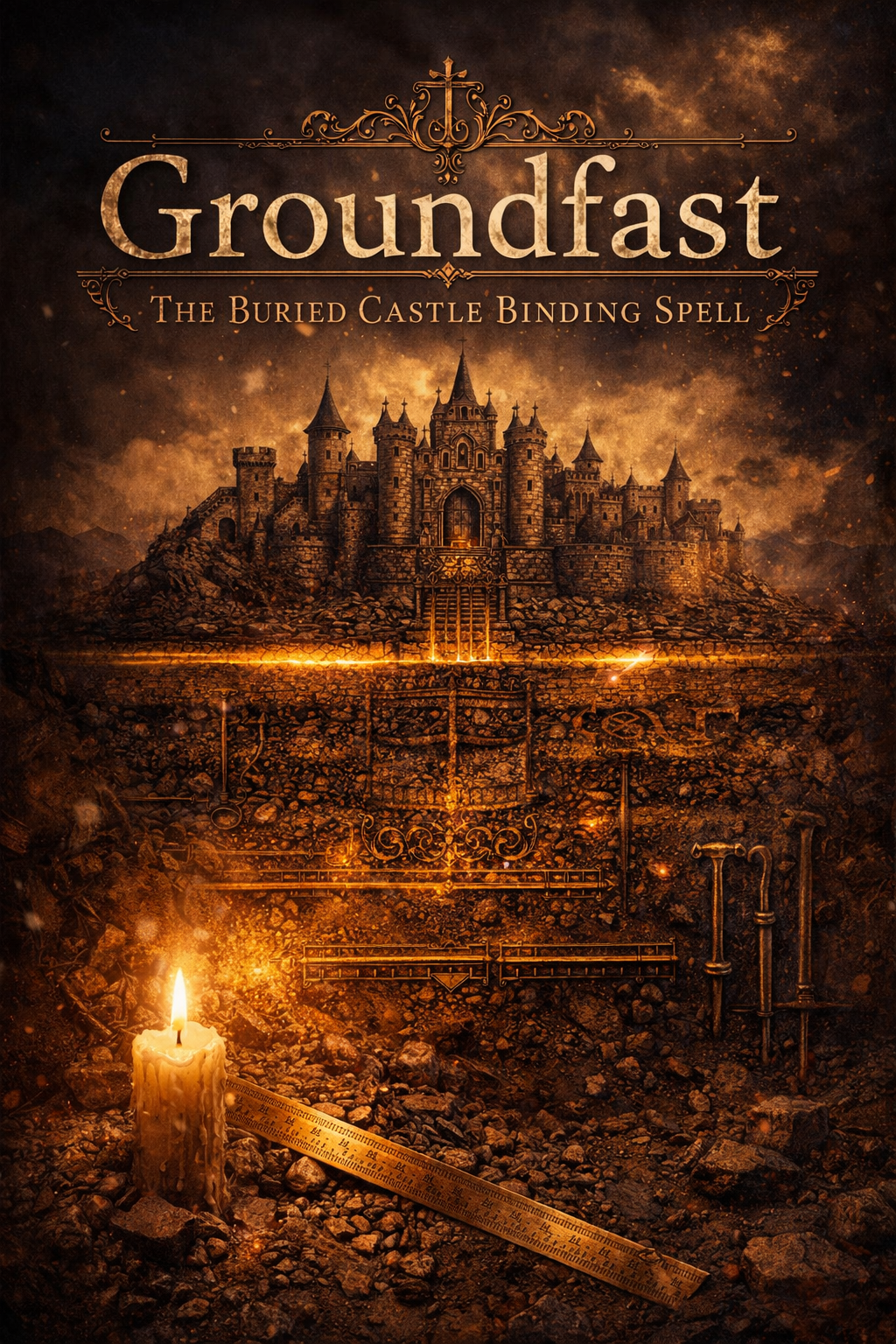
Groundfast: The Black Binding Beneath the First Stone
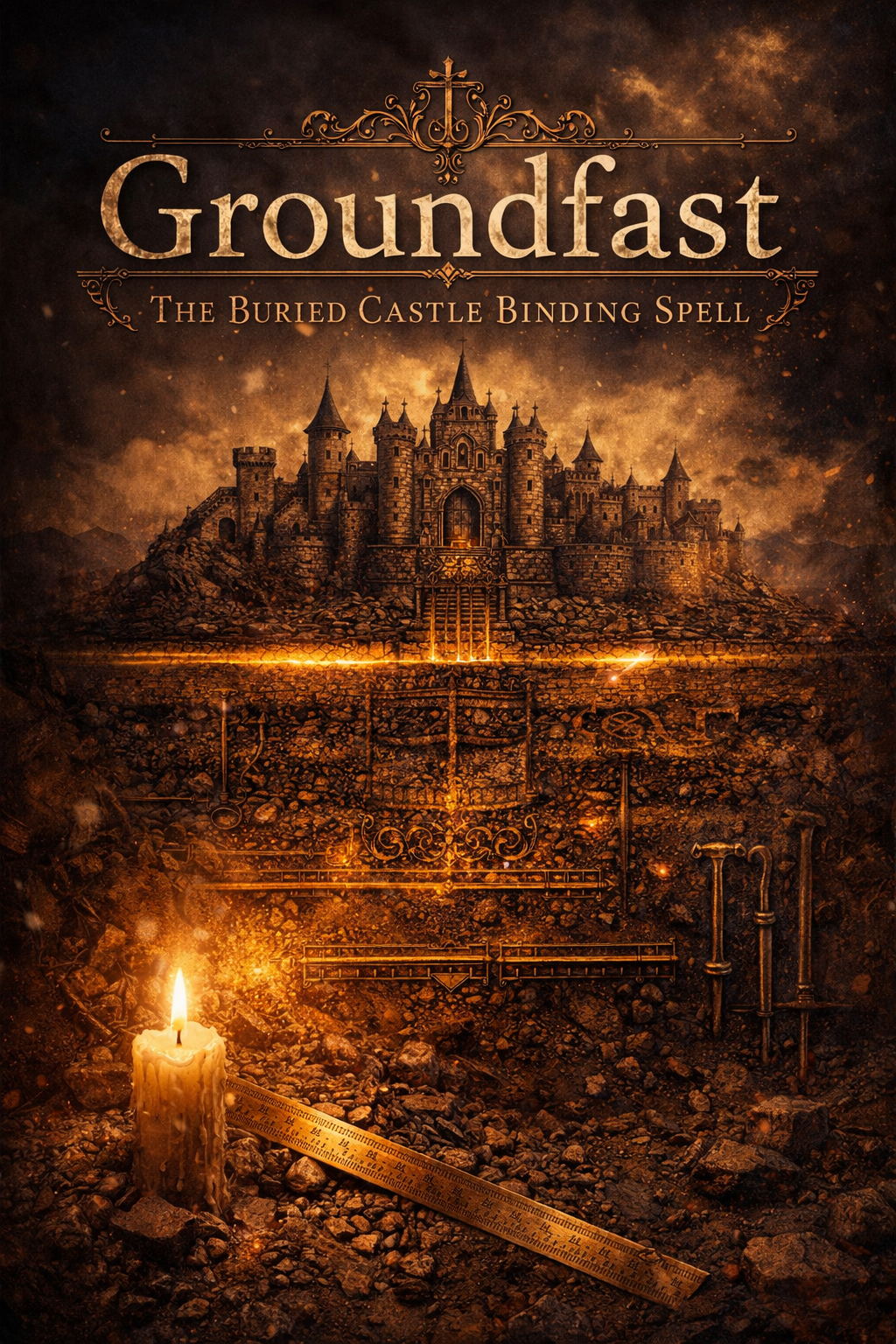
Opening Lore
Among the oldest works of the fortress builders, Groundfast was never counted among the glamorous arts. It summoned no fire, split no mountain, and raised no glittering tower in a single thunderous night. Yet every lord who ruled long, every keep that outlived famine, siege, frost, and flood, owed its endurance to this buried and feared labor. Groundfast was the vow beneath the spectacle, the dark covenant between stone and earth that made all other wonders possible.
In the ruined annals of valley strongholds and cliffside citadels, it is said that a castle without Groundfast is only a boast laid upon the skin of the world. Such walls may rise quickly, but the land remembers every insult. It remembers careless water, loose fill, hidden voids, thawing clay, roots that pry, and slopes that hunger to move. Sooner or later the ground answers. Floors tilt. Towers crack. Gates sink. Courtyards drown. The proud work is reclaimed by the patience of mud.
Groundfast was revered because it taught the builder to listen before commanding. The earth had to be read, tested, opened, dried, weighted, compacted, and persuaded. Ditches had to lead hidden water away. Soft pockets had to be cut out and replaced. Layers had to be pressed until the ground no longer sighed under burden. In this tradition, the builder was less conqueror than negotiator, kneeling at the black threshold where land becomes foundation.
Many claimed the spell first arose in rain cursed marches where early castles vanished by degrees, not in battle, but in silence. A corner settled. A wall bowed. An entire hall went crooked after one cruel winter. The masters who survived learned that grandeur begins underground. They built wide before tall, deep before proud, dry before adorned. They bound gravel, earth, and hidden channels into one disciplined body and called the work Groundfast.
That is why the name endured. Not because it was beautiful, but because it was final. Once performed correctly, the castle no longer merely sat upon the land. It belonged there.
Arcane Theory
Groundfast is a fictional binding art of pressure, passage, and obedience. In castle lore, the land is not treated as dead matter, but as a layered creature with moods, memory, and thresholds. It resists what is placed upon it unless its weakness is discovered and its burdens are distributed with grave precision. The spell therefore responds not to jewels or celestial omens, but to the humbler powers of weight, water, grain, slope, and patience.
Its first principle is that loose earth lies. Freshly moved soil appears generous and level, yet beneath that calm face it hides air, moisture, roots, voids, and soft seams. In the logic of Groundfast, every hidden pocket is a future fracture. The rite begins by exposing the truth of the ground, stripping away organic matter, unstable fill, and wet weakness until a dependable base is found. Only then can the spell speak.
Its second principle is that water is the secret enemy of stone. Not the noble water of fountains or cisterns, but wandering water that pools, seeps, freezes, swells, and loosens. Groundfast therefore favors channels, ditches, drain paths, graded fall, gravel beds, and release lines. The earth must never be allowed to clutch water under the future wall. A dry base is a loyal base. A trapped base is treachery in waiting.
Its third principle is layered force. The spell does not trust a single grand act of pressing. It compels the builder to spread material in measured lifts, each one compacted before the next arrives. In fantasy terms, each layer becomes a sealed sentence in the long oath of the foundation. Compression turns disorder into structure. What was once soft and uncertain becomes dense, interlocked, and bearing.
Groundfast responds best to symbolic materials that represent endurance and filtration. Crushed stone stands for permanence. Coarse sand for disciplined settlement. Marking lime for revelation. Weighted tamps for command. Drain tile or hidden channels for escape. Cord lines for straight judgment. Measuring rods for proportion. In old grimoires, even the sound matters. A dull thud means the land still resists. A sharper knock means it is beginning to hold.
What makes Groundfast rare is not spectacle, but cost in labor and restraint. It demands time when impatience would rather build upward. It requires material to be carried, spread, wetted or dried, checked, and pressed again and again. It is dangerous because failure hides until far too late. A bad tower may stand proud for a season before betraying the entire keep. Thus the spell is expensive in both effort and humility.
In the old castle tradition, that is why only serious builders used it well. Anyone can dream a wall. Groundfast belongs to those willing to master the invisible kingdom below it.
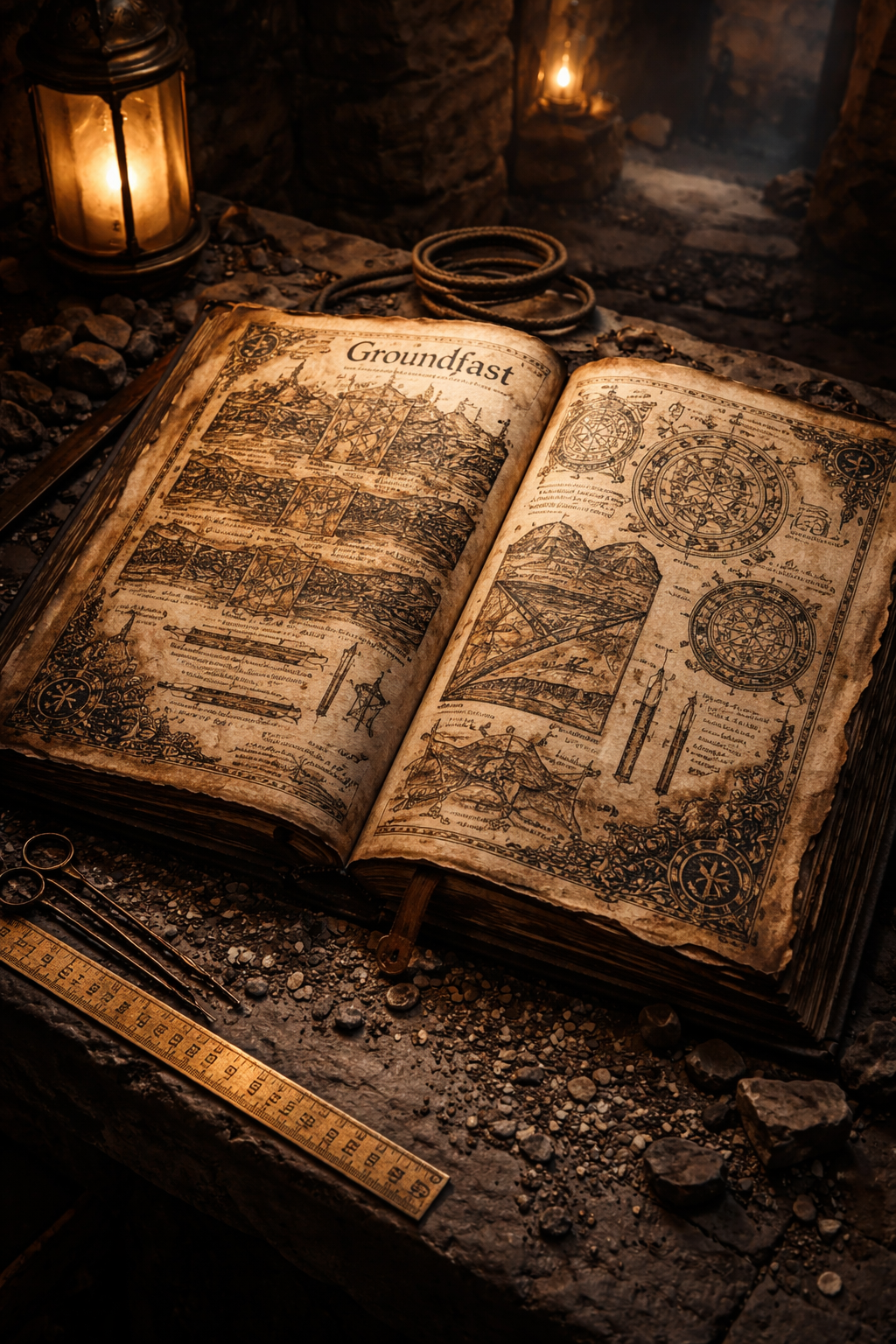
How to Perform the Spell
Setting
The spell is performed on the future footprint of the castle, ideally in the pale hour before sunrise or under a dim iron sky after rain has passed. The site must be quiet enough that the builder can hear the earth answer beneath each strike and step. No greenery, roots, or black rot may remain where the first walls are meant to stand.
Symbolic tools
A weathered survey cord
A brass measuring rod
A mason’s hammer
A hand tamper or heavy ram
A tray of crushed stone
A sack of pale sand
A bowl of dark water
A lantern with a shielded flame
A builder’s journal for marks and depth notes
A ring of iron stakes
Conditions
The ground must be exposed and observed. Water must have somewhere to flee. The site must be cut to competent bearing soil in story terms, meaning the earth that no longer trembles like loosened ash under heel. Any soft seams are to be removed and replaced with compacted aggregate. The ritual must never be rushed across a waterlogged field.
Sequence of actions
First, walk the perimeter in silence with the survey cord, stretching line from stake to stake until the future wall path is visible. This defines the will of the castle before a stone is ever touched.
Second, score the earth within that outline and strip away roots, sod, loose fill, and black organic matter. In the lore of the rite, these are called the false comforts of the ground. Cast them out.
Third, cut shallow channels beyond the footprint so all wandering water will be led away. These drainage paths are the escape veins of the spell. Without them, the ground broods and swells.
Fourth, inspect the exposed base. Where the soil is soft, replace it with crushed stone. Spread the stone in thin layers, no thicker than the width of a strong hand, and compact each layer with the ram until the sound changes from hollow to firm. Add sand where needed to choke voids and tighten the bed.
Fifth, sprinkle a little dark water at the edges and tamp again, not to drench the field, but to symbolize controlled moisture and disciplined settlement. In the fiction of the rite, excess water is chaos, but measured water is obedience.
Sixth, if the site slopes, build the layers in stepped terraces so the burden travels evenly through the earth. Never ask the ground to hold a grand wall on a single careless shelf.
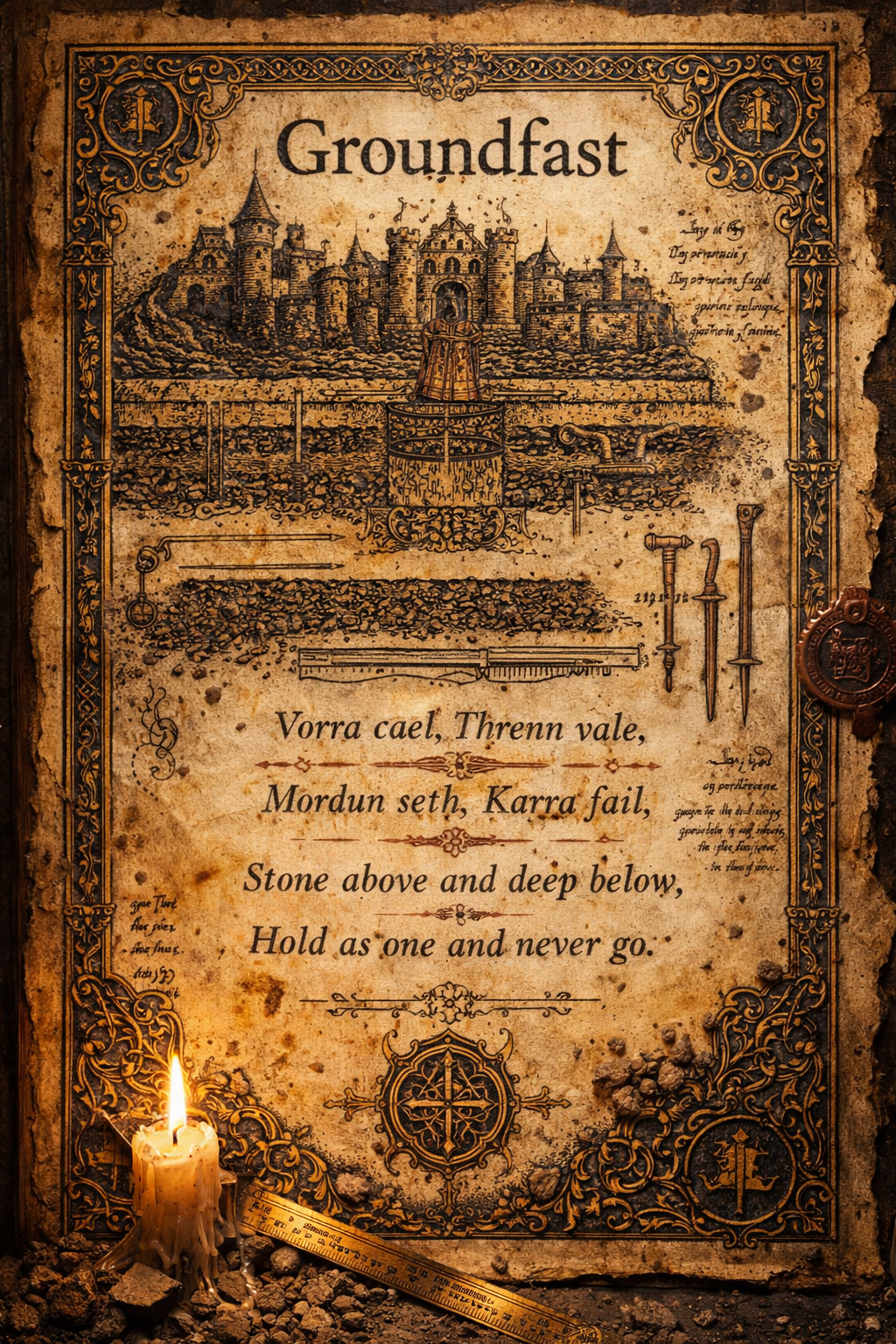
Seventh, stand at the center and raise the lantern. Speak the chant:
“Vorra cael, threnn vale,
Mordun seth, karra fail,
Stone above and deep below,
Hold as one and never go.”
Eighth, strike the tamper three times at each quarter of the site, then once at the center. With every strike, imagine the land knitting tight beneath the unseen future foundation.
Visible effect
The ground seems to darken into richer certainty. Loose dust settles. The lines appear sharper. Shallow puddles creep away toward the cut channels. In torchlight, the compacted bed looks almost sealed, as though the earth has accepted a hidden seal beneath the surface.
Cost or consequence
Groundfast exacts a stern price. It delays all visible glory. Days are spent beneath the level of admiration, in hauling, grading, draining, and compacting. If performed carelessly, the spell does not fail at once. Its punishment comes later, when walls crack under their own pride. But if performed well, every tower raised thereafter inherits its strength from this buried and uncelebrated oath.
Shop the Spell
A weathered black builder journal suits Groundfast beautifully.
It gives the spell a place for depth notes, drainage sketches, bearing observations, and the solemn field records a fortress builder would keep.
A brass measuring ruler set reflects the precise spirit of the rite.
Groundfast is about disciplined proportion, and elegant measuring tools reinforce that editorial castle workshop mood.
A medieval style lantern decor piece adds the guarded light this spell demands.
It helps stage the site as a secret foundation rite performed before the first stone is laid.
A parchment style paper pack is perfect for footprint maps, drainage diagrams, and symbolic site plans.
Its old world texture makes every line feel like part of a hidden castle archive.
A wax seal kit with antique stamp fits the binding theme of the spell.
Use it to seal sketches, builder notes, or fictional land covenants with dark editorial drama.
A decorative hourglass timer echoes the patience required by Groundfast.
This is a spell of waiting, layering, and measured labor, and an hourglass gives that slow discipline a visual symbol.
A castle stone texture table runner creates an immediate fortress worktable atmosphere.
It is ideal beneath journals, plans, and tools when styling a staged grimoire scene for the post.
A vintage skeleton key prop set adds a subtle sense of inheritance and buried authority.
The spell is about unlocking the loyalty of the land, and old keys support that symbolism without becoming literal.
Style It With
A flickering LED pillar candle set brings a soft ritual glow to the scene.
It helps create the feeling of a subterranean vow without relying on open flame.
An ornate black book stand elevates the grimoire page like a sacred engineering text.
It gives the spell page presence and makes the whole composition feel ceremonial and museum worthy.
A rustic iron chain decor accent complements the binding language of Groundfast.
Draped beside the book or plans, it suggests force, restraint, and ancient structural authority.
A wood handled calligraphy pen set suits the manuscript atmosphere perfectly.
Use it for annotations, site symbols, or elegant marginalia around the fictional rite.
A stone look desktop tray gives small props a clean stage.
It visually echoes the compacted base and foundation bed that define the spell’s entire logic.
A castle study decor skull free raven figurine adds ominous intelligence to the styling.
Groundfast is quiet, watchful work, and a raven accent deepens that severe editorial mood.