Butter-Glossed Steak Medallions with Whipped Garlic Mash
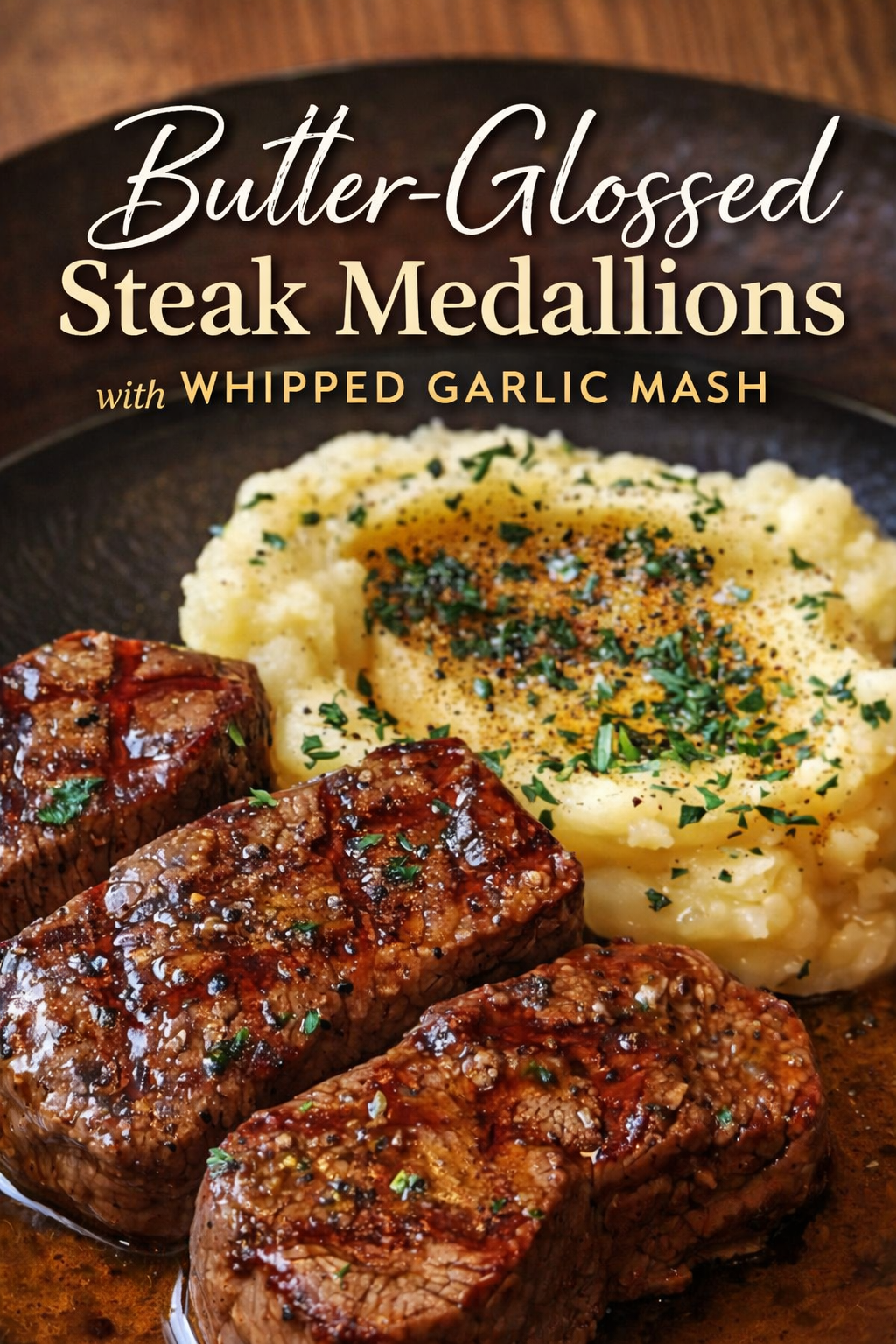
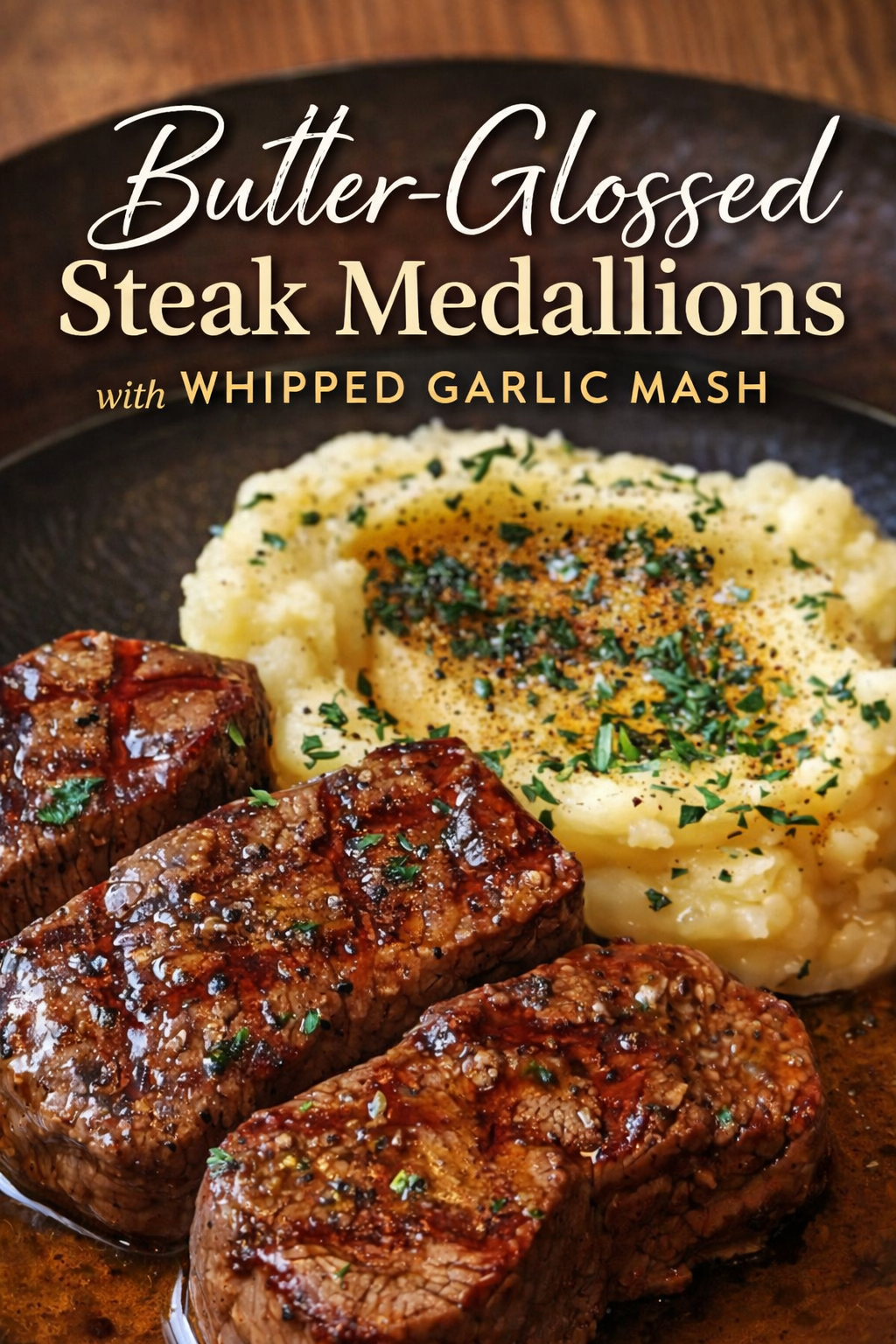
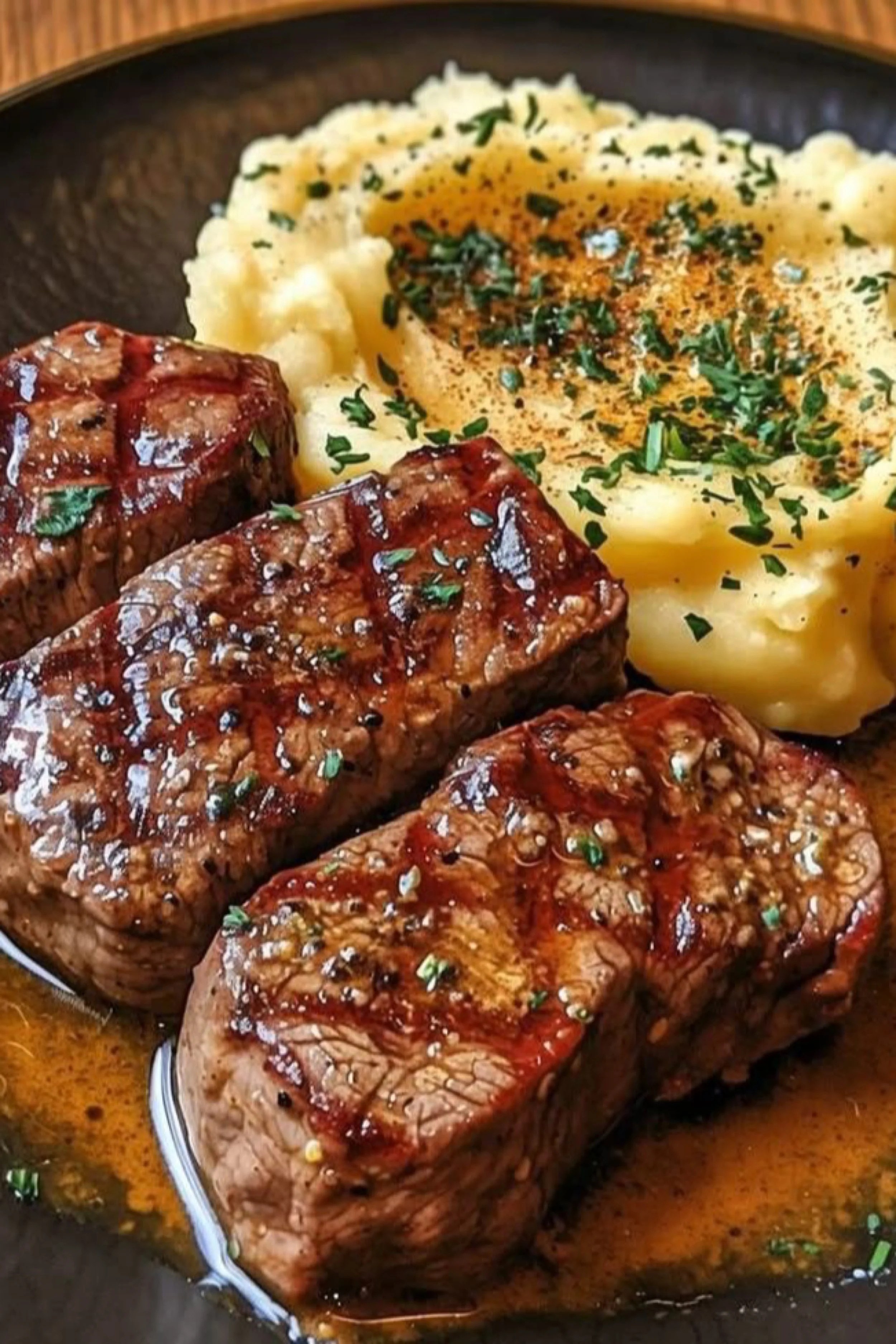
The plate arrives like a quiet flex—rich, simple, and absolutely sure of itself. Three thick steak medallions sit in a shallow pool of glossy pan sauce, the kind that catches the light and makes everything around it feel a little more expensive. The sear is deep and bronzed, edges kissed crisp, centers still tender enough to give when the knife leans in. A few flecks of green—parsley, maybe chives—look like the final brushstrokes on something that was already finished, but needed that last hint of freshness to feel complete.
Next to it, the mashed potatoes are piled high and sculpted into a soft crater, like a warm nest made on purpose. The center holds melted butter or a silky drizzle that disappears into the mash, leaving a golden sheen and that unmistakable promise: this is going to taste like comfort with impeccable manners. A dusting of pepper and paprika warms the surface, while herbs scatter across the top like confetti that knows when to stop. It’s the kind of side dish that isn’t “on the side” at all—it’s half the reason you’re here.
There’s a particular mood to food like this. It doesn’t shout. It doesn’t rely on tricks. It’s just the timeless combination of beef, butter, salt, and patience—made better by a few small choices that stack up into something unforgettable. The sauce is the story: browned bits lifted from the pan with a splash of liquid, butter turned into silk, garlic softened into sweetness, and a final stir that makes everything cling. This is why a good pan matters, why heat control matters, why having the right tools within reach changes the entire experience. A heavy skillet that holds temperature—something like a well-seasoned cast iron pan—turns the sear into a sure thing instead of a gamble.
Even the potatoes feel intentional. They’re not “mash” in the rushed, lumpy sense. They’re whipped, salted correctly, and finished with enough dairy to feel plush without turning soupy. The kind of texture you get when you drain well, steam off moisture, and use the right tool—whether that’s a sturdy potato ricer or an electric hand mixer for that cloudlike lift. The garlic doesn’t bite; it rounds out, mellowed in warm butter and folded in like a secret you only tell friends.
And then there’s the moment before you eat—when the kitchen smells like browned butter and pepper, when the pan is still ticking softly as it cools, when you can feel the satisfaction of making something that looks restaurant-level without needing a reservation. A quick check with an instant-read meat thermometer keeps the steak exactly where you want it, and a good board—like a thick wooden cutting board—makes resting and slicing feel clean and confident. This is dinner that lands with weight, the kind you remember the next day because it tasted like you meant it.
A classic steak-and-mash plate with a glossy butter pan sauce—fast enough for a weeknight, polished enough for company.
Ingredients
Steak
- 6–8 oz steak medallions (filet, sirloin medallions, or tenderloin), 3 pieces
- Kosher salt
- Fresh cracked black pepper
- 1 tbsp neutral oil
- 3 tbsp unsalted butter
- 3–4 cloves garlic, minced
- 1/3 cup beef broth
- 1 tsp Worcestershire
- Optional: 1–2 tsp honey or brown sugar (for a subtle glaze)
- Chopped parsley or chives, for finishing
Whipped Garlic Mash
- 1 1/2–2 lb Yukon Gold potatoes, peeled and cut
- 4 tbsp butter
- 1/3–1/2 cup warm milk or cream
- 2 cloves garlic, finely grated or minced (or roasted garlic)
- Salt and pepper
- Optional: pinch paprika for topping
Method
- Boil potatoes: Salt a pot of water and boil potatoes until very tender (15–18 minutes). Drain well and let steam dry 2 minutes.
- Whip mash: Mash/press potatoes, then mix in butter, warm milk/cream, garlic, salt, and pepper until smooth. Cover to keep warm.
- Sear steaks: Pat steaks dry and season generously. Heat a heavy skillet (like a cast iron skillet) over medium-high, add oil, then sear 2–3 minutes per side until browned.
- Butter baste: Reduce heat to medium. Add butter and garlic; spoon the butter over steaks for 1 minute.
- Build sauce: Add broth and Worcestershire; simmer 1–2 minutes, scraping browned bits. Optional: stir in honey/brown sugar. Spoon sauce over steaks.
- Rest & serve: Rest steaks 5 minutes. Plate with mash, drizzle pan sauce, and finish with herbs and pepper.
1) Choose the right cut—and size it for the sauce
Medallions work best when they’re thick enough to sear hard without overcooking inside. Filet is the classic “butter-soft” option; sirloin medallions bring a beefier chew and still plate beautifully. Whatever you choose, aim for pieces that are similar in thickness so they cook evenly. Before anything hits heat, pat the surface bone-dry—moisture is the enemy of a proper crust. If you want this to feel effortless, use paper towel rolls for prep and dry the steaks until they look matte, not shiny.
2) Season like you mean it (and do it early if you can)
Salt is not just flavor—it’s texture insurance. At minimum, season right before searing. If you have 30–60 minutes, salt earlier and leave the steaks uncovered; it gives the surface time to dry and helps the crust form faster. Pepper can go on now too, but if you’re sensitive to burnt pepper notes, add a touch more at the end instead.
3) Start the potatoes first so the timing feels calm
Steak happens fast. Potatoes take longer, and they’re forgiving. Put a pot of salted water on and boil Yukon Golds until a knife slides through with zero resistance. Drain well, then let them sit in the hot pot for a minute or two—this “steam-off” step is what keeps mash from turning gluey or watery.
For ultra-smooth mash, a ricer is the cheat code. Press the potatoes through a potato ricer while they’re hot. If you don’t have one, mash thoroughly and then whip gently. The biggest mistake is overworking them with a blender or food processor; that’s how you get paste.
4) Build flavor into the mash without making it heavy
Warm your milk or cream before adding it—cold dairy cools the potatoes and can make the texture tighten up. Fold in butter first (butter coats starch), then add warm milk/cream in small splashes until it’s plush. Garlic should be mellow, not harsh: grate it finely so it melts into the mash, or swap in roasted garlic for a sweeter profile. Finish with salt, pepper, and a small pat of butter on top so it looks as luxurious as it tastes.
5) Sear: high heat, heavy pan, no hesitation
This dish lives and dies by the crust. Use a pan that holds heat—a heavy cast iron skillet or thick stainless works best. Preheat until it’s properly hot, add neutral oil, then lay the medallions down and don’t touch them. That stillness is what creates the deep brown surface.
Cook time depends on thickness, but the move is always the same: sear hard, then finish gently with butter. If you want perfect repeatability, pull out an instant-read thermometer:
- Rare: 120–125°F
- Medium-rare: 130–135°F
- Medium: 140–145°F
(Remember: carryover heat rises a few degrees while resting.)
6) Butter baste: where “good” becomes “unfair”
Once you flip and get color on both sides, drop the heat to medium. Add butter, then garlic. The butter should foam, not burn. Tilt the pan and spoon the butter over the steaks repeatedly for about a minute. This does two things: it finishes the interior gently and perfumes the surface with browned butter and garlic without letting the garlic scorch.
7) Turn the pan drippings into a glossy sauce—fast
Here’s the trick: you’re not making a complicated reduction; you’re making a quick emulsified sauce. After basting, add beef broth and Worcestershire. Scrape up every browned bit—those are pure flavor. Let it bubble for 60–90 seconds so it concentrates. Then, if you want that lacquered, slightly sweet sheen like the photo, add a small touch of honey or brown sugar. Keep it subtle; you’re rounding the edges, not making dessert.
If the sauce looks thin, simmer a little longer. If it looks broken or greasy, take it off the heat and whisk in a small cold knob of butter—this tightens it back into a silky gloss.
8) Rest the steak so the plate stays beautiful
Resting isn’t optional; it’s how you keep juices in the meat instead of on the plate. Five minutes is enough for medallions. Use that time to re-whip the mash, warm plates, and taste the sauce for salt.
A clean slice and tidy plating helps the whole dish feel elevated. A sharp knife matters more than most people think—a quality chef’s knife makes the cut smooth instead of shredding the fibers.
9) Variations that keep the vibe but change the story
- Peppercorn finish: Add crushed peppercorns and a splash of cream to the sauce for a steakhouse feel.
- Herb-forward: Stir thyme or rosemary into the butter while basting.
- Dijon shine: Whisk in a teaspoon of Dijon at the end for bite and balance.
- Roasted garlic mash: Swap raw garlic for roasted cloves for sweeter depth.
10) Troubleshooting (so it never disappoints)
- No crust? Pan wasn’t hot enough or steak was damp. Dry it better and preheat longer.
- Garlic bitter? Heat was too high during basting. Lower heat before adding garlic.
- Mash gummy? Overmixed or wrong tool. Ricer or gentle mashing fixes it.
- Sauce too salty? Add a splash more broth and a tiny squeeze of lemon to rebalance.
When it’s done right, you get that exact contrast the image promises: steak with a glossy, savory-sweet butter sheen and mashed potatoes that feel like a warm blanket—rich, whipped, and finished like you cared. ::contentReference[oaicite:0]{index=0}