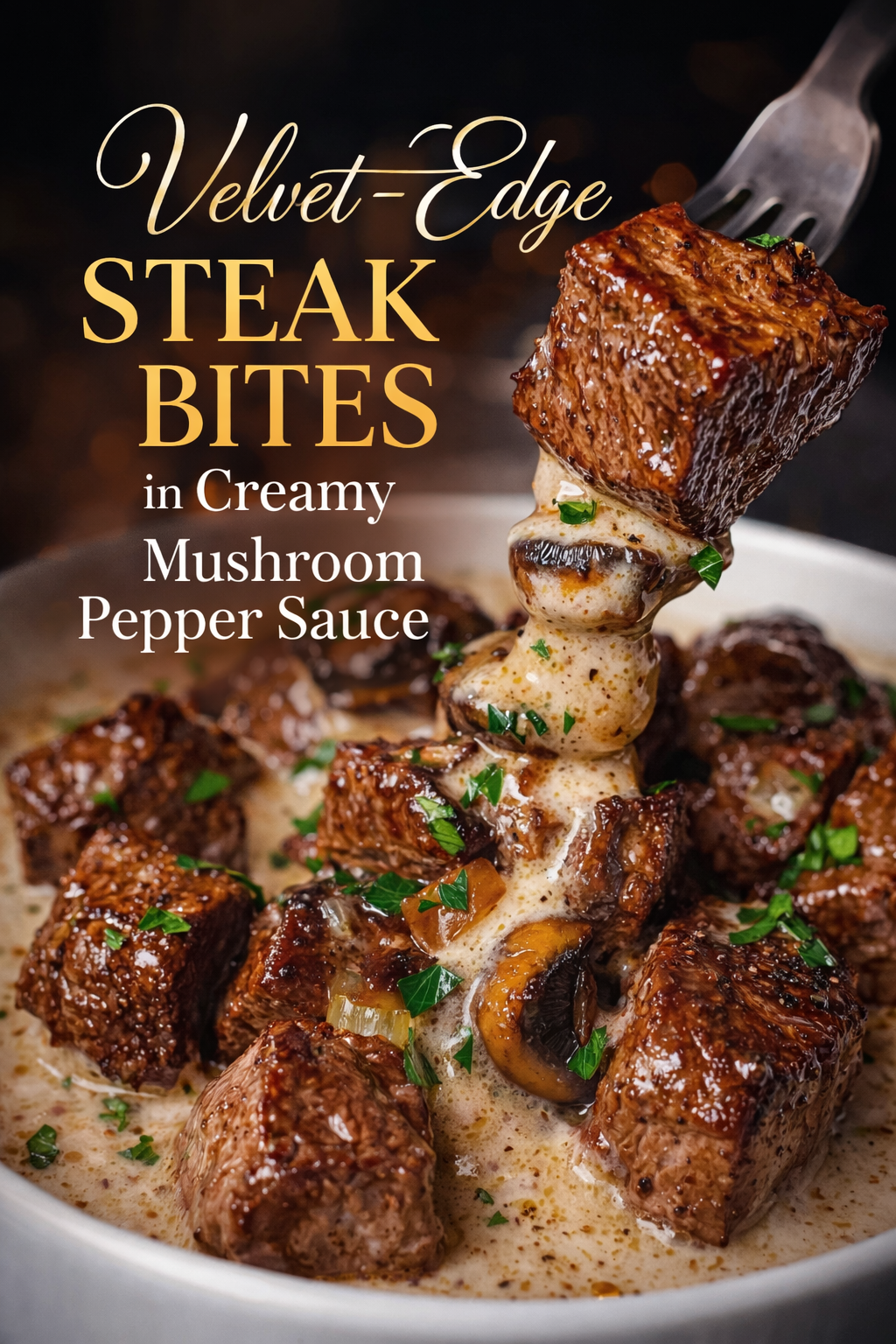
Velvet-Edge Steak Bites in Creamy Mushroom Pepper Sauce
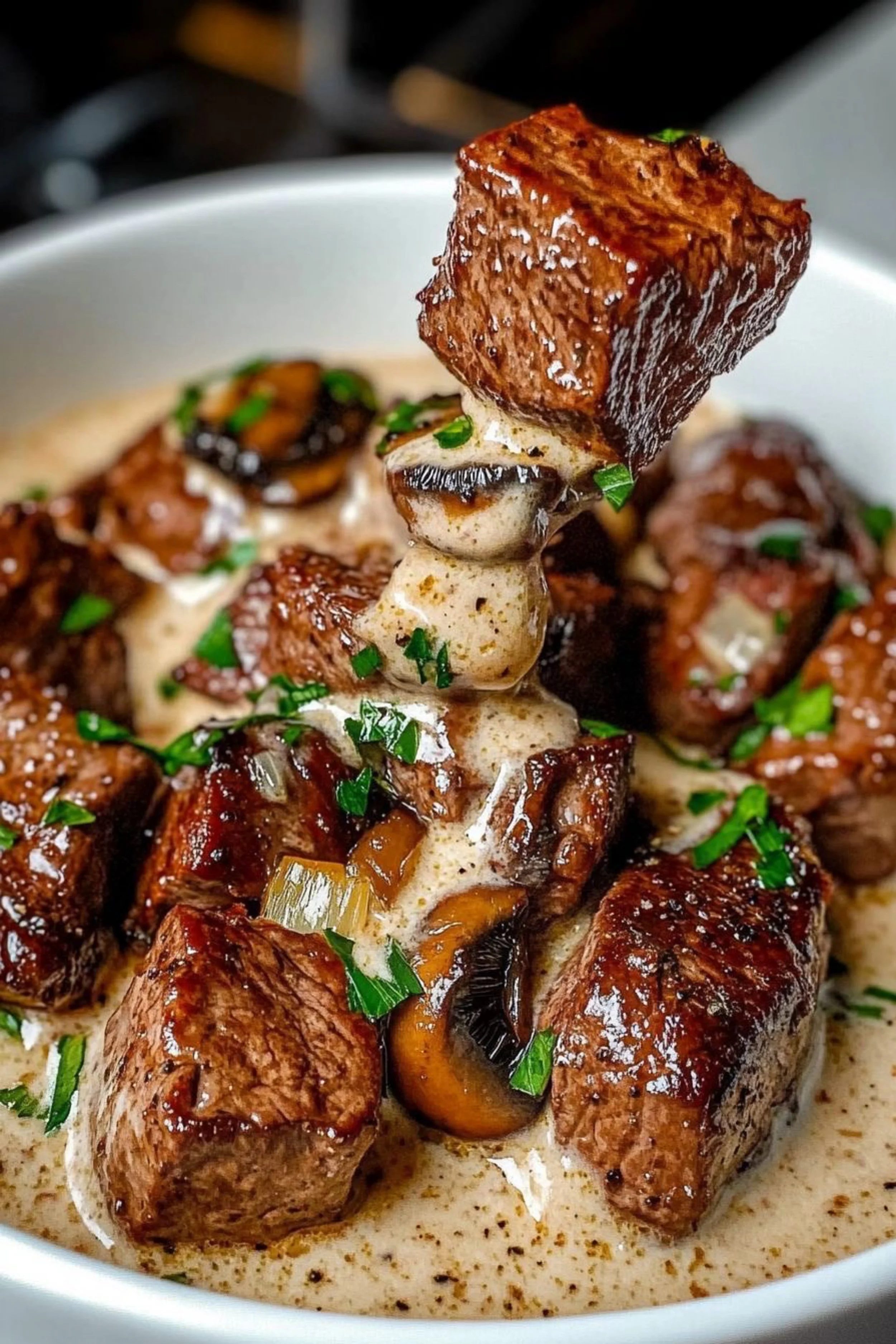
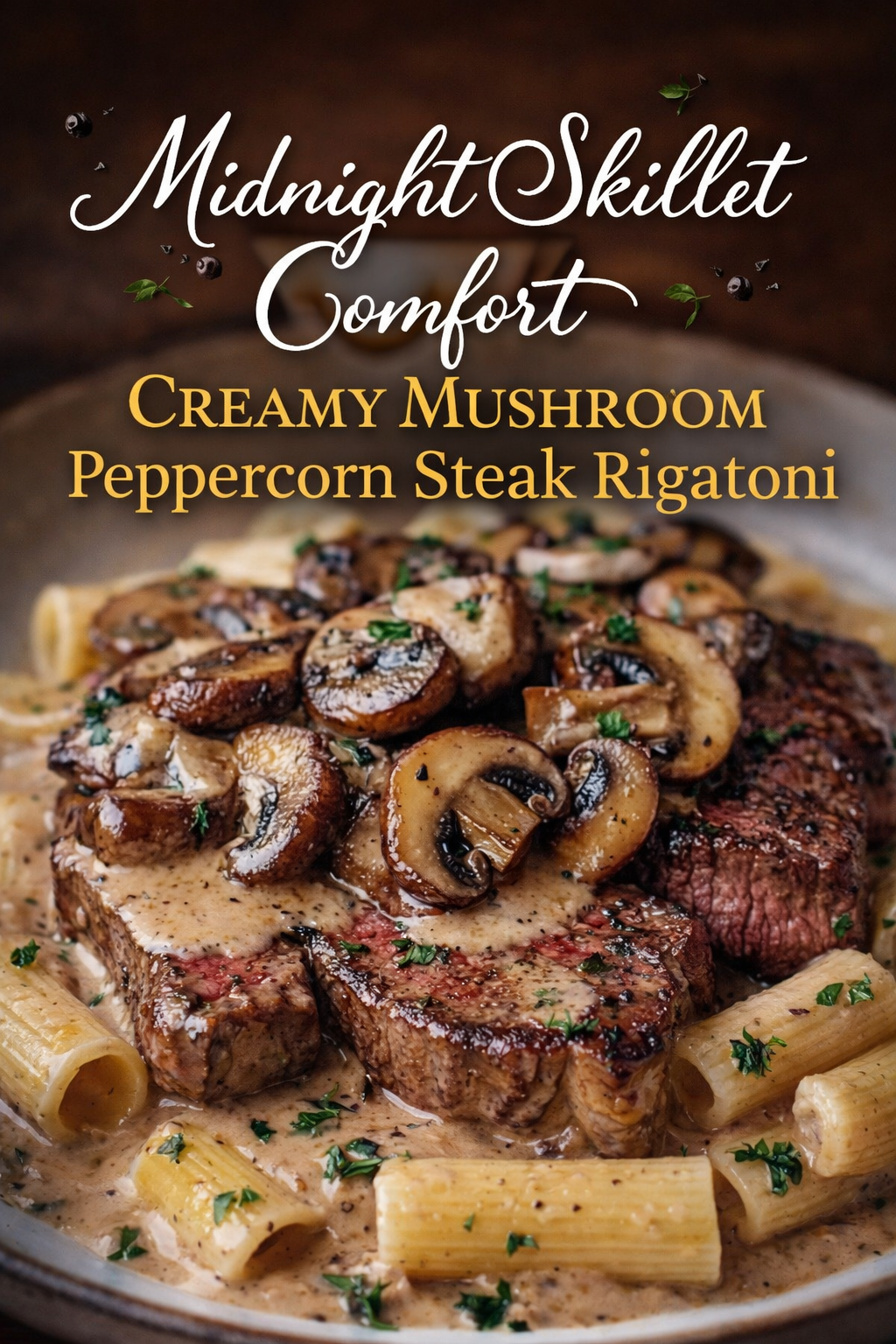
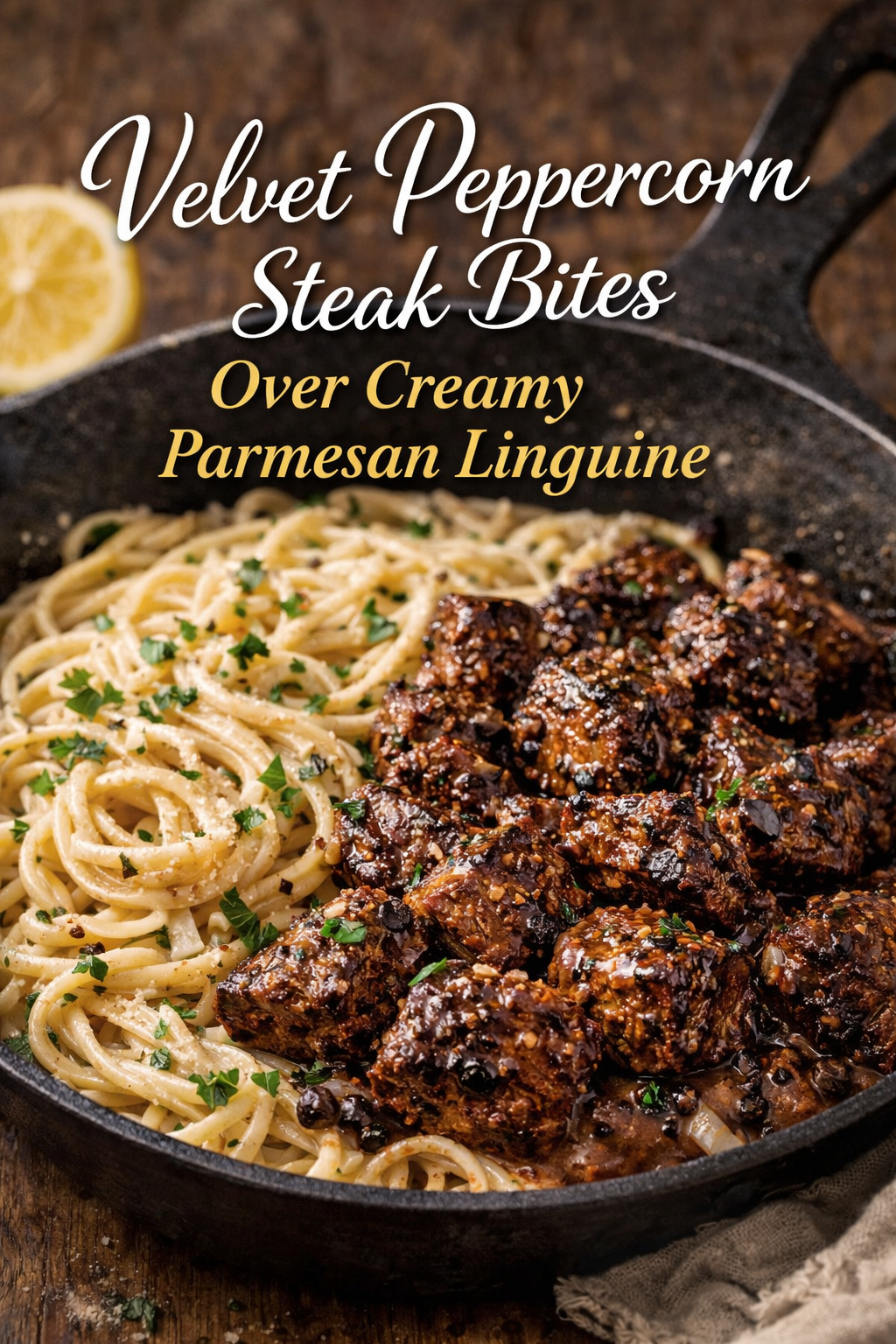
The bowl arrives like a small luxury—white porcelain, clean curves, and a warmth that fogs the air just above the rim. In the center, glossy cubes of steak stack and tumble as if they’ve just been lifted from the pan, their edges bronzed and lacquered, their surfaces catching the light in tiny ripples. A pale, velvety sauce pools beneath them, the kind that clings rather than runs, dotted with specks of cracked pepper and carrying the soft, savory perfume of mushrooms and butter. Sliced caps peek through the cream like polished stones—golden-brown, seared until their faces deepen into something almost caramel. Scattered green herbs cut through the richness with a sharp, garden-bright note, the color so fresh it looks like it was torn moments before serving.
Everything about the scene suggests intention: the steak cut into confident, even pieces for maximum crust; the mushrooms browned patiently rather than steamed; the sauce built to coat and gloss, not drown. You can almost hear the first contact of meat to heat—the sizzle that tells you the pan is ready, the quick burst of aroma when butter meets fond, the brief hush that follows as the sauce comes together and turns silky. This is the kind of comfort that doesn’t apologize for being indulgent. It’s weeknight-friendly in spirit, but it tastes like a late reservation at a place with low lighting and a waiter who knows when to leave you alone.
A dish like this is less about complicated technique and more about small, decisive moments: drying the steak so it sears instead of steams; letting the mushrooms sit untouched until they brown; building the sauce in the same pan so every browned bit becomes flavor. The right tools make those moments feel effortless—something like a heavy cast-iron skillet that holds heat and builds a serious crust or a stainless sauté pan that creates deep fond for pan sauces. A sharp blade matters too, not for show but for clean cuts that cook evenly—think a chef’s knife that glides through steak without tearing, paired with a sturdy cutting board that stays put when you work fast.
The flavor profile lives in a tight, elegant triangle: browned beef, earthy mushrooms, and a creamy pepper sauce with just enough bite to keep it from feeling sleepy. It’s not quite stroganoff, not quite pepper steak—more like the best parts of both, edited down to something modern and bowl-friendly. The sauce is pale but assertive, built with aromatics and a splash of broth, then finished with cream so it turns glossy and clings to every surface it touches. The pepper is not an afterthought; it’s a thread that runs through the whole dish, making the richness feel intentional instead of heavy. To get that snap, the simplest move is a generous grind from a pepper mill that produces a bold, fragrant crush. And when mushrooms are the supporting cast, it helps to give them proper attention with a set of tongs that lets you turn pieces without tearing the crust.
The bowl itself feels like a promise: something deeply savory, something built in layers, something meant to be eaten slowly even if you’re starving. The steak looks tender at the center, the kind that yields with a fork but still has structure. The sauce gathers at the bottom in a creamy tide, carrying little pockets of flavor—tiny bits of onion, browned mushroom edges, peppery warmth. It’s the sort of meal that makes even a plain Tuesday feel like it has a little more gravity. And when you bring it to the table—maybe with a spoon ready to catch extra sauce, maybe with bread or potatoes waiting on the side—it doesn’t feel like cooking as a chore. It feels like a small act of theater, the kind that starts in a hot pan and ends in a quiet, satisfied pause.
For serving, the dish loves companions that soak up sauce: mashed potatoes, buttered noodles, rice, or crusty bread. If you want the full comfort effect, keep a pile of something warm nearby and use a wide bowl so the sauce has room to pool. A sprinkle of herbs at the end isn’t just decoration—it’s the last bright note that makes the whole thing feel balanced. It’s rich, yes, but it’s also clean in its way: sear, sauté, simmer, finish. A handful of simple decisions, and you get a bowl that looks like it belongs in a glossy cookbook—and tastes like it was made for the exact moment you needed it.
Recipe: Velvet-Edge Steak Bites in Creamy Mushroom Pepper Sauce
These steak bites are seared hard for a caramelized crust, then finished in a creamy mushroom pepper sauce that’s bold, silky, and designed to cling to every bite.
Ingredients
- 1 1/2 lb sirloin or ribeye, cut into 1 1/2-inch cubes
- 10 oz cremini mushrooms, sliced
- 1 small yellow onion, finely diced
- 3 cloves garlic, minced
- 2 tbsp neutral oil (avocado or canola)
- 3 tbsp unsalted butter, divided
- 1 1/2 tsp kosher salt, plus more to taste
- 1 1/2 tsp freshly cracked black pepper (more to finish)
- 1 tsp smoked paprika (optional, for warmth)
- 1 tbsp Worcestershire sauce
- 1 1/4 cups beef broth
- 3/4 cup heavy cream
- 1 tsp Dijon mustard
- 1 tbsp cornstarch + 2 tbsp cold water (slurry), optional for thicker sauce
- Chopped parsley or chives, for finishing
Method
- Prep steak: Pat steak dry thoroughly. Season with salt, pepper, and paprika (if using).
- Sear: Heat a cast-iron skillet over medium-high. Add oil. Sear steak in batches 60–90 seconds per side until deeply browned. Remove to a plate.
- Brown mushrooms: Lower heat to medium. Add 1 tbsp butter, then mushrooms. Cook undisturbed 3–4 minutes, then stir and continue until browned. Add onion; cook 3 minutes. Add garlic; cook 30 seconds.
- Build sauce: Stir in Worcestershire, then beef broth, scraping up browned bits. Simmer 3–4 minutes.
- Finish creamy: Reduce heat to low. Stir in cream and Dijon. Simmer gently 2–3 minutes (no hard boil). Optional: whisk in cornstarch slurry to thicken.
- Return steak: Add steak (and juices) back to pan. Warm 1–2 minutes until just cooked through. Taste and adjust salt/pepper.
- Serve: Spoon into bowls, top with herbs, and finish with extra cracked pepper.
Serving ideas: mashed potatoes, buttered egg noodles, rice, or crusty bread.
The difference between “good steak in sauce” and a bowl that makes people stop talking mid-bite comes down to control—heat control, moisture control, and timing. This dish rewards you for being decisive at the start and gentle at the end. The sear is loud and fast; the sauce is quiet and patient.
Step 1: Choose a steak that wants to be cut into cubes
Sirloin is the reliable favorite—beefy, reasonably tender, and forgiving. Ribeye is richer and more luxurious, with fat that melts into the sauce, but it can flare and smoke more during searing. Whatever you choose, cut the pieces evenly so they brown at the same speed. A clean cut matters more than people think; ragged edges leak juices and can inhibit browning. That’s why a sharp tool like a well-balanced chef’s knife makes the prep feel calmer and the results more consistent.
Step 2: Dry the steak like you mean it
Moisture is the enemy of crust. Pat the cubes dry with paper towels until they look matte, not shiny. If you have five extra minutes, let the seasoned steak sit uncovered on a plate—surface moisture evaporates, and the sear improves. Season assertively with salt and pepper; the sauce is rich, so the meat needs a confident baseline.
Step 3: Sear in batches—this is non-negotiable
Overcrowding is how you accidentally braise. Use a pan that can hold serious heat—a heavy cast-iron skillet is ideal because it doesn’t cool down the moment cold meat hits it. Heat the pan first, then add oil, then the steak. You want immediate sizzle. If the pan is too cool, the steak releases water, and the crust turns patchy.
Sear each side briefly—think 60 to 90 seconds per face. You’re not cooking it through yet; you’re building flavor. Pull the steak as soon as it’s browned. The carryover plus the final warm-through in sauce will finish it without turning it tough.
Troubleshooting:
- No browning? Pan wasn’t hot enough, steak wasn’t dry enough, or pan was crowded.
- Burning fast? Heat is too high or the fond is getting too dark. Lower slightly and wipe out excess burnt bits before moving on.
Step 4: Treat mushrooms like the main character for five minutes
Mushrooms need space and time. Add butter, then mushrooms, and let them sit. Don’t stir immediately—browning happens when contact stays steady. Once they’ve browned, stir and repeat. If you keep them moving, they release water and steam.
A simple tool makes this easier: kitchen tongs for turning pieces without scraping away the crusty goodness. When the mushrooms look glossy and deep brown at the edges, you’re ready for onion. Onion sweats into the pan, picks up that mushroom flavor, and becomes the bridge to the sauce.
Step 5: Build the sauce in the same pan—capture the fond
Fond is the browned layer stuck to the bottom of the pan. It’s not “stuff to clean,” it’s flavor. Add Worcestershire for depth, then pour in beef broth and scrape the bottom. A wooden spoon works well, but even better is a flat-edged wooden spatula designed for deglazing. Simmer a few minutes so the liquid concentrates.
If you like a little extra backbone, this is where you can add a pinch of smoked paprika or a small spoon of Dijon. Dijon doesn’t make it “mustardy”—it sharpens the cream and ties the beef to the mushrooms.
Step 6: Add cream gently, not aggressively
Cream is a finishing ingredient, not a boiling ingredient. Lower the heat before it goes in. Stir it through and let it warm until the sauce looks cohesive and silky. A hard boil can split dairy, especially if the pan is extremely hot. Keep it to a gentle simmer.
Want a thicker, clingier sauce? Use a cornstarch slurry, but add it slowly and only after the cream is incorporated. The goal is nappe consistency—thick enough to coat the back of a spoon, not thick like gravy.
Troubleshooting:
- Sauce looks thin: Simmer longer, or add slurry.
- Sauce looks broken: Heat was too high. Pull it off the burner, whisk gently, and add a tablespoon of cream to help smooth it out.
Step 7: Return steak at the last moment
Once the sauce is ready, add the steak back in with any juices. Warm it through 60 to 120 seconds. This preserves tenderness and keeps the cubes from overcooking. Taste the sauce now—this is when you decide if it needs more salt, more pepper, or a tiny splash of broth to loosen it.
Black pepper is the signature note here, and it’s best fresh. Finish with a generous grind from a pepper mill that cracks pepper into bold, aromatic pieces. It hits the nose first, then the palate, and makes the cream feel intentional instead of heavy.
Step 8: Serve like a pro—texture matters
This dish wants something that catches sauce: mashed potatoes, egg noodles, rice, or thick bread. Use a bowl rather than a flat plate so the sauce can pool and stay warm. Add chopped parsley or chives at the end for brightness and contrast. If you want extra polish, warm your serving bowls briefly so the sauce doesn’t cool too quickly.
Variations that keep the soul intact
- Garlic-forward: Add an extra clove and finish with a tiny pinch of garlic powder.
- Spicy edge: A pinch of crushed red pepper or a dash of hot sauce in the broth stage.
- More mushroom intensity: Use mixed mushrooms—cremini plus shiitake—for deeper umami.
- Lighter version: Swap heavy cream for half-and-half, but simmer gently and expect a thinner sauce.
- Extra tang: A spoon of sour cream whisked in off-heat gives a stroganoff-adjacent vibe.
Make-ahead and storage
Sear the steak and brown the mushrooms ahead of time, then cool and refrigerate separately. Reheat the sauce gently, return mushrooms, then steak last. This avoids overcooking and keeps the texture right. Store leftovers in an airtight container and reheat on low with a splash of broth or cream to bring the sauce back to life.
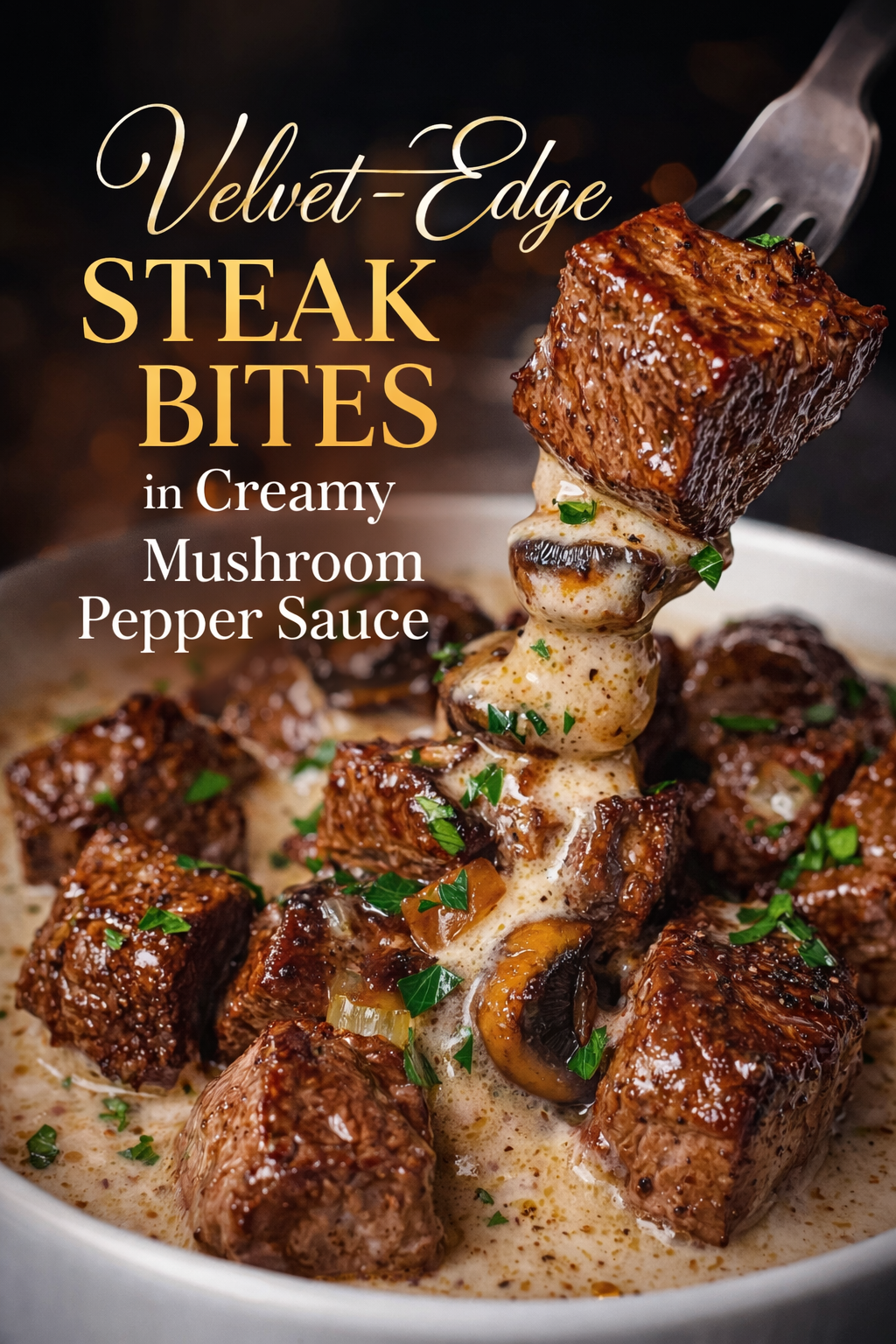
When every step is done with intention—dry steak, hot sear, patient mushrooms, gentle cream—you get that final bowl: glossy cubes of beef, browned mushrooms, and a sauce that clings like velvet. It tastes expensive, but it’s built from simple moves and a few well-timed decisions.