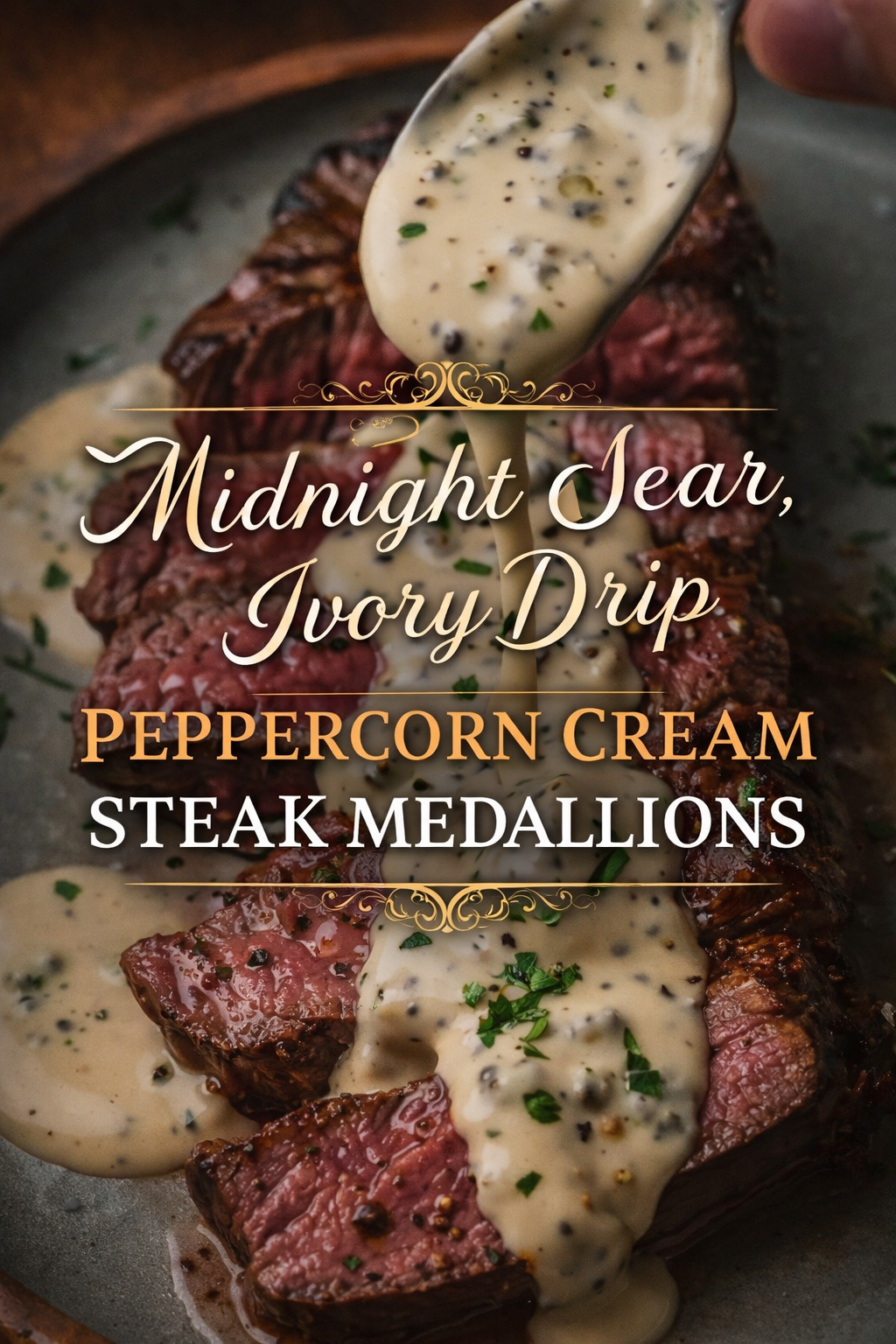
Midnight Sear, Ivory Drip: Peppercorn Cream Steak Medallions
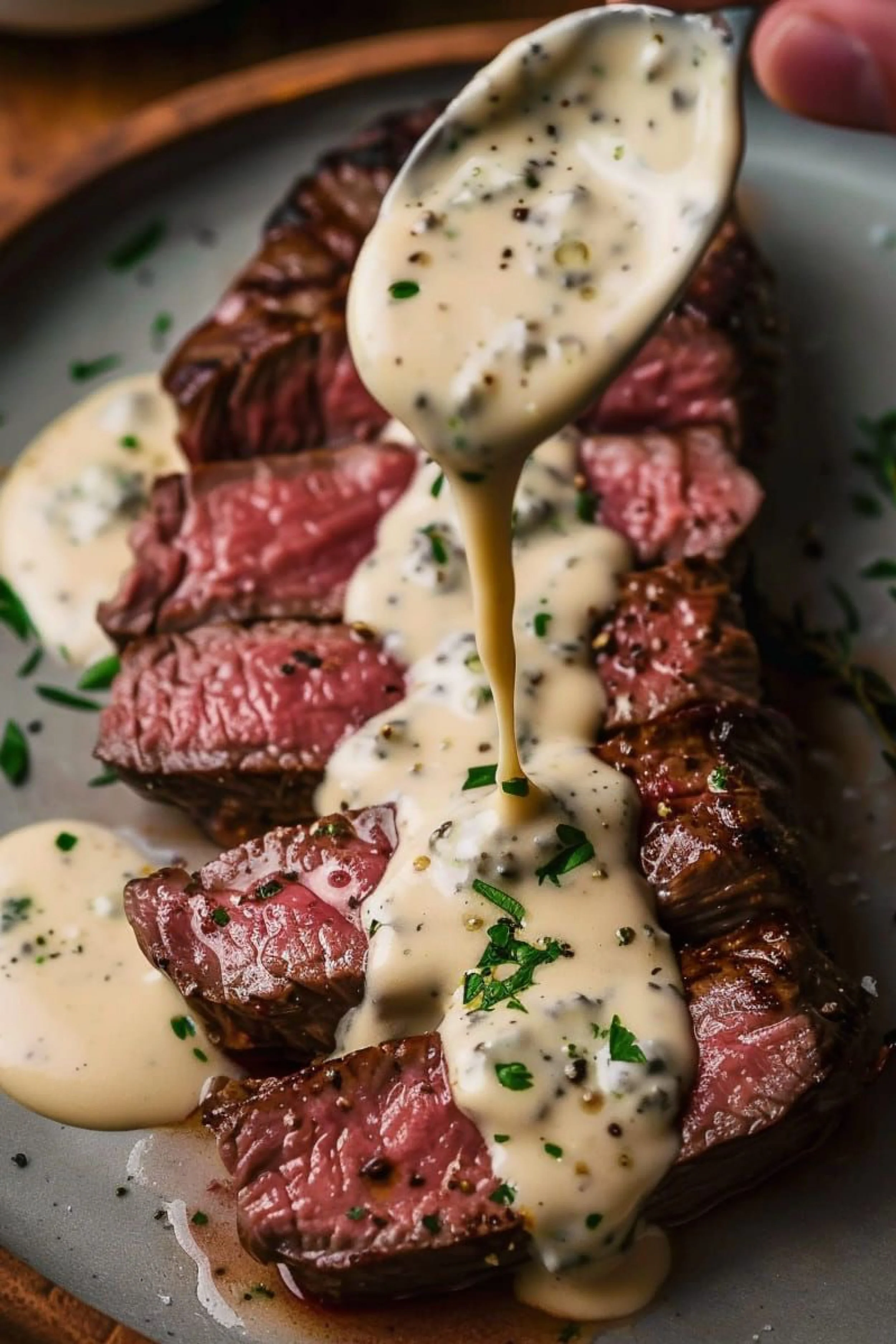
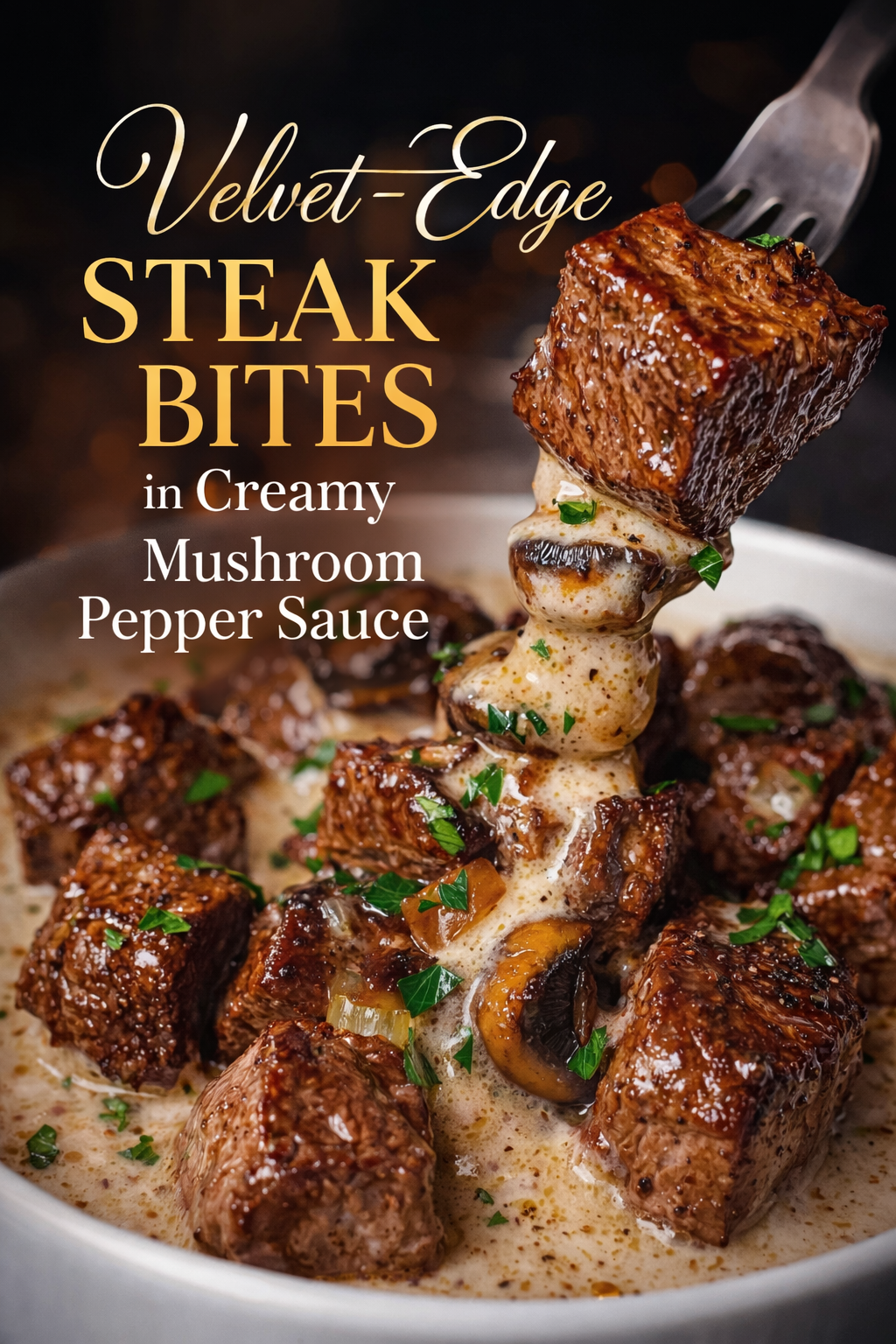
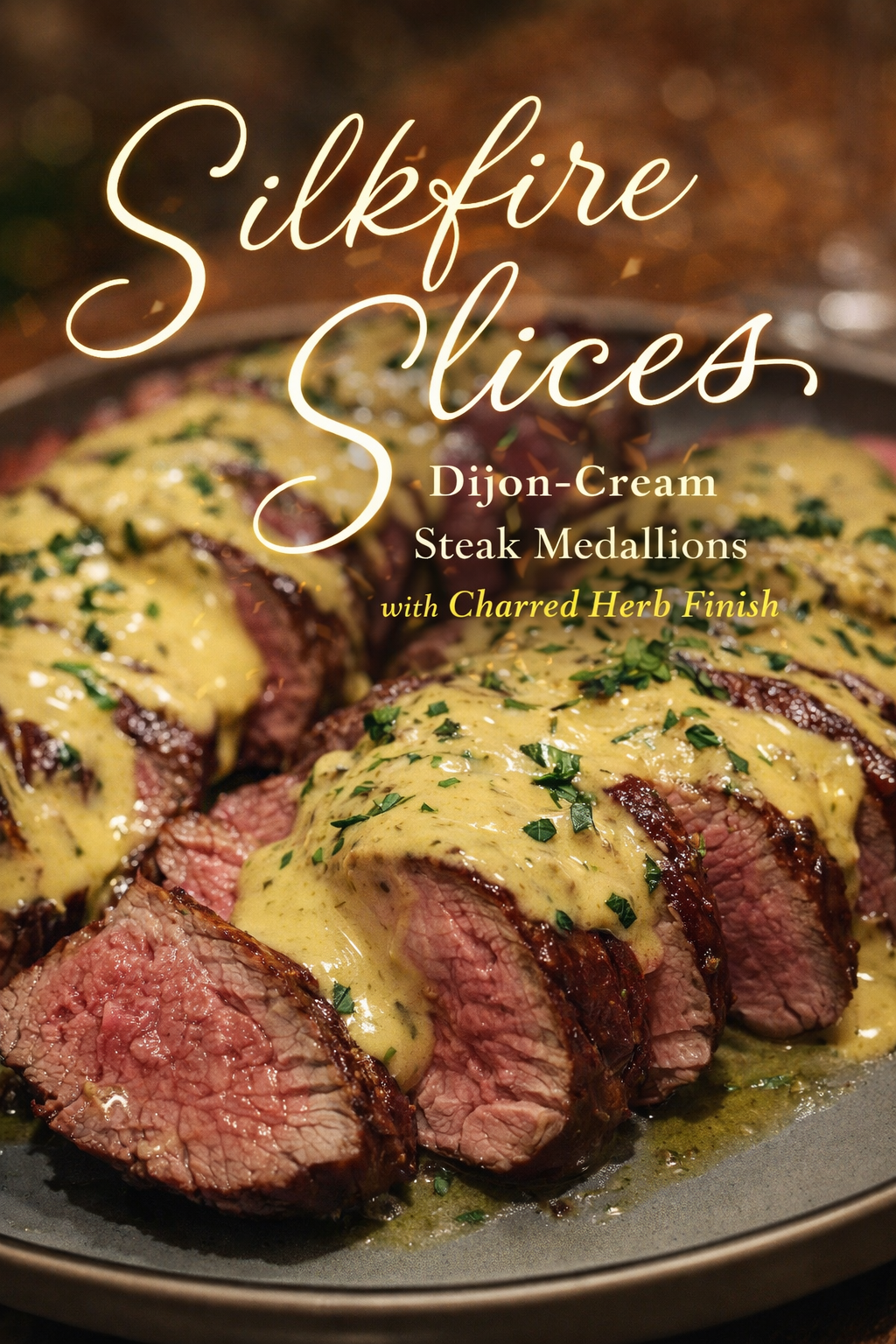
The first thing you notice is the contrast—dark, lacquered edges meeting a pale, glossy river that refuses to hurry. Steak that’s been kissed hard by heat sits in thick slices, the center still blushing and tender, the surface bronzed and faintly crackled where seasoning met the pan. Then comes the pour: a spoon lifted high, cream sauce folding over itself in a slow satin ribbon, speckled with crushed pepper and tiny green flecks like a finishing signature. It lands with a soft weight, pooling in warm eddies around the meat, catching light the way candle wax does when it first turns liquid—steady, indulgent, inevitable.
This is the kind of plate that makes the room quiet for a beat. Not because it’s precious, but because it feels final, like the last track on a record you don’t want to end. The aroma arrives in layers: first the toasted savor of browned beef, then the bright bite of peppercorn, then the mellow warmth of cream rounding everything into something that reads as comfort without slipping into heaviness. If you’ve ever stood at a stove while winter pressed its face to the window—hands warmed by the oven vent, a kitchen clock ticking like it’s keeping you honest—you know the mood. It’s not “special occasion” in the fussy sense. It’s the kind of meal that turns a regular night into something you’ll remember simply because you cared enough to do it right.
There’s a reason peppercorn cream feels timeless. It leans on simple physics: fat carries flavor, heat unlocks aroma, and a little acidity keeps the whole thing from collapsing into richness. You sear until the pan gives you that deep, nutty browning; you bloom pepper so it smells almost citrusy; you deglaze so the browned bits—those tiny, stubborn treasures—become part of the sauce instead of a memory. A heavy cast-iron skillet makes this feel effortless, the way a good tool always does: steady heat, fearless contact, a surface that begs to be used hard. The steak doesn’t steam; it sings.
And the sauce—this is where the spell happens. It isn’t a thick, gluey blanket. It’s a sheen. It’s what you’d want to drag a bite through, then tap your fork against your teeth like you’re trying to keep the flavor from leaving too soon. The peppercorns matter more than people admit. Pre-ground pepper can’t compete with the snap of freshly cracked—those little bursts of heat that bloom and fade instead of sitting flat. A quick turn through whole black peppercorns and a grinder changes everything, turning “peppery” into fragrant, almost floral, with a gentle bitterness that makes the cream feel cleaner.
The plate in the image looks like it was built around restraint. Minimal garnish, just enough green to sharpen the eye. The sauce is the star, but it’s not trying to hide the steak—it’s tracing the contours, settling into the spaces between slices like it belongs there. That’s the secret: steak should still taste like steak. The sauce should amplify, not replace. And the doneness is intentional—warm pink, not raw; juicy, not mushy. If you’ve ever overcooked a beautiful cut by just a minute and felt the disappointment in your chest, you’ll appreciate the quiet confidence of an instant-read meat thermometer. It’s not cheating. It’s respect.
This kind of cooking has a rhythm. Salt first, time second, heat third. A steady hand with kosher salt makes the surface ready to brown and the interior taste complete instead of “seasoned on top.” A short rest lets the meat relax after its sprint across the fire. And good tongs—real ones, not the flimsy kind—make you feel like you’re in control of the moment the crust forms. The click of stainless steel kitchen tongs is its own little ceremony, a sound that says you’re about to do something that matters.
There’s also a certain pleasure in how fast it all comes together. The steak is seared, rested, sliced. The sauce is built in the same pan, as if the whole meal is one continuous thought. That continuity is what makes it feel luxurious without being complicated. The browned bits stuck to the skillet become the foundation; the pan becomes a memory keeper. You can almost taste that moment when the deglaze hits—steam rising, a sharp, sweet note cutting through the fat—especially if you choose a splash of something warming like brandy for deglazing. It’s optional, but it adds a quiet glow, like turning a lamp on low.
And when you finally pour that pepper-speckled cream over the slices, you’re not just finishing dinner—you’re finishing a mood. The sauce clings, then loosens, then gathers again at the edges, glossy and alive. You could serve it with potatoes, or a crisp salad, or nothing at all and still feel like you made something complete. Because the real point is the moment captured in the image: the slow drip, the patience, the confidence of a spoon held steady while the kitchen smells like browned butter and pepper and something you can’t quite name—something like satisfaction.
There’s no need to rush it. This is the kind of meal that rewards a little focus: a good pan, a watchful eye, a brief rest, and the willingness to let simplicity feel extravagant. The plate proves it—steak, sauce, salt, pepper, a scatter of green—and somehow it looks like an event.
Peppercorn Cream Steak Medallions (Recipe)
A classic steakhouse-style sear finished with a silky peppercorn cream sauce—fast enough for a weeknight, rich enough to feel like a celebration.
Ingredients
Steak
- 2 steaks (ribeye, strip, or filet), 1–1.5 inches thick
- 1½ tsp kosher salt
- 1 tsp freshly cracked black pepper
- 1 tbsp neutral oil (avocado/canola)
- 2 tbsp unsalted butter
- 2 garlic cloves, smashed (optional)
- 2–3 thyme sprigs (optional)
Peppercorn Cream Sauce
- 1 tbsp butter (or use remaining pan fat)
- 1–2 tsp cracked black peppercorns (to taste)
- ¼ cup brandy or beef broth (optional but great)
- ¾ cup heavy cream
- 1 tsp Dijon mustard (optional)
- Salt, to taste
Method
- Season steak: Pat dry. Season all over with salt and pepper. Let sit 10–20 minutes at room temp.
- Sear: Heat a skillet over medium-high until very hot. Add oil, then steak. Sear 2–4 minutes per side (depending on thickness) until deep brown.
- Baste (optional): Lower heat to medium. Add butter, garlic, and thyme. Baste 30–60 seconds.
- Rest: Transfer steak to a plate and rest 8–10 minutes.
- Build sauce: In the same skillet, melt 1 tbsp butter if needed. Add cracked peppercorns and toast 15–30 seconds. Deglaze with brandy/broth, scraping up browned bits; reduce by half.
- Finish: Add cream (and Dijon if using). Simmer gently 2–4 minutes until glossy and lightly thickened. Salt to taste.
- Serve: Slice steak into medallions and spoon sauce over top.
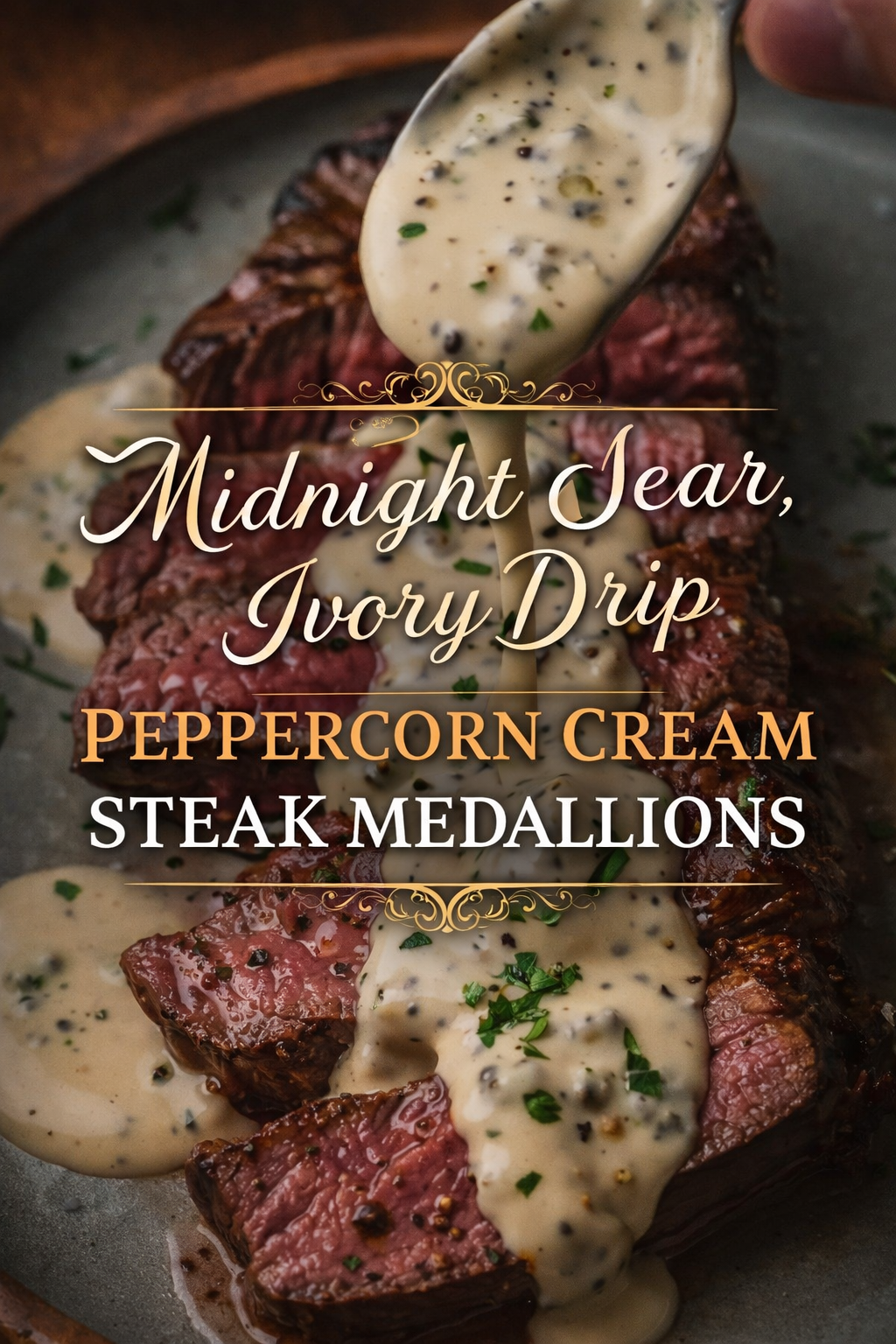
A steak like this is won or lost in small decisions: how dry the surface is before it hits the pan, how confidently you let the crust form without fiddling, how gently you treat the sauce once cream enters the picture. The goal isn’t complexity—it’s precision that feels effortless.
1) Choose the right cut (and thickness)
For the look in the image—thick slices with a rosy interior—start with steaks at least 1 inch thick, preferably closer to 1½. Ribeye gives you buttery richness; strip brings a clean beefy bite; filet turns this into a velvet-on-velvet experience. If you want consistent results, an instant-read thermometer removes the guesswork: pull around 125–130°F for medium-rare, 135°F for medium, knowing the temperature will climb slightly as it rests.
2) Dryness is the gateway to crust
Moisture is the enemy of browning. Pat the steaks thoroughly with paper towels—don’t be shy. If you have time, salt the steaks and leave them uncovered on a rack in the fridge for a few hours; it deepens seasoning and helps the surface dry. Even a quick 10–20 minute rest after salting helps. Use kosher salt for better control and a more even coating.
3) Get the pan truly hot
That dramatic sear comes from a pan that’s already at the right temperature before the steak goes in. A cast-iron skillet is ideal because it holds heat and keeps the sear steady. Heat over medium-high until the pan looks faintly shimmering. Add a high-smoke-point oil, swirl, then lay the steak down and let it be. No sliding, no poking—contact is what builds the crust.
Troubleshooting:
- If the steak sticks, it often means the crust isn’t ready yet. Give it another 30–60 seconds; it will release when properly browned.
- If the pan smokes aggressively, reduce heat slightly or switch to an oil with a higher smoke point.
4) Sear first, then butter-baste for aroma
Once you’ve got color on both sides, lower the heat to medium and add butter. Butter adds flavor, but it can burn at high heat, so timing matters. If you want the steakhouse aroma, add smashed garlic and thyme and tilt the pan, spooning foaming butter over the top for 30–60 seconds. Use stainless steel tongs to hold the steak on its side briefly to render and brown the fat cap.
Variation: If you like a more pepper-forward steak, crack a little extra pepper on only after searing—pepper can scorch in intense heat and turn bitter.
5) Resting isn’t optional—it’s structural
Rest the steak 8–10 minutes. This isn’t about superstition; it’s about texture. The fibers relax, juices redistribute, and your slices stay moist instead of leaking onto the plate. Tent loosely with foil if the room is cool, but don’t wrap tight (that can soften the crust).
6) Toast the peppercorns for fragrance, not heat
The sauce in the image is speckled—pepper that looks alive. Start with freshly cracked peppercorns rather than pre-ground. A simple grinder and whole black peppercorns create a warmer, more aromatic pepper note. Add the cracked pepper to the pan fat and toast briefly—15 to 30 seconds. You’re waking up the aroma, not burning the spice.
Troubleshooting:
- If the pepper smells harsh or acrid, it toasted too long; wipe the pan and start the sauce again with fresh butter.
7) Deglaze like you mean it
Those browned bits stuck to the skillet are flavor concentrate. Deglaze with a splash of liquid and scrape with a wooden spoon. Brandy gives a subtle sweetness and warmth; broth keeps it straightforward. If you choose brandy, a bottle suitable for cooking is perfect—reduce it by about half so the alcohol edge disappears and the flavor rounds out.
No-alcohol option: Use beef broth plus a teaspoon of lemon juice or a tiny splash of vinegar to add brightness.
8) Add cream and keep it gentle
Once the pan is deglazed and reduced, lower heat before adding cream. High heat can cause a greasy split or grainy texture. Heavy cream is the most stable; it thickens into that glossy “ivory drip” look. If you want a subtle tang and more depth, whisk in a teaspoon of Dijon. Use a small saucepan if your steak pan is too hot or too wide and you want tighter control, but it’s absolutely doable in the same skillet.
Troubleshooting:
- Sauce too thin: Simmer gently a bit longer, stirring occasionally.
- Sauce too thick: Add a tablespoon of warm broth or water and whisk to loosen.
- Sauce split: Pull off heat, whisk in 1–2 tbsp warm cream, and calm the temperature down.
9) Slice for the best texture (and the best look)
Slice against the grain into thick medallions. The image shows confident thickness—this keeps the steak juicy and creates that satisfying contrast between crust and interior. Arrange the slices slightly overlapped, then spoon sauce down the center so it pools naturally around the edges. Finish with chopped parsley or chives for freshness.
10) Flavor variations that still feel classic
- Green peppercorn version: Swap some cracked black pepper for brined green peppercorns (rinse and lightly crush).
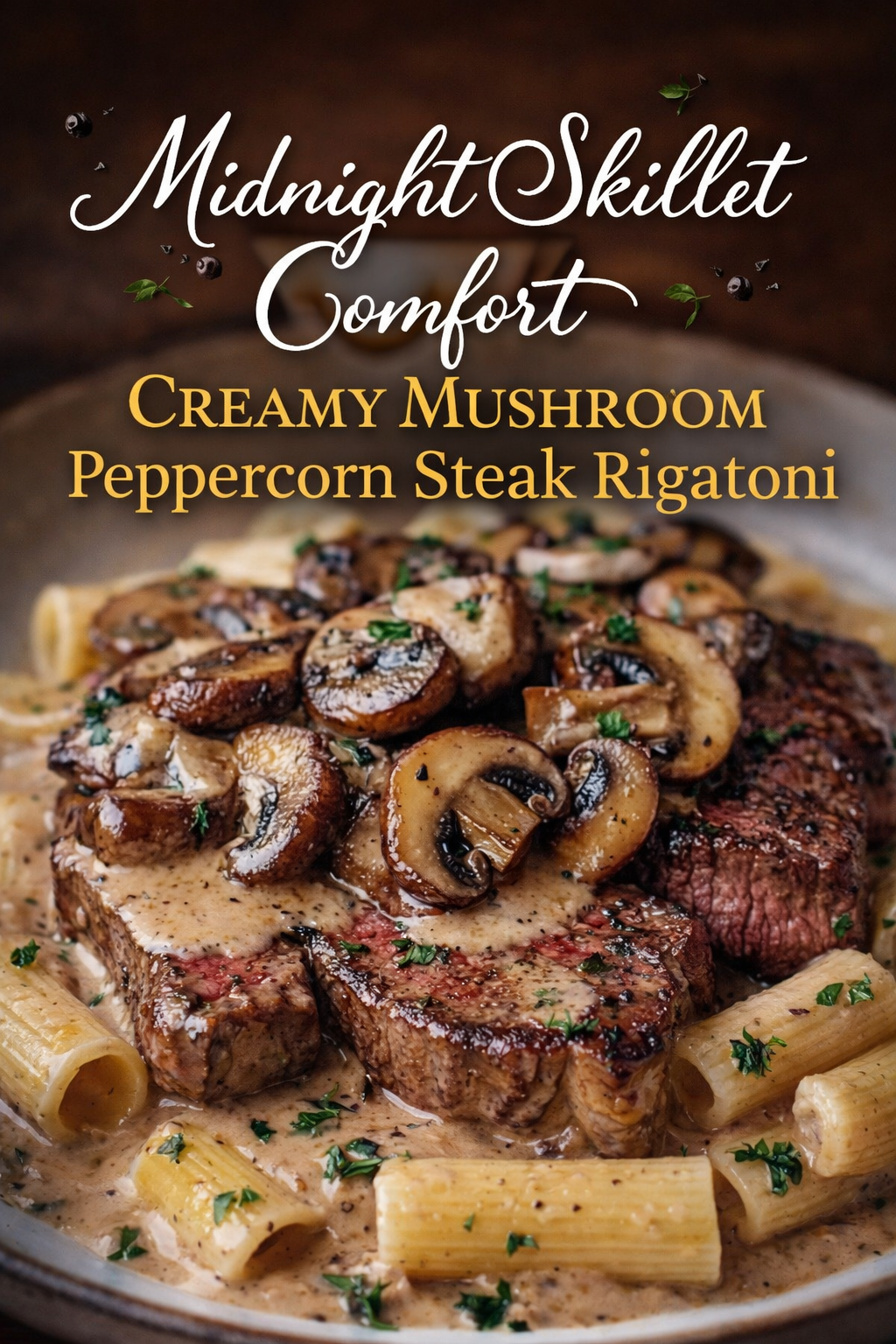
- Mushroom addition: Sauté sliced mushrooms after searing, then proceed with pepper and cream.
- Blue-cheese edge: Whisk in a tablespoon of crumbled blue cheese at the end for a sharper, steakhouse punch.
- Lighter sauce: Use half-and-half, but expect a thinner finish; reduce longer and keep heat very gentle.
11) Serving ideas that match the mood
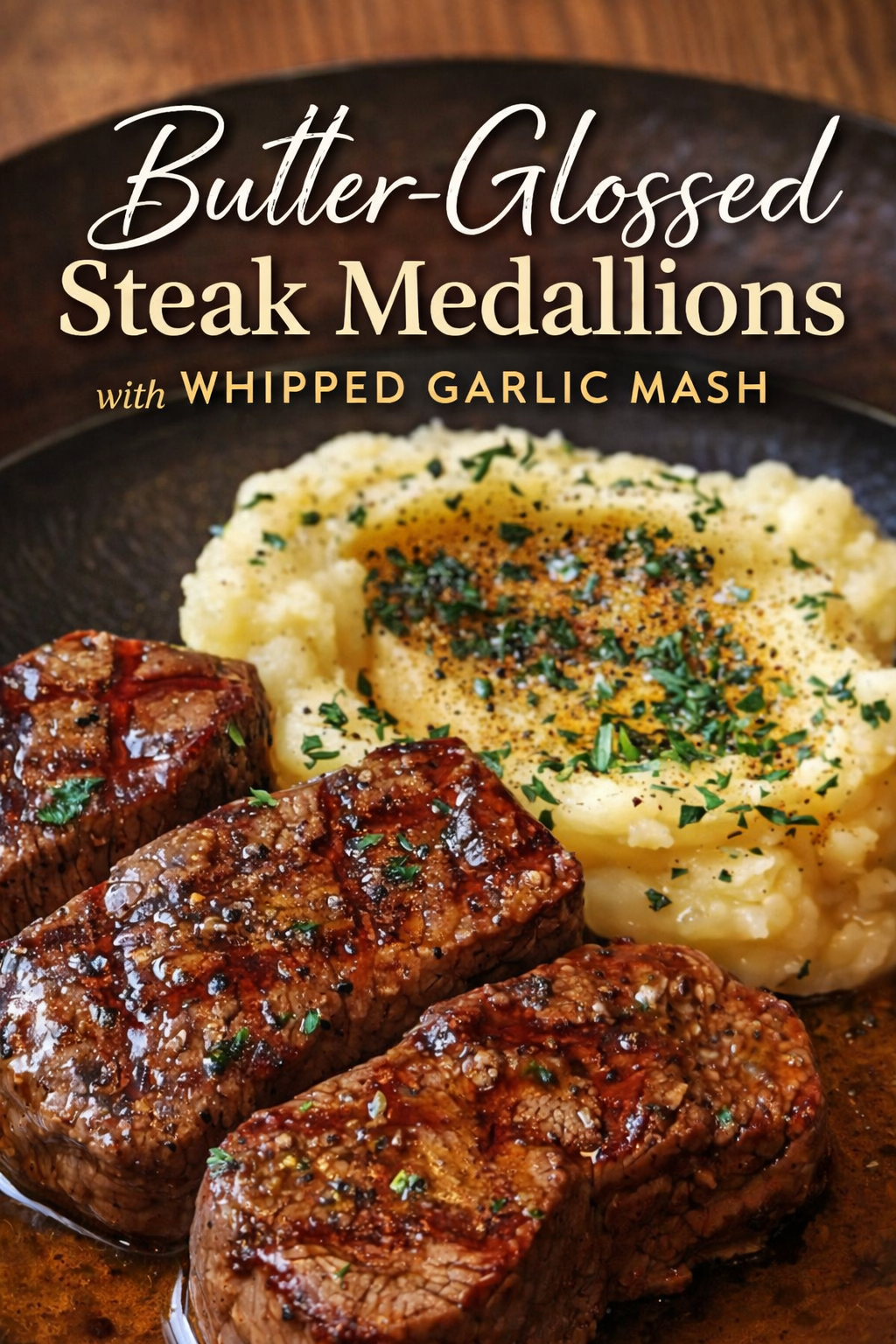
This pairs beautifully with mashed potatoes, roasted baby potatoes, or crusty bread that can chase the sauce. If you want contrast, add something crisp and acidic—arugula with lemon, a shaved fennel salad, or even quick-pickled onions.
The entire experience hinges on two truths: crust requires patience, and cream requires restraint. Nail those, and you get what the image promises—steak that tastes deeply browned and alive, finished with a pepper-speckled sauce that drips like silk and makes every bite feel deliberate.