Hearthbound Bourguignon: A Slow-Burn Beef Stew Sealed in Crust
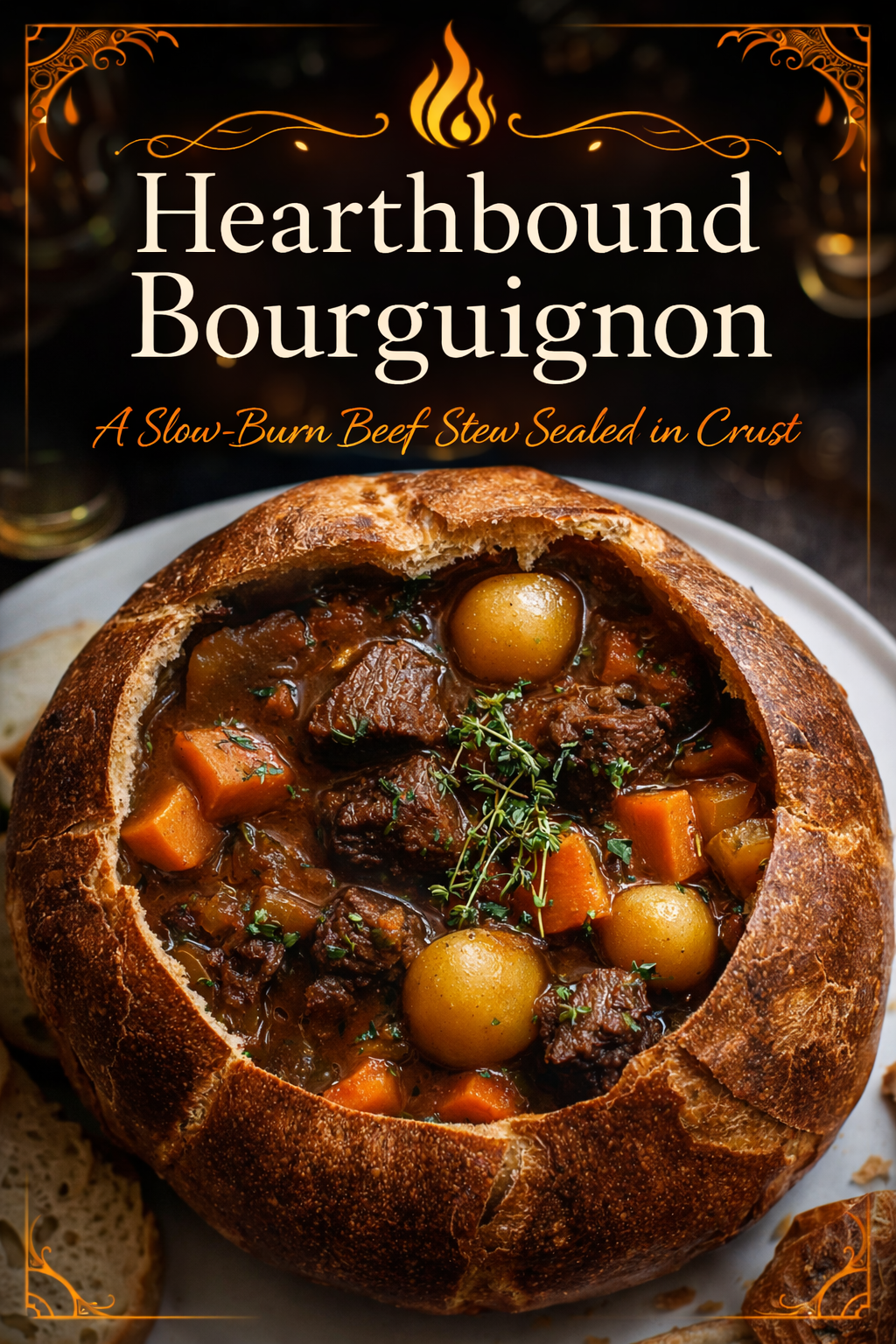
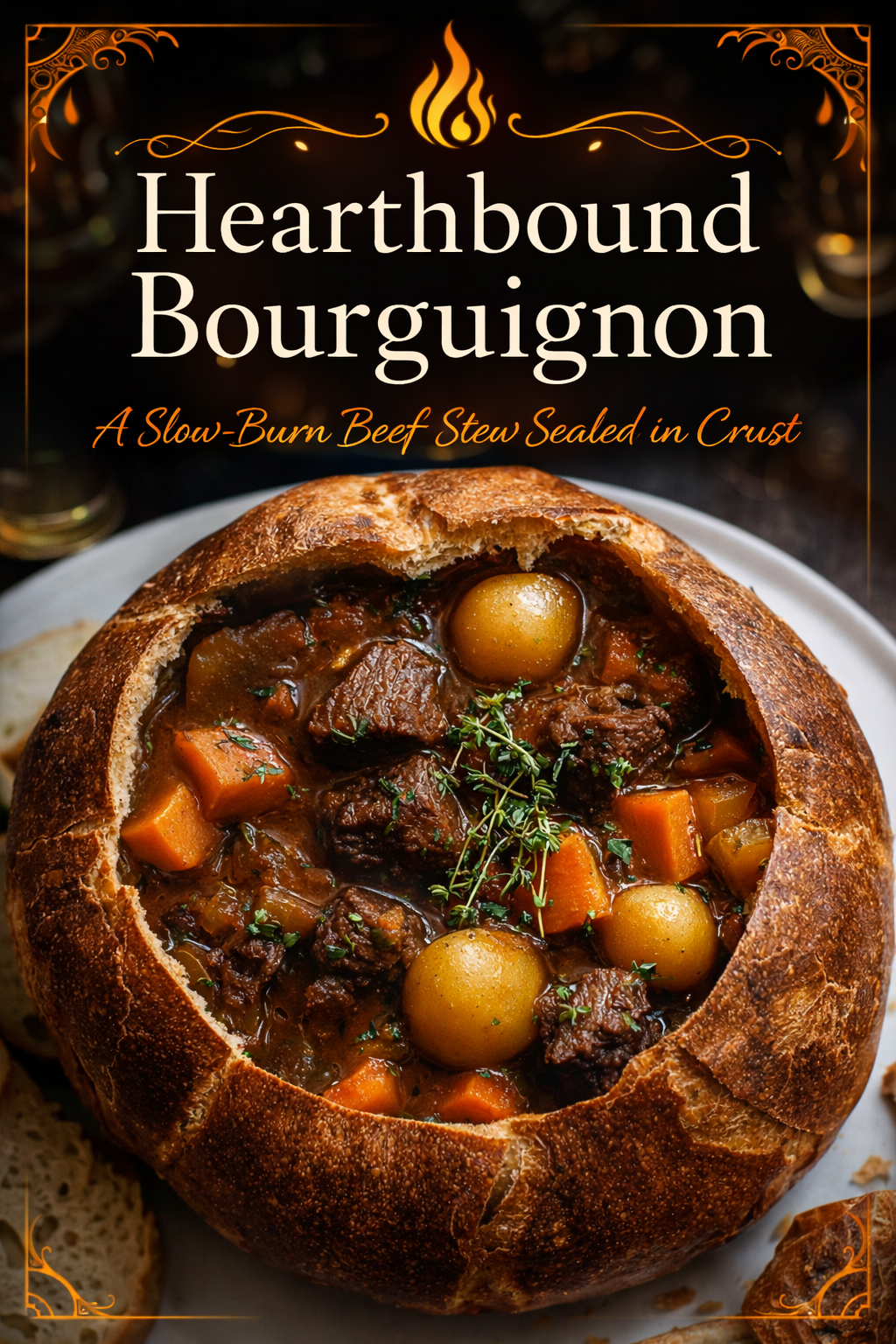
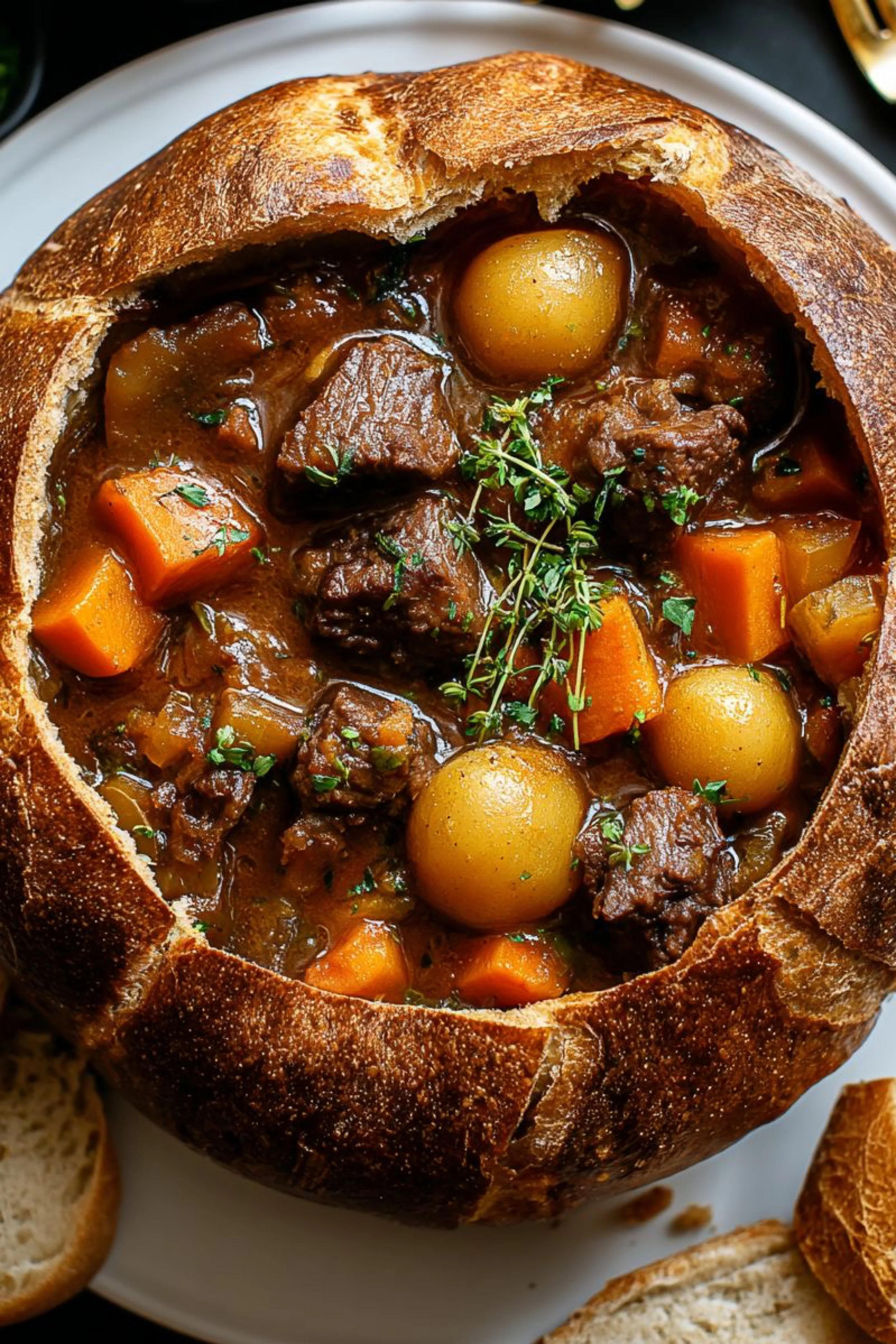
The first thing that registers is the crust. Burnished, deeply bronzed, and fractured just enough to reveal what lies beneath, it looks less like bread and more like a vessel—something forged rather than baked. Its surface carries the faint blistering of high heat and patience, the kind that only comes from time and confidence. Cradled inside is a stew so rich it seems to glow from within, the light catching on pearl-sized potatoes and thick, velvet-dark cubes of beef suspended in a glossy, wine-dark sauce.
Steam lingers at the opening, slow and deliberate, carrying aromas that feel almost architectural in their depth. There is the sweetness of carrots softened into submission, the earthy roundness of mushrooms folded into the sauce, the quiet herbal note of thyme that ties everything together. It smells like winter settling in for the evening, like a long table and low conversation, like the kind of meal that asks you to slow down whether you planned to or not.
The bread bowl does more than hold the stew. It absorbs it, softening at the edges while maintaining a resilient outer shell. Each spoonful is a negotiation between textures: crisp crust yielding to tender crumb, followed by beef that has given up every last bit of resistance. The sauce clings, thick but not heavy, lacquered with gelatin released from hours of gentle cooking. It is the kind of consistency that coats the back of a spoon and makes you pause before taking the next bite.
This is food shaped by intention. You can sense the quiet rhythm of preparation—the measured browning of meat in a heavy pot, the careful deglazing that lifts caramelized flavor from the bottom, the slow reduction that transforms liquid into something silken and profound. The tools matter here, from a heavy enameled pot built for long, even braises to a razor-sharp chef’s knife suited for confident, clean cuts. Nothing flashy, nothing rushed.
The potatoes, left whole and small, act like anchors in the stew. They drink in flavor without losing their shape, offering a buttery contrast to the deep savor of the beef. Carrots add quiet sweetness, while onions melt so fully into the sauce they’re felt more than seen. Somewhere beneath it all is wine—dark, dry, assertive—reduced until its sharpness gives way to richness and length.
Eating this feels ceremonial. The bowl sits heavy on the plate, a complete world unto itself. A spoon breaks the surface, gathers beef, sauce, and bread in a single motion, and delivers something that tastes composed rather than assembled. This is not comfort food in the casual sense; it is comfort with structure, indulgence with restraint.
The setting almost doesn’t matter. A long farmhouse table, a quiet city kitchen, a fire-lit evening with rain at the windows—it adapts to all of it. What remains constant is the feeling that this is a dish meant to be shared slowly, appreciated fully, and remembered long after the last spoonful is gone. The kind of meal that doesn’t announce itself loudly, but leaves a lasting echo.
💡 Pro Tip: Why These Are Amazon Search Links (and Why “Add to Cart” Really Helps) You might notice that every “Shop the Look” section uses Amazon search result links rather than one specific product. That’s not a glitch—it’s a strategy.
Items in fashion, beauty, and home sell out fast. Colors change. Styles get discontinued. Linking to a single item might leave you staring at a “Currently Unavailable” page—and nobody wants that.
With search result links, you’ll get: • A fresh rotation of similar, in-stock finds • Options that match your budget, size, and style • Fewer dead ends and more discoveries
✨ Here’s how you can support this blog with zero extra cost: If something speaks to you—even if you're still deciding—add it to your cart while you’re browsing. Amazon only credits creators like me if the item is added to your cart during that first visit.
It doesn’t cost you anything extra, but it makes a big difference in helping me keep this blog alive, ad-free, and full of hand-picked inspiration for your next obsession.
Thank you for being here. Thank you for shopping with intention. 💛
Ingredients
- 2½ lbs beef chuck, cut into large cubes
- Kosher salt and freshly ground black pepper
- 2 tbsp olive oil
- 2 onions, chopped
- 3 cloves garlic, minced
- 3 tbsp tomato paste
- 3 cups dry red wine
- 2 cups beef stock
- 2 tbsp all-purpose flour
- 3 carrots, cut into chunks
- 1 lb baby potatoes
- 8 oz mushrooms, halved
- 3–4 sprigs fresh thyme
- 2 bay leaves
- 2 large round sourdough loaves
Method
- Season beef generously with salt and pepper.
- Brown beef in olive oil in batches until deeply caramelized; remove and set aside.
- Sauté onions and garlic in the same pot until softened, then stir in tomato paste and flour.
- Deglaze with red wine, scraping up browned bits, then add stock, herbs, and beef.
- Simmer gently until beef is tender, adding vegetables halfway through.
- Hollow sourdough loaves and ladle stew inside just before serving.
The foundation of this stew is patience, and that begins with the beef. Choosing well-marbled chuck is non-negotiable; it contains the connective tissue that breaks down into richness over time. Seasoning generously before browning ensures the meat develops flavor from the inside out. A wide, heavy-bottomed braising pot designed to retain heat evenly allows the surface temperature to stay high enough to create deep caramelization without scorching.
Browning in batches matters more than most people realize. Crowding the pot traps steam, preventing proper searing. Each cube should meet the heat directly, forming a dark crust that will later dissolve into the sauce. Those browned bits left behind are not residue—they are the backbone of flavor. When onions hit the pot, they release moisture that loosens those caramelized fragments, folding them back into the stew.
Tomato paste is added not for acidity, but for depth. Cooking it briefly before deglazing removes rawness and concentrates its sweetness. When the wine goes in, the pot should hiss. That sound is flavor being released. Scraping the bottom thoroughly ensures nothing is wasted. The wine then reduces, its sharp edges softening as it melds with stock and rendered beef juices.
Long, gentle simmering is where transformation happens. A low flame keeps the liquid just below a boil, allowing collagen to melt without tightening the meat. This is not a stage to rush. Stir occasionally, but sparingly, letting the stew settle into its own rhythm. Using a heat-resistant wooden spoon ideal for slow stirring helps maintain that balance without damaging the pot.
Vegetables are added in stages for a reason. Carrots and potatoes need enough time to absorb flavor, but not so much that they collapse. Mushrooms, added later, release moisture that enriches the sauce while keeping their shape. Herbs remain restrained—thyme and bay support rather than dominate, ensuring the beef stays center stage.
The bread bowl deserves equal consideration. Sourdough with a thick crust is essential; softer loaves will collapse under the weight of the stew. Hollowing should leave enough interior structure to absorb liquid without leaking. Lightly warming the bread before filling helps it resist immediate saturation while enhancing aroma.
For variations, pearl onions can replace chopped onions for a more traditional feel, while parsnips offer a subtle sweetness in place of carrots. If wine-forward intensity isn’t desired, replace a portion of the wine with additional stock, though the stew will lose some of its characteristic depth. For thicker sauce, uncover the pot during the final simmer and allow natural reduction rather than adding extra flour.
Troubleshooting is straightforward. If the sauce tastes flat, it usually needs salt or time. If it’s bitter, the wine may not have reduced enough. Simply continue simmering gently. A stew like this is forgiving, improving with each adjustment.
Served sealed inside crust, this dish becomes more than sustenance. It is a study in balance—between texture and tenderness, richness and restraint, craft and comfort. Every step contributes to a final result that feels intentional, composed, and quietly unforgettable.