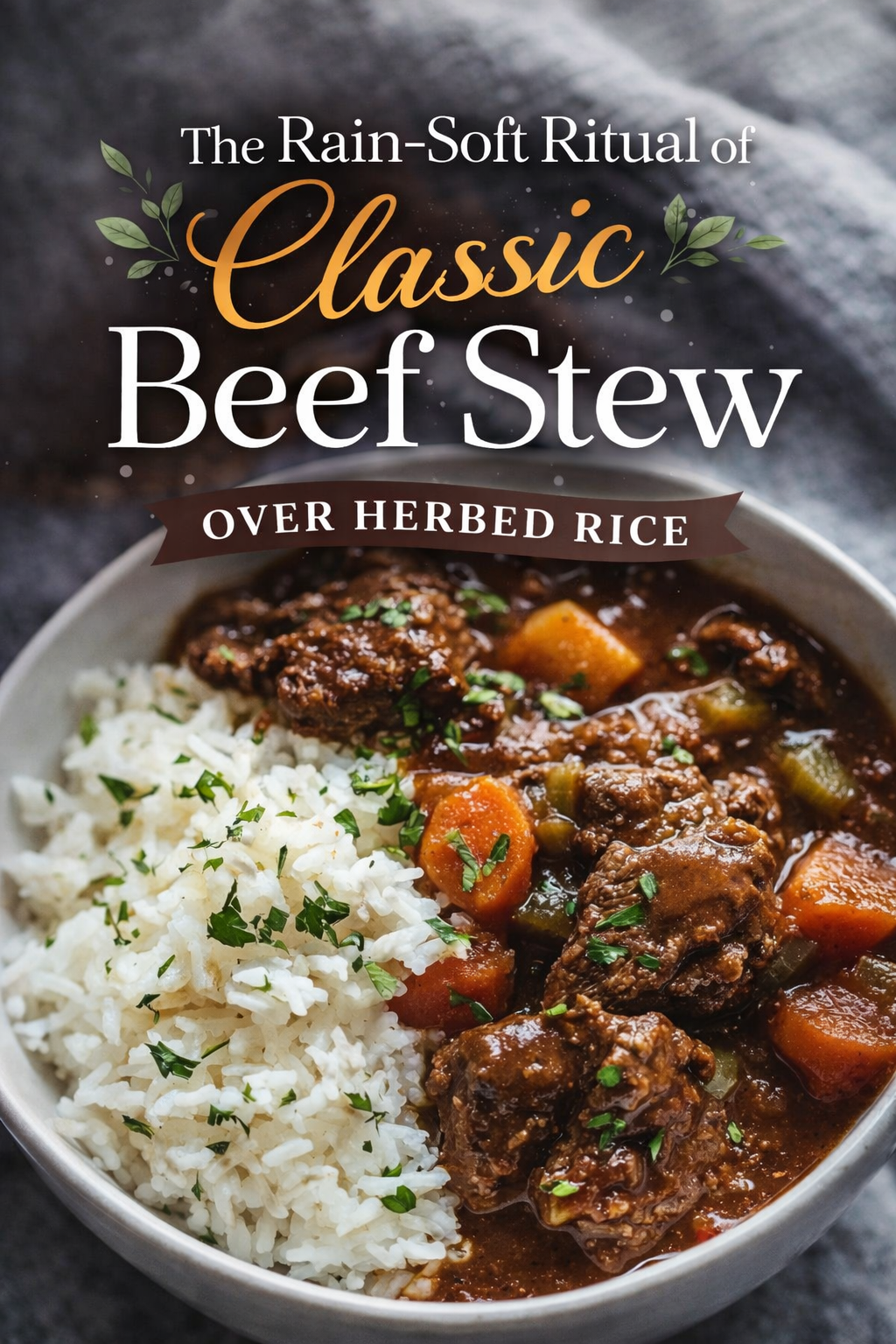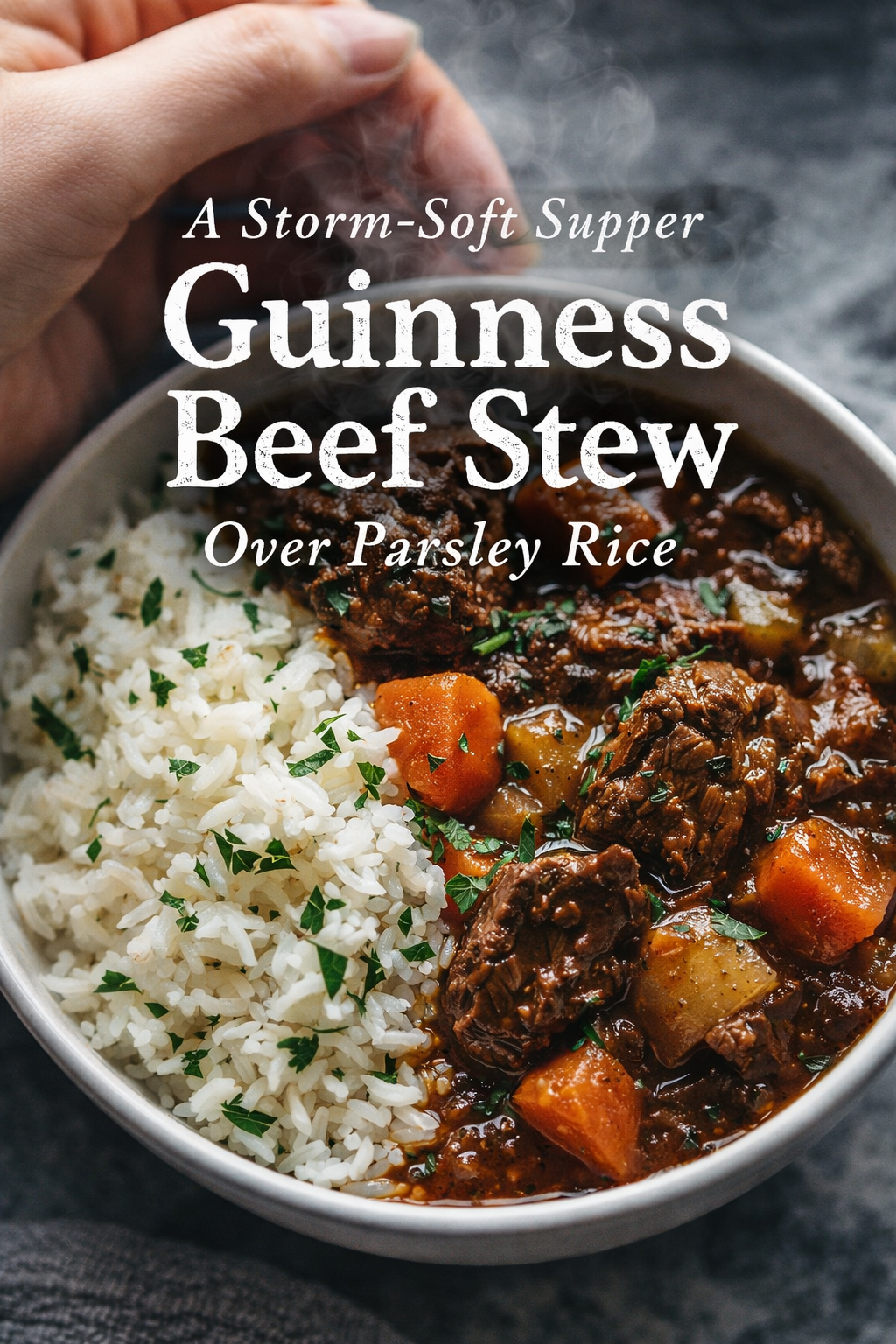
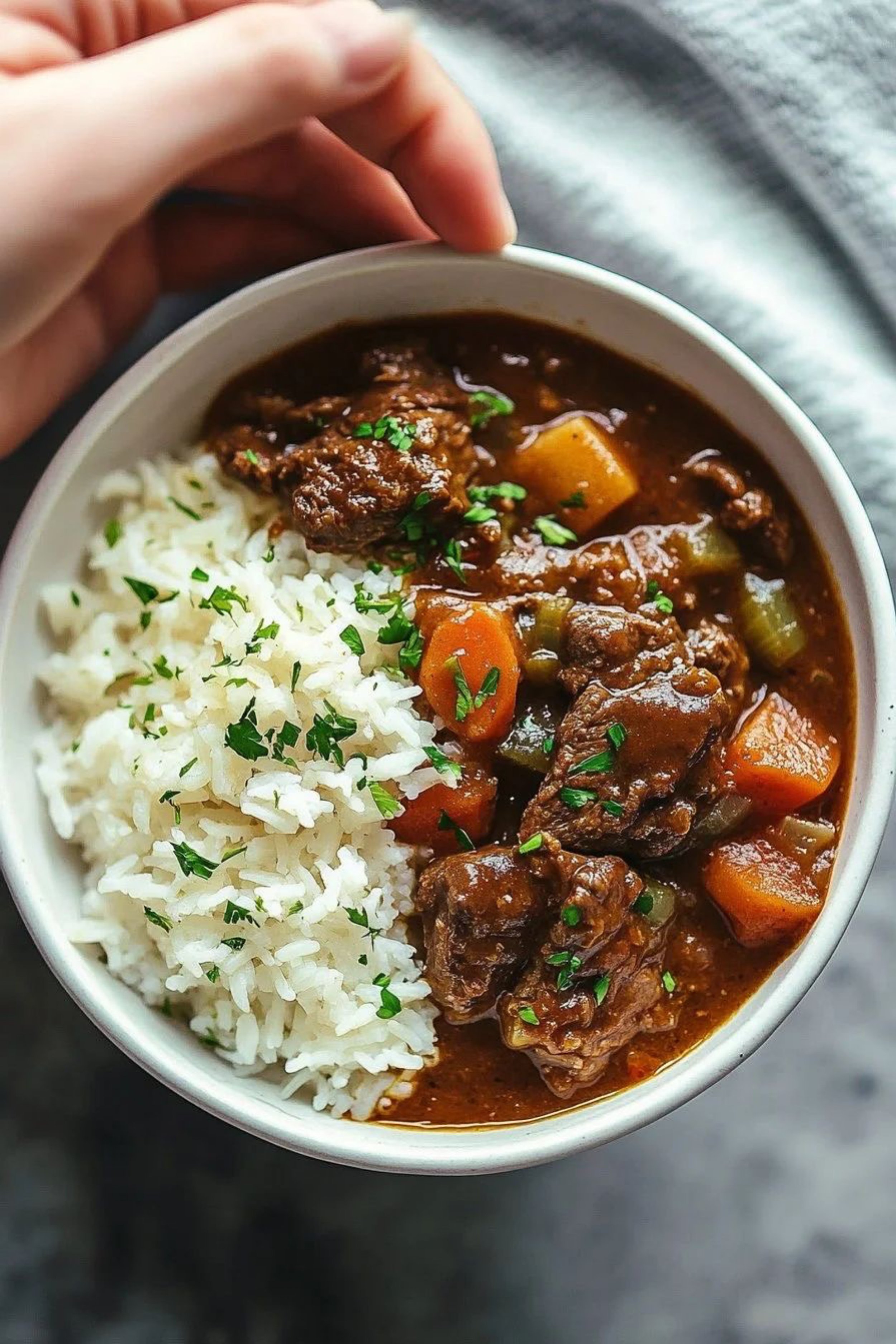
The bowl is warm enough to fog the edge of the moment—the kind of warmth you feel through your palms before you even take a bite. On the left, rice sits in a loose, snowy mound, each grain distinct and slightly glossy, sprinkled with green flecks that look like someone remembered freshness at the very last second. On the right, the stew holds the deeper color of comfort: dark brown, almost bronze where the light hits, thick enough to cling, silky enough to look like it’s been coaxed into place rather than forced.
A few chunks of beef rise above the surface like quiet promises—seared edges, softened centers, the kind of tenderness that only arrives when time is given room to work. Carrots glow a warm orange, potatoes sit like little anchors, and celery threads the whole thing with an earthy sweetness that keeps the richness from feeling heavy. The sauce itself looks glossy, almost lacquered, as if it learned how to behave in a slow simmer and never forgot.
This is the kind of dinner that changes the temperature of a room. Not with drama—just with presence. You can hear the low hiss of a pot that’s been doing its job for hours, the soft clink of a spoon against enamel, the small sigh of someone settling in. The scent is what pulls you closest first: browned beef, onions that have melted into sweetness, a whisper of garlic, and that unmistakable toasted note that comes when something dark and malty hits heat and becomes bigger than itself.
Instead of red wine, this stew leans into stout—bold, roasted, gently bitter in a way that reads like depth rather than sharpness. A good stout doesn’t shout; it hums. It gives the broth a coffee-like richness and a faint caramel edge, especially once it’s simmered down with beef and aromatics. If you’ve ever loved the aroma of toasted bread, dark chocolate, or a well-roasted espresso, you already understand why a stew built on stout tastes so complete.
It starts with a pot that can handle the whole arc: a hard sear, a steady simmer, the slow shift from raw ingredients to something cohesive and lush. A wide-bottomed vessel like a heavy enameled dutch oven makes that transition feel effortless, keeping heat even and letting the fond build without scorching. And because this kind of cooking is equal parts craft and patience, the prep matters more than people admit. A sharp blade turns chopping into rhythm; a well-balanced chef’s knife makes onions and carrots feel like a calm beginning instead of a chore.
The beef is where everything begins. Chuck is the classic because it’s built for this—marbled enough to stay juicy, structured enough to hold together until it finally gives in. Cutting it into generous cubes keeps the center tender while the outside takes on color. And color matters. Browning isn’t just a step; it’s the first layer of flavor, the moment the kitchen starts smelling like you know what you’re doing. A quick shake of seasoning, a little flour if you want extra body later, and then the beef hits hot oil and sizzles—real sizzle, not steam. A pair of kitchen tongs that grip cleanly makes turning those chunks easy without poking holes and losing juice.
As each batch browns, the pot collects its treasure: those dark, sticky bits on the bottom that look messy but taste like gold. When onions go in, they soften and scrape at that fond, sweetening as they move, turning the base aromatic and round. Garlic blooms quickly, just long enough to perfume without burning, and then tomato paste gets pressed into the heat until it deepens—less tangy, more caramelized. Keeping tomato paste in the pantry is like keeping a secret weapon within reach; it turns brothy into velvety with just a little attention.
Then the stout arrives. It’s a bold move that never feels showy—just smart. Pour it in and the pot sighs, loosening everything that stuck, pulling flavor back into the liquid where it belongs. You let it simmer briefly, the raw edge softening, the malt and roast settling in like a bass note. Broth follows, and suddenly the pot looks like it means business. For the backbone, beef broth keeps it savory and full-bodied, while Worcestershire adds that dark, tangy complexity that makes the whole thing taste “finished” even before it’s done—Worcestershire sauce is one of those quiet ingredients that always earns its keep.
A bay leaf or two, a little smoked paprika if you want warmth without heat, and maybe a touch of brown sugar to round the stout’s bitterness—small moves, big payoff. Then the lid goes on and the simmer begins, low and steady. The kitchen becomes slower. Time starts to feel like an ingredient. The beef relaxes. The sauce darkens. The aroma deepens into something that makes you wander back in just to inhale and smile without knowing why.
While the stew does what it does, rice becomes the calm counterpoint. You rinse it until the water runs mostly clear, then simmer it gently, letting it steam itself into softness. The grains stay separate, ready to catch sauce without turning to mush. For a fragrant base, jasmine rice is especially good here—slightly floral against the stout’s roast. A pat of butter, a pinch of salt, and at the end, parsley stirred through like a green spark. A simple fine-mesh strainer for rinsing rice makes that part quick, clean, and oddly satisfying.
When the vegetables finally go in—carrots, potatoes, celery—they soften into the broth without disappearing, absorbing flavor while keeping their own identity. The stew thickens naturally as collagen melts and starches mingle, becoming glossy and spoon-coating. And then the bowl comes together the way it looks in your hands: rice on one side, stew on the other, herbs scattered over the top like a finishing note.
It’s not just dinner. It’s the feeling of a warm bowl held close, the quiet luxury of something that took its time, and the kind of flavor that lingers just long enough to make you slow down and stay a little longer at the table.
Ingredients
For the Guinness beef stew
- 2 1/2 to 3 lb beef chuck roast, cut into 1 1/2-inch chunks
- 2 tsp kosher salt (plus more to taste)
- 1 tsp black pepper
- 2–3 tbsp all-purpose flour (optional, for light dredge)
- 2 tbsp neutral oil
- 1 large onion, diced
- 3 cloves garlic, minced
- 2 tbsp tomato paste
- 12 oz stout (Guinness-style)
- 3 1/2 to 4 cups beef broth
- 2 tbsp Worcestershire sauce
- 2 bay leaves
- 1 tsp smoked paprika (optional)
- 1–2 tsp brown sugar (optional, to balance stout bitterness)
- 3 carrots, sliced into thick coins
- 2 ribs celery, sliced
- 2 large potatoes, peeled and cubed
- 1–2 tsp cornstarch mixed with 2 tbsp cold water (optional thickener)
- Chopped parsley (for finishing)
For the parsley rice
- 1 1/2 cups jasmine or long-grain rice
- 2 1/4 cups water (adjust per rice brand)
- 1/2 tsp salt
- 1 tbsp butter or olive oil (optional)
- 2–3 tbsp chopped parsley
Method
- Brown the beef: Pat beef dry and season with salt/pepper. Lightly dust with flour if using. Heat oil in a heavy pot over medium-high heat. Brown beef in batches; remove to a plate.
- Sauté aromatics: Reduce heat to medium. Add onion and cook 5–7 minutes until soft. Add garlic 30 seconds.
- Toast tomato paste: Stir in tomato paste and cook 1–2 minutes until it darkens slightly.
- Deglaze with stout: Pour in stout and scrape up browned bits. Simmer 2–3 minutes.
- Simmer: Add broth, Worcestershire, bay leaves, paprika, and brown sugar (if using). Return beef to pot. Bring to a gentle simmer, cover, and cook 1 hour.
- Add vegetables: Stir in carrots, celery, and potatoes. Cover and simmer 45–75 minutes, until beef is fork-tender and potatoes are soft.
- Adjust thickness: If needed, add cornstarch slurry and simmer 2–3 minutes. Season to taste.
- Cook rice: Rinse rice. Simmer with water and salt (and butter/oil if using) per package directions. Rest 10 minutes, fluff, and stir in parsley.
- Serve: Spoon rice into bowls, ladle stew beside it, finish with parsley.
A stout-based stew lives or dies by two things: the sear and the simmer. Get those right, and everything else—texture, thickness, depth—falls into place like it was always meant to.
1) Choose the beef that gets better with time
Chuck is ideal because it’s marbled and collagen-rich. That collagen is what transforms into silky body in the broth, giving you a sauce that feels lush without relying on heavy cream or too much starch. Cut your pieces evenly (about 1 1/2 inches) so everything finishes tender at the same time. Before seasoning, pat the beef very dry. Moisture causes steaming, and steaming prevents the browning you need.
If you’re setting yourself up for the easiest possible run, a pot that holds heat and doesn’t hot-spot is everything. A wide enameled dutch oven gives you the surface area to sear properly and the stability to simmer gently without babysitting.
2) Build flavor with a real sear
Heat oil until it shimmers—then add beef in batches. Do not crowd the pot. Crowding drops the temperature and turns your sear into a steam bath. Let each piece sit long enough to form a deep brown crust before you flip. That crust is where the stew’s “roasted” character begins, and it pairs perfectly with stout’s malty backbone.
Troubleshooting
- Meat is gray: Pot too cool, beef too wet, or too crowded. Increase heat slightly, dry the beef better, and sear in smaller batches.
- Fond looks almost black: Heat may be too high. Lower it a touch and move to deglazing sooner.
Good tools help you keep the process clean and confident—stainless kitchen tongs let you turn pieces without tearing the crust or losing juices.
3) Let onions do their slow magic
After searing, reduce heat to medium and add onions. They’ll start softening and pulling the browned bits loose. This is the moment the pot begins to smell like something bigger than the sum of its parts. Give onions time—five to seven minutes—until they’re genuinely soft. Garlic goes in briefly at the end so it perfumes instead of burning.
4) Toast the tomato paste for depth, not tang
Tomato paste can taste sharp if you just stir it into liquid. Press it into the hot surface and cook it for a minute or two until it darkens and smells a little sweeter. That small step makes the sauce taste rounder and more “slow-cooked.” Keeping tomato paste handy means you can build that depth anytime.
5) Deglaze with stout and scrape like you mean it
Pour the stout in and use a wooden spoon to scrape the bottom thoroughly. Those browned bits dissolve into the liquid and become part of the broth—this is where the stew gets its signature roasted complexity. Simmer the stout for a few minutes so the harsh edge softens and the malt notes settle.
If you find stout bitterness too pronounced, balance it with a teaspoon or two of brown sugar. Not enough to make it sweet—just enough to round the corners.
6) Broth + umami = a sauce that tastes finished
Once the stout has done its job, add beef broth and Worcestershire. Broth gives body; Worcestershire gives savory tang and depth. A reliable base like beef broth makes a noticeable difference, especially in a stew where flavor concentrates over time. And Worcestershire sauce adds that “why is this so good?” layer without taking over.
Bring it to a gentle simmer—gentle is key. A rolling boil can tighten the beef and make it seem tougher. Low bubbling lets collagen melt gradually, which is what creates tenderness.
7) Simmer in two stages for perfect texture
Give the beef about an hour on its own first. This head start means the meat begins tenderizing before the vegetables arrive. Then add carrots, celery, and potatoes.
Cut potatoes into larger cubes so they stay intact. Carrots can be thick coins so they keep a little bite. Celery should be medium slices so it melts slightly into the broth without disappearing.
Troubleshooting
- Beef still tough: It needs more time, not more heat. Keep simmering gently; toughness is collagen not yet melted.
- Potatoes falling apart: They were cut too small or simmered too long. Cut larger and add a bit later next time.
8) Thicken the smart way
Stout + collagen often thickens naturally, but if you want a glossy, spoon-coating finish right at serving, use a small cornstarch slurry at the end. Add it gradually and simmer a couple minutes, then reassess. You want silk, not paste.
9) Rice that stays fluffy and bright
Rinse your rice until water runs mostly clear. This removes surface starch so the grains don’t clump. Cook gently, then let it rest off heat for ten minutes before fluffing. That rest is where the texture becomes light and distinct.
For fragrance and a little softness under a dark stew, jasmine rice is a natural match. A quick rinse is easier with a fine-mesh strainer, and it’s one of those small kitchen upgrades that pays off constantly.
10) Finish for contrast
Chopped parsley on top isn’t just decoration—it’s brightness against richness. Stir a little into the rice and scatter more over the stew. Then taste one last time for salt and pepper.
The final bowl should feel balanced: roasted depth from stout, savory richness from beef, sweetness from carrots and onions, and that clean, green lift from herbs—comfort that tastes like it has a point of view, without leaning on red wine at all.