The Potluck Secret Everyone Asked For: One-Pot Beef & Mushroom Rice
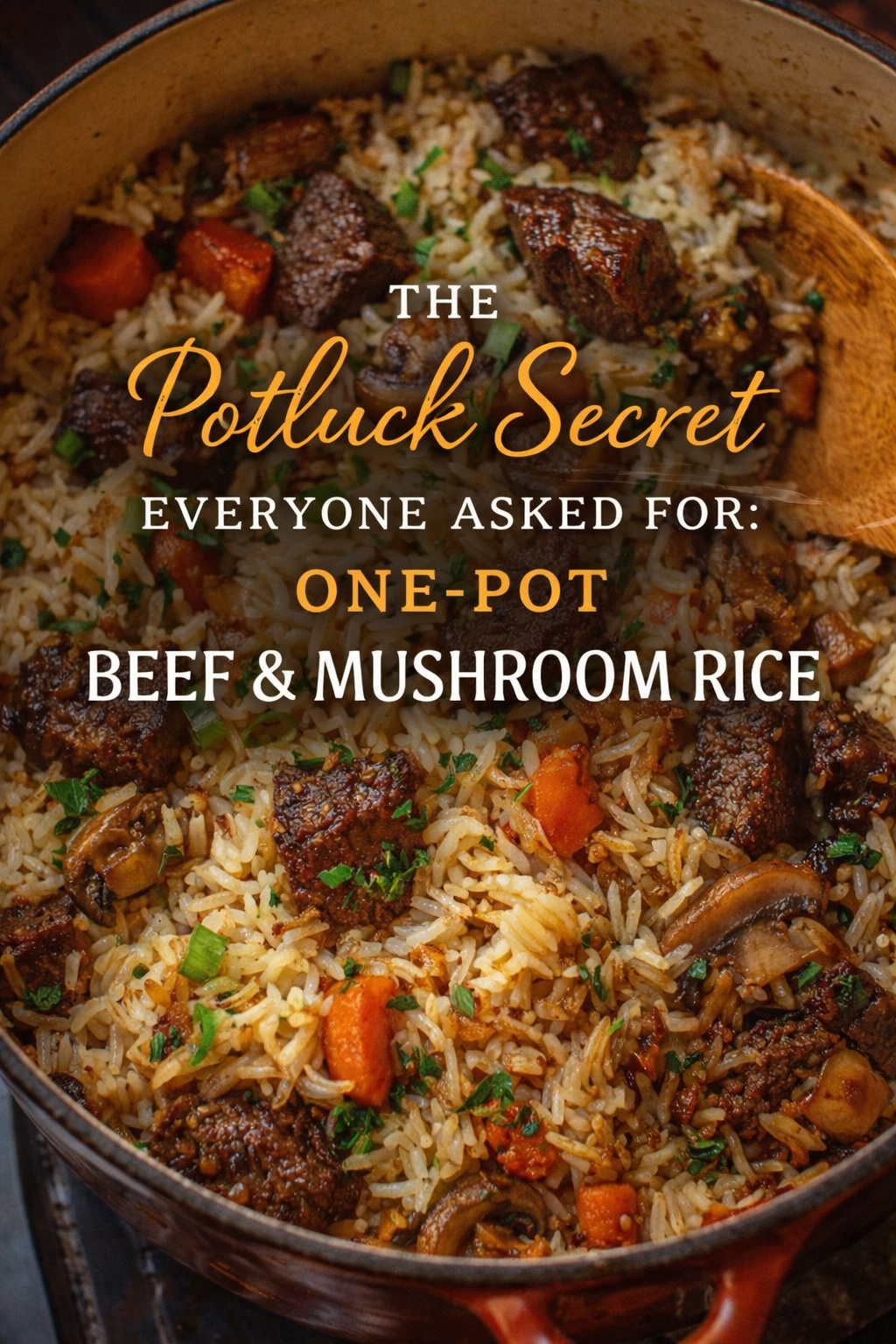
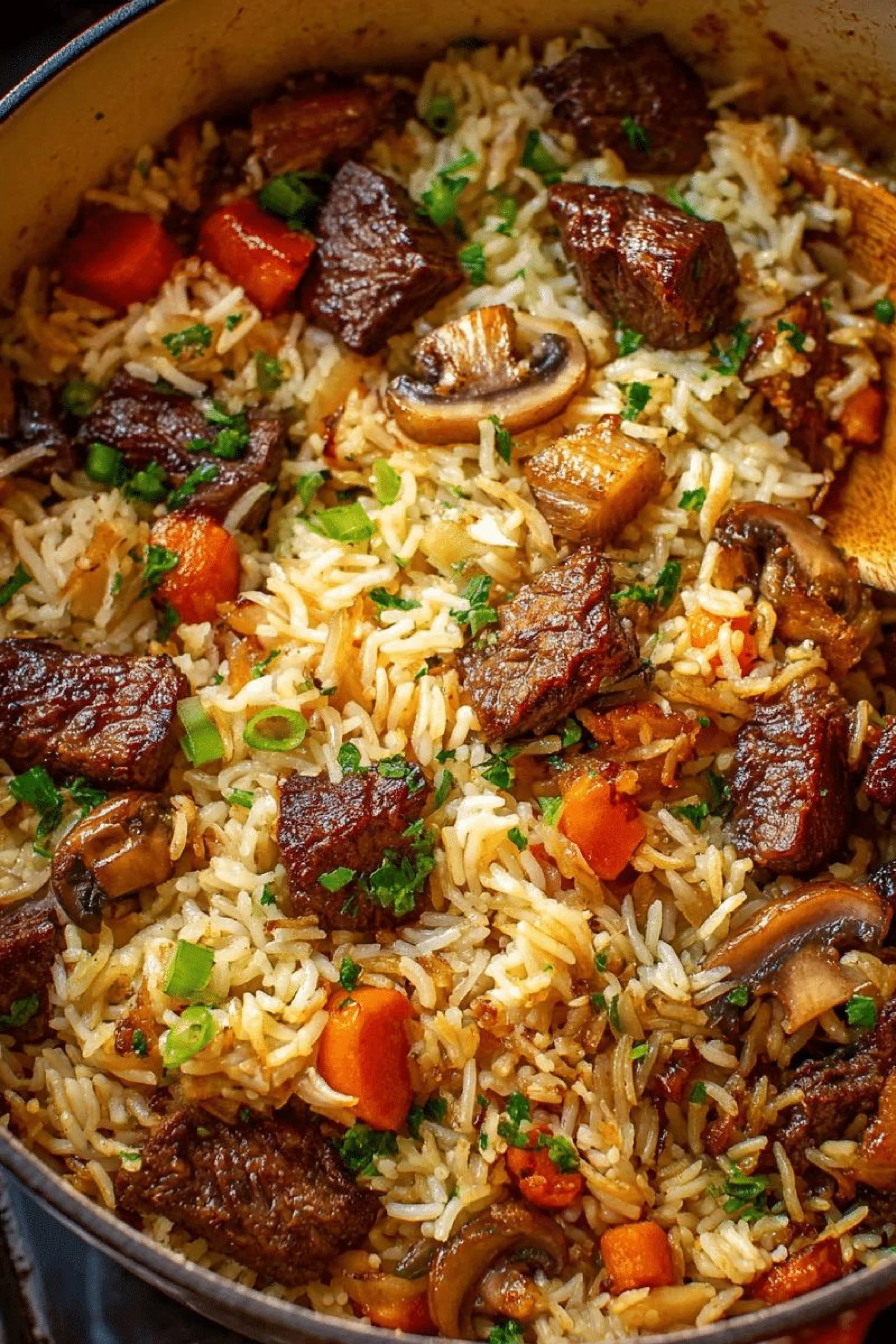
The lid lifts with a quiet sigh, and the kitchen instantly feels warmer—like the room just remembered it’s allowed to be cozy. Steam rolls up in soft waves, carrying that unmistakable perfume of browned beef, toasted rice, and the deep, woodsy sweetness of mushrooms that have given up their edges and gone silky. The surface is a mosaic: glossy cubes of beef tucked between long grains of rice, carrots softened into orange jewels, mushrooms peeking through like little crescents of bronze, and a scatter of bright green herbs that makes the whole pot look alive.
The rice is the first thing you notice up close. Each grain is separate, plush but not mushy, stained just slightly from the pan drippings and broth—like it’s been wearing the flavor all day and isn’t taking it off. It clings to the spoon in a way that feels generous, not sticky; it’s the kind of texture you only get when you let rice toast a little before it drinks. And when you dig deeper, the bottom offers a reward: those darker, caramelized bits where the sauce kissed the pot and concentrated itself into something almost smoky.
The beef sits proud in this dish—seared on the outside with that dark, savory crust that makes you pause before you even take a bite. It’s not the flashy kind of tenderness that falls apart at a whisper; it’s the satisfying kind, the kind that gives you something to chew and then melts anyway. The mushrooms act like tiny sponges, holding onto all the good stuff, so every forkful tastes like it’s been steeped in comfort. Carrots bring a subtle sweetness that keeps the whole pot from feeling too heavy, and the fresh greens—scallion, parsley, whatever you’ve got—snap it back into balance.
This is the sort of meal that feels like it was made for a table with noise around it. It doesn’t demand ceremony, but it earns compliments. It’s a one-pot recipe, sure, but it reads like something you’d find at the center of a weeknight that accidentally turned into a gathering. People hover. They “just taste.” They come back with a bigger spoon.
There’s a practical romance to cooking like this: one vessel, layered flavors, a rhythm you can fall into. The pot does most of the work while you move around the kitchen, wiping the counter, pouring something cold, and pretending you’re not already planning leftovers. If you want that deep sear without fuss, starting with a heavy enameled Dutch oven that holds heat like a dream makes the browning feel effortless, like the pot is collaborating instead of fighting you. And if you’ve ever had rice turn uneven—dry on top, gummy beneath—having a tight-fitting lid designed for one-pot meals can be the difference between “fine” and “perfect.”
The ingredients here are humble, but the effect isn’t. Beef, mushrooms, rice, broth, aromatics—nothing fancy, just treated with respect. The trick is letting each stage do its job. Sear the beef until it’s deeply browned. Let the mushrooms give off their water and then take on color. Toast the rice until it smells nutty. Deglaze the pot so all those flavorful bits come back into the story. From there, it’s mostly patience: a gentle simmer, a steady lid, and the confidence to not fuss.
What makes this dish feel special is how it looks when it’s done—like a finished painting you can eat. The beef glistens. The mushrooms shine. The rice looks airy and abundant. If you want those clean, photogenic cubes of carrot and beef, a sharp prep tool helps—something like a chef’s knife that stays crisp through carrots and onions and a solid cutting board that won’t slide while you work. Little things, sure—but they turn cooking into a smoother kind of pleasure.
And then there’s the moment you taste it. The spoon brings up rice and beef and mushroom together, and you get that perfect harmony: savory, earthy, gently sweet, and just bright enough at the end from fresh herbs that you want another bite immediately. It’s filling without being heavy, rich without being loud. It feels like a recipe you could make once and then keep making—because it fits the shape of real life: busy days, hungry people, and the simple satisfaction of a pot that comes out better than you expected.
One-Pot Beef & Mushroom Rice
A hearty, savory one-pot rice dish with browned beef, tender mushrooms, and sweet carrots—finished with fresh herbs for brightness.
Ingredients
- 1 1/2 lb beef stew meat (or chuck), cut into 1-inch cubes
- 1 1/2 tsp kosher salt, plus more to taste
- 1/2 tsp black pepper
- 2 tbsp neutral oil (or 1 tbsp oil + 1 tbsp butter)
- 8 oz cremini or button mushrooms, sliced
- 1 medium onion, diced
- 3 cloves garlic, minced
- 1 cup carrots, diced (about 2 medium)
- 1 1/2 cups long-grain white rice (basmati or jasmine work well)
- 3 cups beef broth (hot if possible)
- 1 tbsp tomato paste (optional, for deeper color)
- 1 tsp Worcestershire (optional)
- 1/2 tsp smoked paprika (optional)
- 2 bay leaves
- 2 tbsp chopped parsley and/or sliced scallions, for finishing
Method
- Season and sear: Pat beef dry, season with salt and pepper. Heat a heavy pot over medium-high, add oil, and sear beef in batches until deeply browned. Remove to a plate.
- Brown mushrooms: Add mushrooms to the pot and cook until they release moisture and then brown, 6–8 minutes.
- Sauté aromatics: Add onion and carrots; cook until softened, 4–5 minutes. Stir in garlic for 30 seconds.
- Toast rice: Stir in rice and cook 1–2 minutes until lightly toasted. Add tomato paste (if using) and stir to coat.
- Deglaze and simmer: Pour in broth, scraping up browned bits. Add Worcestershire, paprika, bay leaves, and the beef (with any juices). Bring to a gentle simmer.
- Cover and cook: Cover tightly, reduce heat to low, and cook 18–20 minutes (or until rice is tender).
- Rest and finish: Turn off heat and rest covered 10 minutes. Fluff, discard bay leaves, and finish with parsley/scallions. Adjust salt and pepper.
Cooking a one-pot rice dish that tastes layered and luxurious comes down to sequence. The pot isn’t just a container—it’s a flavor factory, and every step builds the next one. If you rush the early stages, you’ll still get dinner, but you won’t get that deep, “how is this so good?” richness that makes people hover over the stove for second spoonfuls.
Start with the beef, and start by drying it. Moisture is the enemy of browning. Pat the cubes until they look almost matte. Season them generously, then heat your pot until it feels assertive—hot enough that the beef sizzles immediately. A thick, heavy-bottomed pot built for even heat or an enameled Dutch oven made for braise-style cooking helps you keep that temperature stable, which matters when you’re searing in batches. And batches are non-negotiable: crowding traps steam, and steam prevents browning. Lay the pieces in with space and let them sit. The first minute is temptation—don’t poke. You want a crust.
That crust is the foundation. It’s not just color; it’s concentrated savoriness. When the beef releases easily, flip and brown another side. You don’t need every face perfect, but you do need real browning on most pieces. Pull the beef out and don’t worry that it isn’t cooked through yet. In this recipe, the beef finishes in the steam and broth, and it does so gently—staying juicy rather than tightening into chewiness.
Next: mushrooms. This is where many cooks accidentally shortchange flavor. Mushrooms should go into the pot and cook long enough to first surrender their moisture and then take on color. If you add onions too soon, you trap water and the mushrooms stew instead of brown. Give them time. As they cook, scrape the pot lightly; you’re moving the browned beef bits around so they don’t burn while the mushrooms do their work. When the mushrooms finally bronze, the pot will smell richer—earthy and almost buttery.
Now bring in onions and carrots. The onions soften and sweeten, and the carrots do something subtle but important: they round off the savory edges. Cook until the onions go translucent and the carrots start to relax. Garlic comes last, and only briefly—thirty seconds to a minute—because burnt garlic turns bitter fast.
Then comes the key move for perfect rice: toasting. Pour in the rice and stir so each grain is coated in fat and those savory juices. The grains should smell slightly nutty after a minute or two, and this small step pays off in texture. Toasted rice holds its shape, cooks more evenly, and tastes like more than “rice with stuff in it.” If you want the long, elegant grains you see in the pot, choosing a fragrant long-grain rice option like basmati is a solid move.
Deglazing is where everything comes together. Add broth—ideally hot, so you don’t stall the cooking—and scrape firmly at the bottom. Those browned bits are pure gold. A wide wooden spoon that can scrape without scratching makes this step feel satisfying instead of fussy. If you’re using tomato paste, stir it in so it dissolves into the broth and amplifies the color and depth. Worcestershire, smoked paprika—both optional, but both helpful if you want that slightly smoky, steakhouse-adjacent vibe.
Once the liquid is in, return the beef and any juices. Add bay leaves, bring everything to a gentle simmer, and then cover. Tight coverage is critical for rice. If your lid vents too much steam, the top layer dries out before the bottom is done. That’s why a snug lid setup for one-pot rice cooking can quietly save the day. When it’s covered, reduce heat to low. Low means low—just enough to maintain a lazy simmer. High heat can scorch the bottom before the rice on top finishes.
Timing matters, but restraint matters more. Don’t lift the lid early “to check.” Every peek releases steam and disrupts the cooking environment the rice needs. If you’re nervous, set a timer and trust the process. After the cook time, the most overlooked step is the rest. Turn off the heat and let the pot sit covered for ten minutes. This is where the rice finishes absorbing any last moisture and the grains firm up into that fluffy, separate texture you want.
When you finally open it, fluff gently. Don’t mash—lift and fold so you don’t break the grains. Taste, then adjust salt. The broth you use changes everything; some are saltier than others. If the dish tastes flat, it almost always needs a pinch more salt and a little brightness at the end. That’s where herbs and scallions do their magic. They don’t just add color—they wake the whole pot up.
Variations are easy once you understand the structure. Want more vegetables? Add peas in the last few minutes of cooking or fold in spinach during the rest so it wilts without turning dull. Prefer a deeper, more intense flavor? Swap a cup of broth for a dark beer, or add a splash of soy sauce for umami. Need a shortcut? Use pre-sliced mushrooms and pre-diced mirepoix, and lean on a simple prep-friendly container set to keep ingredients organized.
Troubleshooting is straightforward:
- Rice undercooked: Add a splash of hot broth (2–4 tbsp), cover, and steam on low for 5 minutes, then rest.
- Bottom scorching: Heat was too high. Next time, lower sooner and make sure the pot is heavy. If it happens, don’t scrape the burnt layer into the rice—lift the good portion out.
- Beef feels tough: It likely needed a gentler finish. Smaller cubes help, as does using chuck. You can also simmer a bit longer with a touch more broth until it relaxes.
The best part is how this dish improves as it sits. The flavors mingle, the rice absorbs just a little more, and leftovers reheat beautifully with a small splash of broth. Store it, then rewarm in a covered pan. You’ll get that same cozy aroma again—the one that made you lean over the pot in the first place—and the kind of meal that feels bigger than its ingredient list every single time.