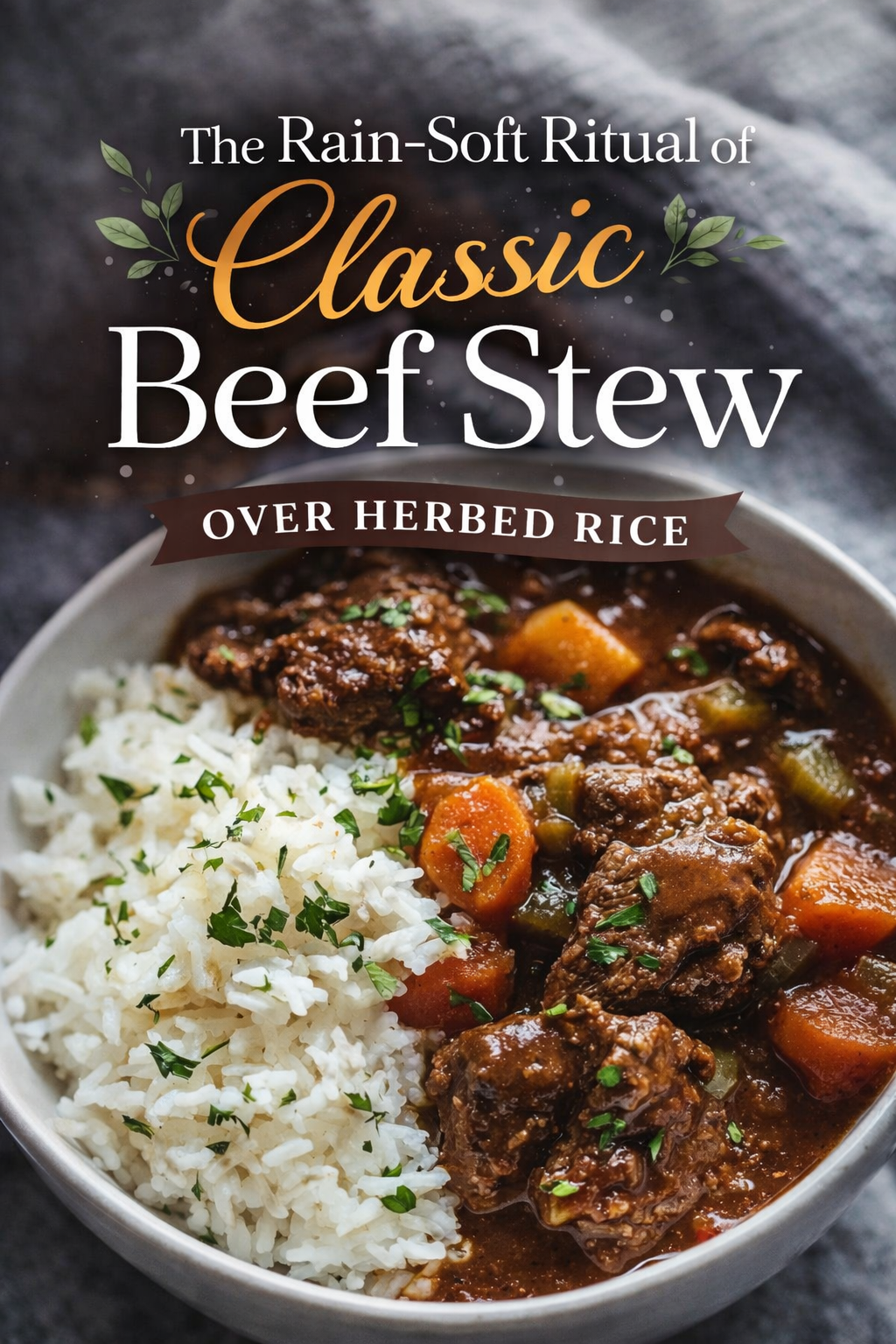
The Brass Spoon Night: Thyme-Braised Beef & Baby Potato Ragout

The plate arrives like a small, edible weather system—steam lifting in slow ribbons, the kind that fogs your glasses for a second and makes you lean in closer without thinking. On one side, long-grain basmati lies in pale drifts, each strand separate, airy, and almost too pristine for what’s about to happen. On the other, a deep mahogany ragout pools and shines, thick enough to cling, glossy enough to catch the light like lacquer. Baby potatoes sit tucked into the sauce like little gold coins, their skins holding the promise of tenderness underneath. Bright squares of red pepper flicker through the darkness, a pop of color that feels like a secret. And threaded over everything—almost casually, like an afterthought that turns out to be the entire point—fresh thyme leaves scatter their green, whispering the word “slow” without ever saying it aloud.
This is the kind of meal that doesn’t announce itself with fireworks. It seduces with patience. It tells you, right from the first look, that someone stood over a pot long enough for time to change flavor. You can practically feel the ritual in it: the first sizzle when beef meets heat, the soft clatter of a wooden spoon against enamel, the moment onions go translucent and the kitchen smells like beginnings. The sauce’s color doesn’t come from a shortcut—it comes from layers, from fond scraped up at the right time, from spices warmed just long enough to bloom, from a braise that keeps its promises.
There’s something almost cinematic about the contrast: the rice acting as a clean canvas, the stew a dark, slow-moving ink. You take a spoonful and it behaves the way truly braised food does—meat that doesn’t fight your teeth, potatoes that hold their shape until they melt, peppers that have surrendered their sharpness but kept their brightness. It’s rich without being heavy, bold without being loud. The thyme hovers at the edges, herbal and clean, the little lift that keeps the whole thing from drifting into pure comfort and instead lands it squarely in “I should make this again when I want to impress someone.”
Some meals feel like plans. This one feels like a mood. It’s what you make when the day is done and you want your home to feel like a sanctuary—when you want the kitchen warm, the lights low, the soundtrack soft, and the world outside politely kept at a distance. You start with a sturdy pot, the kind you trust with an afternoon’s worth of simmering—something like a heavy enameled Dutch oven that holds heat like a charm. You reach for tools that make the process feel grounded: a wide wooden spoon for scraping up browned bits, a sharp chef’s knife that glides through onions and peppers, and maybe a set of nesting bowls for mise en place that keeps you calm before the heat turns everything urgent.
Then comes the most satisfying part: transforming humble ingredients into something that tastes expensive. Beef chuck—marbled, unpretentious, built for braising—becomes the star when you treat it right, especially if you start with well-marbled beef chuck roast for stew. Tomato paste darkens and caramelizes until it smells almost sweet; a pinch of spice turns smoky and warm; broth becomes a stage for thyme, garlic, and that slow reduction that makes the sauce cling like velvet. Even the rice plays a role beyond “side dish”—when you cook it properly, with a rinse and a gentle steam, it becomes fragrant and elegant, especially with extra-long grain basmati rice that cooks up fluffy.
The kitchen fills up with cues. You learn to read them. The sound of the sear tells you if your pot is hot enough. The smell of onions tells you when it’s time to add garlic. The way the sauce coats the spoon tells you if you need another ten minutes uncovered. It’s a meal that teaches you, but never condescends. It just rewards attention. And when it’s finally done, when you ladle that dark ragout beside a snowfall of rice, you understand why slow cooking has never gone out of style: because it doesn’t just feed you—it changes the temperature of your entire evening.
You sit down with a gold-toned spoon, maybe something with a little drama—like a set of elegant gold flatware that makes dinner feel intentional—and you take the first bite. The sauce is deep and savory, the beef tender enough to fall apart with a nudge, the potatoes buttery and bright, the pepper sweetened by time. The thyme lifts it all at the end like a clean note after a low chord. It tastes like care. It tastes like the lights in your house are warm on purpose. It tastes like you chose this moment—and it chose you right back.
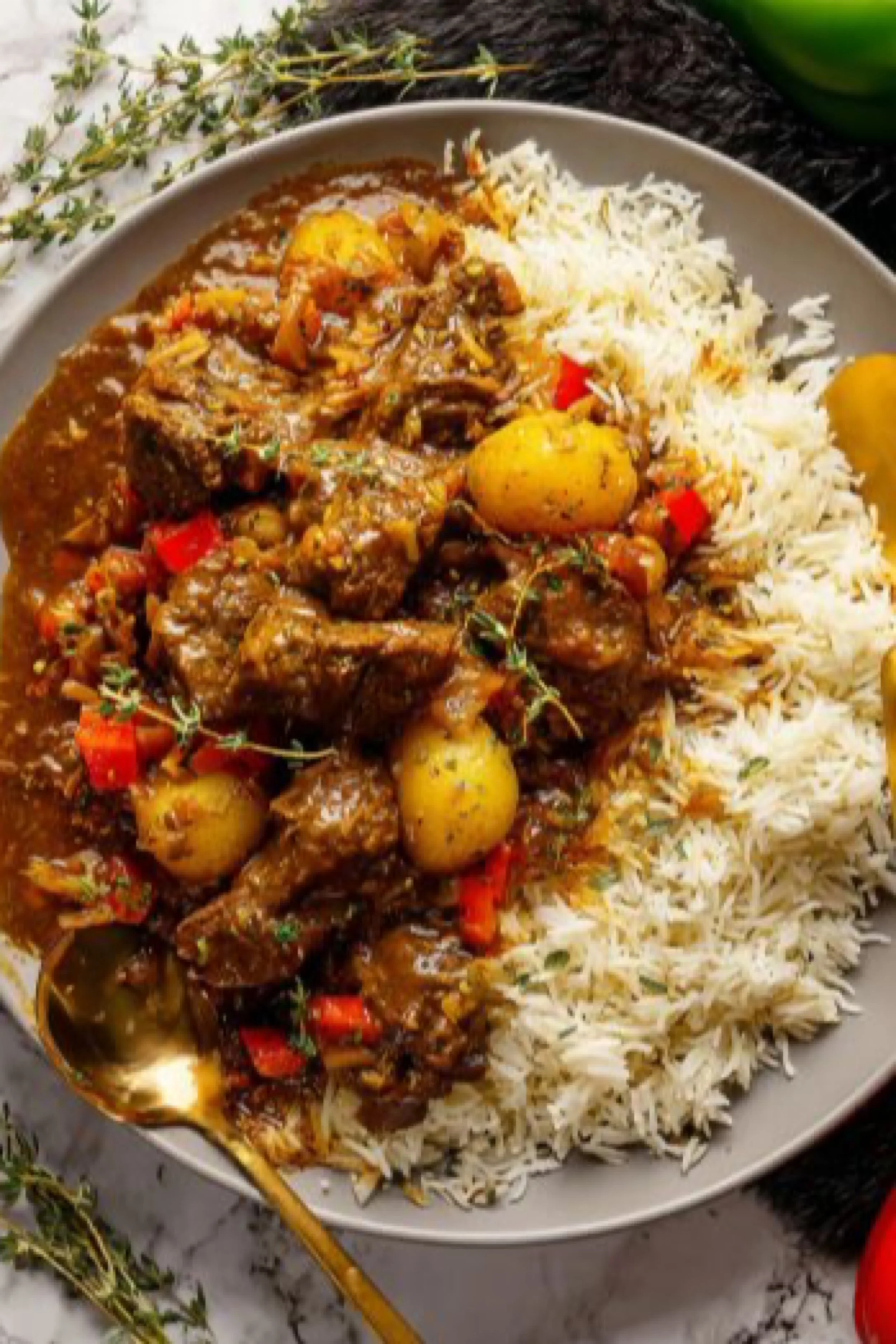
Thyme-Braised Beef & Baby Potato Ragout is a slow-simmered, deeply savory stew-style dish with tender beef, baby potatoes, and sweet peppers, served alongside fluffy basmati rice.
Ingredients
- 2 to 2½ lb beef chuck roast, cut into 1½-inch cubes
- 1½ tsp kosher salt, plus more to taste
- 1 tsp black pepper
- 2 to 3 tbsp all-purpose flour (optional, for light thickening)
- 2 to 3 tbsp neutral oil
- 1 large yellow onion, diced
- 1 red bell pepper, diced
- 3 to 4 cloves garlic, minced
- 2 tbsp tomato paste
- 2 tsp smoked paprika (or sweet paprika)
- 1 tsp ground cumin (optional)
- 2 tbsp Worcestershire sauce
- 3 cups beef broth
- 1 cup crushed tomatoes (or tomato sauce)
- 1½ lb baby potatoes, halved if large
- 3 to 5 sprigs fresh thyme (plus extra leaves to finish)
- 1 bay leaf (optional)
- 1 to 2 tsp brown sugar or honey (optional, to round acidity)
- 1 tbsp butter (optional, for finish)
For the basmati rice
- 1½ cups basmati rice, rinsed
- 2¼ cups water (or broth)
- ½ tsp salt
- 1 tbsp butter or olive oil (optional)
Method
- Prep & season: Pat beef dry. Season with salt and pepper. Toss with flour if using.
- Sear: Heat oil in a heavy pot over medium-high. Sear beef in batches until deeply browned. Remove.
- Build base: Lower heat to medium. Add onion and cook until softened. Add bell pepper; cook 2 minutes. Stir in garlic for 30 seconds.
- Bloom & deglaze: Add tomato paste and cook until it darkens slightly. Stir in paprika (and cumin if using). Splash in a bit of broth and scrape up browned bits.
- Braise: Return beef to pot. Add remaining broth, crushed tomatoes, Worcestershire, thyme, and bay leaf. Bring to a simmer, cover, and cook gently 75–90 minutes.
- Add potatoes: Stir in baby potatoes. Simmer covered 25–35 minutes until potatoes are tender and beef is fall-apart soft.
- Finish: Uncover and simmer 10–15 minutes to thicken. Adjust salt/pepper. Add brown sugar/honey if needed. Swirl in butter if using. Finish with fresh thyme leaves.
- Rice: Combine rinsed basmati, water, and salt. Bring to boil, cover, reduce to low 12 minutes. Off heat 10 minutes, then fluff.
- Serve: Spoon ragout over or beside rice.
Optional tools: a cast-iron or enameled Dutch oven for braising, a fine-mesh rice strainer for easy rinsing.
Start by treating the beef like it’s the main character—because it is. Braised dishes don’t get their magic from “simmering for a while”; they get it from the sequence of small, deliberate choices that stack flavor like layers of lacquer. The first is dryness. Pat your beef cubes until they’re genuinely dry to the touch. Moisture is the enemy of browning, and browning is where this ragout earns its depth. If you want a little extra body in the sauce, a light dusting of flour helps—but keep it subtle. This isn’t gravy; it’s a glossy, spoon-clinging sauce that still feels elegant.
Heat matters next. Use a pot that holds steady heat and gives you room—crowding is the fastest way to steam your meat instead of searing it. A wide, heavy vessel like an enameled Dutch oven with a broad base makes the process calmer and more consistent. Preheat it properly, add oil, then lay the beef in with space between pieces. The sound you want is a confident sizzle, not a timid hiss. Sear in batches and don’t rush the flip. Color equals flavor, and those browned edges become the backbone of the sauce.
Once the beef is browned and resting, you’ll see a constellation of dark bits stuck to the bottom—fond. That’s not mess; that’s concentrated taste. Lower the heat before adding onions so they sweat instead of scorch. Cook them until softened and lightly golden, then add the red bell pepper. The pepper’s job here isn’t crunch; it’s sweetness. Let it soften just enough to start releasing its sugars. Add garlic late and briefly—garlic can turn bitter fast, and you want it fragrant, not harsh.
Now comes one of the most underrated steps in a rich braise: cooking the tomato paste. Stir it into the vegetables and let it darken. You’re coaxing out sweetness and depth, turning something bright and acidic into something rounded and complex. A flexible tool helps here—something like a sturdy silicone spatula that scrapes cleanly so nothing burns in the corners. When the paste looks brick-red and smells almost caramelized, add your paprika (and cumin if you’re using it). Spices bloom in fat; give them a minute to toast so they become warm and aromatic instead of dusty.
Deglazing is where the pot starts telling the truth. Add a splash of broth and scrape the bottom thoroughly. Those browned bits dissolve into the liquid, turning it from plain broth into something that already tastes like “hours.” If you have a flat-edged wooden spoon made for scraping, this is its moment. Once the pot is clean and the liquid looks darker, return the beef and pour in the remaining broth and tomatoes. Worcestershire adds a savory edge that reads like deeper beefiness rather than a separate flavor. Tuck in thyme sprigs and, if you like, a bay leaf.
The simmer should be gentle—think small bubbles, not a rolling boil. Boiling tightens meat fibers and turns tenderness into chewiness. Cover the pot and let time do what it does best. After about an hour, check: the beef should be yielding, but not fully collapsing yet. That’s your signal to add the potatoes. Add them too early and they can break down; too late and they’ll stay firm while the beef gets perfect. Baby potatoes are ideal because they cook evenly and keep their shape, giving you that satisfying bite before they melt.
Once the potatoes go in, keep the simmer calm. If you notice the sauce getting too thick before the potatoes are tender, add a small splash of broth. If it’s too thin once everything is tender, uncover and let it reduce. Reduction is flavor concentration, and it’s also how you get that glossy, clingy finish. Stir occasionally—especially near the end—so nothing sticks. If you’re chasing a little extra shine, a small knob of butter at the end can make the sauce feel restaurant-smooth.
Taste, then tune. If the tomatoes read a little sharp, a teaspoon of brown sugar or honey can round the edges without making it sweet. If it tastes flat, it usually needs salt. If it tastes heavy, it often needs brightness—fresh thyme leaves, a tiny splash of vinegar, or even a squeeze of lemon right before serving (use restraint; you’re lifting, not changing lanes).
Meanwhile, make the rice like you mean it. Rinse basmati until the water runs clearer; this removes excess starch and keeps the grains distinct. A simple, dependable pot helps, but so does a good rinse setup—a fine-mesh strainer sized for rice makes it fast. Bring water and salt to a boil, add the rinsed rice, cover, and drop to the lowest heat. After it cooks, let it rest off heat before fluffing. That rest is where the texture becomes light and fragrant instead of damp.
Troubleshooting is straightforward. Tough beef usually means it needs more time—braises don’t fail; they just ask for patience. Thin sauce needs reduction. Thick sauce needs a splash of broth. Bitter notes often come from scorched garlic or spices; avoid by lowering heat and timing additions. And if you want to vary it: swap thyme for rosemary (use less), add mushrooms for earthiness, stir in peas at the end for freshness, or lean into heat with a pinch of chili flakes.
Serve it with intention. Spoon the ragout beside the rice so the grains stay fluffy, or ladle it over so the sauce threads through every bite. Either way, this dish rewards you for doing things in order, for letting the pot teach you, and for trusting the slow transformation that turns everyday ingredients into something that feels like a night worth remembering.