The Steam-Lifted Secret of Mushroomed Beef & Carrot Pilaf

The first thing you notice is the gloss—those bronzed cubes of beef catching the light like they’ve been lacquered by patience. They sit tucked into long, separate grains of rice, the kind that don’t clump or apologize, each strand carrying a faint stain of broth and spice. Around them, mushrooms curl and deepen at the edges, carrots glow like little embered coins, and a scatter of green—parsley, scallion, something bright—breaks the whole scene open so it feels alive instead of heavy. It’s the kind of food that makes a kitchen feel warmer than the thermostat claims, the kind that convinces you to linger near the stove even after you’ve technically finished cooking.
This dish has a way of turning an ordinary evening into something that feels planned. Not fussy—just intentional. The pot does the talking: a wide, sturdy vessel that holds heat like a secret and coaxes flavor out of simple things. If you’ve ever wanted an excuse to use a heavy enameled Dutch oven that browns beautifully, this is it. It’s the kind of meal where you hear the first sizzle and immediately know you’re in good hands. Beef hits hot oil, the surface tightens, the edges turn dark and confident. Those browned bits left behind aren’t mess—they’re the beginning of the story.
Then come the aromatics—onion and garlic melting down until the sharpness disappears and what’s left is sweetness, that cozy perfume that always feels like the start of something right. Mushrooms join next, soaking up heat, giving off their water, then concentrating into something almost meaty on their own. The carrots add a soft, honeyed edge. And somewhere in the middle of it all, rice slides into the pot and suddenly the entire direction shifts: you’re not just making beef and vegetables anymore. You’re building a pilaf, the kind that tastes layered because every grain got introduced to the pot before the liquid arrived.
There’s a particular pleasure in choosing the right rice here. Long-grain is the move—something that stays distinct, that turns plush without going sticky. If you keep a bag of fragrant basmati rice for pilaf nights around, this becomes less of a special occasion and more of a reliable ritual. The broth goes in warm and steady, the pot quiets down, and the lid goes on like a promise. For a while, there’s nothing to do but let time do what time does—soften, mingle, deepen.
And while it cooks, the kitchen changes. The air gets thicker with savory warmth, the kind that clings to your sleeves. You catch yourself lifting the lid too early, just to see. Don’t. Not because you’ll ruin it—though you can—but because there’s something almost cinematic about waiting until the moment is right. When you finally uncover it, the rice is higher than you remember, the beef tucked in like treasure, the mushrooms glossy and dark. The whole pot looks like it’s been through something and came out better.
This is comfort with structure. Not a soup you slurp quickly, not a casserole that blurs into one note, but a dish with texture and contrast. Each bite gives you beef that’s deeply browned, rice that tastes like broth instead of water, carrots that are tender but still proud of themselves, mushrooms that feel rich and earthy. A pinch of herbs at the end—fresh parsley and sliced scallions—does something almost unfair. It makes the whole thing taste brighter, cleaner, like you could keep going long after you’re full.
The best part is how unshowy the effort feels. You don’t need a dozen pans or a counter full of gadgets. A sharp knife, a hot pot, a steady stir. If you’ve ever upgraded to a chef’s knife that makes prep feel effortless, you know how much calmer cooking becomes when slicing onions and carrots isn’t a battle. And when it’s time to stir and scrape those browned bits up from the bottom, a sturdy wooden spoon that won’t punish your pot is the quiet hero.
The flavors lean classic, but there’s room for your fingerprints. A little smoked paprika if you want warmth without heat. A pinch of cumin if you want depth. A bay leaf that perfumes everything without calling attention to itself. Even the broth can change the personality—rich beef broth for a darker, more traditional pilaf, or chicken broth for something lighter. Keeping a flavorful beef broth or stock base on hand makes this feel like a decision, not a compromise.
And then, when it’s finally time to eat, there’s that first forkful—the way the rice separates, the way the beef gives with a gentle chew, the way the mushrooms taste like they’ve been simmering in secrets. It’s the kind of meal you serve in bowls even if you own plates you’re proud of. The kind you spoon straight from the pot because the pot is part of the romance. The kind you make once and then keep thinking about—how it smelled, how it looked when you lifted the lid, how it made the whole night feel steadier.
Mushroomed Beef & Carrot Pilaf isn’t flashy. It doesn’t need to be. It’s a warm, confident dish that carries itself—rich but not heavy, simple but not plain, the kind of dinner that feels like someone took care on purpose. And when you taste it, you’ll understand why it always looks like it belongs exactly where it is: right in the center of the table, steam rising, everyone leaning in.
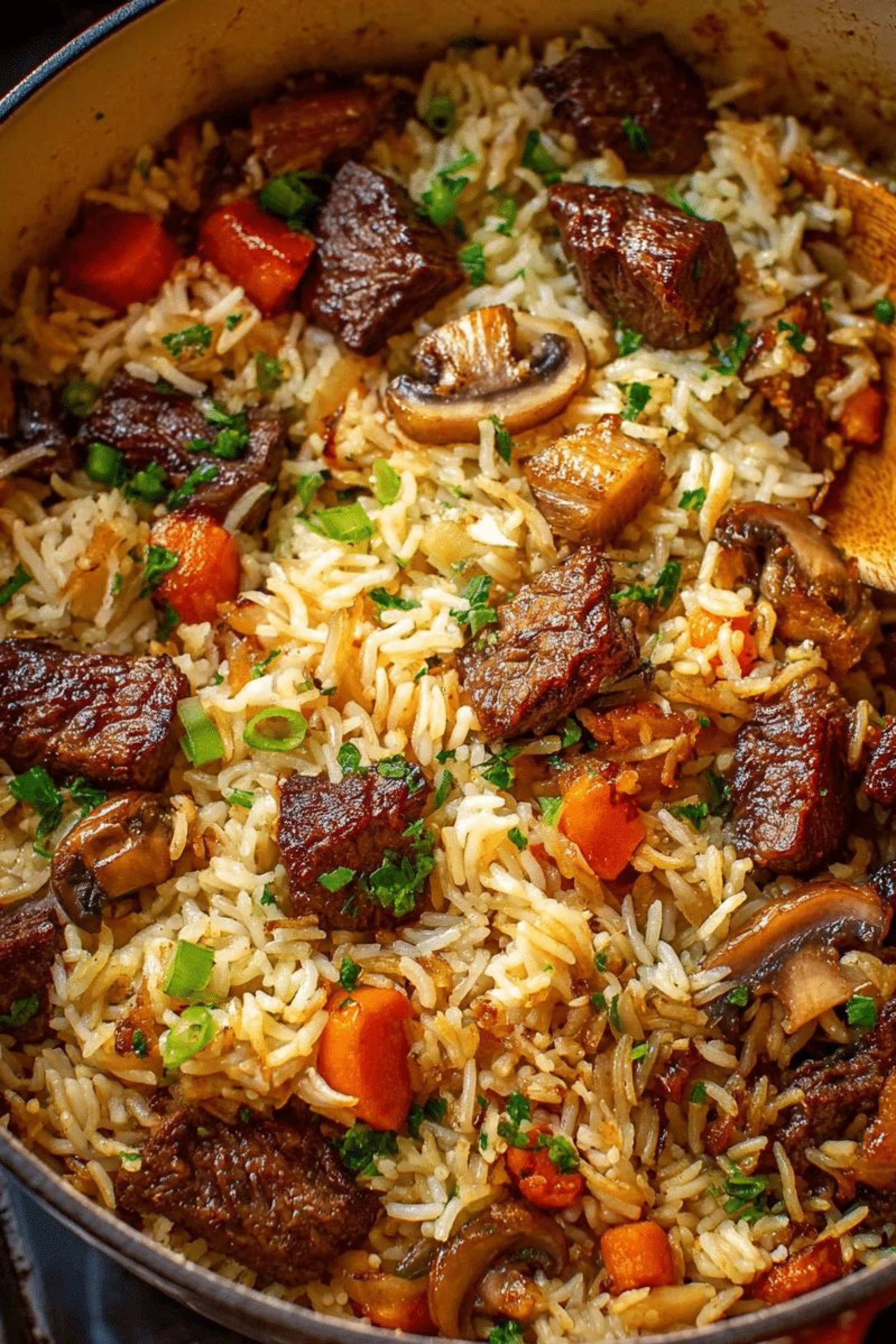
Mushroomed Beef & Carrot Pilaf is a one-pot, deeply savory rice dish built on browned beef, sautéed mushrooms, and aromatic rice that steams up fluffy and flavorful.
Ingredients
- 1 1/2 lb beef stew meat or sirloin, cut into 1-inch cubes
- 1 1/2 tsp kosher salt, plus more to taste
- 1/2 tsp black pepper
- 2 tbsp neutral oil
- 1 medium yellow onion, diced
- 3 cloves garlic, minced
- 8 oz cremini mushrooms, sliced
- 2 medium carrots, diced
- 2 tbsp tomato paste (optional, for deeper color)
- 1 1/2 cups long-grain basmati rice, rinsed well and drained
- 2 1/2 cups beef broth (hot)
- 1 tsp smoked paprika (optional)
- 1/2 tsp dried thyme (or 1 tsp fresh)
- 1 bay leaf
- 2 tbsp chopped parsley
- 2 scallions, thinly sliced (optional)
Method
- Pat beef dry, season with salt and pepper. Heat oil in a Dutch oven over medium-high. Brown beef in batches (don’t crowd), 2–3 minutes per side. Remove to a plate.
- Lower heat to medium. Add onion and cook 3–4 minutes until softened. Stir in garlic for 30 seconds.
- Add mushrooms and cook until they release liquid and start to brown, 6–8 minutes. Add carrots and cook 2 minutes.
- Stir in tomato paste (if using), paprika, thyme, and rice. Toast 1–2 minutes, scraping up browned bits.
- Pour in hot broth, add bay leaf, and return beef (and juices) to the pot. Bring to a gentle simmer.
- Cover tightly, reduce heat to low, and cook 18 minutes (avoid lifting the lid).
- Remove from heat and rest, covered, 10 minutes. Fluff gently, discard bay leaf, then fold in parsley and scallions. Taste and adjust seasoning.
Step 1: Dry the beef like you mean it
Moisture is the enemy of browning. Pat the cubes dry until they feel tacky, then season them evenly. That first sear is where the dish earns its depth—those dark edges and the browned fond on the bottom of the pot become the base note for everything that follows. A wide, heavy pot helps here because it holds steady heat; a roomy enameled Dutch oven gives you the surface area to brown without steaming.
Tip: Brown in batches. If the beef crowds, it releases moisture and turns gray instead of caramelized. You want “sizzle,” not “sigh.”
Step 2: Build flavor in layers (and scrape the good stuff)
After the beef comes out, don’t wipe the pot. Those browned bits are pure flavor. Add onion and let it soften, then garlic just until fragrant. Use a spoon to scrape and dissolve the fond as the vegetables release moisture—this is deglazing without needing wine.
If your spoon matters to you (and your cookware does too), a sturdy wooden spoon makes this part smooth and gentle.
Step 3: Let mushrooms do their two-stage magic
Mushrooms first release water, then concentrate. If you rush them, you’ll get pale slices that taste like nothing. Give them time. Stir occasionally, not constantly, so they actually brown. When they start to look glossy and a little darker at the edges, you’re in the sweet spot.
Troubleshooting: If mushrooms seem to “boil,” your heat is too low or the pot is overcrowded. Turn the heat up slightly and spread them out.
Step 4: Toast the rice so it stays fluffy
Rinsing rice removes excess surface starch; toasting it in the pot adds a subtle nutty note and helps grains stay separate. Stir the drained rice into the sautéed vegetables and let it toast for a minute or two until it smells warm and slightly nutty.
For that signature long, elegant grain, basmati rice is ideal. Jasmine can work in a pinch, but it’s softer and a bit stickier.
Step 5: Hot broth = better texture
Pouring in cold broth drops the pot temperature and can turn the cooking process uneven. Warm your broth first so the rice transitions smoothly into a gentle simmer. Keep it measured—too much liquid makes mushy pilaf; too little leaves tough grains.
Stock choice is a major lever for flavor. A good low-sodium beef broth lets you control salt while still building richness.
Optional depth: A tablespoon or two of tomato paste (stirred in before the rice) adds color and a subtle roasted tang. Smoked paprika adds warmth without heat.
Step 6: Lid discipline is everything
Once you bring the pot to a gentle simmer, cover tightly and drop the heat low. From this point, resist lifting the lid. Steam is doing the work: it cooks the rice evenly and keeps the beef moist. Every peek releases heat and steam, which can leave you with uneven doneness.
If your lid doesn’t seal well, a sheet of foil under the lid can help trap steam.
Step 7: Resting isn’t optional
When the timer ends, remove the pot from heat and let it sit covered for 10 minutes. This rest finishes cooking the center of each grain and lets moisture redistribute. Skip it and you’ll fluff too early—steam escapes, texture suffers.
Fluff gently with a fork (not a spoon) so you separate grains instead of smashing them.
Step 8: Finish bright for balance
Pilaf is rich by nature. Chopped parsley and sliced scallions wake it up and keep it from tasting heavy. If you want even more lift, a small squeeze of lemon over the finished pot works surprisingly well—just enough to brighten, not enough to turn it citrusy.
Beef tenderness: what to expect and how to adjust
This method gives you beef that’s browned and pleasantly chewy-tender, especially if you use sirloin or another relatively tender cut. If you’re using true stew meat (chuck), you have two great options:
- Longer braise first: After browning and sautéing vegetables, return beef with broth and simmer covered for 45–60 minutes before adding rice. Then add rinsed rice and cook until fluffy.
- Smaller cubes: Cut beef slightly smaller (3/4-inch) so it softens more during the rice cook time.
Variations that feel intentional
- Add peas: Stir in frozen peas during the 10-minute rest so they warm through without turning dull.
- Swap protein: Lamb works beautifully with thyme and mushrooms; chicken thighs work with slightly less broth and a touch of lemon at the end.
- Make it spicy-warm: Add a pinch of cayenne or red pepper flakes when sautéing onions.
- Herb shift: Dill or cilantro changes the whole personality—choose based on what you’re serving alongside.
Common problems (and fixes)
- Rice is soggy: Too much broth or too high a simmer. Next time, measure carefully and keep it at a bare simmer once covered.
- Rice is undercooked: Heat was too low or lid leaked steam. Add a splash of hot broth (2–3 tbsp), cover tightly, and steam 5–7 more minutes.
- Beef is tough: Cut was too collagen-heavy for a short cook. Use the longer-braise option above or choose a more tender cut.
Serving notes that make it feel finished
Serve straight from the pot while it’s steaming and glossy. A simple side—something crisp and green—balances the richness. And if you want the dish to look as good as it tastes, that final shower of herbs right before serving is the move.
This is one of those recipes where technique quietly does the heavy lifting: proper browning, toasted rice, hot broth, and a strict lid. Nail those, and Mushroomed Beef & Carrot Pilaf becomes the kind of dinner people remember as “the one that tasted like it took all day,” even when it didn’t.