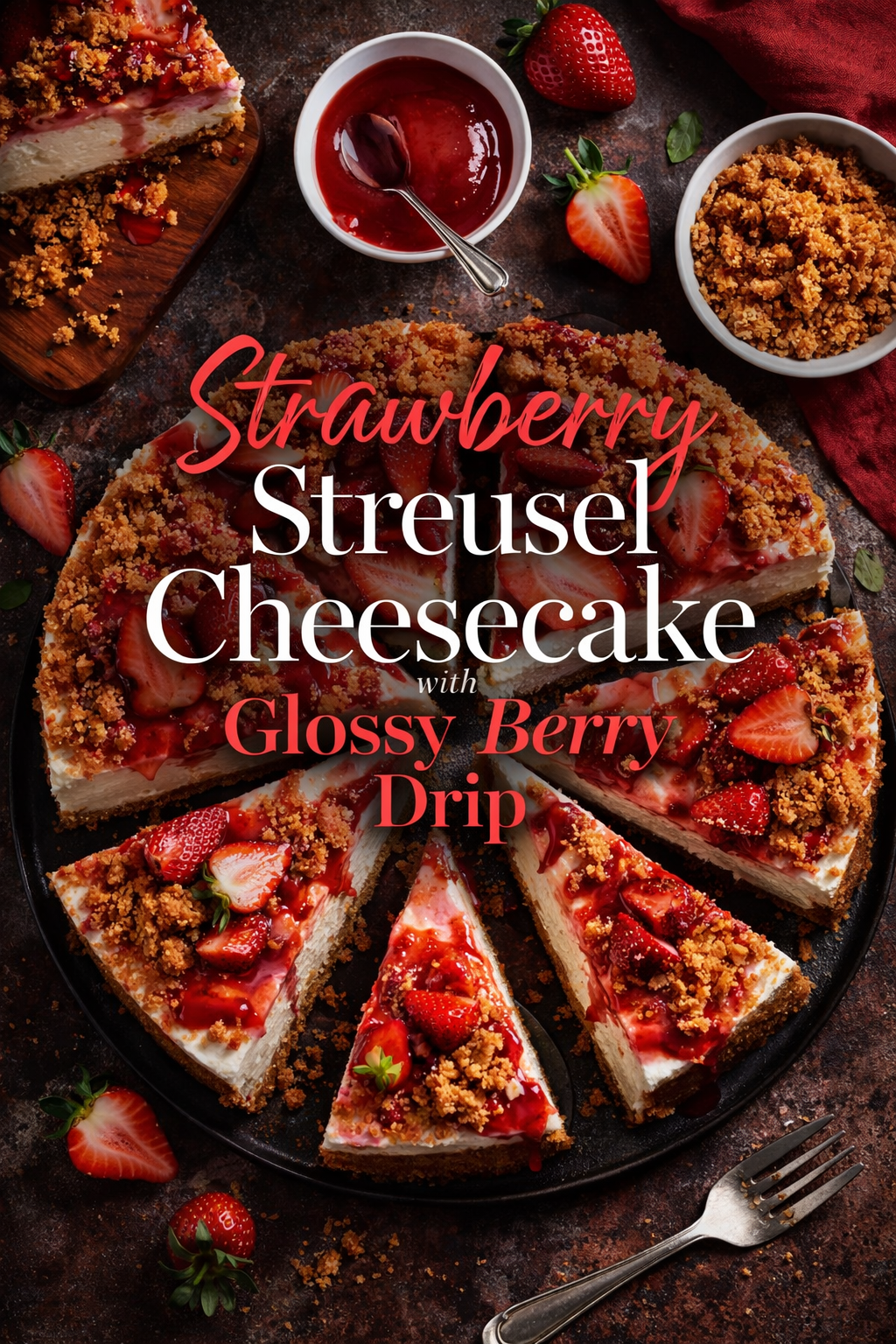
Strawberry Streusel Cheesecake with Glossy Berry Drip
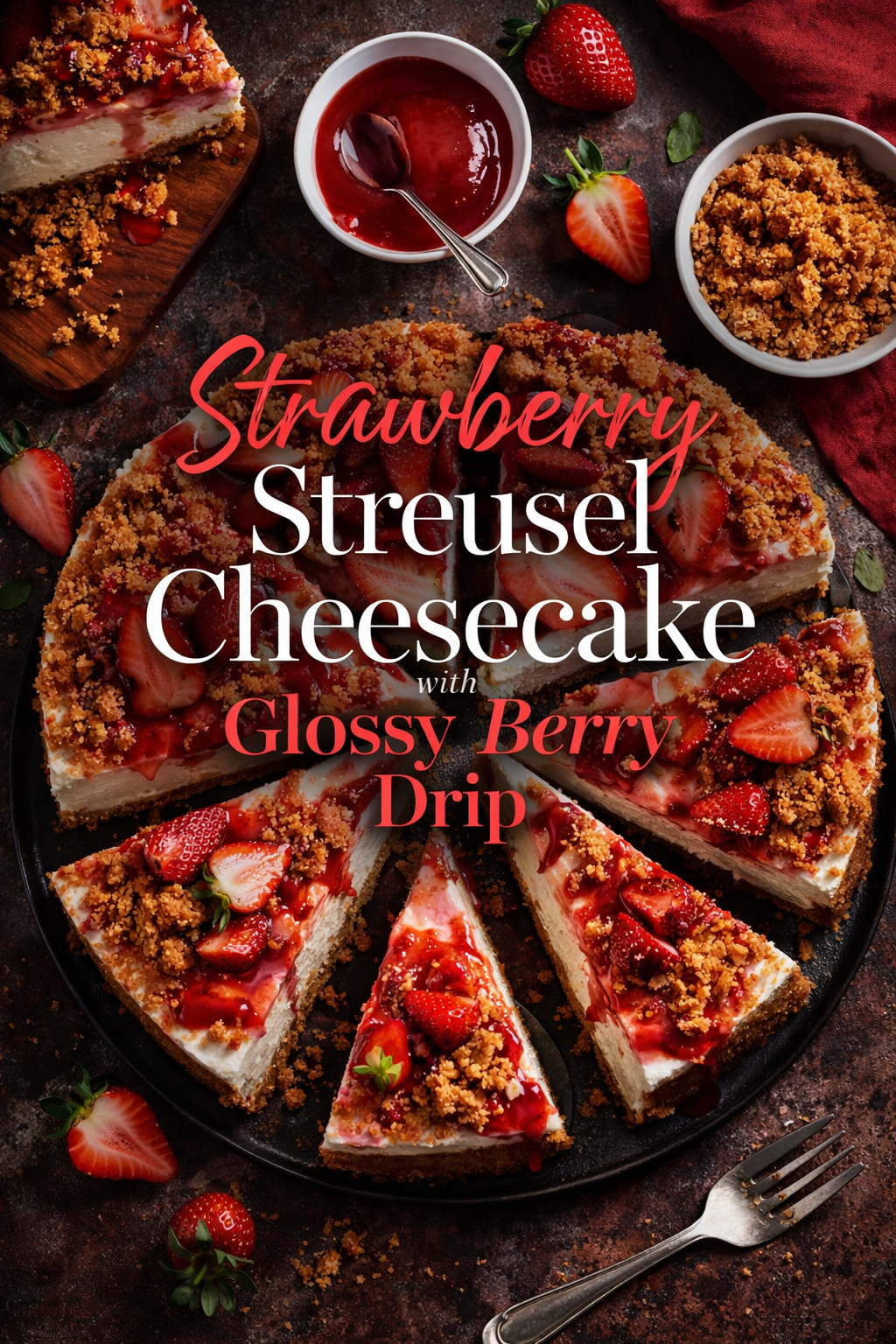
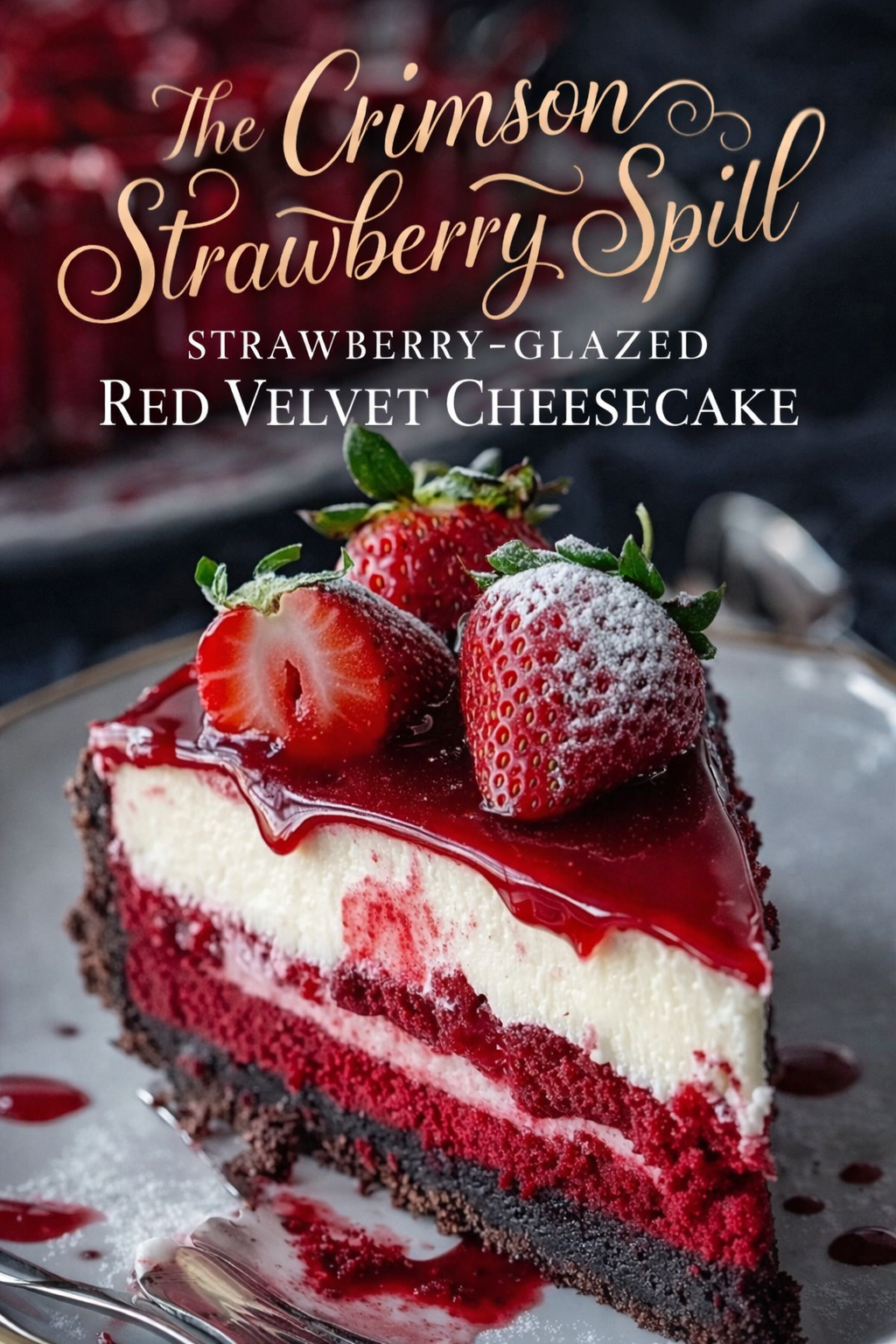
The first thing you notice is the contrast—white and scarlet, cloud-soft and jewel-bright—like a dessert dressed for a spotlight. A thick wedge of cheesecake sits confidently on a warm wooden board, the grain dark and honeyed beneath it, as if the whole scene was staged on a cutting block in a quiet kitchen where time slows down on purpose. The filling is pale and satin-smooth, dense in a way that promises richness without needing to say a word. Along the face of the slice, thin ribbons of strawberry run downward in slow, blush-colored streaks, as though the fruit couldn’t help but leave a signature.
On top, the berries are fresh and sliced into bright, glossy wedges, their seeds catching the light like tiny beads. They’re nestled into a layer of crimson sauce that looks both indulgent and clean—sweet, but sharp enough to wake up the creaminess beneath. Then there’s the crumble: golden, sandy, and scattered with intention, the kind of buttery streusel that breaks between your fingers and smells faintly toasted. It’s not just decoration; it’s texture, the little crackle that interrupts the hush of cheesecake and makes each bite feel designed.
In the background, strawberries blur into soft shapes—ripe, deep red, the green tops still attached—like a reminder that the flavor starts with something real. The board holds a small pool of sauce near the crust, a glossy red puddle that hints at what happens when you cut into something too good to behave. The base is sturdy and browned, a compact layer that looks like it was pressed with patience. It’s the kind of crust that holds its own—crumbly, yes, but anchored, the foundation that lets the filling feel even more luxurious.
This is the dessert you bring out when you want the room to change. It doesn’t ask for fireworks; it creates them in quiet ways. The sound is subtle—the first tap of a fork through streusel, the soft resistance of chilled filling, the faint crunch at the crust. The scent lands before the taste does: vanilla and butter first, then that strawberry brightness, like summer pulled through a silk ribbon. And there’s a visual kind of anticipation too, because a slice like this makes everyone lean in without realizing they’re doing it.
Cheesecake has always carried a certain ceremony. It’s not casual, not even when it’s made at home. It chills, it sets, it waits. It rewards planning and punishes rushing. That’s part of its charm: the way it insists on a little discipline in exchange for a dessert that feels like a small luxury. The tools become part of the ritual—the steady weight of a springform pan that releases cleanly, the quick certainty of a food processor for fine, even crumbs, the quiet, reliable heat of a roasting pan for a gentle water bath. None of it is flashy, but all of it matters, like good lighting in a room where you want people to linger.
Even the simplest ingredients feel elevated here. The filling begins with the kind of richness that only comes from full-fat cream cheese for baking, softened until it’s pliable and ready to become something smoother than it started. Vanilla—real, fragrant, almost floral—shows up best when you reach for pure vanilla extract. The crust wants warmth and toastiness, and that’s where graham cracker crumbs (or crushed cookies) become the base note that holds everything together. And strawberries—those bright, simple, unmistakable berries—take on a different personality when they’re cooked down into a sauce, then cooled until they shine.
There’s a reason the slice in front of you looks so composed. Cheesecake is a study in temperature: chilled enough to cut cleanly, warm enough to taste fully. It’s also a study in restraint—mix gently, bake slowly, cool gradually. Every time you break those rules, cheesecake answers back with a crack, a weep, a texture that feels tight instead of plush. But when you respect the process, it gives you that ideal bite: creamy, tall, and balanced, with a bright berry tang that keeps it from ever feeling heavy.
And then you add the streusel—golden and crumbly, a buttery crown that makes the whole thing feel bakery-level without turning it fussy. That crumble is where aroma blooms: browned butter notes, a whisper of cinnamon if you want it, and the kind of crisp that stays crisp when you sprinkle it on right before serving. It turns a classic strawberry cheesecake into something more memorable, something with an extra layer of “wait—what is that?” in the best way.
The mood of this dessert is intimate. It feels like a slow weekend, like clean counters and a favorite playlist, like a chilled slice waiting behind the refrigerator door while you make coffee and pretend you’re not thinking about it. It feels like dressing up a simple moment—setting the slice on a wooden board instead of a plate, letting the sauce drip a little instead of wiping it away, finishing with fresh berries because beauty counts in food, even when no one’s photographing it.
And when it’s finally time, the fork sinks in with the kind of satisfaction you can’t fake. Streusel gives way first, then the berry layer slides into the cream, and the crust holds steady at the bottom like it knows its job. The flavors arrive in order—bright fruit, warm butter, cool vanilla cream—and then they overlap, turning into something that feels both nostalgic and new. A dessert doesn’t need to be complicated to feel like a moment. It just needs to be made with enough care that you can taste the attention in it.
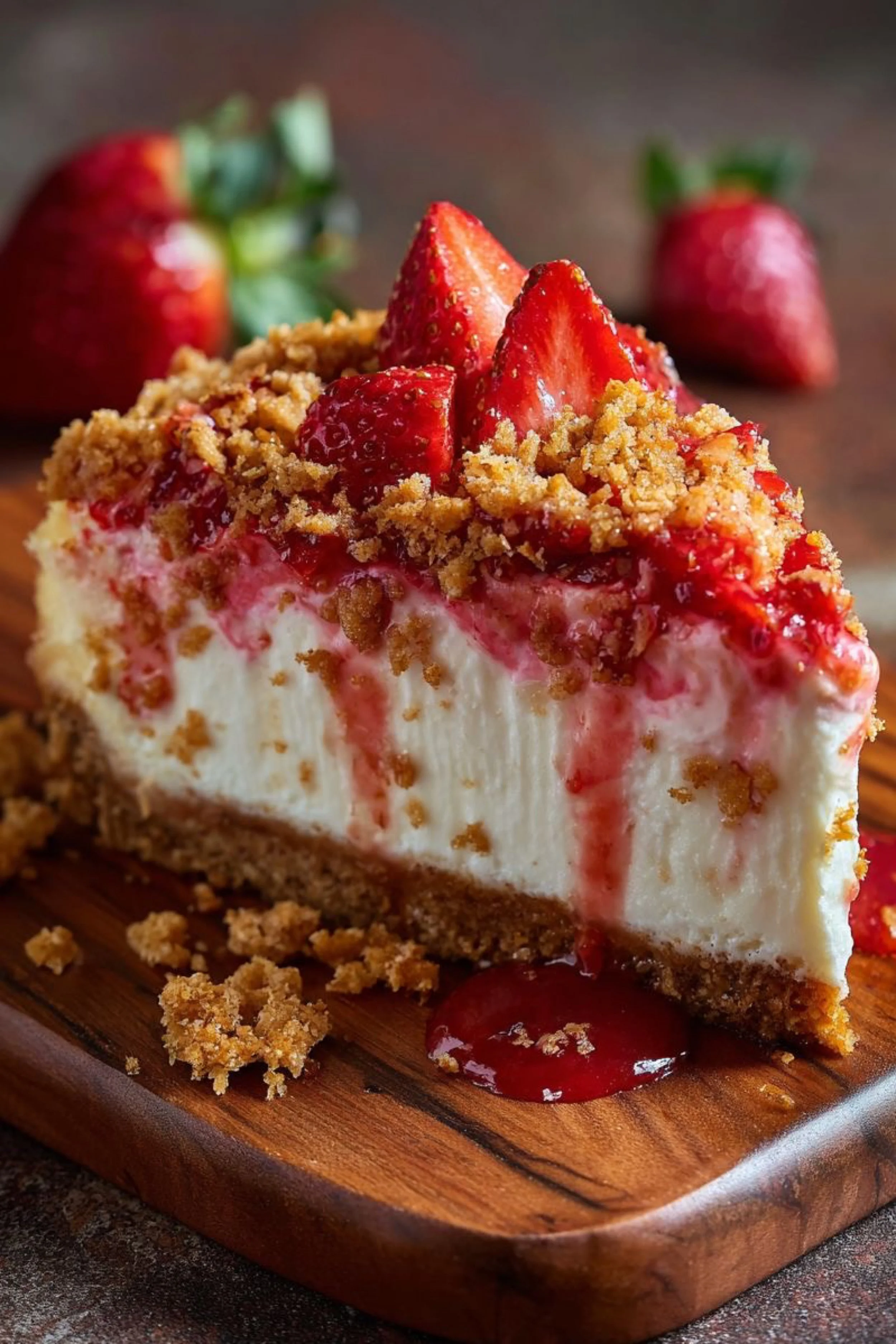
Strawberry Streusel Cheesecake with Glossy Berry Drip
A classic baked cheesecake topped with strawberry sauce, fresh berries, and a buttery streusel crumble for contrast and crunch.
Ingredients
Crust
- 1 1/2 cups graham cracker crumbs
- 2 tbsp granulated sugar
- 6 tbsp unsalted butter, melted
- Pinch of salt
Cheesecake Filling
- 24 oz full-fat cream cheese, softened
- 1 cup granulated sugar
- 3 large eggs, room temperature
- 1/2 cup sour cream
- 2 tsp vanilla extract
- 1 tbsp all-purpose flour (optional, for extra stability)
- Pinch of salt
Strawberry Sauce
- 2 cups strawberries (fresh or frozen), chopped
- 1/3 cup sugar
- 1 tbsp lemon juice
- 1 tbsp cornstarch + 2 tbsp water (slurry)
- Pinch of salt
Streusel Topping
- 1/2 cup all-purpose flour
- 1/3 cup brown sugar
- 4 tbsp unsalted butter, melted
- Pinch of salt
- Optional: 1/2 tsp cinnamon
To Finish
- Sliced fresh strawberries
Method / Instructions
- Prep pan & oven: Heat oven to 325°F. Line the bottom of a 9-inch springform pan with parchment.
- Make crust: Mix crumbs, sugar, salt, and butter. Press firmly into pan. Bake 10 minutes, then cool.
- Make streusel: Combine flour, brown sugar, salt (and cinnamon). Stir in melted butter until crumbly. Bake on a sheet at 325°F for 12–15 minutes until golden; cool.
- Make filling: Beat cream cheese and sugar until smooth. Mix in sour cream, vanilla, salt (and flour if using). Add eggs one at a time, mixing low just until combined.
- Bake: Pour filling over crust. Bake in a water bath (pan set inside a larger pan with hot water) for 60–75 minutes, until edges are set and center jiggles slightly.
- Cool gently: Turn oven off, crack door 1 hour. Cool to room temp, then chill at least 6 hours (overnight best).
- Make strawberry sauce: Simmer strawberries, sugar, lemon, and salt until juicy. Stir in cornstarch slurry and cook 1–2 minutes until glossy. Cool completely.
- Assemble: Spoon sauce over chilled cheesecake, add fresh strawberries, then finish with streusel right before serving.
Cheesecake rewards the calm, unhurried approach—the kind where you set everything out, let ingredients come to temperature, and treat each step like it has a purpose (because it does). The goal is a slice that looks tall and clean, with a filling that’s creamy instead of airy, a crust that doesn’t crumble apart, and a topping that stays glossy rather than watery. Here’s how to make that happen, step by step, with the little decisions that separate “good” from “why is this so perfect?”
1) Start with temperature, not enthusiasm
Cream cheese that’s too cold forces you to overmix to remove lumps, and overmixing whips in air. Air expands in the oven, then collapses as it cools—hello cracks and sinkholes. Give the cream cheese time to soften, and keep eggs at room temp too. If you want an easy win, use an instant-read thermometer to confirm your water bath is hot and your oven is behaving; precision keeps cheesecake predictable.
2) Build a crust that holds its ground
Crumbs + butter seems simple, but the press matters. Compact the crust firmly and evenly, especially at the edges. A flat-bottomed measuring cup is the unsung hero here, or even a tart tamper if you like dedicated tools. Pre-baking the crust sets the butter and toasts the crumbs so it stays crisp under the filling instead of turning soggy.
Variation ideas:
- Swap graham crumbs for crushed vanilla wafers or shortbread for a softer, buttery base.
- Add a pinch of cinnamon or a spoon of brown sugar to deepen that warm, bakery note.
If you’re crushing your own cookies, a food processor makes the texture uniform, which bakes more evenly and slices cleaner.
3) Mix the filling like you’re trying not to be noticed
The ideal cheesecake batter is smooth and thick—no bubbles, no froth. Beat the cream cheese and sugar until creamy, then add sour cream and vanilla. When eggs go in, drop to low speed and mix only until the batter looks unified. If you want extra insurance against cracks, a tablespoon of flour helps the structure a bit without changing flavor. Scrape the bowl often with a flexible silicone spatula so you’re not tempted to mix longer than necessary.
Common mistake: beating after the eggs are in. That’s where air gets trapped, and trapped air is the enemy of a flawless top.
4) Choose the water bath on purpose (it’s not optional if you want that look)
A water bath buffers heat, keeps the oven moist, and slows the bake so the cheesecake sets gently. Wrap the springform pan in heavy-duty foil, or use a reliable pan wrap method, then place it inside a larger pan. Pour hot water into the larger pan until it reaches about halfway up the springform. A sturdy large roasting pan makes this simple and stable.
If water baths have ever scared you, here’s the calm version: set the roasting pan in the oven first, place the wrapped cheesecake in it, then carefully pour hot water in. Less sloshing, less stress.
5) Bake until the center behaves like set satin
Time ranges vary by oven, but the visual cue is consistent: edges are set, the center still jiggles like gelatin when you nudge the pan. If it sloshes, it’s underbaked. If it doesn’t move at all, it’s probably overbaked and heading toward dryness. A gentle jiggle is the sweet spot.
Tip: if your oven runs hot, consider an oven thermometer or a slightly lower temperature. Cheesecake prefers patience over aggression.
6) Cool it slowly, because sudden changes cause drama
Turn the oven off and crack the door, letting the cheesecake cool in a gradual fade. This reduces the temperature shock that triggers cracking. After an hour, move it to the counter until it’s no longer warm, then refrigerate. Overnight is best. If you’re chasing clean slices, a fully chilled cheesecake cuts like a dream with a long, thin-bladed knife dipped in hot water and wiped between cuts.
7) Make a strawberry sauce that shines, not weeps
For that glossy drip effect, you want a sauce that’s thick enough to cling and slow enough to streak beautifully. Simmer strawberries with sugar and lemon until the fruit breaks down and the color deepens. Then add a cornstarch slurry and cook just until it turns translucent and shiny. Overcooking dulls the color; undercooking leaves it watery.
Troubleshooting:
- Too thin: simmer another minute or add a touch more slurry.
- Too thick: whisk in a teaspoon of water at a time until pourable.
- Not bright enough: a little extra lemon juice brings the berry flavor forward.
A small fine-mesh strainer is optional, but helpful if you want a smoother sauce while still keeping some fruit texture for that artisanal look.
8) Streusel is the texture upgrade—bake it separately
The crumble on top should taste toasted and buttery, not raw-floury. Mix flour, brown sugar, salt (and cinnamon if you love it), then stir in melted butter until clumps form. Spread on a sheet pan and bake until golden. Cool completely before using; it crisps as it cools.
Pro move: sprinkle streusel right before serving. If it sits on sauce overnight, it softens. You want that crisp bite against the creamy filling.
9) Assemble with intention (and timing)
Once cheesecake is fully chilled and sauce is cooled, spoon sauce over the top and let it drift toward the edges naturally. Add sliced strawberries for that fresh, bright crown. Then finish with streusel at the last moment so it stays crunchy and photogenic.
If you’re serving for guests, keep everything ready: chilled cheesecake, sauce in a jar, berries sliced, streusel cooled in a container. Then build the top right before the first slice.
10) Variations that still feel “bakery-level”
- Lemon-strawberry: add lemon zest to the batter and a little extra lemon in the sauce.
- Chocolate crust: swap graham crumbs for chocolate cookie crumbs.
- No-bake vibe, baked texture: keep the bake method but lighten the topping with macerated strawberries instead of sauce for a fresher, less glossy finish.
- Berry mix: use strawberries plus raspberries for a deeper tang and darker drip.
11) Storage and serving so it stays gorgeous
Cheesecake keeps best covered in the fridge. Store streusel separately and add it per slice. For clean plating, wipe the knife between cuts and serve chilled, letting the slice sit for 5–10 minutes so the flavor opens up without losing structure. If you love that “perfect slice” moment, a cake server helps lift pieces without breaking the crust edge.
When it’s done right, each bite lands in layers: cool vanilla cream, bright strawberry, buttery crunch, and that steady, toasted base. The beauty isn’t just the drip and the crumble—it’s the way the textures cooperate. That’s the real secret: gentle mixing, gentle baking, gentle cooling, then a bold finish. The slice in the photo doesn’t look accidental, and yours doesn’t have to either.