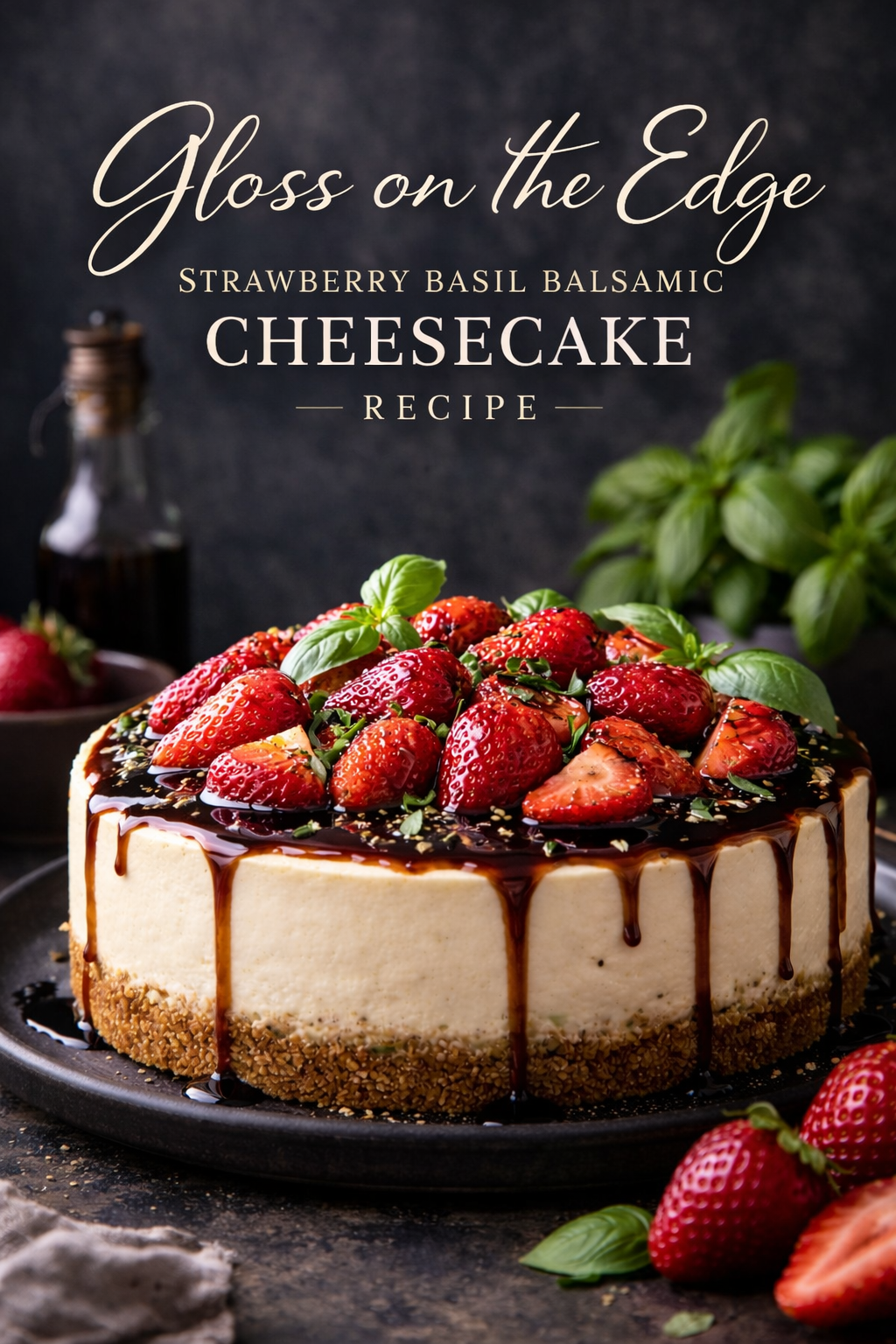
Gloss on the Edge: Strawberry Basil Balsamic Cheesecake Recipe
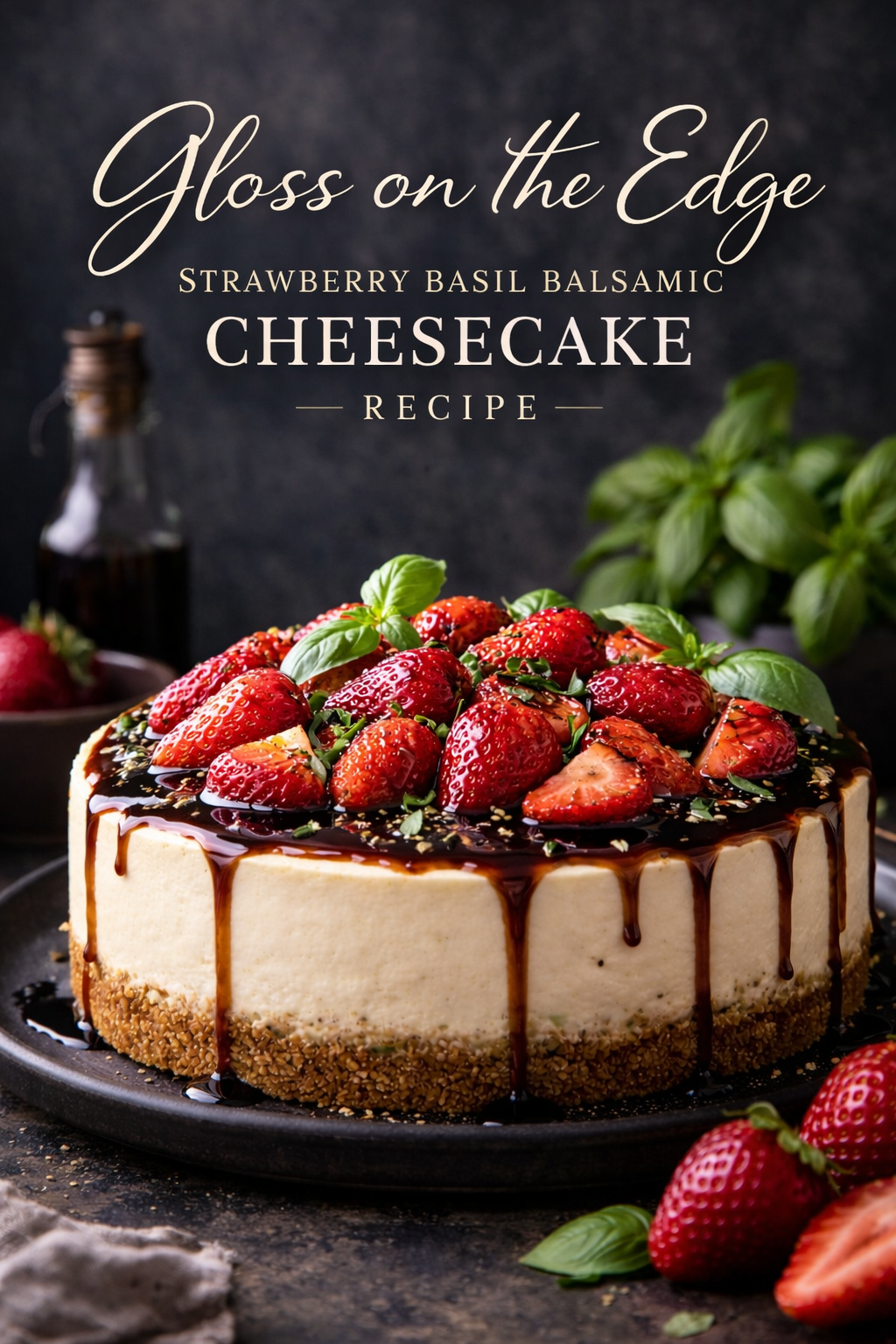
The room feels quieter when a dessert looks like this—smooth, pale cheesecake rising from a sandy, golden crust, crowned with strawberries that shine as if they’ve just stepped out of a summer rain. The top is lacquered in a dark, glossy ribbon that gathers at the edges, then drips down the sides in slow, dramatic trails. It’s the kind of finish that makes you pause before the first slice, not out of politeness, but because the whole thing reads like a still-life with a pulse.
Strawberries sit piled at the center like jewels—some whole, some halved—showing their bright, seeded skin and soft, scarlet interiors. Between them, green basil leaves tuck in like tiny flags, fresh and unapologetic, adding an herbal lift that keeps the sweetness from becoming too easy. The glaze—inky, almost espresso-dark—clings to the berries and spreads into a mirror-smooth pool that catches the light. It promises richness, but also bite: the slight tang of balsamic, the deep cocoa warmth, the kind of contrast that turns a familiar dessert into something you remember.
Everything around it supports the mood without stealing the scene: a matte, dark plate that makes the cream-colored cheesecake look even silkier; a fork with a warm metallic glow; a bowl of extra berries waiting in the background like a backup chorus. Even the basil plant off to the side feels intentional—an ingredient and a vibe at the same time. The atmosphere is moody, modern, and a little cinematic, like dessert at the end of a dinner that ran long in the best way.
This is the cheesecake for people who love the drama of a perfect slice—the clean edge, the firm-set body, the crust that holds together without turning hard. It’s for anyone who wants sweetness with dimension: bright fruit, a hint of garden-green, and a finish that tastes like a whisper of smoke and tang. The best part is how achievable it is with the right rhythm and a few reliable helpers: a springform pan that releases cleanly for flawless edges, a baking sheet for a steady water bath setup, and a fine-mesh strainer to keep the glaze silky and seed-free.
The flavor story starts with the base: a cheesecake that’s rich but not heavy, lightly kissed with vanilla and just enough salt to make the cream taste louder. It’s built for toppings—built to be dressed up. The strawberry layer brings brightness and a gentle acidity that makes each bite feel fresh. Basil steps in like a secret weapon, not shouting “herb,” but adding lift and perfume the way a good cocktail does. And that balsamic-chocolate glaze is the final move: glossy, bittersweet, a little sharp, tying the whole thing together in a single dark ribbon.
There’s a particular satisfaction in the small rituals that lead here: crushing cookies into crumbs, pressing a crust into place, smoothing batter until it looks like satin. A food processor that turns cookies into perfect crumbs in seconds makes the crust effortless, but a sturdy bag and rolling pin can do it too. The filling comes together best when everything is room temperature and patience is part of the ingredient list; a hand mixer that keeps the batter smooth without overworking it helps, and so does a simple rule: mix just until it’s unified, then stop.
Even the finishing touches feel luxurious. A microplane for a whisper of citrus zest can brighten the filling if you want a little sparkle under the berries. A small saucepan for reducing balsamic into a glossy syrup turns the glaze into something that looks like it belongs in a restaurant. And if you want the berries to sit proud and clean instead of sliding, a sharp paring knife for neat strawberry halves makes the prep feel precise and calm.
The magic is in the contrast: cool, creamy cheesecake; tender strawberries; that dark drip that tastes both sweet and grown-up. It reads like decadence, but it eats like balance. One forkful gives you the snap of berry seeds, the softness of fruit, the perfume of basil when it hits warmth, and then the lingering bass note of cocoa and balsamic that makes you reach back in almost immediately.
Serve it when you want the table to go quiet for a second. Serve it when you want people to ask what that glaze is. Serve it when you want the dessert to feel like a finale instead of a formality. The first slice will be the hardest—once the knife breaks through that glossy top and the creamy center yields, it becomes a moment you can repeat whenever you want the mood back.
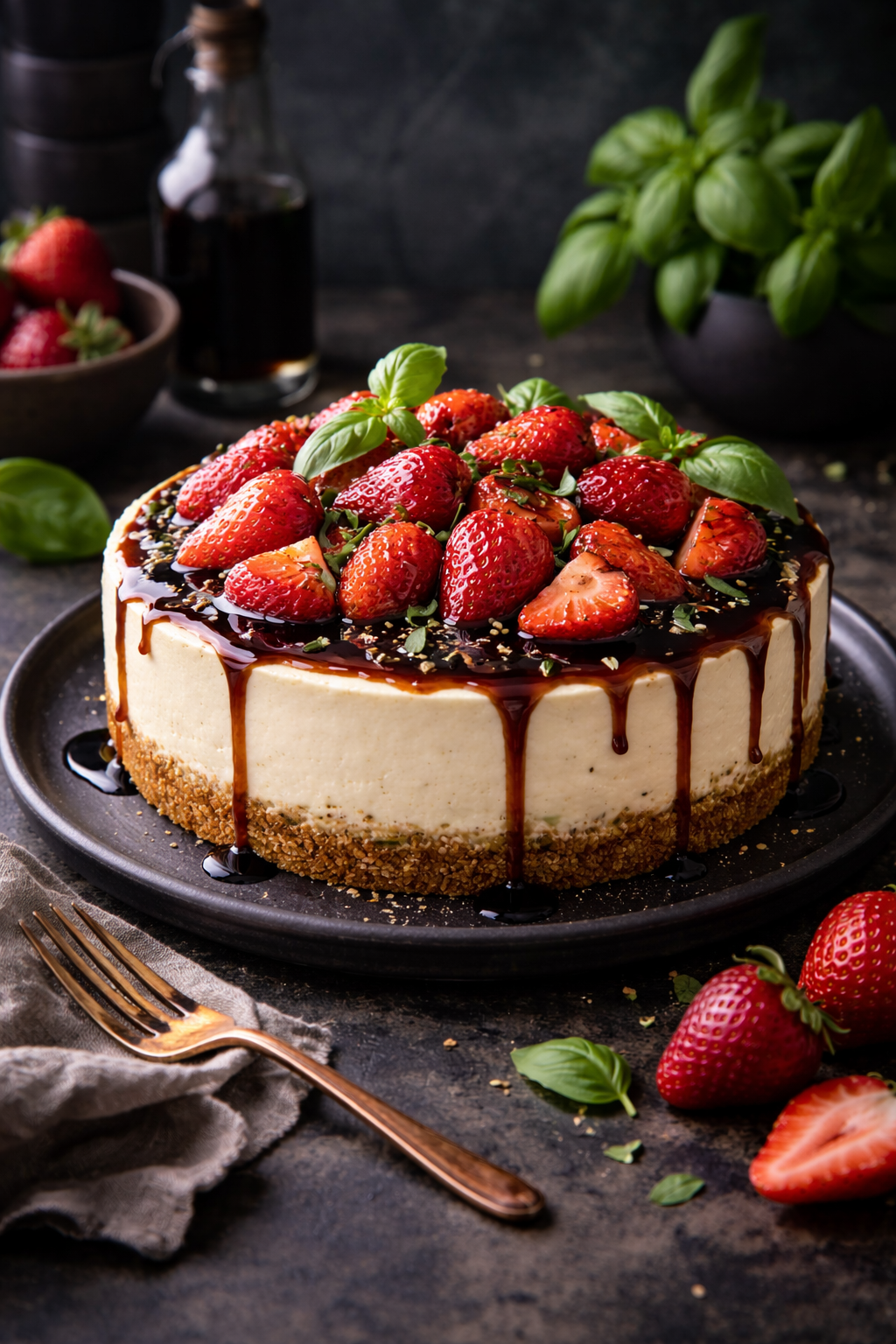
Strawberry Basil Balsamic Cheesecake
A creamy baked cheesecake with a crisp cookie crust, topped with strawberries, basil, and a glossy balsamic-chocolate drizzle.
Ingredients
Crust
- 2 cups graham cracker crumbs (or crushed vanilla wafers)
- 2 tbsp sugar
- 6 tbsp unsalted butter, melted
- Pinch of salt
Filling
- 24 oz cream cheese, room temperature
- 1 cup sugar
- 3 tbsp sour cream
- 1 tbsp heavy cream
- 1 tsp vanilla extract
- 3 large eggs, room temperature
- 1 tbsp cornstarch (optional, for extra stability)
- Pinch of salt
Topping
- 1½–2 cups fresh strawberries, hulled (some halved)
- Small handful fresh basil leaves
Balsamic-Chocolate Drizzle
- ½ cup balsamic vinegar
- 2–3 tbsp brown sugar or honey
- 2 tbsp cocoa powder (or 2 oz dark chocolate, chopped)
- Pinch of salt
Method
- Prep: Heat oven to 325°F. Wrap the outside of a 9-inch springform pan in heavy-duty foil.
- Crust: Mix crumbs, sugar, salt, and melted butter. Press firmly into the pan bottom. Bake 10 minutes; cool.
- Filling: Beat cream cheese and sugar until smooth. Mix in sour cream, heavy cream, vanilla, salt, and (if using) cornstarch. Add eggs one at a time, mixing just until incorporated.
- Bake: Pour filling into crust. Place pan in a roasting pan and add hot water halfway up the sides. Bake 60–75 minutes until edges are set and center slightly wobbles.
- Cool: Turn oven off, crack the door, rest cheesecake 45 minutes. Cool to room temp, then chill at least 6 hours (overnight best).
- Drizzle: Simmer balsamic and sweetener until reduced by about half and syrupy. Whisk in cocoa (or melt in chocolate) plus salt; cool slightly.
- Finish: Top chilled cheesecake with strawberries and basil. Spoon/drizzle glaze over the top and let it drip naturally.
The goal here is a cheesecake that slices like velvet—no cracks, no weeping, no gummy texture—finished with berries that look fresh and intentional, and a glaze that drips in slow, glossy ribbons. Once the workflow clicks, it becomes repeatable and surprisingly calm.
1) Set up for clean release and even baking
Start with a 9-inch springform and line the bottom with parchment so the base lifts cleanly. Wrapping the outside with foil matters because the water bath is the secret to that smooth, pale surface. A wide roll of heavy-duty foil for watertight wrapping makes this painless—use two layers and bring it high up the sides.
Preheat to 325°F. Cheesecake likes gentle heat. If the oven runs hot or cycles aggressively, the top can puff and crack. A simple oven thermometer to verify true temperature is one of those tiny upgrades that saves a lot of heartbreak.
2) Build a crust that stays crisp
Mix crumbs with melted butter until they resemble damp sand. The key is pressing firmly and evenly—especially at the edges—so the crust holds together when sliced. Use a flat-bottomed cup or a tamper. If you want that extra “professional” bite, bake it for 10 minutes, then cool fully before adding filling. Cooling prevents steam from softening the base.
Variations that work:
- Swap graham crumbs for vanilla wafers for a warmer, more dessert-forward base.
- Add a spoon of cocoa to the crumbs if you want the glaze to feel even deeper.
- For a nuttier edge, stir in a few tablespoons of finely chopped toasted pecans.
3) Smooth batter without overmixing
Room-temperature cream cheese is non-negotiable. Cold cream cheese leaves little lumps you’ll chase forever. Beat cream cheese and sugar until smooth, then add sour cream, a splash of cream, vanilla, and salt. If you want added stability for a taller slice, cornstarch helps—but keep it light.
When eggs go in, switch your mindset: fold them in gently, one at a time, mixing only until the yellow disappears. Overmixing adds air, and air expands, then collapses, which leads to cracks and a dry texture. A silicone spatula for controlled folding and clean scraping keeps the batter cohesive without whipping it.
Troubleshooting batter issues:
- Lumps: cream cheese wasn’t warm enough. Let it sit longer next time, or cut into cubes to warm faster.
- Foamy batter: mixed too long after eggs. Let the bowl sit 5–10 minutes so bubbles rise, then tap the bowl gently on the counter.
- Too thin: measurements may be off. A digital kitchen scale for consistent results makes cheesecake far more predictable.
4) Water bath: the texture insurance policy
Place the wrapped pan in a roasting pan and pour hot water around it to about halfway up the sides. The water bath keeps the heat moist and steady, preventing the edges from cooking too fast while the center lags behind. If you don’t have a roasting pan, a deep baking dish can work—just make sure it’s stable.
Bake until the edges are set and the center has a gentle wobble. Not a ripple, not a slosh—just a soft jiggle in the middle couple inches. That usually lands around 60–75 minutes depending on your oven and pan.
5) Cooling is part of baking
The fastest way to crack a cheesecake is to yank it from the oven into cool air. Turn the oven off, crack the door, and let it rest inside for about 45 minutes. This gradual cool prevents sudden contraction. Then remove it, peel back the foil, and cool to room temperature before chilling.
Chill at least 6 hours, overnight if possible. That’s when the texture tightens into the slice you want: creamy, dense, and clean.
If you ever get a small crack anyway, don’t panic—this dessert is designed for a topping that hides everything beautifully.
6) Strawberries and basil: fresh, not sloppy
Dry the strawberries well after washing—water on the fruit can thin the glaze and make everything slide. Hull them neatly and slice a few in half for that bright interior pop. Basil should be fresh and unbruised; tear or place whole leaves right before serving for the most vibrant aroma.
Optional upgrade: toss the strawberries with a teaspoon of sugar and let them sit 10 minutes, then drain. This concentrates flavor and reduces excess juice.
7) The balsamic-chocolate drizzle that makes it look expensive
Simmer balsamic with a little brown sugar or honey until it reduces to a syrupy consistency. Reduction is where the magic happens: harsh acidity mellows into something round and almost fruity. Whisk in cocoa for a quick, dark sheen, or melt in chopped dark chocolate for a richer, truffle-like finish. A small whisk that reaches the corners of a saucepan helps the cocoa dissolve smoothly.
Consistency cues:
- Too thin: reduce longer; it should coat a spoon.
- Too thick: whisk in a teaspoon of warm water at a time until it loosens.
- Grainy: cocoa clumped; strain through a fine-mesh strainer for a glossy finish.
Let the glaze cool slightly before pouring—hot glaze can melt the surface and run too fast; slightly cooled glaze drips slowly and holds that dramatic edge.
8) Assemble like a stylist
Unmold the chilled cheesecake, slide it onto a serving plate, then add strawberries first. This gives you a structure to pour the glaze over. Spoon the drizzle around the edges and let gravity do the rest. Finish with basil placed in pockets between berries so it looks intentional, not scattered.
For the cleanest slices, warm a knife in hot water, wipe dry, and cut. Repeat between slices. A long, sharp chef’s knife for clean cheesecake cuts makes a noticeable difference, especially once the glaze sets.
Flavor variations that still fit the vibe
- Citrus-basil lift: add lemon zest to the filling for brightness under the berries.
- Chocolate crust: use chocolate cookie crumbs to echo the drizzle.
- Berry swap: mix strawberries with raspberries for extra tang.
- No basil: swap in mint for a brighter, cooler herbal note.
Common fixes
- Cheesecake looks puffy: oven was too hot or batter had extra air. Next time, verify temp and mix less after eggs.
- Center too soft after chilling: underbaked. Bake until the wobble is smaller and the edges are more set.
- Watery topping: strawberries weren’t dried well. Pat thoroughly and assemble close to serving time.
When it’s done right, the first slice tells the whole story: a crust that holds, a center that’s creamy and composed, strawberries that taste like summer, and that dark drizzle that makes the whole thing feel like a night-out dessert—moody, glossy, and just a little dangerous.