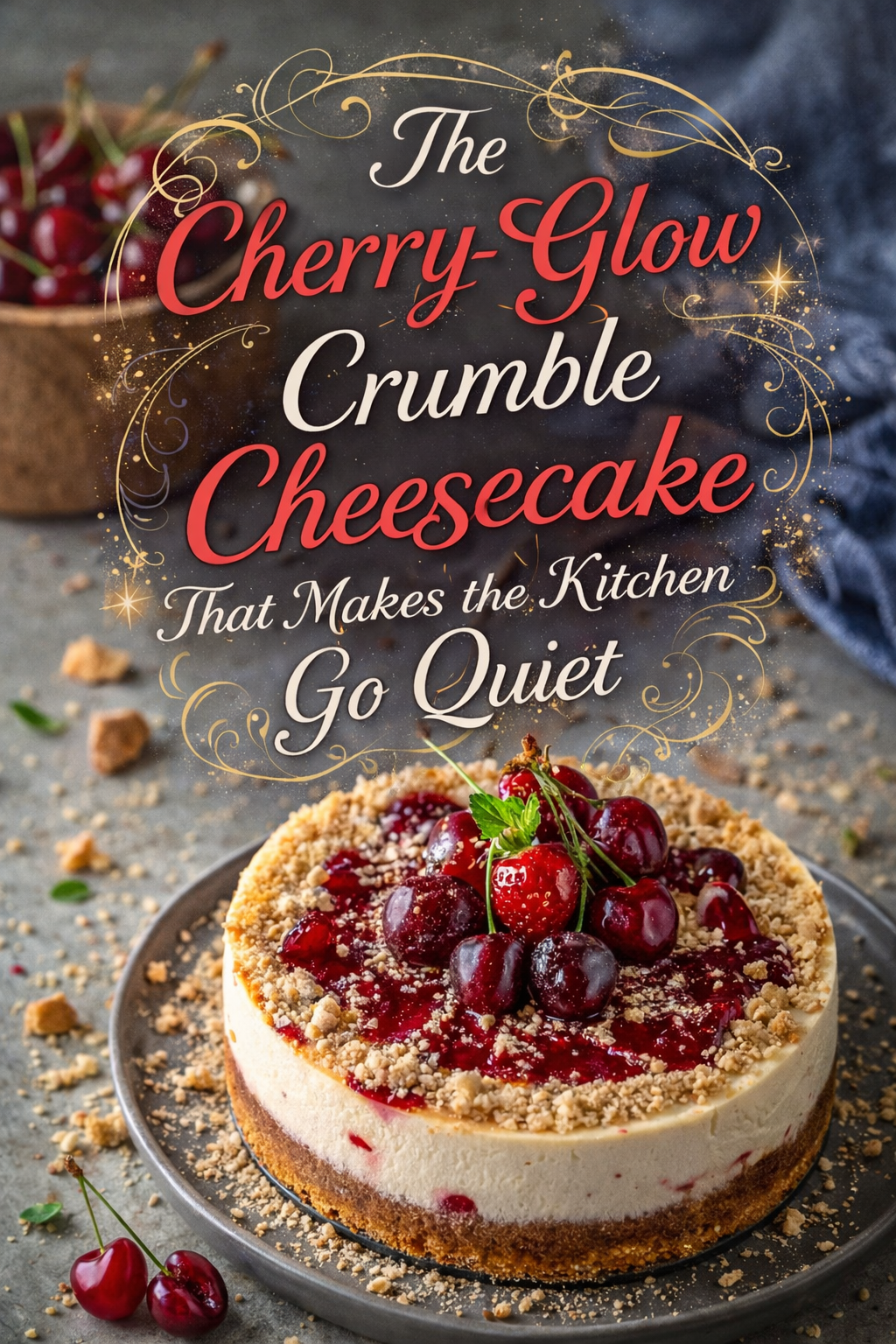
The Cherry-Glow Crumble Cheesecake That Makes the Kitchen Go Quiet
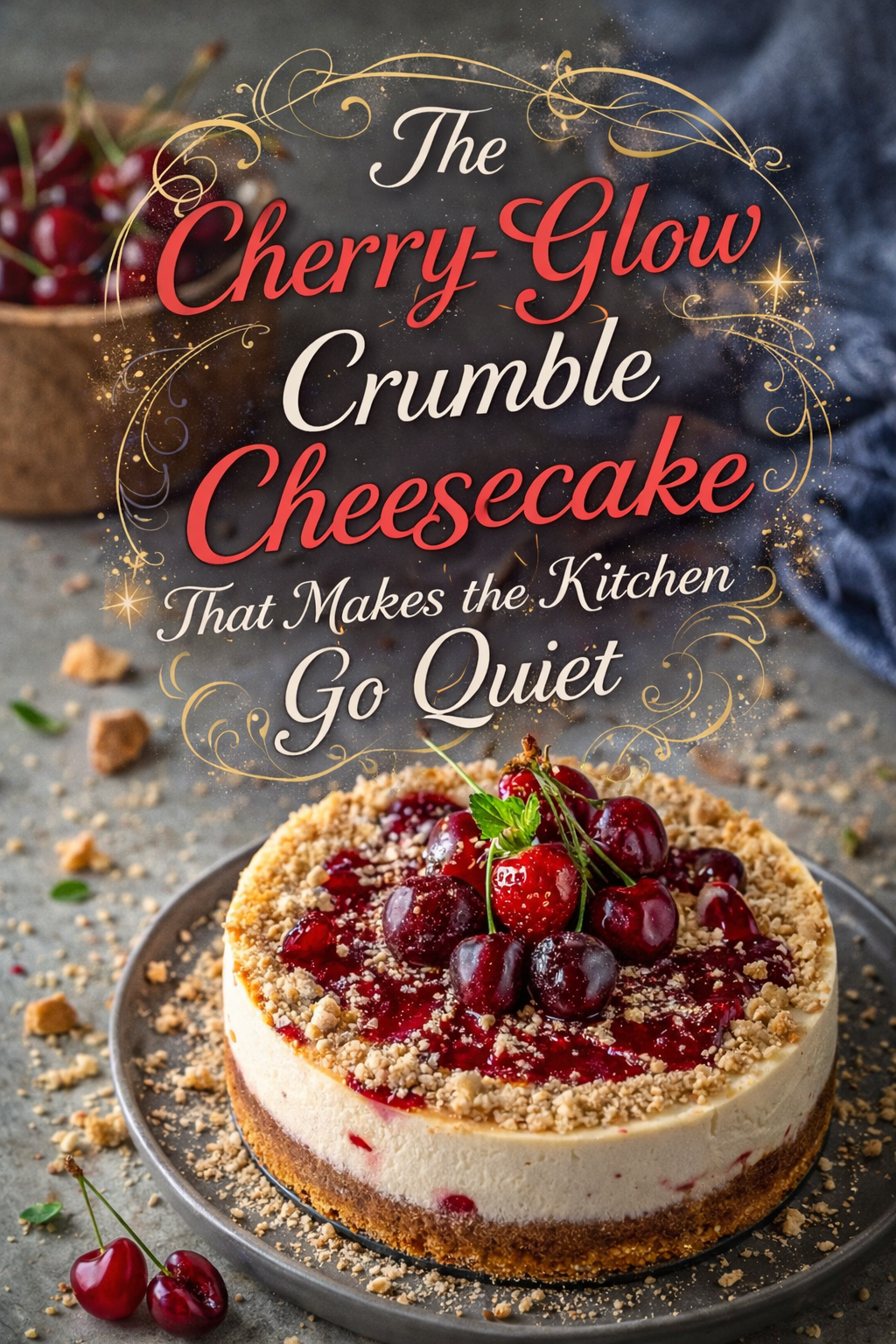
The plate arrives like a little stage set: a thick, ivory cheesecake perched on a warm, golden base, crowned with a slick ribbon of cherry-red shine. The topping isn’t fussy—just honest, gorgeous contrast. Fresh cherries tumble over the center with their stems still on, like they were plucked at the last second because waiting would have been a crime. Around them, a sandy crumble scatters across the surface and spills onto the plate, as if the dessert exhaled and the room leaned in closer.
Everything about it feels soft but intentional. The creamy layer stands tall and smooth, the kind of texture that promises a clean slice and then immediately breaks that promise the moment your fork presses in—because the richness gives way, slow and luxurious. The cherry layer glows like stained glass, glossy enough to catch light and turn it into something edible. Even the crumbs have their own voice: toasted, nutty, faintly buttery, like the quiet crunch you hear right before the cheesecake melts into silence.
Some desserts announce themselves with height or drama. This one seduces with balance. The base looks like a classic graham foundation—baked into that honeyed brown that says it was pressed firmly, loved properly, and given enough heat to become its own flavor. The cheesecake body is thick, almost cloudlike, with tiny blush pinpricks near the bottom where fruit or syrup flirted with the cream. There’s a sense of patience baked into the edges: the kind of patience you need to let things cool slowly, to let textures set, to let flavors settle into each other instead of shouting.
The scene around it is casual, lived-in, and absolutely right. A wooden bowl of cherries sits off to the side like a backup plan you secretly hope to need. A soft cloth rests nearby, a gentle reminder that the best kitchens aren’t spotless—they’re in motion. A jar in the background holds something dark and granular, the kind of ingredient you twist between your fingers to make the air smell like possibility. The plate itself is matte and earthy, giving the cherries permission to shine as brightly as they want.
This is the kind of dessert that turns an ordinary afternoon into a moment you remember later. It doesn’t require a holiday; it creates one. You can imagine it at the end of a long table when the conversation slows and everyone suddenly becomes polite, careful, reverent. Or you can imagine it in a quiet house with the blinds half-drawn, where you cut a slice “just to taste” and end up standing at the counter, fork in hand, because sitting down feels like it would make it too real.
There’s a particular romance to cherries—bright, unapologetic, a little nostalgic. They taste like summer even when you buy them in winter, like you’re daring the season to argue with you. And when they meet cheesecake, the whole thing becomes a kind of soft glamour: creamy, tangy, sweet, with that fruit snap that keeps it from ever feeling heavy or sleepy. The crumble topping seals the deal, giving you that gentle crunch that makes each bite feel complete, like a sentence that ends exactly where it should.
If you’re chasing that perfect texture—the one that’s rich but not dense, set but not stiff—it helps to have the right tools in the room. A reliable springform pan for cheesecakes makes the whole experience calmer, and a sturdy electric hand mixer keeps the batter silky without overworking it. For the cherry topping, a bright, simple finish comes from using cherry pie filling or a jar of cherry preserves, then nudging it into something more personal with a squeeze of lemon and a little warmth.
The crumble is where you can leave your signature. Some days it’s a straightforward buttery graham crumble. Other days you add a handful of chopped nuts or a whisper of spice. Either way, you’ll want a fine, even texture—easy to achieve with a compact food processor or even a rolling pin and a bag if you like the therapy of it. And when it’s time to slice, a clean cut matters; a sharp, thin chef’s knife and a quick wipe between slices keeps those layers looking as immaculate as they taste.
The best part is what happens after it’s done: the slow chill, the anticipation, the way the topping settles into a glossy, jewel-like layer while the cheesecake becomes firmer and more confident. You don’t rush this kind of dessert. You let it become what it’s trying to be. And then you bring it out—crumbs scattered, cherries shining, and that creamy edge catching the light—like you’re revealing a secret you’re proud to share.
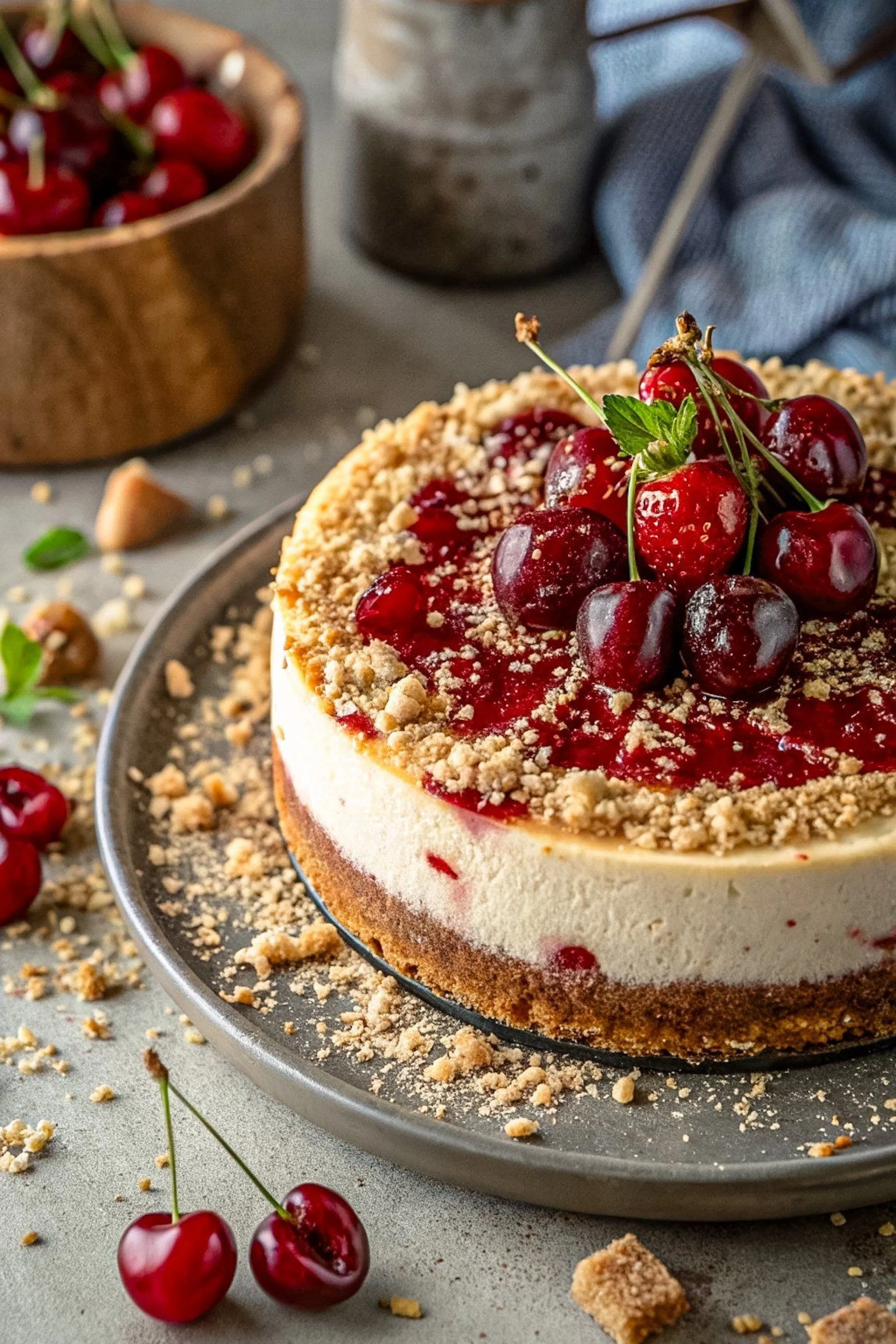
Cherry-Glow Crumble Cheesecake (with Cherry Topping)
A bright, creamy cheesecake with a buttery graham crust, a toasted crumble finish, and a glossy cherry crown.
Ingredients
Crust
- 2 cups graham cracker crumbs
- 6 tbsp unsalted butter, melted
- 2 tbsp granulated sugar
- Pinch of salt
Cheesecake Filling
- 24 oz cream cheese, softened
- 1 cup granulated sugar
- 3 large eggs, room temperature
- 1 cup sour cream
- 2 tsp vanilla extract
- 1 tbsp cornstarch (optional, for extra stability)
- 1 tbsp lemon juice
- Pinch of salt
Cherry Topping
- 1 can cherry pie filling or 1½ cups cherry preserves
- 1–2 tbsp lemon juice (to brighten)
- Optional: ½ tsp almond extract
Crumble Topping
- ¾ cup graham cracker crumbs
- 3 tbsp unsalted butter, melted
- 2 tbsp brown sugar
- Optional: ¼ tsp cinnamon
Finish
- Fresh cherries (for the top)
Method
- Prep: Heat oven to 325°F. Lightly grease a 9-inch springform pan. Wrap the outside in foil to reduce leak risk.
- Crust: Mix crust ingredients, press firmly into the pan, bake 10 minutes. Cool.
- Filling: Beat cream cheese and sugar until smooth. Mix in sour cream, vanilla, lemon, salt (and cornstarch if using). Add eggs one at a time on low, just until blended.
- Bake: Pour batter over crust. Bake 55–70 minutes until edges are set and center still slightly wobbly.
- Cool slowly: Turn oven off, crack the door, rest 45 minutes. Cool to room temp, then chill at least 6 hours (overnight best).
- Topping & crumble: Warm cherry topping briefly, stir in lemon (and almond if using). Mix crumble ingredients and toast in a skillet 3–5 minutes if desired.
- Finish: Spread cherry topping over chilled cheesecake, sprinkle crumble, and pile fresh cherries in the center.
Optional helpers: graham cracker crumbs, cream cheese, vanilla extract, springform pan
Cheesecake is half recipe, half temperament. The goal here is a filling that’s silky and tall, not airy—set enough to slice cleanly, yet soft enough to feel luxurious. Every step is designed to protect that texture, keep cracks away, and make the cherry topping look like a glossy jewel instead of a mess.
1) Set the room up for success
Start by getting your ingredients to the right temperature. Cream cheese that’s truly soft blends smooth; cold cream cheese clumps and forces overmixing later. Pull it out 60–90 minutes ahead. Eggs should be room temp too—warm eggs combine faster and help the batter emulsify without getting foamy. If you’re in a hurry, set the eggs in a bowl of warm water for 10 minutes.
Use a dependable pan; cheesecake lives and dies by the release. A good 9-inch springform pan means you’ll unmold without panic. Lightly grease the sides, and line the bottom with parchment if you love extra insurance.
2) Build a crust that holds its shape
Graham crust should be pressed firmly—especially at the corners where slices tend to crumble. Mix crumbs with melted butter until it feels like damp sand. If it looks dry, add another tablespoon of butter. Press with the flat bottom of a measuring cup; the more compact the crust, the cleaner the slice.
Bake the crust briefly. That 10-minute bake locks the butter in place and prevents a soggy layer later, especially when the cherry topping sits on top for hours.
If you want a deeper, toastier base, try blending in crushed cookies or adding a spoon of brown sugar. Keep it simple and balanced; the cherries already bring drama.
3) Mix gently for a dense, creamy interior
The secret is smooth batter with minimal air. Use an electric hand mixer or stand mixer on low to medium-low. Beat cream cheese and sugar until the mixture is fully smooth—no graininess. Scrape the bowl often; hidden lumps love to cling to the bottom and sides.
Next, add sour cream, vanilla, lemon, salt, and (optionally) cornstarch. Cornstarch isn’t mandatory, but it adds stability and can reduce cracking, especially if your oven runs hot. A fragrant, reliable pure vanilla extract makes a noticeable difference here—cheesecake is simple, so quality shows up.
Now the eggs: add them one at a time on low, mixing just until each disappears. Overmixing eggs whips in air, which expands in the oven and later collapses, creating cracks and a drier texture. You’re aiming for glossy, cohesive batter, not fluffy.
4) Bake with patience, not brute force
Cheesecake prefers gentle heat. Bake at 325°F so the custard sets slowly. If you have hot spots, rotate the pan once halfway through, but don’t over-fuss. The cake is done when the outer ring is set and the center still has a small wobble like set gelatin. If it looks liquid, keep going. If the whole surface is firm, you may have gone a touch far (still delicious, just slightly denser).
Water baths help, but they aren’t the only path to success. If you don’t want a full bain-marie, at least put a roasting pan of hot water on the rack below the cheesecake to add moisture to the oven. This reduces surface drying and helps prevent cracks.
5) Cool it like you mean it
Most cracks happen during cooling, not baking. Sudden temperature drops make the custard contract too quickly. When bake time ends, turn off the oven, crack the door, and let the cheesecake sit inside for about 45 minutes. This is the calm-down phase.
Then move it to a rack and cool to room temperature before chilling. Chilling too early traps heat and condensation, which can create a gummy top. Once it’s cool, refrigerate at least 6 hours—overnight is best. The texture finishes setting in the fridge, and the flavor deepens into that classic cheesecake tang.
6) Make the cherry topping look like lacquer
You can keep it easy with cherry pie filling, or go slightly more grown-up with cherry preserves. Either way, warm it gently so it spreads without tearing the cheesecake. Add lemon juice to brighten—this keeps the topping from tasting flat and sugary. If you love the “bakery cherry” vibe, a tiny splash of almond extract makes it pop, but keep it restrained.
Let the topping cool to lukewarm before spreading. Hot topping can soften the cheesecake surface. Spread from the center outward with a spoon, letting it settle into a glossy pool.
7) Crumble topping: texture and restraint
Crumble is all about contrast. Mix graham crumbs with melted butter and brown sugar. For extra crunch and a toasted flavor, quickly toast it in a skillet until it smells nutty—3 to 5 minutes, stirring constantly. Cool completely before sprinkling. Warm crumble will steam and soften, and you want it crisp.
Sprinkle around the edges first, then lightly toward the center so the cherries still look like the hero. Finish with fresh cherries—dry them well so they don’t bleed or slide. A small mound in the center gives that editorial “just placed” look.
8) Slicing without smearing
For sharp slices, use a thin, sharp chef’s knife dipped in hot water and wiped dry between cuts. Clean blade, clean layers. If the topping drags, chill the cheesecake 15 minutes more and try again.
9) Variations that still feel premium
- Chocolate-cherry: Add 2 tbsp cocoa to the crust and use chocolate cookie crumbs.
- Almond-vanilla: Add ¼ tsp almond extract to the filling and top with sliced almonds mixed into the crumble.
- Lighter tang: Swap half the sour cream for Greek yogurt for a brighter, slightly lighter feel—look for plain Greek yogurt.
- Fresh cherry compote: Simmer pitted cherries with sugar and lemon until syrupy, then cool completely before topping. A pitter makes it effortless; a simple cherry pitter tool saves your counter (and your patience).
10) Troubleshooting, fast and calm
- Crack formed: Cover it with cherry topping and crumble—instant glamour, zero shame.
- Center too soft after chilling: It needed more bake time. Next round, bake until the center wobble is smaller and the edges are fully set. Cornstarch can help.
- Grainy filling: Cream cheese was too cold or the sugar didn’t fully dissolve. Start softer, scrape more, mix longer before adding eggs.
- Soggy crust: Underbaked crust or too little butter. Bake the crust and press firmly; consider a slightly thicker base.
Cheesecake rewards confidence. Keep the mixing gentle, the baking slow, the cooling patient, and the finish intentional. The result is exactly what the image promises: a tall, creamy slice with a cherry gloss that catches the light, and a crumble that whispers crunch right before everything turns smooth.