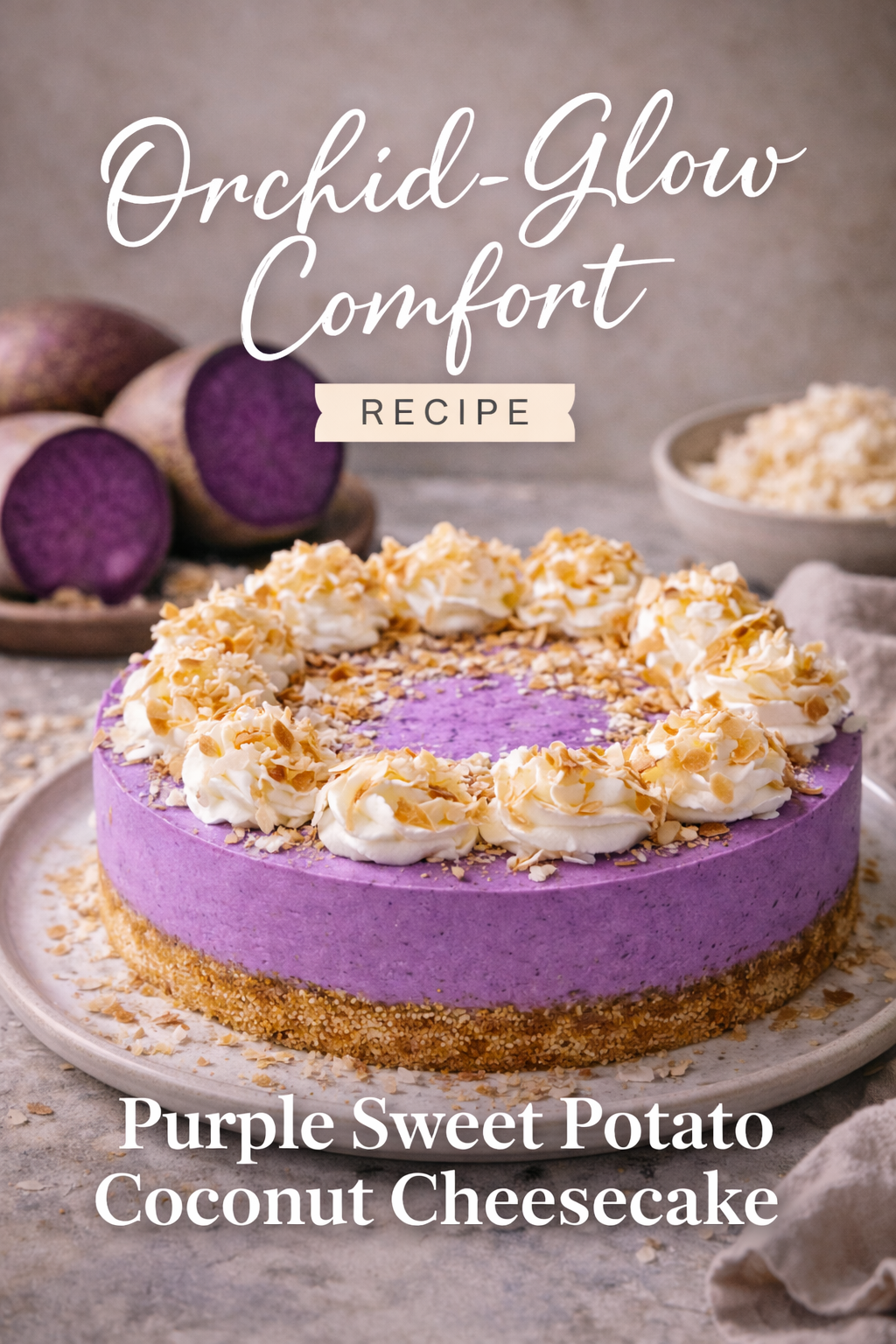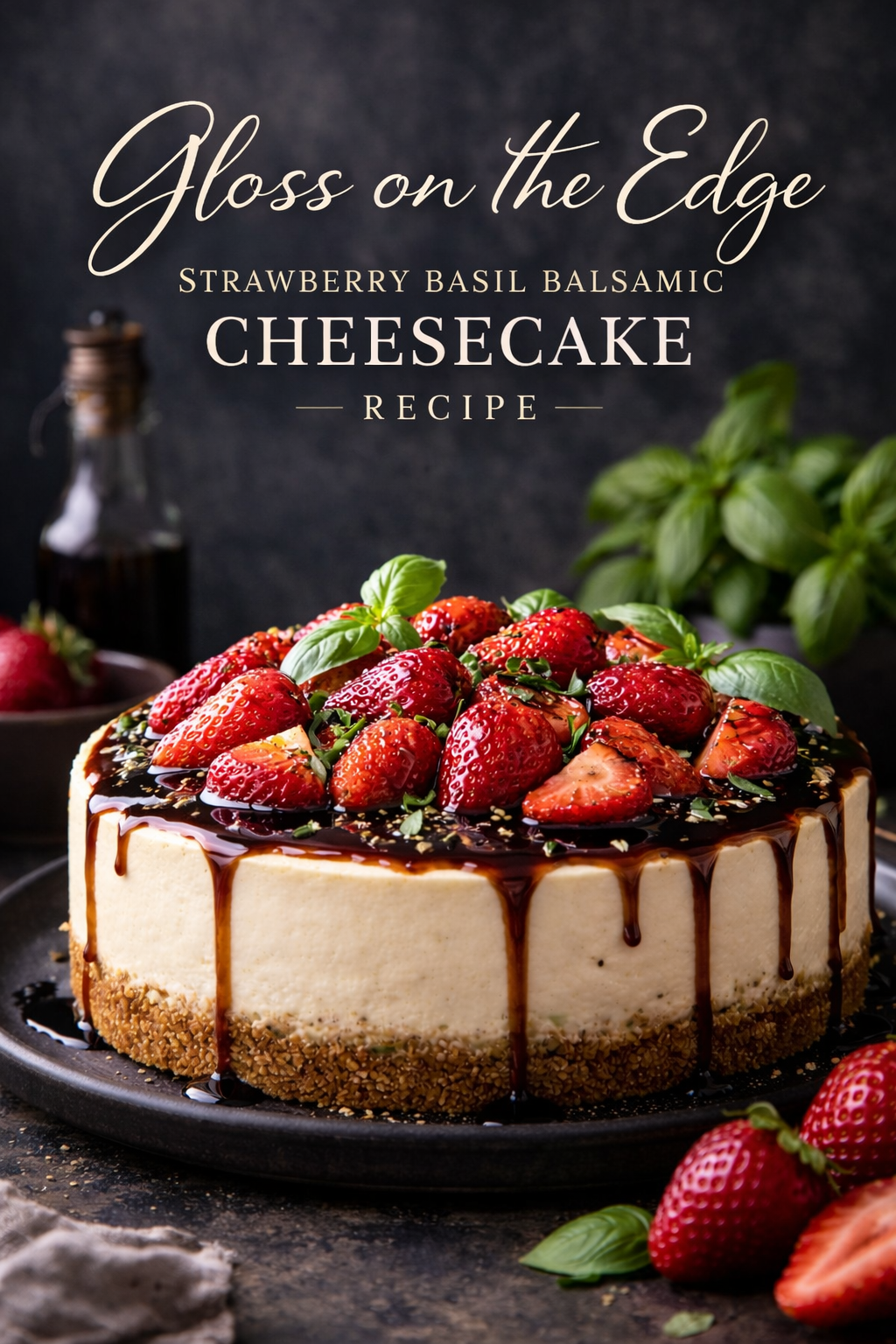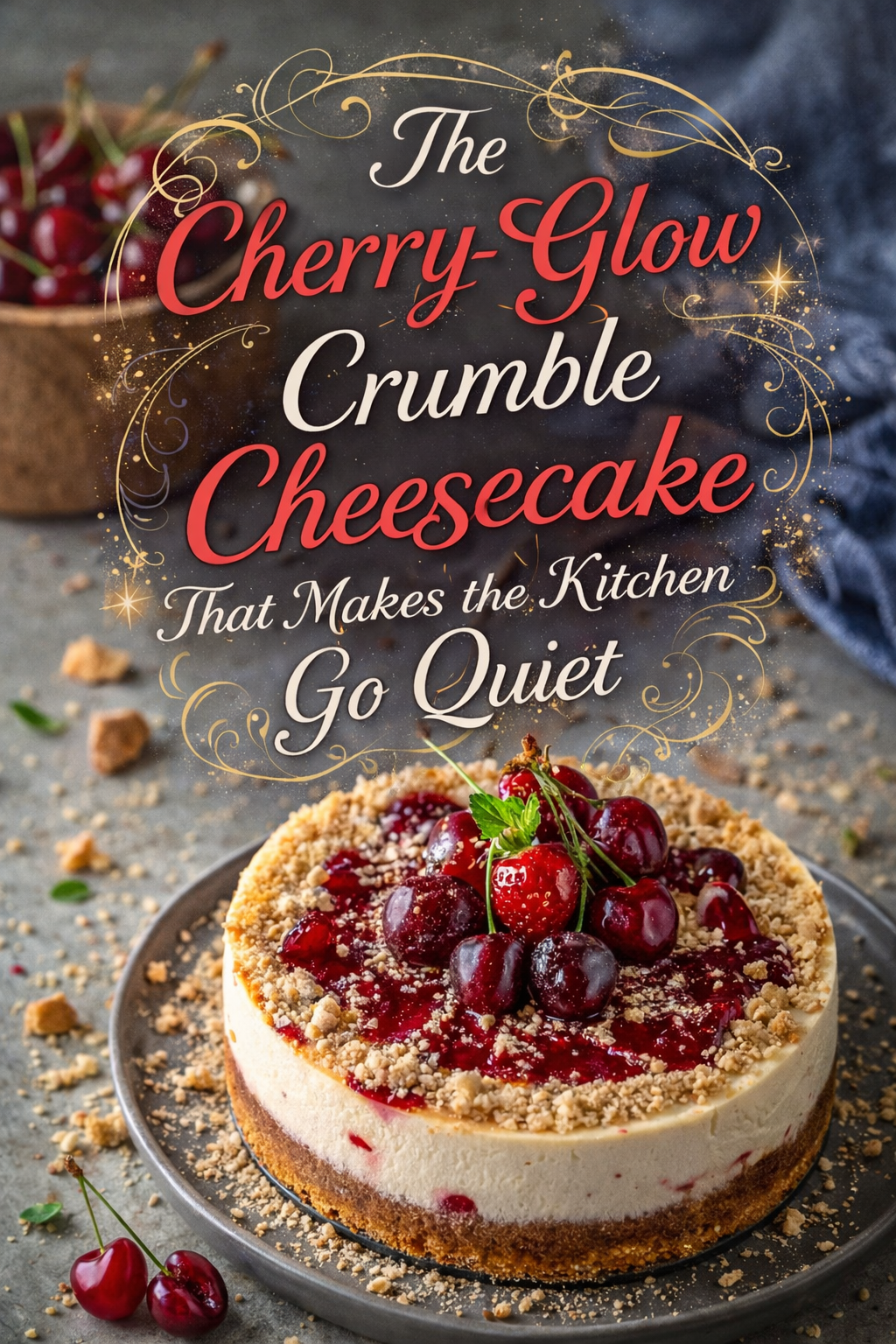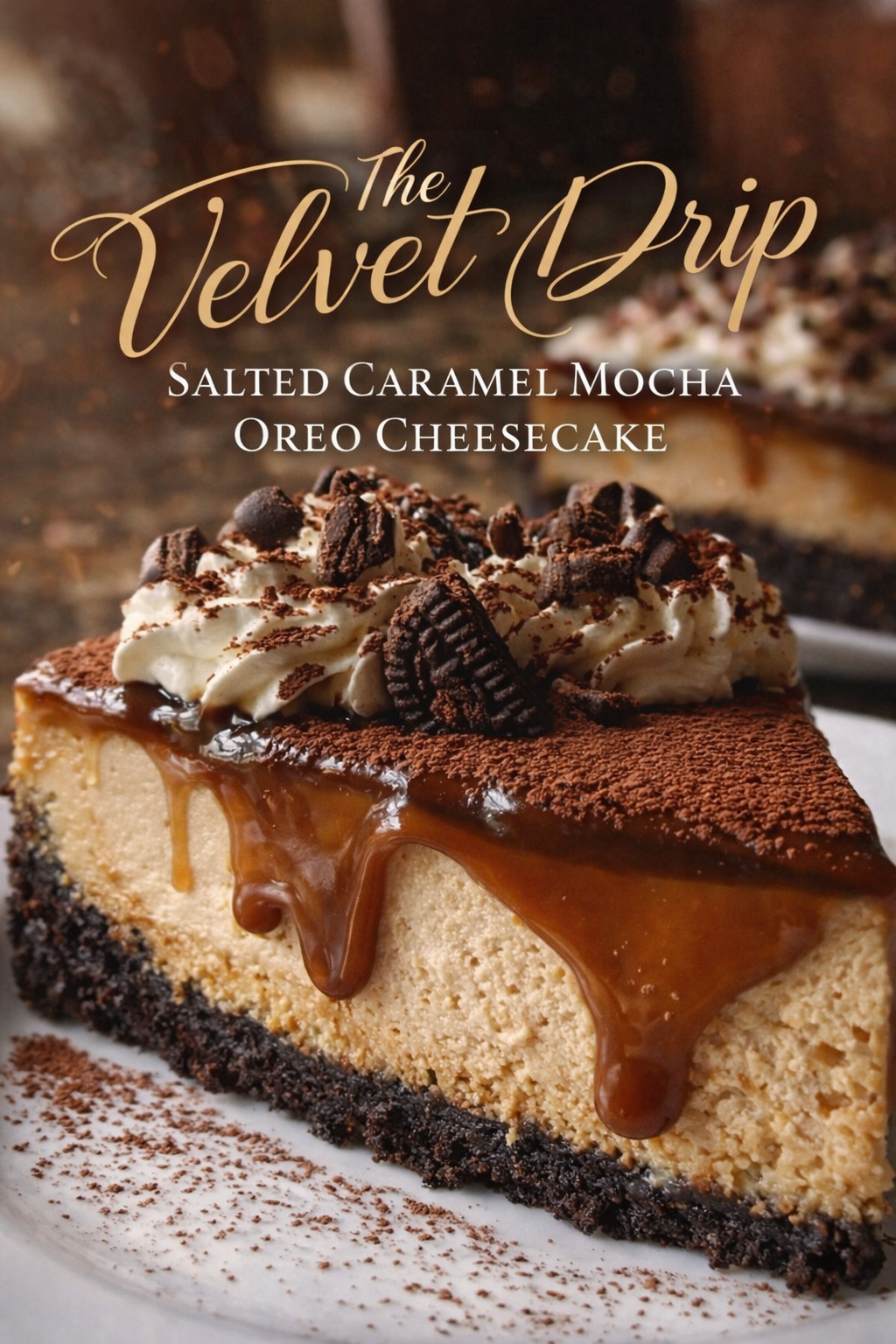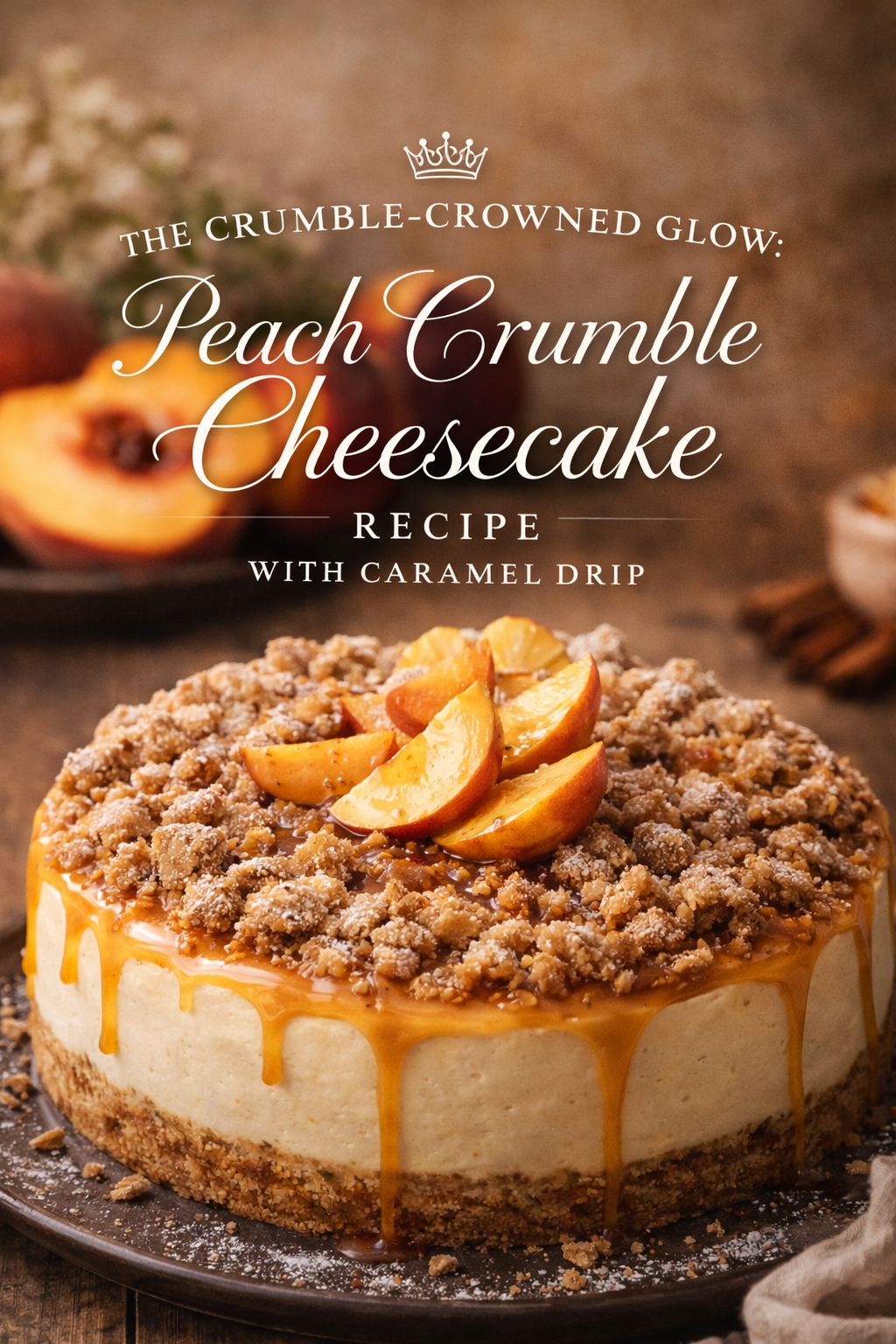
The Crumble-Crowned Glow: Peach Crumble Cheesecake Recipe With Caramel Drip
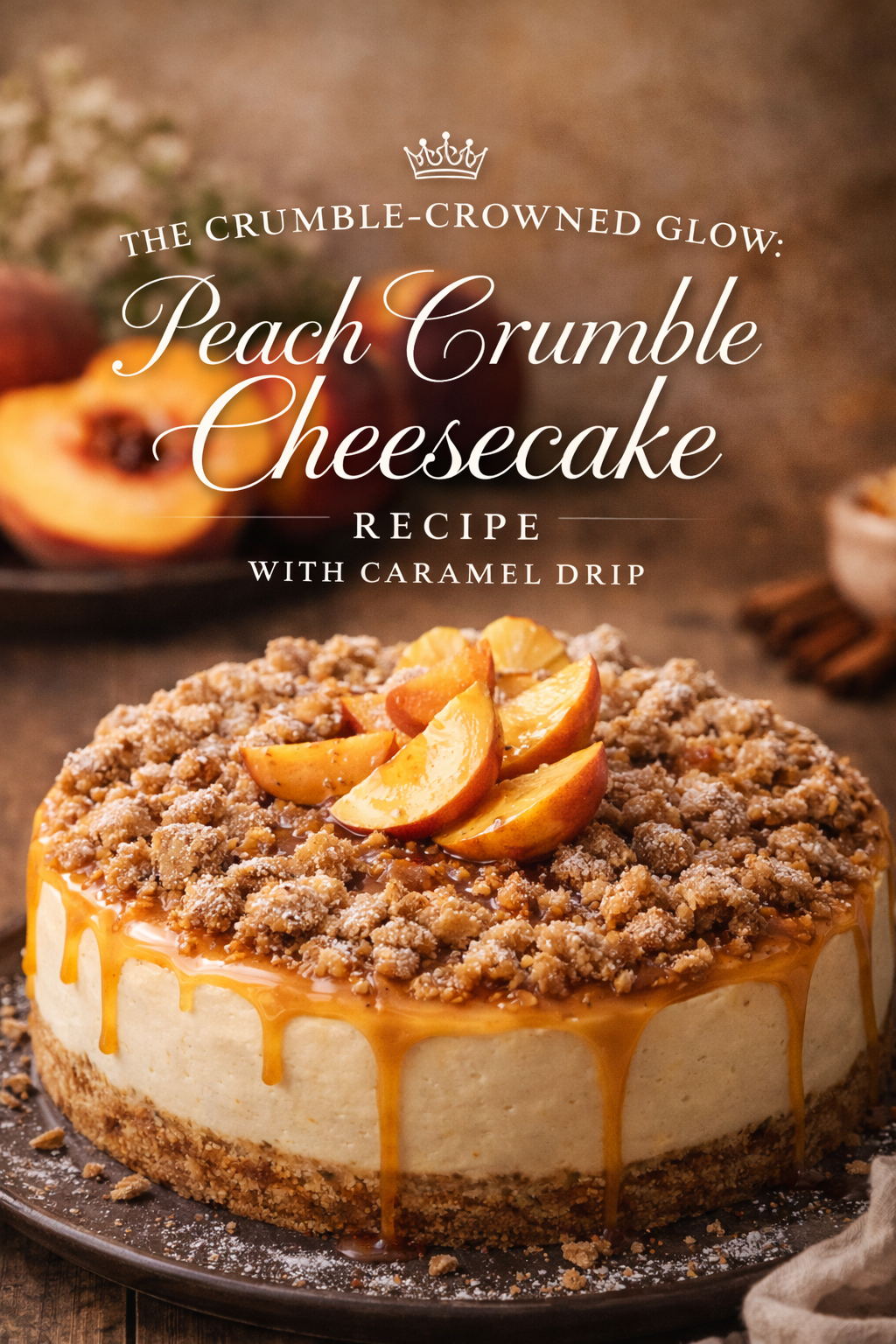
The first thing that lands is the color—sun-warmed peach and amber caramel, the kind of glow that makes a kitchen feel softer even when the light outside has gone a little bronze. A cheesecake sits low and proud on a dark platter, its edges clean and calm, as if it’s been holding its breath for the moment the first slice breaks the silence. The top is a landscape of crumble—small, sandy boulders that look like they were scattered by hand on purpose, not poured, not rushed. Across the rim, caramel doesn’t politely stop at the edge. It commits. It spills in thick ribbons, catching on the cream-colored sides before stretching into slow drips that feel almost cinematic, like time has been asked to move just a little slower for dessert.
Everything around it quietly confirms the mood. A few cinnamon sticks rest nearby like props from a warm-weather fable, their woody spirals suggesting something toasted and spiced without needing to shout. A small bowl of glossy fruit compote sits close enough to be tempting, the surface reflecting light like lacquer. Peaches appear in the background—whole and halved—showing that deep gold flesh and blushed skin that always looks more romantic than it has any right to. The scene feels rustic but intentional: weathered wood, soft linen, muted ceramics, and that gentle dusting of powdered sugar that reads like the final hush over something extravagant.
This is a dessert that wears two personalities perfectly. The base is pure velvet—cool, tangy, and dense in the way a proper cheesecake should be. But the top is all crunch and warmth, a crumble cap that snaps softly under a fork before giving way to the creamy center. The caramel turns each bite into something layered: sweet, a little buttery, slightly bittersweet if you let it go deep enough in the pan. The peaches make it bright—sunlit, juicy, and fragrant—pulling the whole thing away from heaviness and into something that feels like late summer leaning into fall.
There’s a particular satisfaction to building a cheesecake like this—one that looks like it belongs on a styled table, yet still feels honest and homemade. It helps to set yourself up with a few quiet advantages: a reliable springform pan that releases cleanly, a mixing bowl that doesn’t wobble, a crumb crust that packs tight and stays crisp. The process feels smoother when you have a sturdy springform pan for cheesecakes and parchment rounds that prevent sticking ready to go before the first ingredient hits the counter.
The crumble is the crown here—sweet, sandy, and just salty enough to keep it interesting. It’s the kind of topping that makes people lean in before they even ask what it is. You can hear it when the knife cuts through: that faint crackle, the tiny collapse of crisp crumbs into caramel. If you want that texture to stay sharp, the little details matter: cold butter, a quick mix, and a bake that dries it out without burning the edges. The scent alone—vanilla, cinnamon, browned butter—makes the whole room feel like a slow weekend. A gentle dusting of spice is easier when you have a fine-mesh sifter for powdered sugar and spices and a cinnamon grinder or spice mill that keeps everything fragrant and fresh.
And then there’s the caramel—golden, glossy, unapologetic. It’s the detail that turns a beautiful cheesecake into something that looks like it’s been waiting under warm lights for a photograph. Whether you make it from scratch or lean on a shortcut, a good caramel should be thick enough to cling, but fluid enough to cascade. That “drip” moment is pure theater: you pour slowly, you watch it choose its own paths, and suddenly the cake feels alive. For ease and consistency, a caramel sauce bottle or dispenser gives you control, while a small offset spatula for smoothing and nudging helps refine the edges without overworking them.
The peaches pull everything into a season. Fresh, they bring perfume and brightness; cooked down, they become glossy and concentrated, the flavor tightening into something jammy and deep. A peach topping can be as simple as sliced fruit warmed with sugar, or as lush as a compote with a hint of lemon and spice. If you want a shortcut that still tastes like something you meant to do, keep quality peach preserves or fruit spread on hand and brighten it with pure vanilla extract and a little citrus.
What makes this dessert feel so luxurious isn’t just richness—it’s contrast. Cool cream against warm caramel. Crisp crumble against smooth filling. Bright peach against toasted spice. Even the setting supports the experience: a dark plate makes the colors pop; a linen cloth softens the scene; a handful of cinnamon sticks hints at what’s coming before the first bite delivers it. The whole thing feels like an edible moodboard: rustic without being messy, indulgent without being loud.
Serve it chilled and clean, or let it sit just long enough to soften at the edges so the caramel relaxes again. Cut slow, wipe the knife between slices, and let the crumb fall where it wants. It’s the kind of cake that doesn’t need a special occasion—because it becomes the occasion the moment it hits the table.
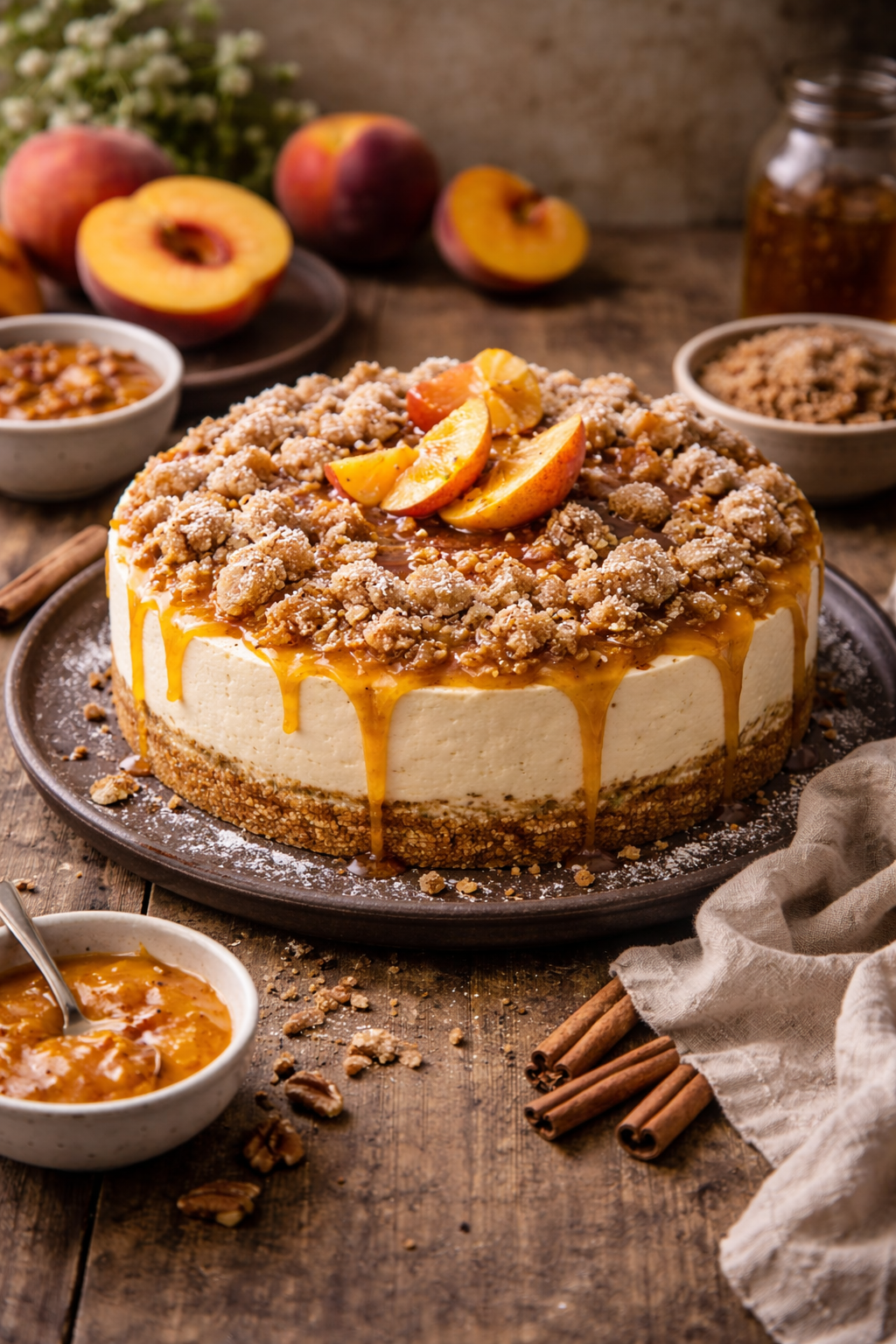
Peach Crumble Cheesecake balances a classic tangy cheesecake base with a crisp streusel topping, a glossy peach layer, and a caramel drip finish. Chill time matters, but the build is straightforward and the payoff is dramatic.
Ingredients
Crust
- 2 cups graham cracker crumbs
- 6 tbsp unsalted butter, melted
- 2 tbsp sugar
- Pinch of salt
Cheesecake Filling
- 24 oz cream cheese, room temperature
- 1 cup sugar
- 3 large eggs, room temperature
- 1 cup sour cream
- 2 tsp vanilla extract
- 1 tbsp all-purpose flour (optional, for stability)
- Pinch of salt
Peach Layer
- 2 cups sliced peaches (fresh or thawed frozen)
- 1/3 cup sugar
- 1 tbsp lemon juice
- 2 tsp cornstarch + 2 tbsp water (slurry)
- 1/2 tsp cinnamon (optional)
Crumble Topping
- 3/4 cup all-purpose flour
- 1/2 cup brown sugar
- 1/2 tsp cinnamon
- Pinch of salt
- 6 tbsp cold unsalted butter, cubed
- 1/2 cup chopped pecans (optional)
Finish
- Caramel sauce, for drizzling
Method / Instructions
- Prep pan & oven: Heat oven to 325°F. Line the bottom of a 9-inch springform pan with parchment.
- Make crust: Mix crumbs, sugar, salt, and melted butter. Press firmly into the pan bottom. Bake 10 minutes; cool.
- Make filling: Beat cream cheese and sugar until smooth. Add eggs one at a time, mixing just to combine. Mix in sour cream, vanilla, salt, and flour (if using).
- Bake cheesecake: Pour filling over crust. Bake 55–70 minutes until edges are set and center jiggles slightly. Cool to room temp, then chill at least 6 hours (overnight best).
- Cook peaches: Simmer peaches, sugar, lemon, and cinnamon until juicy. Stir in cornstarch slurry and cook until glossy and thick. Cool completely.
- Make crumble: Combine flour, brown sugar, cinnamon, salt (and pecans if using). Cut in cold butter until clumpy crumbs form. Bake on a sheet at 350°F for 12–15 minutes until golden; cool.
- Assemble: Spread cooled peach topping over chilled cheesecake. Sprinkle crumble generously. Drizzle caramel over the top and let it drip down the sides.
- Serve: Slice with a warm knife, wiping between cuts.
Step 1: Build a crust that stays crisp
A crumble-topped cheesecake needs a base that can handle moisture from both the filling and the fruit. Graham cracker crust works beautifully, but only if it’s packed tight and lightly baked. Mix crumbs with melted butter until every grain looks coated, then press firmly—first with your hands, then with the bottom of a measuring cup for a hard, even layer. If the crust is loose, slices will crumble and the caramel drip will feel like it’s sliding on sand. A clean release starts with smart prep: use a 9-inch springform pan with a strong latch and line the base with pre-cut parchment rounds. Bake the crust briefly to set it—this evaporates surface moisture and makes the crust less likely to turn soggy later.
Step 2: Mix the filling without whipping in air
The secret to a cheesecake that looks like satin is restraint. Cream cheese must be fully softened so it blends smoothly, but overbeating traps air, which expands in the oven and collapses into cracks. Beat the cream cheese and sugar just until silky, scraping down often. Add eggs one at a time and stop mixing as soon as each disappears. A stand mixer makes it easy to go too far; a handheld mixer on low is often safer. If you want a stable, sliceable texture, sour cream adds tang and softness, while a small amount of flour can help with structure. For clean workflow and consistent results, keep a silicone spatula set for scraping bowls nearby so you’re not tempted to “just mix longer” to chase lumps that could have been scraped.
Step 3: Bake gently to avoid cracks and graininess
Cheesecake is custard at heart. High heat makes custard tighten too fast, pushing out moisture and causing curdled texture or fissures on top. Bake at 325°F and look for the tell: the edges should be set, but the center should still wobble like a thick gel when you gently nudge the pan. If the entire top looks firm, it’s likely overbaked. To reduce cracking risk, you can use a water bath, but it’s optional if you manage temperature and cooling well. If you do use one, protect your pan with extra-wide heavy-duty foil for wrapping and set the springform in a roasting pan. Water bath or not, don’t rush the finish: turn the oven off, crack the door, and let the cake cool gradually for 45–60 minutes. That slow drop in temperature prevents the dramatic contraction that causes splits.
Step 4: Chill long enough for a clean slice
Warm cheesecake is a heartbreak waiting to happen—soft, fragile, and prone to smearing. Chilling isn’t just for temperature; it’s the set time that allows the custard to fully firm and the fats to stabilize into that luxurious, dense texture. Aim for at least 6 hours, and overnight if possible. When it’s time to release the springform, run a thin warm knife around the edge first. This is one of those tiny steps that makes the final presentation feel intentional. For clean slices, use a long chef’s knife dipped in hot water and wiped dry between cuts; the heat helps glide through caramel and crumble without dragging.
Step 5: Make peaches glossy, not watery
Fruit topping should sit on cheesecake like silk—lush, spoonable, and thick enough not to seep into the surface. If you simply cook peaches until soft and dump them on, you risk creating a wet layer that loosens the topping and dulls the flavor. Instead, simmer peaches with sugar and lemon until they release juice, then thicken with a cornstarch slurry. Cook just until the mixture turns glossy and holds soft peaks when stirred. Lemon matters: it keeps the peach flavor bright, and it prevents the topping from tasting flat and sugary. Want a deeper, more autumnal edge? Add cinnamon and a whisper of vanilla. If peaches aren’t in season, frozen peaches work well—just thaw and drain slightly. A consistent topping is easier with a small saucepan set with a heavy bottom, which prevents scorching and helps the fruit reduce evenly.
Step 6: Bake the crumble separately for maximum crunch
Crumble is where texture lives, but moisture is its enemy. If you pile raw crumble onto a chilled cheesecake and drizzle fruit over it, it will soften quickly. The move is to bake the crumble separately until golden and crisp, then cool it completely before assembling. Use cold butter and cut it into flour and brown sugar until you get clumps ranging from peas to small marbles. Those varied sizes create a more interesting bite—some sandy, some crunchy. Spread on a sheet pan and bake at 350°F, stirring once, until it smells toasted and the color shifts from pale to caramel-brown. For speed and ease, a pastry cutter for crumble topping helps you keep the butter cold without overworking it. Add chopped pecans if you want extra crunch and a subtle roastiness that pairs beautifully with peaches.
Step 7: Assemble in layers that stay defined
Once everything is fully cooled—cheesecake chilled, peach topping cooled, crumble cooled—you’re ready to build the final look. Spread the peach layer gently over the cheesecake surface. Use the back of a spoon or an offset spatula to keep it even without pressing down. Then add crumble generously, letting it mound slightly in the center for that “crown” effect. This is where the cake starts to look like the image: rustic, abundant, and deliberate. If you want a more sculpted finish, an offset spatula set for baking gives you precision without tearing the surface.
Step 8: Create the caramel drip like it’s on purpose
Caramel drip looks effortless when you control viscosity. If caramel is too hot and thin, it will run straight down and pool; too cold and thick, it will clump and refuse to drip. Warm it gently until it flows in a slow ribbon from a spoon. Start by spooning or squeezing a ring near the edge, then nudge it over in a few spots so drips form at different lengths. That variation is what reads “editorial” instead of “accidental.” For clean control, a squeeze bottle for sauces is ideal—especially if you want those neat, intentional trails across the crumble. If you prefer a richer caramel profile, look for sauces labeled “buttery” or “salted,” and adjust sweetness in the peach topping accordingly.
Step 9: Troubleshooting like a pro
- Cracks on top: Usually from overbaking or rapid cooling. Next time, pull the cake when the center still jiggles and cool it gradually in the oven.
- Grainy texture: Cream cheese was too cold or the batter was overmixed after eggs were added. Room-temp ingredients and gentle mixing fix this.
- Soggy crumble: The crumble wasn’t baked long enough, wasn’t cooled fully, or was applied under warm fruit. Bake it separately and assemble only when everything is cool.
- Runny peach layer: Not enough thickener or it didn’t boil long enough after adding the slurry. You need a brief simmer to activate cornstarch fully.
- Crust falling apart: Not enough butter or not packed firmly. Press harder and pre-bake the crust.
Step 10: Variations that keep the vibe but change the mood
- Brown butter crumble: Brown the butter first, chill it until firm, then cut it into the crumble for a deeper, toasted flavor.
- Bourbon peach topping: Add a small splash near the end of cooking for warmth and complexity.
- Gingersnap crust: Swap graham crumbs for crushed gingersnaps for spice and snap.
- Maple-caramel finish: Use maple-forward caramel and add a pinch of flaky salt on top for contrast.
Step 11: Serving and storage that preserves the drama
Serve chilled for clean structure, or let it sit 10–15 minutes for a slightly softer, more luscious bite. Always slice with a warm knife and wipe between cuts to keep the layers crisp and defined. Store covered in the fridge; keep extra crumble separate and add right before serving if you want crunch to stay at its peak. For parties, assemble the peach layer ahead, then add crumble and caramel right before presenting—so the top still looks freshly crowned when it hits the table.