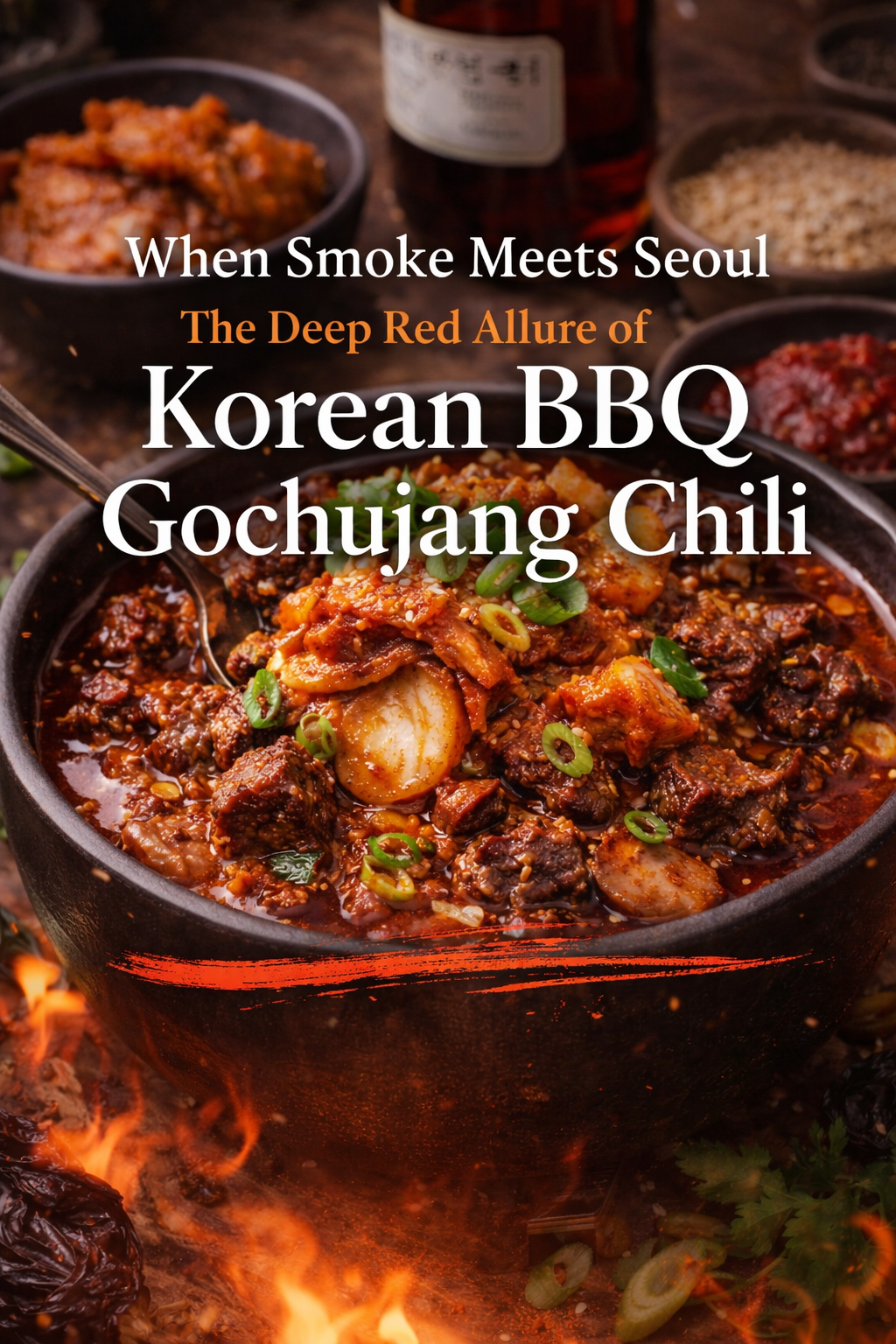
When Smoke Meets Seoul: The Deep Red Allure of Korean BBQ Gochujang Chili
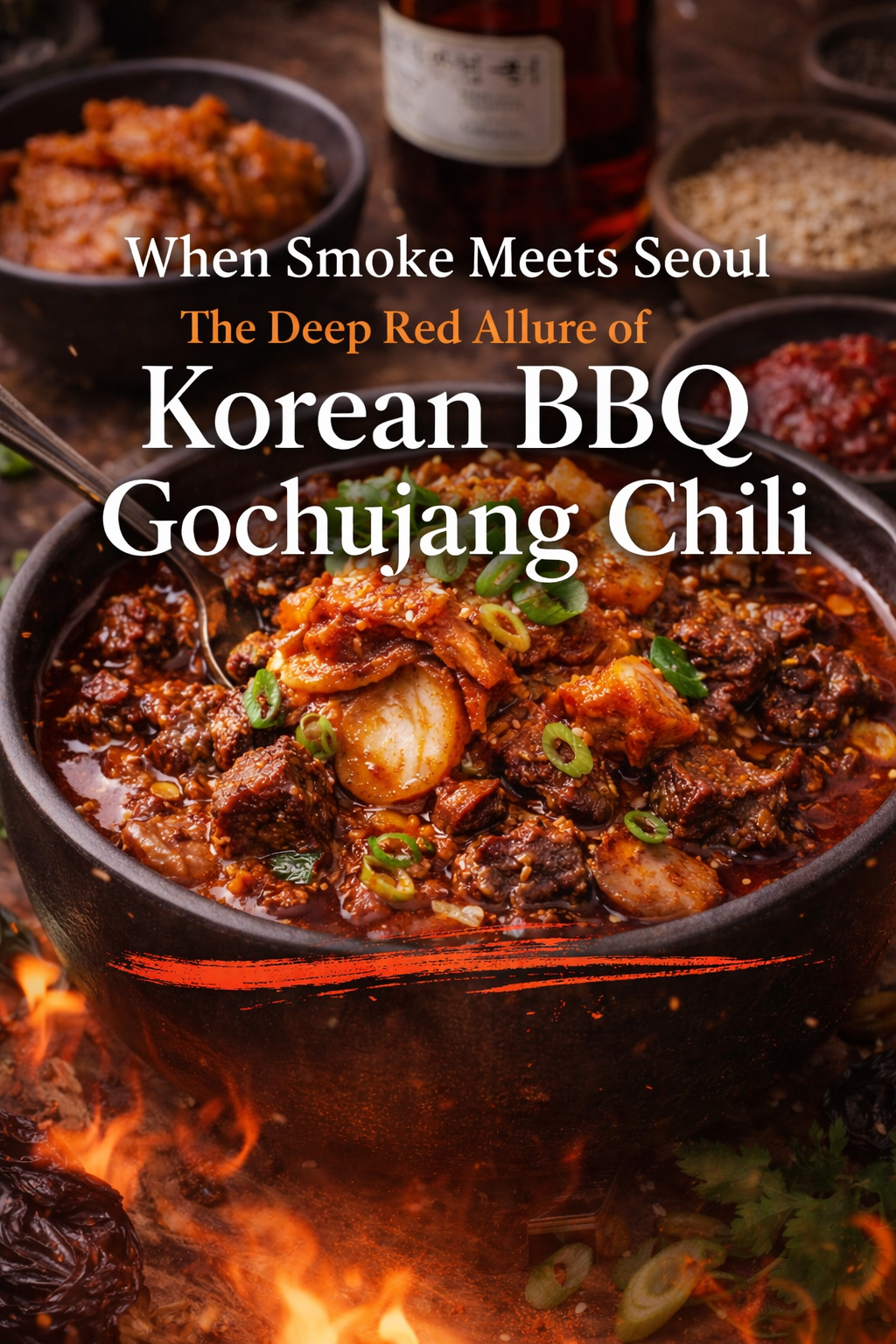
The bowl arrives heavy, almost reverent, its dark ceramic rim cradling something that feels both ancient and urgent. Steam rises slowly, not in a rush, but in a steady breath that carries the unmistakable scent of fermented heat, long-simmered meat, and spice softened by time. The surface glistens—deep crimson lacquered with chili oil—broken only by emerald slices of scallion and the pale glow of tender radish rounds tucked beneath the surface. This is Korean BBQ Gochujang Chili, and it doesn’t announce itself loudly. It pulls you in.
The image tells a story of patience. Thick chunks of beef sit suspended in the sauce, their edges softened, fibers relaxed after hours of low heat. Each piece looks as though it could fall apart at the slightest pressure of a spoon. The sauce itself is layered—gochujang’s fermented funk meeting slow-cooked aromatics, toasted sesame, and the faint sweetness that only emerges when onions and peppers surrender fully. There’s no harshness here, only depth.
The setting matters. A worn wooden board beneath the bowl, scarred and darkened from years of use, grounds the scene in something real and tactile. Around it, small supporting players wait quietly: a dish of sesame seeds, a bowl of kimchi glowing orange-red, a jar of deep brown liquid that hints at soy and age. Cilantro leaves rest casually nearby, not as garnish but as invitation. Everything feels intentional yet unforced, like a meal meant to be shared late, when conversation slows and the night stretches.
This kind of chili doesn’t belong to hurried evenings. It belongs to weekends, to cold air outside and warmth building slowly indoors. It belongs to kitchens where a heavy-bottomed Dutch oven built for long simmers sits confidently on the stove, where time is an ingredient treated with respect. The richness in the bowl suggests hours of quiet bubbling, the kind that fills a home with scent long before anyone thinks about eating.
What makes this chili compelling is contrast. Korean barbecue flavors are bold, assertive, unapologetic—but here they’ve been woven into something familiar, comforting, almost nostalgic. The gochujang doesn’t shout; it hums. The beef carries smoke and umami without bitterness. Even the heat feels considered, layered rather than sharp. This is warmth that builds, that stays with you.
There’s also generosity in the bowl. It’s not precious. It’s meant to be ladled generously, spoon scraping gently against ceramic, sauce spilling just a little over the edge. Served alongside rice, cornbread, or simply on its own, it adapts without losing its identity. It’s the kind of dish that invites customization at the table—extra scallions, a drizzle of sesame oil, maybe even a soft egg stirred in at the last moment.
The image captures a moment just before eating, that pause where anticipation peaks. A spoon rests inside the bowl, already committed, already claiming the first bite. The chili looks alive, glossy and textured, promising comfort without boredom. This is food that bridges cultures without diluting either, where Korean fermentation meets American chili tradition and finds common ground in patience, heat, and depth.
It’s easy to imagine the tools involved: a sharp chef’s knife for clean vegetable prep, a sturdy wooden cutting board that can handle aromatics, a long-handled wooden spoon ideal for slow stirring. Nothing flashy. Just reliable companions to a process that rewards attention.
Ultimately, the bowl feels like a conversation between past and present. Korean pantry staples speaking fluently with chili tradition, smoke and fermentation meeting in the middle. It’s rich without being heavy, spicy without being punishing, familiar yet quietly surprising. The image doesn’t just show a dish—it captures a mood, a temperature, a moment of deep, savory calm that lingers long after the last spoonful.
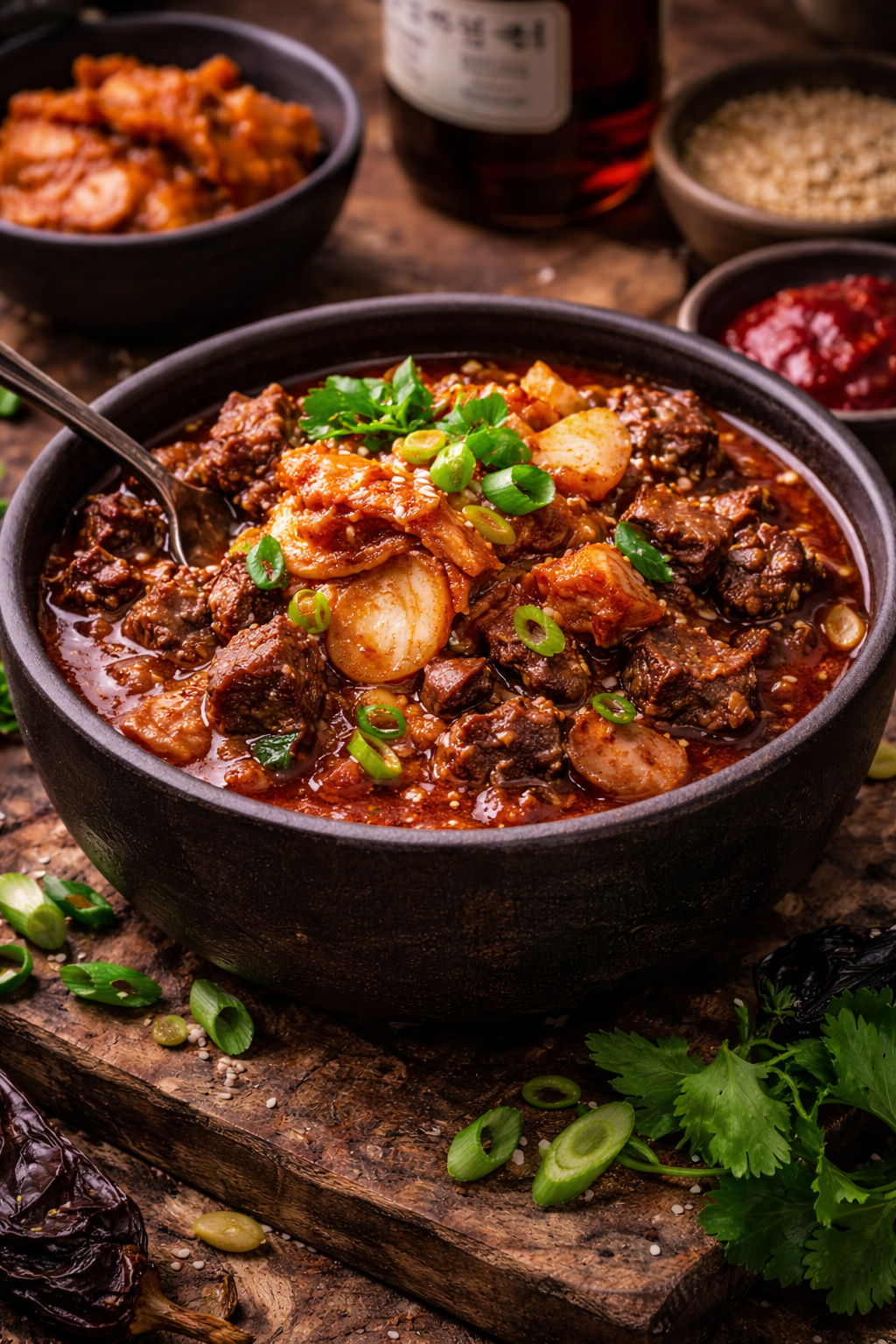
Korean BBQ Gochujang Chili — Core Recipe
This chili blends classic slow-cooked beef chili with Korean barbecue depth and fermented heat.
Ingredients
- 2 lb beef chuck, cut into large cubes
- 2 tbsp neutral oil
- 1 large onion, diced
- 4 cloves garlic, minced
- 3 tbsp gochujang
- 2 tbsp soy sauce
- 1 tbsp toasted sesame oil
- 2 tbsp chili paste or chili crisp
- 2 tbsp tomato paste
- 4 cups beef broth
- 1 cup crushed tomatoes
- 1 cup daikon radish or turnip, sliced
- 1 tsp smoked paprika
- 1 tsp ground cumin
- Salt and black pepper, to taste
- Sliced scallions and sesame seeds, for finishing
Method
- Heat oil in a heavy pot over medium-high heat.
- Brown beef in batches until deeply caramelized; remove and reserve.
- Lower heat and sauté onion until soft, then add garlic.
- Stir in gochujang, tomato paste, chili paste, and spices; toast briefly.
- Deglaze with beef broth, return beef to pot, and add crushed tomatoes and radish.
- Simmer gently, covered, for 2½–3 hours until beef is fork-tender.
- Finish with soy sauce and sesame oil. Adjust seasoning.
- Serve hot, topped with scallions and sesame seeds.
The foundation of Korean BBQ Gochujang Chili is the sear. Browning the beef properly isn’t optional—it’s where depth begins. Working in batches prevents steaming and allows the meat to develop a dark, flavorful crust. Using a cast iron or enameled pot that retains heat evenly ensures consistent caramelization without scorching.
Once the beef is set aside, the onion becomes the bridge between meat and paste. Cooking it slowly draws out sweetness, which later balances gochujang’s fermented intensity. Garlic should be added only once the onion has softened; too early and it risks bitterness. When the gochujang and tomato paste hit the pot, take a moment to let them toast. This step deepens color and removes any raw edge from the chili paste.
Deglazing with beef broth is where everything comes together. Scrape the bottom thoroughly—those browned bits dissolve into the liquid and become part of the sauce. Returning the beef at this stage allows it to absorb flavor as it relaxes over time. Low, steady heat is critical; aggressive boiling will tighten the meat and dull the sauce. A gentle simmer, barely breaking the surface, is the goal.
Radish might seem unconventional in chili, but it plays a crucial role. As it cooks, it softens and becomes subtly sweet, absorbing sauce while lightening the overall richness. Daikon holds its shape better than potatoes and doesn’t cloud the broth, making it ideal here. If unavailable, turnips or even parsnips work well.
Timing matters. At around two hours, the beef will be tender but not finished. Another thirty to sixty minutes allows collagen to fully break down, giving the chili its luxurious texture. Stir occasionally with a heat-resistant spoon designed for thick stews to prevent sticking.
Seasoning at the end is deliberate. Soy sauce adds salinity and umami, while sesame oil should be used sparingly—just enough to perfume the dish without overpowering it. Taste before adding salt; gochujang and broth already contribute sodium.
For heat control, chili crisp adds texture and depth, but it can be adjusted easily. Less for a mellow warmth, more for a lingering burn. For smokier notes, a touch more smoked paprika or even a small amount of chipotle powder can be introduced.
This chili improves overnight. Resting allows flavors to integrate, making leftovers arguably better than the first serving. Reheat gently, adding a splash of broth if needed. Serve with rice, cornbread, or simply on its own, finished with fresh scallions for brightness.
Every step reinforces the same principle: patience builds flavor. Korean BBQ Gochujang Chili rewards attention, restraint, and time—transforming bold ingredients into something deeply comforting and quietly unforgettable.