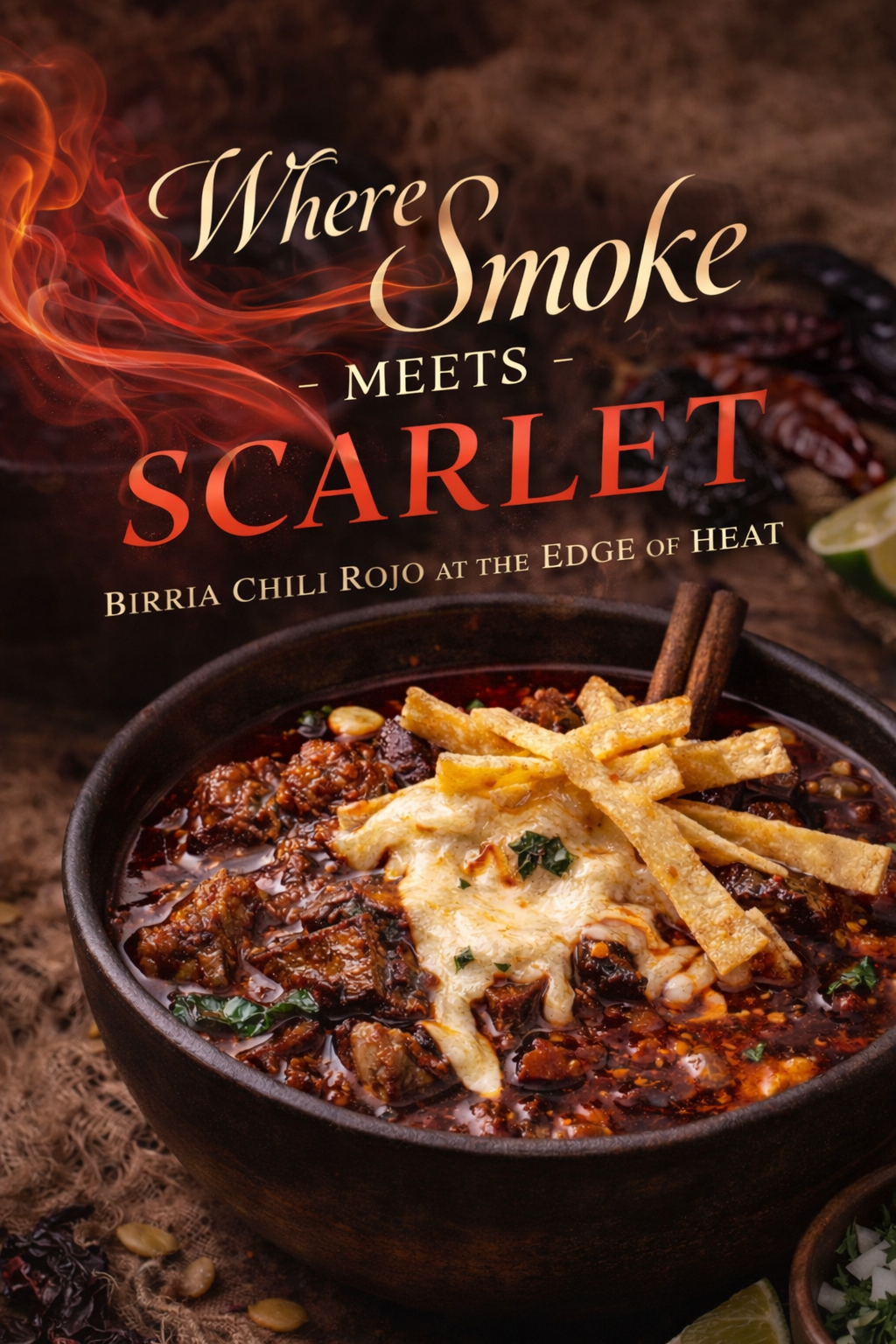
Where Smoke Meets Scarlet: Birria Chili Rojo at the Edge of Heat
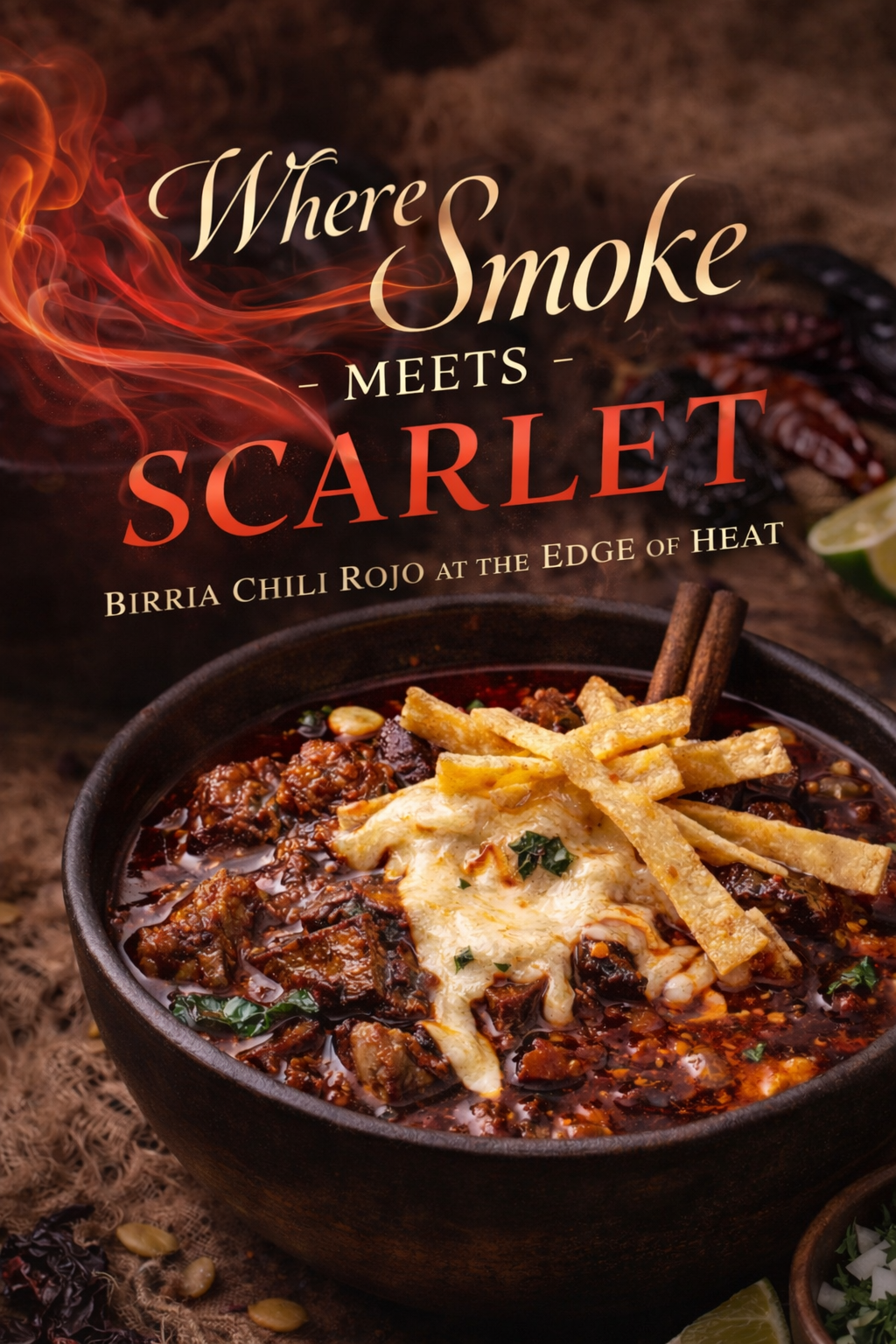
The bowl arrives heavy in the hands, its weight matching the depth of what it holds. A deep scarlet surface shimmers under low light, oils catching like embers at the edge of a fire. This is not the bright, casual red of weeknight chili. This is darker, more deliberate—slow-built, smoke-forward, and unapologetically intense. The aroma rises first: dried chiles toasted just shy of bitterness, beef rendered down until it surrenders, cinnamon whispering instead of shouting. There’s lime nearby, cut clean and green, its brightness waiting patiently at the margins.
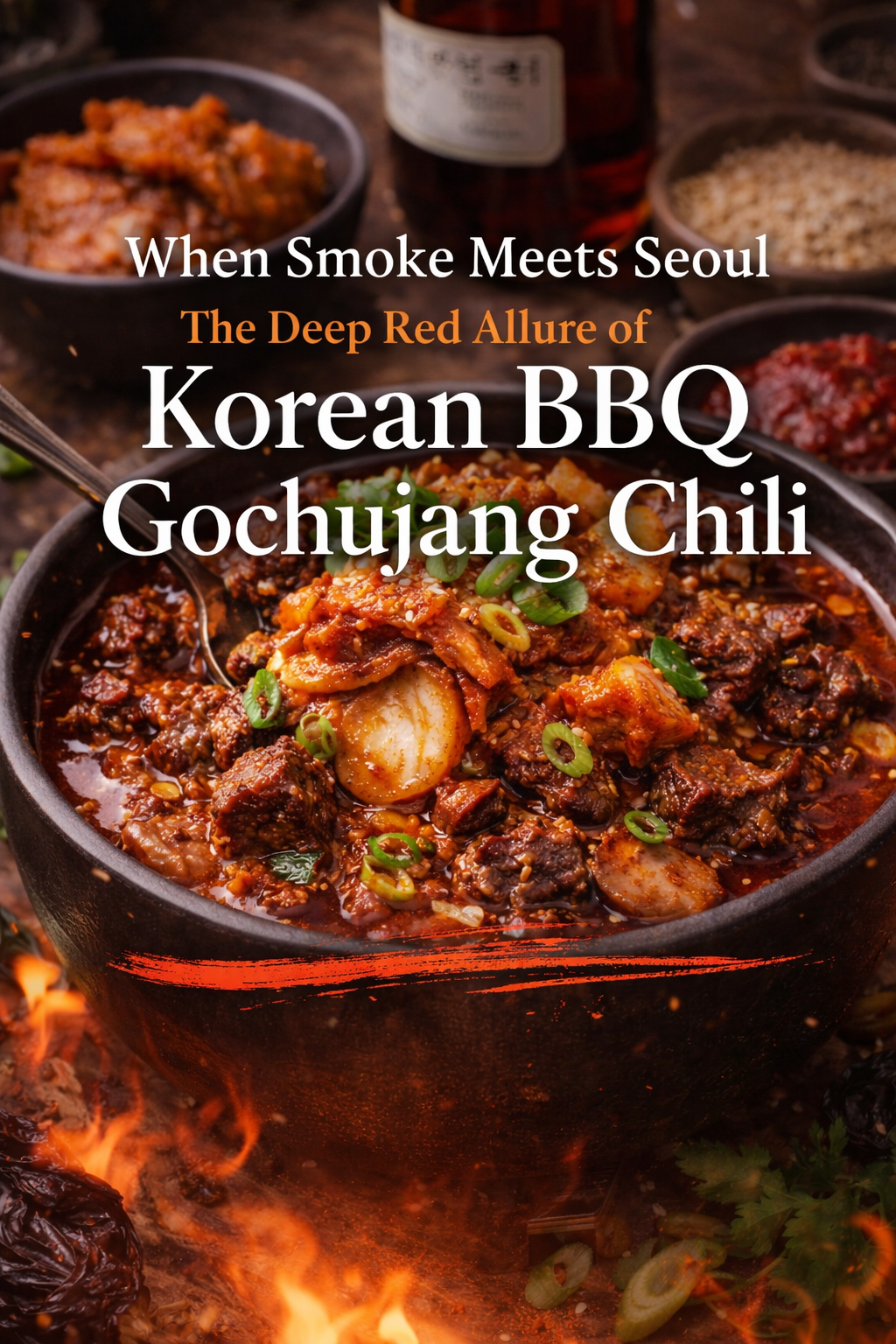
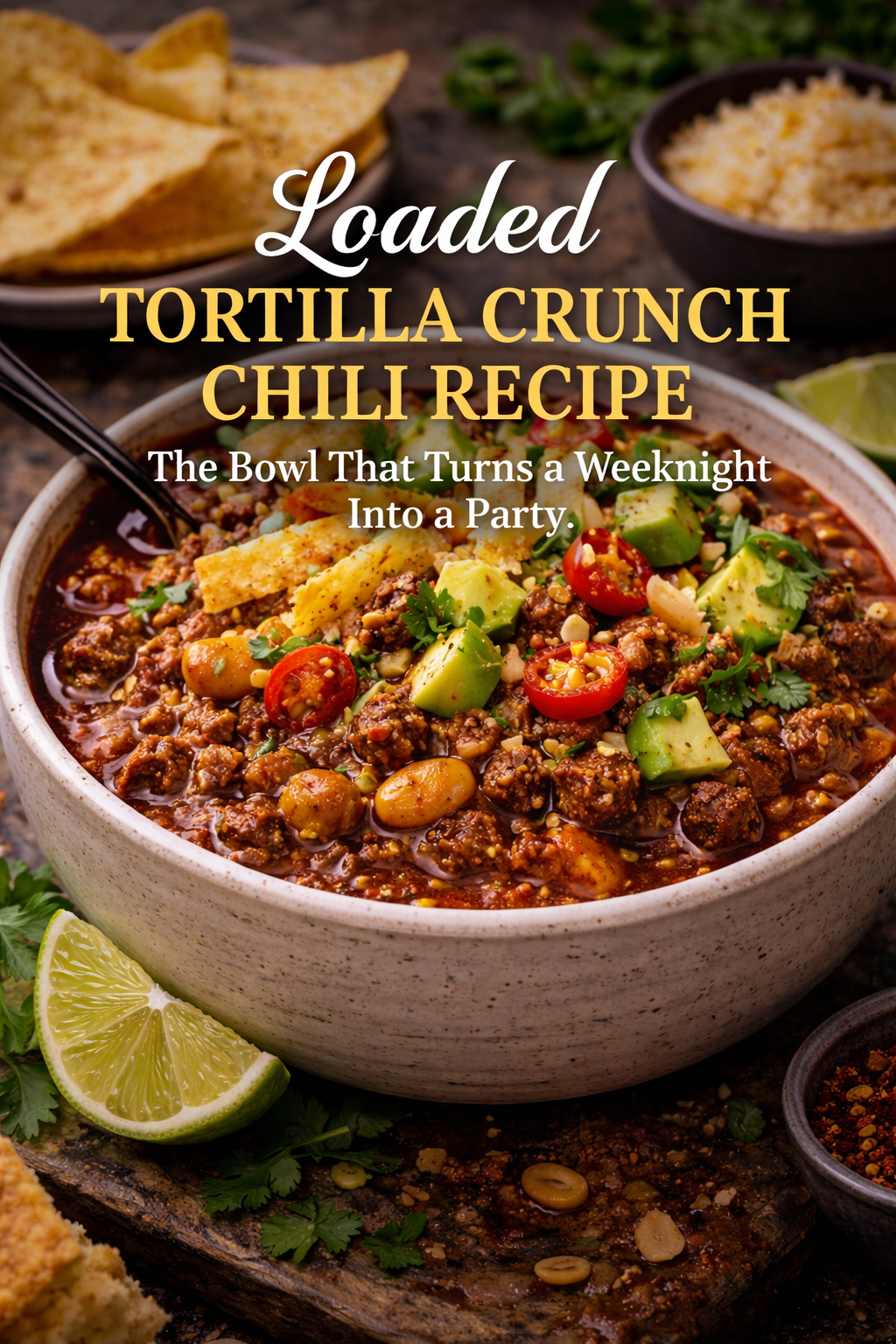
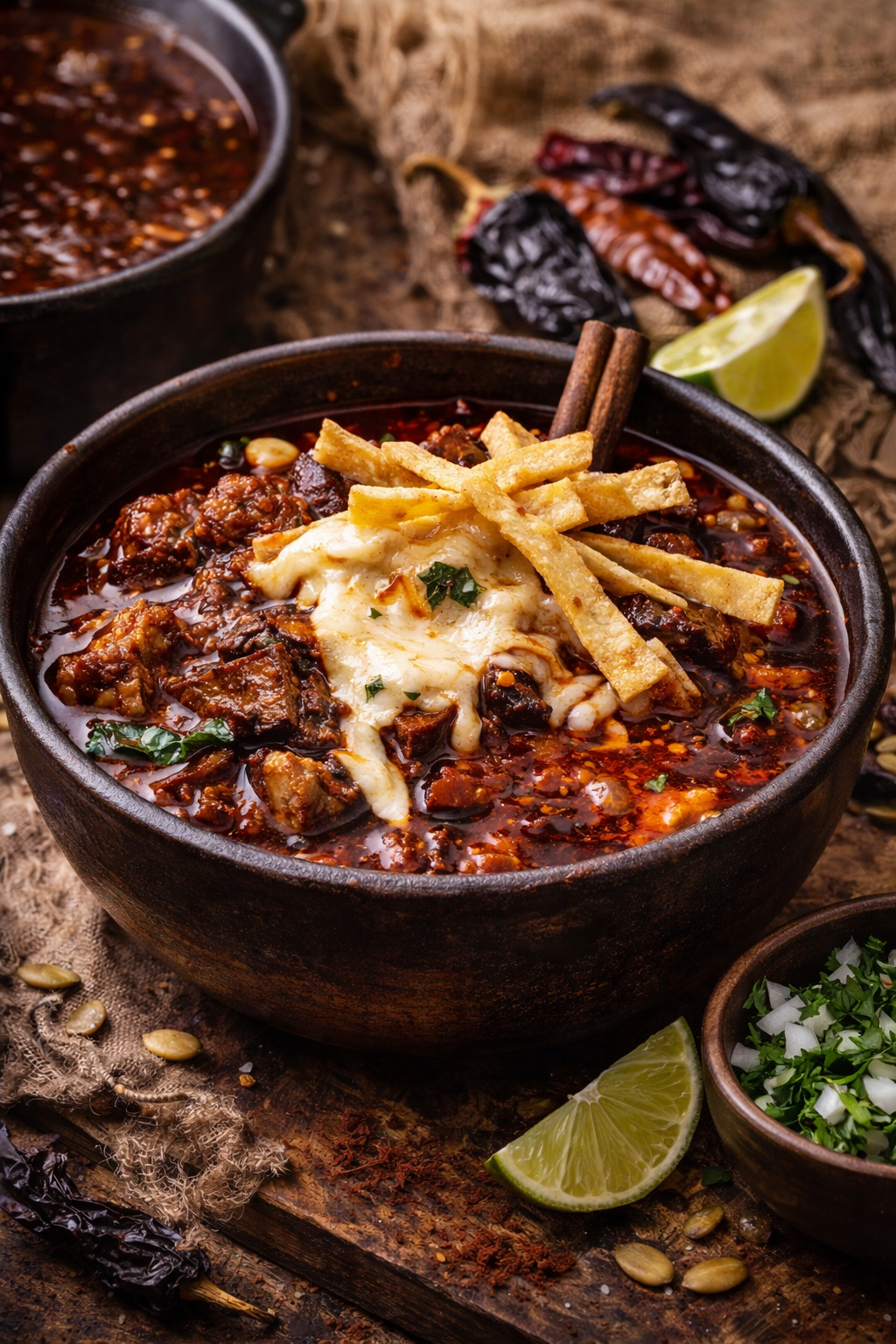
The image tells its story without words. Thick chunks of beef sit suspended in the broth, not floating but anchored, as if the chili itself has structure. A molten pool of melted cheese stretches lazily across the surface, tugged upward by a scattering of crisp tortilla strips that add both height and contrast. Cilantro flecks break up the red with flashes of green, a visual cue to the herbal notes layered beneath the heat. In the background, dried chiles rest like relics—wrinkled, dark, and potent—alongside cinnamon sticks that hint at warmth rather than sweetness.
This kind of chili doesn’t rush. It belongs to afternoons that stretch into evening, to kitchens filled with low music and the steady sound of simmering. It’s the kind of dish that rewards patience, built from dried chiles rehydrated and blended smooth in something like a high-powered blender designed for sauces and soups, then strained into a pot where time does most of the work. The color alone suggests depth—guajillo for body, ancho for roundness, árbol for bite—each chile contributing something distinct yet inseparable.
Birria-style chili rojo lives at the intersection of comfort and intensity. It borrows its soul from traditional birria, where meat is slowly coaxed into tenderness by layered spice and gentle heat, but it leans into the American ritual of chili: a bowl meant to be eaten slowly, spoon after spoon, heat building but never overwhelming. The broth is rich without being heavy, glossy without being greasy, its complexity unfolding as it cools slightly between bites.
There’s a tactile pleasure here too. The contrast of textures—the crisp snap of tortilla strips against silky broth, the resistance of beef before it yields—makes each bite feel intentional. Even the vessel matters. Something substantial, like a rustic ceramic bowl with heat-retaining weight, keeps the chili warm long after it’s served, encouraging lingering at the table.
This dish feels rooted. It speaks of open flames and cast iron, of chiles dried under the sun and spices ground by hand. Yet it also feels modern, styled with restraint, letting the color and texture do the work. It’s food that photographs beautifully but eats even better, leaving a warmth that settles in rather than spikes.
Birria chili rojo isn’t about excess. It’s about depth. About letting smoke, acid, fat, and heat find equilibrium. About understanding that chili can be both soulful and refined, rustic and editorial. This bowl captures that balance perfectly—an invitation to slow down, lean in, and taste something built with intention from the first toasted chile to the final squeeze of lime.
Birria-Style Chili Rojo — Core Recipe
Introduction
This birria-inspired chili rojo combines slow-simmered beef with a deeply flavored chile base, balancing heat, smoke, and richness in a bold but controlled profile.
Ingredients
- 3 lbs beef chuck, cut into large cubes
- 4 dried guajillo chiles
- 3 dried ancho chiles
- 1–2 dried árbol chiles (to taste)
- 1 large onion, quartered
- 6 cloves garlic
- 1 cinnamon stick
- 2 tsp cumin
- 1 tsp dried oregano
- 2 tbsp tomato paste
- 6 cups beef broth
- Salt to taste
- Neutral oil for searing
Optional Garnishes
- Shredded melting cheese
- Crispy tortilla strips
- Fresh cilantro
- Lime wedges
Method
- Toast dried chiles briefly until fragrant, then soak in hot water until softened.
- Blend chiles with onion, garlic, spices, and soaking liquid until smooth.
- Sear beef in oil until deeply browned.
- Add chile puree, tomato paste, and broth.
- Simmer gently for 2.5–3 hours until beef is tender.
- Season to taste and serve with garnishes.
The foundation of birria-style chili rojo begins before anything touches the pot. Dried chiles need attention. Toasting them briefly in a dry pan awakens their oils, but timing matters—too long and bitterness creeps in. You’re looking for aroma, not smoke. Once softened in hot water, they transform from brittle skins into something supple and alive, ready to be blended into a sauce that carries the entire dish. Using a tool like a powerful countertop blender capable of ultra-smooth purees ensures the chile base becomes velvety rather than gritty, which is essential for the final texture.
Straining the blended chile mixture is optional but recommended if you want a more refined finish. It removes stray skins and seeds that can muddy the broth. This step is less about tradition and more about intention—choosing whether the chili leans rustic or polished. Both are valid, but the image suggests a smooth, cohesive base that clings gently to each piece of beef.
Searing the beef is non-negotiable. High heat, patience, and space in the pan create the Maillard reaction that gives the chili depth beyond spice. Overcrowding steams the meat instead of browning it, robbing the final dish of complexity. A heavy vessel like a cast iron Dutch oven built for long simmers holds heat evenly and encourages proper caramelization before the liquid ever enters.
Once the chile base meets the beef, the transformation begins. The color deepens almost immediately, shifting from brick red to something darker and more dramatic. Tomato paste adds body, not brightness, reinforcing the savory backbone rather than pulling the flavor toward acidity. Beef broth stretches the sauce into a chili, but restraint matters—this should remain thick, spoon-coating, never soupy.
Low and slow simmering is where birria influence truly shows. Gentle heat allows collagen in the beef to break down gradually, enriching the broth naturally. Boiling is the enemy here. A lazy bubble, barely breaking the surface, is ideal. Over time, the chili tightens, flavors melding into something unified rather than layered. The cinnamon stick, removed before serving, leaves behind warmth without sweetness, a background note rather than a headline.
Seasoning should be adjusted near the end. Salt early enough to penetrate but fine-tune late, once the liquid has reduced. If heat feels aggressive, a squeeze of lime or a small splash of broth can rebalance without dulling the profile. If it feels flat, a pinch of salt or a dash of vinegar brings it back into focus.
Garnishes are not decoration—they’re contrast. Melted cheese softens the heat, tortilla strips add crunch, herbs lift the aroma. Serving the chili in something substantial, like deep bowls designed to retain heat, keeps the experience intact from first spoon to last.
Birria-style chili rojo rewards attention at every stage. It’s forgiving but not careless, bold but controlled. When done right, it delivers exactly what the image promises: depth, heat, richness, and a lingering warmth that feels earned rather than imposed.