When the Gourd Meets the Flame: A Pumpkin Ale Chili for the Deepest Part of Fall
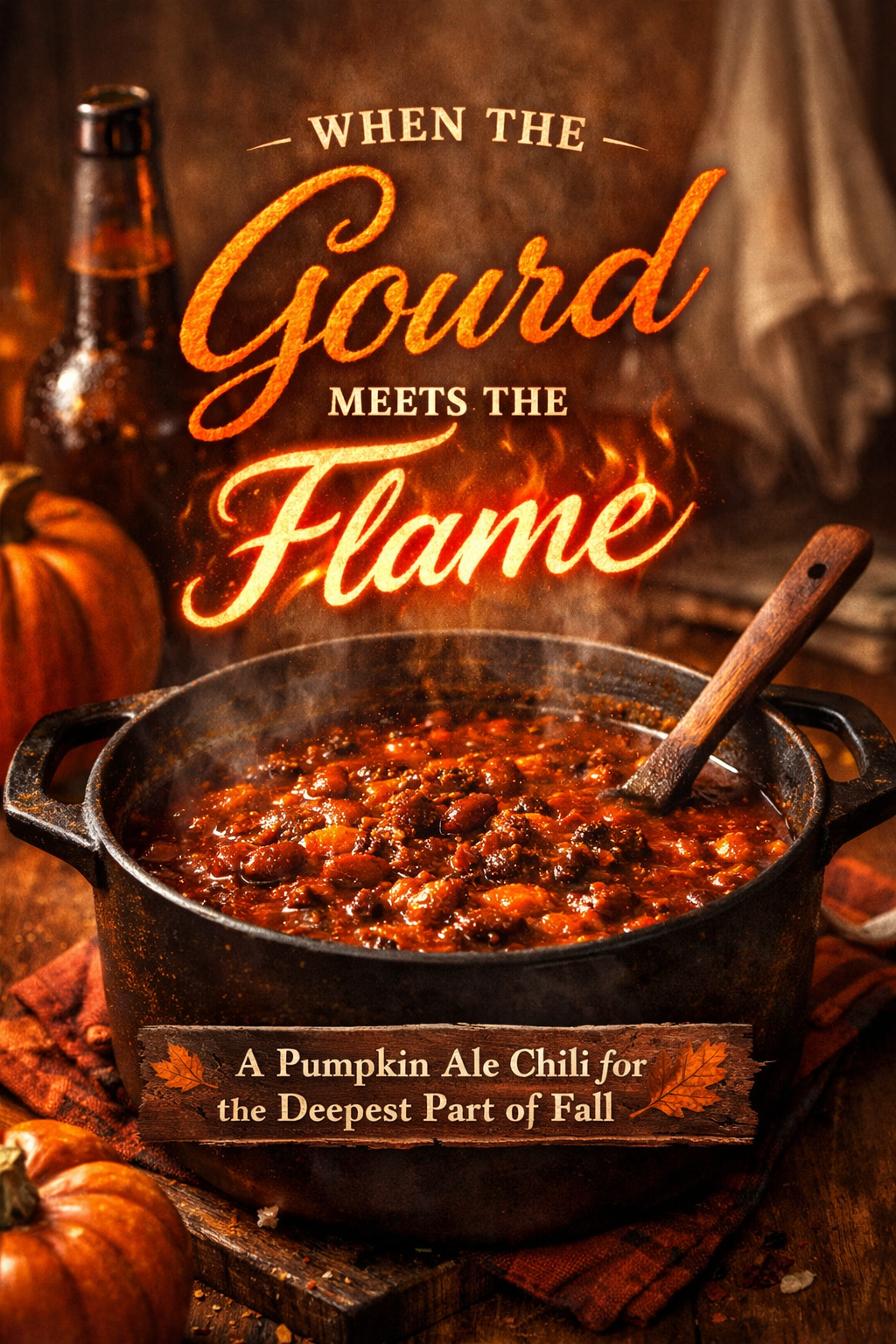
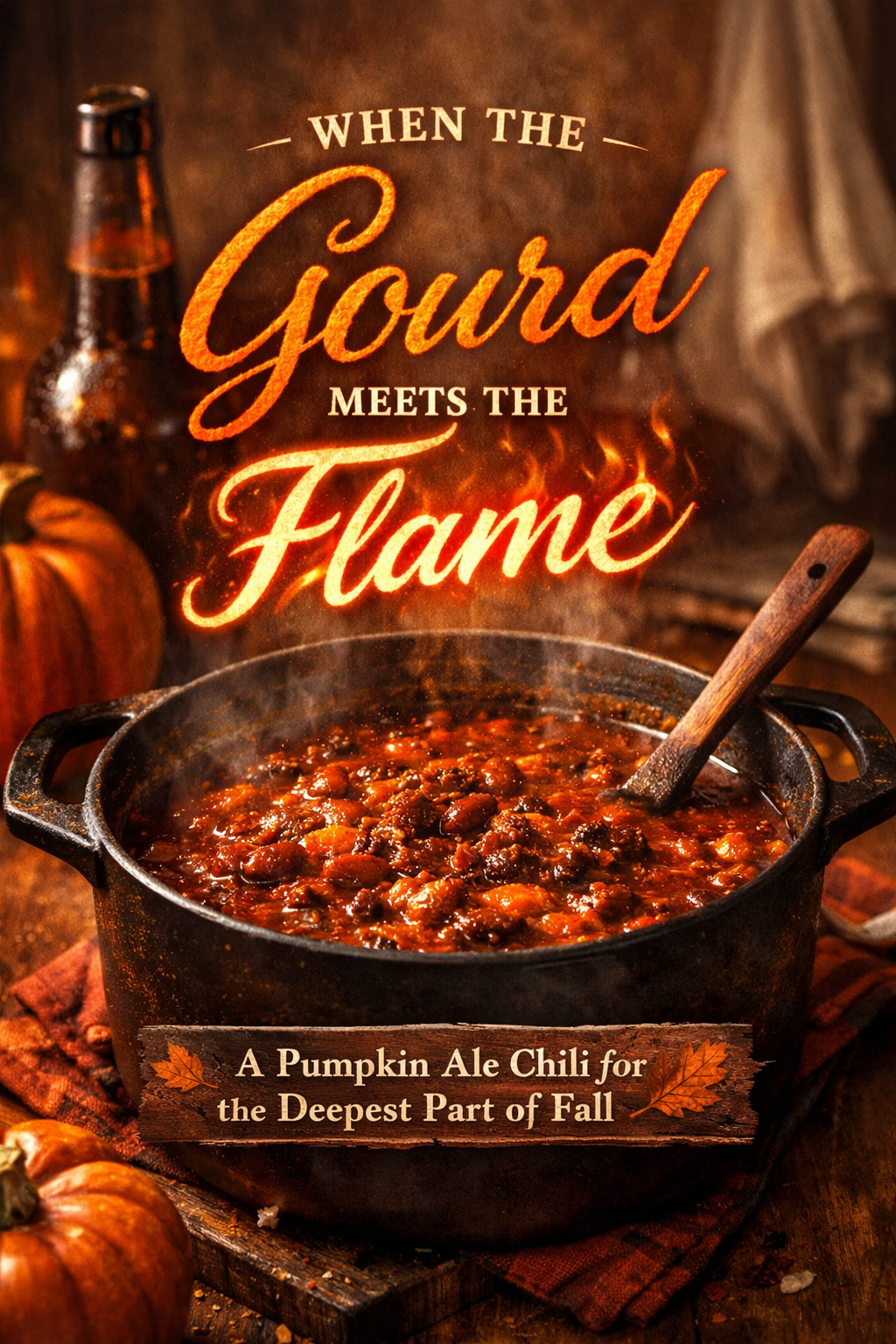
The image opens in the low amber light of late autumn, the kind that slants through kitchen windows just before dusk and makes everything feel intentional. A heavy pot sits centered on the stove, its dark enamel glowing softly as steam curls upward in slow, aromatic ribbons. The surface of the chili is glossy and deep, a burnished rust color with pockets of darker red where spices have bloomed in oil. Tiny orange flecks of pumpkin melt seamlessly into the sauce, no longer distinct but lending body and warmth. You can almost hear the gentle burble as it simmers, patient and confident, filling the room with a scent that feels like October itself.
Nearby, a bottle of pumpkin ale rests against a cutting board, its label partially turned away, condensation beading at the neck. The beer’s copper hue mirrors the chili in the pot, as if the two were always meant to meet. There’s a wooden spoon laid casually across the counter, its bowl stained with spices, evidence of recent stirring. In the background, a linen towel hangs from the oven handle, rumpled and lived-in, the mark of a meal being built slowly rather than rushed.
The atmosphere is unmistakably autumnal but not theatrical. No staged pumpkins or forced nostalgia—just the quiet confidence of a dish that understands the season deeply. The chili looks thick without being heavy, substantial without being muddy. Light catches on small pools of oil at the surface, carrying the aromas of toasted cumin, smoked paprika, and chili powder upward. Beneath it all is a sweetness that doesn’t announce itself immediately, coming instead from roasted pumpkin and malty ale, the kind that rounds the edges rather than stealing the show.
This is the kind of meal that belongs to evenings when the temperature finally drops and the house grows quieter. It suggests worn sweaters, windows cracked just enough to let in cool air, and the low hum of a football game or vinyl record in another room. The image feels unhurried, as though the chili has been simmering for hours and will happily continue to do so until everyone is ready.
The tools implied by the scene are simple but deliberate. A heavy Dutch oven built for slow simmering anchors the process, holding heat evenly so flavors have time to deepen. A wooden spoon suited for thick stews moves through the pot without scraping or rushing, folding ingredients together gently. Even the beer itself feels chosen with care, the kind you might discover while browsing a seasonal craft ale selection, knowing its malty backbone will stand up to spice and pumpkin alike.
What the image communicates most clearly is restraint. This chili isn’t about novelty for novelty’s sake. Pumpkin isn’t dumped in to announce itself, and the ale isn’t there to be clever. They’re woven into the base, lending sweetness, bitterness, and body in a way that feels natural and grounded. The result is something that looks deeply comforting but still refined, a dish that could anchor a casual weeknight dinner or quietly impress at a fall gathering.
There’s also a sense of generosity in the pot’s fullness. This is food meant to be ladled, shared, and revisited the next day when the flavors have had even more time to settle. The image hints at leftovers stored in the fridge, tasting better tomorrow, spooned out and reheated in a smaller saucepan while the world outside stays cold and gray.
In its stillness, the scene captures why fall cooking resonates so deeply. It’s about warmth without excess, richness without heaviness, and flavors that feel both familiar and slightly elevated. The pumpkin ale chili at the center of the image embodies that balance perfectly, inviting you not just to eat, but to slow down long enough to appreciate what’s in the bowl.
Ingredients
- 1½ pounds ground beef or turkey
- 1 tablespoon olive oil
- 1 large onion, finely diced
- 4 cloves garlic, minced
- 2 tablespoons chili powder
- 2 teaspoons ground cumin
- 1 teaspoon smoked paprika
- ½ teaspoon cinnamon
- 1 teaspoon salt, plus more to taste
- ½ teaspoon black pepper
- 1 cup pumpkin purée
- 1 (12 oz) bottle pumpkin ale
- 1 (28 oz) can crushed tomatoes
- 1 (15 oz) can kidney beans, drained and rinsed
- 1 (15 oz) can black beans, drained and rinsed
Method
- Heat olive oil in a heavy pot over medium heat and brown the meat thoroughly.
- Add onion and cook until softened, then stir in garlic and spices.
- Deglaze the pot with pumpkin ale, scraping up browned bits.
- Stir in pumpkin purée, crushed tomatoes, and beans.
- Reduce heat and simmer gently for 45–60 minutes, stirring occasionally.
- Adjust seasoning and serve hot.
Begin by choosing a pot that can hold steady heat and encourage even cooking, such as a thick-bottomed Dutch oven designed for chili and stews. This matters because pumpkin purée and beer both contain natural sugars that benefit from slow, controlled heat rather than aggressive boiling, which can scorch or turn flavors bitter.
Start with the meat over medium heat, giving it space to brown properly. Browning isn’t just about cooking through—it develops a savory base that anchors the sweetness of the pumpkin ale later. Resist the urge to stir constantly; letting the meat sit undisturbed for short intervals allows caramelization to form. Once browned, the fat in the pot becomes a flavor carrier for the aromatics.
When the onion goes in, lower the heat slightly and cook until translucent and soft. This step builds sweetness naturally, so the chili doesn’t rely solely on pumpkin for balance. Garlic should be added just long enough to release its aroma; overcooking it can introduce bitterness that competes with the ale.
Spices come next, and this is where the chili begins to define itself. Blooming chili powder, cumin, smoked paprika, and cinnamon in the fat wakes up their essential oils. Stir constantly during this phase so nothing scorches. The cinnamon shouldn’t read as dessert-like; it functions as a background warmth that amplifies the pumpkin rather than announcing itself.
Deglazing with pumpkin ale is a critical transition. Pour it in slowly, listening for the hiss as it lifts the browned bits from the bottom of the pot. Those bits dissolve into the liquid, enriching the chili with depth that water or stock alone can’t provide. Using a beer-friendly measuring cup for controlled pours helps keep this step precise and mess-free.
Pumpkin purée should be stirred in gradually, ensuring it incorporates smoothly without clumping. This is what gives the chili its body and subtle sweetness. Follow with crushed tomatoes to introduce acidity, which keeps the final dish from feeling heavy. Beans go in last, folded gently so they retain their shape and texture.
Once everything is combined, reduce the heat to a low simmer. This stage is about patience. A gentle bubble allows flavors to meld without breaking down the beans or thickening the chili too quickly. Cover partially to control evaporation, adjusting as needed depending on how thick you prefer the final result. Stir occasionally with a sturdy wooden spoon made for thick sauces to prevent sticking.
As the chili simmers, taste periodically. Pumpkin ale varies in sweetness and spice, so seasoning adjustments are normal. A pinch more salt sharpens flavors, while a small splash of ale can reintroduce maltiness if the chili tightens too much. If heat is desired, a dash of cayenne or diced chili can be added carefully.
For variations, ground turkey lightens the dish, while beef adds richness. Vegetarian versions work well by increasing beans and adding diced mushrooms for umami. Leftovers store beautifully and often taste better the next day as flavors continue to develop.
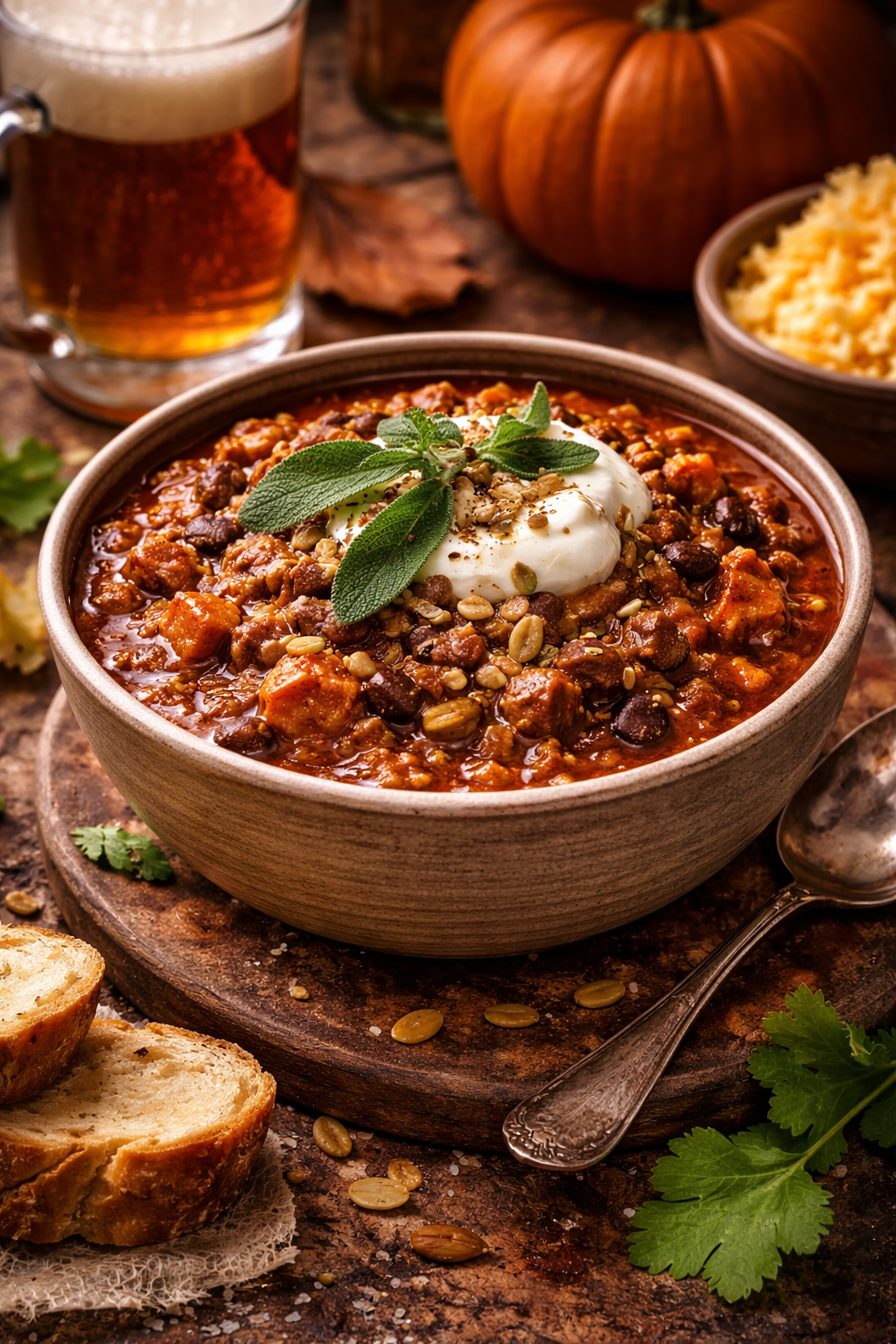
Serve the chili hot, ladled generously, knowing each step—from browning to blooming spices to slow simmering—played a role in building a bowl that feels deeply autumnal, balanced, and intentionally crafted.