When the Souk Meets the Hearth: Moroccan Spiced Lamb Chili Under Low Lantern Light
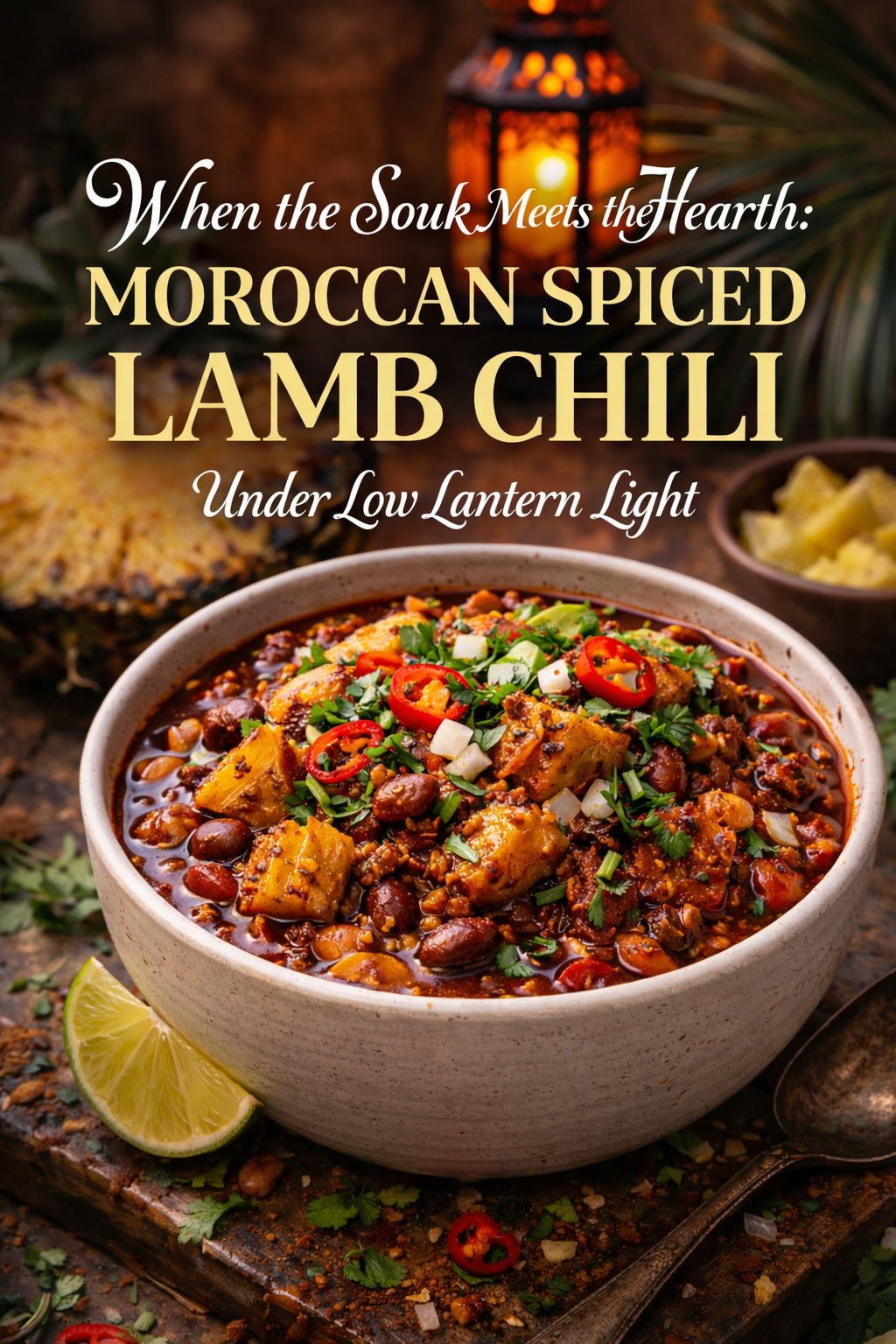
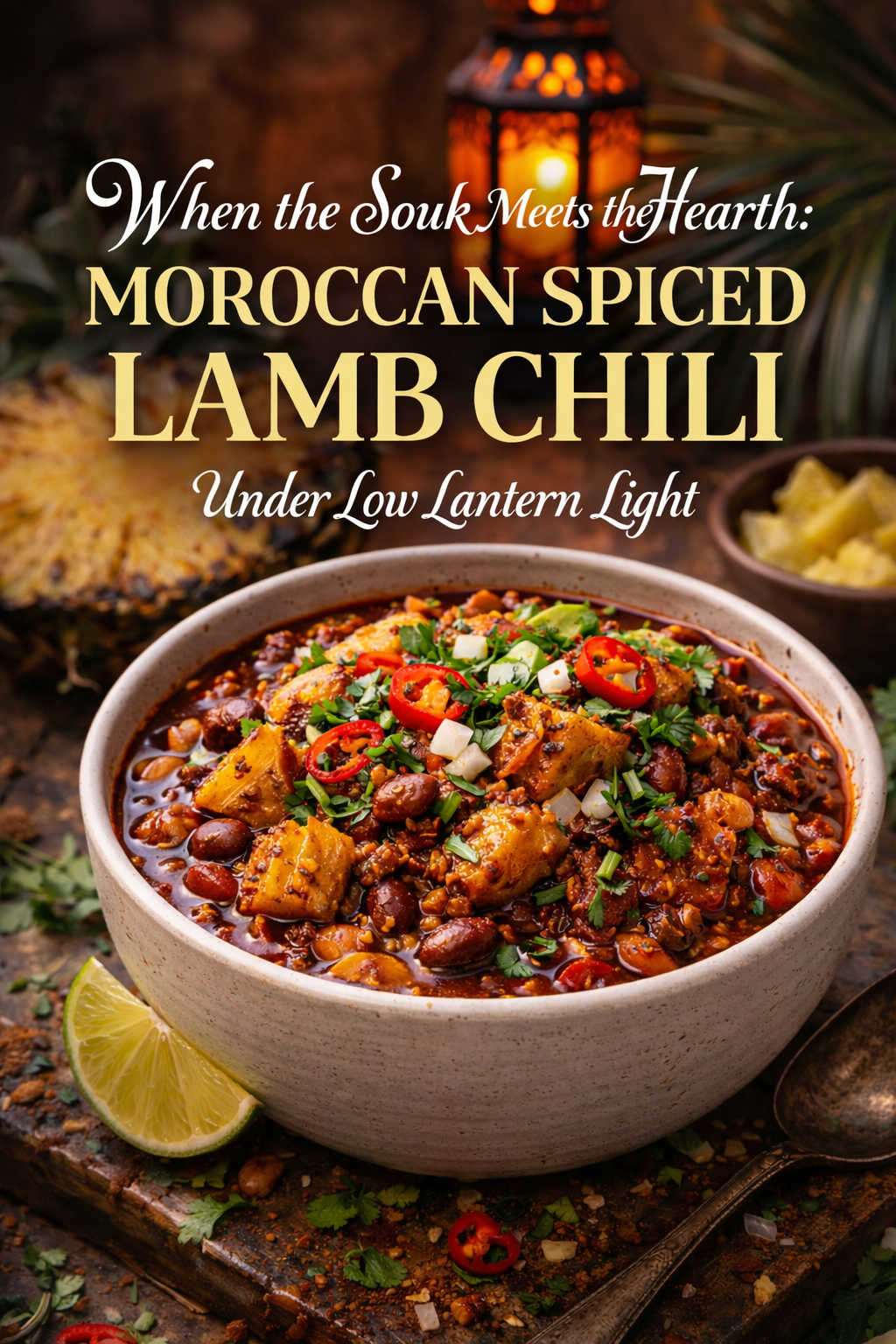
The bowl arrives as if carried in from another latitude, steam lifting slowly like breath in cool night air. The color is the first thing that holds you—deep brick red with flashes of saffron warmth, oil shimmering on the surface like heat trapped beneath desert stone. Cubes of lamb rest among beans and sauce, their edges softened, stained with spice and time. Cilantro and sliced chiles scatter across the top, fresh and green, breaking the intensity with brightness. A lime wedge waits at the edge of the board, glossy and sharp, while behind it all sits the quiet suggestion of somewhere far away: palm fronds, carved wood, the memory of markets and open flames.
This dish feels anchored and nomadic at once. It belongs equally to a heavy ceramic bowl and to a low table surrounded by cushions. The aroma carries cumin and coriander first, then deeper notes—smoked paprika, cinnamon warmth, a trace of clove. There’s a faint sweetness that isn’t sugar but patience: onions cooked until they surrender, tomatoes reduced into silk, spices toasted until they bloom. Lamb, richer than beef, holds the structure, absorbing everything while still asserting itself with a clean, savory depth.
The image suggests a slow evening. Not rushed, not loud. The kind of night where cooking becomes ritual rather than task. The wooden board beneath the bowl is scarred and darkened, as if it has known many meals like this one. The spoon nearby is heavy, meant for lingering. This is food that asks you to sit down properly. To eat slowly. To notice how the heat builds gently rather than striking all at once.
There’s a practicality beneath the romance, too. This is a dish built for a wide pot, something sturdy and reliable like a heavy enameled pot built for long simmers. Spices would have been measured out earlier, perhaps ground fresh with a stone mortar that releases deeper aromatics. Beans soaked or opened, tomatoes crushed by hand, lamb trimmed carefully with a sharp knife meant for real work.
What makes the scene compelling is its balance. Heat without aggression. Spice without chaos. Richness offset by herbs and citrus. Even the garnishes feel intentional—the chopped onion for crunch, the chili slices for clarity, the herbs for lift. Nothing is accidental. This is chili that borrows its soul from North Africa without pretending to be something else. It respects the structure of a classic chili while letting cumin, paprika, and cinnamon quietly rewrite the story.
You can imagine the pot earlier in the evening, lid tilted, sauce thickening slowly as the room fills with warmth. Maybe music playing low. Maybe silence. This is food that doesn’t need distraction. It rewards attention. It invites you to tear bread or reach for a spoon, to taste, adjust, taste again. A squeeze of lime at the end changes everything—suddenly the depth brightens, the spices sharpen, the lamb feels lighter.
The bowl doesn’t shout. It glows. It suggests cold nights and long conversations, shared tables and refilled glasses. It’s comforting without being familiar, exotic without being showy. The kind of dish that feels like a discovery even when you’ve made it before. The kind that lingers, not just on the palate, but in memory.
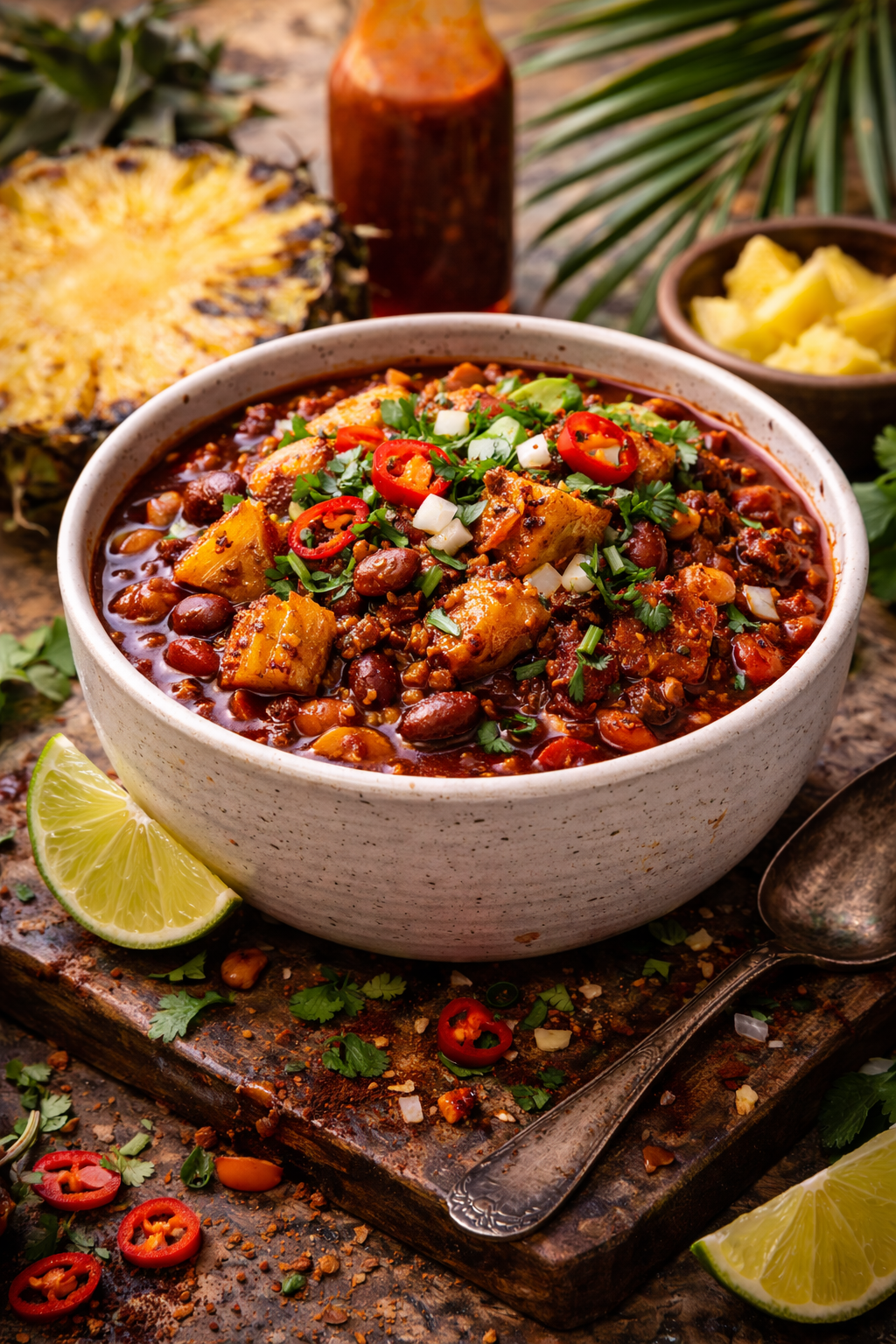
Moroccan Spiced Lamb Chili — Core Recipe
This recipe combines slow-simmered lamb with warm Moroccan spices in a deeply savory chili format.
Ingredients
- 2 lbs lamb shoulder, cut into 1-inch cubes
- 2 tbsp olive oil
- 1 large onion, finely diced
- 4 cloves garlic, minced
- 2 tbsp tomato paste
- 1 tbsp ground cumin
- 2 tsp ground coriander
- 2 tsp smoked paprika
- 1 tsp ground cinnamon
- 1/2 tsp ground cloves
- 1 tsp chili powder
- 1 tsp salt (adjust to taste)
- 1/2 tsp black pepper
- 1 can crushed tomatoes (28 oz)
- 2 cups beef or lamb stock
- 2 cans kidney or chickpeas, drained and rinsed
- Fresh cilantro, chopped
- Red chili slices and lime wedges for serving
Method
- Heat olive oil in a large pot over medium-high heat.
- Brown lamb in batches until well-seared; remove and set aside.
- Sauté onion until softened, then add garlic and tomato paste.
- Stir in spices and toast briefly until fragrant.
- Return lamb to the pot, add tomatoes and stock, and bring to a simmer.
- Reduce heat, cover, and cook gently for 90 minutes.
- Add beans and simmer uncovered for 20–30 minutes until thickened.
- Adjust seasoning and serve with fresh garnishes.
The foundation of this dish begins with restraint. Lamb rewards patience, and the first step—browning—is where depth is earned. Using a wide, heavy vessel such as a thick-bottomed cooking pot designed for even heat prevents crowding and allows each cube to caramelize properly. Browning in batches matters because color equals flavor. Pale meat creates flat chili; deeply seared lamb builds the backbone.
Once the lamb is set aside, the onions step in. They should soften slowly, absorbing the rendered fat and lifting the browned bits from the pot. This deglazing happens naturally, without liquid, as moisture releases from the onions. Garlic follows briefly—long enough to perfume, never long enough to burn. Tomato paste goes in next, and this step is critical. Cooking it down concentrates sweetness and removes raw acidity, transforming it into something almost jammy.
Spices deserve respect here. Toasting cumin, coriander, paprika, cinnamon, and clove directly in the fat wakes them up. You’ll smell the change almost immediately—a shift from dusty to warm and rounded. Grinding whole spices fresh with a durable hand grinder made for seeds and pods intensifies this effect, but pre-ground works if kept fresh and stored properly.
Liquids come next, and balance is the goal. Crushed tomatoes bring body, while stock adds savory length. Once the lamb returns, the heat drops low. This isn’t a boil; it’s a gentle murmur. Over the next ninety minutes, connective tissue melts, spices marry, and the sauce thickens organically. Stir occasionally, scraping the bottom to prevent sticking, adjusting heat as needed.
Beans are added late to preserve texture. Chickpeas stay firm and nutty; kidney beans soften and enrich the sauce. Either works, or a mix of both. At this stage, the chili should coat the back of a spoon. If it’s thin, remove the lid and let evaporation do the work. If too thick, a splash of stock restores balance.
Seasoning at the end matters more than at the beginning. Salt sharpens spices and reveals sweetness, while black pepper adds quiet heat. A squeeze of lime just before serving lifts everything, cutting richness and making the dish feel lighter. Fresh herbs should be added last—heat dulls them, and this chili thrives on contrast.
Variations are forgiving. Dried apricot or golden raisin adds subtle sweetness. A pinch of saffron steeped in warm stock introduces floral depth. For more heat, harissa or extra chili slices integrate seamlessly. Serve with flatbread, couscous, or simply a spoon and time.
Troubleshooting is straightforward. If the chili tastes muddy, it needs acid or salt. If it feels sharp, more time or a touch of sweetness balances it. Lamb too firm means the simmer was rushed—give it longer. This dish rewards confidence but forgives adjustments.
In the end, Moroccan Spiced Lamb Chili isn’t about precision; it’s about intention. Each step builds warmth, each choice deepens character. The result is layered, grounding, and quietly bold—a bowl meant to be returned to, remembered, and made again when the night calls for something slow and certain.