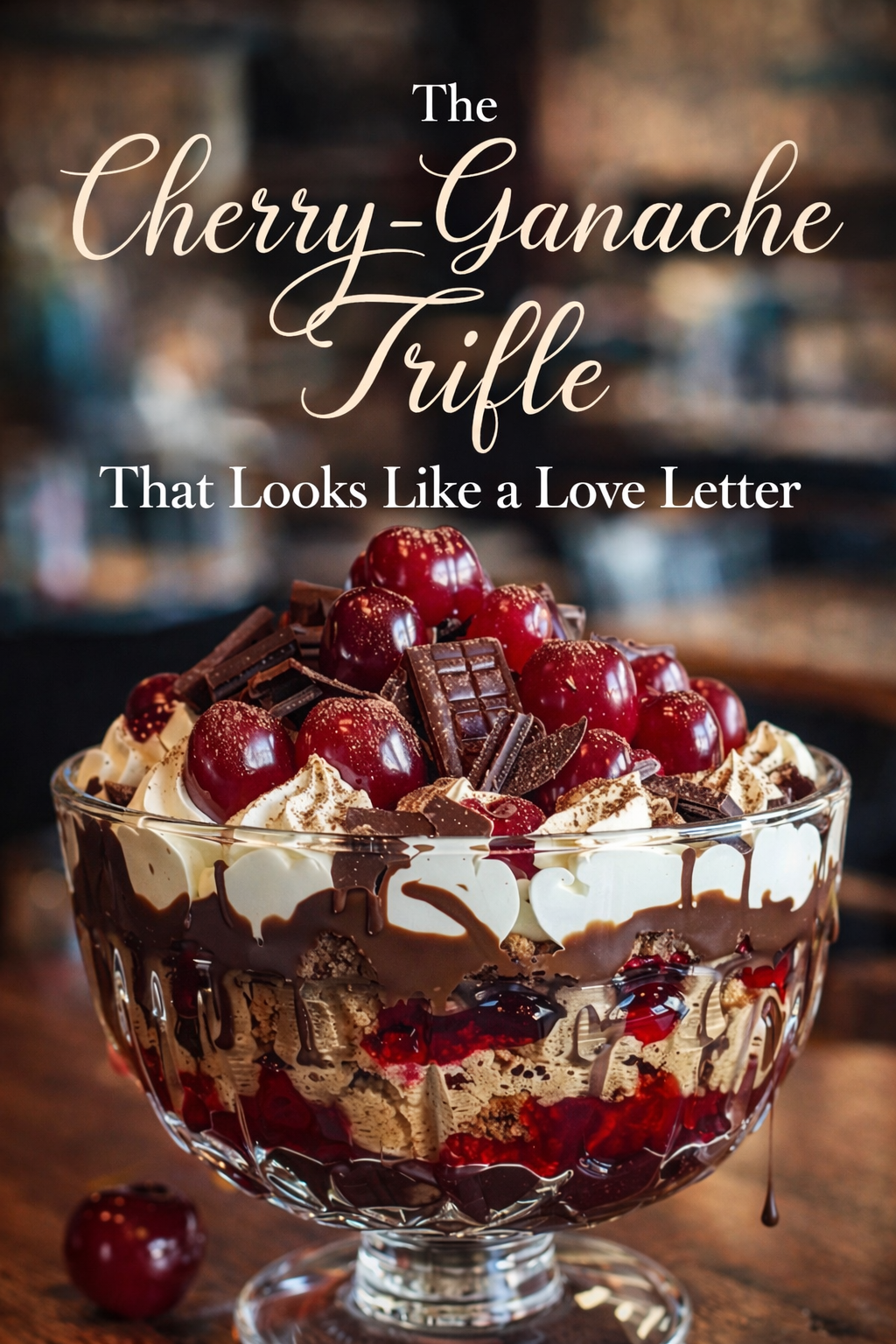
The Cherry-Ganache Trifle That Looks Like a Love Letter
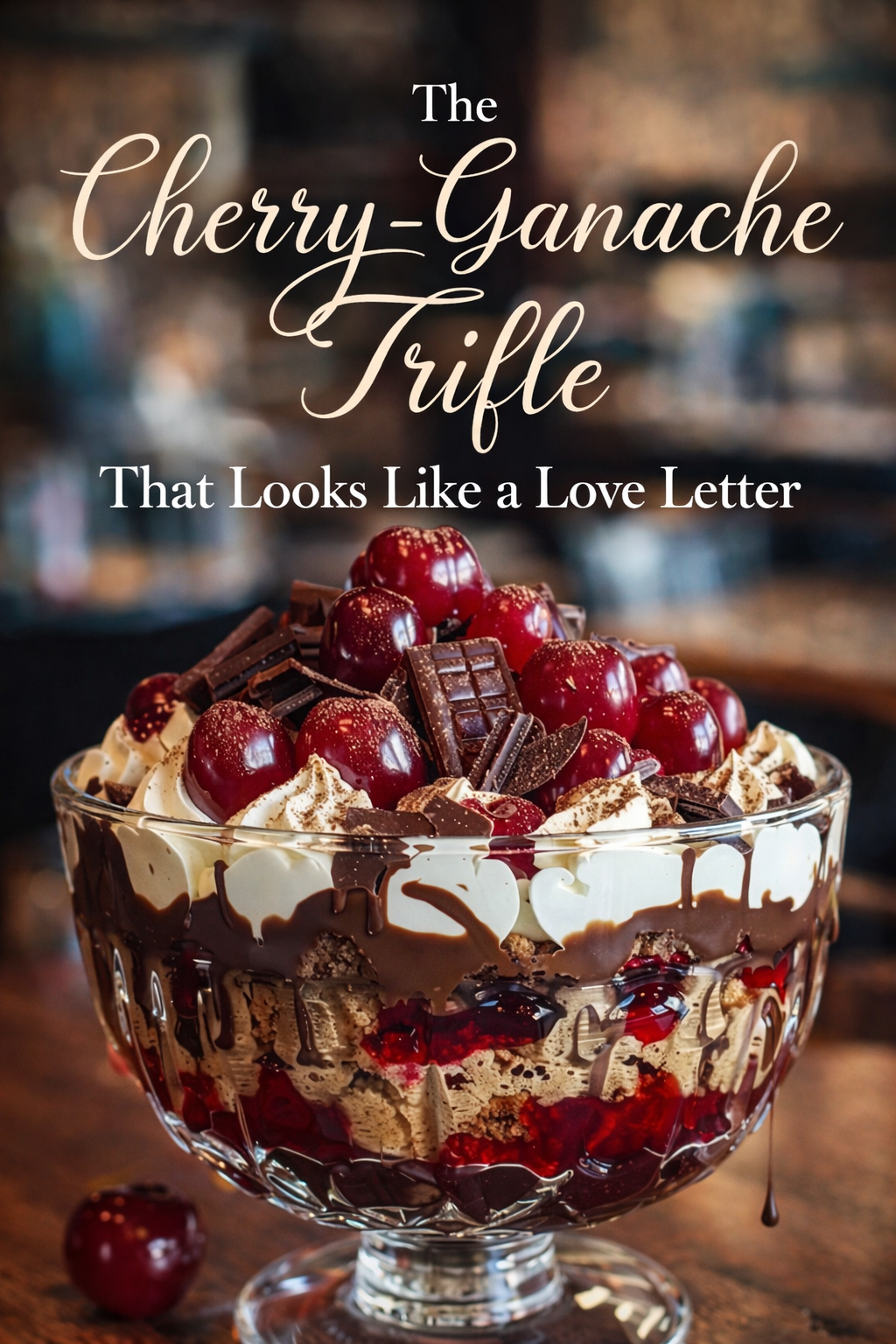
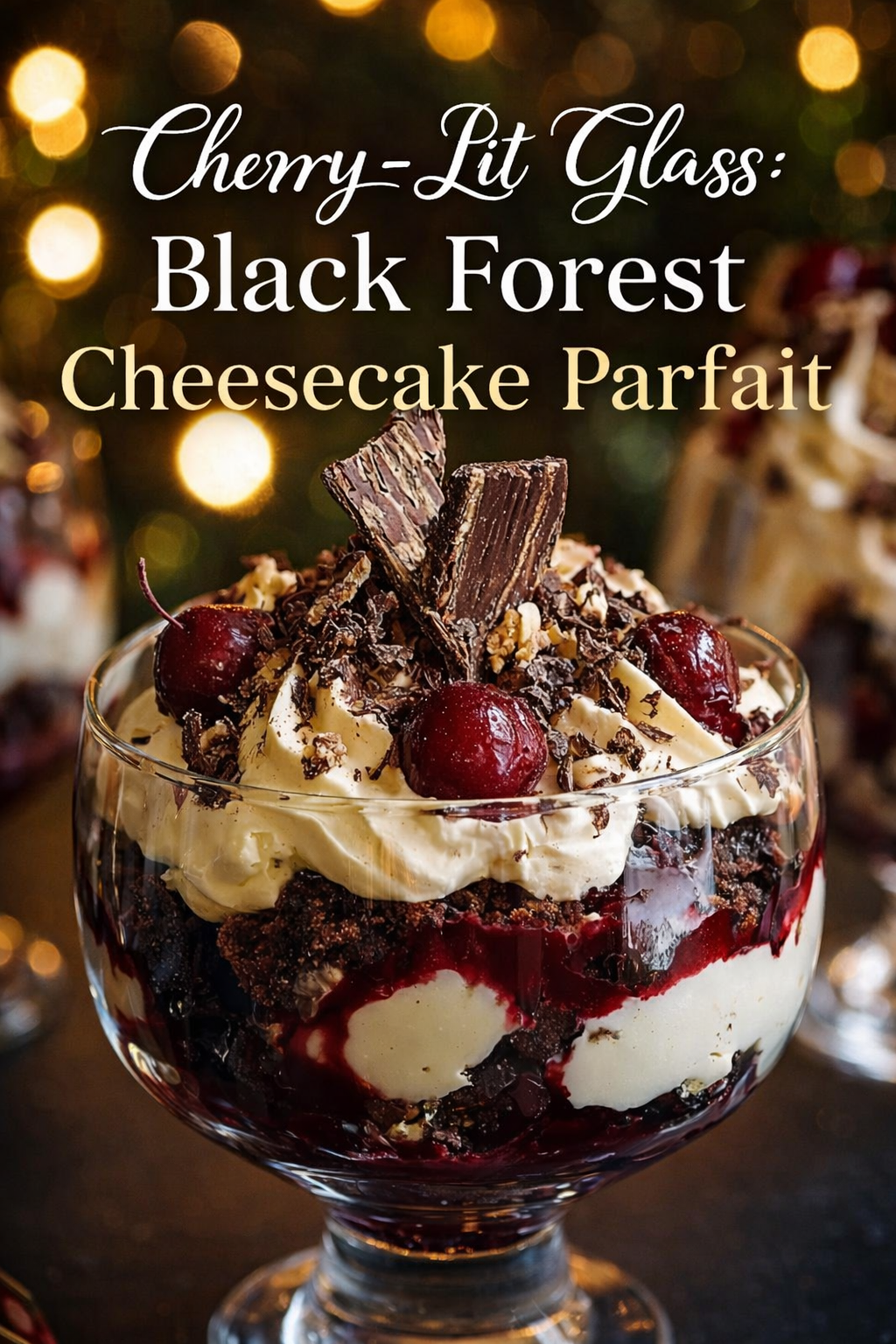
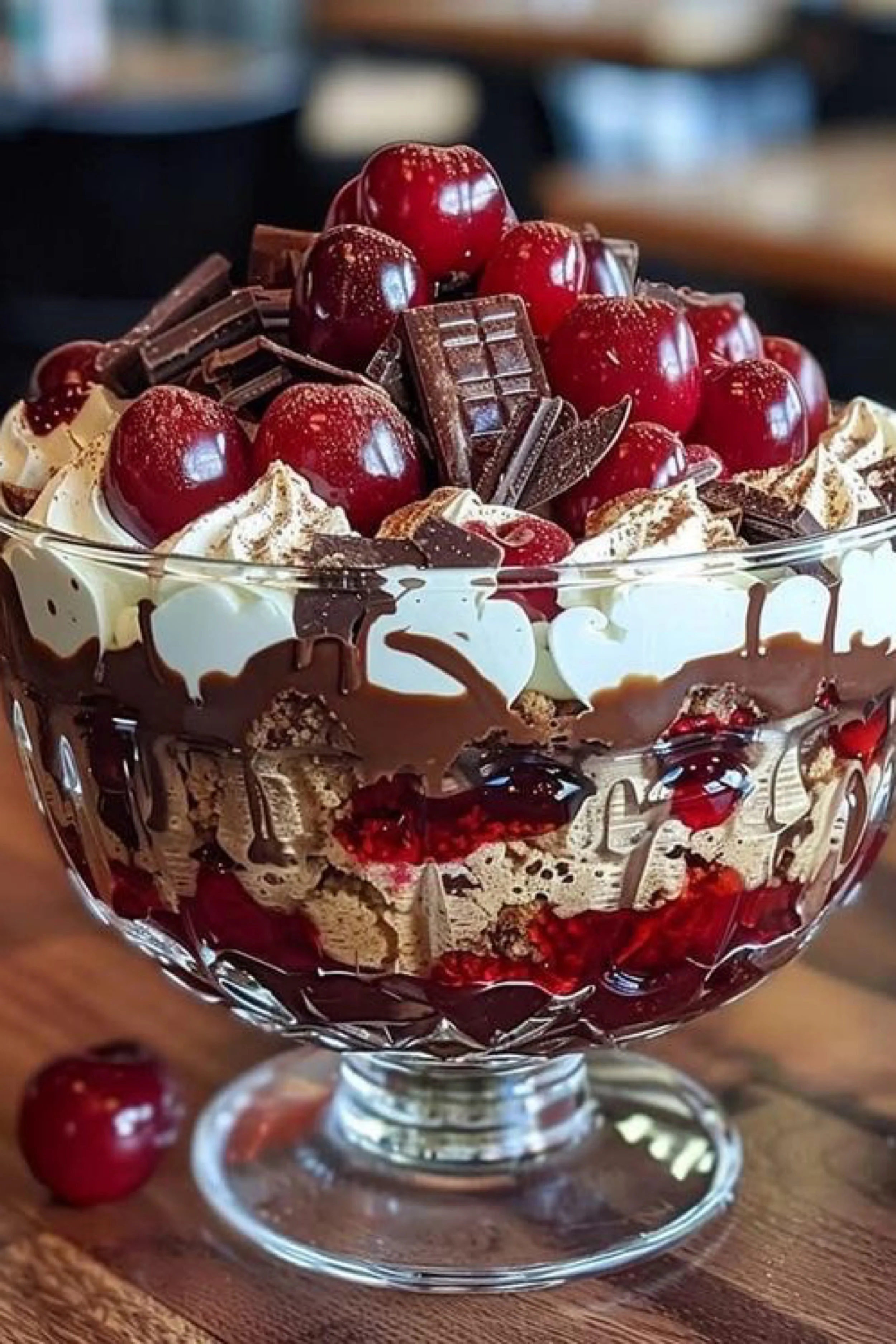
A glass bowl sits like a little stage, and everything inside it feels unapologetically dramatic—deep burgundy cherries, glossy as lacquer, piled high like jewels; broken squares of chocolate tucked between them like secret notes; ribbons of dark sauce sliding down the sides in slow, imperfect streaks. The layers aren’t shy. They’re visible on purpose, pressed against the cut-glass pattern so you can read the whole story before a single spoonful: chocolate, cream, cherry, crumb, and that final drip that makes it feel daring.
It’s the kind of dessert that changes a room’s mood. Even in daylight, it brings evening energy—candlelight energy—like someone put on a record and turned the volume down just enough to lean closer. The whipped peaks are soft but sculpted, dusted with cocoa the way a good coat gets powdered after a night out. And the cherries—those cherries—catch every highlight. They look like they’ve been polished, like they were meant to be admired before they’re tasted.
There’s a particular pleasure in desserts you don’t have to hide. No need for perfect slices, no pressure for clean edges. A trifle is permission to be lavish without being fussy. You build it in view, you let the layers show, you let the drips happen, and somehow that honesty reads as elegance. A cut-glass trifle bowl turns that idea into a centerpiece—part dessert, part décor, part dare. Set it down and people immediately start doing that subtle math: how soon is too soon to go in for a spoon?
The scent is its own preview: cocoa first, warm and bittersweet, followed by the bright, almost almondy lift of cherries and the faint vanilla hum that makes everything feel finished. The chocolate isn’t just “chocolate” here—it’s multiple tones of it. There’s the glossy darkness of sauce, the snap of chopped pieces, the softer chocolate hiding in the cake layer, all harmonizing the way velvet and leather somehow work together. A good cocoa powder for dusting and depth gives the top that grown-up, café-window feel—like something you’d spot behind glass and immediately rearrange your plans around.
The best part is how cinematic the textures are. You get the clean pop of cherry, then the silk of cream, then the soft chew of brownie or cake soaked with just enough cherry syrup to turn plush. That soak is where trifles become unforgettable. It’s not soggy; it’s saturated—like the dessert learned how to hold a secret. A deep mixing bowl set for folding cream and a balloon whisk that builds glossy peaks fast make that whipped layer airy but stable, the kind that holds its shape and still melts when it hits your tongue.
And then there’s the drip. The drip is the attitude. It’s the moment the dessert stops being polite and becomes memorable. You don’t need to overthink it—just warm chocolate until it pours, then let gravity do something a little reckless. A small saucepan for gentle melting helps keep the chocolate smooth instead of scorched, and a silicone spatula for clean scraping makes sure none of that shine gets left behind.
What makes this style of trifle feel so luxurious is that it’s built from familiar things—cream, chocolate, cherries—but assembled like a night out. It’s the dessert equivalent of an outfit with perfect bones and one bold detail that makes people stare a second longer. The chocolate squares on top aren’t just garnish; they’re a promise. The cocoa dust isn’t just pretty; it’s a little bitterness that keeps the sweetness from getting loud. The glass bowl doesn’t just hold it; it frames it.
Serve it cold, when the layers have had time to settle into each other, when the sauce has thickened just enough to cling, when the cherries taste even brighter against the chocolate. Keep spoons nearby because nobody wants to wait for neat portions. A trifle invites the kind of sharing that feels intimate—everyone leaning in, choosing their favorite layer, chasing the perfect bite. And when the bowl is finally scraped clean, what’s left is that quiet satisfaction: the sense that something simple was turned into something unmistakably special.
Cherry-Ganache Chocolate Trifle Recipe
A showy, layered dessert with whipped vanilla cream, chocolate cake or brownies, cherry filling, and a silky chocolate drip—built in a bowl so every layer stays visible and irresistible.
Ingredients
- 2 cups heavy whipping cream (cold)
- 1/3 cup powdered sugar
- 2 tsp vanilla extract
- 3 cups brownie cubes or chocolate cake cubes (store-bought or homemade)
- 2 cups cherry pie filling or cherry compote
- 1/2 cup cherry syrup or reserved cherry juices (for soaking, optional)
- 6 oz dark chocolate, chopped
- 1/2 cup heavy cream (for ganache)
- 1–2 tbsp cocoa powder (for dusting)
- Fresh or jarred cherries for topping
- Chocolate squares or shavings for topping
Optional helpers: hand mixer for quick whipped cream, piping bags and tips for pretty dollops
Method / Instructions
- Whip the cream: Beat heavy cream, powdered sugar, and vanilla to medium-stiff peaks. Chill.
- Make ganache: Warm 1/2 cup cream until steaming, pour over chopped chocolate, rest 2 minutes, then stir smooth.
- Layer: In a trifle bowl, add brownie/cake cubes, spoon over cherries and a splash of syrup (optional), then add whipped cream. Repeat 2–3 times.
- Finish: Drizzle ganache over the top so it drips down the sides. Add cherries and chocolate pieces. Dust lightly with cocoa.
- Chill: Refrigerate 2–6 hours for best texture, then serve with a large spoon.
In-Depth Step-by-Step Guide to the Cherry-Ganache Chocolate Trifle
1) Choose the bowl and decide the “look”
A trifle is a visual dessert first, so start with the vessel. A wide, clear bowl shows off clean layers and makes the drip feel intentional. If you want that dramatic, jewel-box effect, a glass trifle bowl with a pedestal gives height and sparkle, especially under kitchen lights. The wider the bowl, the more surface area you get for cocoa-dusted cream and glossy cherries on top.
Decide early if you want two thick layers or multiple thinner ones. Thin layers look intricate and upscale; thick layers look abundant and cozy. Both work—just be consistent so the final bowl reads “designed” instead of accidental.
2) Build a whipped cream that holds its shape
Whipped cream is the cushion between the intense flavors, so it needs structure. Start with cold cream and a chilled bowl if possible. Use powdered sugar rather than granulated; it dissolves fast and helps stabilize. Vanilla matters here—it’s the soft perfume that makes the chocolate feel round instead of sharp.
Whip to medium-stiff peaks: the cream should stand up, but still look plush and glossy. Overwhipped cream turns grainy and won’t give that cloudlike layer. If you want extra insurance (especially if it will sit overnight), a whipped cream stabilizer option can keep the texture airy for longer without making it taste “set.”
3) Pick your chocolate layer: brownies vs cake
Brownies give chew and richness—perfect if you want a dessert that feels decadent and slightly dense. Chocolate cake gives a lighter bite and absorbs syrup more readily. Either is great; the key is cubing evenly so the layers stack cleanly.
If your brownies/cake feel very dry, that’s actually helpful here—trifles thrive on absorption. If they’re ultra-fudgy, keep the syrup light so the dessert doesn’t collapse into heaviness.
4) Make the cherry layer taste intentional
Cherry pie filling is convenient, but it’s even better with a quick upgrade: stir in a pinch of salt and a tiny splash of vanilla to make it taste less one-note. If you have time, simmer jarred cherries briefly to thicken the juices into a glossy compote.
The goal is brightness that cuts through chocolate. If your cherries taste too sweet, add a small squeeze of lemon. If they taste flat, a pinch of salt wakes them up immediately.
5) Create a soak that turns “good” into “luxury”
That plush, bakery-style texture comes from lightly soaking the cake layer. Use reserved cherry juices or a quick syrup (cherry juice warmed with a spoon of sugar). Spoon it on—don’t pour—so you control saturation. A few tablespoons per layer is usually enough.
The cake should look darker and slightly glossy after soaking, not puddled. If you can press a cube gently and it springs back, you nailed it. If it squishes into paste, you went too far—fix it by adding a handful of fresh cake cubes to balance texture.
6) Make a ganache that drips, not clumps
Ganache is simple, but temperature control is everything. Warm the cream just until steaming—no hard boil. Pour over chopped chocolate and let it sit before stirring. This rest time melts the chocolate evenly so you don’t chase lumps.
If the ganache is too thick to drip, add a tablespoon of warm cream and stir again. If it’s too thin, let it sit a few minutes to cool and thicken. A small offset spatula is handy for guiding drips along the rim without smearing the whipped cream beneath.
7) Layering strategy that keeps everything crisp and beautiful
Now assemble with intention:
- First layer: Cake/brownie cubes pressed lightly for an even base.
- Second layer: Cherries spooned in pockets so red shows along the glass.
- Third layer: Whipped cream spread gently to seal in the fruit.
Repeat. When you add whipped cream, avoid stirring into the cherries—think “blanket,” not “mix.” If you want picture-perfect layers, use a large piping bag to pipe cream in a ring around the edge first, then fill the center. That trick keeps the glass clean and makes the stripes pop.
8) The topping: make it look expensive with simple moves
For the top, go bold. Pile cherries high in the center like a crown. Add chocolate squares or shards for height and contrast. Then dust cocoa lightly—just enough to look dramatic, not enough to taste dry. A fine-mesh cocoa shaker gives that soft, even snowfall effect without clumps.
Finally, drizzle the ganache. Aim for the rim first and let it slide naturally. A few intentional drips beat a fully coated top, because you can still see the whipped peaks and the cherries.
9) Chill time: when the layers become one dessert
A trifle improves with rest. Two hours is the minimum for flavors to mingle and for the cake to soften into that spoon-perfect texture. If you can do 4–6 hours, the difference is noticeable: the cherry and chocolate stop tasting separate and start tasting like one composed dessert.
Cover lightly so the top stays fresh. If you’re worried about the chocolate garnish softening, add the chocolate pieces right before serving and keep the cherries chilled until the last moment.
10) Troubleshooting and upgrades
If it looks watery: Your cherries are too loose. Stir in a spoon of cornstarch slurry (or simmer longer next time) to thicken.
If it’s overly sweet: Add a pinch of salt to the cherries and use darker chocolate. A high-cacao dark chocolate option brings balance fast.
If the cream deflates: It was underwhipped or too warm. Chill the bowl and whip a bit more next time, or use a stabilizer.
If the ganache seized: The cream was too cool or water got in. Rewarm gently over low heat and whisk; if needed, add a splash of warm cream.
11) Variations that keep the vibe but change the flavor
- Espresso-cherry: Add a teaspoon of instant espresso to ganache for a mocha edge.
- Almond-cherry: Add a few drops of almond extract to the whipped cream (go light).
- Raspberry swap: Replace cherries with raspberries for a brighter, tangier version.
- No-bake shortcut: Use store-bought brownies and prepared filling—focus your effort on whipped cream and ganache.
12) Serving notes that make it feel like an event
Serve straight from the bowl with a big spoon—trifles are meant to be shared and slightly chaotic in the best way. The ideal scoop catches every layer: cake, cherry, cream, ganache. For clean servings, use a long-handled dessert spoon set so you can reach the bottom without breaking the layers too much.
Done right, each bite feels like a little reveal—dark chocolate, bright cherry, soft cream—rich without being heavy, dramatic without being complicated, and pretty enough that everyone pauses before they dig in.