The Candlelit Craving That Started with Pumpkin Black Bean Chili Recipe
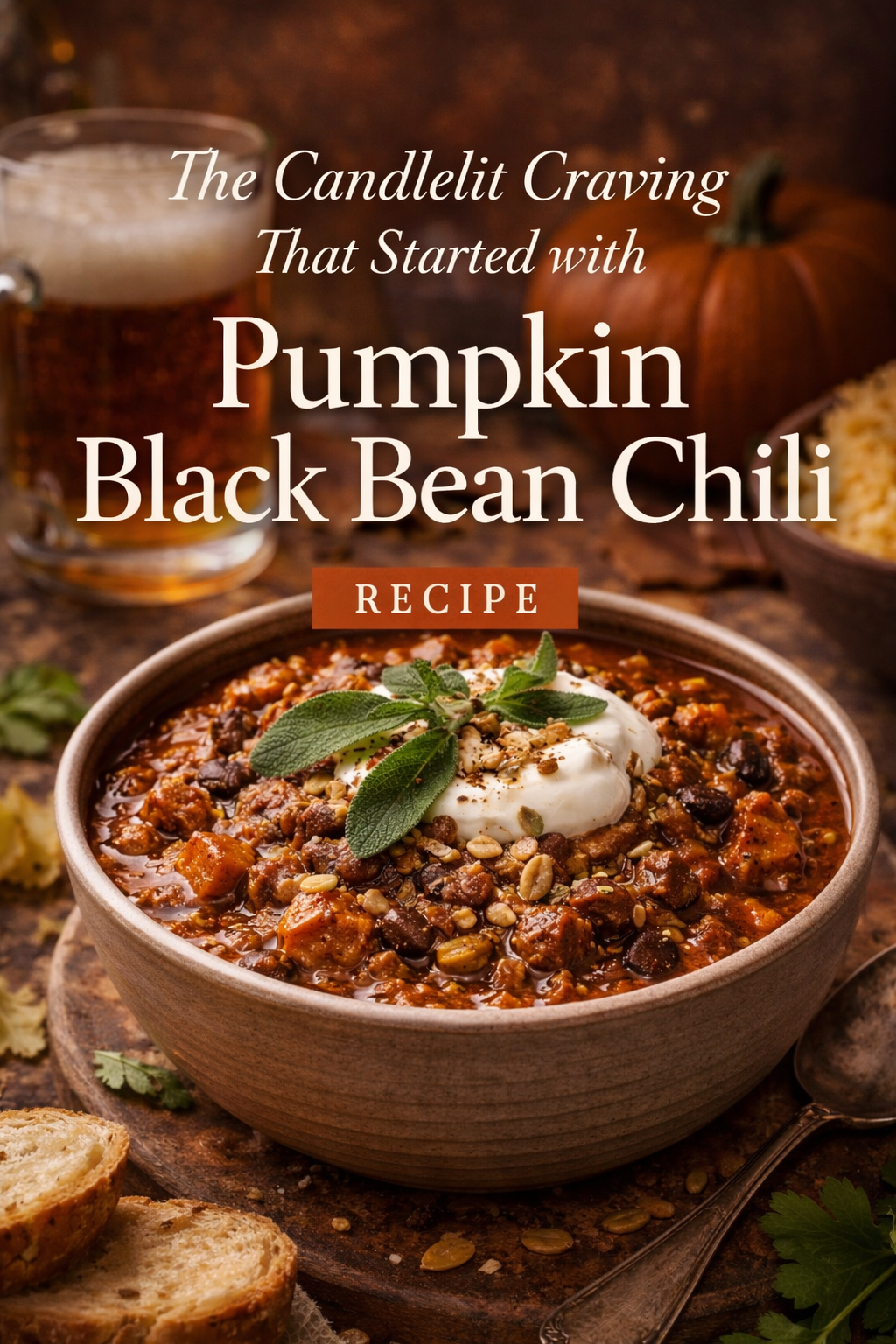
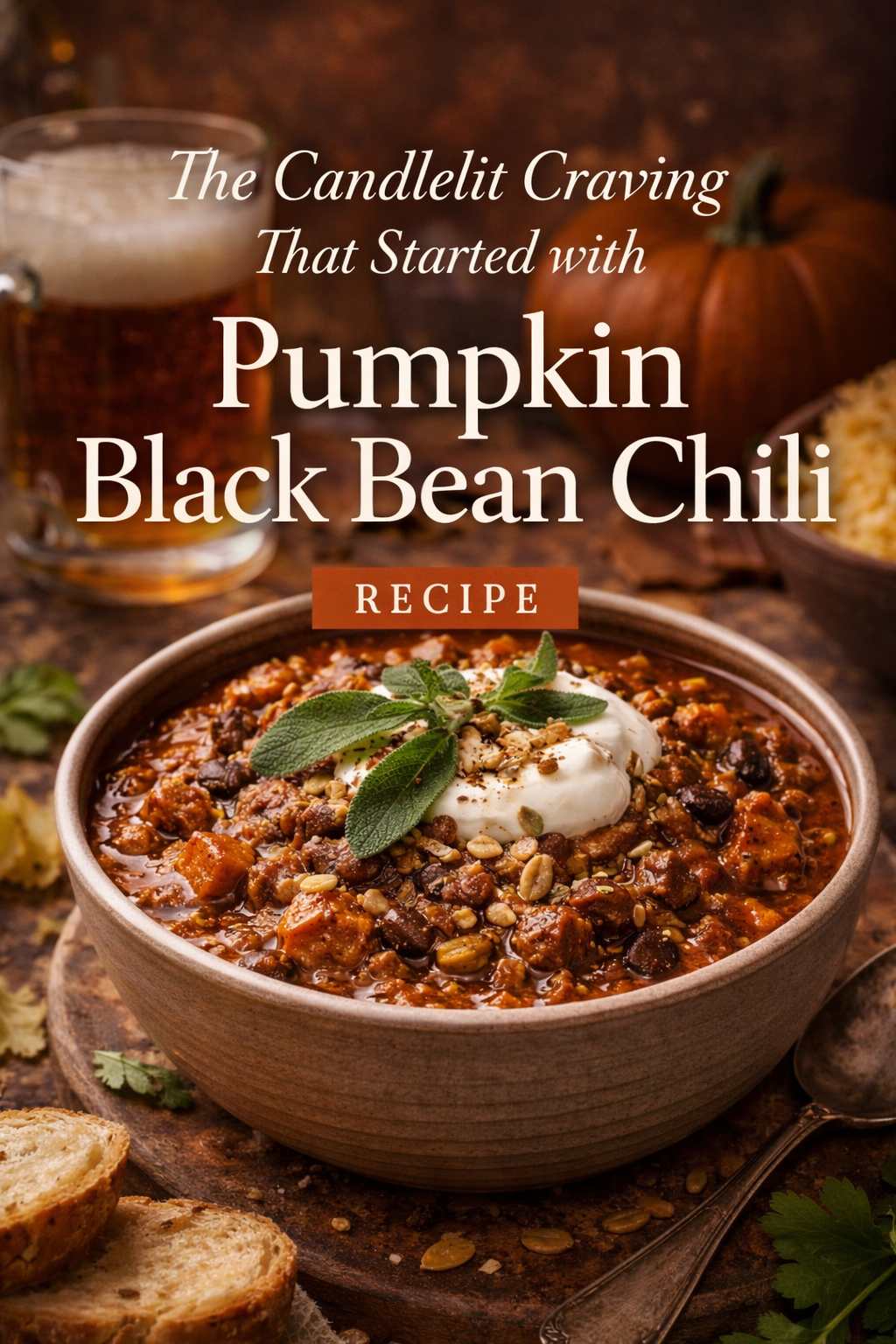
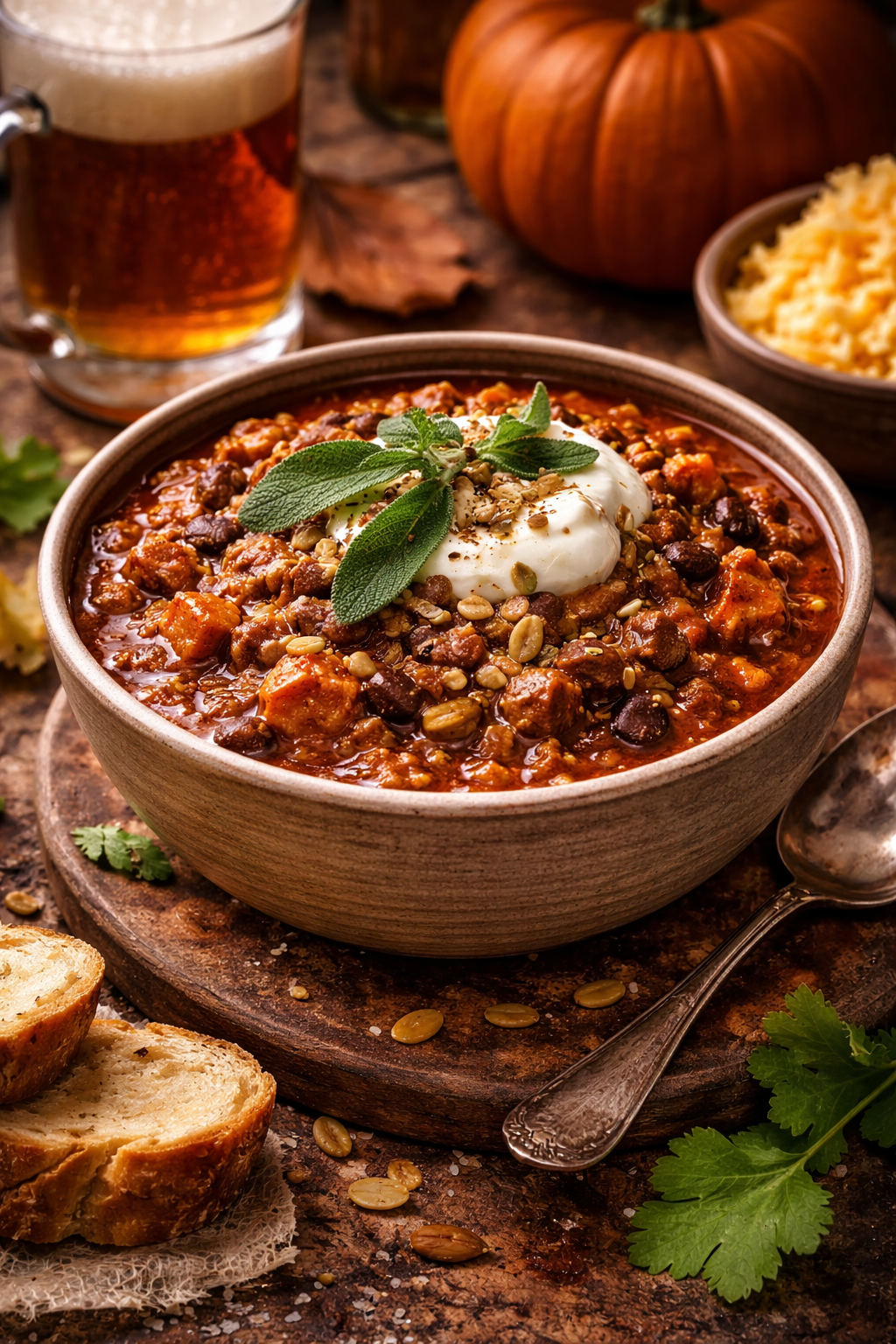
The bowl sits heavy and warm in the hands, the kind of warmth that feels earned. A deep brick-red chili, glossy at the edges where the oil rises in tiny amber pools, looks almost lacquered under soft light. Black beans hold their shape like little midnight stones—noisy against the sauce in the best way—while cubes of tender squash catch the glow, their edges softened into a velvety bite. On top, a cool cloud of sour cream melts slowly into the heat, drawing pale ribbons through the surface like marble veins. A small sprig of sage rests there, aromatic and green, as if it wandered in from the season itself. Pepitas scatter across the crown, toasted and nutty, giving a faint crunch that lands somewhere between comfort and celebration.
Everything around it reads like a quiet ritual: a wooden board worn smooth, a spoon with a familiar weight, a few crumbs of bread ready for dunking. There’s a mug of something amber nearby—foam clinging to the glass—bringing that mellow, roasted hush that autumn drinks always seem to carry. A pumpkin waits in the background, not as a decoration but as a promise. This is the kind of scene that makes a kitchen feel like a refuge, where the air stays scented with spice long after the pot is off the heat and the windows have begun to fog.
Chili can be loud, but this version doesn’t need to shout. It’s layered. It starts sweet with squash and tomato, then deepens into smoke and warmth—paprika, cumin, maybe a whisper of chipotle—until the whole thing tastes like it’s been simmering all day, even if it hasn’t. The beans make it grounding, a steady bass note, while the pumpkin (or squash) brings a soft, almost creamy body that rounds out the edges. The finish is brightened by the toppings: tang from sour cream, crunch from pepitas, and that clean herbal lift from sage that keeps each spoonful feeling new.
There’s also something undeniably satisfying about how this comes together with the right tools laid out like a small mise en place ceremony. A heirloom-style Dutch oven for slow, even simmering turns the base into something glossy and cohesive, letting the aromatics soften without scorching. A wide wooden spoon that won’t scratch cookware becomes the quiet workhorse, scraping up the browned bits that carry so much flavor. And when the moment comes to toast those pepitas, a small cast-iron skillet for quick toasting makes it effortless—just enough heat to wake them up without tipping into bitter.
The ingredients themselves feel like pantry luxury: humble, but elevated by intention. A smoky paprika that leans rich rather than sharp gives the chili its autumn glow. A fresh-ground cumin option can turn the aroma into something almost citrusy and alive if you toast it first. Even the pumpkin element can be flexible—roasted cubes, or the silky convenience of pure pumpkin purée for body and depth. And if the beans are the backbone, a good, consistent batch of dried black beans for that perfect tender bite can make the whole pot feel more deliberate, more from-scratch, more yours.
But the real magic is how this chili changes the room. It turns an ordinary evening into a slow one. It invites you to slice bread, to set out bowls, to add a little extra sour cream because why not. The steam rises, scented with spice and tomato and roasted squash, and suddenly the season feels present—less like a calendar page and more like a mood you can taste. It’s the kind of meal that makes people hover near the stove, asking when it’ll be ready even though they can already smell the answer.
And once it’s ladled into a bowl, it doesn’t feel like “dinner.” It feels like arrival. A spoon breaks through the top, dragging sour cream into the chili, catching a pepita here, a bean there, a tender orange cube that melts at the edges. The sage releases its perfume with the heat, and the first bite lands with that perfect contradiction: warming but bright, rich but not heavy, familiar but just surprising enough to feel special. The bowl empties slowly, not because it isn’t delicious, but because it deserves to be savored.
Pumpkin Black Bean Chili Recipe
A cozy, smoky-sweet chili built on black beans, pumpkin (or squash), warm spices, and a creamy finish.
Ingredients
- 2 tbsp olive oil
- 1 large yellow onion, diced
- 1 red bell pepper, diced
- 4 cloves garlic, minced
- 2 tbsp tomato paste
- 2 tsp ground cumin
- 2 tsp smoked paprika
- 1 tsp chili powder
- 1/2 tsp dried oregano
- 1/4–1/2 tsp chipotle powder (optional, for heat)
- 1 (28 oz) can crushed tomatoes
- 3 cups vegetable broth (or chicken broth)
- 2 (15 oz) cans black beans, drained and rinsed
- 2 cups pumpkin purée or 3 cups peeled cubed butternut squash (or pumpkin)
- 1 tbsp maple syrup or brown sugar (optional, balances acidity)
- 1 tbsp apple cider vinegar or lime juice
- Kosher salt and black pepper, to taste
To Finish (Optional but recommended)
- Sour cream or Greek yogurt
- Toasted pepitas
- Fresh sage leaves (or cilantro)
- Shredded cheddar or pepper jack
- Crusty bread
Method / Instructions
- Heat oil in a heavy pot over medium heat. Sauté onion and bell pepper until softened, 6–8 minutes. Add garlic and cook 30 seconds.
- Stir in tomato paste and cook 1 minute. Add cumin, smoked paprika, chili powder, oregano (and chipotle if using) and toast 30 seconds.
- Add crushed tomatoes and broth, stirring to combine.
- Stir in black beans and pumpkin purée (or squash cubes). Simmer uncovered 25–35 minutes, stirring occasionally, until thick and glossy. (If using squash cubes, simmer until fork-tender.)
- Season with salt and pepper. Add maple syrup (if using) and finish with vinegar or lime juice.
- Serve with sour cream, pepitas, and herbs. Optional: add cheese and a slice of crusty bread.
Start by setting the tone: this chili is all about building depth without rushing. A heavy pot matters because it protects the aromatics from scorching and keeps the simmer steady; a deep, thick-bottomed chili pot for even heat gives you that controlled, slow bloom of flavor. Heat the oil until it shimmers, then add onion and bell pepper and let them actually soften—don’t just “sweat” them for two minutes and move on. You’re looking for translucence, a gentle collapse, and the first hint of caramel at the edges. That’s where the sweetness comes from, and it’s what makes the pumpkin taste intentional rather than random.
When you add garlic, keep it short. Garlic goes from fragrant to bitter fast, so think of it as a quick perfume rather than a long-cooked base. Then comes tomato paste: this is your cheat code. Cooking it for a minute deepens it, taking it from sharp and metallic to rounded and almost jammy. If you want that restaurant-level color and richness, let the paste darken slightly on the bottom of the pot—just not to the point of burning.
Now toast the spices. Cumin and smoked paprika are the backbone here; chili powder and oregano fill in the mid-notes. The goal is to wake them up in fat so they release aroma before liquid mutes them. If you love a low, smoky heat, a touch of chipotle powder changes the entire mood—more bonfire than bite. Keeping spices fresh makes a big difference, and a set of airtight spice jars that actually seal helps preserve that punch if you cook seasonally and rotate spices.
Once you add crushed tomatoes and broth, stir slowly and scrape the bottom. Those browned bits are flavor concentrate. Bring it to a gentle simmer, not a rolling boil; boiling can make beans tough and can turn the tomato base harsh. If you’re using pumpkin purée, it dissolves into the liquid and thickens quickly—expect the chili to look a little lighter at first, then deepen as it simmers. If you’re using cubed squash, give it time. You want fork-tender cubes that hold shape but melt at the corners, like the ones in the bowl that look almost glazed.
Beans are where texture can go wrong. Canned beans are convenient, but rinse them well to avoid that starchy brine dulling your spices. If you’re cooking from dried, you want beans that are tender but not blown out; undercooked beans stay chalky, overcooked beans turn the chili pasty. If you go the from-scratch route, a simple bean-cooking setup with a large mesh strainer makes rinsing and sorting easy without fuss.
Thickening is personal. For a chili that looks like the image—rich, spoon-coating, glossy—you have a few options. The simplest is time: simmer uncovered so water evaporates and the pumpkin binds everything. Another option is partial blending: scoop out a cup or two, blend, then stir it back in. An immersion blender for quick, controlled thickening is perfect here because you can pulse just enough to make it creamy without turning it into soup. If you prefer no blending, mash a small portion of beans against the side of the pot; it thickens naturally and keeps texture.
Balance is the final step, and it’s where the chili becomes addictive. Tomatoes and pumpkin together can lean sweet, but they also carry acidity. Add salt slowly and taste between pinches. Then decide: do you need warmth (more chili powder), smoke (more paprika), brightness (a splash of vinegar or lime), or roundness (a hint of maple syrup)? That last one isn’t about making it sugary—it’s about smoothing the edges so the spices read richer. A splash of apple cider vinegar at the end can make the whole pot taste more “alive” without shouting vinegar.
Now the toppings, because they’re not garnish—they’re structure. Toast pepitas in a dry pan until they pop and smell nutty; don’t walk away, because they go from perfect to scorched in seconds. Keep a small nonstick skillet for fast toasting and easy cleanup if you don’t want another heavy pan involved. The sour cream should be cold so it contrasts the heat; that temperature play is part of what makes the first bite so satisfying. If you want a lighter feel, Greek yogurt works, but choose full-fat for the same melt-in texture.
Sage is the surprise note. One sprig on top perfumes the bowl as you eat. If you love sage, try quickly frying a few leaves in a teaspoon of oil until crisp; they become aromatic chips. If sage isn’t your thing, cilantro gives brightness, and scallions add a clean bite. Cheese is optional, but a small handful of sharp cheddar or pepper jack can turn it into a more indulgent bowl.
Variations that stay true to the spirit:
- Add browned ground turkey or beef for a heartier version; brown it first, then build the aromatics in the rendered fat.
- Stir in a cup of roasted corn for sweetness and pop.
- Swap broth for a darker, richer base and add a pinch of cocoa powder for depth.
- For vegetarian richness, add sautéed mushrooms early; they bring savory weight without changing the flavor profile.
Troubleshooting:
- Too thin: simmer uncovered longer, mash beans, or do a quick partial blend.
- Too thick: add broth in small splashes and stir well before adding more.
- Too acidic: add a pinch of sugar/maple syrup, more pumpkin, or a little extra salt (salt often fixes “acid” more than expected).
- Flat flavor: finish with vinegar/lime and a fresh herb; brightness wakes everything up.
Finally, serve it the way the image suggests: generous bowl, cool sour cream in the center, pepitas scattered like confetti, herbs on top, and bread nearby for the last swipe around the rim. A chili like this rewards patience, but it also rewards leftovers—tomorrow it will taste even deeper, the spices more integrated, the pumpkin more seamless, the whole pot tasting like it had all night to become itself.